



Allergic Rhinitis
-
Allergic Rhinitis (23)

- 1
- 2

Ovalbumins are the major proteins in egg white. Ovalbumins act as an allergen and inducer, and can be applied to mouse models of allergic diseases. Ovalbumins can induce allergic rhinitis in mice via sensitization and nasal challenge. Ovalbumins can be used to establish asthma models.
Ovalbumin, low endotoxin (HY-W250978A) is recommended for model establishment.
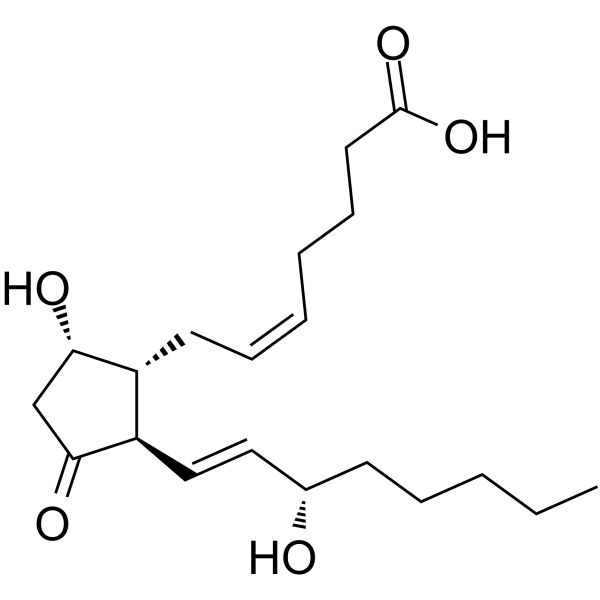
- Formula: C20H32O5
- Molecular Weight: 352.47
Prostaglandin D2 (PGD2) is one of the major PGs actively produced in the brain of various mammals. Prostaglandin D2 is one of the most potent endogenous sleep promoting substances. PGD2 plays a protective role by suppressing inflammation.
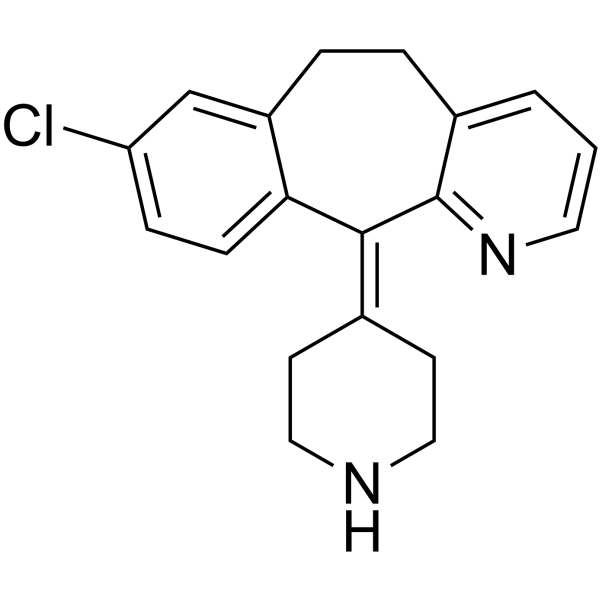
- Formula: C19H19ClN2
- Molecular Weight: 310.83
Desloratadine (Sch34117) is an orally active and selective H1 receptor antagonist (Ki=0.9 nM) with anti-inflammatory and anti-allergic activities. Desloratadine inhibits the release of histamine and LTC4 from human basophils and targets the regulatory signals of IL-4 and IL-13 production in basophils. Desloratadine significantly alleviates SAR symptoms in patients with concurrent asthma and can be used in the study of seasonal allergic rhinitis and chronic idiopathic urticaria.
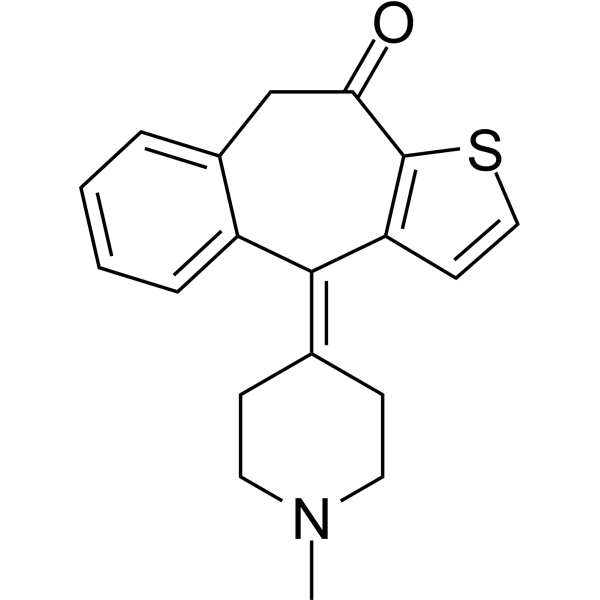
- Formula: C19H19NOS
- Molecular Weight: 309.43
Ketotifen (HC 20-511) is an orally active second-generation noncompetitive histamine 1 (H1) receptor blocker and mast cell stabilizer. Ketotifen can block 6-phosphogluconate dehydrogenase (PGD) in vitro. Ketotifen also has antiviral activity against SARS-CoV-2 and Influenza virus. Ketotifen can be used to the research of autoimmune encephalomyelitis (EAE) and asthma attack prevention.

- Molecular Weight: 146.5 kDa
Quilizumab (Anti-Human IGHE Recombinant Antibody; 47H4; MEMP1972A) is a monoclonal antibody that targets FcγRIIIa and the M1 prime segment of human membrane-bound IgE. Quilizumab has enhanced FcγRIIIa binding affinity and activity against IgE class-switched B cells, and reduces serum IgE levels by inducing antibody-dependent cell-mediated cytotoxicity and apoptosis through cross-linking of membrane-bound IgE receptors. Quilizumab depletes IgE-producing cells; it also directly binds the membrane-bound M1 prime domain on IgE class-switched cells to inhibit IgE production. Quilizumab is used in research on allergic asthma and allergic diseases (asthma, allergic rhinitis).
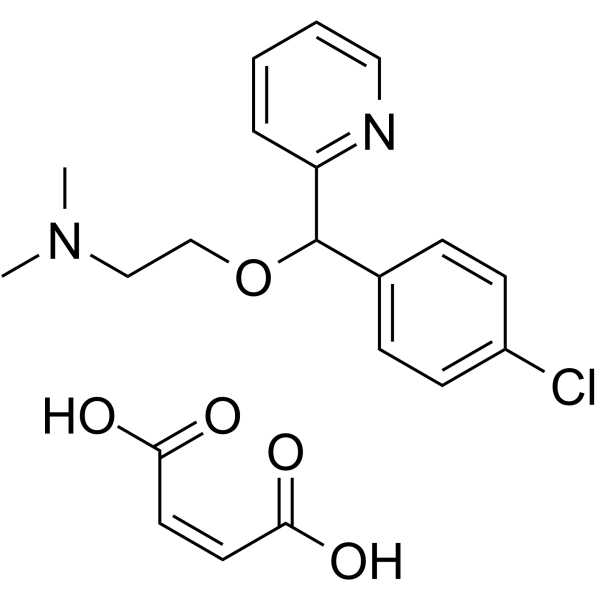
- Formula: C20H23ClN2O5
- Molecular Weight: 406.86
Carbinoxamine maleate salt is a blood-brain barrier-permeable histamine H1 receptor antagonist. Carbinoxamine maleate salt blocks the action of histamine on H1 receptors, reducing symptoms such as sneezing, rhinitis, rhinorrhea, erythema, pruritus and urticaria. Carbinoxamine maleate salt inhibits influenza virus entry into cells via endocytosis, targets the early stage of the viral life cycle, and simultaneously reduces viral replication levels in the lungs, alleviating pathological damage and inflammatory responses in lung tissues. Carbinoxamine maleate salt can be used in research on allergic rhinitis, influenza, etc.
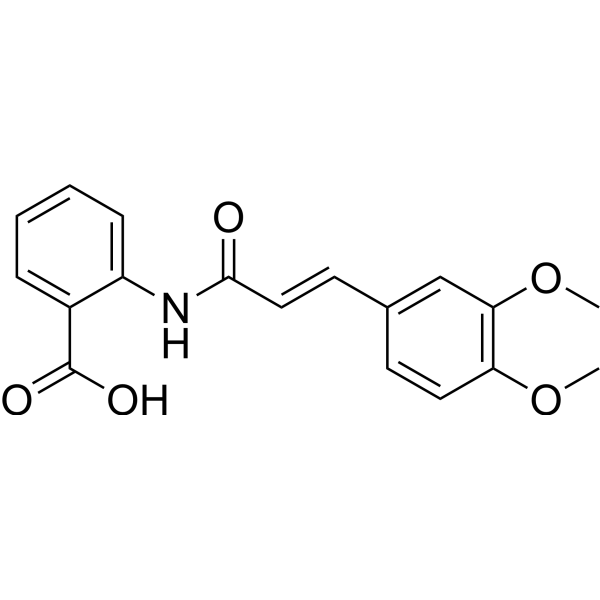
- Formula: C18H17NO5
- Molecular Weight: 327.34
trans-Tranilast (trans-MK-341) is an isomer of Tranilast (HY-B0195), and an anti-allergy agent used in studies of bronchial asthma, allergic rhinitis, and atopic dermatitis.
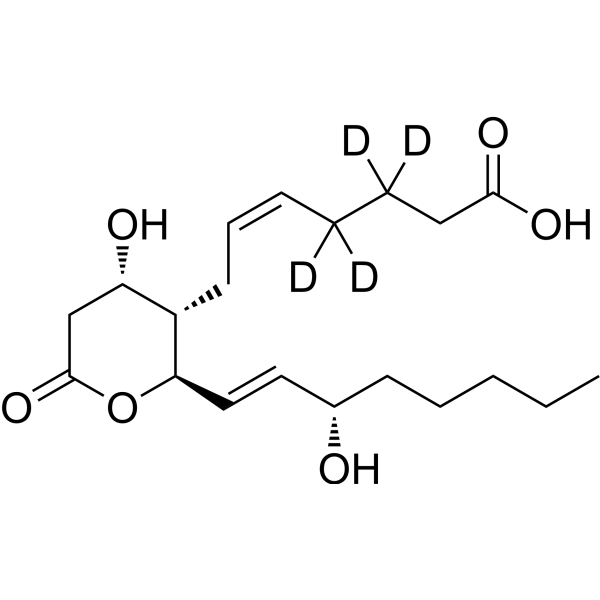
- Formula: C20H28D4O6
- Molecular Weight: 372.49
11-Dehydro-thromboxane B2-d4 is the d4-labeled 11-Dehydro-thromboxane B2 (HY-113420). 11-Dehydro-thromboxane B2 is a stable terminal metabolite of thromboxane A2 and an agonist of the CRTH2 receptor. 11-Dehydro-TXB2 activates human eosinophils, basophils, and CRTH2-transfected BaF/3 cells through a pertussis toxin-insensitive G protein-PLC pathway, inducing intracellular calcium mobilization, morphological changes, and chemotaxis, but does not affect platelet aggregation. 11-Dehydro-thromboxane B2 is involved in thrombosis and promotes eosinophil recruitment to the lungs in allergic inflammation, and its urinary levels are used to assess the inhibitory effect of Aspirin (HY-14654) on thromboxane production. 11-Dehydro-TXB2 serves as a biomarker for research related to asthma, atopic rhinitis, nephropathy, and coronary artery disease.
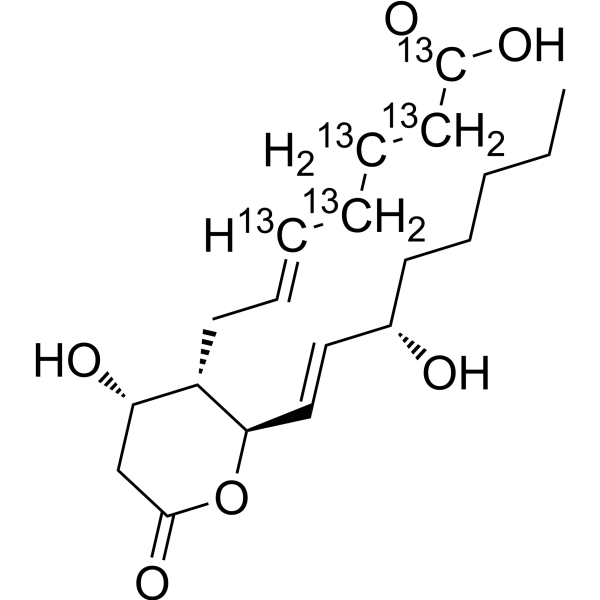
- Formula: C1513C5H32O6
- Molecular Weight: 373.43
11-Dehydro-thromboxane B2-13C5 is the 13C-labeled 11-Dehydro-thromboxane B2 (HY-113420). 11-Dehydro-thromboxane B2 is a stable terminal metabolite of thromboxane A2 and an agonist of the CRTH2 receptor. 11-Dehydro-TXB2 activates human eosinophils, basophils, and CRTH2-transfected BaF/3 cells through a pertussis toxin-insensitive G protein-PLC pathway, inducing intracellular calcium mobilization, morphological changes, and chemotaxis, but does not affect platelet aggregation. 11-Dehydro-thromboxane B2 is involved in thrombosis and promotes eosinophil recruitment to the lungs in allergic inflammation, and its urinary levels are used to assess the inhibitory effect of Aspirin (HY-14654) on thromboxane production. 11-Dehydro-TXB2 serves as a biomarker for research related to asthma, atopic rhinitis, nephropathy, and coronary artery disease.
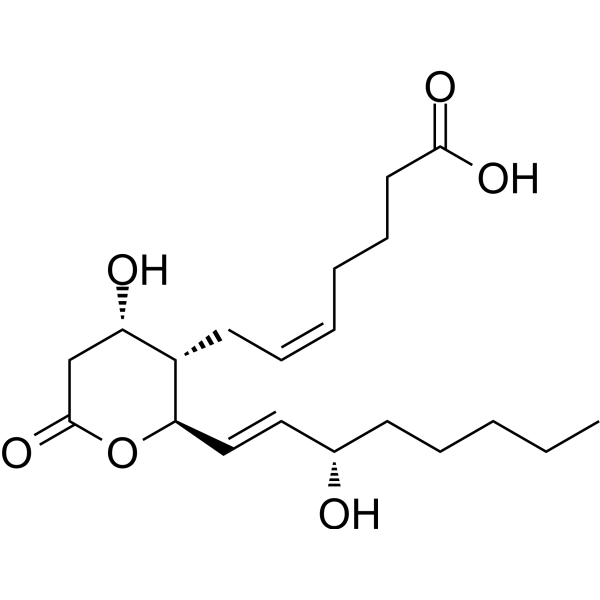
- Formula: C20H32O6
- Molecular Weight: 368.46
11-Dehydro-thromboxane B2 is a stable terminal metabolite of thromboxane A2 and an agonist of the CRTH2 receptor. 11-Dehydro-TXB2 activates human eosinophils, basophils, and CRTH2-transfected BaF/3 cells through a pertussis toxin-insensitive G protein-PLC pathway, inducing intracellular calcium mobilization, morphological changes, and chemotaxis, but does not affect platelet aggregation. 11-Dehydro-thromboxane B2 is involved in thrombosis and promotes eosinophil recruitment to the lungs in allergic inflammation, and its urinary levels are used to assess the inhibitory effect of Aspirin (HY-14654) on thromboxane production. 11-Dehydro-TXB2 serves as a biomarker for research related to asthma, atopic rhinitis, nephropathy, and coronary artery disease.
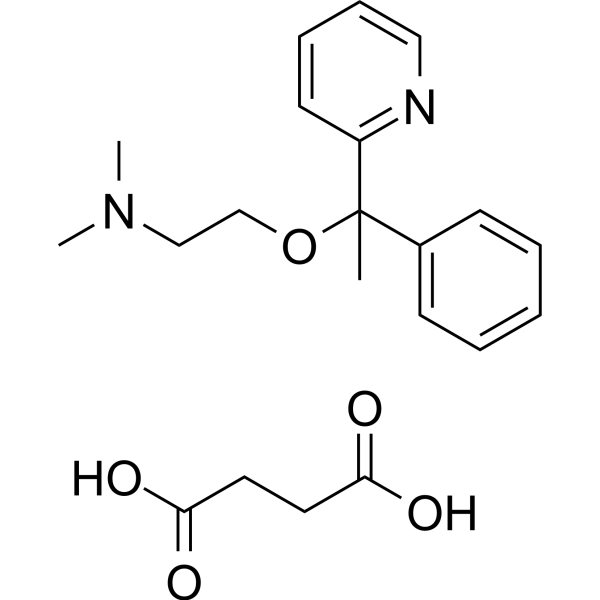
- Formula: C21H28N2O5
- Molecular Weight: 388.46
Doxylamine succinate is a first-generation antihistamine and acts as a histamine H1 receptor antagonist. Doxylamine succinate is orally active, possessing analgesic and hypnotic activities. Doxylamine succinate enhances the activities of CYP2B, CYP2A, CYP3A and thyroxine-glucuronosyltransferase via promoting substrate hydroxylation and thyroxine metabolic pathways. Doxylamine succinate decreases serum thyroxine (T4) level and elevates serum thyroid-stimulating hormone (TSH) level. Doxylamine succinate induces liver enlargement and increases the activities of hepatic microsomal cytochrome P450, cytochrome b5 and NADPH-cytochrome c reductase. Doxylamine succinate can be used for the research of nausea, allergy, insomnia.
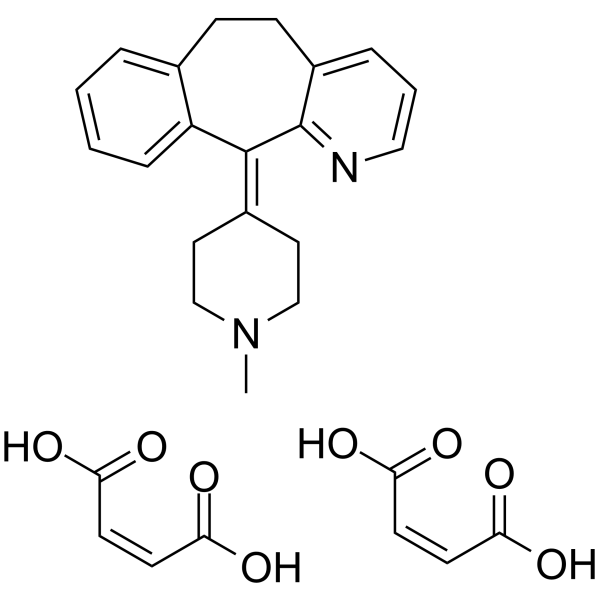
- Formula: C28H30N2O8
- Molecular Weight: 522.55
Azatadine dimaleate (Azatadine maleate) is an orally active histamine H1 receptor inhibitor, cetylcholine receptor inhibitor, and serotonin receptor inhibitor. Azatadine dimaleate induces sedation and exhibits topical anesthetic properties. Azatadine dimaleate can be used for the research of allergic rhinitis.

- Formula: C19H20N2O7S
- Molecular Weight: 420.44
(R)-MMP408 is an isomer of MMP408 (HY-12093). MMP408 is an orally active MMP-12 inhibitor (IC50=2.0 nM for hMMP-12) that effectively interferes with the epithelial-mesenchymal transition (EMT) process. MMP408 significantly upregulates the expression of E-cadherin in nasal epithelial cells, while inhibiting mesenchymal markers such as vimentin, α-smooth muscle actin and fibronectin, thereby reversing the EMT phenotype. MMP408 is used in studies of airway remodeling-related diseases, including chronic rhinosinusitis with nasal polyps, chronic obstructive pulmonary disease (COPD) and asthma.

- Formula: C24H32O6S
- Molecular Weight: 448.57
Bakkenolide Iva is a bakkenolide-type sesquiterpene. Bakkenolide Iva is isolated from the rhizomes of Petasites tricholobus. Bakkenolide Iva inhibits lipid peroxidation in rat brain homogenates and scavenges DPPH free radicals. Bakkenolide Iva protects cortical neurons against oxygen-glucose deprivation-induced injury and oxidative stress-induced neuronal injury. Bakkenolide Iva can be used in research on paralysis and allergic rhinitis.


- Formula: C28H30FN5O2
- Molecular Weight: 487.57
YM-344484 is an orally active dual antagonist of chemokine CCR3 receptor and histamine histamine H1 receptor. YM-344484 inhibits ligand-induced Ca2+ influx, chemotaxis of CCR3-expressing cells, histamine-induced Ca2+ influx, increased vascular permeability and eosinophil accumulation. YM-344484 suppresses vascular permeability and inhibits eosinophil infiltration in a mouse asthma model. YM-344484 can be used in research related to asthma, allergic rhinitis and atopic dermatitis.

- Formula: C24H29Cl2N3O4S
- Molecular Weight: 526.48
AZD3778 (Compound 8) is an inhibitor of CCR3 and histamine H1 receptor (histamine H1 receptor), with IC50 values of 8.1 nM and 40 nM, respectively. AZD3778 inhibits the binding of eosinophil chemokines to CCR3, as well as the binding of histamine to histamine H1 receptor. AZD3778 exhibits anti-eosinophilic activity. AZD3778 alleviates symptoms associated with allergic rhinitis. AZD3778 can be used in research related to allergic rhinitis and asthma.

- Formula: C18H16Cl2N4O
- Molecular Weight: 375.25
SCH 79687 is an orally active histamine H3 receptor antagonist, with a Ki of 1.9 nM in rats and 13 nM in guinea pigs. SCH 79687 acts as a competitive antagonist against (R)-α-methylhistamine. SCH 79687 attenuates the inhibitory effect of (R)-α-methylhistamine-induced sympathetic hypertensive responses in guinea pigs. When used in combination with H1 antagonists, SCH 79687 inhibits Compound 48/80 (HY-115768)-induced nasal congestion in cats. SCH 79687 can be used for the research of allergic rhinitis.

- Formula: C27H36FN5O3S
- Molecular Weight: 529.67
BMS-570520 is an orally bioavailable CCR3 antagonist with an IC50 of 1.9 nM against hCCR3 and an IC50 of 1300 nM against hCYP2D6. BMS-570520 inhibits CYP2D6, but shows low activity against off-target G protein-coupled receptors, biogenic amine transporters, and the hERG potassium channel. BMS-570520 regulates chemotaxis, calcium mobilization, and anti-inflammatory pathways. BMS-570520 can be used in research related to asthma, allergic rhinitis, and contact dermatitis.
- 1
- 2



