



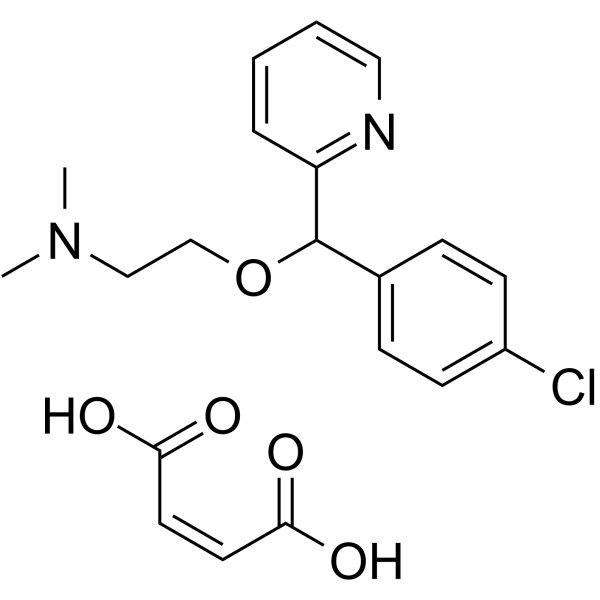
Carbinoxamine maleate salt
Based on 1 publication(s) in Google Scholar
Carbinoxamine maleate salt is a blood-brain barrier-permeable histamine H1 receptor antagonist. Carbinoxamine maleate salt blocks the action of histamine on H1 receptors, reducing symptoms such as sneezing, rhinitis, rhinorrhea, erythema, pruritus and urticaria. Carbinoxamine maleate salt inhibits influenza virus entry into cells via endocytosis, targets the early stage of the viral life cycle, and simultaneously reduces viral replication levels in the lungs, alleviating pathological damage and inflammatory responses in lung tissues. Carbinoxamine maleate salt can be used in research on allergic rhinitis, influenza, etc.
For research use only. We do not sell to patients.
- Purity : 98.78%
- CAS No.: 3505-38-2
- Formula: C20H23ClN2O5
- Molecular Weight:406.86
-
Storage:
4°C, sealed storage, away from moisture
* In solvent : -80°C, 6 months; -20°C, 1 month (sealed storage, away from moisture)

To place orders, for customer services and technical support, please contact: MedChemExpress USA
Tel: 609-228-6898 E-mail: [email protected] [email protected]


-
 Biological Activity
-
Chemical Information
-
Solvent & Solubility
- Purity & Documentation
- References
-
 Help & FAQs


-
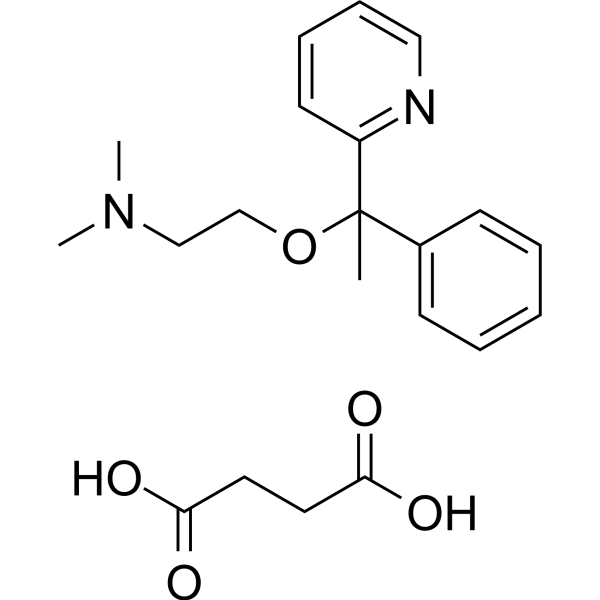
HY-A0069
Doxylamine succinate -

HY-B1589AR
Carbinoxamine maleate salt (Standard) -
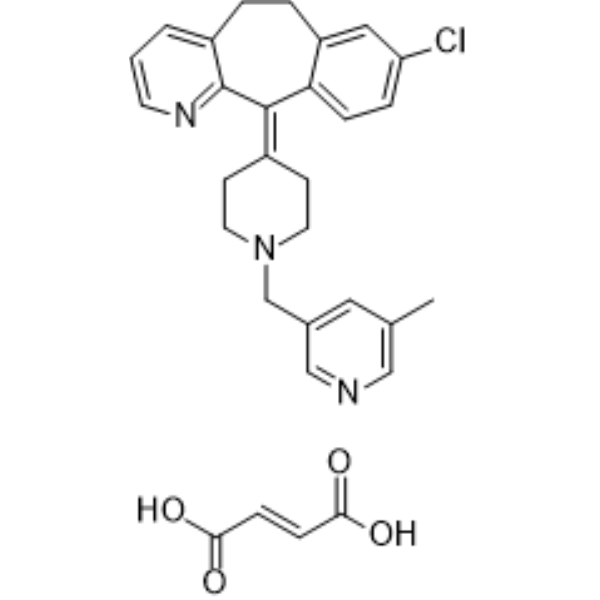
HY-13511A
Rupatadine Fumarate -
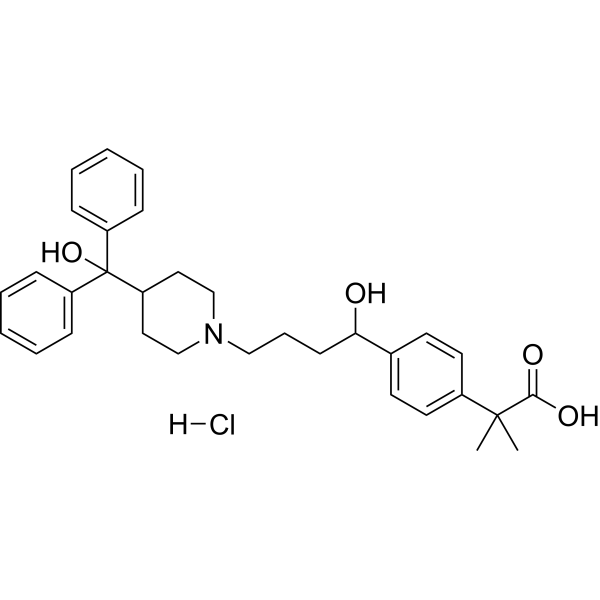
HY-B0801A
Fexofenadine hydrochloride -
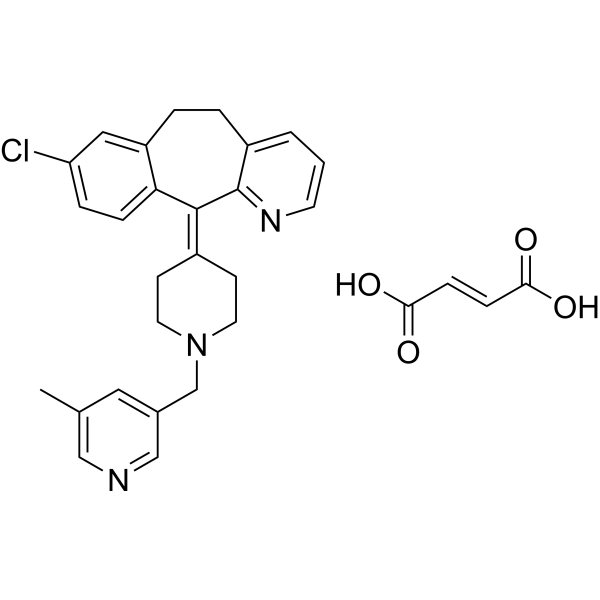
HY-13511AR
Rupatadine Fumarate (Standard) -

HY-B1895R
Levodropropizine (Standard) -
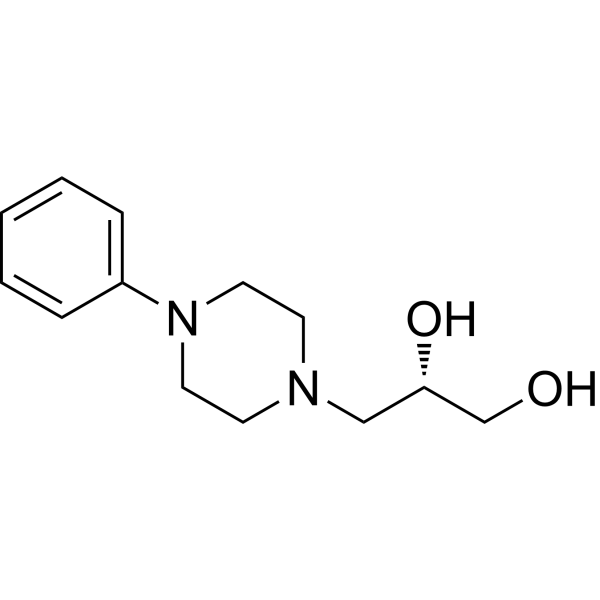
HY-B1895
Levodropropizine -
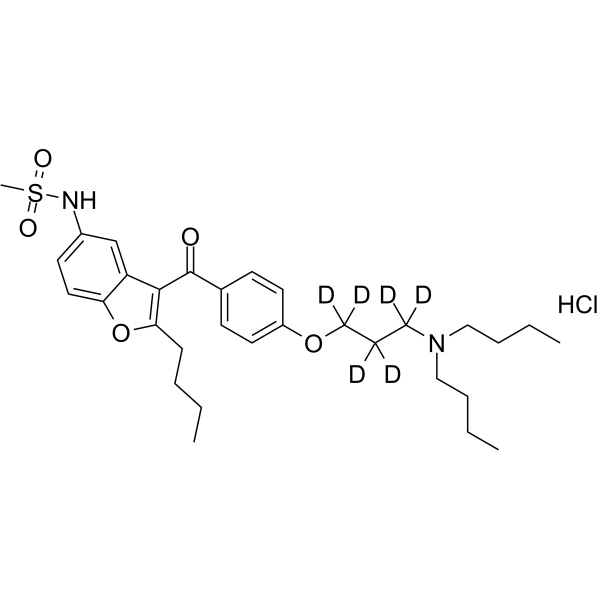
HY-A0016S
Dronedarone-d6 hydrochloride -
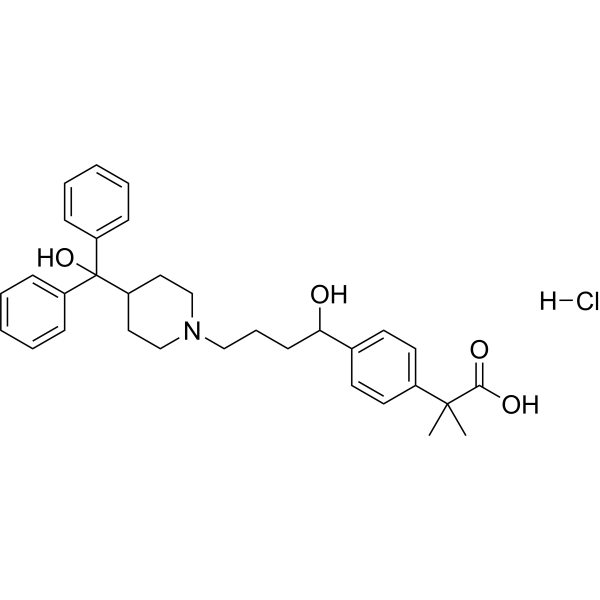
HY-B0801AR
Fexofenadine hydrochloride (Standard) -

HY-A0069R
Doxylamine succinate (Standard)
Publications Citing Use of MedChemExpress (MCE) Carbinoxamine maleate salt
MoreAll Histamine Receptor Isoforms
More

Biological Activity
Description
IC50 & Target
|
H1 Receptor |
In Vitro
Carbinoxamine maleate salt (72 h) potently inhibits infection of MDCK cells by multiple influenza A strains (H7N9, H1N1 2009, H1N1 1934, H3N2) and one influenza B strain (BY), with IC50 values ranging from 3.56 to 15.54 μM[1].
Carbinoxamine maleate salt (0-1000 μM; 72 h) exhibits low cytotoxicity against MDCK cells, with a CC50 of 297.30 μM, thus showing a high selection index against various influenza virus strains[1].
Carbinoxamine maleate salt (20 μM; 0-12 h) inhibits infection of MDCK cells by A/Shanghai/37T/2009 (H1N1) at the early stage of the viral life cycle; the inhibition rate reaches 99% when added at 0.5 h post-infection, and drops to 23% when added at 4 h post-infection[1].
Carbinoxamine maleate salt (48 h) specifically inhibits the entry of A/Shanghai/4664T/2013 (H7N9) pseudovirus into MDCK cells, with an IC50 of 8.98 μM, and does not affect the entry of other pseudoviruses or HIV-1[1].
Carbinoxamine maleate salt (1.6-100 μM; 1.5 h) does not inhibit the neuraminidase activity of A/Puerto Rico/8/1934 (H1N1) virus even at concentrations as high as 100 μM[1].
Carbinoxamine maleate salt (12 h) reduces viral RNA synthesis in a dose-dependent manner in MDCK cells infected with the A/Puerto Rico/8/1934 (H1N1) virus[1].
Carbinoxamine maleate salt (10 μM; 12 h) reduces the number of NP-positive MDCK cells infected with A/Puerto Rico/8/1934 (H1N1) virus[1].
MedChemExpress (MCE) has not independently confirmed the accuracy of these methods. They are for reference only.
-
Cell Line:Madin-Darby canine kidney (MDCK) cells
-
Concentration:0, 4, 8, 16, 31, 63, 125, 250, 500, 1000 µM
-
Incubation Time:72 h
-
Result:Exhibited low cytotoxicity to MDCK cells with a CC50 of 297.30 µM.
Resulted in selectivity index (SI = CC50/IC50) ranging from 19.13 (against B/Shanghai/2017(BY)) to 83.51 (against A/Shanghai/4664T/2013(H7N9)).
-
Cell Line:Madin-Darby canine kidney (MDCK) cells
-
Concentration:10 µM
-
Incubation Time:1 h (virus-compound co-incubation); 12 h (total culture)
-
Result:Markedly reduced the number of fluorescent-staining (NP-positive) cells compared to the PBS control.
In Vivo
MedChemExpress (MCE) has not independently confirmed the accuracy of these methods. They are for reference only.
-
Animal Model:C57BL/6 (female, 4-8 weeks old, specific-pathogen-free)[1]
-
Dosage:10 mg/kg; 1 mg/kg
-
Administration:i.p.; daily; 5 days
-
Result:Achieved a 77.7% survival rate at 14 days post-challenge.
Showed a survival rate higher than the PBS control (22.2%) but lower than the 10 mg/kg/day group.
Significantly reduced viral gene expression in lung tissues.
Lowered integrated optical density values of viral nucleoprotein in lung tissues.
Attenuated histopathological lung damage including reduced inflammatory cell infiltration, alveolar congestion, and alveolar wall thickening compared to the PBS control.


Chemical Information
-
CAS No. 3505-38-2
-
Appearance Solid
-
Molecular Weight 406.86
-
Formula C20H23ClN2O5
-
Color White to off-white
-
SMILES
ClC1=CC=C(C(C2=NC=CC=C2)OCCN(C)C)C=C1.O=C(O)/C=C\C(O)=O
-
Shipping
Room temperature in continental US; may vary elsewhere.
-
Storage
4°C, sealed storage, away from moisture
* In solvent : -80°C, 6 months; -20°C, 1 month (sealed storage, away from moisture)


Publications (1)
-
Journal Impact Factor
-
Most Recent
-
Dis Model Mech
A Drosophila chemical screen reveals targeting MEK and DGKa mitigates Ras-driven polarity-impaired tumour growth. [Abstract]2023 Mar 1;16(3):dmm049769. PMID: 36861754


Solvent & Solubility
In Vitro:
DMSO : 100 mg/mL (245.78 mM; Need ultrasonic; Hygroscopic DMSO has a significant impact on the solubility of product, please use newly opened DMSO)
H2O : 50 mg/mL (122.89 mM; Need ultrasonic)
Please refer to the solubility information to select the appropriate solvent. Once prepared, please aliquot and store the solution to prevent product inactivation from repeated freeze-thaw cycles.
Storage method and period of stock solution: -80°C, 6 months; -20°C, 1 month (sealed storage, away from moisture). When stored at -80°C, please use it within 6 months. When stored at -20°C, please use it within 1 month.
* Note: If you choose water as the stock solution, please dilute it to the working solution, then filter and sterilize it with a 0.22 μm filter before use.
Please refer to the solubility information to select the appropriate solvent. Once prepared, please aliquot and store the solution to prevent product inactivation from repeated freeze-thaw cycles.
Storage method and period of stock solution: -80°C, 6 months; -20°C, 1 month (sealed storage, away from moisture). When stored at -80°C, please use it within 6 months. When stored at -20°C, please use it within 1 month.
* Note: If you choose water as the stock solution, please dilute it to the working solution, then filter and sterilize it with a 0.22 μm filter before use.
Concentration (start) × Volume (start) = Concentration (final) × Volume (final)
In Vivo:
Select the appropriate dissolution method based on your experimental animal and administration route.
- For the following dissolution methods, please ensure to first prepare a clear stock solution using an In Vitro approach and then sequentially add co-solvents:
- To ensure reliable experimental results, the clarified stock solution can be appropriately stored based on storage conditions. As for the working solution for In Vivo experiments, it is recommended to prepare freshly and use it on the same day.
- The percentages shown for the solvents indicate their volumetric ratio in the final prepared solution. If precipitation or phase separation occurs during preparation, heat and/or sonication can be used to aid dissolution.
Add each solvent one by one: 10% DMSO 40% PEG300 5% Tween-80 45% Saline
Solubility: ≥ 2.5 mg/mL (6.14 mM); Clear solution
This protocol yields a clear solution of ≥ 2.5 mg/mL (saturation unknown).
Taking 1 mL working solution as an example, add 100 μL DMSO stock solution (25.0 mg/mL) to 400 μL PEG300, and mix evenly; then add 50 μL Tween-80 and mix evenly; then add 450 μL Saline to adjust the volume to 1 mL.
Preparation of Saline: Dissolve 0.9 g sodium chloride in ddH₂O and dilute to 100 mL to obtain a clear Saline solution.
Add each solvent one by one: 10% DMSO 90% (20% SBE-β-CD in Saline)
Solubility: ≥ 2.5 mg/mL (6.14 mM); Clear solution
This protocol yields a clear solution of ≥ 2.5 mg/mL (saturation unknown).
Taking 1 mL working solution as an example, add 100 μL DMSO stock solution (25.0 mg/mL) to 900 μL 20% SBE-β-CD in Saline, and mix evenly.
Preparation of 20% SBE-β-CD in Saline (4°C, storage for one week): 2 g SBE-β-CD powder is dissolved in 10 mL Saline, completely dissolve until clear.
For the following dissolution methods, please prepare the working solution directly:
It is recommended to prepare fresh solutions and use them promptly within a short period of time.
The percentages shown for the solvents indicate their volumetric ratio in the final prepared solution. If precipitation or phase separation occurs during preparation, heat and/or sonication can be used to aid dissolution.
Add each solvent one by one: PBS
Solubility: 100 mg/mL (245.78 mM); Clear solution; Need ultrasonic
In Vivo Dissolution Calculator
Please enter the basic information of animal experiments:
-
-
-
-
Recommended: Prepare an additional quantity of animals to account for potential losses during experiments.
Working solution concentration: 0.22 mg/mL
This product has good water solubility, please refer to the measured solubility data in water/PBS/Saline for details.


Purity & Documentation
-
Data Sheet (297 KB)
-
SDS (480 KB)
- English - EN (480 KB)
- Français - FR (480 KB)
- Deutsch - DE (480 KB)
- Norwegian - NO (480 KB)
- Español - ES (480 KB)
- Swedish - SV (480 KB)
- Italian - IT (480 KB)
- Korean - KR (480 KB)
- Portuguese - PT (480 KB)
-
Handling Instructions (2659 KB)
References


Complete Stock Solution Preparation Table
Please refer to the solubility information to select the appropriate solvent. Once prepared, please aliquot and store the solution to prevent product inactivation from repeated freeze-thaw cycles.
Storage method and period of stock solution: -80°C, 6 months; -20°C, 1 month (sealed storage, away from moisture). When stored at -80°C, please use it within 6 months. When stored at -20°C, please use it within 1 month.
| Optional Solvent | Concentration Solvent Mass | 1 mg | 5 mg | 10 mg | 25 mg |
|---|---|---|---|---|---|
| H2O / DMSO | 1 mM | 2.4578 mL | 12.2892 mL | 24.5785 mL | 61.4462 mL |
| 5 mM | 0.4916 mL | 2.4578 mL | 4.9157 mL | 12.2892 mL | |
| 10 mM | 0.2458 mL | 1.2289 mL | 2.4578 mL | 6.1446 mL | |
| 15 mM | 0.1639 mL | 0.8193 mL | 1.6386 mL | 4.0964 mL | |
| 20 mM | 0.1229 mL | 0.6145 mL | 1.2289 mL | 3.0723 mL | |
| 25 mM | 0.0983 mL | 0.4916 mL | 0.9831 mL | 2.4578 mL | |
| 30 mM | 0.0819 mL | 0.4096 mL | 0.8193 mL | 2.0482 mL | |
| 40 mM | 0.0614 mL | 0.3072 mL | 0.6145 mL | 1.5362 mL | |
| 50 mM | 0.0492 mL | 0.2458 mL | 0.4916 mL | 1.2289 mL | |
| 60 mM | 0.0410 mL | 0.2048 mL | 0.4096 mL | 1.0241 mL | |
| 80 mM | 0.0307 mL | 0.1536 mL | 0.3072 mL | 0.7681 mL | |
| 100 mM | 0.0246 mL | 0.1229 mL | 0.2458 mL | 0.6145 mL |
* Note: If you choose water as the stock solution, please dilute it to the working solution, then filter and sterilize it with a 0.22 μm filter before use.


Carbinoxamine maleate salt Related Classifications
HY-B1589A Related Classifications
 Powered by Bioz