



Doxylamine succinate

Based on 1 Customer Validation
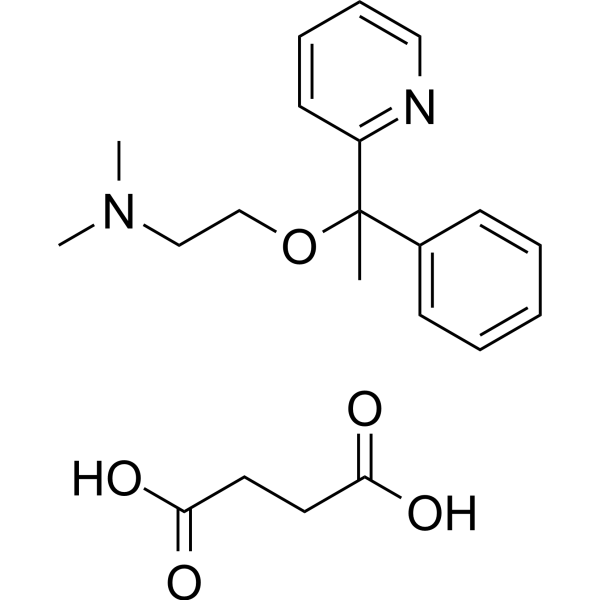
Doxylamine succinate is a first-generation antihistamine and acts as a histamine H1 receptor antagonist. Doxylamine succinate is orally active, possessing analgesic and hypnotic activities. Doxylamine succinate enhances the activities of CYP2B, CYP2A, CYP3A and thyroxine-glucuronosyltransferase via promoting substrate hydroxylation and thyroxine metabolic pathways. Doxylamine succinate decreases serum thyroxine (T4) level and elevates serum thyroid-stimulating hormone (TSH) level. Doxylamine succinate induces liver enlargement and increases the activities of hepatic microsomal cytochrome P450, cytochrome b5 and NADPH-cytochrome c reductase. Doxylamine succinate can be used for the research of nausea, allergy, insomnia.
For research use only. We do not sell to patients.
- Purity : 99.44%
- CAS No.: 562-10-7
- Formula: C21H28N2O5
- Molecular Weight:388.46
-
Storage:
4°C, sealed storage, away from moisture
* In solvent : -80°C, 6 months; -20°C, 1 month (sealed storage, away from moisture)

To place orders, for customer services and technical support, please contact: MedChemExpress USA
Tel: 609-228-6898 E-mail: [email protected] [email protected]


-
 Biological Activity
-
Chemical Information
-
Solvent & Solubility
- Protocols
- Purity & Documentation
- References
-
 Help & FAQs


-
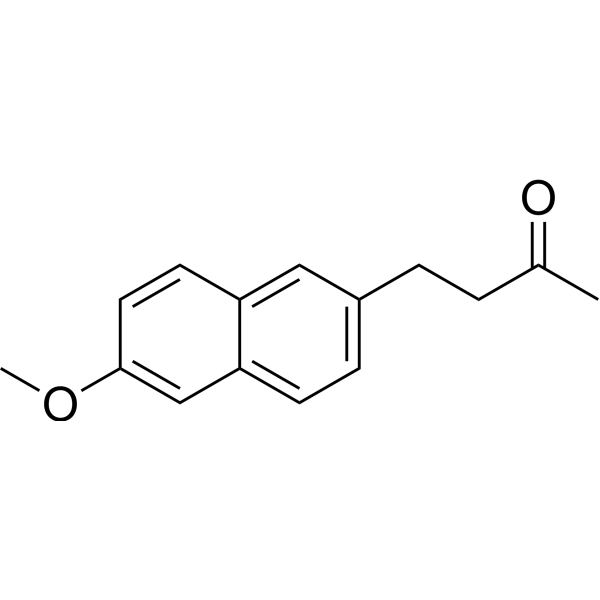
HY-B0559
NabumetoneCOX-2 Inhibitor -
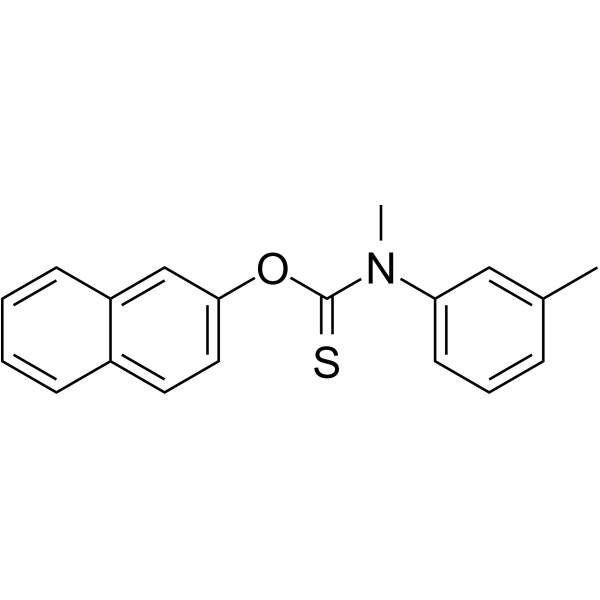
HY-B0370
TolnaftateFungal Inhibitor -

HY-B2153
Tetraethylenepentamine pentahydrochlorideCopper Chelator -
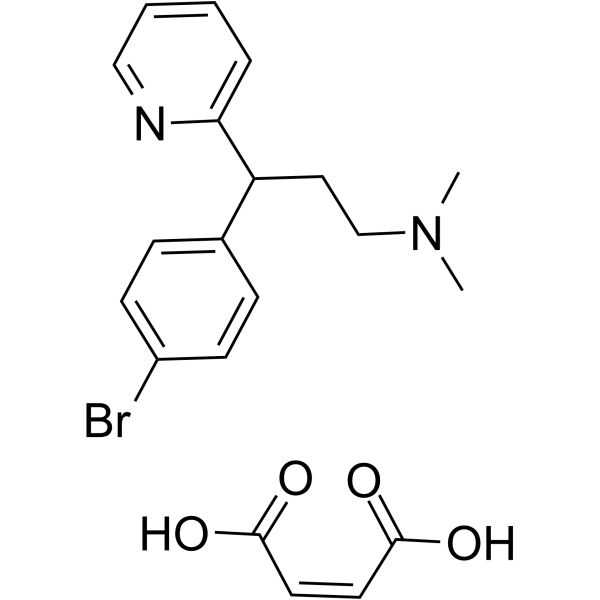
HY-B0480
Brompheniramine maleateAntihistamine Agent -
HY-B1589A
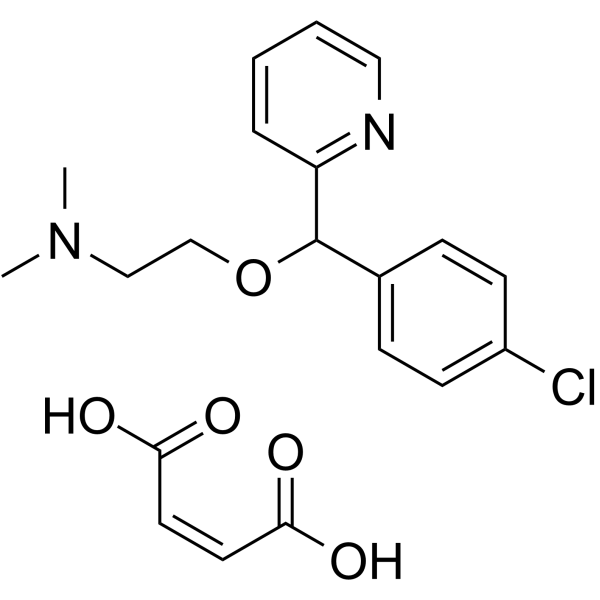
Carbinoxamine maleate saltHistamine H1 Receptor Antagonist -

HY-A0069R
Doxylamine succinate (Standard)Reference Standards -
HY-N0629
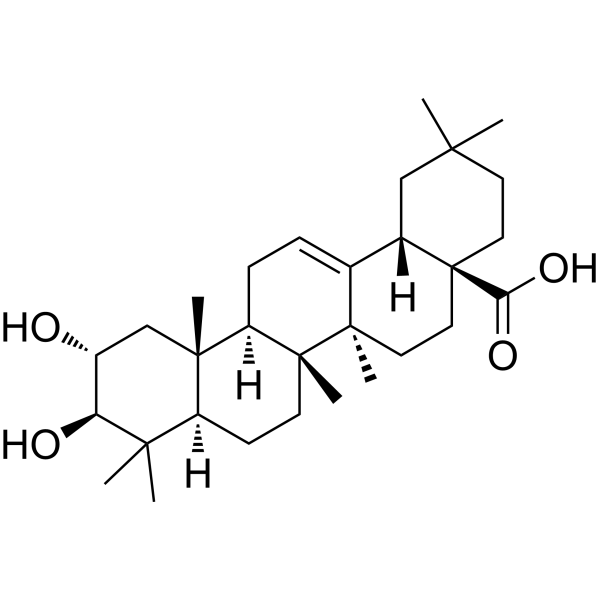
Maslinic acidBacterial Inhibitor -
HY-14648
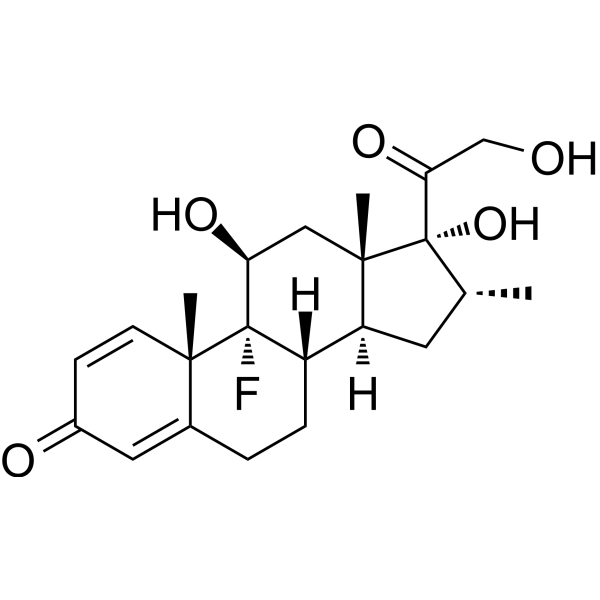
DexamethasoneGR Agonist -

HY-14648C
Dexamethasone (Water Soluble)Muscular Atrophy/Hypertension/Depression Modeling Reagent -
HY-17574
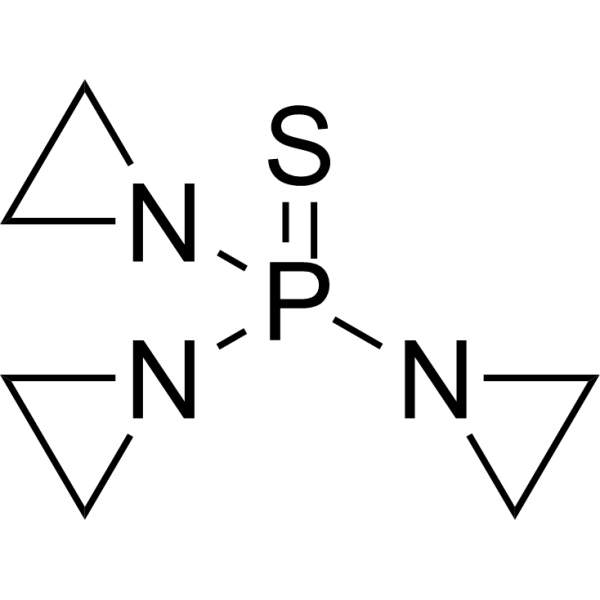
Thio-TEPABacterial Inhibitor -
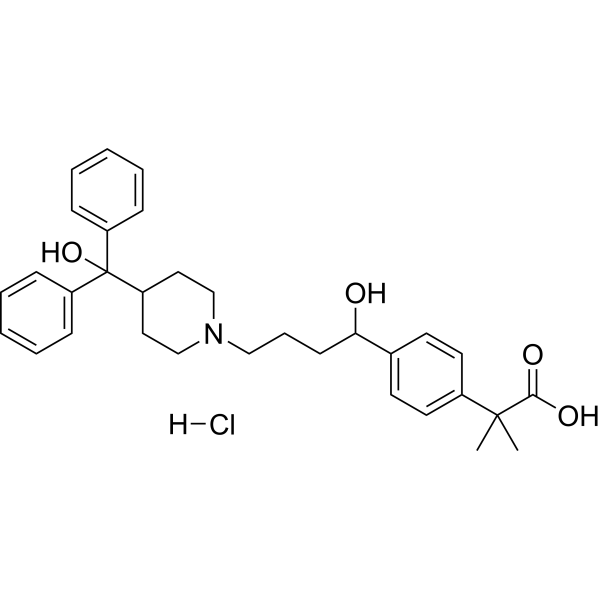
HY-B0801A
Fexofenadine hydrochlorideH1R Antagonist -
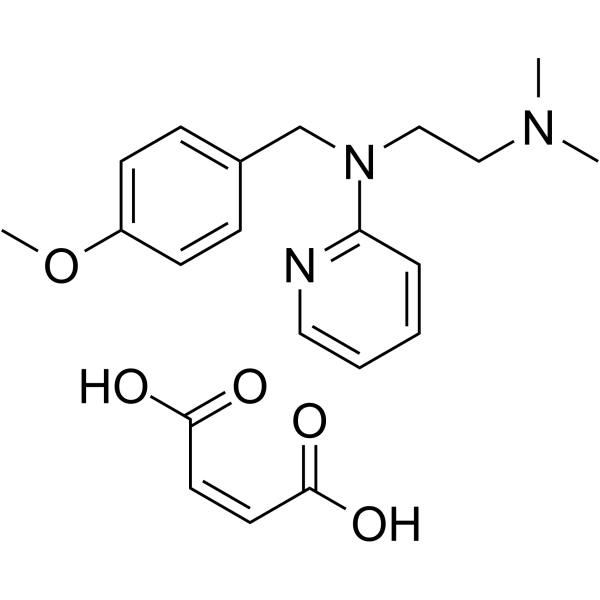
HY-B1281
Mepyramine maleatehistamine H1 receptor Antagonist, KCNQ channel Inhibitor
All Histamine Receptor Isoforms
More

Biological Activity
Description
IC50 & Target
[1]|
H1 Receptor |
Parmacokinetics
In Vivo
Doxylamine succinate (1-2 mg; 4% solution (25 μL); oral administration; intravenous injection; intranasal administration; single dose) shows a bioavailability of 70.8% via intranasal delivery in male Sprague-Dawley rats, with rapid absorption and no nasal epithelial damage[3].
MedChemExpress (MCE) has not independently confirmed the accuracy of these methods. They are for reference only.
-
Animal Model:B6C3F1/CrlBR VAF/Plus (male and female, 45-52 days old)[1]
-
Dosage:40, 375, 750, 1500 ppm (dietary, free base equivalent); 10, 86, 173, 349 mg/kg/day (male) (7 days); 9, 84, 166, 395 mg/kg/day (male) (15 days); 10, 102, 198, 416 mg/kg/day (female) (7 days); 12, 104, 204, 446 mg/kg/day (female) (15 days)
-
Administration:dietary; daily; 7 or 15 days
-
Result:Elevated liver weight significantly in a dose-related manner at ≥ 375 ppm in both sexes following 7‑day and 15‑day treatments.
Induced hepatic microsomal cytochrome P450 and overall hepatic metabolic activity dose‑dependently in all treated animals, strongly upregulating the functions of CYP2B, CYP3A and CYP2A subfamilies.
Increased thyroxine‑glucuronosyltransferase activity with obvious sex and dose differences, and raised adjusted total hepatic activity.
Disrupted thyroid endocrine homeostasis by elevating serum TSH, lowering serum T4 universally, and causing only slight T3 reduction in high‑dose females.
Clinical Trial
| NCT Number | Sponsor | Condition | Start Date |
Phase

|
|---|---|---|---|---|
| NCT01329991 | 2011-05 | PHASE1 |


Chemical Information
-
CAS No. 562-10-7
-
Appearance Solid
-
Molecular Weight 388.46
-
Formula C21H28N2O5
-
Color White to off-white
-
SMILES
O=C(O)CCC(O)=O.CC(C1=NC=CC=C1)(C2=CC=CC=C2)OCCN(C)C
-
Shipping
Room temperature in continental US; may vary elsewhere.
-
Storage
4°C, sealed storage, away from moisture
* In solvent : -80°C, 6 months; -20°C, 1 month (sealed storage, away from moisture)


Solvent & Solubility
In Vitro:
DMSO : ≥ 100 mg/mL (257.43 mM; Hygroscopic DMSO has a significant impact on the solubility of product, please use newly opened DMSO)
H2O : 50 mg/mL (128.71 mM; Need ultrasonic)
* "≥" means soluble, but saturation unknown.
Please refer to the solubility information to select the appropriate solvent. Once prepared, please aliquot and store the solution to prevent product inactivation from repeated freeze-thaw cycles.
Storage method and period of stock solution: -80°C, 6 months; -20°C, 1 month (sealed storage, away from moisture). When stored at -80°C, please use it within 6 months. When stored at -20°C, please use it within 1 month.
* Note: If you choose water as the stock solution, please dilute it to the working solution, then filter and sterilize it with a 0.22 μm filter before use.
Please refer to the solubility information to select the appropriate solvent. Once prepared, please aliquot and store the solution to prevent product inactivation from repeated freeze-thaw cycles.
Storage method and period of stock solution: -80°C, 6 months; -20°C, 1 month (sealed storage, away from moisture). When stored at -80°C, please use it within 6 months. When stored at -20°C, please use it within 1 month.
* Note: If you choose water as the stock solution, please dilute it to the working solution, then filter and sterilize it with a 0.22 μm filter before use.
Concentration (start) × Volume (start) = Concentration (final) × Volume (final)
In Vivo:
Select the appropriate dissolution method based on your experimental animal and administration route.
- For the following dissolution methods, please ensure to first prepare a clear stock solution using an In Vitro approach and then sequentially add co-solvents:
- To ensure reliable experimental results, the clarified stock solution can be appropriately stored based on storage conditions. As for the working solution for In Vivo experiments, it is recommended to prepare freshly and use it on the same day.
- The percentages shown for the solvents indicate their volumetric ratio in the final prepared solution. If precipitation or phase separation occurs during preparation, heat and/or sonication can be used to aid dissolution.
Add each solvent one by one: 10% DMSO 40% PEG300 5% Tween-80 45% Saline
Solubility: ≥ 2.5 mg/mL (6.44 mM); Clear solution
This protocol yields a clear solution of ≥ 2.5 mg/mL (saturation unknown).
Taking 1 mL working solution as an example, add 100 μL DMSO stock solution (25.0 mg/mL) to 400 μL PEG300, and mix evenly; then add 50 μL Tween-80 and mix evenly; then add 450 μL Saline to adjust the volume to 1 mL.
Preparation of Saline: Dissolve 0.9 g sodium chloride in ddH₂O and dilute to 100 mL to obtain a clear Saline solution.
Add each solvent one by one: 10% DMSO 90% (20% SBE-β-CD in Saline)
Solubility: ≥ 2.5 mg/mL (6.44 mM); Clear solution
This protocol yields a clear solution of ≥ 2.5 mg/mL (saturation unknown).
Taking 1 mL working solution as an example, add 100 μL DMSO stock solution (25.0 mg/mL) to 900 μL 20% SBE-β-CD in Saline, and mix evenly.
Preparation of 20% SBE-β-CD in Saline (4°C, storage for one week): 2 g SBE-β-CD powder is dissolved in 10 mL Saline, completely dissolve until clear.
For the following dissolution methods, please prepare the working solution directly:
It is recommended to prepare fresh solutions and use them promptly within a short period of time.
The percentages shown for the solvents indicate their volumetric ratio in the final prepared solution. If precipitation or phase separation occurs during preparation, heat and/or sonication can be used to aid dissolution.
Add each solvent one by one: PBS
Solubility: 100 mg/mL (257.43 mM); Clear solution; Need ultrasonic
In Vivo Dissolution Calculator
Please enter the basic information of animal experiments:
-
-
-
-
Recommended: Prepare an additional quantity of animals to account for potential losses during experiments.
Working solution concentration: 0.22 mg/mL
This product has good water solubility, please refer to the measured solubility data in water/PBS/Saline for details.


Purity & Documentation
-
Data Sheet (274 KB)
-
SDS (393 KB)
- English - EN (393 KB)
- Français - FR (393 KB)
- Deutsch - DE (393 KB)
- Norwegian - NO (393 KB)
- Español - ES (393 KB)
- Swedish - SV (393 KB)
- Italian - IT (393 KB)
- Korean - KR (393 KB)
- Portuguese - PT (393 KB)
-
Handling Instructions (2659 KB)
References
[1]. Bookstaff RC, et al. Effects of doxylamine succinate on thyroid hormone balance and enzyme induction in mice. Toxicol Appl Pharmacol. 1996;141(2):584-594. [Content Brief]
[2]. Nuangchamnong N, et al. Doxylamine succinate-pyridoxine hydrochloride (Diclegis) for the management of nausea and vomiting in pregnancy: an overview. Int J Womens Health. 2014;6:401-409. [Content Brief]
[3]. Pelser A, et al. Comparative pharmacokinetics of single doses of doxylamine succinate following intranasal, oral and intravenous administration in rats. Biopharm Drug Dispos. 2002;23(6):239-244. [Content Brief]


Complete Stock Solution Preparation Table
Please refer to the solubility information to select the appropriate solvent. Once prepared, please aliquot and store the solution to prevent product inactivation from repeated freeze-thaw cycles.
Storage method and period of stock solution: -80°C, 6 months; -20°C, 1 month (sealed storage, away from moisture). When stored at -80°C, please use it within 6 months. When stored at -20°C, please use it within 1 month.
| Optional Solvent | Concentration Solvent Mass | 1 mg | 5 mg | 10 mg | 25 mg |
|---|---|---|---|---|---|
| H2O / DMSO | 1 mM | 2.5743 mL | 12.8713 mL | 25.7427 mL | 64.3567 mL |
| 5 mM | 0.5149 mL | 2.5743 mL | 5.1485 mL | 12.8713 mL | |
| 10 mM | 0.2574 mL | 1.2871 mL | 2.5743 mL | 6.4357 mL | |
| 15 mM | 0.1716 mL | 0.8581 mL | 1.7162 mL | 4.2904 mL | |
| 20 mM | 0.1287 mL | 0.6436 mL | 1.2871 mL | 3.2178 mL | |
| 25 mM | 0.1030 mL | 0.5149 mL | 1.0297 mL | 2.5743 mL | |
| 30 mM | 0.0858 mL | 0.4290 mL | 0.8581 mL | 2.1452 mL | |
| 40 mM | 0.0644 mL | 0.3218 mL | 0.6436 mL | 1.6089 mL | |
| 50 mM | 0.0515 mL | 0.2574 mL | 0.5149 mL | 1.2871 mL | |
| 60 mM | 0.0429 mL | 0.2145 mL | 0.4290 mL | 1.0726 mL | |
| 80 mM | 0.0322 mL | 0.1609 mL | 0.3218 mL | 0.8045 mL | |
| 100 mM | 0.0257 mL | 0.1287 mL | 0.2574 mL | 0.6436 mL |
* Note: If you choose water as the stock solution, please dilute it to the working solution, then filter and sterilize it with a 0.22 μm filter before use.


Doxylamine succinate Related Classifications
HY-A0069 Related Classifications
 Powered by Bioz