14 Results for "

viral replication inhibition

" in MedChemExpress (MCE) Product Catalog:
Products (14)

14 Results for "viral replication inhibition" in MCE Product Catalog:

5
5 Cited Publications
Cat. No.: HY-120072
CAS No.: 1352879-65-2
Purity:  98.89%
Synonyms: PF-74
Target:  

HIV

Research Areas:  

Infection

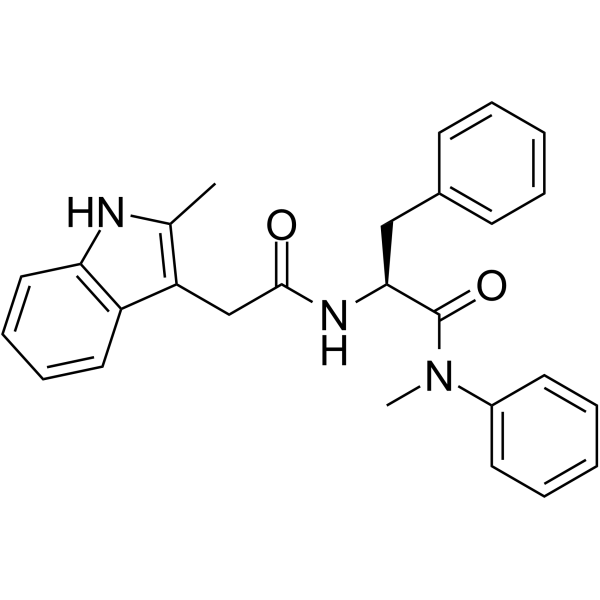
PF-3450074 (PF-74) is a specifical inhibitor of HIV-1 capsid protein (CA) and displays a broad-spectrum inhibition of HIV isolates with submicromolar potency (EC50=8-640 nM). PF-3450074 (PF-74) acts at an early stage of HIV-1 infection, inhibits viral replication by directly competing with the binding of CPSF6 and NUP153, and blocks the uncoating, assembly, and the reverse transcription steps of the viral life cycle . CPSF6: nuclear host factors cleavage and polyadenylation specific factor 6; NUP153: nucleoporin 153.
loading...
    loading...
Cat. No.: HY-137697D
Purity:  ≥98.0%
ddCTP trilithium solution (100 mM) is a chain-terminating dideoxynucleotide. ddCTP trilithium is a type of chain-terminating deoxynucleotide. ddCTP trilithium can be incorporated into the extension primer chain that lacks the 3'-hydroxyl group, thereby terminating primer extension, viral genome replication, and DNA synthesis. ddCTP trilithium can distinguish almost identical RNA through distinguishable extension products in primer extension inhibition experiments. ddCTP trilithium is the active metabolite of Zalcitabine (HY-17392), which can competitively inhibit HIV reverse transcriptase, terminate the synthesis of viral DNA chains, and thereby inhibit HIV replication .
loading...
    loading...
Cat. No.: HY-137697
CAS No.: 66004-77-1
ddCTP is a type of chain-terminating deoxynucleotide. ddCTP can be incorporated into the extension primer chain that lacks the 3'-hydroxyl group, thereby terminating primer extension, viral genome replication, and DNA synthesis. ddCTP can distinguish almost identical RNA through distinguishable extension products in primer extension inhibition experiments. ddCTP is the active metabolite of Zalcitabine (HY-17392), which can competitively inhibit HIV reverse transcriptase, terminate the synthesis of viral DNA chains, and thereby inhibit HIV replication .
loading...
    loading...
Cat. No.: HY-134922
CAS No.: 181373-35-3
Synonyms: REDD1 inducer-1
Target:  

Influenza Virus mTOR

Research Areas:  

Infection

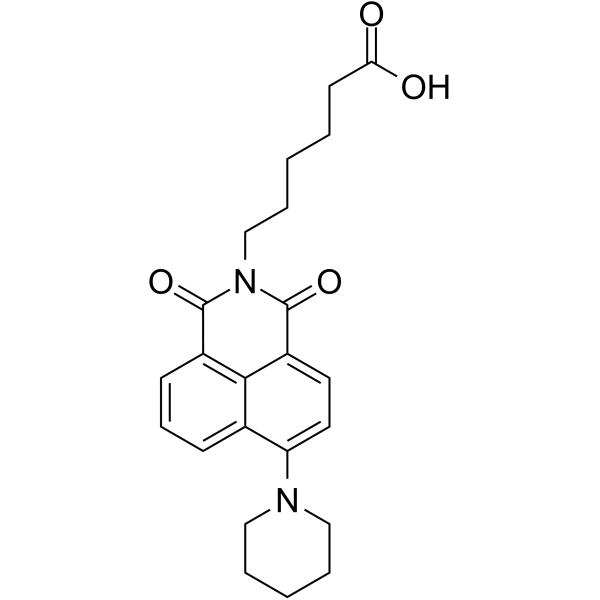
NS1-IN-1 (REDD1 inducer-1) is a naphthalimide compound and an NS1 inhibitor. NS1-IN-1 antagonizes influenza A virus NS1-mediated inhibition of host gene expression and induces REDD1 expression. NS1-IN-1 suppresses the mTORC1 signaling pathway via a TSC1-TSC2 dependent mechanism. NS1-IN-1 exhibits broad antiviral activity against influenza virus and vesicular stomatitis virus (VSV), with low toxicity .
loading...
    loading...
Cat. No.: HY-137697B
CAS No.: 93939-77-6
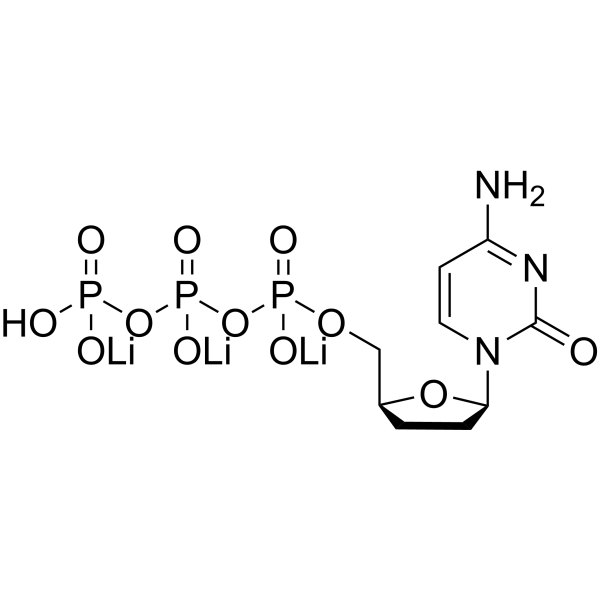
ddCTP trilithium is a type of chain-terminating deoxynucleotide. ddCTP trilithium can be incorporated into the extension primer chain that lacks the 3'-hydroxyl group, thereby terminating primer extension, viral genome replication, and DNA synthesis. ddCTP trilithium can distinguish almost identical RNA through distinguishable extension products in primer extension inhibition experiments. ddCTP trilithium is the active metabolite of Zalcitabine (HY-17392), which can competitively inhibit HIV reverse transcriptase, terminate the synthesis of viral DNA chains, and thereby inhibit HIV replication .
loading...
    loading...
Cat. No.: HY-128660
CAS No.: 2187352-99-2
Research Areas:  

Infection

RYL-634 is a potent broad-spectrum antiviral agent. RYL-634 exerts its antiviral effect by inhibiting the activity of human dihydroorotate dehydrogenase (HsDHODH) and blocking the supply of pyrimidines required for viral replication. RYL-634 shows significant inhibition against many viruses, with the EC50 values against DENV, ZIKV, EV71, HCV and HIV are 7 nM, 20 nM, 4 nM, 5 nM and 13 nM respectively. RYL-634 can be used for the study of various virus infection-related diseases .
loading...
    loading...
Cat. No.: HY-162154
CAS No.: 2738323-08-3
Target:  

SARS-CoV

Research Areas:  

Infection

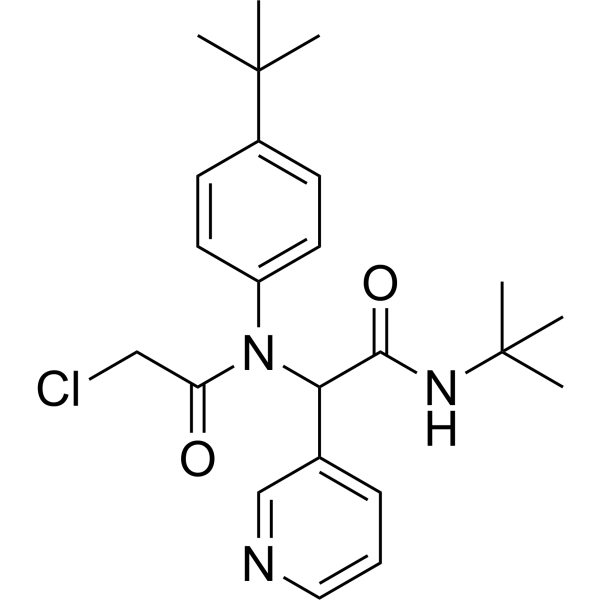
SARS-CoV-2-IN-75 (compound 13) is a SARS-CoV-2 inhibitor based on chloroacetamide inhibition. SARS-CoV-2-IN-75 inhibits cellular SARS-CoV-2 replication with an EC68 (half-log reduction in viral titer) of 3 μM .
loading...
    loading...
Cat. No.: HY-P11546
CAS No.: 1612249-42-9
Target:  

HCV

Research Areas:  

Infection

Antiviral agent 76 is an antiviral peptide containing azide groups, which has anti-hepatitis C virus (HCV) activity .
loading...
    loading...
Cat. No.: HY-175697
Glycosyltransferase-IN-2 (Compound 20) is a Glycosyltransferase inhibitor. Glycosyltransferase-IN-2 has a broad-spectrum anticoronavirus activity with IC50s of 11.3, 5.5 and ~16.2 μM for MHV, HCoV-NL63 and SARS-CoV-2, respectively. Glycosyltransferase-IN-2 interferes with the coronavirus infectivity, alters viral protein glycosylation with inhibition of interaction with the ACE2 receptor or SC-VLP secretion, and inhibits RNA replication. Glycosyltransferase-IN-2 can be used for coronavirus infections research .
loading...
    loading...
Cat. No.: HY-137697A
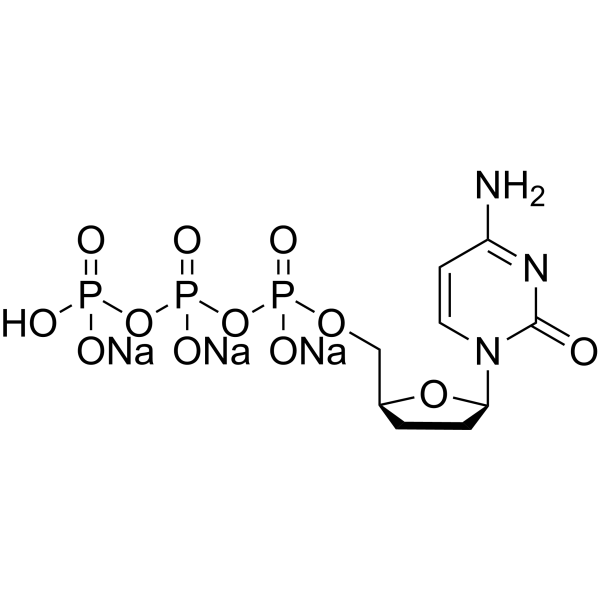
ddCTP tetrasodium is a type of chain-terminating deoxynucleotide. ddCTP tetrasodium can be incorporated into the extension primer chain that lacks the 3'-hydroxyl group, thereby terminating primer extension, viral genome replication, and DNA synthesis. ddCTP tetrasodium can distinguish almost identical RNA through distinguishable extension products in primer extension inhibition experiments. ddCTP tetrasodium is the active metabolite of Zalcitabine (HY-17392), which can competitively inhibit HIV reverse transcriptase, terminate the synthesis of viral DNA chains, and thereby inhibit HIV replication .
loading...
    loading...
Cat. No.: HY-183592
Research Areas:  

Infection

Anti-virus agent 2 is an orally active and selective anti-orthopoxvirus (poxvirus) agent, with EC50 values of 6.1 μM and 47.1 μM against VTT-Fluc and MPXV clade IIb, respectively. Anti-virus agent 2 covalently binds to viral A17L protein and mRNA methyltransferase, blocks viral membrane fusion and intracellular biosynthesis, and acts on multiple stages of the viral replication cycle. Anti-virus agent 2 achieves viral inhibition in nude mouse models. Anti-virus agent 2 can be used for the research of orthopoxvirus infections such as monkeypox and smallpox .
loading...
    loading...
Cat. No.: HY-L044
590 compounds

Nucleoside and nucleotide analogues are synthetic, chemically modified compounds that have been developed to mimic their physiological counterparts in order to exploit cellular metabolism and subsequently be incorporated into DNA and RNA to inhibit cellular division and viral replication. In addition to their incorporation into nucleic acids, nucleoside and nucleotide analogues can interact with and inhibit essential enzymes such as human and viral polymerases (that is, DNA-dependent DNA polymerases, RNA-dependent DNA polymerases or RNA-dependent RNA polymerases), kinases, ribonucleotide reductase, DNA methyltransferases, purine and pyrimidine nucleoside phosphorylase and thymidylate synthase. These actions of nucleoside and nucleotide analogues have potential therapeutic benefits — for example, in the inhibition of cancer cell growth, the inhibition of viral replication as well as other indications.

MCE offers a unique collection of 590 nucleotide compounds including nucleotide, nucleoside and their structural analogues. MCE Nucleotide Compound Library is a useful tool to discover anti-cancer and antiviral drugs for high throughput screening (HTS) and high content screening (HCS).

Cat. No.: HY-126120
CAS No.: 154612-31-4
Target:  

HIV HIV Protease

Research Areas:  

Infection

BILA 1906 BS is a HIV protease inhibitor. BILA 1906 BS prevents HIV-1 replication via inhibition of viral protease-mediated cleavage of Gag and Gag-Pol polyprotein precursors during virion maturation. BILA 1906 BS blocks maturation of p24 proteins in wild-type HIV-1, impairing polyprotein processing and viral maturation. BILA 1906 BS can be used for the research of human immunodeficiency virus type 1 (HIV-1) infection .
loading...
    loading...
Cat. No.: HY-W816575
CAS No.: 127471-94-7
Target:  

RAR/RXR SARS-CoV

Research Areas:  

Infection

MDI-403 is a retinoic acid receptor (RAR) agonist with an EC50 value of less than 1 μM. MDI-403 exhibits significant antiviral activity against SARS-CoV-2, and can dose-dependently inhibit the expression of viral nucleoprotein (NP) and reduce the proportion of infected cells. MDI-403 mainly acts during the virus invasion stage. MDI-403 can be used in research on anti-SARS-CoV-2 .
loading...
    loading...
  • 1

