1. 疾患モデリングル製品 GPCR/G Protein Neuronal Signaling
  2. Immunology and Inflammatory Disease Models Digestive System Disease Models Cholecystokinin Receptor
  3. Pancreatitis Models Pancreatic Disease Models
  4. Caerulein

セルレイン  (Synonyms: Ceruletide; Caerulein; Cerulein)

製品番号: HY-A0190 純度: 99.74%
COA 取扱説明書 Technical Support

Caerulein is a decapeptide and a potent cholecystokinin receptor agonist. Caerulein is a safe and effective cholecystokinetic agent with a direct spasmogenic effect on the gallbladder muscle and bile ducts.

商品は「研究用試薬」です。人や動物の医療用・臨床診断用・食品用の製品ではありません。
研究用途以外に使用した場合、当社は一切の責任を負いかねます。

カスタムペプチド

CAS 番号 : 17650-98-5

容量 価格(税別) 在庫状況 数量
100 μg $40 在庫あり
500 μg $70 在庫あり
1 mg $110 在庫あり
5 mg $420 在庫あり
10 mg $650 在庫あり
25 mg $1100 在庫あり
50 mg $1650 在庫あり
100 mg $2400 在庫あり
200 mg   お問い合わせ  
500 mg   お問い合わせ  

* アイテムを追加する前、数量をご選択ください

This product is a controlled substance and not for sale in your territory.

カスタマーレビュー

Based on 132 publication(s) in Google Scholar

Other Forms of Caerulein:

Top Publications Citing Use of Products

顧客検証

RT-PCR
WB

    Caerulein purchased from MedChemExpress. Usage Cited in: Exp Cell Res. 2019 Nov 1;384(1):111606.  [Abstract]

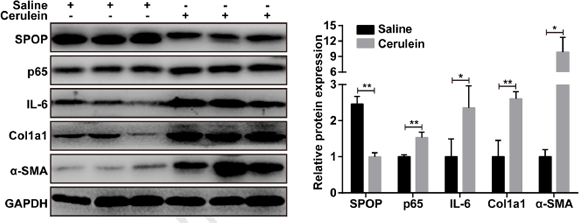
    Decreased SPOP expression in cerulein-induced CP mice. Pancreatic SPOP, NF-κB/p65 and downstream proteins are determined through western blotting. Protein levels are normalized to the GAPDH loading control. Densitometry analysis is performed using the ImageJ software.

    Caerulein purchased from MedChemExpress. Usage Cited in: Can J Physiol Pharmacol. 2019 Jan;97(1):15-22.  [Abstract]

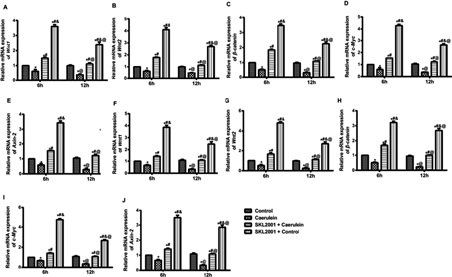
    Expressions of Wnt/β-Catenin pathway-related genes in pancreatic and small intestinal tissues in each group (control, Caerulein, SKL2001+Caerulein, SKL2001+control). Relative mRNA expressions of Wnt1 (A, F), Wnt2 (B, G), β-catenin (C, H), c-Myc (D, I) and Axin-2 (E, J) in pancreatic and small intestinal tissues in each group detected by qRT-PCR.

    Caerulein purchased from MedChemExpress. Usage Cited in: Am J Transl Res. 2018 Feb 15;10(2):402-410.  [Abstract]

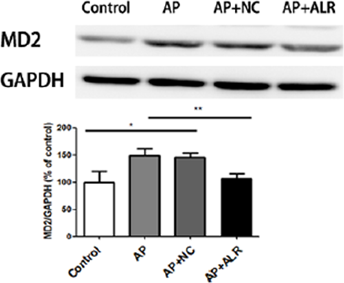
    Cerulein exposure increases the protein expression of MD2, while ALR reduces the Cerulein-induced upregulation in MD2 protein expression.

    Cholecystokinin Receptor アイソフォーム固有の製品をすべて表示:

    • 生物活性

    • プロトコル

    • 純度とドキュメンテーション

    • 参考文献

    • カスタマーレビュー

    製品説明

    Caerulein is a decapeptide and a potent cholecystokinin receptor agonist. Caerulein is a safe and effective cholecystokinetic agent with a direct spasmogenic effect on the gallbladder muscle and bile ducts[1].

    IC50 & Target

    Cholecystokinin receptor[4]

    体外実験

    Caerulein is similar chemically and biologically to the human gastrointestinal hormones cholecystokinin-pancreozymin (CCK) and gastrin II. Caerulein stimulates gallbladder contraction, pancreatic exocrine secretion, gastric secretion, and motility in the distal duodenum, jejunum, ileum and colon, while delaying gastric emptying and inhibiting motility in the proximal duodenum[1]. Caerulein in supramaximal but not in physiological doses activates NF-kappaB/Rel in vitro. This activation may induce a self-defending genetic program before the onset of cellular injury, which may prevent higher degrees of damage of pancreatic acinar cells after secretagogue hyperstimulation[2].

    MedChemExpress (MCE) has not independently confirmed the accuracy of these methods. They are for reference only.

    体内実験

    Note:
    Please do not refer to only one article to determine the experimental conditions. It is recommended to determine the optimal experimental conditions (animal strain, age, dosage, frequency and cycle, detection time and indicators, etc.) through preliminary experiments before the formal experiment.

    Caerulein (0.4-0.5 μg/kg, i.v.; 3-4 μg/kg, s.c.) results in emesis and evacuation of the bowel in the intact conscious dog, and recovery is complete 15-30 min after i. v. administration and 2-4 hr after s.c. administration. Caerulein (5-15 ng/kg, i.v.) shows a marked spasmogenic effect on the pylorus of rats. Caerulein also reduces blood pressure in anesthetized dogs[1].
    Caerulein serum bile acid (SBA) stimulation circumvents exogenous and endogenous influences associated with postprandial (PP) SBA stimulation. Caerulein SBA stimulation may perform as well as PP SBA stimulation in dogs with portosystemic shunt (PSS) and be more sensitive for the detection of hepatic dysfunction in dogs with upper respiratory disease (URD)[3].
    Caerulein can be used to induce pancreatitis models. When S35-labeled Caerulein is administered by intramuscular injection to rats, rabbits, and mice, the radioactivity in the blood of rats and rabbits reaches its peak within 5 and 15 minutes, respectively, followed by a rapid decline. Acute toxicity studies in mice show that the intravenous LD50 value for Caerulein is 1012 mg/kg[4][5]

    Induction of Acute Pancreatitis[6][7][8]
    Background
    Caerulein acts on CCK receptors, which are often expressed on various species of pancreatic acinar cells. Caerulein induces dysregulation of the production and secretion of digestive enzymes, leading to cytoplasmic vacuolization and the death of acinar cells, edema formation, and an infiltration of inflammatory cells into the pancreas.
    Specific Modeling Methods
    1. Mice: C57Bl/6n mice • 8-12 week-old
    Administration: Caerulein 50 μg/kg • i.p. • 8 hourly, total 8 times;
    2. Mice: C57BL6/J mice • male • 6-8 week-old
    Administration: Caerulein 100 μg/kg plus LPS (5 mg/kg, i.p. immediately after the last injection of Caerulein) • i.p. • 10 hourly, total 10 times;
    or Caerulein (50 μg/kg, 7 hourly, total 7 times) plus LPS (10 mg/kg, once) • i.p.
    Note
    (1) Cerulein induces rapid pancreatitis and rapid spontaneous recovery within one week in mammals. Therefore, mice are usually euthanized within 12 h after the first Caerulein injection.
    Modeling Indicators
    Molecular changes: Increased serum amylase, serum lipase, TNF-α, and IL-1β level.
    Histology analysis: Pancreatic edema, inflammatory infiltration, and acinar cell necrosis (H&E staining).
    Correlated Product(s): Lipopolysaccharides (HY-D1056)

    Induction of Chronic Pancreatitis[9]
    Background
    Chronic pancreatitis (CP) model can be established by repeated injection of mice with Caerulein. Histologic characteristics of chronic pancreatitis include inflammatory infiltrates, fibrosis, acinar cell atrophy, duct distortion, and squamous metaplasia of the duct epithelium.
    Specific Modeling Methods
    Mice: C57BL/6 • female • 6 week-old
    Administration: Caerulein 50 μg/kg • i.p. • 3 days per week, for a total of 4 weeks.
    Note
    Mice were sacrificed 3 days after the last injection.
    Modeling Indicators
    Histology analysis: Glandular atrophy, infiltration of immune cells and distorted and/or blocked ducts.
    Correlated Product(s): Pevonedistat (HY-70062)

    MedChemExpress (MCE) has not independently confirmed the accuracy of these methods. They are for reference only.

    分子量

    1352.41

    分子式

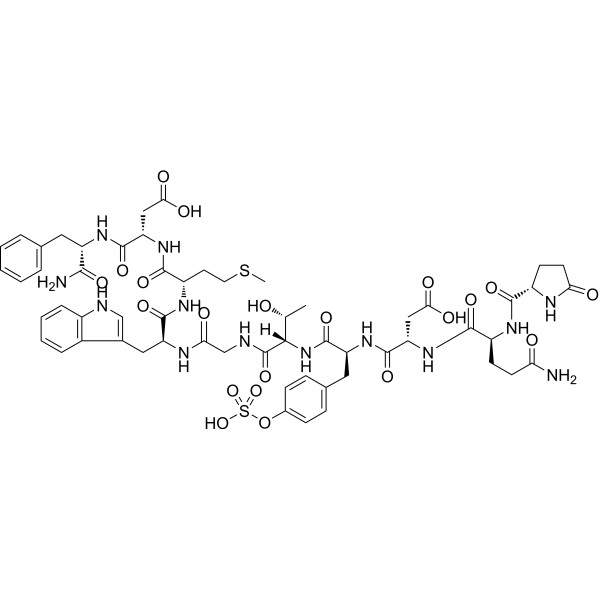
    C58H73N13O21S2

    CAS 番号
    Appearance

    Solid

    Color

    White to off-white

    Sequence

    {pGlu}-Gln-Asp-Tyr(SO3H)-Thr-Gly-Trp-Met-Asp-Phe-NH2

    Sequence Shortening

    {pGlu}-QD-Y(SO3H)-TGWMDF-NH2

    Structure Classification
    Initial Source

    the skin of a tropical frog

    輸送条件

    Room temperature in continental US; may vary elsewhere.

    保管条件
    Sealed storage, away from moisture
    Powder -80°C 2 years
      -20°C 1 year
    In solvent -80°C 6 months
      -20°C 1 month
    溶剤 & 溶解度
    体外: 

    DMSO : 100 mg/mL (73.94 mM; Need ultrasonic; Hygroscopic DMSO has a significant impact on the solubility of product, please use newly opened DMSO)

    DMF : 16.67 mg/mL (12.33 mM; Need ultrasonic)

    H2O : 2.5 mg/mL (1.85 mM; Need ultrasonic)

    Preparing
    Stock Solutions
    Concentration Solvent Mass 1 mg 5 mg 10 mg
    1 mM 0.7394 mL 3.6971 mL 7.3942 mL
    5 mM 0.1479 mL 0.7394 mL 1.4788 mL
    10 mM 0.0739 mL 0.3697 mL 0.7394 mL
    View the Complete Stock Solution Preparation Table

    * Please refer to the solubility information to select the appropriate solvent. Once prepared, please aliquot and store the solution to prevent product inactivation from repeated freeze-thaw cycles.
    Storage method and period of stock solution: -80°C, 6 months; -20°C, 1 month (sealed storage, away from moisture). When stored at -80°C, please use it within 6 months. When stored at -20°C, please use it within 1 month.

    * Note: If you choose water as the stock solution, please dilute it to the working solution, then filter and sterilize it with a 0.22 μm filter before use.

    • Molarity Calculator

    • Dilution Calculator

    Mass (g) = Concentration (mol/L) × Volume (L) × Molecular Weight (g/mol)

    Mass
    =
    Concentration
    ×
    Volume
    ×
    Molecular Weight *

    Concentration (start) × Volume (start) = Concentration (final) × Volume (final)

    一般には略語で表示されます:C1V1 = C2V2

    濃度 (開始)

    C1

    ×
    体積 (開始)

    V1

    =
    濃度 (終了)

    C2

    ×
    体積 (終了)

    V2

    体内:

    Select the appropriate dissolution method based on your experimental animal and administration route.

    For the following dissolution methods, please ensure to first prepare a clear stock solution using an In Vitro approach and then sequentially add co-solvents:
    To ensure reliable experimental results, the clarified stock solution can be appropriately stored based on storage conditions. As for the working solution for in vivo experiments, it is recommended to prepare freshly and use it on the same day.
    The percentages shown for the solvents indicate their volumetric ratio in the final prepared solution. If precipitation or phase separation occurs during preparation, heat and/or sonication can be used to aid dissolution.

    • Protocol 1

      Add each solvent one by one:  10% DMSO    40% PEG300    5% Tween-80    45% Saline

      Solubility: ≥ 2.5 mg/mL (1.85 mM); Clear solution

      This protocol yields a clear solution of ≥ 2.5 mg/mL (saturation unknown).

      Taking 1 mL working solution as an example, add 100 μL DMSO stock solution (25.0 mg/mL) to 400 μL PEG300, and mix evenly; then add 50 μL Tween-80 and mix evenly; then add 450 μL Saline to adjust the volume to 1 mL.

      Preparation of Saline: Dissolve 0.9 g sodium chloride in ddH₂O and dilute to 100 mL to obtain a clear Saline solution.
    • Protocol 2

      Add each solvent one by one:  10% DMSO    90% (20% SBE-β-CD in Saline)

      Solubility: ≥ 2.5 mg/mL (1.85 mM); Clear solution

      This protocol yields a clear solution of ≥ 2.5 mg/mL (saturation unknown).

      Taking 1 mL working solution as an example, add 100 μL DMSO stock solution (25.0 mg/mL) to 900 μL 20% SBE-β-CD in Saline, and mix evenly.

      Preparation of 20% SBE-β-CD in Saline (4°C, storage for one week): 2 g SBE-β-CD powder is dissolved in 10 mL Saline, completely dissolve until clear.

    For the following dissolution methods, please prepare the working solution directly. It is recommended to prepare fresh solutions and use them promptly within a short period of time.
    The percentages shown for the solvents indicate their volumetric ratio in the final prepared solution. If precipitation or phase separation occurs during preparation, heat and/or sonication can be used to aid dissolution.

    • Protocol 1

      Add each solvent one by one:  PBS

      Solubility: 30.3 mg/mL (22.40 mM); Clear solution; Need ultrasonic

    • Protocol 2

      Add each solvent one by one:  Saline

      Solubility: 2 mg/mL (1.48 mM); Clear solution; Need ultrasonic and adjust pH to 12 with 1M NaOH

    In Vivo Dissolution Calculator
    Please enter the basic information of animal experiments:

    Dosage

    mg/kg

    Animal weight
    (per animal)

    g

    Dosing volume
    (per animal)

    μL

    Number of animals

    Recommended: Prepare an additional quantity of animals to account for potential losses during experiments.
    Please enter your animal formula composition:
    %
    DMSO +
    +
    %
    Tween-80 +
    %
    Saline
    Recommended: Keep the proportion of DMSO in working solution below 2% if your animal is weak.
    The co-solvents required include: DMSO, . All of co-solvents are available by MedChemExpress (MCE). , Tween 80. All of co-solvents are available by MedChemExpress (MCE).
    Calculation results:
    Working solution concentration: mg/mL
    Method for preparing stock solution: mg drug dissolved in μL  DMSO (Stock solution concentration: mg/mL).

    *In solvent : -80°C, 6 months; -20°C, 1 month (sealed storage, away from moisture)

    The concentration of the stock solution you require exceeds the measured solubility. The following solution is for reference only. If necessary, please contact MedChemExpress (MCE).
    Method for preparing in vivo working solution for animal experiments: Take μL DMSO stock solution, add μL . μL , mix evenly, next add μL Tween 80, mix evenly, then add μL Saline.
     If the continuous dosing period exceeds half a month, please choose this protocol carefully.
    Please ensure that the stock solution in the first step is dissolved to a clear state, and add co-solvents in sequence. You can use ultrasonic heating (ultrasonic cleaner, recommended frequency 20-40 kHz), vortexing, etc. to assist dissolution.
    純度とドキュメンテーション

    純度: 99.96%

    参考文献
    動物実験
    [3]

    Dogs[3]
    All dogs undergo serum bile acid (SBA) stimulation with food (<5 kg/body weight [BW] 2 teaspoons, >5 kg BW 2 tablespoons) or 0.3 μg/kg BW Caerulein IM, respectively, on consecutive days. A diet of moderate protein content and with an increased concentration of fiber is chosen to minimize metabolic complications such as hepatic encephalopathy. Before each test, the dogs are fasted for 12 hours. Blood samples are drawn at baseline, 60 and 120 minutes after feeding, and 20, 30, and 40 minutes postinjection, respectively. The blood samples are collected in plain tubes and left to clot; they are then centrifuged at 6,500 ×g for 1 minute, and the serum is used to measure SBA by a colorimetric test with endpoint determination[3].

    MedChemExpress (MCE) はこれらの方法の精度を確認していません。 こちらは参照専用です。

    参考文献

    Complete Stock Solution Preparation Table

    * Please refer to the solubility information to select the appropriate solvent. Once prepared, please aliquot and store the solution to prevent product inactivation from repeated freeze-thaw cycles.
    Storage method and period of stock solution: -80°C, 6 months; -20°C, 1 month (sealed storage, away from moisture). When stored at -80°C, please use it within 6 months. When stored at -20°C, please use it within 1 month.

    Optional Solvent Concentration Solvent Mass 1 mg 5 mg 10 mg 25 mg
    H2O / DMF / DMSO 1 mM 0.7394 mL 3.6971 mL 7.3942 mL 18.4855 mL
    DMF / DMSO 5 mM 0.1479 mL 0.7394 mL 1.4788 mL 3.6971 mL
    10 mM 0.0739 mL 0.3697 mL 0.7394 mL 1.8486 mL
    DMSO 15 mM 0.0493 mL 0.2465 mL 0.4929 mL 1.2324 mL
    20 mM 0.0370 mL 0.1849 mL 0.3697 mL 0.9243 mL
    25 mM 0.0296 mL 0.1479 mL 0.2958 mL 0.7394 mL
    30 mM 0.0246 mL 0.1232 mL 0.2465 mL 0.6162 mL
    40 mM 0.0185 mL 0.0924 mL 0.1849 mL 0.4621 mL
    50 mM 0.0148 mL 0.0739 mL 0.1479 mL 0.3697 mL
    60 mM 0.0123 mL 0.0616 mL 0.1232 mL 0.3081 mL

    * Note: If you choose water as the stock solution, please dilute it to the working solution, then filter and sterilize it with a 0.22 μm filter before use.

    • No file chosen (Maximum size is: 1024 Kb)
    • If you have published this work, please enter the PubMed ID.
    • Your name will appear on the site.
    • Molarity Calculator

    • Dilution Calculator

    The molarity calculator equation

    Mass (g) = Concentration (mol/L) × Volume (L) × Molecular Weight (g/mol)

    質量   濃度   体積   分子量 *
    = × ×

    The dilution calculator equation

    Concentration (start) × Volume (start) = Concentration (final) × Volume (final)

    一般には略語で表示されます:C1V1 = C2V2

    濃度 (開始) × 体積 (開始) = 濃度 (終了) × 体積 (終了)
    × = ×
    C1   V1   C2   V2
    Help & FAQs
    • Do most proteins show cross-species activity?

      Species cross-reactivity must be investigated individually for each product. Many human cytokines will produce a nice response in mouse cell lines, and many mouse proteins will show activity on human cells. Other proteins may have a lower specific activity when used in the opposite species.

    最近チェックした製品:

    オンラインお問い合わせ

    Your information is safe with us. * Required Fields.

    製品名


    カスタマ需要量 *

    お名前 *


    タイトル

    メールアドレス *


    電話番号 *

    デパートメント


    組纖名 *

    市区町村

    都道府県

    国或いは地域 *


    必ず会社名を記載ください。個人への返信は行いません。

    備考

    バルクお問い合わせ

    Inquiry Information

    製品名:
    Caerulein
    製品番号:
    HY-A0190
    数量:
    MCE 日本正規代理店: