



Idarubicin hydrochloride
Based on 19 publication(s) in Google Scholar
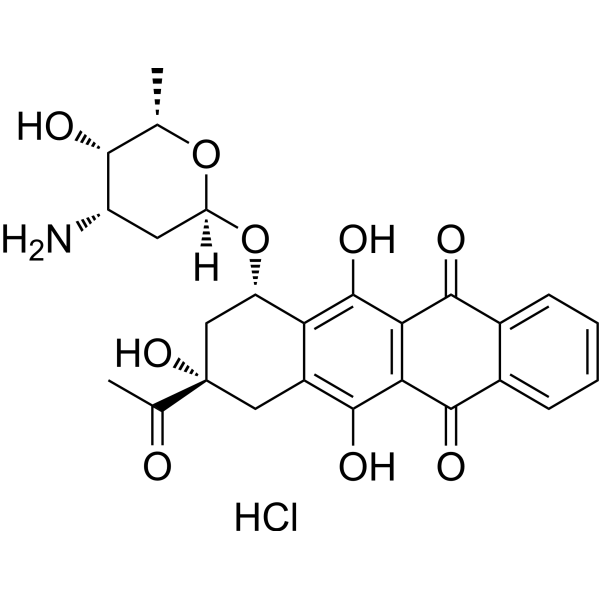
Idarubicin hydrochloride is an anthracycline antileukemic agent. It inhibits the topoisomerase II interfering with the replication of DNA and RNA transcription. Idarubicin hydrochloride inhibits the growth of bacteria and yeasts.
For research use only. We do not sell to patients.
- Purity : 99.94%
- CAS No.: 57852-57-0
- Formula: C26H28ClNO9
- Molecular Weight:533.95
-
Storage:
4°C, sealed storage, away from moisture and light
* In solvent : -80°C, 1 year; -20°C, 6 months (sealed storage, away from moisture and light)

To place orders, for customer services and technical support, please contact: MedChemExpress USA
Tel: 609-228-6898 E-mail: [email protected] [email protected]


-
 Biological Activity
-
Chemical Information
-
Solvent & Solubility
- Protocol
- Purity & Documentation
- References
-
 Help & FAQs


-
HY-13062
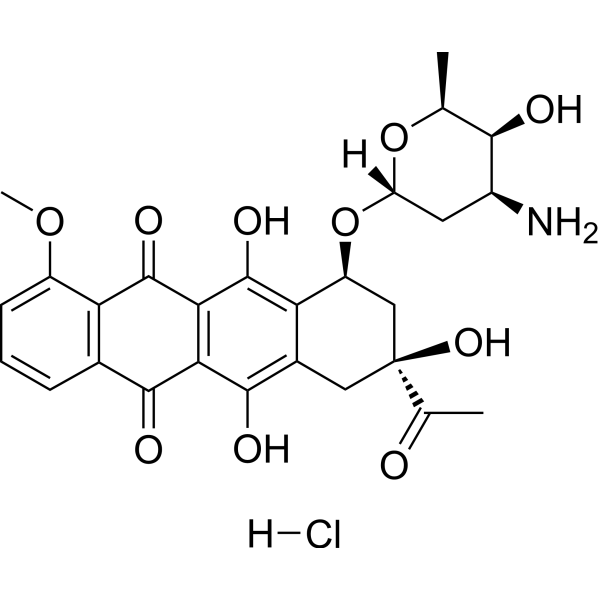
Daunorubicin hydrochloride -
HY-13768A
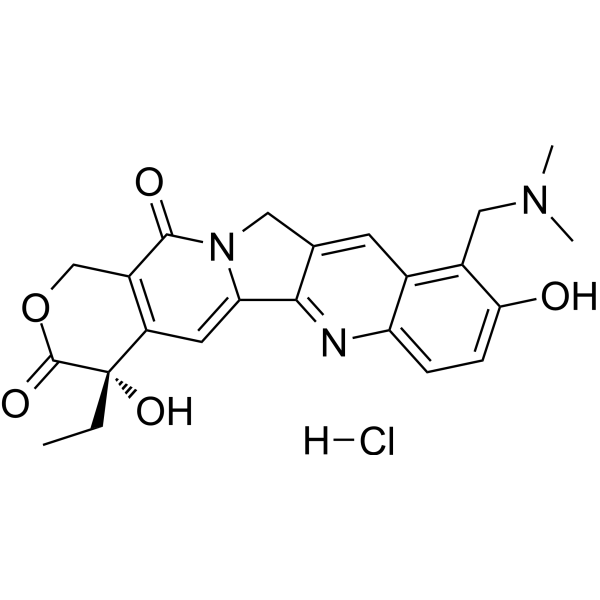
Topotecan hydrochloride -
HY-13629
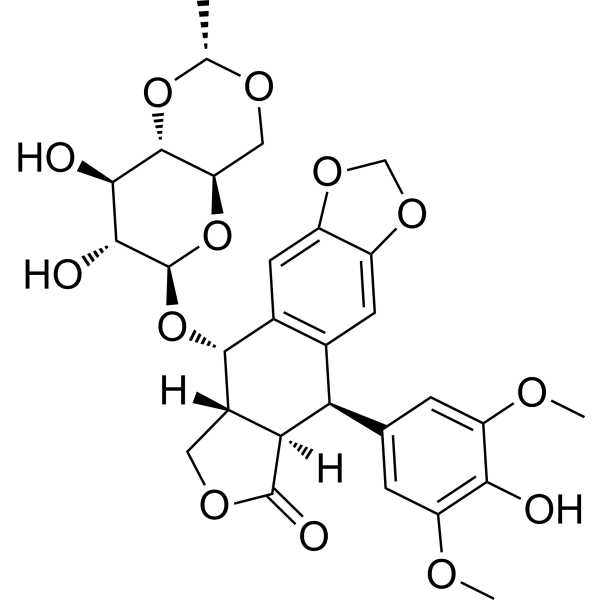
Etoposide -
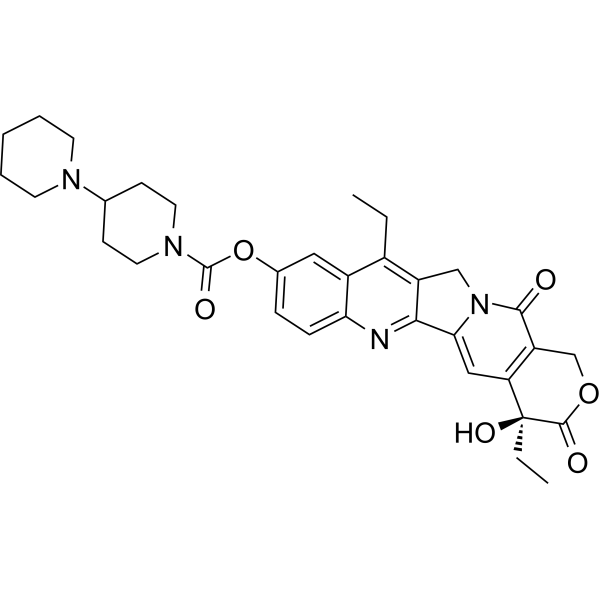
HY-16562
Irinotecan -
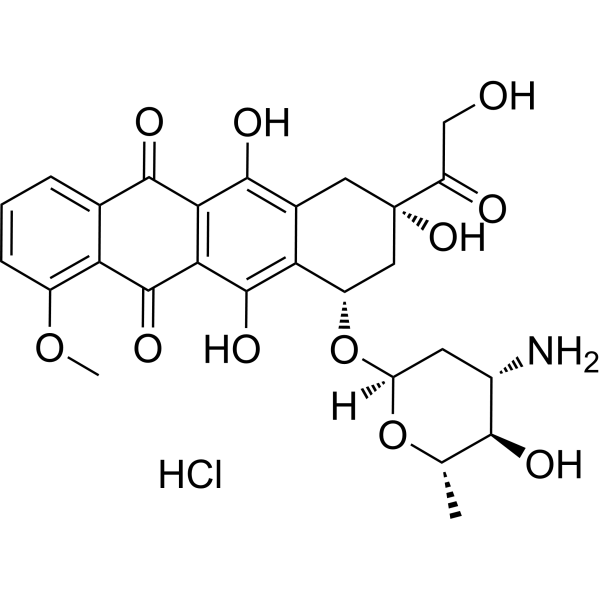
HY-13624A
Epirubicin hydrochloride -
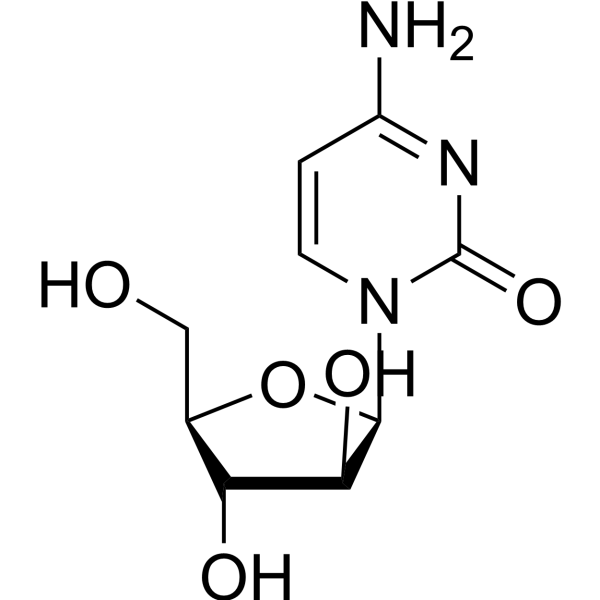
HY-13605
Cytarabine -
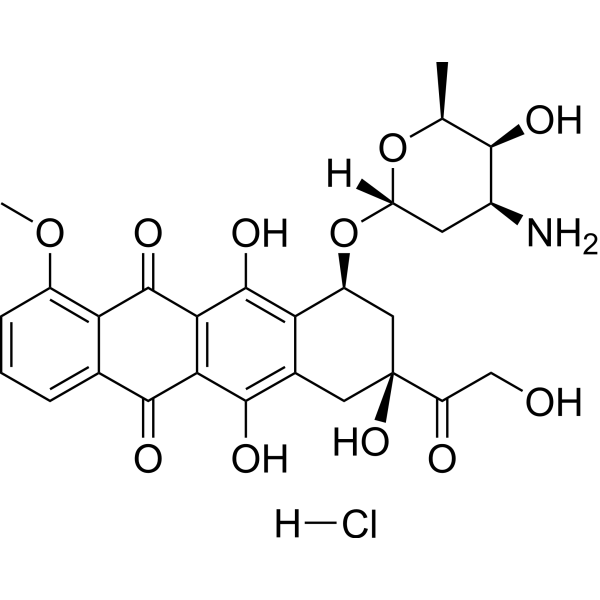
HY-15142
Doxorubicin hydrochloride -
HY-13502
Mitoxantrone -
HY-15531
Venetoclax -
HY-10219
Rapamycin -
HY-10227
Bortezomib -
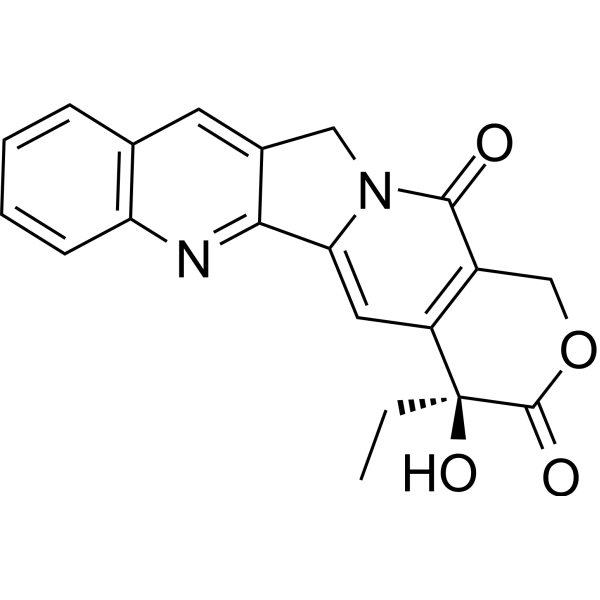
HY-16560
Camptothecin
Publications Citing Use of MedChemExpress (MCE) Idarubicin hydrochloride
More- Signal Transduct Target Ther. 2025 Dec 15;10(1):406. [Abstract]
- Nat Cell Biol. 2024 Aug;26(8):1346-1358. [Abstract]
- Nat Commun. 2020 Apr 14;11(1):1792. [Abstract]
- Nucleic Acids Res. 2018 Apr 20;46(7):3284-3297. [Abstract]
- Cell Rep Med. 2025 Apr 15;6(4):102053. [Abstract]
- Sci Adv. 2026 Apr 3;12(14):eady4536. [Abstract]
- Cancer Lett. 2019 Oct 1:461:31-43. [Abstract]
- Anal Chem. 2022 Oct 4;94(39):13623-13630. [Abstract]
- Cancer Cell Int. 2024 Dec 26;24(1):430. [Abstract]
- Biochem Pharmacol. 2026 Feb:244:117591. [Abstract]
- J Mol Med (Berl). 2019 Aug;97(8):1183-1193. [Abstract]
- iScience. 2024 Jun 8;27(7):110221. [Abstract]
- J Virol. 2019 May 15;93(11):e02230-18. [Abstract]
- Viruses. 2020 Jun 10;12(6):628. [Abstract]
- Mol Carcinog. 2023 Oct;62(10):1546-1562. [Abstract]
- Exp Cell Res. 2020 Aug 1;393(1):112054. [Abstract]
- Hematology. 2026 Dec 31;31(1):2664314. [Abstract]
- bioRxiv. 2023 Jan 13.
- University of Paris. 2022 Sep 19.
 Customer Validation & Images

-
In Vivo Efficacy Study
-
Flow Cytometry
-
Flow Cytometry
-
WB
-
Cell Proliferation/Viability Assay
All Topoisomerase Isoforms
MoreAll Antibiotic Isoforms
MoreAll DNA/RNA Synthesis Isoforms
More

Biological Activity
Description
IC50 & Target
[1]|
Topoisomerase II |
In Vitro
The IC50 of Idarubicin hydrochloride is 3.3±0.4 ng/mL on MCF-7 monolayers and 7.9±1.1 ng/mL in multicellular spheroids[1]. Idarubicin hydrochloride has shown a greater cytotoxicity than daunorubicin or doxorubicin in various in vitro systems. This has been attributed to a better ability of idarubicin to induce the formation of topoisomerase II -mediated DNA breaks[2]. Idarubicin hydrochloride is about 57.5-fold and 25-fold more active than doxorubicin and epirubicin, respectively[3]. Idarubicin hydrochloride produces a concentration-dependent reduction in cell growth, with an IC50 value of approximately 0.01 μM. Idarubicin hydrochloride produced a concentration-dependent inhibition of DNA synthesis[4].
MedChemExpress (MCE) has not independently confirmed the accuracy of these methods. They are for reference only.


Chemical Information
-
CAS No. 57852-57-0
-
Appearance Solid
-
Molecular Weight 533.95
-
Formula C26H28ClNO9
-
Color Orange to red
-
SMILES
OC(C(C(C1=CC=CC=C21)=O)=C3C2=O)=C4[C@H](C[C@@](C(C)=O)(O)CC4=C3O)O[C@@](O[C@@H](C)[C@H]5O)([H])C[C@@H]5N.Cl
-
Synonyms
4-Demethoxydaunorubicin hydrochloride
-
Shipping
Room temperature in continental US; may vary elsewhere.
-
Storage
4°C, sealed storage, away from moisture and light
* In solvent : -80°C, 1 year; -20°C, 6 months (sealed storage, away from moisture and light)


Publications (19)
-
Journal Impact Factor
-
Most Recent
-
Signal Transduct Target Ther
Selective depletion of tumor-associated SAMHD1 enhances chemotherapeutic efficacy and antitumor immune responses. [Abstract]2025 Dec 15;10(1):406. PMID: 41392286 -
Nat Cell Biol
Trafficking circuit of CD8+ T cells between the intestine and bone marrow governs antitumour immunity. [Abstract]2024 Aug;26(8):1346-1358. PMID: 39039181
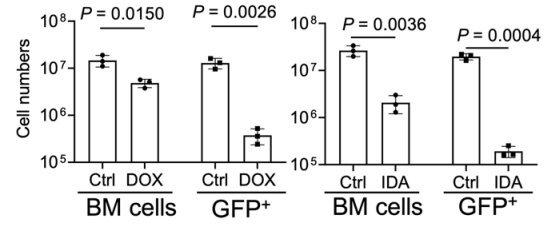
Idarubicin hydrochloride purchased from MedChemExpress. Usage Cited in: Nat Cell Biol. 2024 Aug;26(8):1346-1358. [Abstract]
Number of total BM cells and GFP+ AF9 cells after treatment with 5 mg/kg DOX or 1 mg/kg Idarubicin hydrochloride for 5 days (n = 3 per group).
-
Nat Commun
Selective inhibition of cancer cell self-renewal through a Quisinostat-histone H1.0 axis. [Abstract]2020 Apr 14;11(1):1792. PMID: 32286289 -
Nucleic Acids Res
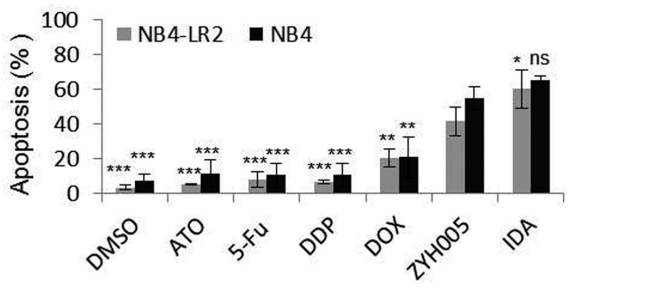
ZYH005, a novel DNA intercalator, overcomes all-trans retinoic acid resistance in acute promyelocytic leukemia. [Abstract]2018 Apr 20;46(7):3284-3297. PMID: 29554366
Idarubicin hydrochloride purchased from MedChemExpress. Usage Cited in: Nucleic Acids Res. 2018 Apr 20;46(7):3284-3297. [Abstract]
NB4 and NB4-LR2 cells were treated with ZYH005, Arsenic trioxide (ATO), 5-fluorouracil (5-Fu), Cisplatin (DDP), Doxorubicin (DOX) and Idarubicin hydrochloride (IDA) at 0.05 μM for 24 h, and then cell apoptosis was determined.
-
Cell Rep Med
CAN-Scan: A multi-omic phenotype-driven precision oncology platform identifies prognostic biomarkers of therapy response for colorectal cancer. [Abstract]2025 Apr 15;6(4):102053. PMID: 40187357 -
Sci Adv
Tissue-specific inflammation induces cell state plasticity with oncogenic addiction in mucosal melanoma. [Abstract]2026 Apr 3;12(14):eady4536. PMID: 41920996 -
Cancer Lett
Synthetic lethality of combined AT-101 with idarubicin in acute myeloid leukemia via blockade of DNA repair and activation of intrinsic apoptotic pathway. [Abstract]2019 Oct 1:461:31-43. PMID: 31301319 -
Anal Chem
Force-Dependent Intercalative Bulky DNA Adduct Formation Detected by Single-Molecule Stretching. [Abstract]2022 Oct 4;94(39):13623-13630. PMID: 36129494 -
Cancer Cell Int
GANT61 surmounts drug resistance of ADR by upregulating lysosome activities and reducing BCL2 expression in HL-60/ADR cells. [Abstract]2024 Dec 26;24(1):430. PMID: 39726048 -
Biochem Pharmacol
Deubiquitinase USP5 promotes acute myeloid leukemia through C2CD5 stabilization and PI3K/AKT/mTOR/HIF-1α-driven glycolysis. [Abstract]2026 Feb:244:117591. PMID: 41344512 -
J Mol Med (Berl)
2019 Aug;97(8):1183-1193. PMID: 31201471 -
iScience
RHOF activation of AKT/β-catenin signaling pathway drives acute myeloid leukemia progression and chemotherapy resistance. [Abstract]2024 Jun 8;27(7):110221. PMID: 39021805
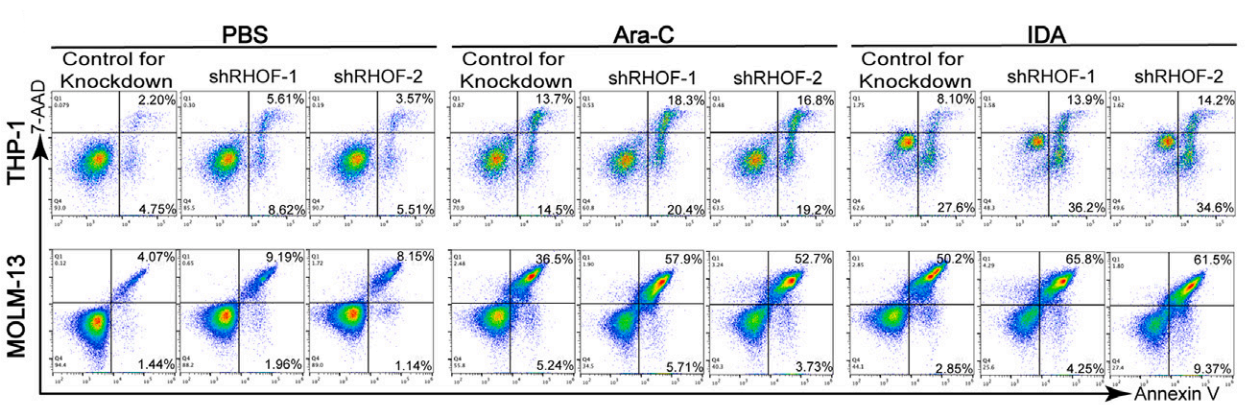
Idarubicin hydrochloride purchased from MedChemExpress. Usage Cited in: iScience. 2024 Jun 8;27(7):110221. [Abstract]
THP-1 and MOLM-13 cells (control for knockdown or shRHOF) were treated with 1.2 μM Ara-C and 0.03 μg/mL Idarubicin hydrochloride for 48 h to measure apoptosis via flow cytometry (n = 3). Student's t tests were used for comparing two variables.
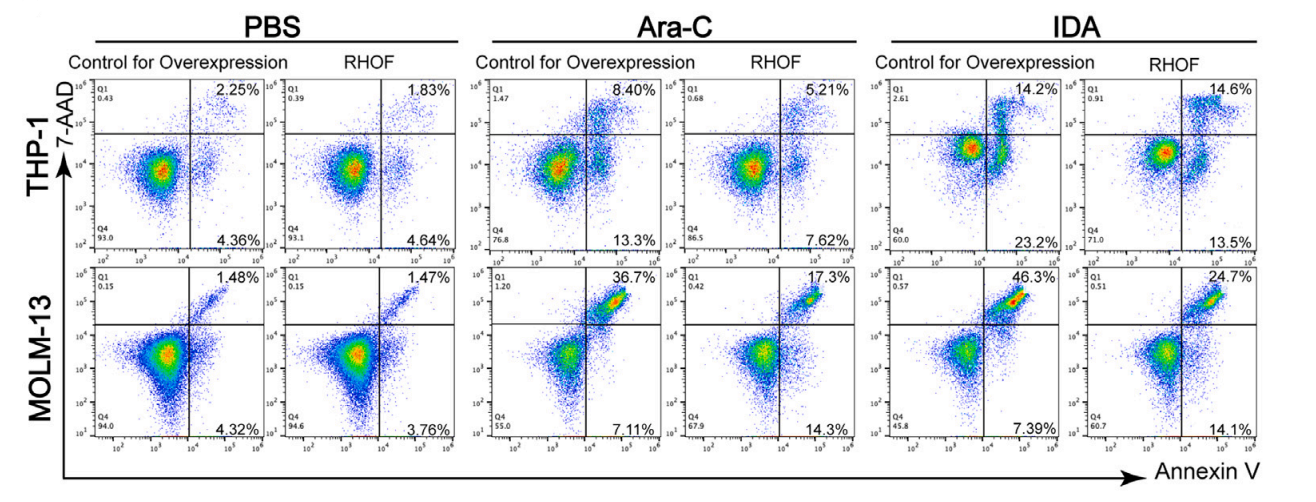
Idarubicin hydrochloride purchased from MedChemExpress. Usage Cited in: iScience. 2024 Jun 8;27(7):110221. [Abstract]
THP-1 and MOLM-13 cells (control for overexpression or RHOF) were treated with 1.2 μM Ara-C and 0.03 μg/mL Idarubicin hydrochloride for 48 h to measure apoptosis via flow cytometry (n = 3). Student's t tests were used for comparing two variables.
-
J Virol
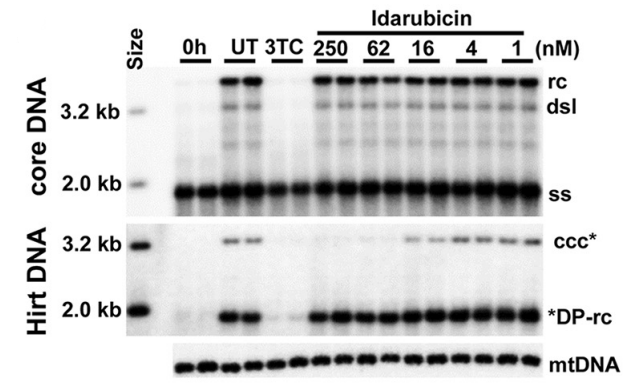
Cellular DNA Topoisomerases Are Required for the Synthesis of Hepatitis B Virus Covalently Closed Circular DNA. [Abstract]2019 May 15;93(11):e02230-18. PMID: 30867306
Idarubicin hydrochloride purchased from MedChemExpress. Usage Cited in: J Virol. 2019 May 15;93(11):e02230-18. [Abstract]
Idarubicin hydrochloride reduced HBV cccDNA levels in a dose-dependent manner, but had no effect on core DNA and DP-rcDNA levels.
-
Viruses
Broad-Spectrum Host-Based Antivirals Targeting the Interferon and Lipogenesis Pathways as Potential Treatment Options for the Pandemic Coronavirus Disease 2019 (COVID-19). [Abstract]2020 Jun 10;12(6):628. PMID: 32532085 -
Mol Carcinog
2023 Oct;62(10):1546-1562. PMID: 37493101 -
Exp Cell Res
Network-based analysis with primary cells reveals drug response landscape of acute myeloid leukemia. [Abstract]2020 Aug 1;393(1):112054. PMID: 32376287 -
Hematology
XPO1 inhibitor selinexor suppresses homologous recombination by inhibiting E2F7 nuclear export in acute myeloid leukemia. [Abstract]2026 Dec 31;31(1):2664314. PMID: 42026967 -
-


Solvent & Solubility
In Vitro:
DMSO : 83.33 mg/mL (156.06 mM; Need ultrasonic; Hygroscopic DMSO has a significant impact on the solubility of product, please use newly opened DMSO)
Please refer to the solubility information to select the appropriate solvent. Once prepared, please aliquot and store the solution to prevent product inactivation from repeated freeze-thaw cycles.
Storage method and period of stock solution: -80°C, 1 year; -20°C, 6 months (sealed storage, away from moisture and light). When stored at -80°C, please use it within 1 year. When stored at -20°C, please use it within 6 months.
Please refer to the solubility information to select the appropriate solvent. Once prepared, please aliquot and store the solution to prevent product inactivation from repeated freeze-thaw cycles.
Storage method and period of stock solution: -80°C, 1 year; -20°C, 6 months (sealed storage, away from moisture and light). When stored at -80°C, please use it within 1 year. When stored at -20°C, please use it within 6 months.
Concentration (start) × Volume (start) = Concentration (final) × Volume (final)
In Vivo:
Select the appropriate dissolution method based on your experimental animal and administration route.
- For the following dissolution methods, please ensure to first prepare a clear stock solution using an In Vitro approach and then sequentially add co-solvents:
- To ensure reliable experimental results, the clarified stock solution can be appropriately stored based on storage conditions. As for the working solution for In Vivo experiments, it is recommended to prepare freshly and use it on the same day.
- The percentages shown for the solvents indicate their volumetric ratio in the final prepared solution. If precipitation or phase separation occurs during preparation, heat and/or sonication can be used to aid dissolution.
Add each solvent one by one: 10% DMSO 40% PEG300 5% Tween-80 45% Saline
Solubility: ≥ 2.08 mg/mL (3.90 mM); Clear solution
This protocol yields a clear solution of ≥ 2.08 mg/mL (saturation unknown).
Taking 1 mL working solution as an example, add 100 μL DMSO stock solution (20.8 mg/mL) to 400 μL PEG300, and mix evenly; then add 50 μL Tween-80 and mix evenly; then add 450 μL Saline to adjust the volume to 1 mL.
Preparation of Saline: Dissolve 0.9 g sodium chloride in ddH₂O and dilute to 100 mL to obtain a clear Saline solution.
Add each solvent one by one: 10% DMSO 90% (20% SBE-β-CD in Saline)
Solubility: ≥ 2.08 mg/mL (3.90 mM); Clear solution
This protocol yields a clear solution of ≥ 2.08 mg/mL (saturation unknown).
Taking 1 mL working solution as an example, add 100 μL DMSO stock solution (20.8 mg/mL) to 900 μL 20% SBE-β-CD in Saline, and mix evenly.
Preparation of 20% SBE-β-CD in Saline (4°C, storage for one week): 2 g SBE-β-CD powder is dissolved in 10 mL Saline, completely dissolve until clear.
In Vivo Dissolution Calculator
Please enter the basic information of animal experiments:
-
-
-
-
Recommended: Prepare an additional quantity of animals to account for potential losses during experiments.
Please enter your animal formula composition:
-
%DMSO +
Recommended: Keep the proportion of DMSO in working solution below 2% if your animal is weak.
-
%+
-
+%Tween-80 + +
-
%Saline +
The co-solvents required include: DMSO, . All of co-solvents are available by MedChemExpress (MCE). , Tween 80. All of co-solvents are available by MedChemExpress (MCE).
Working solution concentration: 0.22 mg/mL
Method for preparing stock solution: mg drug dissolved in μL DMSO. Stock solution concentration: mg/mL. * In solvent : -80°C, 1 year; -20°C, 6 months (sealed storage, away from moisture and light)
1. Take μL DMSO stock solution;
2. Add μL .
μL , mix evenly;
3. Then add μL Tween 80, mix evenly;
4. Then add μL
Please ensure that the stock solution in the first step is dissolved to a clear state, and add co-solvents in sequence. You can use ultrasonic heating (ultrasonic cleaner, recommended frequency 20-40 kHz), vortexing, etc. to assist dissolution.

Protocol
Cell Assay[1]
Stock solutions of idarubicin hydrochloride is dissolved in distilled water (1 mg/mL). MCF-7 monolayer are exposed to idarubicin or its metabolite idarubicinol at 0.01, 0.1, 1, 10, 100, and 1000 ng/mL for 24 hours. Multicellular spheroids are exposed to the same range of idarubicin and idarubicinol concentration as monolayers (0.01-1000 ng/mL) for 24 h and, in separate experiments, at the drug concentration of 100 ng/mL for 6, 12, 24 and 48 h. The inhibition of cell proliferation is determined by counting the viable cells with an hemocytometer. Results are expressed as percentage of cell survival vs. control cultures[1].
MedChemExpress (MCE) has not independently confirmed the accuracy of these methods. They are for reference only.


Purity & Documentation
-
Data Sheet (281 KB)
-
SDS (644 KB)
- English - EN (644 KB)
- Français - FR (644 KB)
- Deutsch - DE (644 KB)
- Norwegian - NO (644 KB)
- Español - ES (644 KB)
- Swedish - SV (644 KB)
- Italian - IT (644 KB)
- Korean - KR (644 KB)
- Portuguese - PT (644 KB)
-
Handling Instructions (2659 KB)
References
[1]. Orlandi P, et al. Idarubicin and idarubicinol effects on breast cancer multicellular spheroids. J Chemother. 2005 Dec;17(6):663-7. [Content Brief]
[2]. Robert J. Clinical pharmacokinetics of idarubicin. Clin Pharmacokinet. 1993 Apr;24(4):275-88. [Content Brief]
[3]. Siegsmund MJ, et al. Enhanced in vitro cytotoxicity of idarubicin compared to epirubicin and doxorubicin in rat prostate carcinoma cells. Eur Urol. 1997;31(3):365-70. [Content Brief]
[4]. Gewirtz DA, et al. Induction of DNA damage, inhibition of DNA synthesis and suppression of c-myc expression by the anthracycline analog, idarubicin (4-demethoxy-daunorubicin) in the MCF-7 breast tumor cell line. Cancer Chemother Pharmacol. 1998;41(5):361- [Content Brief]
[5]. Kinnunen U, et al. Idarubicin inhibits the growth of bacteria and yeasts in an automated blood culture system. Eur J Clin Microbiol Infect Dis. 2009 Mar;28(3):301-3. [Content Brief]


Complete Stock Solution Preparation Table
Please refer to the solubility information to select the appropriate solvent. Once prepared, please aliquot and store the solution to prevent product inactivation from repeated freeze-thaw cycles.
Storage method and period of stock solution: -80°C, 1 year; -20°C, 6 months (sealed storage, away from moisture and light). When stored at -80°C, please use it within 1 year. When stored at -20°C, please use it within 6 months.
| Optional Solvent | Concentration Solvent Mass | 1 mg | 5 mg | 10 mg | 25 mg |
|---|---|---|---|---|---|
| DMSO | 1 mM | 1.8728 mL | 9.3642 mL | 18.7283 mL | 46.8209 mL |
| 5 mM | 0.3746 mL | 1.8728 mL | 3.7457 mL | 9.3642 mL | |
| 10 mM | 0.1873 mL | 0.9364 mL | 1.8728 mL | 4.6821 mL | |
| 15 mM | 0.1249 mL | 0.6243 mL | 1.2486 mL | 3.1214 mL | |
| 20 mM | 0.0936 mL | 0.4682 mL | 0.9364 mL | 2.3410 mL | |
| 25 mM | 0.0749 mL | 0.3746 mL | 0.7491 mL | 1.8728 mL | |
| 30 mM | 0.0624 mL | 0.3121 mL | 0.6243 mL | 1.5607 mL | |
| 40 mM | 0.0468 mL | 0.2341 mL | 0.4682 mL | 1.1705 mL | |
| 50 mM | 0.0375 mL | 0.1873 mL | 0.3746 mL | 0.9364 mL | |
| 60 mM | 0.0312 mL | 0.1561 mL | 0.3121 mL | 0.7803 mL | |
| 80 mM | 0.0234 mL | 0.1171 mL | 0.2341 mL | 0.5853 mL | |
| 100 mM | 0.0187 mL | 0.0936 mL | 0.1873 mL | 0.4682 mL |


Idarubicin hydrochloride Related Classifications
HY-17381 Related Classifications
 Powered by Bioz