



Cancer Immunotherapy
Cancer immunotherapy (CIT) is a type of biological therapy, aiming to improve anti-tumor immune responses with fewer off-target effects than chemotherapy. Several types of immunotherapy include: oncolytic virus therapies, cancer vaccines, cytokine therapies, adoptive cell transfer (ACT), and immune checkpoint inhibitors (ICIs). In particular, ICIs and ACT have obtained immense clinical response, but their efficacy varies from person to person. Immune cells can be harnessed to eliminate tumor cells, such as T cells, B cells, NK cells, and myeloid cells. T cells have potent tumor-killing capability, therefore, a plethora of cancer immunotherapy research have focused on inducing T-cell-mediated anti-tumor responses. CTLA-4 and PD-1 are found on the cell surface of T cells as co-inhibitory receptors. The breakthrough in cancer immunotherapy results from the identification and subsequent targeting of checkpoint mechanisms in T cells with monoclonal antibodies against CTLA-4 and programmed death-ligand 1/programmed death-1 (PD-L1/PD-1).
Several types of cancers (e.g., melanoma, mismatch repair-deficient cancers, bladder cancer, and non-small cell lung cancer) have achieved significant clinical responses in T-cell checkpoint blockade therapies. However, single-mode immunotherapy faces challenges such as low immune response, low tumor infiltration, and complex immunosuppressive tumor microenvironment. Recently, combined therapies based on tumor immunity have received extensive attention in the research of enhancing tumor cells immunogenicity and inhibiting their growth. For example, anti CTLA-4 and PD-1, immune checkpoint blockade (ICB) combined with chemotherapy, anti-angiogenic drugs and kinase inhibitors.
-
Nitroxoline (Standard)
 0 ImagesSynonyms: 8-Hydroxy-5-nitroquinoline (Standard); 5-Nitro-8-quinolinol (Standard)
Nitroxoline (Standard) is the analytical standard of Nitroxoline. This product is intended for research and analytical applications. Nitroxoline (8-Hydroxy-5-nitroquinoline), an antibiotic, is an orally active antibiofilm agent. Nitroxoline reduces the formation and induces the dispersal of Pseudomonas aeruginosa biofilms by chelation of iron and zinc. Nitroxoline can be used for the urinary tract infections and cancer research.
-
2-Amino-2-deoxy-D-glucopyranose
 0 ImagesCat. No.: HY-W615152CAS No.: 90-77-7
2-Amino-2-deoxy-D-glucopyranose is an isomeric form of Glucosamine (HY-B1125). 2-Amino-2-deoxy-D-glucopyranose is an amino sugar and a prominent precursor in the biochemical synthesis of glycosylated proteins and lipids, is used as a dietary supplement. 2-Amino-2-deoxy-D-glucopyranose also is a natural constituent of glycosaminoglycans in the cartilage matrix and synovial fluid, which when administered exogenously, exerts pharmacological effects on osteoarthritic cartilage and chondrocytes.
-
4-Methoxyestradiol
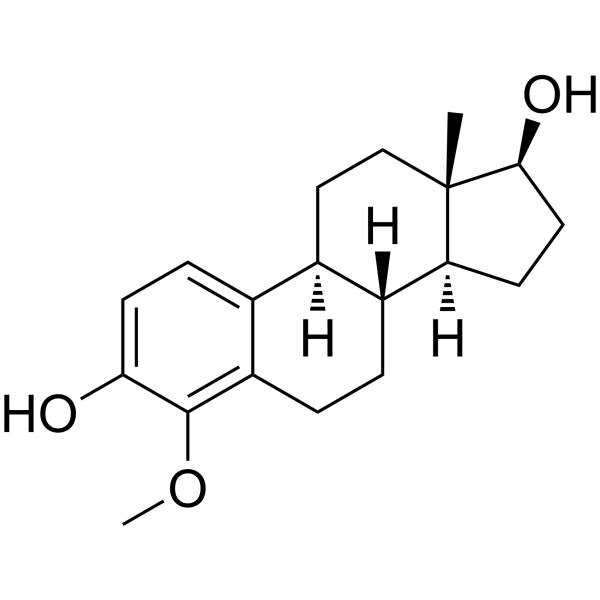 0 ImagesCat. No.: HY-148296CAS No.: 26788-23-8
4-Methoxyestradiol is methoxylestradiol that induces oxidative DNA damage in human lung epithelial cells. 4-Methoxyestradiol also elevates ROS and SOD activities in H1355 cells.
-
Telomeric G4s ligand 1
 0 Images
Telomeric G4s ligand 1 is a telomeric G-quadruplex ligand that stabilizes telomeric G4 and induces R-loop formation, leading to DNA damage responses. Telomeric G4s ligand 1 induces apoptosis and evokes immunogenic cell death (ICD) in tumor cells.
-
Auristatin F-d8
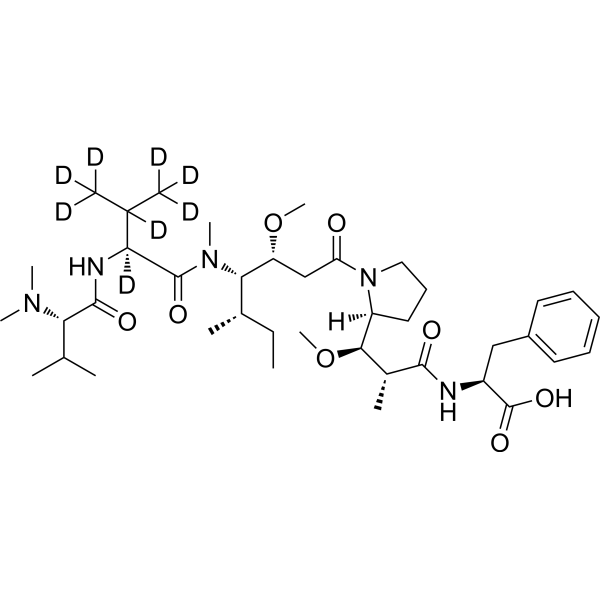 0 ImagesCat. No.: HY-15583SPurity: 99.82%
Auristatin F-d8 is deuterium labeled Auristatin F (HY-15583). Auristatin F is a potent cytotoxin in antibo-conjugated agents and an analogue of MMAF. Auristatin F is a potent microtubule inhibitor and vascular damaging agent (VDA). Auristatin F inhibits cell division by preventing tubulin aggregation.Auristatin F can be used in antibody-drug conjugates (ADC) .

-
Propyl gallate (Standard)
 0 Images
Propyl gallate (Standard) is the analytical standard of Propyl gallate. This product is intended for research and analytical applications. Propyl gallate is a common food antioxidant. Propyl gallate can inhibit the production of acrolein, glyoxal and methylglyoxal. Propyl gallate exhibits anti-inflammatory, antitumor and cardioprotective activities.
-
Cys-MC-GGFG-Dxd-d5 TFA
 0 ImagesCat. No.: HY-176415S1Synonyms: Cys-MC-GGFG-Dxd-d5 TFA
Cys-MC-GGFG-Dxd-d5 TFA (Cys-MC-GGFG-Dxd-d5 TFA) is the deuterium labeled Cys-MC-GGFG-Dxd (HY-176415). Cys-MC-GGFG-Dxd-d5 TFA is a conjugate of Cys and Deruxtecan (HY-13631E). Cys-MC-GGFG-Dxd-d5 TFA is a linker-toxin building block in antibody-drug conjugates (ADCs) used to link antibody Cys residues to cytotoxic drugs. Cys-MC-GGFG-Dxd-d5 TFA can be used in cancer research.
-
CBB1007 hydrochloride
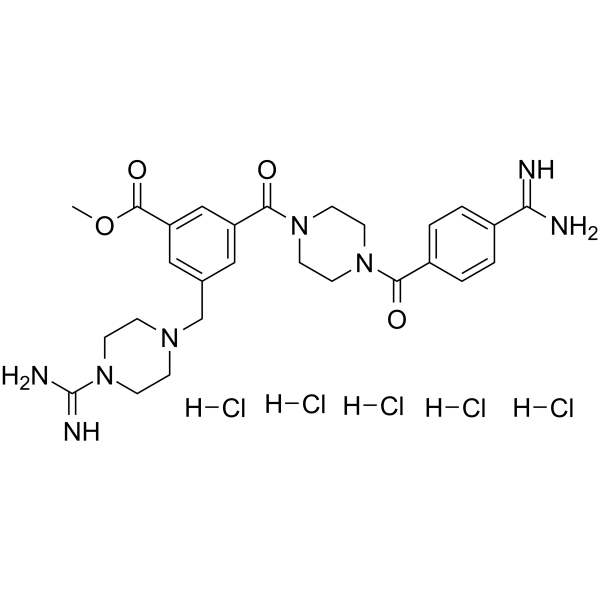 0 Images
CBB1007 hydrochloride is a reversible and selective LSD1 inhibitor with an IC50 of 5.27 µM for human LSD1. CBB1007 hydrochloride significantly blocks the demethylase activity of LSD1 on H3K4Me2 and H3K4Me. CBB1007 hydrochloride shows selectivity for LSD1 over LSD2 or JARID1A, and induces differentiation-related genes in pluripotent cells. CBB1007 hydrochloride is studied in non-pluripotent cancer research, targeting teratocarcinoma, embryonic carcinoma, and seminoma.
-
RFB4
 0 ImagesCat. No.: HY-P991550CAS No.: 505393-48-6
RFB4 is an anti-CD22 monoclonal antibody. RFB4 can be fused with Pseudomonas aeruginosa exotoxin (PE38) via disulfide bonds to construct recombinant immunotoxins, such as RFB4 (dsFv)-PE38. RFB4 is applicable to the research of cancers including lymphoma.

-
Tigecycline mesylate
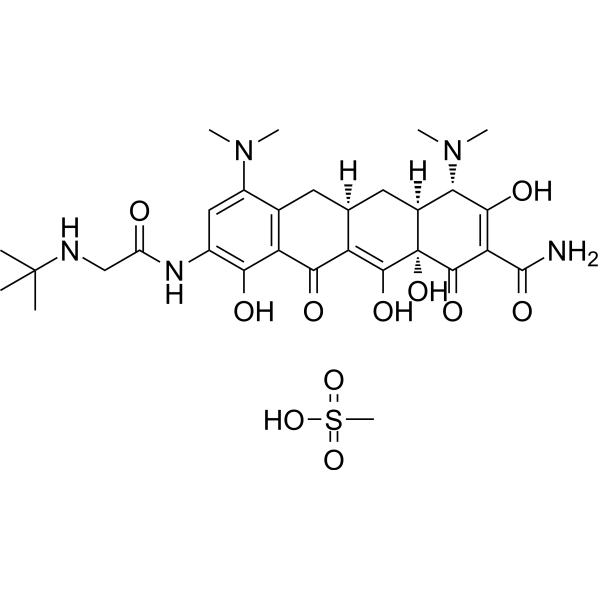 0 ImagesCat. No.: HY-B0117BCAS No.: 1135871-27-0Synonyms: GAR-936 mesylate
Tigecycline mesylate (GAR-936 mesylate) is a broad-spectrum glycylcycline antibiotic. The mean inhibitory concentration (MIC) of Tigecycline for E. coli (MG1655 strain) is approximately 125 ng/mL. MIC50 and MIC90 are 1 and 2 mg/L for Acinetobacter baumannii (A. baumannii), respectively.
-
HX009
 0 ImagesCat. No.: HY-P991085Purity: 99.56%
-
Lexibulin dihydrochloride
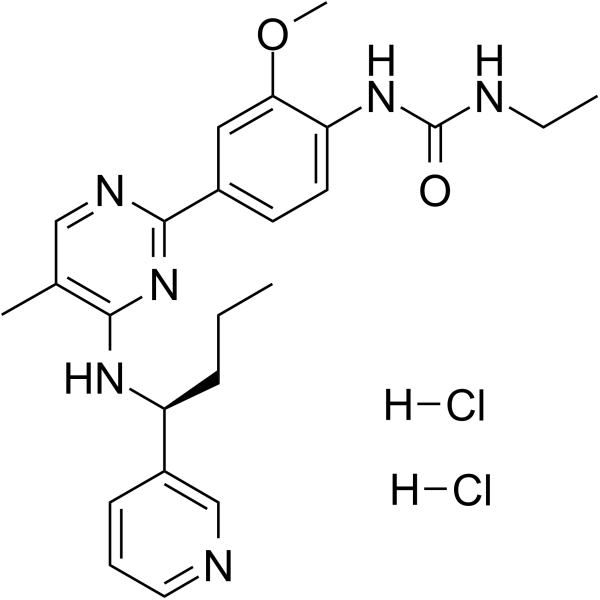 0 ImagesCat. No.: HY-10498ACAS No.: 917111-49-0Synonyms: CYT-997 dihydrochloride
Lexibulin dihydrochloride (CYT-997 dihydrochloride) is a potent and orally active tubulin polymerisation inhibitor with IC50s of 10-100 nM in cancer cell lines; with potent cytotoxic and vascular disrupting activity in vitro and in vivo. Lexibulin dihydrochloride induces cell apoptosis and induces mitochondrial ROS generation in GC cells.
-
Sulfo SMCC R-phycoerythrin
 0 ImagesCat. No.: HY-D2396Synonyms: Sulfo SMCC R-PE
Sulfo SMCC R-phycoerythrin is a conjugate composed of the protein crosslinker SMCC (HY-42360) and R-PE (R-Phycoerythrin) (HY-D0988) that can be used to label proteins to make them carry red fluorescence. Among them, SMCC is able to engage antigen-coupled spleen cells to induce antigen-specific immune responses.
-
Farrerol (Standard)
 0 ImagesSynonyms: (-)-Farrerol (Standard)
Farrerol (Standard) is the analytical standard of Farrerol. This product is intended for research and analytical applications. Farrerol is a bioactive constituent of Rhododendron, with broad activities such as anti-oxidative, anti-inflammatory, anti-tumor, neuroprotective and hepatoprotective effects.

-
Anti-Mouse FGL-1 Antibody (177R4)
 0 ImagesCat. No.: HY-P990243
Anti-Mouse FGL-1 Antibody (177R4) is an anti-mouse FGL-1 IgG2a monoclonal antibody. Anti-Mouse FGL-1 Antibody (177R4) can increase CD8+ T cell infiltration. Anti-Mouse FGL-1 Antibody (177R4) enhances the anti-tumor immune effect by blocking FGL1. Anti-Mouse FGL-1 Antibody (177R4) can be used for research on cancer such as lung cancer and breast cancer.
-
Ferrostatin-1 (Standard)
 0 ImagesCat. No.: HY-100579RCAS No.: 347174-05-4Synonyms: Fer-1 (Standard)
Ferrostatin-1 (Standard) is the analytical standard of Ferrostatin-1 (HY-100579). This product is intended for research and analytical applications. Ferrostatin-1 (Fer-1), a potent and selective ferroptosis inhibitor, suppresses Erastin-induced ferroptosis in HT-1080 cells (EC50=60 nM). Ferrostatin-1, a synthetic antioxidant, acts via a reductive mechanism to prevent damage to membrane lipids and thereby inhibits cell death. Ferrostatin-1 exhibits antifungal activity.



