Infection
-
Infection Related Products (18789)
Related Products (18789)

-
Antibodies (22)
-
p60 (217–225)
 0 ImagesCat. No.: HY-P10296CAS No.: 153147-67-2
p60 (217–225) is the subdominant epitope of Listeria monocytogenes, which combines with H-2Kd MHC class I molecules.
-
Oseltamivir-fructosyl
 0 ImagesCat. No.: HY-W654302CAS No.: 2413185-85-8
Oseltamivir-fructosyl exhibits antiviral activity against influenza viruses and has inhibitory effects on various types of bacteria such as streptococcus and serratia marcescens.
-
Mitorubrin
 0 Images
Mitorubrin ((-)-Mitorubrin) is a compound that can be isolated from Penicillium purpurogenum JS03-21. Mitorubrin shows no significant inhibitory activity against the H1N1 influenza virus (IC50 > 200 μM).
-
PIQ-2
 0 ImagesCat. No.: HY-169289CAS No.: 3035141-23-9
PIQ-2 (compound 54) is a antiprotozoal agent with the IC50 values of 9.4 nM and 1.6 nM against IP. falciparum 3D7I and B. divergens Rouen,respectively.
-
Lasioglossin-III
 0 ImagesCat. No.: HY-P10596CAS No.: 1242413-05-3
Lasioglossin-III is an antimicrobial peptide that can be isolated from the venom of wild bees. Lasioglossin-III has high antibacterial activity against Gram-positive and Gram-negative bacteria, antifungal activity and antitumor activity. Lasioglossin-III has certain cytotoxicity against three cancer cell lines (HeLa S3, CRC SW 480 and CCRF-CEM T) with IC50 values of 4, 18 and 5 μM, respectively.
-
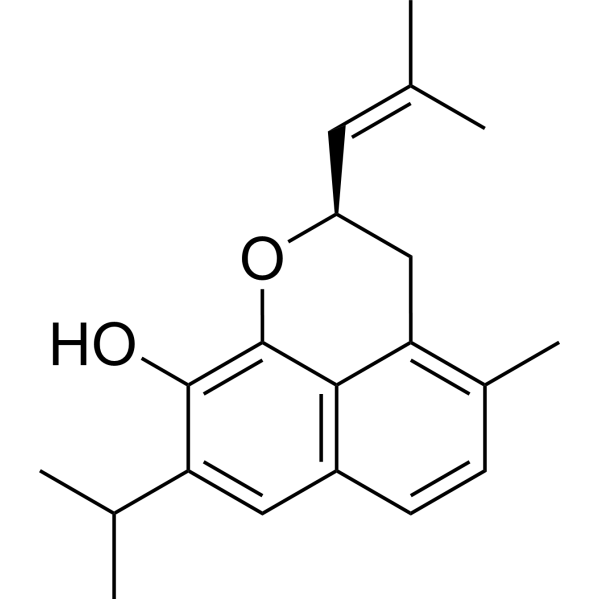
Sahandol
 0 ImagesCat. No.: HY-N8476CAS No.: 1452398-07-0
Sahandol is a diterpene, that can be isolated from Salvia sahendica. Sahandol shows antiplasmodial, antitrypanosomal, and cytotoxic activities.
-
Verlamelin B
 0 ImagesCat. No.: HY-P11343CAS No.: 1619237-95-4
Verlamelin B (Compound 147) is effective against plant pathogenic fungal and is a derivative of Verlamelin (HY-N14856).Verlamelin B exhibits potent plant protective activity in vivo, particularly against rice blast and barley powdery mildew. Verlamelin B causes morphological changes in fungal cells, such as swelling or expansion. Verlamelin B exhibits weaker antifungal activity in vitro against plant pathogens such as rice blast, Dipolaris zeae, and Botrytis cinerea. Verlamelin B is useful for research on antifungal activities against plant pathogens.
-
A76889
 0 ImagesCat. No.: HY-116537CAS No.: 134805-77-9
A76889 is an HIV-1 protease inhibitor.
-
Bestatin hydrochloride (Standard)
 0 ImagesSynonyms: Ubenimex hydrochloride (Standard)
Bestatin (hydrochloride) (Standard) is the analytical standard of Bestatin (hydrochloride). This product is intended for research and analytical applications. Bestatin hydrochloride is an inhibitor of CD13 (Aminopeptidase N)/APN and leukotriene A4 hydrolase, used for cancer research.
-
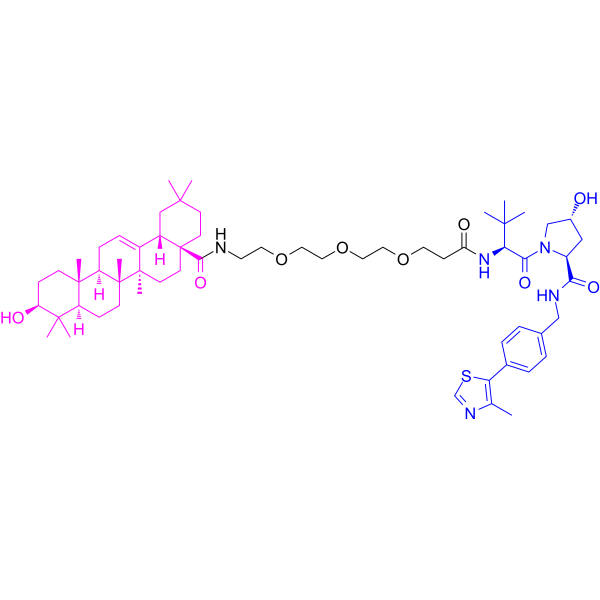
PROTAC Hemagglutinin Degrader-1
 0 ImagesCat. No.: HY-147654CAS No.: 3031330-66-9
PROTAC Hemagglutinin Degrader-1 (Compound V3) is a potent PROTAC influenza hemagglutinin (HA) degrader with a median degradation concentration of 1.44 μM. PROTAC Hemagglutinin Degrader-1 shows broad-spectrum anti-influenza virus activity.
-
Schizanrin D
 0 ImagesCat. No.: HY-N17557CAS No.: 343326-65-8Synonyms: Schizarin D
Schizanrin D (Schizarin D) is a C18 Dibenzocyclooctadiene lignin. Schizanrin D can be derived from dried stems of Kadsura matsudai. Schizanrin D inhibits HBeAg production. Schizanrin D is inactive in vitro against HIV replication.
-
Fingolimod phosphate (Standard)
 0 ImagesCat. No.: HY-15381RCAS No.: 402615-91-2Synonyms: FTY720 phosphate (Standard)
Fingolimod phosphate (Standard) is the analytical standard of Fingolimod phosphate. This product is intended for research and analytical applications. Fingolimod phosphate (FTY720 phosphate) is an orally active sphingosine 1-phosphate (S1P) receptor agonist. Fingolimod phosphate can promote the neuroprotective effects of microglia. Fingolimod phosphate can be used for the research of multiple sclerosis and neurologic diseases.
-
Surfen
 0 Images
Surfen is a potent heparan sulfate antagonist. Surfen inhibits FGF2 binding and signal transduction. Surfen binds to glycosaminoglycans and reduces tau hyperphosphorylation. Surfen inhibits the activity of recombinant uronyl 2-O-sulfotransferase with an IC50 of approximately 2 μM. Surfen inhibits HSV-1 viral infection. Surfen inhibits neural differentiation, delays remyelination, and alleviates EAE.
-
NE58043
 0 ImagesCat. No.: HY-W779743CAS No.: 105462-25-7
NE58043 (Compound 21) is a nitrogen-containing bisphosphonate compound. NE58043 has no significant inhibitory activity against Entamoeba histolytica and Plasmodium falciparum with IC50 > 200 μM. NE58043 shows a LD50 of 171 μM for human nasopharyngeal carcinoma KB cells. NE58043 can be used for the research of cancer and infection, such as nasopharyngeal carcinoma.
-
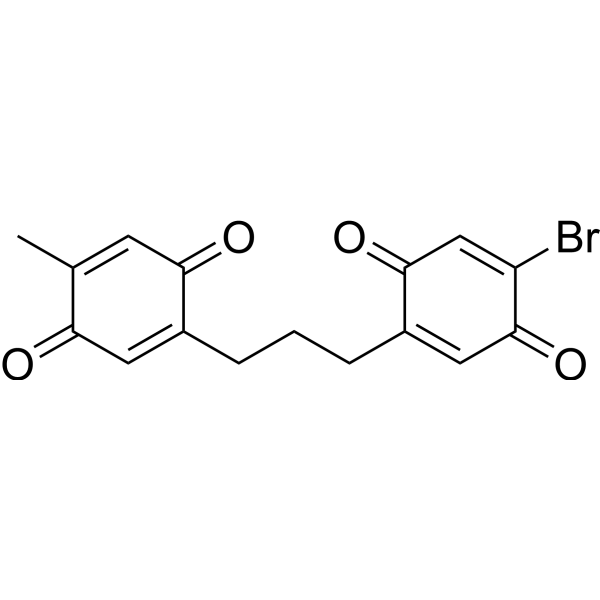
SARS-CoV-2-IN-84
 0 ImagesCat. No.: HY-162414CAS No.: 214221-82-6
SARS-CoV-2-IN-84 (compound 20) is aSARS-CoV-2 inhibitor that targets the 3CL protease (3CL Pro) of SARS-CoV-2 (IC50: 369.5 nM ).
-
Nigella sativa extract
 0 ImagesCat. No.: HY-N18778CAS No.: 90064-32-7
Nigella sativa extract, derived from the seeds of the Nigella sativa plant, which has anti-inflammatory, antioxidant, antibacterial, and antifungal effects.
-
XSJ2-46
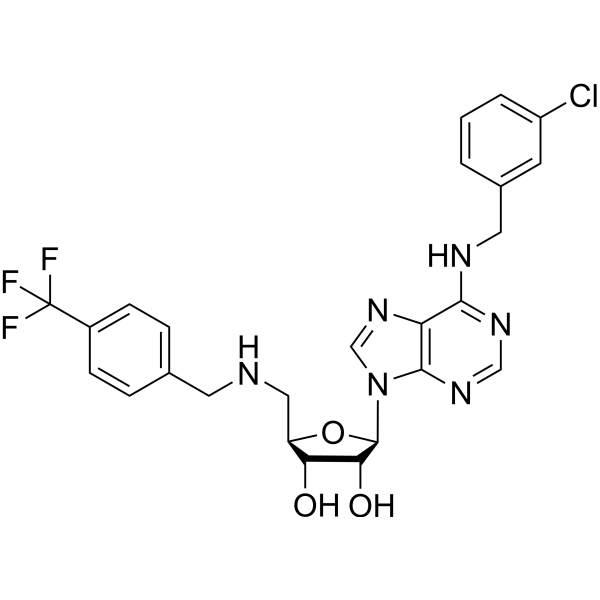 0 ImagesCat. No.: HY-156291CAS No.: 2265911-12-2
XSJ2-46, 5'-amino NI analog, is an antiviral agent. XSJ2-46 has anti-Zika virus activity. XSJ2-46 exhibits reasonable inhibition of RNA-dependent RNA polymerases (RdRp) with an IC50 value of 8.78 μM.
-
ROS inducer 1
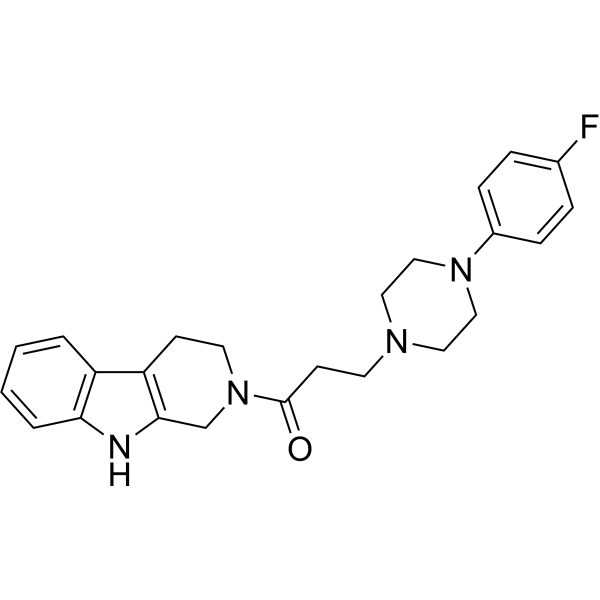 0 ImagesCat. No.: HY-155644CAS No.: 2921602-31-3
ROS inducer 1 (compound I29) is a fungicide, with EC50 against Xanthomonas axonopodis pv. citri (Xac), Xanthomonas oryzae pv. oryzae (Xoo), and Pseudomonas syringae pv. actinidiae (Psa) of 5.73, 6.62 and 9.05 μg/mL. ROS inducer 1 can effectively induce the production of ROS in Xanthomonas cells and inhibit rice bacterial blight. ROS inducer 1 has the potential to study bacterial infection in crops.
-
PF-46396
 0 ImagesCat. No.: HY-120764CAS No.: 1207481-21-7
-
(Rac)-Adibelivir hydrochloride
 0 ImagesCat. No.: HY-150306CCAS No.: 2954725-84-7Synonyms: (Rac)-IM-250 hydrochloride
(Rac)-Adibelivir hydrochloride ((Rac)-IM-250 hydrochloride) is a blood-brain barrier-penetrant HSV helicase-primase inhibitor and metabolic stabilizer with antiviral activity. (Rac)-Adibelivir hydrochloride is also effective against Acyclovir (HY-17422)-resistant strains, and its deuterated structure exhibits enhanced metabolic stability, reducing the formation of hydroxylated metabolites. (Rac)-Adibelivir prolongs in vivo half-life, reduces administration dosage, improves oral bioavailability, and achieves higher brain exposure in mice. (Rac)-Adibelivir hydrochloride can be used in the research of herpes simplex infection, herpes encephalitis and Alzheimer's disease.