



TS 155-2
TS 155-2 (JBIR 100), an antimicrobial agent, is a Bafilomycin analogue and an antibiotic. TS 155-2 can be isolated from a culture of Streptomyces sp. TS 155-2 inhibits V-ATPase activity. V-ATPase is correlated with an increasing number of diseases such as osteopetrosis, male infertility and renal acidosis.
Nos produits utilisent uniquement pour la recherche. Nous ne vendons pas aux patients.
- CAS No.: 1314486-37-7
- Formule: C39H60O11
- Masse moléculaire:704.89
-
Stockage:
Please store the product under the recommended conditions in the Certificate of Analysis.


To place orders, for customer services and technical support, please contact: MedChemExpress USA
Tel: 609-228-6898 E-mail: [email protected] [email protected]


-
 Activité biologique
-
Chemical Information
- Protocole
- Pureté et documentation
- Références
-
 Help & FAQs


-
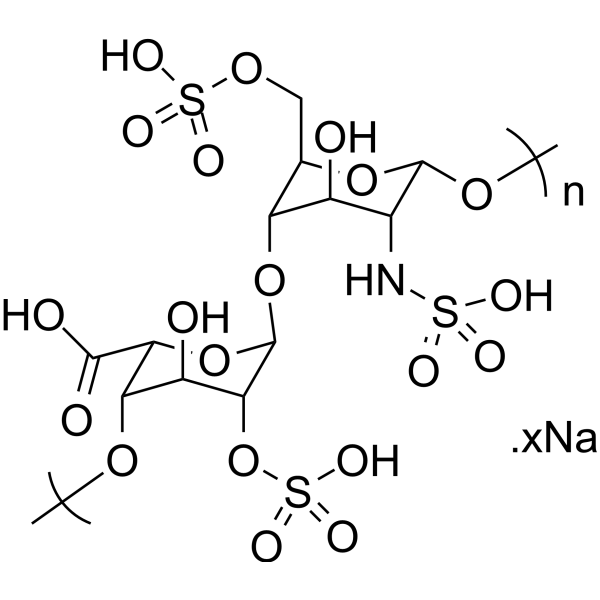
HY-17567A
Heparin sodium saltAnticoagulant -
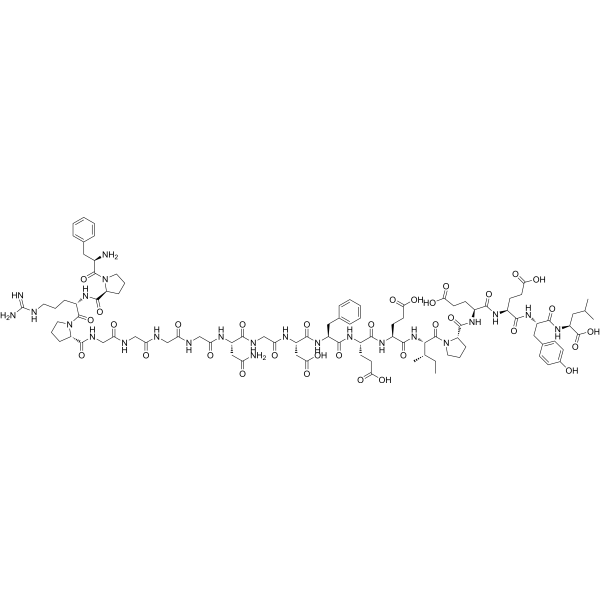
HY-P1929
BivalirudinThrombin Inhibitor -
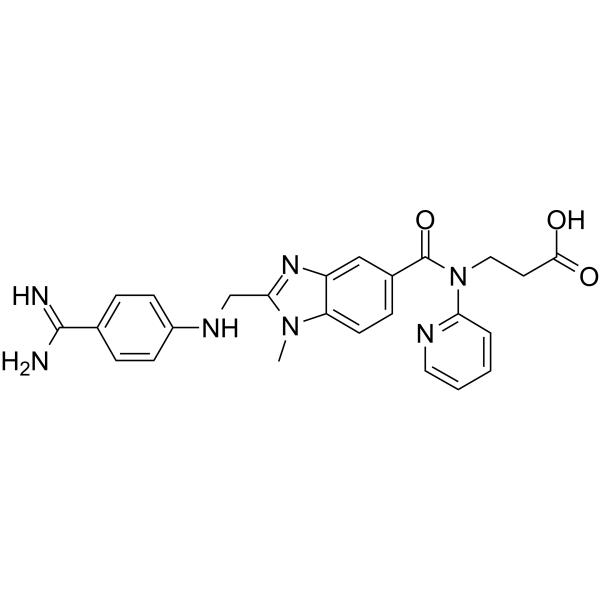
HY-10163
DabigatranThrombin Inhibitor -
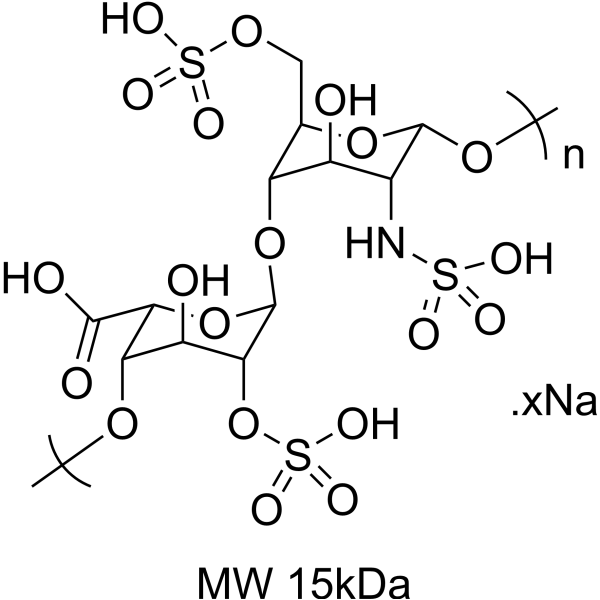
HY-17567C
Heparin sodium salt (MW 15kDa)Anticoagulant Agent -
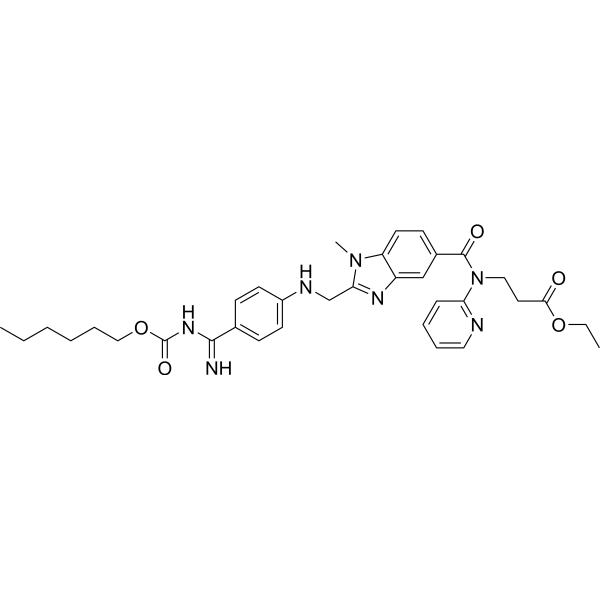
HY-10274
Dabigatran etexilateAntithrombotic Agent -

HY-10163R
Dabigatran (Standard)Thrombin Inhibitor -
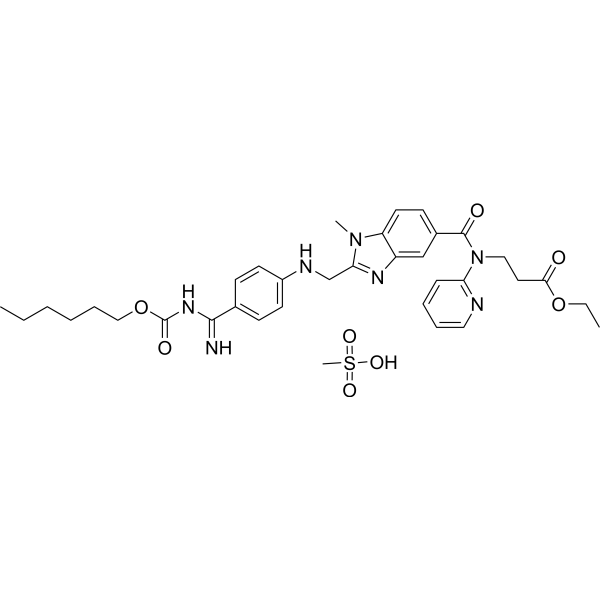
HY-10274A
Dabigatran etexilate mesylateAntithrombotic Agent -
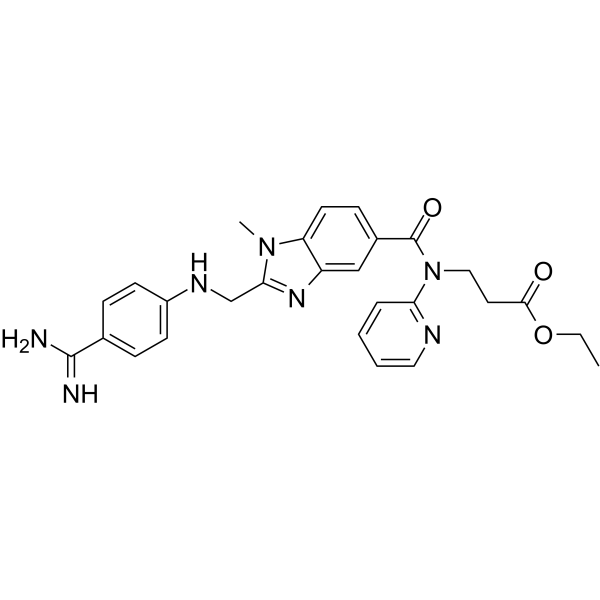
HY-17378
Dabigatran ethyl esterNQO2 Inhibitor/Thrombin Inhibitor -

HY-10274R
Dabigatran etexilate (Standard)Antithrombotic Agent -

HY-10274AR
Dabigatran etexilate mesylate (Standard)Antithrombotic Agent
Voir tous les produits spécifiques à Isoform Antibiotic
More

Activité biologique
Description
In Vitro
TS 155-2 shows cytotoxic effect against HeLa cells (IC50: 72.6 nM) at 48 h[1].
MedChemExpress (MCE) has not independently confirmed the accuracy of these methods. They are for reference only.


Chemical Information
-
CAS No. 1314486-37-7
-
Masse moléculaire 704.89
-
Formule C39H60O11
-
SMILES
O=C(O[C@@H]1C[C@@]([C@@H](C)[C@H](O)[C@@H]([C@H]([C@@H](OC)/C=C/C=C(C)/C[C@H](C)[C@H](O)[C@H](C)/C=C(C)/C=C2\C)OC2=O)C)(O)O[C@H](C(C)C)[C@H]1C)/C=C/C(O)=O
-
Synonyms
JBIR 100
-
Structure Classification
-
Initial Source
Streptomyces sp. IR027-SDHV6
-
Livraison
Room temperature in continental US; may vary elsewhere.
-
Stockage
Please store the product under the recommended conditions in the Certificate of Analysis.


Pureté et documentation
Références
[1]. Ueda JY, et al. A new 16-membered tetraene macrolide JBIR-100 from a newly identified Streptomyces species. J Antibiot (Tokyo). 2010 Oct;63(10):627-9. [Content Brief]
[2]. Molloy EM, et al. Biological characterization of the hygrobafilomycin antibiotic JBIR-100 and bioinformatic insights into the hygrolide family of natural products. Bioorg Med Chem. 2016 Dec 15;24(24):6276-6290. [Content Brief]

Calculators
Concentration (start) × Volume (start) = Concentration (final) × Volume (final)


TS 155-2 Related Classifications
HY-123095 Related Classifications
 Powered by Bioz