Infection
-
Infection Related Products (18904)
Related Products (18904)

-
Antibodies (22)
-
Enduracidin
 0 ImagesCat. No.: HY-131093CAS No.: 11115-82-5Synonyms: Enramycin
Enduracidin (Enramycin) is a polypeptide antibiotic produced by Streptomyces fungicides.
-
LDC4297
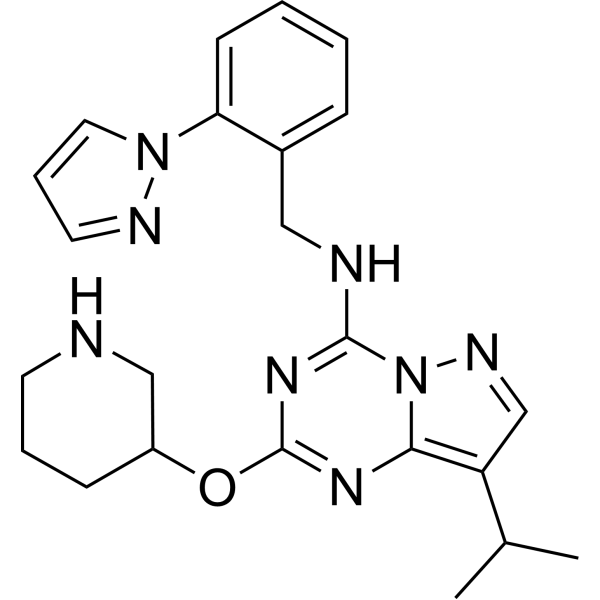 0 Images
LDC4297 is a selective inhibitor of CDK7 with an IC50 value of 0.13 nM. LDC4297 inhibits human cytomegalovirus (HCMV) replication with an EC50 value of 24.5 nM. LDC4297 shows broad antiviral activities to Herpesviridae, Adenoviridae, Poxviridae, Retroviridae and Orthomyxoviridae with EC50 value of 0.02-1.21 μM. LDC4297 can be used for the research of infection.
-
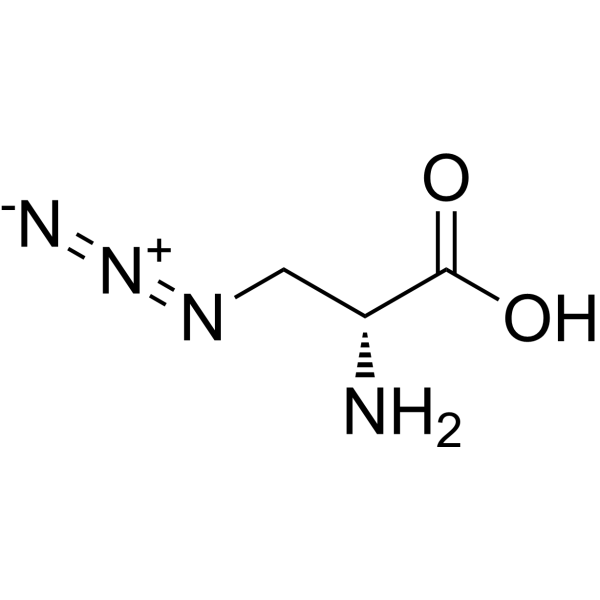
3-Azido-D-alanine
 0 Images
3-Azido-D-alanine is an orally active, selective metabolic tracer applicable for click chemistry labeling. 3-Azido-D-alanine can be selectively incorporated into bacterial cell wall peptidoglycans, introducing azido groups to enable copper-free click chemistry-based modification, labeling and single-cell tracing, while it cannot be metabolically incorporated by mammalian cells. 3-Azido-D-alanine can be used in studies related to bacterial infection, intracranial infection, otitis media, intestinal inflammation and tissue damage, as well as sepsis.
-
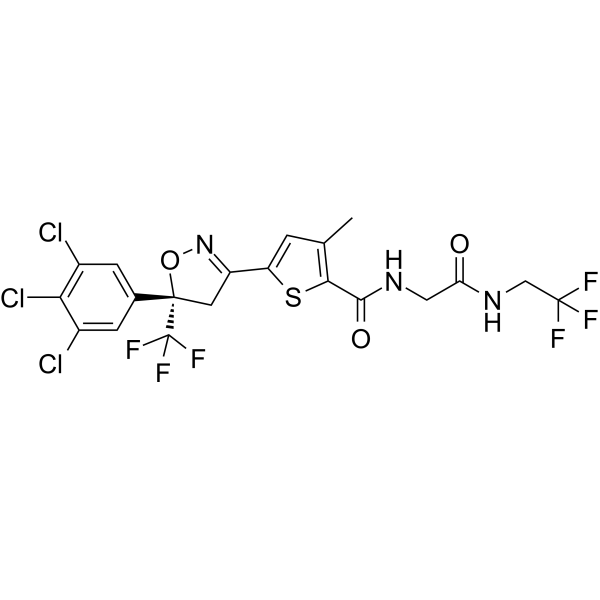
Lotilaner
 0 Images
Lotilaner is a parasiticide, acts as a potent non-competitive antagonist of insects GABACl receptors, with an IC50 of 23.84 nM for Drosophila melanogaster GABA receptor. No effect on a dog GABAA receptor.
-
MS-L6
 0 Images
MS-L6 is a OXPHOS inhibitor and antimalarial agent. MS-L6 inhibits NADH oxidation and electron transport. MS-L6 induces OXPHOS uncoupling, dissipates mitochondrial membrane potential, increases non-ATP-coupled oxygen consumption, and reduces ATP synthesis. MS-L6 triggers the production of ROS. MS-L6 exhibits anti-amoebic activity. MS-L6 exerts antitumor activity in mouse lymphoma xenograft models. MS-L6 can be used in research related to B-cell lymphoma, T-cell lymphoma, and non-Hodgkin B-cell lymphoma.
-
Hydroxylamine (50% w/w in water)
 0 Images
Hydroxylamine (50% w/w in water) is an inorganic highly reactive compound and antibacterial agent. Hydroxylamine (50% w/w in water) acutely activates the transport activity of GLUT1, inhibits Monoamine oxidase activity. Hydroxylamine (50% w/w in water) inhibits nitrite oxidizing bacteria. Hydroxylamine (50% w/w in water) activates glucose uptake. Hydroxylamine (50% w/w in water) can be used in the research of inflammatory diseases and allergies[1][2][3][4].
-
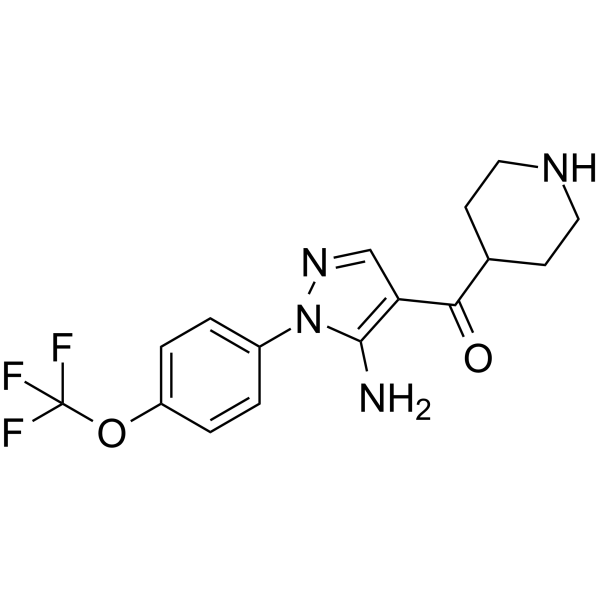
ARN1468
 0 Images
ARN1468 (compound 5) is an orally active and potent SerpinA3n inhibitor. ARN1468 can inhibit serpins activity would set the protease free to further reduce prion accumulation. ARN1468 shows anti-prion effect in ScGT1 RML, ScGT1 22L, ScN2a RML, and ScN2a 22L cell lines, with EC50 values of 8.64, 19.3, 11.2, and 6.27 μM.
-
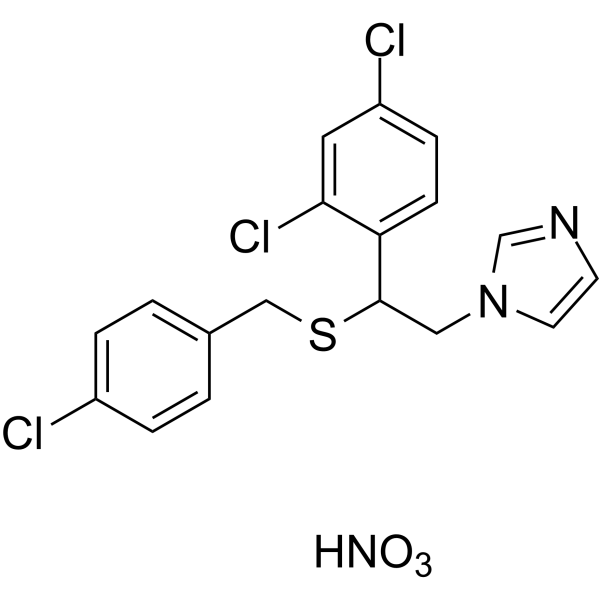
Sulconazole mononitrate
 0 ImagesSynonyms: (±)-Sulconazole mononitrate
Sulconazole mononitrate ((±)-Sulconazole mononitrate), an imidazole derivative, is a broad-spectrum fungicide. Sulconazole mononitrate can be used for the research of dermatomycoses, pityriasis versicolor, and cutaneous candidiasis.
-
Trifluoromethyl-tubercidin
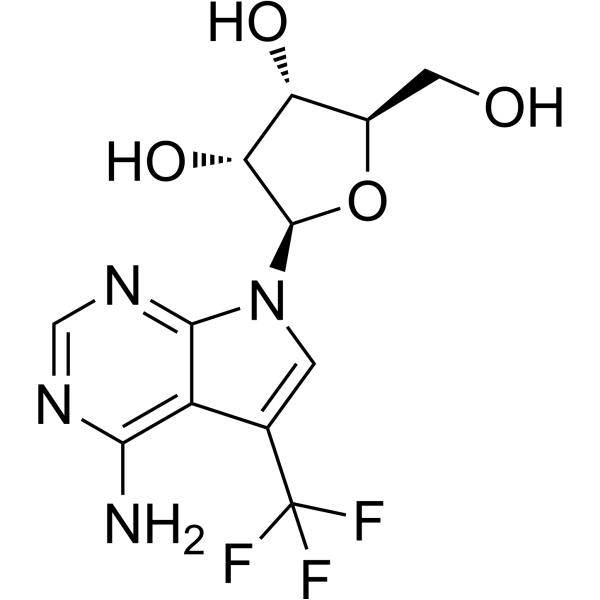 0 ImagesSynonyms: TFMT
Trifluoromethyl-tubercidin (TFMT) is an inhibitor of 2'-O-ribose methyltransferase 1 (MTr1). Trifluoromethyl-tubercidin can inhibit the replication of influenza A and B viruses by interfering with the cap-snatching process of the influenza virus. Trifluoromethyl-tubercidin has antiviral activity and low toxicity.
-
D-Phenylalanine-d5
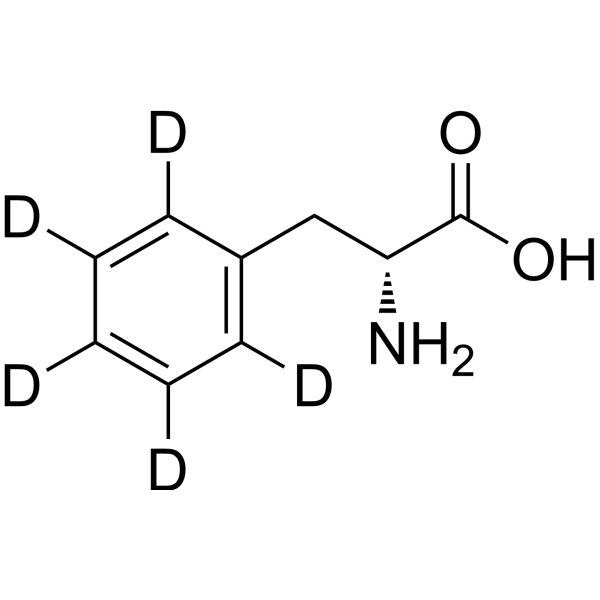 0 Images
D-Phenylalanine-d5 is the deuterium labeled D-Phenylalanine. D-Phenylalanine is the synthetic dextro isomer of phenylalanine. D-Phenylalanine inhibits biofilm development of Pseudoalteromonas sp. SC2014.
-
Elebsiran sodium
 0 ImagesCat. No.: HY-147266Synonyms: VIR-2218 sodium
Elebsiran (VIR-2218) sodium is a siRNA that targets and degrades hepatitis B virus (HBV) and hepatitis D virus (HDV) RNA transcripts. Elebsiran sodium leads to a significant decrease in HBV surface antigen (HBsAg) and a reduction in viral load. Elebsiran sodium binds to the sialic acid-depleted glycoprotein receptor (ASGPR) on the surface of liver cells through the GalNAc ligand, achieving liver-targeted delivery and demonstrating improved liver safety. Elebsiran sodium can be used for the study of chronic HBV/HDV infections.
-
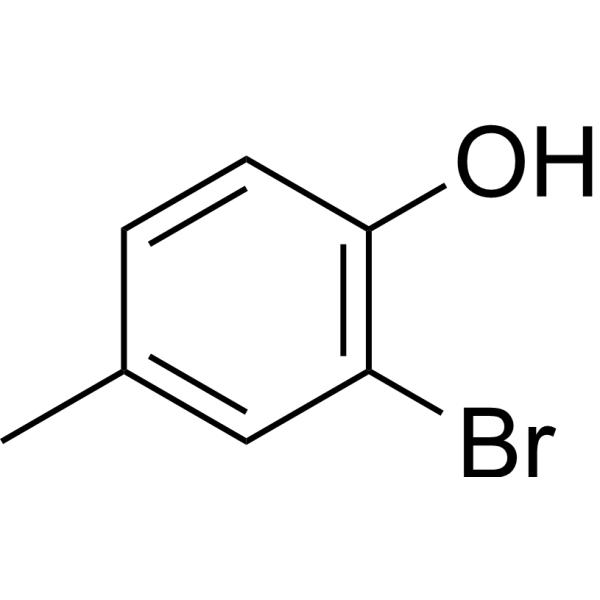
2-Bromo-4-methylphenol
 0 Images
2-Bromo-4-methylphenol is a versatile compound. 2-Bromo-4-methylphenol produces an iodine-like odor in reverse osmosis water and red wine matrices. 2-Bromo-4-methylphenol exhibits antibacterial properties and effectively inhibits the growth of bacteria and fungal. 2-Bromo-4-methylphenol is an important intermediate for a variety of organic compounds.
-
Amoxicillin-clavulanate potassium
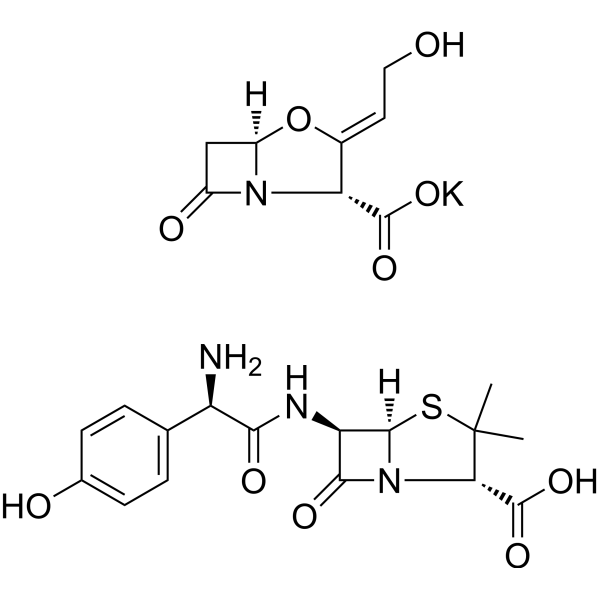 0 ImagesCat. No.: HY-135532CAS No.: 74469-00-4
Amoxicillin-clavulanate potassium is an orally active antibacterial composition consisting of Amoxicillin (HY-B0467A) and the β-lactamase inhibitor Clavulanate potassium (HY-A0256A). In Amoxicillin-clavulanate potassium, Amoxicillin binds to bacterial penicillin-binding proteins to inhibit peptidoglycan synthesis and exert a bactericidal effect; Clavulanate potassium protects Amoxicillin from hydrolysis by β-lactamase. Amoxicillin-clavulanate potassium exhibits antibacterial activity against β-lactamase-producing Gram-positive and Gram-negative bacteria. Amoxicillin-clavulanate potassium dose-dependently interferes with the function of ameloblasts at the maturation stage, disrupts the enamel mineralization process, and induces enamel developmental defects. Amoxicillin-clavulanate potassium can be used in research related to bacterial infections.
-
Olgotrelvir sodium
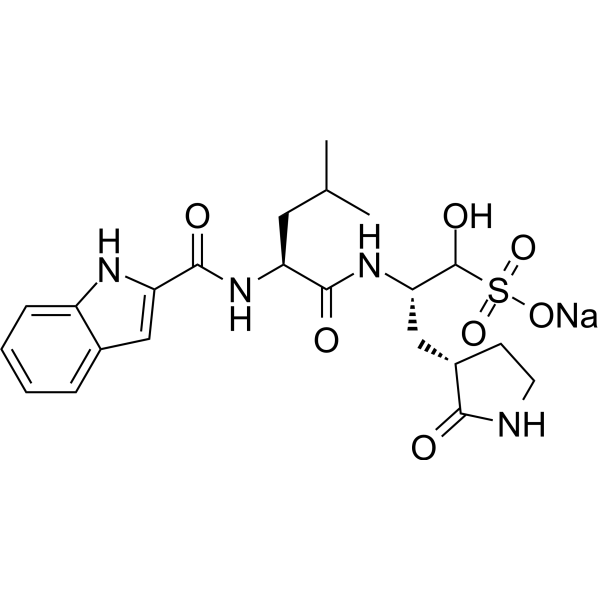 0 ImagesCat. No.: HY-156655ACAS No.: 2763596-72-9Synonyms: STI-1558 sodium
Olgotrelvir (STI-1558) sodium is an orally active dual inhibitor of coronavirus main protease (Mpro) and human cell cathepsin (Cathepsin L). Olgotrelvir sodium is readily converted to its active form, AC1115, in full blood and/or plasma. Olgotrelvir sodium can effectively inhibit both SARS-CoV-2 replication and entry into host cells.
-
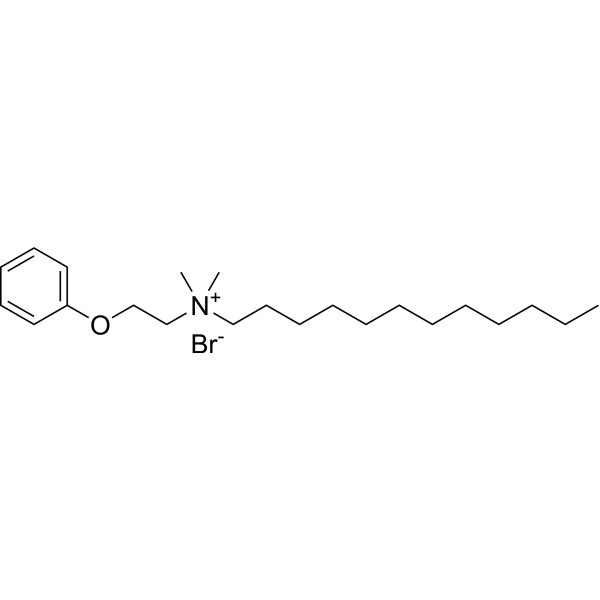
Domiphen bromide
 0 Images
Domiphen bromide is a cationic active quaternary ammonium salt and also an inhibitor of HERG channels (IC50: 9 nM), aminopeptidase-like enzymes, Escherichia coli alkaline phosphatase, and α-chymotrypsin. Domiphen bromide has multiple activities such as antibacterial, antimalarial, and disinfectant properties, and it is also a synergist of Colistin (HY-113678). Domiphen bromide can be used as a chemical preservative and a cationic surfactant, and it can also be used in the research of bacterial infectious diseases such as pharyngitis, thrush, and oral ulcers.
-
10-Undecenoic acid,98% (stabilized with TBC)
 0 Images
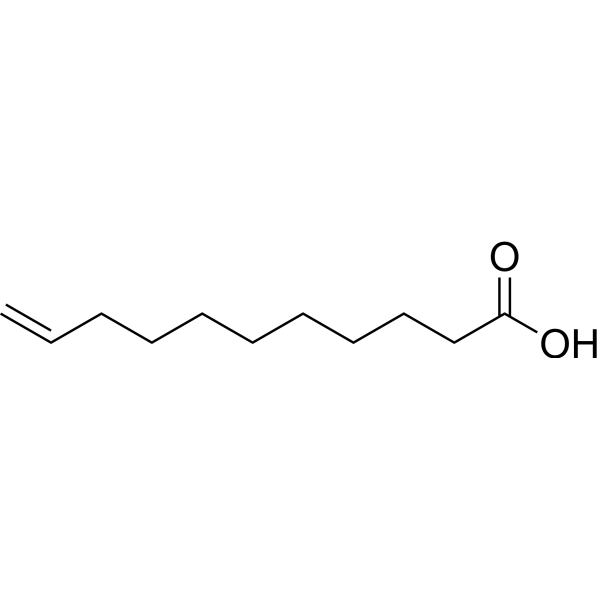
10-Undecenoic acid (Undecylenic acid) is an antifungal agent. 10-Undecenoic acid inhibits Aβ oligomerization, scavenges ROS and inhibits μ-calpain activity. 10-Undecenoic acid has neuroprotective effects. 10-Undecenoic acid has anticancer effects on a variety of tumors. 10-Undecenoic acid inhibits C. albicans biofilm formation and MRSA infection. 10-Undecenoic acid inhibits quorum sensing signals of Bacillus subtilis and Pseudomonas aeruginosa.
-
Kanamycins sulfate
 0 Images
Kanamycins sulfate is a blood-brain barrier-permeable JNK1 and Bcl-2 modulator as well as an antibiotic, with broad-spectrum antibacterial, and biofilm-inhibiting activities, and it induces autophagy. Kanamycins sulfate promotes Bcl-2 phosphorylation to upregulate autophagy levels, triggering changes such as mitochondrial swelling and endoplasmic reticulum expansion. Consequently, it causes reversible neuronal damage in the dorsal cochlear nucleus without inducing significant neuronal apoptosis. In the presence of exogenous alanine or glucose, Kanamycins sulfate effectively kills drug-resistant bacteria, restores drug sensitivity of multidrug-resistant bacteria, and alleviates urinary tract and kidney infections in mice. Kanamycins sulfate can be applied to scientific research related to Mycobacterium tuberculosis, salmonellosis, brucellosis, shigellosis, urinary tract infections, and reversible neurotoxicity.