



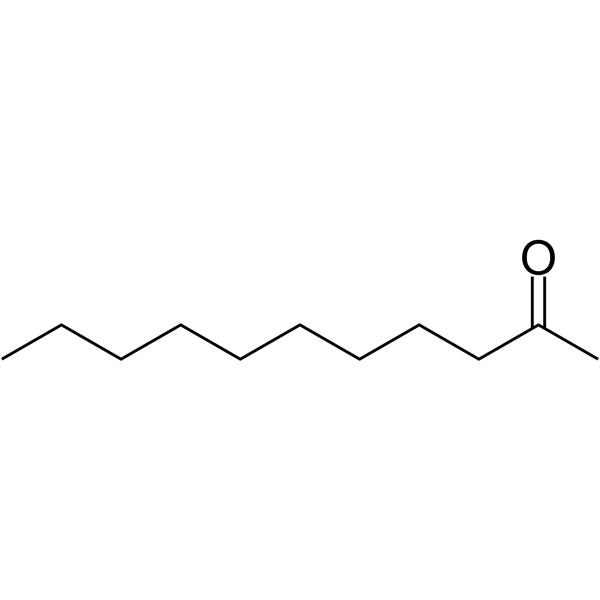
2-Undecanone

Based on 1 Customer Validation
2-Undecanone is an orally active organic ketone. 2-Undecanone exerts antibacterial effects by inhibiting bacterial chaperone systems and interfering with the refolding of heat-inactivated proteins. 2-Undecanone also ameliorates asthmatic inflammation and airway remodeling by blocking the NF-κB pathway, and activates the Nrf2 pathway to reduce oxidative damage and prevent lung cancer induced by Benzo[a]pyrene (HY-107377). 2-Undecanone can be used in research related to cancer, asthma and infections.
For research use only. We do not sell to patients.
- Purity : 99.91%
- CAS No.: 112-12-9
- Formula: C11H22O
- Molecular Weight:170.30
-
Storage:
Store at room temperature, keep dry and cool.
In solvent -80°C, 1 year , -20°C, 6 months

To place orders, for customer services and technical support, please contact: MedChemExpress USA
Tel: 609-228-6898 E-mail: [email protected] [email protected]


-
 Biological Activity
-
Chemical Information
-
Solvent & Solubility
- Protocols
- Purity & Documentation
- References
-
 Help & FAQs





Biological Activity
Description
IC50 & Target
|
Human Endogenous Metabolite |
In Vitro
2-Undecanone (6.25-200 μM; 48 h) exhibits low intrinsic cytotoxicity toward BEAS-2B cells, and reverses Benzo[a]pyrene (B[a]P) (HY-107377)-induced cytotoxicity in a dose-dependent manner[1].
2-Undecanone (25-100 μM; 48 h) dose-dependently reverses B[a]P-induced G0/G1 cell cycle arrest in BEAS-2B cells and restores the expression of cyclin D1[1].
2-Undecanone (25-100 μM; 48 h) reduces B[a]P-induced DNA strand breaks in BEAS-2B cells[1].
2-Undecanone (25-100 μM; 48 h) dose-dependently reduces B[a]P-induced overexpression of p-H2A.X in BEAS-2B cells, indicating that it can alleviate DNA double-strand breaks[1].
2-Undecanone (25-100 μM; 24 h) dose-dependently reduces B[a]P-induced overexpression of IL-1β and pro-IL-1β in BEAS-2B cells, indicating that it inhibits inflammatory responses[1].
2-Undecanone (25-100 μM; 48 h) reduces the excessive intracellular ROS production induced by B[a]P in BEAS-2B cells[1].
2-Undecanone (50 μM) activates the Nrf2-HO-1/NQO-1 signaling pathway in BEAS-2B cells and reverses the inhibitory effect of B[a]P on this pathway in BEAS-2B cells[1].
2-Undecanone (50 μM; 24-48 h) exerts protective effects against B[a]P-induced cytotoxicity, excessive ROS production and DNA damage in BEAS-2B cells via the Nrf2-HO-1/NQO-1 signaling pathway[1].
2-Undecanone (20 μmol; 0-90 min) almost completely inhibits the DnaK-ClpB-dependent refolding of heat-inactivated Photobacterium leiognathi luciferase in cell lysates of Escherichia coli JW3663 ibpB::kan (pLeo1)[2].
2-Undecanone (12.5-50 μM; 48 h) inhibits PDGF-BB-induced proliferation of primary mouse airway smooth muscle cells in a dose-dependent manner when co-incubated with 20 ng/mL PDGF-BB[3].
2-Undecanone (12.5-50 μM; 48 h) dose-dependently attenuates PDGF-BB-induced migration of primary mouse airway smooth muscle cells pretreated with 20 ng/mL PDGF-BB[3].
When co-incubated with 20 ng/mL PDGF-BB, 2-Undecanone (12.5-50 μM; 48 h) dose-dependently reverses PDGF-BB-induced phenotypic switch of primary mouse airway smooth muscle cells from the contractile to the synthetic phenotype, restores calmodulin expression and reduces osteopontin expression[3].
2-Undecanone (12.5-50 μM; 48 h) inhibits PDGF-BB-induced secretion of the proinflammatory cytokines IL-6 and TNF-α from primary mouse airway smooth muscle cells in a dose-dependent manner[3].
2-Undecanone (50 μM; 48 h) inhibits PDGF-BB-induced activation of the NF-κB pathway in primary mouse airway smooth muscle cells during co-incubation with 20 ng/mL PDGF-BB, reduces the phosphorylation levels of IκBα and NF-κB p65, and blocks the nuclear translocation of NF-κB p65[3].
MedChemExpress (MCE) has not independently confirmed the accuracy of these methods. They are for reference only. Further protocols information, click here.
-
Cell Line:BEAS-2B human lung epithelial cells
-
Concentration:6.25, 12.5, 25, 50, 100 and 200 μM
-
Incubation Time:48 h
-
Result:Did not change or weakly decreased BEAS-2B cell viability when used alone at 6.25-200 μM for 48 h.
Effectively increased cell viability in a dose-dependent manner when cotreated with 5 μM B[a]P at 6.25-200 μM for 48 h.
-
Cell Line:BEAS-2B human lung epithelial cells
-
Concentration:25, 50, 100 μM
-
Incubation Time:48 h
-
Result:Significantly decreased the percentage of cells in G0/G1 phase and reversed the suppression of cyclin D1 protein levels in a dose-dependent manner.
-
Cell Line:BEAS-2B human lung epithelial cells
-
Concentration:25, 50, 100 μM
-
Incubation Time:24 h
-
Result:Significantly decreased B[a]P-induced increases in IL-1β protein levels in culture supernatants, and pro-IL-1β and IL-1β protein levels in cell lysates, in a dose-dependent manner (p < 0.001) when cotreated with 5 μM B[a]P at 25, 50, or 100 μM for 24 h compared with B[a]P treatment alone.
In Vivo
2-Undecanone (100-400 mg/kg; i.g.; once daily; 7 days) dose-dependently alleviates OVA-induced asthma in female BALB/c mice by reducing airway inflammation, histopathological lung changes, and activation of the NF-κB pathway[3].
MedChemExpress (MCE) has not independently confirmed the accuracy of these methods. They are for reference only.
-
Animal Model:A/J mice (male, 4-6 weeks old, 18-22 g, intraperitoneal injection of 100 mg/kg benzo(a)pyrene to induce lung adenocarcinoma)[1]
-
Dosage:100 mg/kg; 200 mg/kg
-
Administration:p.o.; five times weekly; 38 weeks
-
Result:Reduced visible lung tumor numbers.
Downregulated phosphorylated H2A.X (p-H2A.X) protein levels in mouse lung tissue.
Reduced plasma interleukin-1β (IL-1β) levels.
Showed no significant differences in body weight or organ indexes (heart, liver, spleen, kidney, thymus) compared to control mice.
-
Animal Model:BALB/c (female, 6 weeks old, 18-22 g, OVA-induced allergic airway inflammation)[3]
-
Dosage:100 mg/kg; 200 mg/kg; 400 mg/kg
-
Administration:i.g.; once daily; 7 days
-
Result:Reduced OVA-induced inflammatory cell infiltration with dose-dependent reduction in lung inflammation scores, goblet cell hyperplasia with dose-dependent reduction in PAS-positive cell counts, and airway smooth muscle thickness with dose-dependent reduction in α-SMA-positive staining and smooth muscle thickness measurements in lung tissues.
Dose-dependently reduced total inflammatory cell counts, eosinophil counts, neutrophil counts, lymphocyte counts, and macrophage counts in BALF.
Dose-dependently decreased BALF levels of IL-4, IL-5, and IL-13, as well as OVA-specific IgE levels in both BALF and serum.
Inhibited OVA-induced phosphorylation of IκBα and NF-κB p65, and reduced nuclear translocation of NF-κB p65 in lung tissues (400 mg/kg dose).


Chemical Information
-
CAS No. 112-12-9
-
Appearance Liquid (Density: 0.825 g/cm3 )
-
Molecular Weight 170.30
-
Formula C11H22O
-
Color Colorless to light yellow
-
SMILES
CC(CCCCCCCCC)=O
-
Structure Classification
-
Initial Source
-
Shipping
Room temperature in continental US; may vary elsewhere.
-
Storage
Store at room temperature, keep dry and cool
In solvent -80°C 1 year -20°C 6 months


Solvent & Solubility
In Vitro:
DMSO : 100 mg/mL (587.20 mM; Need ultrasonic; Hygroscopic DMSO has a significant impact on the solubility of product, please use newly opened DMSO)
Please refer to the solubility information to select the appropriate solvent. Once prepared, please aliquot and store the solution to prevent product inactivation from repeated freeze-thaw cycles.
Storage method and period of stock solution: -80°C, 1 year; -20°C, 6 months. When stored at -80°C, please use it within 1 year. When stored at -20°C, please use it within 6 months.
Please refer to the solubility information to select the appropriate solvent. Once prepared, please aliquot and store the solution to prevent product inactivation from repeated freeze-thaw cycles.
Storage method and period of stock solution: -80°C, 1 year; -20°C, 6 months. When stored at -80°C, please use it within 1 year. When stored at -20°C, please use it within 6 months.
Concentration (start) × Volume (start) = Concentration (final) × Volume (final)
In Vivo:
Select the appropriate dissolution method based on your experimental animal and administration route.
- For the following dissolution methods, please ensure to first prepare a clear stock solution using an In Vitro approach and then sequentially add co-solvents:
- To ensure reliable experimental results, the clarified stock solution can be appropriately stored based on storage conditions. As for the working solution for In Vivo experiments, it is recommended to prepare freshly and use it on the same day.
- The percentages shown for the solvents indicate their volumetric ratio in the final prepared solution. If precipitation or phase separation occurs during preparation, heat and/or sonication can be used to aid dissolution.
Add each solvent one by one: 10% DMSO 40% PEG300 5% Tween-80 45% Saline
Solubility: ≥ 2.5 mg/mL (14.68 mM); Clear solution
This protocol yields a clear solution of ≥ 2.5 mg/mL (saturation unknown).
Taking 1 mL working solution as an example, add 100 μL DMSO stock solution (25.0 mg/mL) to 400 μL PEG300, and mix evenly; then add 50 μL Tween-80 and mix evenly; then add 450 μL Saline to adjust the volume to 1 mL.
Preparation of Saline: Dissolve 0.9 g sodium chloride in ddH₂O and dilute to 100 mL to obtain a clear Saline solution.
Add each solvent one by one: 10% DMSO 90% (20% SBE-β-CD in Saline)
Solubility: ≥ 2.5 mg/mL (14.68 mM); Clear solution
This protocol yields a clear solution of ≥ 2.5 mg/mL (saturation unknown).
Taking 1 mL working solution as an example, add 100 μL DMSO stock solution (25.0 mg/mL) to 900 μL 20% SBE-β-CD in Saline, and mix evenly.
Preparation of 20% SBE-β-CD in Saline (4°C, storage for one week): 2 g SBE-β-CD powder is dissolved in 10 mL Saline, completely dissolve until clear.
In Vivo Dissolution Calculator
Please enter the basic information of animal experiments:
-
-
-
-
Recommended: Prepare an additional quantity of animals to account for potential losses during experiments.
Please enter your animal formula composition:
-
%DMSO +
Recommended: Keep the proportion of DMSO in working solution below 2% if your animal is weak.
-
%+
-
+%Tween-80 + +
-
%Saline +
The co-solvents required include: DMSO, . All of co-solvents are available by MedChemExpress (MCE). , Tween 80. All of co-solvents are available by MedChemExpress (MCE).
Working solution concentration: 0.22 mg/mL
Method for preparing stock solution: mg drug dissolved in μL DMSO. Stock solution concentration: mg/mL.
1. Take μL DMSO stock solution;
2. Add μL .
μL , mix evenly;
3. Then add μL Tween 80, mix evenly;
4. Then add μL
Please ensure that the stock solution in the first step is dissolved to a clear state, and add co-solvents in sequence. You can use ultrasonic heating (ultrasonic cleaner, recommended frequency 20-40 kHz), vortexing, etc. to assist dissolution.

Protocols
-
Research Protocol for Infectious Diseases
Infectious-disease experiments test how pathogens interact with host barriers, innate immune receptors, inflammatory signaling, pathogen replication, and tissue injury; pattern-recognition receptors such as TLRs, RIG-I-like receptors, NOD-like receptors, and inflammasomes detect microbial molecules and activate NF-κB, interferon, and cytokine responses. The central hypothesis is that infection severity reflects the balance between pathogen burden and host response: protective inflammation restricts pathogen growth, whereas excessive or mislocalized inflammation contributes to tissue damage and disease phenotype. Unresolved questions include which host pathways are protective versus pathogenic, why some infection models fail to translate to human disease, and which combined readouts best predict clinically relevant infection outcomes.
-
ROS/oxidative-stress fluorescent staining
ROS/oxidative-stress fluorescent staining uses cell-permeant fluorogenic probes that become fluorescent after oxidation inside cells or tissues; commonly used examples include DCFH-DA/DCFDA for broad cellular oxidant detection, DHE for superoxide-related signal detection, MitoSOX for mitochondrial superoxide-related signal detection, and CellROX probes for oxidative-stress-associated fluorescence readouts. The assay detects probe oxidation rather than a single ROS species unless the probe and analysis method have been chemically validated for that species. DCFH-DA enters cells, is deacetylated by intracellular esterases to DCFH, and produces fluorescent DCF after oxidation, so the readout is used as an operational measure of total cellular oxidative stress rather than a species-specific ROS measurement. DHE and MitoSOX can report superoxide-related oxidation, but red fluorescence alone can include non-specific ethidium-like oxidation products; HPLC or optimized spectral approaches are
-
Research Protocol for Inflammation-related Diseases
The NLRP3 inflammasome is a cytosolic innate immune signaling platform that integrates priming signals and danger-signal activation to promote caspase-1 activation, maturation of IL-1β and IL-18, and gasdermin D-mediated pyroptotic cell death. The core experimental logic is to determine whether inflammatory disease phenotypes are driven by increased NLRP3 expression, ASC-containing inflammasome assembly, caspase-1 cleavage, GSDMD cleavage, and extracellular release of IL-1β/IL-18 rather than by nonspecific cell injury alone. The pathway is strongly linked to inflammation-related disease phenotypes because monosodium urate crystals activate NALP3/NLRP3 inflammasome signaling in gout-like crystal inflammation, cholesterol crystals activate NLRP3 inflammasomes in atherogenesis models, and DSS-induced intestinal inflammation has been reported to involve NLRP3 inflammasome activity. However, experimental colitis studies also show context-dependent protective effects of NLRP3 inflammasome co


Purity & Documentation
-
Data Sheet (283 KB)
-
SDS (459 KB)
- English - EN (459 KB)
- Français - FR (459 KB)
- Deutsch - DE (459 KB)
- Norwegian - NO (459 KB)
- Español - ES (459 KB)
- Swedish - SV (459 KB)
- Italian - IT (459 KB)
- Korean - KR (459 KB)
- Portuguese - PT (459 KB)
-
Handling Instructions (2659 KB)
References
[1]. Lou Y, et al. Houttuynia cordata Thunb. and its bioactive compound 2-undecanone significantly suppress benzo(a)pyrene-induced lung tumorigenesis by activating the Nrf2-HO-1/NQO-1 signaling pathway. J Exp Clin Cancer Res. 2019;38(1):242. Published 2019 Jun 7. [Content Brief]
[2]. Melkina OE, et al. Ketones 2-heptanone, 2-nonanone, and 2-undecanone inhibit DnaK-dependent refolding of heat-inactivated bacterial luciferases in Escherichia coli cells lacking small chaperon IbpB. Appl Microbiol Biotechnol. 2017;101(14):5765-5771. [Content Brief]
[3]. Song G, et al. 2-Undecanone alleviates asthma by inhibiting NF-κB pathway. Biochem Cell Biol. 2023;101(1):101-111. [Content Brief]


Complete Stock Solution Preparation Table
Please refer to the solubility information to select the appropriate solvent. Once prepared, please aliquot and store the solution to prevent product inactivation from repeated freeze-thaw cycles.
Storage method and period of stock solution: -80°C, 1 year; -20°C, 6 months. When stored at -80°C, please use it within 1 year. When stored at -20°C, please use it within 6 months.
| Optional Solvent | Concentration Solvent Mass | 1 mg | 5 mg | 10 mg | 25 mg |
|---|---|---|---|---|---|
| DMSO | 1 mM | 5.8720 mL | 29.3600 mL | 58.7199 mL | 146.7998 mL |
| 5 mM | 1.1744 mL | 5.8720 mL | 11.7440 mL | 29.3600 mL | |
| 10 mM | 0.5872 mL | 2.9360 mL | 5.8720 mL | 14.6800 mL | |
| 15 mM | 0.3915 mL | 1.9573 mL | 3.9147 mL | 9.7867 mL | |
| 20 mM | 0.2936 mL | 1.4680 mL | 2.9360 mL | 7.3400 mL | |
| 25 mM | 0.2349 mL | 1.1744 mL | 2.3488 mL | 5.8720 mL | |
| 30 mM | 0.1957 mL | 0.9787 mL | 1.9573 mL | 4.8933 mL | |
| 40 mM | 0.1468 mL | 0.7340 mL | 1.4680 mL | 3.6700 mL | |
| 50 mM | 0.1174 mL | 0.5872 mL | 1.1744 mL | 2.9360 mL | |
| 60 mM | 0.0979 mL | 0.4893 mL | 0.9787 mL | 2.4467 mL | |
| 80 mM | 0.0734 mL | 0.3670 mL | 0.7340 mL | 1.8350 mL | |
| 100 mM | 0.0587 mL | 0.2936 mL | 0.5872 mL | 1.4680 mL |


2-Undecanone Related Classifications
HY-W016969 Related Classifications
 Powered by Bioz