Inflammation/Immunology
-
Inflammation/Immunology Related Products (20898)
Related Products (20898)

-
Antibodies (115)
-
Related Compound Screening Libraries (4)
-
AAL-149
 0 ImagesCat. No.: HY-168471CAS No.: 177258-60-5
-
Terfenadine N-oxide
 0 ImagesCat. No.: HY-133727CAS No.: 634901-83-0
Terfenadine N-oxide, an N-oxide derivative of Terfenadine (HY-B1193), is a histamine H1 receptor antagonist (IC50 = 2.73 μM) and an hERG potassium channel inhibitor (IC50 = 0.698 μM). Terfenadine N-oxide is can be used for the research of histamine-related allergic diseases and hERG channel-associated arrhythmias.

-
Murpanicin
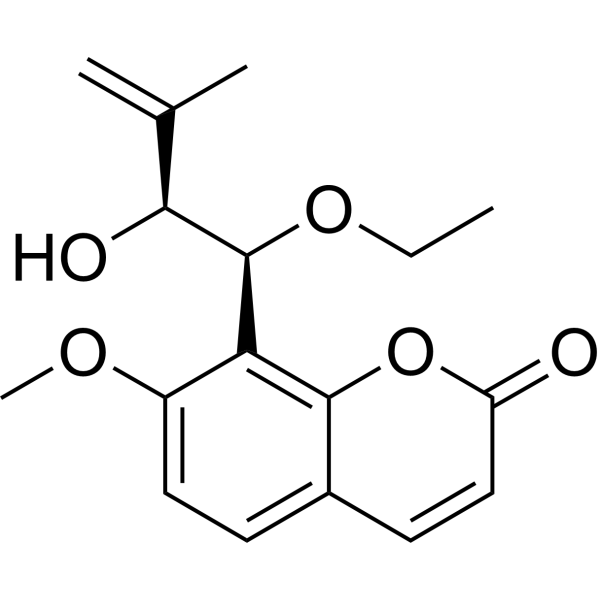 0 ImagesCat. No.: HY-N3230CAS No.: 88478-44-8Synonyms: Murraxocin
Murpanicin (murraxocin) is a coumarin that is a thermosensitive transient receptor potential vanilloid 2 (TRPV2) channel inhibitor. Murpanicin has significant anti-inflammatory and insecticidal effects.
-
(7'E,8S)-2',4,8-Trihydroxy-3-methoxy-2,4'-epoxy-8,5'-neolign-7'-en-7-one
 0 ImagesCat. No.: HY-N16980CAS No.: 2292113-33-6
(7'E,8S)-2',4,8-Trihydroxy-3-methoxy-2,4'-epoxy-8,5'-neolign-7'-en-7-one (compound 4) is a novel neolignan anti-inflammatory agent. (7'E,8S)-2',4,8-Trihydroxy-3-methoxy-2,4'-epoxy-8,5'-neolign-7'-en-7-one has an IC50 of 25.2 μM against TGF-β-induced hepatic stellate cells (HSC-T6). (7'E,8S)-2',4,8-Trihydroxy-3-methoxy-2,4'-epoxy-8,5'-neolign-7'-en-7-one may be related to blocking excessive cell proliferation in the process of liver fibrosis and can be used in the study of liver fibrosis-related diseases. (7'E,8S)-2',4,8-Trihydroxy-3-methoxy-2,4'-epoxy-8,5'-neolign-7'-en-7-one can be naturally extracted from the dried aerial parts of Penthorum chinense Pursh.

-
JAK3/BTK-IN-2
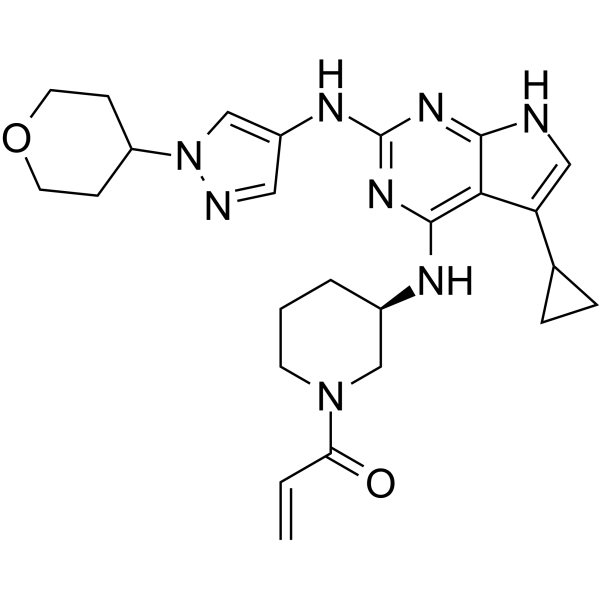 0 ImagesCat. No.: HY-143717CAS No.: 2674036-93-0
JAK3/BTK-IN-2 is a potent inhibitor of JAK3/BTK. BTK and JAK3 are two important targets for autoimmune diseases. Simultaneous inhibition of the BTK/JAK3 signalling pathway exhibits synergistic effects. JAK3/BTK-IN-2 has the potential for the research of JAK3 kinase and/or BTK-related diseases (extracted from patent WO2021147952A1, compound 004)
-
L-Lysine-d9 dihydrochloride
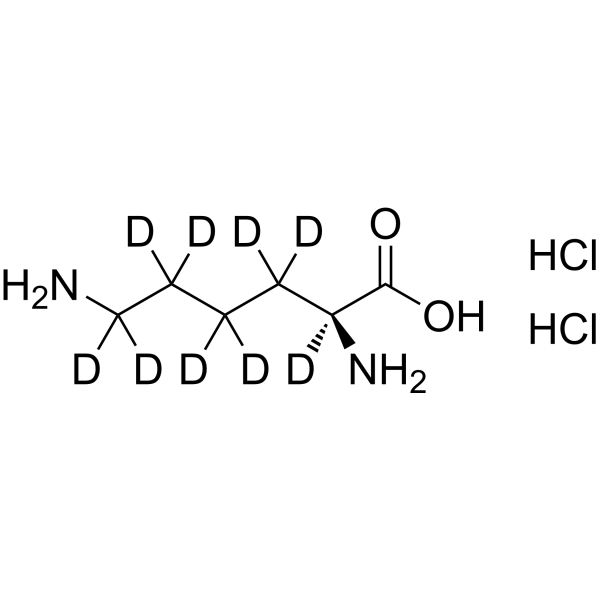 0 ImagesCat. No.: HY-W009762S4CAS No.: 2483831-52-1
L-Lysine-d9 (dihydrochloride) is the deuterium labeled L-Lysine dihydrochloride.
-
ZYH-23
 0 ImagesCat. No.: HY-176407
ZYH-23 is a potent necroptosis inhibitor. ZYH-23 blocks necroptosis by inhibiting RIPK1, RIPK3, and MLKL phosphorylation via HSP90 targeting.
-
(14S,15R)-14-Deoxyoxacyclododecindione
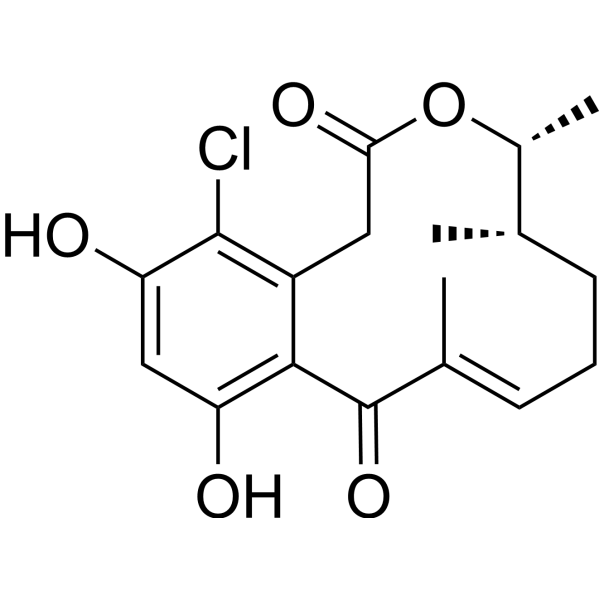 0 ImagesCat. No.: HY-162404CAS No.: 1899061-36-9
(14S,15R)-14-Deoxyoxacyclododecindione (Compound 3) acts as an inhibitor of TGF-β-dependent Smad2/3 and IL-4-dependent STAT6, with IC50 values of 90 nM and 20 nM, respectively. (14S,15R)-14-deoxyoxacyclododecindione is a potent IL-4 inhibitor with an IC50
value of 20 nM. (14S,15R)-14-Deoxyoxacyclododecindione is applicable to the research of chronic inflammation and fibrotic diseases.
-
Meclofenamic acid sodium hydrate
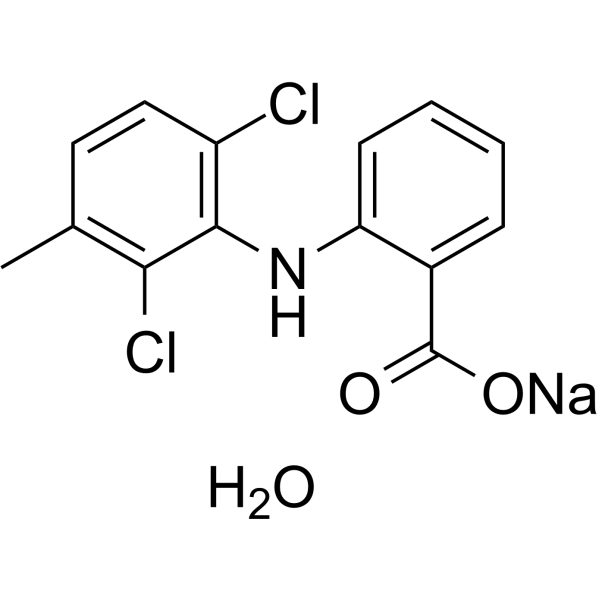 0 ImagesSynonyms: Meclofenamate sodium hydrate
Meclofenamic acid (Meclofenamate) sodium hydrate is a non-steroidal anti-inflammatory agent. Meclofenamic acid sodium hydrate is a highly selective FTO (fat mass and obesity-associated) enzyme inhibitor. Meclofenamic acid sodium hydrate competes with FTO binding for the m(6)A-containing nucleic acid. Meclofenamic acid sodium hydrate is a non-selective gap-junction blocker. Meclofenamic acid sodium hydrate inhibits hKv2.1 and hKv1.1, with IC50 values of 56.0 and 155.9 μM, respectively.
-
Anti-Siglec-10/CD24 Antibody
 0 ImagesCat. No.: HY-P992303
-
NCX-6560
 0 ImagesCat. No.: HY-108040CAS No.: 803728-45-2
NCX-6560 is an orally active nitric oxide releasing derivative of atorvastatin that inhibits cholesterol biosynthesis and has anti-inflammatory and antithrombotic activity.
-
sEH inhibitor-10
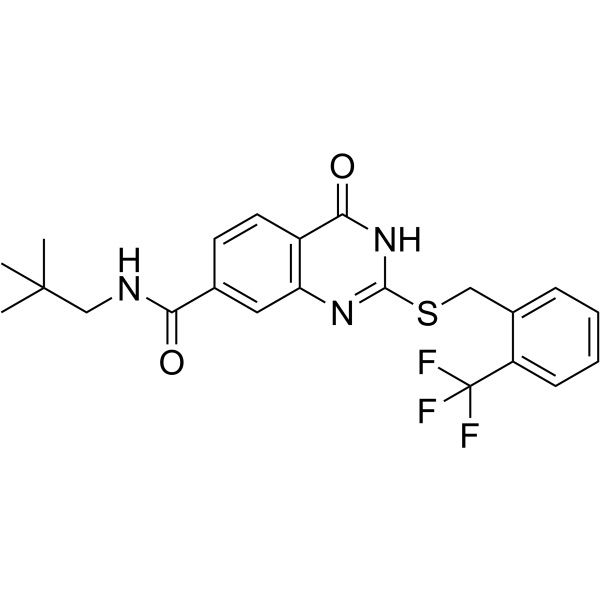 0 ImagesCat. No.: HY-151616
sEH inhibitor-10 (Compound 37) is a selective soluble epoxide hydrolase (sEH) inhibitor (IC50=0.5 μM). sEH inhibitor-10 maintains high cycloeicosatrienoic acid (EETs) levels by inhibiting sEH, thereby reducing inflammation, regulating endothelial tone, improving mitochondrial function, and reducing oxidative stress. sEH inhibitor-10 has good research potential in metabolic, renal and cardiovascular diseases.
-
KW-5805
 0 ImagesCat. No.: HY-117358CAS No.: 113302-01-5
KW-5805 is an orally effective anti-ulcer agent that potently inhibits gastric injury induced by various necrotizing agents. KW-5805 enhances the activity of gastric mucosal glucosamine synthetase, increases the levels of gastric adherent mucus and mucosal glycoproteins, and promotes the biosynthesis, storage and secretion of gastric mucus. KW-5805 inhibits the reduction of gastric mucosal blood volume and oxygen supply caused by hemorrhagic shock. KW-5805 suppresses the development of experimental gastric and duodenal ulcers, necrotizing agent-induced gastric mucosal injury, and induced gastric acid secretion. KW-5805 can be used in ulcer-related research.
-
Rorifamide
 0 ImagesCat. No.: HY-N17742CAS No.: 53078-91-4
Rorifamide is an anticough component. Rorifamide can be isolated from Rorippa montana.

-
Gnetucleistol F
 0 ImagesCat. No.: HY-N16620CAS No.: 913529-99-4
Gnetucleistol F is a stilbenolignan isolated from Gnetum cleistostachyum with anti-inflammatory activity. Gnetucleistol F exhibits potent inhibitory activities on TNF-α and malondialdehyde (MDA) with IC50 values of 10.3 and 6.36 μM, respectively. Gnetucleistol F can be used for anti-inflammatory research.
-
Perillyl acetate
 0 Images
Perillyl acetate is a monoterpene found in in essential oils of plants and is synthesized from perillyl alcohol (HY-N7000). Perillyl acetate can activate the μ-opioid receptor and exert potent analgesic activity. Perillyl acetate can be used for the research of inflammation and neurological disease such as arthritis.