



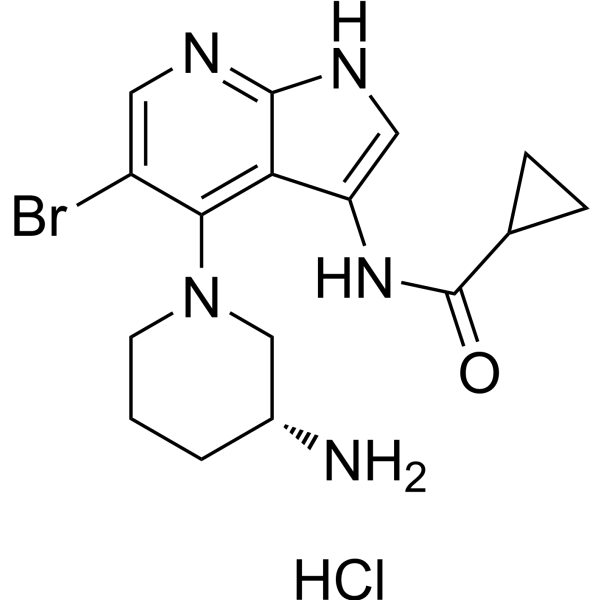
GDC0575 hydrochloride
Based on 6 publication(s) in Google Scholar
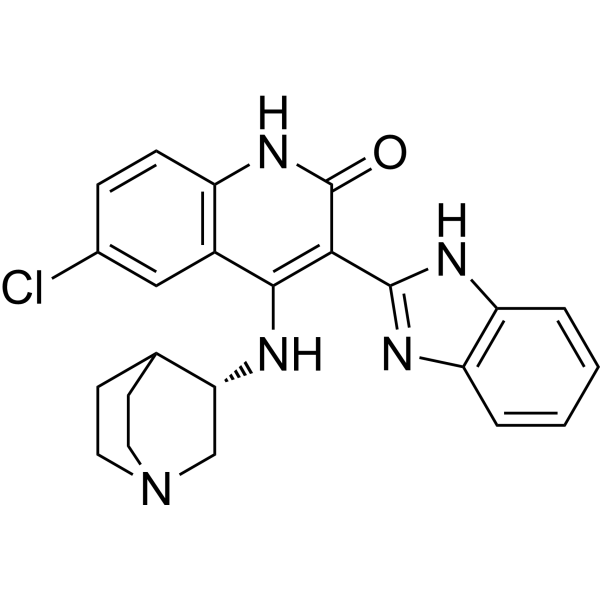
GDC0575 (ARRY-575) hydrochloride is a highly-selective and orally active Chk1 (IC50=1.2 nM) inhibitor. GDC0575 (ARRY-575) hydrochloride can be used for colitis-associated cancer (CAC) and colitis research.
For research use only. We do not sell to patients.
- CAS No.: 1196504-54-7
- Formula: C16H21BrClN5O
- Molecular Weight:414.73
-
Storage:
Please store the product under the recommended conditions in the Certificate of Analysis.

To place orders, for customer services and technical support, please contact: MedChemExpress USA
Tel: 609-228-6898 E-mail: [email protected] [email protected]


-
 Biological Activity
-
Chemical Information
- Protocols
- Purity & Documentation
- References
-
 Help & FAQs


-
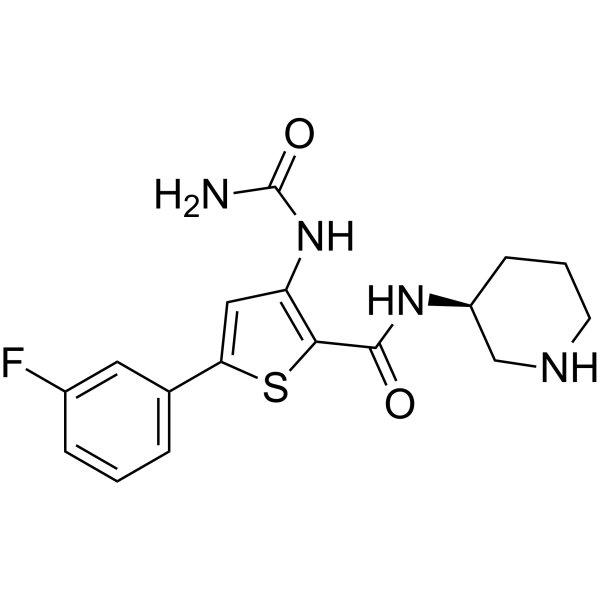
HY-10992
AZD-7762Chk Inhibitor -
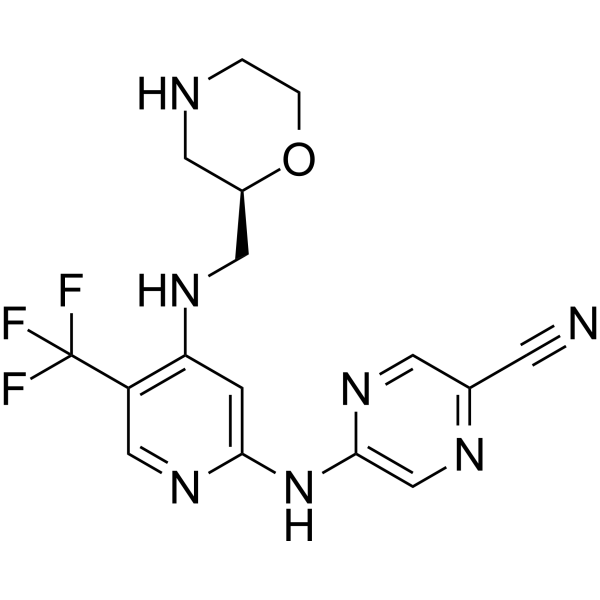
HY-18958
CCT245737CHK1 Inhibitor -
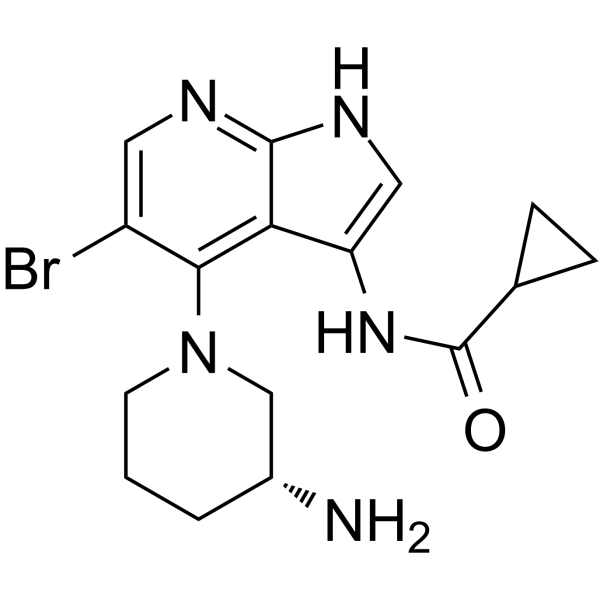
HY-112167
GDC-0575Chk1 Inhibitor -
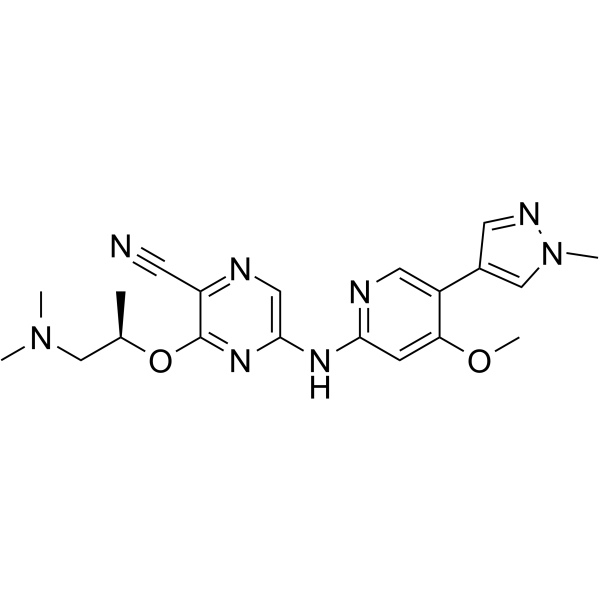
HY-18175
CCT244747 -
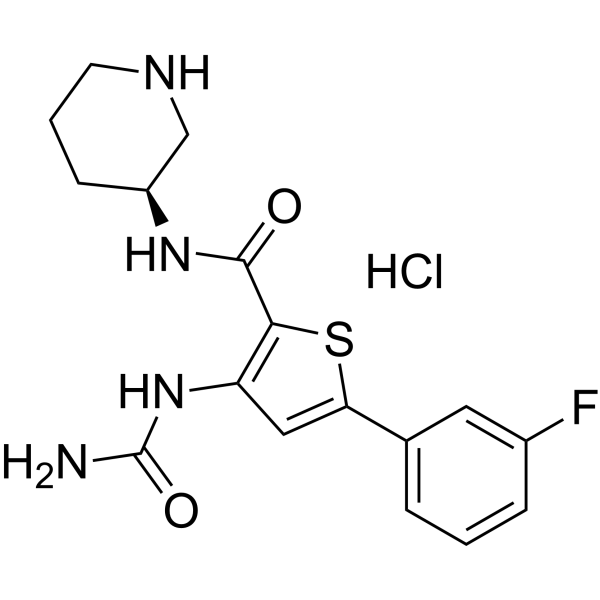
HY-10992A
AZD-7762 hydrochlorideChk Inhibitor -
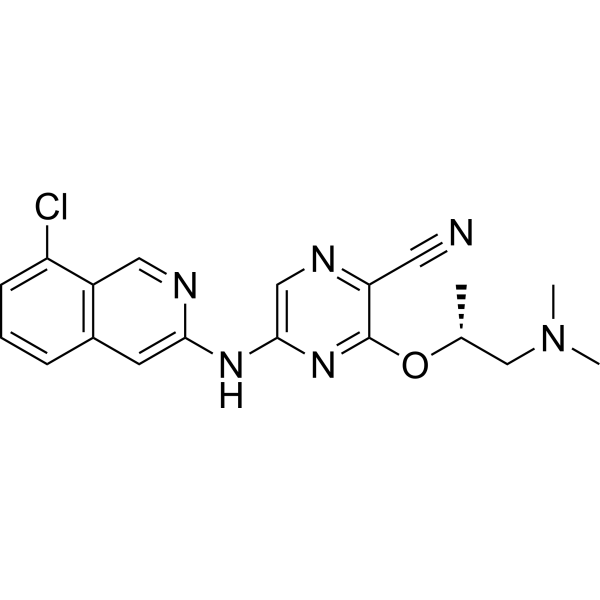
HY-100195
SAR-020106CHK1 Inhibitor -
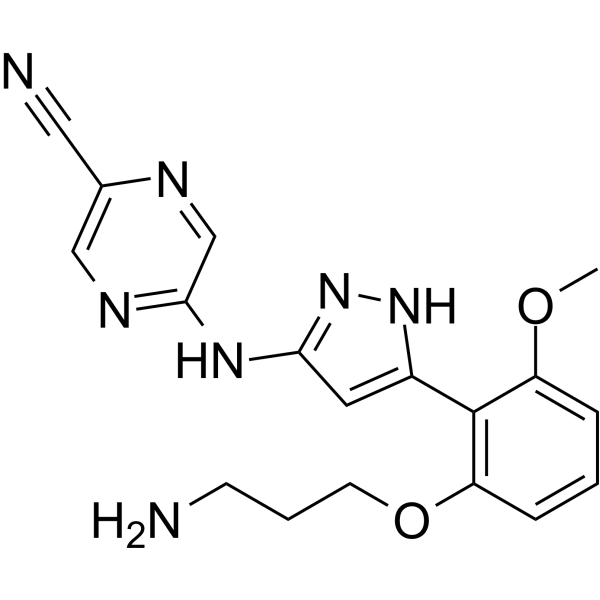
HY-18174
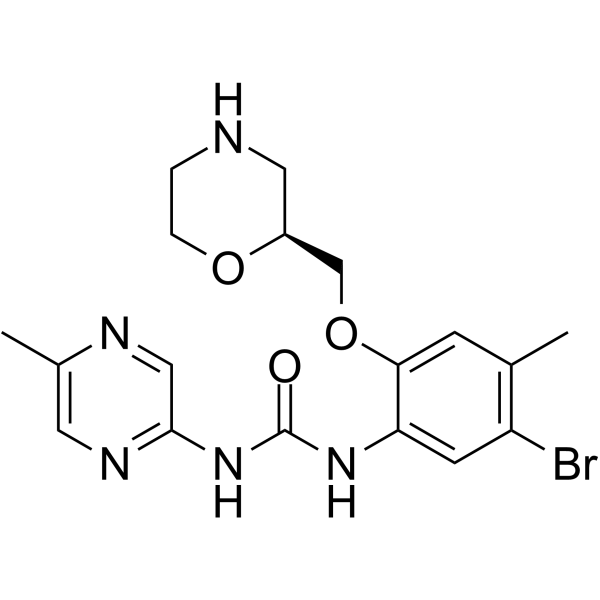
PrexasertibCHK1 Inhibitor -
HY-14720
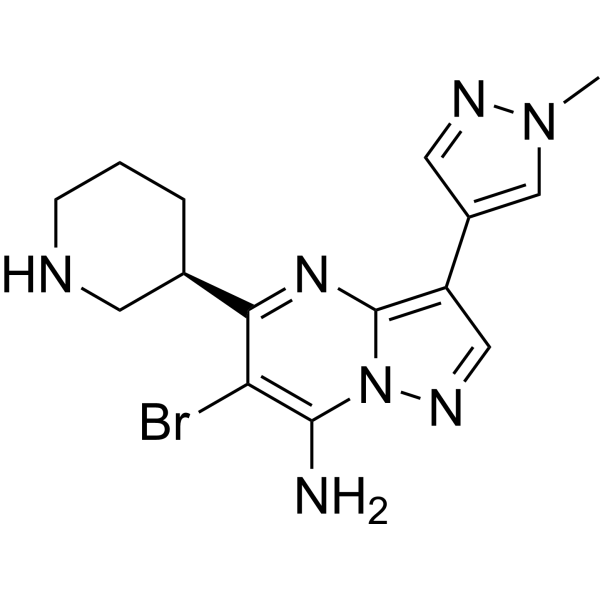
RabusertibCHK1 Inhibitor -
HY-15532
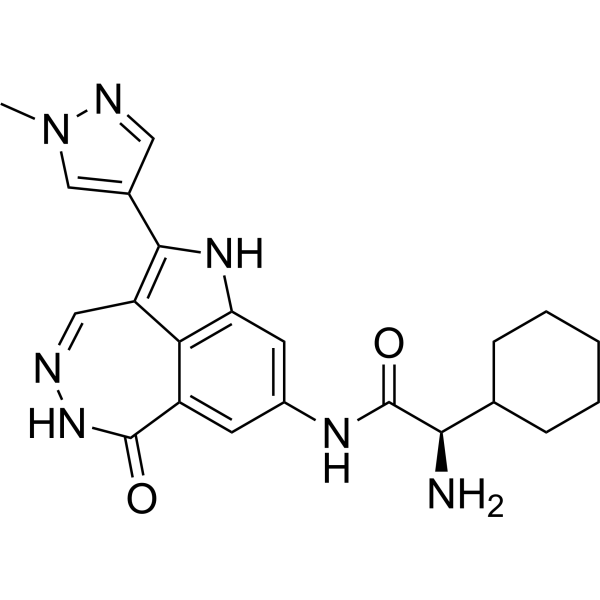
SCH900776CHK1 Inhibitor -
HY-10032
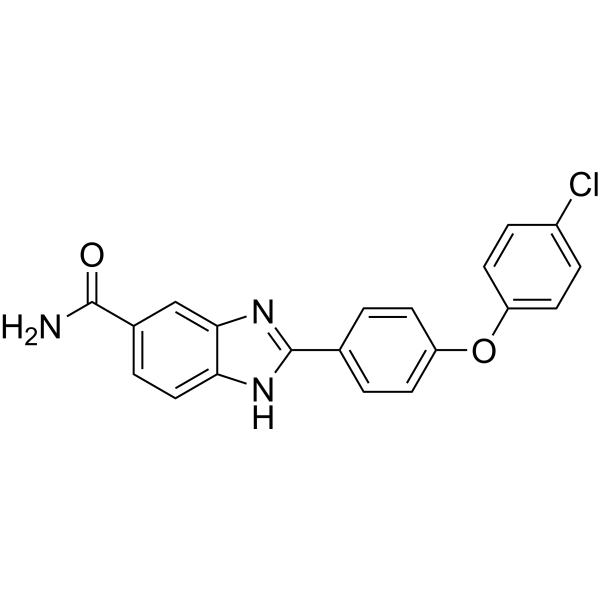
PF 477736Chk1 Inhibitor -
HY-13946
BML-277 -
HY-13263
CHIR-124Checkpoint Kinase (Chk) Inhibitor
Publications Citing Use of MedChemExpress (MCE) GDC0575 hydrochloride
More

Biological Activity
Description
IC50 & Target
[1]|
Chk1 1.2 nM (IC50) |
In Vitro
GDC-0575 dihydrochloride is a selective and orally bioavailable CHK1 inhibitor, with an IC50 of 1.2 nM. GDC-0575 (100 nM) suppressses CHK1 activation induced by AraC by decreasing the level of Tyr15-phosphorylated CDK2[1]. GDC-0575 dihydrochloride (100 nM) has no effect on the viability of AML cells, but significantly reduces cell viability and induces apoptosis in combination with AraC. GDC-0575 plus AraC shows no effect on normal hematopoietic stem and progenitor cells (HSPCs)[1]. GDC-0575 shows cytotoxic activity against most of 20 melanoma cell lines tested, but several cell lines grown as tumour sphere (TS) are relatively insensitive[2].
MedChemExpress (MCE) has not independently confirmed the accuracy of these methods. They are for reference only. Further protocols information, click here.
In Vivo
MedChemExpress (MCE) has not independently confirmed the accuracy of these methods. They are for reference only.


Chemical Information
-
CAS No. 1196504-54-7
-
Molecular Weight 414.73
-
Formula C16H21BrClN5O
-
SMILES
O=C(C1CC1)NC2=CNC3=NC=C(Br)C(N4C[C@H](N)CCC4)=C32.Cl
-
Synonyms
ARRY-575 hydrochloride; RG7741 hydrochloride
-
Shipping
Room temperature in continental US; may vary elsewhere.
-
Storage
Please store the product under the recommended conditions in the Certificate of Analysis.


Publications (6)
-
Journal Impact Factor
-
Most Recent
-
Mol Cancer
2024 Apr 29;23(1):86. PMID: 38685067 -
Nat Commun
Treacle controls the nucleolar response to rDNA breaks via TOPBP1 recruitment and ATR activation. [Abstract]2020 Jan 8;11(1):123. PMID: 31913317 -
Neurotherapeutics
Chk1 Inhibition Ameliorates Alzheimer's Disease Pathogenesis and Cognitive Dysfunction Through CIP2A/PP2A Signaling. [Abstract]2022 Mar;19(2):570-591. PMID: 35286657 -
Mol Cancer Res
Inhibition of the ATR-CHK1 Pathway in Ewing Sarcoma Cells Causes DNA Damage and Apoptosis via the CDK2-Mediated Degradation of RRM2. [Abstract]2020 Jan;18(1):91-104. PMID: 31649026 -
-

Protocols
-
Cell Cytotoxicity Assay
Cytotoxicity assays are usually based on the assessment of cell membrane damage, which can also be indirectly detected by measuring cell viability. Detection methods include MTT assay, CKK-8 assay, LDH assay and ATP assay, etc.
-
DSS-Induced Colitis
Dextran sulfate sodium (DSS)-induced colitis is generated by administering DSS in mouse drinking water, producing epithelial injury, barrier disruption, weight loss, diarrhea, fecal blood, colon shortening, histologic mucosal damage, and inflammatory mediator changes; the model is mainly used to study acute or chronic intestinal inflammation resembling selected features of ulcerative colitis. DSS injury is interpreted through clinical and tissue readouts rather than a single molecular endpoint: daily body weight, stool consistency, and bleeding are combined into a disease activity index, while colon length, histology, cytokines, myeloperoxidase activity, intestinal permeability, and tight-junction markers provide complementary measures of inflammation and barrier damage.
-
TNBS-Induced Colitis
TNBS-induced colitis is produced by intrarectal delivery of 2,4,6-trinitrobenzene sulfonic acid in ethanol, where ethanol disrupts the mucosal barrier and TNBS haptenates colonic proteins, generating immune-mediated colonic inflammation with weight loss, diarrhea, ulceration, transmural injury, inflammatory-cell infiltration, and cytokine responses. The model is used as an experimental intestinal inflammation model with Crohn’s disease–like features, especially when Th1-type responses, IL-12–dependent inflammation, chronic relapsing inflammation, or fibrosis-related endpoints are studied.


Purity & Documentation
References
[1]. Oo ZY, et al. Endogenous Replication Stress Marks Melanomas Sensitive to CHEK1 Inhibitors In Vivo. Clin Cancer Res. 2018 Mar 13. [Content Brief]
[2]. Laroche-Clary A, et al. CHK1 inhibition in soft-tissue sarcomas: biological and clinical implications. Ann Oncol. 2018 Apr 1;29(4):1023-1029. [Content Brief]
[3]. Di Tullio A, et al. The combination of CHK1 inhibitor with G-CSF overrides cytarabine resistance in human acute myeloid leukemia. Nat Commun. 2017 Nov 22;8(1):1679. [Content Brief]

Calculators
Concentration (start) × Volume (start) = Concentration (final) × Volume (final)


GDC0575 hydrochloride Related Classifications
HY-112167B Related Classifications
 Powered by Bioz