



SAR131675
Based on 7 publication(s) in Google Scholar
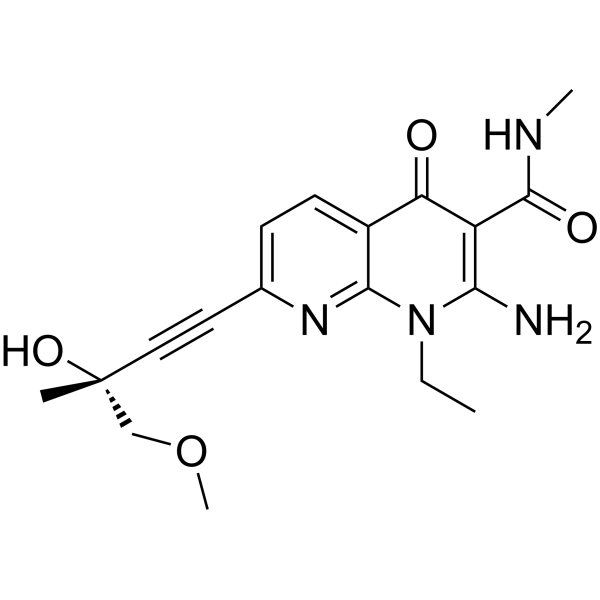
SAR131675 is a potent and selective VEGFR3 inhibitor with an IC50 of 23 nM. SAR131675 is a click chemistry reagent, it contains an Alkyne group and can undergo copper-catalyzed azide-alkyne cycloaddition (CuAAc) with molecules containing Azide groups.
For research use only. We do not sell to patients.
- Purity : 99.85%
- CAS No.: 1433953-83-3
- Formula: C18H22N4O4
- Molecular Weight:358.39
-
Storage:Powder -20°C, 3 years , 4°C, 2 years ; In solvent -80°C, 2 years , -20°C, 1 year

To place orders, for customer services and technical support, please contact: MedChemExpress USA
Tel: 609-228-6898 E-mail: [email protected] [email protected]


-
 Biological Activity
-
Chemical Information
-
Solvent & Solubility
- Protocols
- Purity & Documentation
- References
-
 Help & FAQs


-
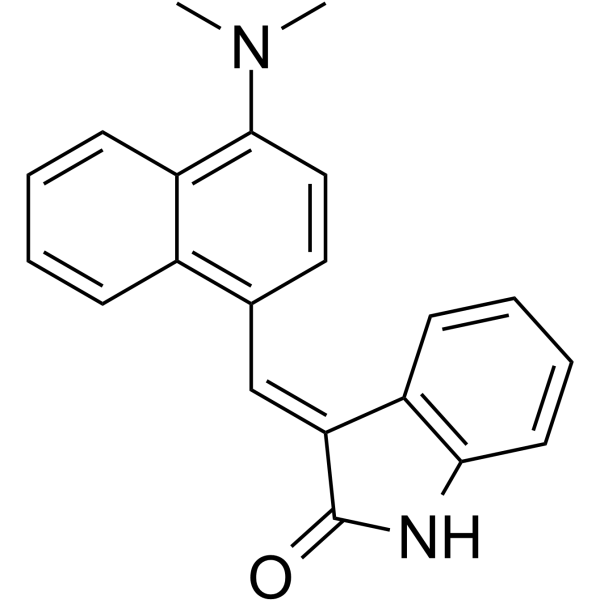
HY-116624
MAZ51VEGFR-3 Inhibitor -
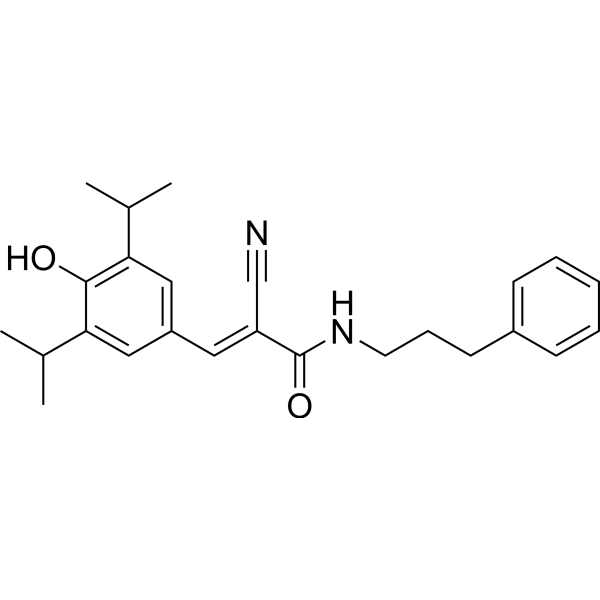
HY-19326
SU1498VEGFR2 Inhibitor -
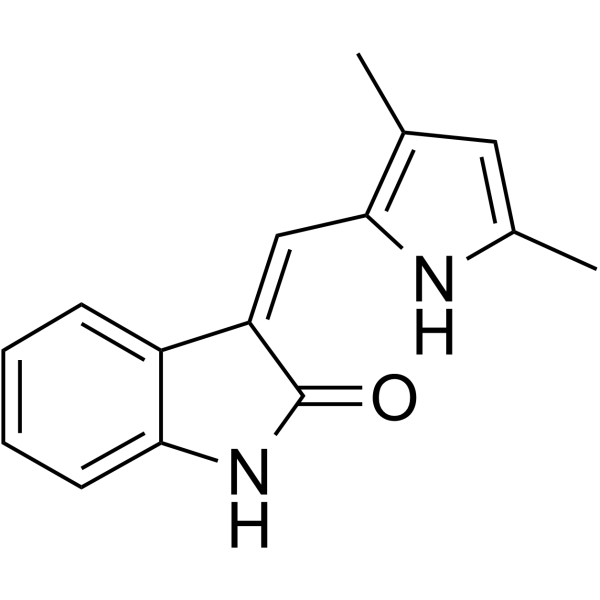
HY-10374
SemaxinibFlk-1/KDR Inhibitor -
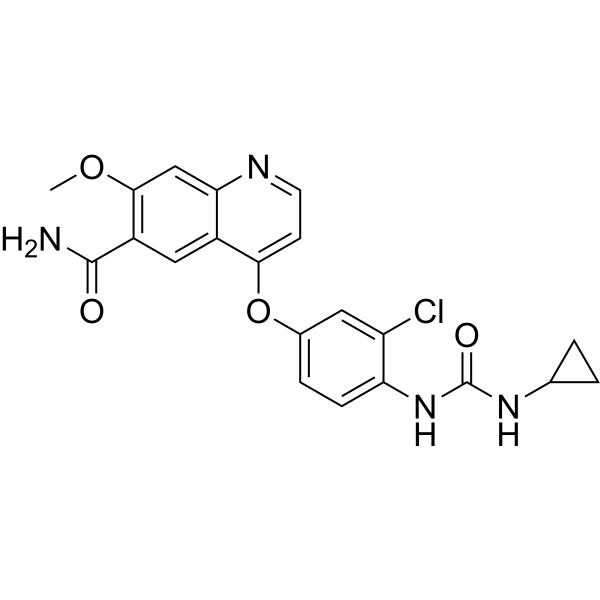
HY-10981
LenvatinibVEGFR/FGFR Inhibitor -
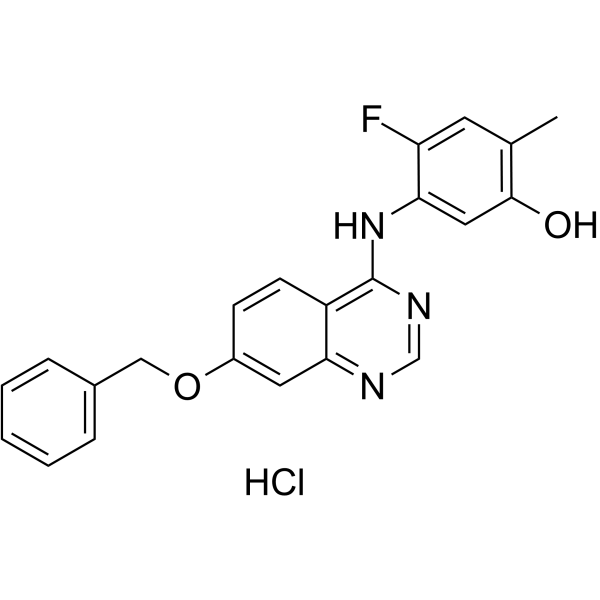
HY-15467A
ZM323881 hydrochlorideVEGFR2 Inhibitor -
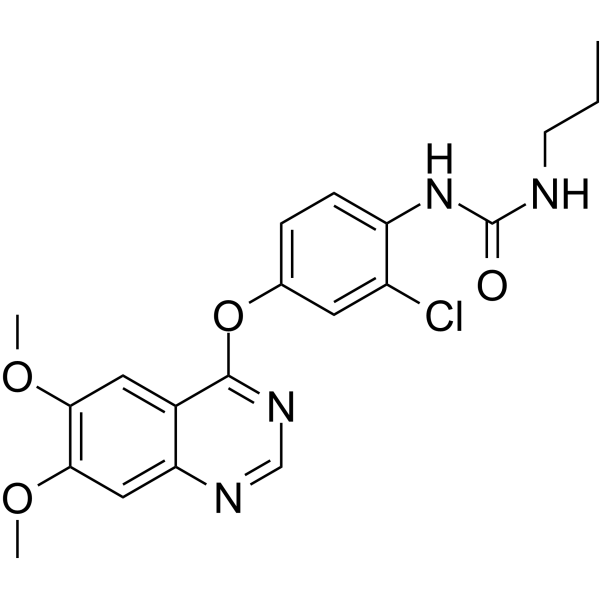
HY-12060
KRN-633VEGFR Inhibitor -
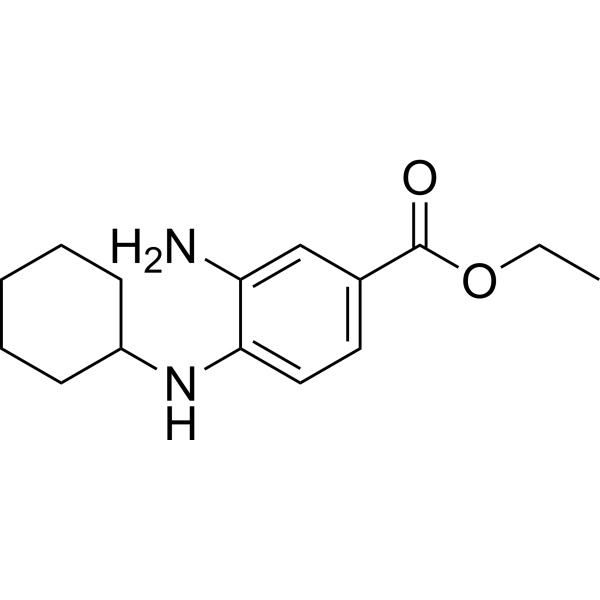
HY-100579
Ferrostatin-1Ferroptosis Inhibitor -
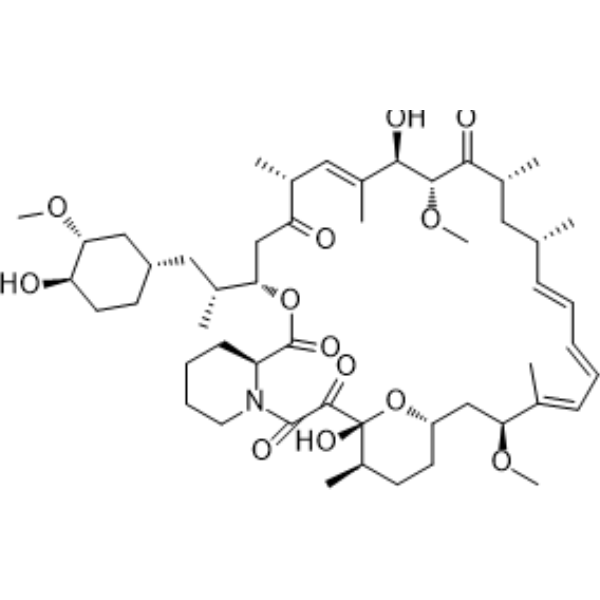
HY-10219
RapamycinmTOR Inhibitor -
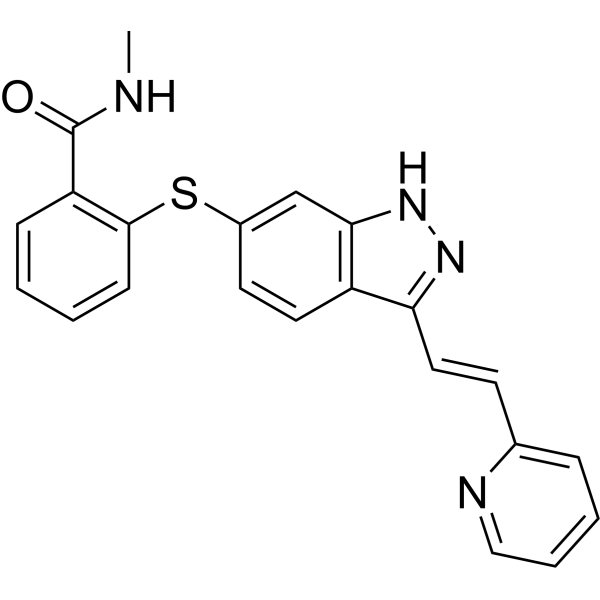
HY-10065
AxitinibTyrosine Kinase Inhibitor -
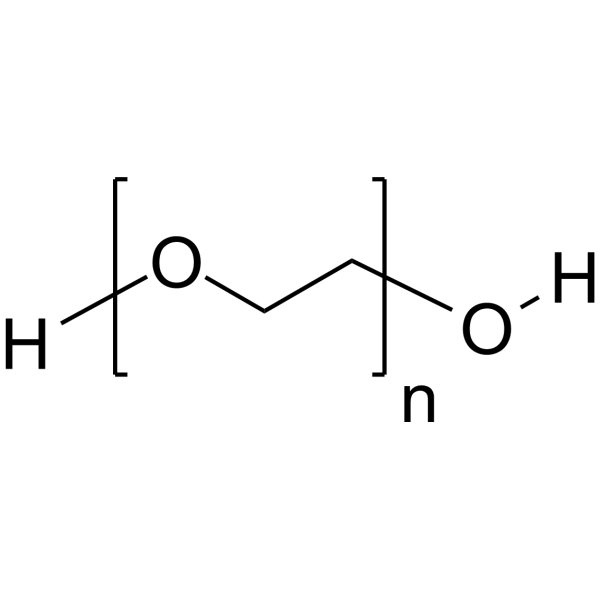
HY-Y0873
PEG300Neutral Polymer -
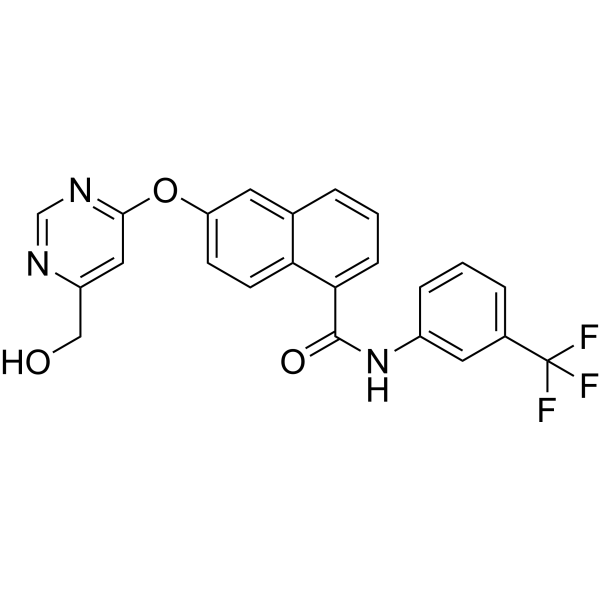
HY-100419
BFH772VEGFR2 Inhibitor
Publications Citing Use of MedChemExpress (MCE) SAR131675
More- Stem Cell Res Ther. 2022 Sep 5;13(1):448. [Abstract]
- Transl Stroke Res. 2021 Dec;12(6):991-1017. [Abstract]
- J Cell Biochem. 2020 Mar;121(3):2343-2353. [Abstract]
- Research Square Preprint. 2024 Dec 17.
- Res Sq. 2023 Nov 14:rs.3.rs-3474507. [Abstract]
- Elife. 2020 Dec 7:9:e61405. [Abstract]
- Oncotarget. 2016 Sep 27;7(39):63839-63855. [Abstract]
 Customer Validation & Images

-
Cell Migration/Invasion Assay

-
RT-PCR

-
WB

All VEGFR Isoforms
More

Biological Activity
Description
IC50 & Target
[1]|
VEGFR3 23 nM (IC50) |
Cellular Effect
|
Cell Line

|
Type | Value | Description | References |
|---|---|---|---|---|
| BaF3 | GI50 |
>25 μM
Compound: SAR131675
|
Growth inhibition of mouse BA/F3 cells assessed as inhibition of cell growth incubated for 72 hrs by Cell-titer-Glo assay
Growth inhibition of mouse BA/F3 cells assessed as inhibition of cell growth incubated for 72 hrs by Cell-titer-Glo assay
|
[PMID: 31513411] |
| MDA-MB-231 | IC50 |
>50 μM
Compound: 10; SAR131675
|
Anticancer activity against human MDA-MB-231 cells assessed as cell viability incubated for 48 hrs by MTT assay
Anticancer activity against human MDA-MB-231 cells assessed as cell viability incubated for 48 hrs by MTT assay
|
[PMID: 34351741] |
| MDA-MB-436 | IC50 |
>50 μM
Compound: 10; SAR131675
|
Anticancer activity against human MDA-MB-436 cells assessed as cell viability incubated for 48 hrs by MTT assay
Anticancer activity against human MDA-MB-436 cells assessed as cell viability incubated for 48 hrs by MTT assay
|
[PMID: 34351741] |
In Vitro
AR131675 is highly selective for VEGFR-3. However, it is moderately active on VEGFR-2 with a VEGFR-3/VEGFR-2 ratio of about 10. SAR131675 inhibits VEGFR-3 tyrosine kinase activity and VEGFR-3 autophosphorylation in HEK cells with IC50 values of 20 and 45 nM, respectively. SAR131675 dose dependently inhibits the proliferation of primary human lymphatic cells, induced by the VEGFR-3 ligands VEGFC and VEGFD, with an IC50 of about 20 nM. SSAR131675 has no antiproliferative activity on a panel of 30 tumors and primary cells, further showing its high specificity and indicating that SAR131675 is not a cytotoxic or cytostatic agent[1].
MedChemExpress (MCE) has not independently confirmed the accuracy of these methods. They are for reference only.
In Vivo
MedChemExpress (MCE) has not independently confirmed the accuracy of these methods. They are for reference only.


Chemical Information
-
CAS No. 1433953-83-3
-
Appearance Solid
-
Molecular Weight 358.39
-
Formula C18H22N4O4
-
Color White to yellow
-
SMILES
O=C1C(C(NC)=O)=C(N)N(CC)C2=NC(C#C[C@@](COC)(C)O)=CC=C21
-
Shipping
Room temperature in continental US; may vary elsewhere.
-
Storage
Powder -20°C 3 years 4°C 2 years In solvent -80°C 2 years -20°C 1 year


Publications (7)
-
Journal Impact Factor
-
Most Recent
-
Stem Cell Res Ther
ADSCs stimulated by VEGF-C alleviate intestinal inflammation via dual mechanisms of enhancing lymphatic drainage by a VEGF-C/VEGFR-3-dependent mechanism and inhibiting the NF-κB pathway by the secretome. [Abstract]2022 Sep 5;13(1):448. PMID: 36064450
SAR131675 purchased from MedChemExpress. Usage Cited in: Stem Cell Res Ther. 2022 Sep 5;13(1):448. [Abstract]
Representative images of LEC migration per group were captured at 12 h. VEGFR-3 inhibitor (SAR131675; 100 nM) treated LECs per group showed attenuated transmigration.
SAR131675 purchased from MedChemExpress. Usage Cited in: Stem Cell Res Ther. 2022 Sep 5;13(1):448. [Abstract]
SAR131675 (100 nM; 12 h). Relative mRNA expression levels of VEGF-C and VEGFR-3.
-
Transl Stroke Res
The Key Regulator of Necroptosis, RIP1 Kinase, Contributes to the Formation of Astrogliosis and Glial Scar in Ischemic Stroke. [Abstract]2021 Dec;12(6):991-1017. PMID: 33629276
SAR131675 purchased from MedChemExpress. Usage Cited in: Transl Stroke Res. 2021 Dec;12(6):991-1017. [Abstract]
SAR131675 reduced VEGFR-3, GFAP, neurocan, and phosphacan levels in astrocytes after OGD/Re, as determined by western blotting. Astrocytes were exposed to OGD for 6 h, followed by reoxygenation for 24 h, and were treated with SAR131675 (20 nM) upon reoxygenation.
-
J Cell Biochem
Vascular endothelial growth factor enhances tendon-bone healing by activating Yes-associated protein for angiogenesis induction and rotator cuff reconstruction in rats. [Abstract]2020 Mar;121(3):2343-2353. PMID: 31633245 -
-
Res Sq
Lymphatic platelet thrombosis limits bone repair by precluding lymphatic transporting DAMPs. [Abstract]2023 Nov 14:rs.3.rs-3474507. PMID: 38014223 -
Elife
2020 Dec 7:9:e61405. PMID: 33284104 -
Oncotarget
Induction of VEGFA and Snail-1 by meningitic Escherichia coli mediates disruption of the blood-brain barrier. [Abstract]2016 Sep 27;7(39):63839-63855. PMID: 27588479


Solvent & Solubility
In Vitro:
DMSO : 100 mg/mL (279.03 mM; ultrasonic and warming and heat to 60°C; Hygroscopic DMSO has a significant impact on the solubility of product, please use newly opened DMSO)
Please refer to the solubility information to select the appropriate solvent. Once prepared, please aliquot and store the solution to prevent product inactivation from repeated freeze-thaw cycles.
Storage method and period of stock solution: -80°C, 2 years; -20°C, 1 year. When stored at -80°C, please use it within 2 years. When stored at -20°C, please use it within 1 year.
Please refer to the solubility information to select the appropriate solvent. Once prepared, please aliquot and store the solution to prevent product inactivation from repeated freeze-thaw cycles.
Storage method and period of stock solution: -80°C, 2 years; -20°C, 1 year. When stored at -80°C, please use it within 2 years. When stored at -20°C, please use it within 1 year.
Concentration (start) × Volume (start) = Concentration (final) × Volume (final)
In Vivo:
Select the appropriate dissolution method based on your experimental animal and administration route.
- For the following dissolution methods, please ensure to first prepare a clear stock solution using an In Vitro approach and then sequentially add co-solvents:
- To ensure reliable experimental results, the clarified stock solution can be appropriately stored based on storage conditions. As for the working solution for In Vivo experiments, it is recommended to prepare freshly and use it on the same day.
- The percentages shown for the solvents indicate their volumetric ratio in the final prepared solution. If precipitation or phase separation occurs during preparation, heat and/or sonication can be used to aid dissolution.
Add each solvent one by one: 10% DMSO 40% PEG300 5% Tween-80 45% Saline
Solubility: ≥ 1.43 mg/mL (3.99 mM); Clear solution
This protocol yields a clear solution of ≥ 1.43 mg/mL (saturation unknown).
Taking 1 mL working solution as an example, add 100 μL DMSO stock solution (14.3 mg/mL) to 400 μL PEG300, and mix evenly; then add 50 μL Tween-80 and mix evenly; then add 450 μL Saline to adjust the volume to 1 mL.
Preparation of Saline: Dissolve 0.9 g sodium chloride in ddH₂O and dilute to 100 mL to obtain a clear Saline solution.
Add each solvent one by one: 10% DMSO 90% (20% SBE-β-CD in Saline)
Solubility: ≥ 1.43 mg/mL (3.99 mM); Clear solution
This protocol yields a clear solution of ≥ 1.43 mg/mL (saturation unknown).
Taking 1 mL working solution as an example, add 100 μL DMSO stock solution (14.3 mg/mL) to 900 μL 20% SBE-β-CD in Saline, and mix evenly.
Preparation of 20% SBE-β-CD in Saline (4°C, storage for one week): 2 g SBE-β-CD powder is dissolved in 10 mL Saline, completely dissolve until clear.
For the following dissolution methods, please prepare the working solution directly:
It is recommended to prepare fresh solutions and use them promptly within a short period of time.
The percentages shown for the solvents indicate their volumetric ratio in the final prepared solution. If precipitation or phase separation occurs during preparation, heat and/or sonication can be used to aid dissolution.
Add each solvent one by one: 0.5% CMC-Na/saline water
Solubility: 10 mg/mL (27.90 mM); Suspended solution; Need ultrasonic
In Vivo Dissolution Calculator
Please enter the basic information of animal experiments:
-
-
-
-
Recommended: Prepare an additional quantity of animals to account for potential losses during experiments.
Please enter your animal formula composition:
-
%DMSO +
Recommended: Keep the proportion of DMSO in working solution below 2% if your animal is weak.
-
%+
-
+%Tween-80 + +
-
%Saline +
The co-solvents required include: DMSO, . All of co-solvents are available by MedChemExpress (MCE). , Tween 80. All of co-solvents are available by MedChemExpress (MCE).
Working solution concentration: 0.22 mg/mL
Method for preparing stock solution: mg drug dissolved in μL DMSO. Stock solution concentration: mg/mL.
1. Take μL DMSO stock solution;
2. Add μL .
μL , mix evenly;
3. Then add μL Tween 80, mix evenly;
4. Then add μL
Please ensure that the stock solution in the first step is dissolved to a clear state, and add co-solvents in sequence. You can use ultrasonic heating (ultrasonic cleaner, recommended frequency 20-40 kHz), vortexing, etc. to assist dissolution.


Purity & Documentation
-
Data Sheet (283 KB)
-
SDS (393 KB)
- English - EN (393 KB)
- Français - FR (393 KB)
- Deutsch - DE (393 KB)
- Norwegian - NO (393 KB)
- Español - ES (393 KB)
- Swedish - SV (393 KB)
- Italian - IT (393 KB)
- Korean - KR (393 KB)
- Portuguese - PT (393 KB)
-
Handling Instructions (2659 KB)
References
[1]. Alam A, et al. SAR131675, a potent and selective VEGFR-3-TK inhibitor with antilymphangiogenic, antitumoral, and antimetastatic activities. Mol Cancer Ther. 2012 Aug;11(8):1637-49. [Content Brief]
[2]. Paillasse MR, Esquerré M, Bertrand FA, et al. Targeting Tumor Angiogenesis with the Selective VEGFR-3 Inhibitor EVT801 in Combination with Cancer Immunotherapy. Cancer Res Commun. 2022;2(11):1504-1519. [Content Brief]


Complete Stock Solution Preparation Table
Please refer to the solubility information to select the appropriate solvent. Once prepared, please aliquot and store the solution to prevent product inactivation from repeated freeze-thaw cycles.
Storage method and period of stock solution: -80°C, 2 years; -20°C, 1 year. When stored at -80°C, please use it within 2 years. When stored at -20°C, please use it within 1 year.
| Optional Solvent | Concentration Solvent Mass | 1 mg | 5 mg | 10 mg | 25 mg |
|---|---|---|---|---|---|
| DMSO | 1 mM | 2.7903 mL | 13.9513 mL | 27.9026 mL | 69.7564 mL |
| 5 mM | 0.5581 mL | 2.7903 mL | 5.5805 mL | 13.9513 mL | |
| 10 mM | 0.2790 mL | 1.3951 mL | 2.7903 mL | 6.9756 mL | |
| 15 mM | 0.1860 mL | 0.9301 mL | 1.8602 mL | 4.6504 mL | |
| 20 mM | 0.1395 mL | 0.6976 mL | 1.3951 mL | 3.4878 mL | |
| 25 mM | 0.1116 mL | 0.5581 mL | 1.1161 mL | 2.7903 mL | |
| 30 mM | 0.0930 mL | 0.4650 mL | 0.9301 mL | 2.3252 mL | |
| 40 mM | 0.0698 mL | 0.3488 mL | 0.6976 mL | 1.7439 mL | |
| 50 mM | 0.0558 mL | 0.2790 mL | 0.5581 mL | 1.3951 mL | |
| 60 mM | 0.0465 mL | 0.2325 mL | 0.4650 mL | 1.1626 mL | |
| 80 mM | 0.0349 mL | 0.1744 mL | 0.3488 mL | 0.8720 mL | |
| 100 mM | 0.0279 mL | 0.1395 mL | 0.2790 mL | 0.6976 mL |


SAR131675 Related Classifications
HY-15458 Related Classifications
 Powered by Bioz