



Cholinesterase (ChE)
Cholinesterase (ChE) is a family of enzymes present in the central nervous system, particularly in nervous tissue, muscle and red cells, which catalyze the hydrolysis of the neurotransmitter acetylcholine into choline and acetic acid, a reaction necessary to allow a cholinergic neuron to return to its resting state after activation. It is one of many important enzymes needed for the proper functioning of the nervous systems of humans.
There are two types: acetylcholinesterase (AChE, acetylcholine hydrolase) and butyrylcholinesterase (BChE, acylcholine acylhydrolase), also known as nonspecific cholinesterase or pseudocholinesterase. AChE is primarily found in the blood on red blood cell membranes, in neuromuscular junctions, and in neural synapses, while BChE is produced in the liver and found primarily in plasma. The difference between the two types of cholinesterase is their relative preferences for substrates: AChE hydrolyzes acetylcholine faster while BChE hydrolyzes butyrylcholine faster.
Cholinesterase (ChE) Isoform Specific Products
All Product Categories
-
Cholinesterase (ChE) Inhibitors
(913)
View all products
-
Cholinesterase (ChE) Agonists
(5)
View all products
-
Cholinesterase (ChE) Antagonists
(10)
View all products
-
Cholinesterase (ChE) Activators
(32)
View all products
-
Cholinesterase (ChE) Modulators
(10)
View all products
-
Cholinesterase (ChE) Chemical
(1)
View all products
-
Cholinesterase (ChE) Inducer
(1)
View all products
-
Cholinesterase (ChE) Controls
(6)
View all products
-
Cholinesterase (ChE) Substrates
(2)
View all products
-
Cholinesterase (ChE) Related Products (1062)
Related Products (1062)

-
Antibodies (2)
-
Cholinesterase (ChE) Isoform Comparison
-
AChE-IN-62
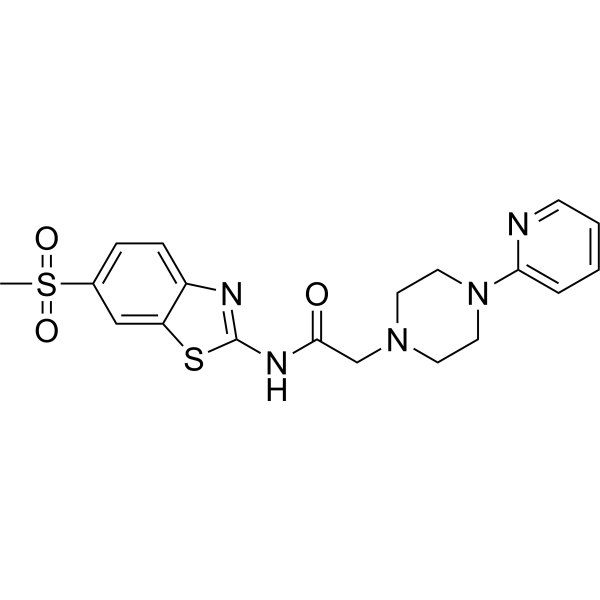 0 ImagesCat. No.: HY-161466AChE-IN-62 (Compound 1) is an effective mixed and selective acetylcholinesterase (AChE) inhibitor with an IC50 value of 0.421 μM. AChE-IN-62 exhibits excellent blood-brain barrier permeability and neuroprotective effects. Additionally, AChE-IN-62 can inhibit the aggregation of Aβ1-42 with an IC50 value of 44.64 μM. AChE-IN-62 is also an effective multi-target-directed ligand (MTDL) that can be utilized in the research of Alzheimer's disease.
-
AChE-IN-85
 0 ImagesCat. No.: HY-173144AChE-IN-85 (Compound 7k) is an AChE inhibitor with an IC50 of 0.083 μM. AChE-IN-85 can inhibit the release of NO, the production of TNF-α and IL-1β, the levels of LDH and ROS, as well as the aggregation of Aβ42. AChE-IN-85 has anti-inflammatory and neuroprotective effects and can be used in the research of diseases such as Alzheimer's disease.
-
Stacofylline
 0 ImagesSynonyms: S 9977 free base; S 9977-2 free baseStacofylline (S 9977 free base; S 9977-2 free base), a Xanthine (HY-W017389) derivative, is a potent AChE inhibitor with an IC50 of 5-50 nM. Stacofylline shows anti-amnesic and promnesic activities.
-
Acotiamide hydrochloride
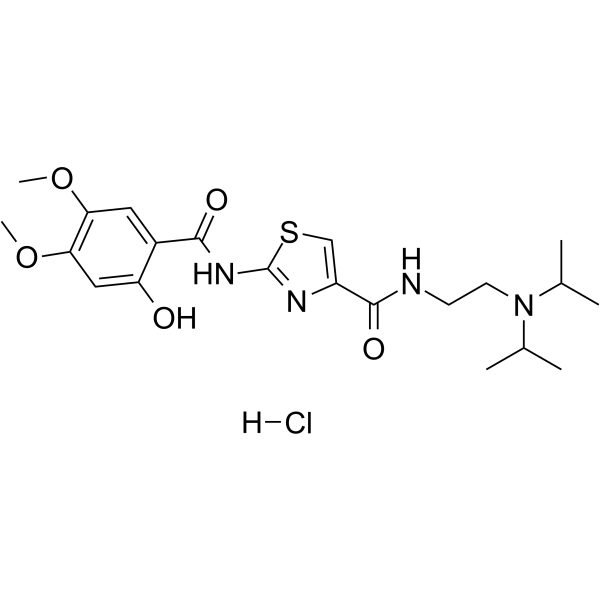 0 ImagesSynonyms: Z-338; YM443Acotiamide hydrochloride is an orally active, selective and reversible acetylcholinesterase (AChE) inhibitor, with an IC50 of 1.79 μM. Acotiamide hydrochloride can enhance gastric contractility and accelerate delayed gastric emptying. Acotiamide hydrochloride has the potential for the research of functional dyspepsia involving gastric motility dysfunction and intestinal inflammatory.
-
8-Hydroxydihydrochelerythrine
 0 Images8-Hydroxydihydrochelerythrine is a benzophenanthridine alkaloid-derived, selective and competitive AChE inhibitor (IC50=0.61 μM) isolated from the roots of Zanthoxylum nitidum (Roxb.) DC. 8-Hydroxydihydrochelerythrine increases the content of acetylcholine in the synapses of cholinergic neurons and enhances cholinergic neurotransmission. 8-Hydroxydihydrochelerythrine is applicable to the research of neurodegenerative diseases with dementia such as Alzheimer's disease.
-
BGC-201259
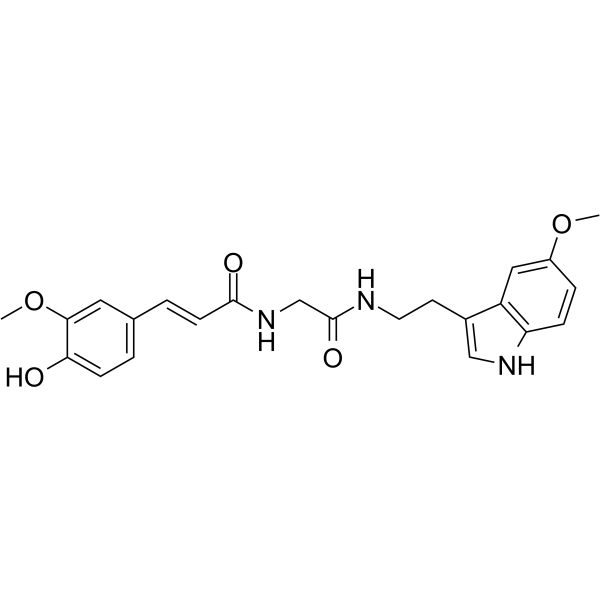
 0 ImagesCat. No.: HY-107047CAS No.: 444667-97-4Synonyms: RS-1259BGC-201259 (RS-1259) is an orally active inhibitor that simultaneously targets acetylcholinesterase (AChE) (IC50 = 101 nM) and serotonin transporter (SERT) (IC50 = 42 nM). BGC-201259 inhibits 5-HT receptor with an IC50 of 90 nM. BGC-201259 exhibits strong weak activity against the NA transporter (IC50 = 7.7 μM), L-type calcium channel (IC50 = 3.6 μM), σ receptor (IC50 = 2 μM), and sodium channel (IC50 = 5.1 μM). BGC-201259 demonstrates synergistic potential in improving cognitive and emotional symptoms by balancing the inhibition of these two targets. BGC-201259 can be used in research on Alzheimer's disease.
-
tau/Aβ40 aggregation-IN-1
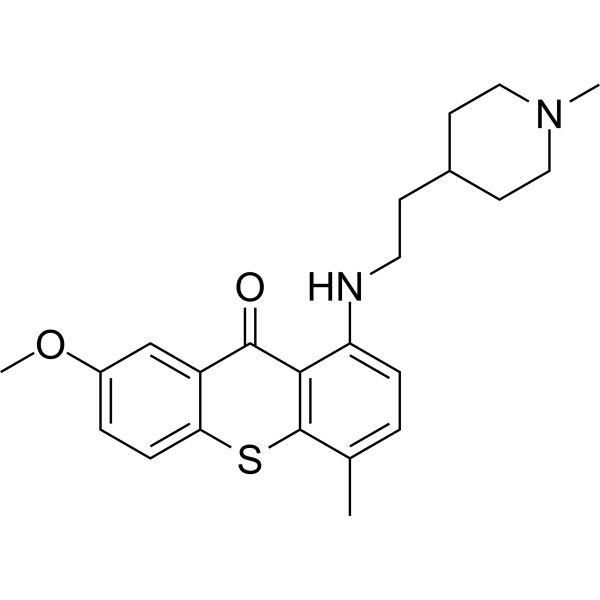 0 ImagesCat. No.: HY-149272CAS No.: 2973377-10-3tau/Aβ40 aggregation-IN-1 (Compound 20) is a tau and Aβ40 aggregation inhibitor with IC50s of 1.8 μM and 1.3 μM, respectively.

-
AChE/BChE-IN-6
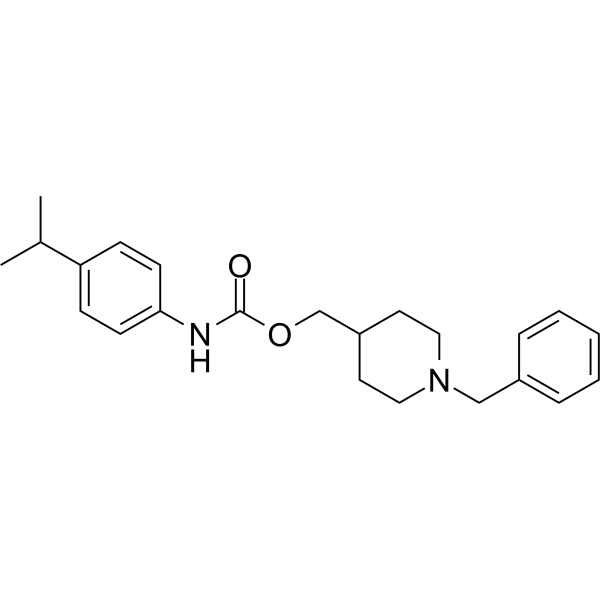 0 ImagesCat. No.: HY-146315CAS No.: 2416910-94-4AChE/BChE-IN-6 (compound 22) is a potent dual AChE/BChE inhibitor with IC50 values of 0.809 µM, 2.248 µM and > 100 µM for hBChE, hAChE and hMAO-B, respectively. AChE/BChE-IN-6 penetrates the blood-brain barrier (BBB). AChE/BChE-IN-6 can be used for Alzheimer’s disease (AD) research.
-
AChE-IN-24
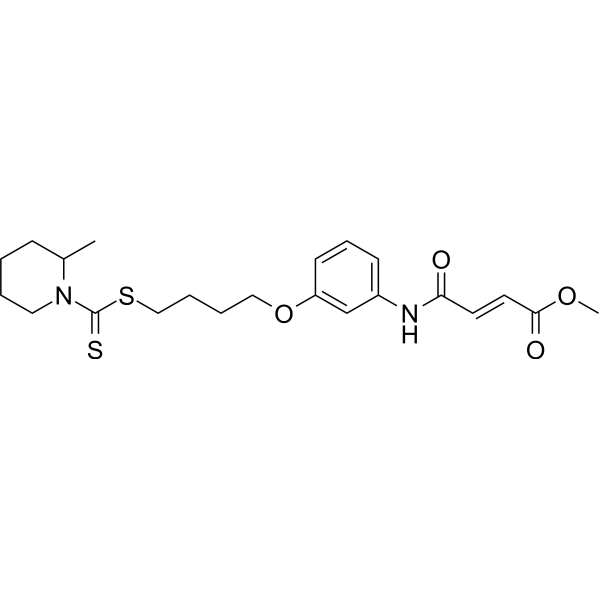 0 ImagesCat. No.: HY-151152CAS No.: 3033542-32-1AChE-IN-24 is a potent AChE inhibitor and can penetrate the BBB. AChE-IN-24 has the mighty inhibitory activity to hAChE with an IC50 value of 0.053 μM. AChE-IN-24 can be used for the research of Alzheimer s disease (AD).
-
AChE-IN-51
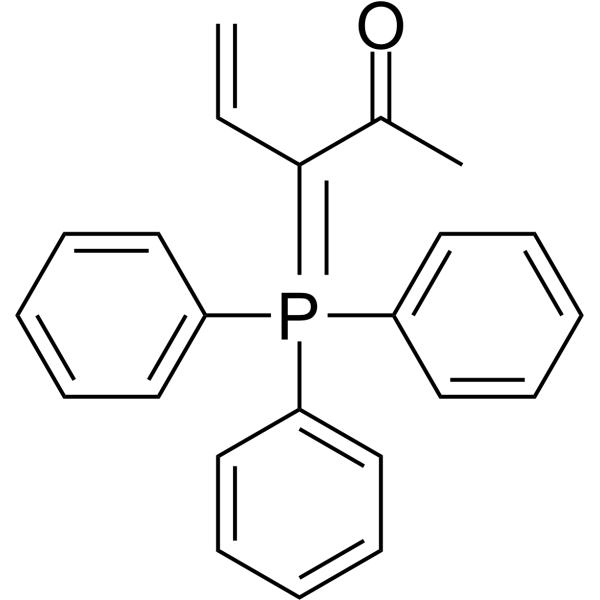 0 ImagesCat. No.: HY-157382AChE-IN-51 (compound 8C) is an orally active, non-competitive inhibitor of AChE and BChE (IC50: 84 nM, 97 nM). It also inhibits MMP-2 and amyloid Aβ1-42 aggregates (IC50: 724 nM, 302 nM). AChE-IN-51 has low cytotoxicity and in silico predicted blood-brain barrier permeability. Can be used for research on diseases such as Alzheimer's disease (AD).
-
Acephate (Standard)
 0 ImagesAcephate (Standard) is the analytical standard of Acephate. This product is intended for research and analytical applications. Acephate is a broad-spectrum anticholinesterase insecticide. Acephate acts via inhibiting AChE activity of insects. Acephate is used for control of several species of insects in agriculture and in horticulture.
-
Artanin
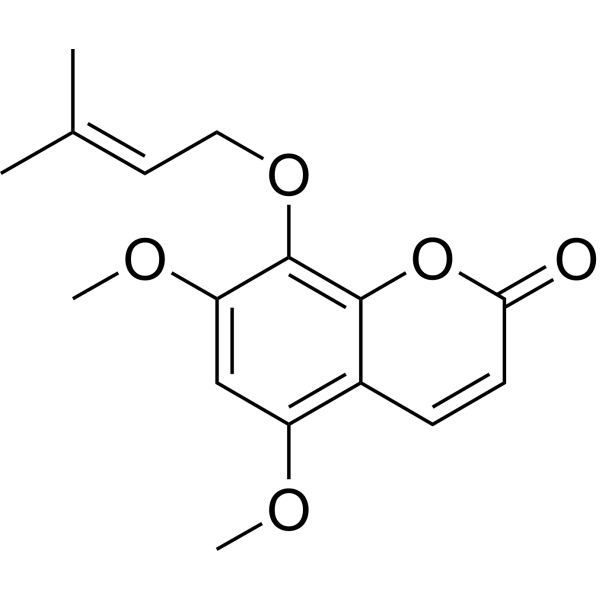 0 ImagesCat. No.: HY-N2898CAS No.: 96917-26-9Artanin is a coumarin, has biological activities related to Alzheimer’s disease. Artanin exerts function including AChE inhibitory and AChE- and self-induced amyloid beta (Aβ) aggregation inhibitory activities, with IC50s of 51 μM, 98 μM, and 124 μM, respectively.

-
ACS03
 0 ImagesCat. No.: HY-177958CAS No.: 2227022-64-0ACS03 is a hybrid thiophene-acridine compound. ACS03 induces an increase in lactate dehydrogenase, glutathione S-transferase, and AChE activities. ACS03 has antileishmanial activity. ACS03 exhibits selective anti-cancer effects against colon carcinoma.
-
MAO-B-IN-50
 0 ImagesCat. No.: HY-180842CAS No.: 3105860-84-9MAO-B-IN-50 (Compound C20) is a selective MAO-B inhibitor with an IC50 value of 0.06 μM. MAO-B-IN-50 shows good inhibitory effects on the aggregation of Aβ40/42 and Tau proteins, with overall IC50 values around 1 μM. MAO-B-IN-50 exhibits potent and selective AChE inhibition (IC50 = 1.78 μM). MAO-B-IN-50 can be used in the research of Alzheimer's disease.
-
BChE-IN-49
 0 ImagesCat. No.: HY-181248BChE-IN-49 is an orally active BChE inhibitor with IC50 values of 0.73 μM and 6.43 μM against BChE and AChE, respectively. BChE-IN-49 reduces AChE levels to inhibit the degradation of acetylcholine. By inhibiting GSK-3β, BChE-IN-49 potently activates the Wnt/β-catenin signaling pathway, exerting potent anti-Aβ, antioxidant, anti-neuroinflammatory and anti-apoptotic effects. BChE-IN-49 can be used in research related to Alzheimer's disease.

-
sEH/AChE-IN-2
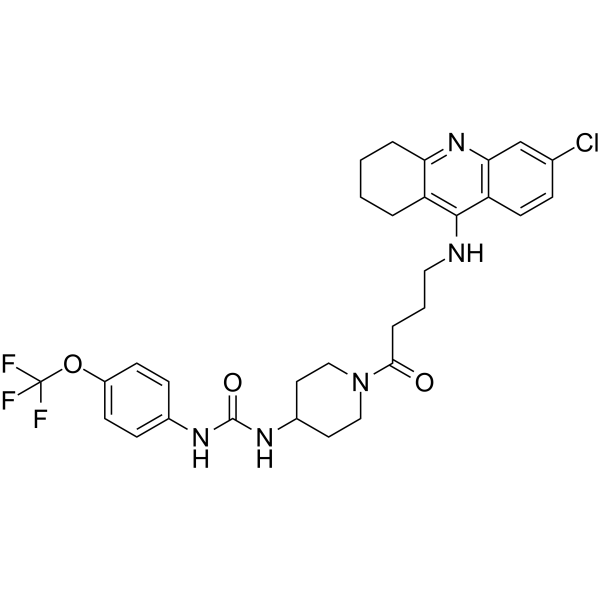 0 ImagesCat. No.: HY-145832CAS No.: 2490589-09-6sEH/AChE-IN-2 (Compound 12b) is a dual inhibitor of the enzymes soluble epoxide hydrolase (sEH) and acetylcholinesterase (AChE). sEH/AChE-IN-2 provides cumulative effects against neuroinflammation and memory impairment. sEH/AChE-IN-2 has the potential for the research of Alzheimer's disease (AD).




