



Amyloid-β
β-amyloid peptide; Aβ; Abeta
Amyloid-β (Aβ) denotes peptides of 36–43 amino acids that are crucially involved in Alzheimer's disease as the main component of theamyloid plaques found in the brains of Alzheimer patients. The peptides result from the amyloid precursor protein (APP), which is being cut by certain enzymes to yield Aβ. Amyloid-β molecules can aggregate to form flexible soluble oligomers which may exist in several forms. Amyloid-β peptide is due to overproduction of Aβ and/or the failure of clearance mechanisms. Amyloid-β self-aggregates into oligomers, which can be of various sizes, and forms diffuse and neuritic plaques in the parenchyma and blood vessels. Amyloid-β oligomers and plaques are potent synaptotoxins, block proteasome function, inhibit mitochondrial activity, alter intracellular Ca2+levels and stimulate inflammatory processes. Loss of the normal physiological functions of Aβ is also thought to contribute to neuronal dysfunction.
All Product Categories
-
Amyloid-β Inhibitors
(494)
View all products
-
Amyloid-β Agonists
(2)
View all products
-
Amyloid-β Antagonists
(5)
View all products
-
Amyloid-β Activators
(5)
View all products
-
Amyloid-β Modulators
(4)
View all products
-
Amyloid-β Chemicals
(7)
View all products
-
Amyloid-β Inducers
(5)
View all products
-
Amyloid-β Degraders
(6)
View all products
-
Amyloid-β Controls
(3)
View all products
-
Amyloid-β Substrate
(1)
View all products
-
Amyloid-β Ligands
(11)
View all products
-
Amyloid-β Related Products (773)
Related Products (773)

-
Antibodies (9)
-
hAChE/hBACE-1-IN-4
 0 ImagesCat. No.: HY-161512CAS No.: 229476-71-5hAChE/hBACE-1-IN-4 (compound AK-2) is a quinazoline derivative. hAChE/hBACE-1-IN-4 shows significant inhibitory activity against hAChE and hBACE-1 enzymes (hAChE, IC50=0.283 μM; hBACE-1, IC50=0.231 μM). hAChE/hBACE-1-IN-4 has the potential to inhibit Aβ aggregation. hAChE/hBACE-1-IN-4 has non-neurotoxicity , blood-brain barrier permeability and oral activity. hAChE/hBACE-1-IN-4 can be used in Alzheimer's disease research.
-
RAGE/SERT-IN-1
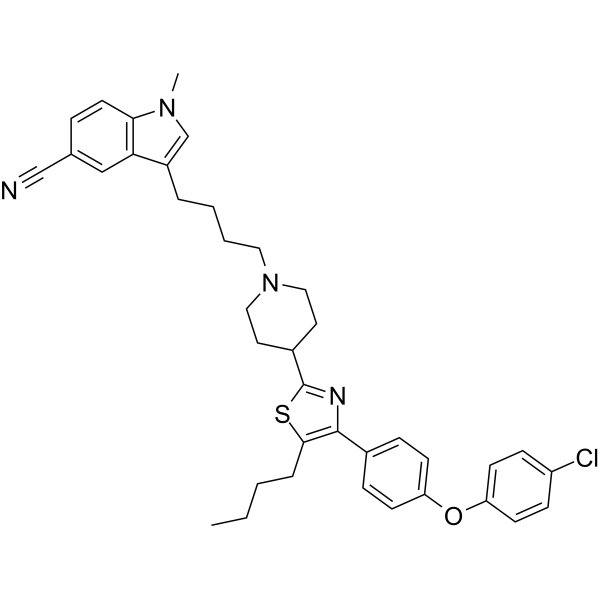 0 ImagesCat. No.: HY-146619CAS No.: 2766739-35-7RAGE/SERT-IN-1 is a potent and orally active advanced glycation end products (RAGE) and serotonin transporter (SERT) inhibitor with IC50s of 8.26 μM and 31.09 nM, respectively. RAGE/SERT-IN-1 exhibits significant neuroprotective effect against Aβ25-35-induced neuronal damage and alleviates depressive behavior of mice. RAGE/SERT-IN-1 can be used for researching the comorbidity of Alzheimer's disease and depression.
-
Protriptyline hydrochloride (Standard)
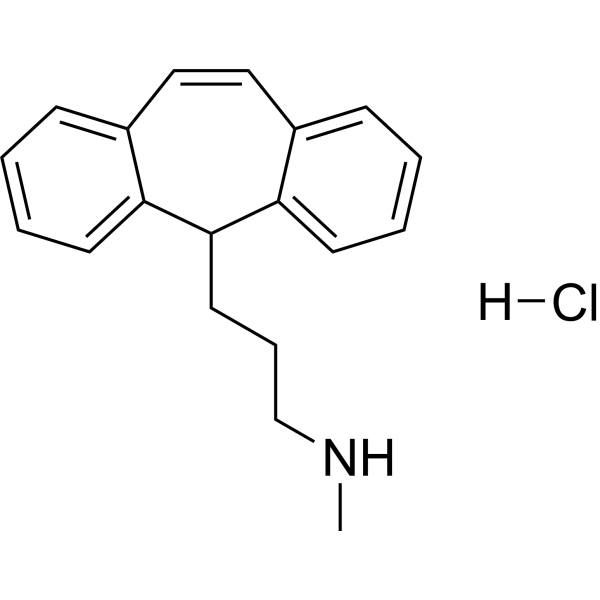 0 ImagesProtriptyline hydrochloride (Standard) is the analytical standard of Protriptyline hydrochloride (HY-B0949). This product is intended for research and analytical applications. Protriptyline hydrochloride is a potent tricyclic antidepressant (TCA). Protriptyline hydrochloride inhibits AChE activity with an IC50 value of 0.06 mM and inhibits Aβ self-assembly. Protriptyline hydrochloride can be used for the study of depression and Alzheimers disease.
-
SEN 304
 0 ImagesCat. No.: HY-P10578CAS No.: 906357-94-6SEN 304 is an Aβ aggregation inhibitor. SEN 304 can bind directly to Aβ(1-42), delay β-sheet formation and promote aggregation of toxic oligomers into a nontoxic form. SEN 304 can be used for research of Alzheimer’s disease.
-
Glutaminyl Cyclase Inhibitor 2
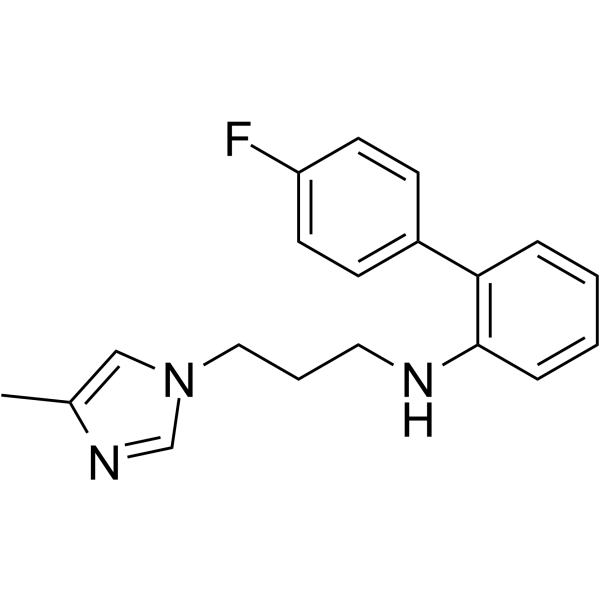 0 ImagesCat. No.: HY-112270CAS No.: 1884546-29-5Glutaminyl Cyclase Inhibitor 2 is a glutaminyl cyclase inhibitor with an IC50 of 1.23 μM.
-
GSK3β-IN-3
 0 ImagesCat. No.: HY-W098905CAS No.: 301359-45-5GSK3β-IN-3 is an ATP-competitive GSK-3β inhibitor (IC50 = 0.90 μM). GSK3β-IN-3 can reduce the phosphorylation level of tau protein in the BR5706 strain and reduce the deposition of Aβ aggregates in the CL2006 strain, and can be used to research Alzheimer's disease (AD).
-
AChE-IN-19
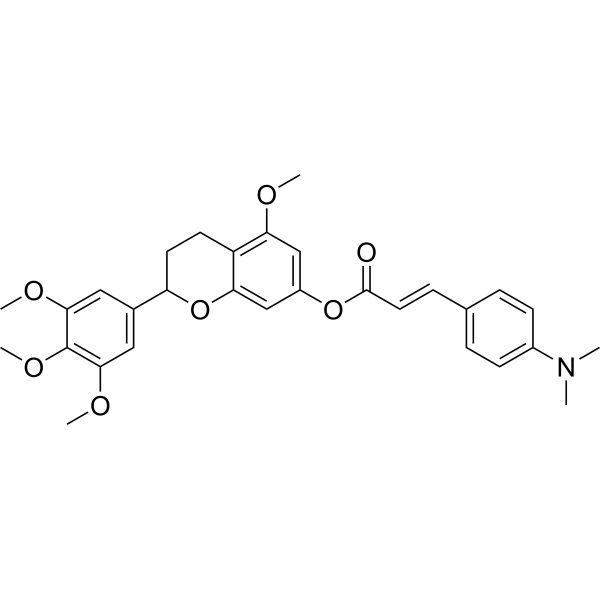 0 ImagesCat. No.: HY-147938CAS No.: 2742707-36-2AChE-IN-19 (compound A15) is a highly potent AChE inhibitor with an IC50 value of 0.56 μM, also inhibits Aβ aggregation. AChE-IN-19 has potent neuroprotective activities and nearly no toxicity on SH-SY5Y cells. AChE-IN-19 can be used for researching Alzheimer's disease.
-
PTO-41
 0 ImagesCat. No.: HY-D3220CAS No.: 2408913-88-0PTO-41 is a blood-brain barrier-permeable near-infrared fluorescent probe that targets β-amyloid oligomers (Aβ Oligomers, AβOs) with a Kd of 349 nM. PTO-41 exhibits low cytotoxicity, high sensitivity to β-amyloid oligomers in in vitro phantom imaging, and can be rapidly cleared from the brain. PTO-41 is applicable to the research of Alzheimer's disease (Ex/Em = 538 nM/680 nM).
-
2,3-Dehydrosilybin A (Standard)
 0 ImagesCat. No.: HY-N12360RCAS No.: 25166-14-72,3-Dehydrosilybin A (Standard) is the analytical standard of 2,3-Dehydrosilybin A. This product is intended for research and analytical applications. 2,3-Dehydrosilybin A is a pro-longevity and anti-aggregation compound.
-
Amilo-5MER
 0 ImagesCat. No.: HY-P10935CAS No.: 1860001-61-1Synonyms: 5-MPAmilo-5MER (5-MP) is an orally active and selective Serum Amyloid A (SAA) inhibitor. Amilo-5MER specifically inhibits the release of pro-inflammatory cytokines IL-6 and IL-1β from SAA-activated cells. Amilo-5MER reduces chronic inflammation and relieves symptoms of diseases such as rheumatoid arthritis (RA), inflammatory bowel disease (IBD), and multiple sclerosis (MS). Amilo-5MER is promising for research of autoimmune diseases and chronic inflammatory diseases.
-
EQ-04
 0 ImagesCat. No.: HY-179621EQ-04 is a highly selective positive allosteric modulator (PAM) of α7 nAChR. EQ-04 has no direct inhibitory activity on AChE and BChE. EQ-04 inhibits Aβ aggregation. EQ-04 has safe cytotoxicity and potent neuroprotective activity. EQ-04 can be used for the study of Alzheimer's disease.
-
Ac-BIM-acid bromide
 0 ImagesCat. No.: HY-175755Ac-BIM-acid bromide is a derivative of Acridine. Ac-BIM-acid bromide significantly inhibits amyloid fibrillation. Ac-BIM-acid bromide modulates the structure of N-terminal region of Saccharomyces cerevisiae Stm1 protein (Stm1_N1-113) and the amyloid morphology of human Aβ42 protein, inhibiting theirs growth. Ac-BIM-acid bromide can be used for Alzheimer’s disease research.
-
β-Amyrin (Standard)
 0 Imagesβ-Amyrin shows effectively counteract amyloid β (Aβ)-induced impairment of long-term potentiation (LTP). β-Amyrin is a promising candidate for Alzheimer's disease (AD) research. β-Amyrin exhibits anti-inflammatory effects, protective activity against pulmonary fibrosis, and notable antibacterial capabilities. β-Amyrin is an orally active natural triterpenoid compound.
-
Aβ Fibrillization modulator 1
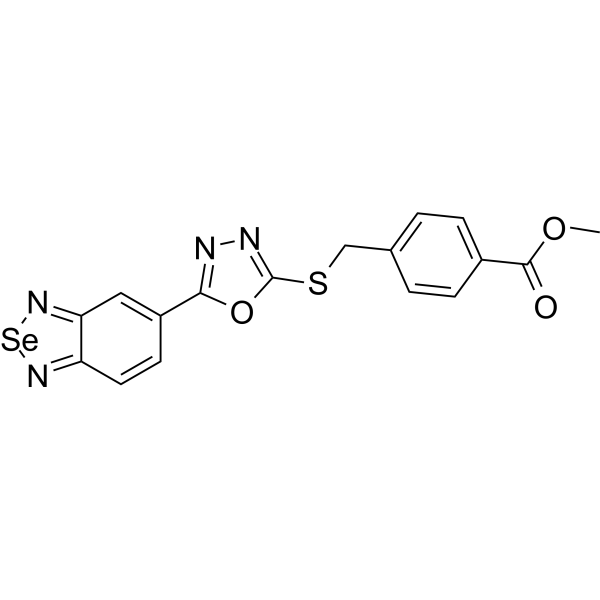 0 ImagesCat. No.: HY-139740CAS No.: 2847131-53-5Aβ Fibrillization modulator 1 stabilizes Aβ monomers.
-
7-Deoxy-trans-dihydronarciclasine
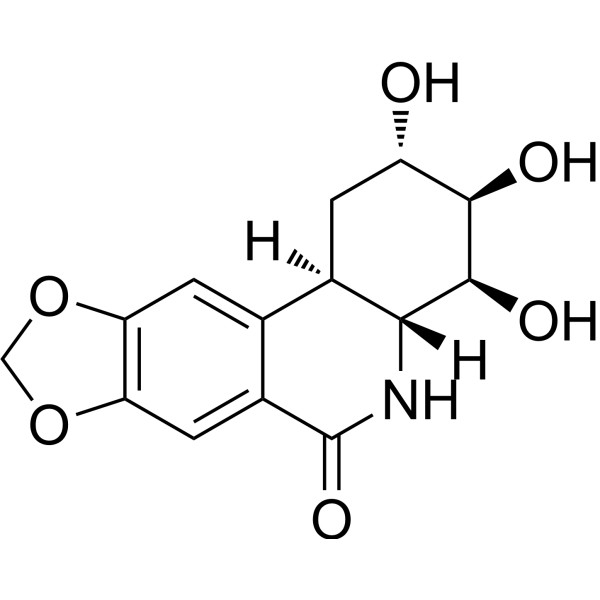 0 ImagesCat. No.: HY-N12249CAS No.: 145987-74-27-Deoxy-trans-dihydronarciclasine, an alkaloid, is a tobacco mosaic virus (TMV) inhibitor (IC50: 1.80 μM). 7-Deoxy-trans-dihydronarciclasine is an anti-neuroinflammatory agent. 7-Deoxy-trans-dihydronarciclasine decreases the Aβ and APP levels in the cerebral cortex of Tg2576 mice.
-
AChE/Aβ-IN-5
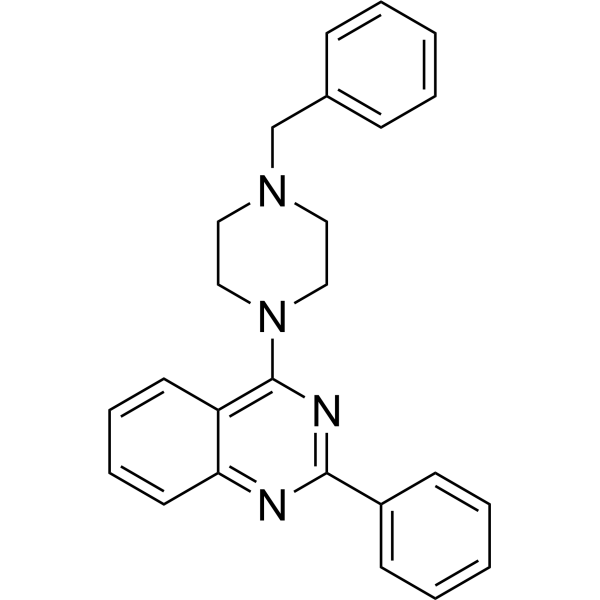 0 ImagesCat. No.: HY-163320CAS No.: 181114-32-9
-
COX-2/HDAC6-IN-1
 0 ImagesCat. No.: HY-181926COX-2/HDAC6-IN-1 (Compound 11e) is a dual COX-2 and HDAC6 inhibitor, with an IC50 of 0.12 μM against HDAC6 and an IC50 of 0.66 μM against COX-2. COX-2/HDAC6-IN-1 enhances the acetylation level of α-tubulin, regulates epigenetic gene expression, and inhibits the expression of pro-inflammatory mediators (COX-2, IL-1β, IL-6 and TNF-α). COX-2/HDAC6-IN-1 promotes Amyloid-β clearance and reduces excessive phosphorylation of Tau protein. COX-2/HDAC6-IN-1 maintains neuronal morphology by stabilizing MAP2, protects synaptic integrity by regulating synapsin, and restores the expression of memory-related genes. COX-2/HDAC6-IN-1 possesses neuroprotective activity and improves learning and memory abilities in Scopolamine (HY-N0296)-induced Alzheimer's disease mouse models. COX-2/HDAC6-IN-1 is applicable to research related to Alzheimer's disease.
-
Cys-β-Amyloid (1-42), human
 0 ImagesCat. No.: HY-P1363DCys-β-Amyloid (1-42), human is a Cys-labeled β-Amyloid (1-42), human TFA (HY-P1363). β-Amyloid (1-42), human TFA is a peptide composed of 42 amino acids that plays a key role in the pathogenesis of Alzheimer's disease.
-
2002-G12
 0 ImagesCat. No.: HY-169614CAS No.: 313666-93-22002-G12 (compound 5a) is an Aβ42 inhibitor that can reduce Aβ42 toxicity by 76%. 2002-G12 can be used in Alzheimer's research.
-
KMS88009
 0 ImagesCat. No.: HY-118243CAS No.: 1089681-42-4KMS88009 is a potent small molecule that directly interferes with the formation of amyloid-β oligomers, thereby preserving cognitive behavior when used preventively and reversing cognitive behavior decline when used therapeutically. Oral administration of KMS88009 around the onset of Alzheimer's disease symptoms significantly reduced the assembly of amyloid-β oligomers and improved cognitive behavior in the APP/PS1 double transgenic mouse model. This unique dual mode of action suggests that KMS88009 may be a powerful therapeutic candidate for the treatment of Alzheimer's disease. In an evaluation, the physicochemical properties, pharmacokinetics and toxicity of this anti-amyloidogenic small molecule KMS88009 were studied, as well as post-mortem analysis of APP/PS1 TG mice after behavioral testing.




