



Amyloid-β
β-amyloid peptide; Aβ; Abeta
Amyloid-β (Aβ) denotes peptides of 36–43 amino acids that are crucially involved in Alzheimer's disease as the main component of theamyloid plaques found in the brains of Alzheimer patients. The peptides result from the amyloid precursor protein (APP), which is being cut by certain enzymes to yield Aβ. Amyloid-β molecules can aggregate to form flexible soluble oligomers which may exist in several forms. Amyloid-β peptide is due to overproduction of Aβ and/or the failure of clearance mechanisms. Amyloid-β self-aggregates into oligomers, which can be of various sizes, and forms diffuse and neuritic plaques in the parenchyma and blood vessels. Amyloid-β oligomers and plaques are potent synaptotoxins, block proteasome function, inhibit mitochondrial activity, alter intracellular Ca2+levels and stimulate inflammatory processes. Loss of the normal physiological functions of Aβ is also thought to contribute to neuronal dysfunction.
All Product Categories
-
Amyloid-β Inhibitors
(494)
View all products
-
Amyloid-β Agonists
(2)
View all products
-
Amyloid-β Antagonists
(5)
View all products
-
Amyloid-β Activators
(5)
View all products
-
Amyloid-β Modulators
(4)
View all products
-
Amyloid-β Chemicals
(7)
View all products
-
Amyloid-β Inducers
(5)
View all products
-
Amyloid-β Degraders
(6)
View all products
-
Amyloid-β Controls
(3)
View all products
-
Amyloid-β Substrate
(1)
View all products
-
Amyloid-β Ligands
(11)
View all products
-
Amyloid-β Related Products (773)
Related Products (773)

-
Antibodies (9)
-
AD-35
 0 ImagesCat. No.: HY-117710BCAS No.: 1531586-64-7AD-35 is an orally active, blood-brain barrier-permeable acetylcholinesterase inhibitor with an IC50 of 793 nM. AD-35 inhibits metal-induced amyloid-β aggregation and disassembles preformed amyloid-β aggregates. In rat models of cognitive impairment, AD-35 attenuates Aβ25-35-induced astrocyte activation, TNF-α and IL-1β release, inhibits ERK phosphorylation, and alleviates learning and memory deficits. AD-35 can be used for research on Alzheimer's disease.
-
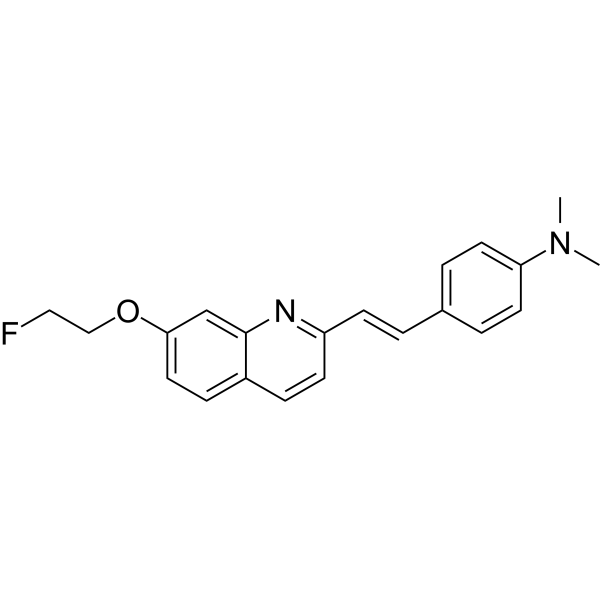
Glutaminyl Cyclase Inhibitor 6
 0 ImagesCat. No.: HY-163655Glutaminyl Cyclase Inhibitor 6 (compound BI-43) is a secretory glutaminyl cyclase (sQC) and golgi-resident glutaminyl cyclase (gQC) inhibitor with IC50 values of 0.012 0.040 µM, respectively. Glutaminyl Cyclase Inhibitor 6 has the potential for the research of Parkinson’s disease.
-
Pep63
 0 ImagesCat. No.: HY-P10630CAS No.: 1781242-18-9Pep63 is a neuroprotective peptide (VFQVRARTVA). Pep63 has a neuroprotective effect on synaptic plasticity and memory. Pep63 can competitively bind with Aβ1-42 oligomers, and can block Aβ fiber formation. Pep63 can be used for Alzheimer’s disease (AD) research.
-
Caprospinol
 0 ImagesCaprospinol (SP-233) is a steroid compound candidate based on the structure of 22R-hydroxycholesterol. It has multiple mechanisms of neuroprotection, including binding to β-amyloid protein (Aβ(42)), interacting with the mitochondrial respiratory chain, clearing Aβ(42) monomers, and acting as a σ-1 receptor ligand. It can cross the blood-brain barrier in vivo and restore cognitive impairment, and has the potential to inhibit Alzheimer's disease.

-
APP669-711
 0 ImagesCat. No.: HY-P10487APP669-711 is a peptide segment from amino acid 669 to amino acid 711 of amyloid precursor protein (APP). APP669-711 can be used to diagnose the amyloid deposition in the brain, and is a biomarker for Alzheimer's disease (AD) research.
-
20(S)-Ginsenoside Rg3 (Standard)
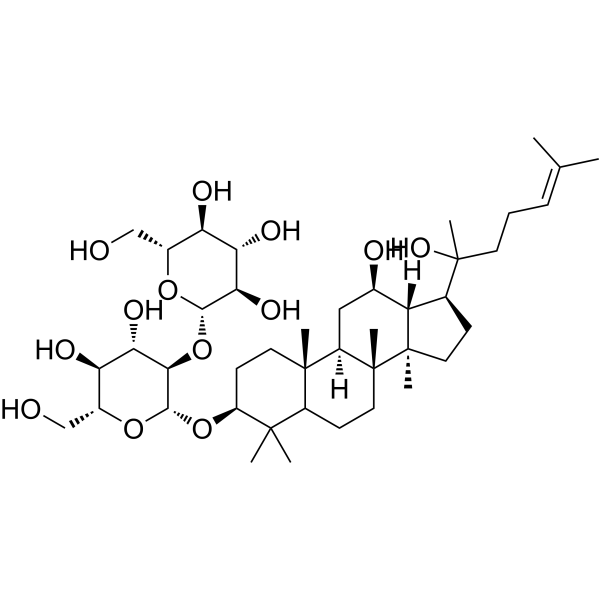 0 ImagesSynonyms: 20(S)-Propanaxadiol(Standard); S-ginsenoside Rg3 (Standard)20(S)-Ginsenoside Rg3 (Standard) is the analytical standard of 20(S)-Ginsenoside Rg3. This product is intended for research and analytical applications. 20(S)-Ginsenoside Rg3 is the main component of Panax ginseng C. A. Meyer. Ginsenoside Rg3 inhibits Na+ and hKv1.4 channel with IC50s of 32.2±4.5 and 32.6±2.2 μM, respectively. 20(S)-Ginsenoside Rg3 also inhibits Aβ levels, NF-κB activity, and COX-2 expression.
-
Bim BH3, Peptide IV TFA
 0 ImagesCat. No.: HY-P1889ABim BH3, Peptide IV TFA is an Aβ42-binding peptide and the pro-apoptotic BH3 domain of the BIM protein. Bim BH3, Peptide IV TFA binds Aβ42 with a Kd of 7.1 μM. Bim BH3, Peptide IV TFA modulates Aβ42 structure, fibrillization pathways, aggregate morphology, and membrane interactions, inhibiting fibril formation while enhancing protofibril assembly. Bim BH3, Peptide IV TFA promotes Aβ42 β-sheet formation and accelerates aggregation. Bim BH3, Peptide IV TFA enhances Aβ42 membrane internalization and bilayer stiffening. Bim BH3, Peptide IV TFA induces neuronal cell death by enhancing BH3-induced membrane interactions of Aβ42 prefibrillar species. Bim BH3, Peptide IV TFA can be used for research on Alzheimer's disease.
-
Tolcapone (Standard)
 0 ImagesSynonyms: Ro 40-7592 (Standard)Tolcapone (Standard) (Ro 40-7592 (Standard)) is the analytical standard of Tolcapone (HY-17406). Tolcapone (Ro 40-7592) is a selective, potent and orally active COMT inhibitor with an IC50of 773 nM. Tolcapone can inhibits α-syn and Aβ42 oligomerization and fibrillogenesis. Tolcapone can cause oxidative stress and induce cancer cells apoptosis and ROS production. Tolcapone can be used for the researches of cancer and neurological disease, such as Parkinson disease and neuroblastoma.
-
AChE/BChE-IN-21
 0 ImagesCat. No.: HY-168031CAS No.: 2756368-79-1AChE/BChE-IN-21 is a histamine H3 receptor antagonist, calcium channel blocker, and acetylcholinesterase inhibitor. AChE/BChE-IN-21 exhibits neuroprotective activity against H2O2 and Aβ1-40, and can restore cognitive function in AD mice.
-
RI-OR2
 0 ImagesCat. No.: HY-P10823CAS No.: 1219627-58-3
-
β Amyloid (1-16) rat
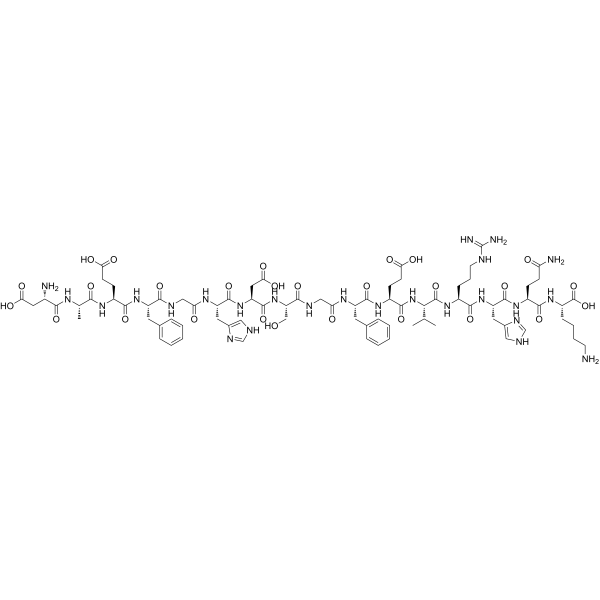 0 ImagesCat. No.: HY-P10039CAS No.: 1123154-43-7β-Amyloid (1-16) rat is a β-amyloid peptide (Abeta), a metal-binding domain fragment of amyloid. Three amino acid substitutions in β-Amyloid (1-16) rat that differ from humans render rats and mice less susceptible to AD-like neurodegeneration.
-
Heishuixiecaoline A
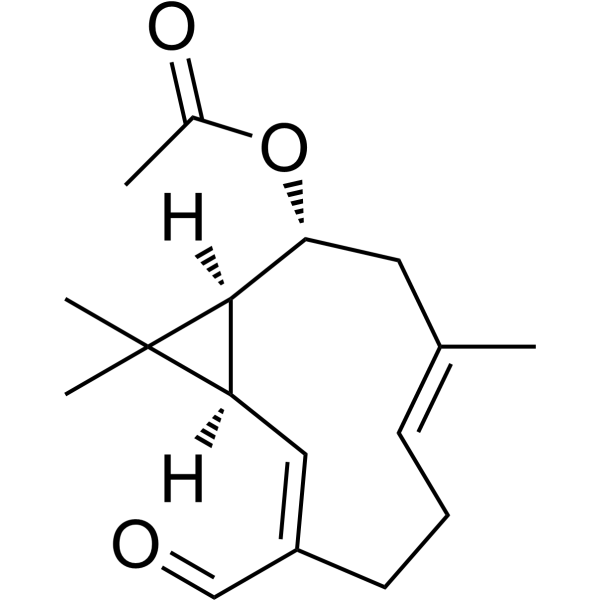 0 ImagesCat. No.: HY-N8103CAS No.: 1469493-85-3Heishuixiecaoline A is a germacrane-type sesquiterpenoid. Heishuixiecaoline A shows protective effect on the neurotoxicity of PC12 cells induced by Aβ25-35.
-
AChE/BChE-IN-37
 0 ImagesCat. No.: HY-183760AChE/BChE-IN-37 is a blood-brain barrier-permeable AChE/BChE inhibitor, with an IC50 of 73.65 μM against electric eel-derived AChE and an IC50 of 82.93 μM against horse-derived BChE. AChE/BChE-IN-37 exhibits chelating activity towards Cu2+, Ca2+, Mg2+, Fe2+ and Zn2+. AChE/BChE-IN-37 interacts with HSP90AA1 and GSK-3β. AChE/BChE-IN-37 inhibits the self-induced aggregation of Aβ1-42. AChE/BChE-IN-37 suppresses LPS-induced NO production in cells. AChE/BChE-IN-37 can be used in research related to Alzheimer's disease and inflammatory diseases.
-
AChE/BuChE-IN-2
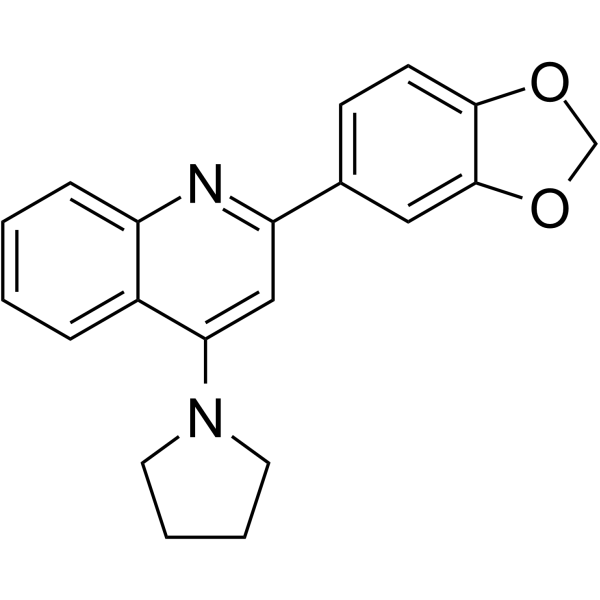 0 ImagesCat. No.: HY-146142CAS No.: 1946008-31-6AChE/BuChE-IN-2 (Compound 5f) is an orally active AChE and BuChE inhibitor with IC50 values of 0.72 μM and 0.16 μM, respectively. AChE/BuChE-IN-2 shows a non-competitive inhibition with AChE and shows potent self-induced β-amyloid (Aβ) aggregation inhibition with an IC50 of 62.52 μM. AChE/BuChE-IN-2 can cross the BBB.
-
Anti-Aβ agent 1A
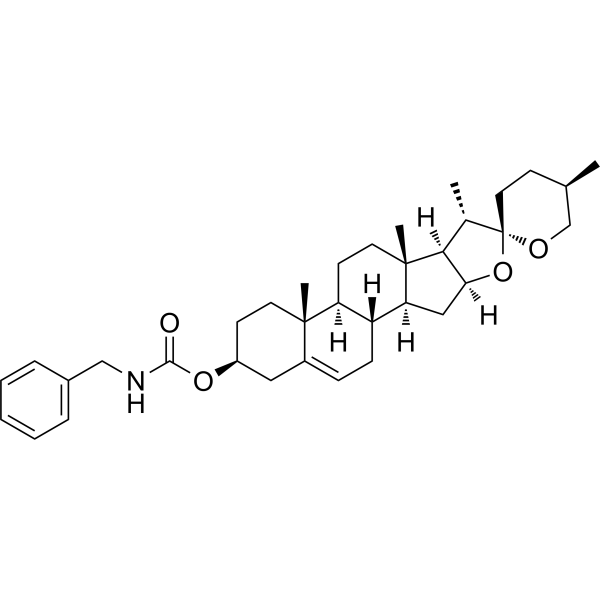 0 ImagesCat. No.: HY-146483CAS No.: 2313346-53-9Anti-Aβ agent 1A (compound M15) has potent activity against amyloid-β. Anti-Aβ agent 1A possesses can significantly inhibit LPS-induced levels of IL-1β, IL-6 and TNF-α, and reduces the apoptosis of SH-SY5Y induced by H2O2 through mitochondria pathway. Anti-Aβ agent 1A possesses antioxidant, anti-inflammatory, anti-Aβ toxicity and neuroprotective activities. Anti-Aβ agent 1A can be used for researching Alzheimer’s disease (AD).
-
Multitarget AD inhibitor-1
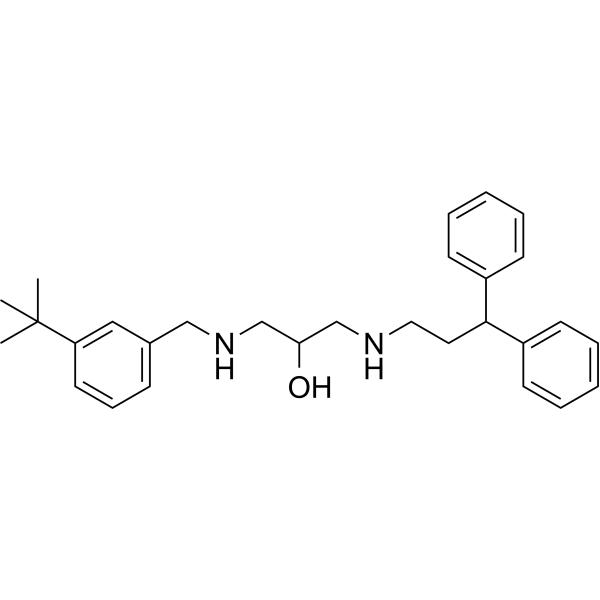 0 ImagesCat. No.: HY-136813CAS No.: 2205015-77-4Multitarget AD inhibitor-1 is a selective and reversible butyrylcholinesterase (BuChE) inhibitor with IC50s of 7.22 μM and 1.55 μM for hBuChE and eqBuChE (BuChE from equine serum), respectively. Multitarget AD inhibitor-1 inhibits β-secretase (IC50hBACE-1=41.60 μM), amyloid β aggregation (IC50Aβ=3.09 μM), tau aggregation. Multitarget AD inhibitor-1, a diphenylpropylamine derivative, has the potential for multifunctional disease-modifying anti-Alzheimer’s research.
-
Drofenine
 0 ImagesDrofenine (Cycloadiphene; Hexahydroadiphenine) is an brain-penetrant antispasmodic agent. Drofenine is a Kv2.1 channel inhibitor with human IC50 of 9.53 μM. Drofenine is a butyrylcholinesterase (BChE) inhibitor with Ki of 0.003 mM, and is a TRPV3 activator. Drofenine blocks Kv2.1-dependent potassium efflux, inhibits Kv2.1/JNK/NF-κB and IkBa/NF-kB signaling, suppresses Kv2.1 mRNA/protein expression. Drofenine suppresses oligomeric Aβ-induced microglial NLRP3 inflammasome activation and neuronal Tau hyperphosphorylation, improves cognitive impairment, promotes neurite outgrowth. Drofenine induces calcium influx in keratinocytes and exert cytotoxicity against keratinocytes. Drofenine ameliorates diabetic peripheral neuropathy -like pathology. Drofenine can be used for the researches of Alzheimer's disease, diabetic peripheral neuropathy and smooth muscle spasm.
-
Keap1-Nrf2-IN-30
 0 ImagesCat. No.: HY-184761Keap1-Nrf2-IN-30 is an orally active, blood-brain barrier-permeable Keap1-Nrf2 protein-protein interaction inhibitor with a Keap1 Kd value of 157 nM. Keap1-Nrf2-IN-30 selectively inhibits the Keap1-Nrf2 protein-protein interaction, promotes Nrf2 nuclear translocation, suppresses induced ferroptosis, reduces the expression of Aβ and p-Tau, and upregulates the expression of GPX4 and SLC7A11. Keap1-Nrf2-IN-30 upregulates the expression of HO-1 and NQO1, alleviates neuronal damage, and improves cognitive and spatial memory deficits. Keap1-Nrf2-IN-30 can be used in the research of Alzheimer's disease.




