



Apoptosis
Apoptosis
Apoptosis is a distinctive form of cell death exhibiting specific morphological and biochemical characteristics, including cell membrane blebbing, chromatin condensation, genomic DNA fragmentation, and exposure of specific phagocytosis signaling molecules on the cell surface. Cells undergoing apoptosis differ from those dying through necrosis. Necrotic cells are usually recognized by the immune system as a danger signal and, thus, resulting in inflammation; in contrast, apoptotic death is quiet and orderly.
There are two major pathways of apoptotic cell death induction: The intrinsic pathway, also called the Bcl-2-regulated or mitochondrial pathway, is activated by various developmental cues or cytotoxic insults, such as viral infection, DNA damage and growth-factor deprivation, and is strictly controlled by the BCL-2 family of proteins. The extrinsic or death-receptor pathway is triggered by ligation of death receptors (members of the tumor necrosis factor (TNF) receptor family, such as Fas or TNF receptor-1 (TNFR1)) that contain an intracellular death domain, which can recruit and activate caspase-8 through the adaptor protein Fas-associated death domain (FADD; also known as MORT1) at the cell surface. This recruitment causes subsequent activation of downstream (effector) caspases, such as caspase-3, -6 or -7, without any involvement of the BCL-2 family.
Studies suggest that alterations in cell survival contribute to the pathogenesis of a number of human diseases, including cancer, viral infections, autoimmune diseases, neurodegenerative disorders, and AIDS (acquired immunodeficiency syndrome). Treatments designed to specifically alter the apoptotic threshold may have the potential to change the natural progression of some of these diseases.
All Product Categories
-
Apoptosis Inhibitors
(904)
View all products
-
Apoptosis Agonists
(7)
View all products
-
Apoptosis Antagonists
(9)
View all products
-
Apoptosis Activators
(363)
View all products
-
Apoptosis Modulators
(60)
View all products
-
Apoptosis Inducers
(7944)
View all products
-
Apoptosis Degrader
(1)
View all products
-
Apoptosis Controls
(33)
View all products
-
Apoptosis Related Products (9888)
Related Products (9888)

-
Antibodies (120)
-
Minodronic acid-d4
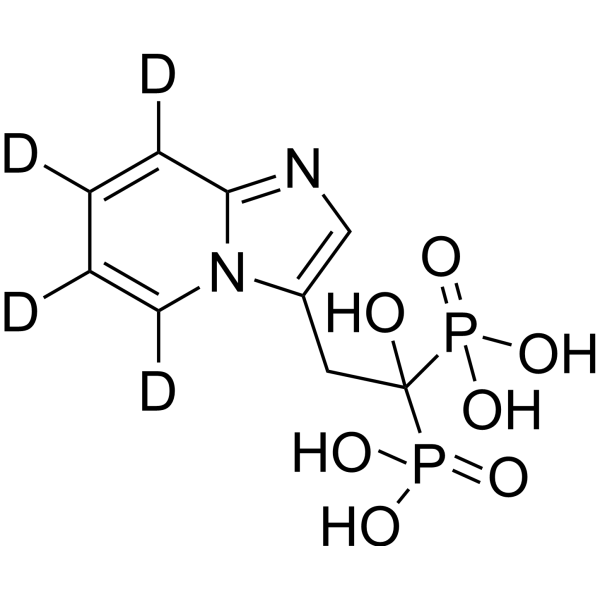 0 ImagesCat. No.: HY-16322SCAS No.: 1807367-80-1Synonyms: YM-529-d4Minodronic acid-d4 (YM-529-d4) is deuterium labeled Minodronic acid (HY-16322). Minodronic acid (YM-529) is an FPP synthase inhibitor with an IC50 of 3 nM, and also an antagonist of P2X2/3 receptors with an IC50 of 62.7 μM. Minodronic acid induces tumor cell apoptosis and inhibits cell growth. Minodronic acid also suppresses bone resorption. Minodronic acid can be used in research related to osteoporosis and cancer.
-
CDK6-IN-2
 0 ImagesCat. No.: HY-181483CDK6-IN-2 is a CDK6 covalent inhibitor with an IC50 of 0.013 μM. CDK6-IN-2 inhibits the proliferation and migration of triple-negative breast cancer cells, and induces cell cycle arrest and apoptosis. CDK6-IN-2 induces ROS accumulation and mitochondrial damage through cellular metabolic reprogramming. CDK6-IN-2 exhibits anti-tumor activity and can be used for the research of triple-negative breast cancer.
-
XSJ05
 0 ImagesCat. No.: HY-161970CAS No.: 1461652-87-8XSJ05 is a camptothecin (CPT) derivative that can inhibit topoisomerase I (Topo I) to exert anti-cancer activity. XSJ05 can trigger DNA double-strand breaks, leading to DNA damage. XSJ05 can inhibit the growth of colorectal cancer (CRC), arrest the cell cycle in G2/M phase, and induce apoptosis.
-
HDAC-IN-39
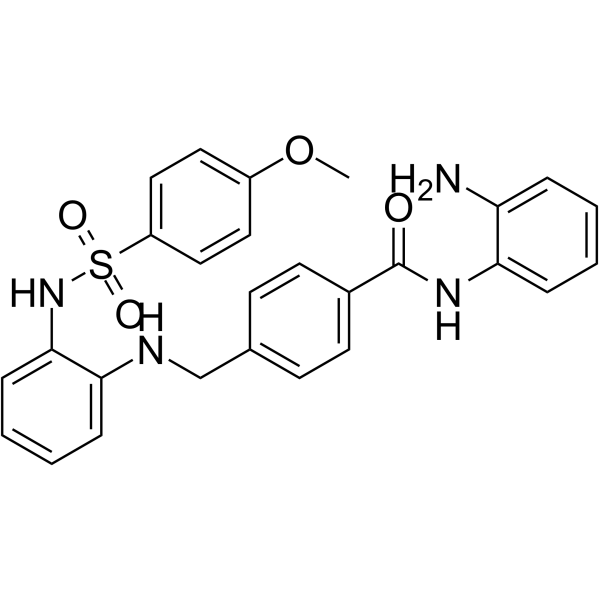 0 ImagesCat. No.: HY-146392CAS No.: 2414046-33-4HDAC-IN-39 (compound 16c) is a potent HDAC inhibitor, with IC50 values of 1.07 μM (HDAC1), 1.47 μM (HDAC2), and 2.27 μM (HDAC3), respectively. HDAC-IN-39 also significantly inhibits microtubule polymerization. HDAC-IN-39 induces cell cycle arrest at the G2/M phase. HDAC-IN-39 displays promising anticancer activity against resistant cancer cells.

-
MHY219
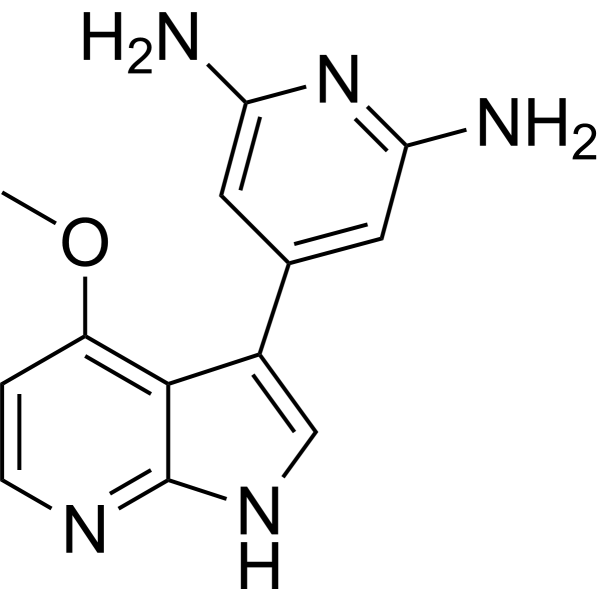
 0 ImagesCat. No.: HY-116267CAS No.: 1326750-61-1MHY219 is a histone deacetylase (HDAC) inhibitor with an IC50 of 0.276 μM. MHY219 inhibits total HDAC enzyme activity, increases histone H3 and H4 hyperacetylation. MHY219 induces cance cells phase arrest, apoptosis and inhibits proliferationin. MHY219 increases cleavage of PARP, Bax, cytochrome c levels, androgen receptor expression and decreases Bcl-2 expression. MHY219 can be used for the research of prostate cancer.
-
BCL-XL-IN-5
 0 ImagesCat. No.: HY-184471CAS No.: 2599098-78-7BCL-XL-IN-5 is an orally active, highly selective BH3-mimetic BCL-XL inhibitor with a cKi of 7.96 pM. BCL-XL-IN-5 triggers caspase-3 activation and robust PARP cleavage to initiate apoptosis in BCL-XL-dependent MOLT-4 T-cell acute lymphoblastic leukemia cells. BCL-XL-IN-5 serves as a potent selective probe for investigating BCL-XL-dependent malignancies, such as acute lymphoblastic leukemia.
-
Anti-CD146 Antibody (AA98)
 0 ImagesCat. No.: HY-P992200Anti-CD146 Antibody (AA98) is an antibody targeting CD146 and an angiogenesis inhibitor. Anti-CD146 Antibody (AA98) blocks the dimerization of CD146 as well as its downstream PI3K/AKT, p38 MAPK and NF-κB signaling pathways; it inhibits the expression of MMP9 and ICAM1, epithelial-mesenchymal transition (EMT), and the proliferation, migration and tube formation of endothelial cells. Anti-CD146 Antibody (AA98) enhances radiation-induced cancer cell apoptosis and survival inhibition, reduces tumor microvessel density, and suppresses tumor growth, invasion and vasculogenic mimicry. Anti-CD146 Antibody (AA98) can be used in research related to cervical cancer, liver cancer, malignant phyllodes tumor of the breast, uveal melanoma, leiomyosarcoma, pancreatic cancer, other tumors and angiogenesis.
-
PI3Kδ-IN-11
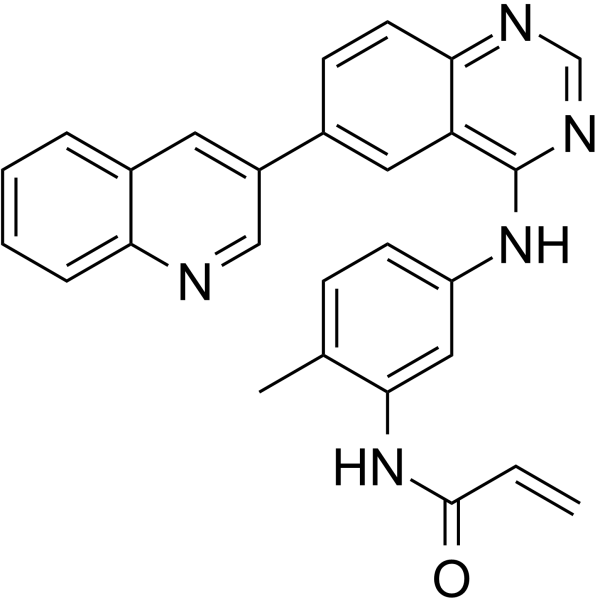 0 ImagesCat. No.: HY-143472CAS No.: 2413257-51-7PI3Kδ-IN-11 is a highly potent and selective PI3Kδ inhibitor with IC50 value of 27.5 nM. PI3Kδ-IN-11 dose-dependently blocks the activity of PI3K/Akt pathway. PI3Kδ-IN-11 can be used for researching B or T cell-related malignancies.
-
EZH2/HSP90-IN-29
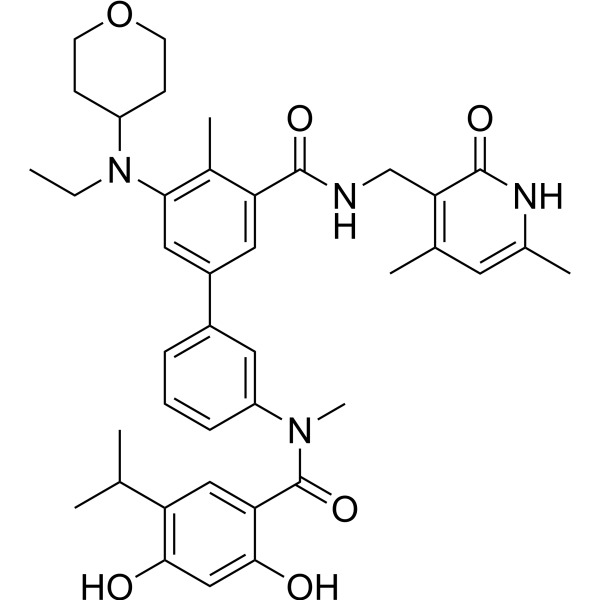 0 ImagesCat. No.: HY-163288CAS No.: 3033571-35-3EZH2/HSP90-IN-29 is a dual inhibitor for EZH2 and HSP90, with IC50s of 6.29 nM and 60.1 nM, for EZH2 and HSP90, respectively. EZH2/HSP90-IN-29 increases apoptosis/necrosis-related gene expression, induces cell cycle arrest at M phase and inhibits reactive oxygen species (ROS) catabolism pathway. EZH2/HSP90-IN-29 is able to cross the blood-brain-barrier (BBB).
-
(-)-Salcolin B
 0 ImagesCat. No.: HY-N21550CAS No.: 1292294-32-6Synonyms: Tricin 4'-O-(threo-β-guaiacylglyceryl)ether(-)-Salcolin B (Tricin 4'-O-(threo-β-guaiacylglyceryl) ether) is an isomer of Salcolin B (HY-N16766) and anti-inflammatory agent. (-)-Salcolin B is isolable from Njavara. (-)-Salcolin B downregulates the activities of NF-κB and STAT3, reduces the expressions of iNOS and COX-2, activates the ERK signaling pathway, and inhibits LPS-induced NO and ROS production. (-)-Salcolin B induces Apoptosis. (-)-Salcolin B inhibits TPA (HY-18739)-induced ear edema. (-)-Salcolin B possesses antioxidant activity. (-)-Salcolin B can be used in research related to inflammatory diseases, colon adenocarcinoma, ovarian cancer and breast cancer.
-
VEGFR-2-IN-79
 0 ImagesCat. No.: HY-180827VEGFR-2-IN-79 (Compound 17) is a VEGFR-2 inhibitor with an IC50 of 2.32 μM. VEGFR-2-IN-79 exhibits potent and broad-spectrum cytotoxicity and can induce apoptosis in MCF-7 cells. VEGFR-2-IN-79 does not cause a significant decrease in the mitochondrial membrane potential of MCF-7 cells. VEGFR-2-IN-79 can be used for research on breast cancer.
-
Anticancer agent 266
 0 ImagesCat. No.: HY-173040Anticancer agent 266 (Compound 3B) is an anticancer agent that can inhibit the proliferation of tumor cells. Anticancer agent 266 has an IC50 of 0.13 μM for MCF-7 breast cancer cell line.
-
Ammonium chloride, meets analytical specification of Ph. Eur. BP USP FCC
 0 ImagesCat. No.: HY-Y1269HCAS No.: 12125-02-9Synonyms: Salmiac, meets analytical specification of Ph. Eur. BP USP FCCAmmonium chloride, meets analytical specification of Ph. Eur. BP USP FCC (Salmiac, meets analytical specification of Ph. Eur. BP USP FCC) is an inhibitor of Slc26a4 and SMAD2. Ammonium chloride, meets analytical specification of Ph. Eur. BP USP FCC reduces the protein expression level of Slc26a4 in lung tissue, and attenuates ozone-induced increases in proinflammatory cytokines, inflammatory cells, pulmonary resistance, goblet cell hyperplasia, peribronchial inflammation and thiocyanate levels in mouse tissues and bronchoalveolar lavage fluid. Ammonium chloride, meets analytical specification of Ph. Eur. BP USP FCC decreases the level of phosphorylated SMAD2, inhibits autophagy by reducing autophagy-related proteins, and enhances Cisplatin (HY-17394)-induced cancer cell apoptosis and DNA double-strand breaks. Ammonium chloride, meets analytical specification of Ph. Eur. BP USP FCC also inhibits the TCA cycle, reduces ATP production, increases glucose utilization, regulates the levels of lactic acid, glutamic acid and ATP, and induces morphological degeneration of neuroblastoma cells. Ammonium chloride, meets analytical specification of Ph. Eur. BP USP FCC can be used in studies related to ozone-induced airway injury, hepatocellular carcinoma, human cervical cancer, hepatic encephalopathy, Reye syndrome, epilepsy and neurodegenerative diseases.
-
Pep1-DNP conjugate 9
 0 ImagesCat. No.: HY-P10870Pep1-DNP conjugate 9 is a functionalized peptide which is composed of the DNP-Hapten and the FGFR1 binding peptide. Pep1-DNP conjugate 9 exhibits good affinity to FGFR1 with KD of 5.01 μM. Pep1-DNP conjugate 9 recruits anti-DNP antibodies to the surface of FGFR1-positive cells, inhibits the FGF2-induced proliferation in rat skeletal myoblast cells, and induces apoptosis. Pep1-DNP conjugate 9 exhibits antitumor efficacy in mouse models.
-
CPA-7
 0 ImagesCat. No.: HY-122759CAS No.: 16961-77-6CPA7 is a novel Stat3 inhibitor. CPA7 downregulates survivin, Bcl-XL, and Mcl-1. CPA7 induces Apoptosis. CPA7 enhances the radiosensitivity of prostate cancer. CPA7 has anti-cancer effects against prostate cancer.
-
Lanuginosine
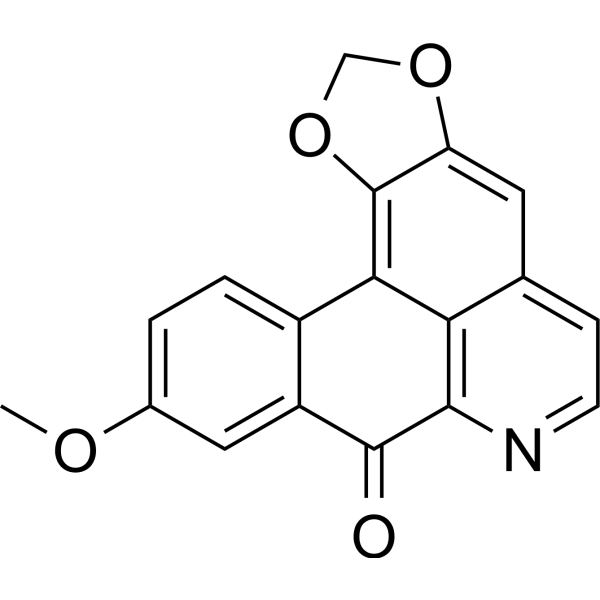 0 ImagesLanuginosine is an alkaloid. Lanuginosine can be isolated from the stems of Xylopia laevigata (Annonaceae) and the leaves of Magnolia grandiflora. Lanuginosine induces Apoptosis. Lanuginosine inhibits AChE (IC50: 10.9 μM). Lanuginosine inhibits Aβ aggregation. Lanuginosine exhibits anticancer activity against hepatocellular carcinoma, human promyelocytic leukemia, human chronic myeloid leukemia, melanoma, and brain tumors. Lanuginosine can be used in the research of Alzheimer's disease.
-
20-5,14-HEDE-d2-2
 0 ImagesCat. No.: HY-160099S2Synonyms: WIT003-d2-220-5,14-HEDE-d2 (WIT003-d2) is the deuterated-labeled 20-5,14-HEDE (HY-160099). 20-5,14-HEDE (WIT003) is an analog of 20-HETE. 20-5,14-HEDE activates PI3K/Akt signaling pathway, thereby exhibiting anti-apoptotic and cell survival promoting effects. 20-5,14-HEDE is the agonist for 20-HETE that increases intracellular Ca2+ concentrations, thereby enhancing vasoconstriction.
-
CSRM617
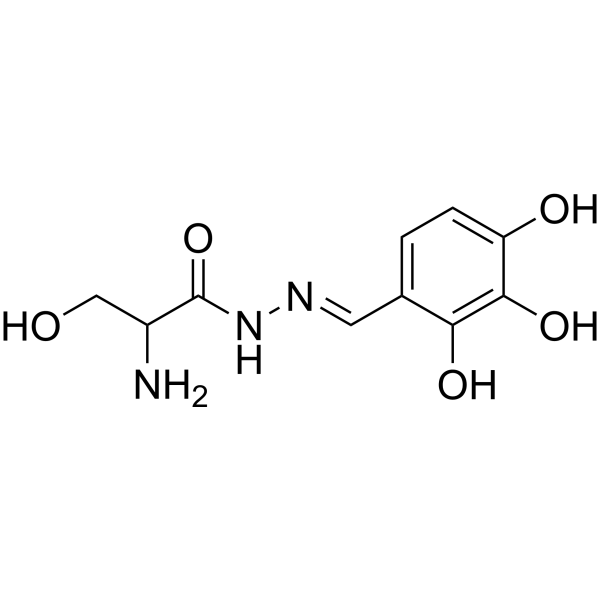 0 ImagesCat. No.: HY-122611CAS No.: 787504-88-5CSRM617 is a selective small-molecule inhibitor of the transcription factor ONECUT2 (OC2, a master regulator of androgen receptor) with a Kd of 7.43 uM in SPR assays, binding to OC2-HOX domain directly. CSRM617 induces apoptosis by appearance of cleaved Caspase-3 and PARP. CSRM617 is well tolerated in the prostate cancer mouse model




