



Autophagy
Autophagy is a conserved cellular degradation and recycling process in the lysosome. In mammalian cells, there are three primary types of autophagy: microautophagy, macroautophagy, and chaperone-mediated autophagy (CMA). Microphagy captures cargoes by means of invaginations or protrusions of the lysosomal membrane directly, CMA uses chaperones to identify cargo proteins and then unfolds and transfers them into the lysosomal, while macroautophagy sequesters cargo by autophagosomes-de novo synthesized of double-membrane vesicles-and subsequently transport it to the lysosome.
Macroautophagy is the best studied and it occurs at a low level constitutively and can also be further induced under stress conditions, such as nutrient or energy starvation with a salient feature of autophagy protein degradation. Stress-induced macrophagy plays an important role in protein catabolism with another key protein degradation pathway, the ubiquitin–proteasome system (UPS).
As the study progressed, autophagy gains its importance under basal, nutrient-rich conditions, and is now recognized as a critical housekeeping pathway in catabolism of diverse cellular constituents, such as protein aggregates (aggrephagy), lipid droplets (lipophagy), iron complex (Ferritinophagy) and carbohydrate. Except for macromolecules, autophagy can also target several organelles and structures, such as mitochondria (mitophagy), peroxisome (pexophagy), endoplasmic reticulum (reticulophagy or ER-phagy), ribosome (ribophagy), spermatozoon-inherited organelles following fertilization (allophagy), secretory granules within pancreatic cells (zymophagy) and intracellular pathogens (xenophagy).
Autophagy and its dysfunction are associated with a variety of human pathologies, including ageing, cancer, neurodegenerative disease, heart disease and metabolic diseases, such as diabetes. Plenty of drugs and natural products are involved in autophagy modulation through multiple signaling pathways. Small molecules that can regulate autophagy seem to have great potential to intervene such diseases in animal models or clinical courses.
All Product Categories
-
Autophagy Inhibitors
(470)
View all products
-
Autophagy Agonists
(6)
View all products
-
Autophagy Activators
(119)
View all products
-
Autophagy Modulators
(59)
View all products
-
Autophagy Chemicals
(2)
View all products
-
Autophagy Inducers
(2165)
View all products
-
Autophagy Controls
(5)
View all products
-
Autophagy Ligand
(1)
View all products
-
Autophagy Related Products (3358)
Related Products (3358)

-
Antibodies (31)
-
Autophagy Signaling Pathway
-
SBP-5147
 0 ImagesCat. No.: HY-181815CAS No.: 1884222-37-0SBP-5147 is an orally active ULK1/ULK2 inhibitor, with an IC50 of 2 nM against ULK1 and an IC50 of 53 nM against ULK2. SBP-5147 inhibits the phosphorylation of Beclin-1 and Vps34, reduces autophagy flux, downregulates the expression of ATG13 and ATG101, upregulates the expression of MHC-I, induces caspase-dependent apoptosis, and decreases the viability of non-small cell lung cancer cells. SBP-5147 is applicable to research related to non-small cell lung cancer[1].
-
N6-Isopentenyladenosine (Standard)
 0 ImagesSynonyms: Riboprine (Standard)N6-Isopentenyladenosine (Riboprine), an RNA modification found in cytokinins, which regulate plant growth/differentiation, and a subset of tRNAs, where it improves the efficiency and accuracy of translation. N6-Isopentenyladenosine, an end product of the mevalonate pathway, is an autophagy inhibitor with an interesting anti-melanoma activity.
-
Leonurine (Standard)
 0 ImagesSynonyms: SCM-198 (Standard)Leonurine is an alkaloid isolated from Leonurus artemisia, with anti-oxidative and anti-inflammatory.
-
Esmolol-d7 hydrochloride
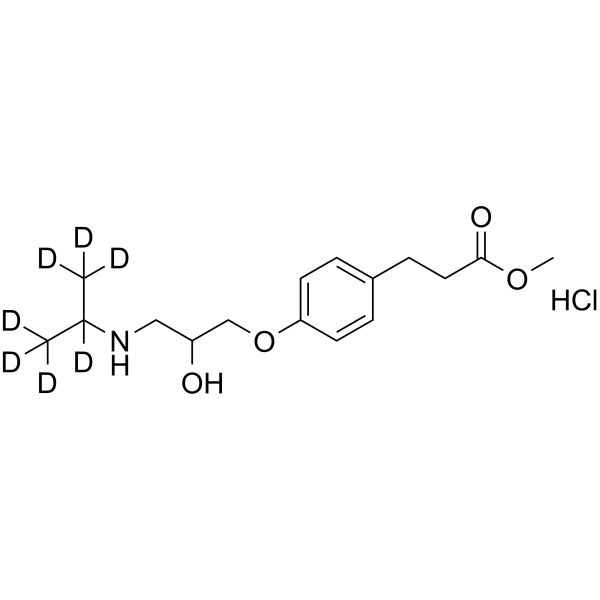 0 ImagesCat. No.: HY-B1392SCAS No.: 1346598-13-7Esmolol-d7 hydrochloride is the deuterium labeled Esmolol hydrochloride (HY-B1392). Esmolol hydrochloride is an ultra-short-acting cardioselective β1-adrenergic blocker. Esmolol hydrochloride exerts its antiarrhythmic effect by activating Neurokinin 1 ReceptorEsmolol hydrochloride attenuates post resuscitation myocardial dysfunction. Esmolol hydrochloride improves diabetic wound healing by inhibiting (aldose reductase) and the production of advanced glycation end products and promoting fibroblast migration. Esmolol hydrochloride can be used to study cardiac diseases such as arrhythmias and diabetic foot ulcers.
-
13(S)-HOTrE
 0 Images13 (S)-HOTrE is an oxylipin metabolite of α-Linolenic acid (HY-N0728). 13 (S)-HOTrE mediates the inactivation of the NLRP3 inflammasome through the PPAR-γ pathway to exert anti-inflammatory effects. 13 (S)-HOTrE inhibits NF-κB nuclear translocation, ROS production, autophagy and IL-1β levels, induces apoptosis, and increases IL-10 levels. 13 (S)-HOTrE alleviates LPS-induced inflammatory responses in macrophages, prolongs the survival time of septic mice, and regulates the immunometabolic phenotype in parenteral nutrition mouse models. 13 (S)-HOTrE can be used in the research of immune and inflammation-related diseases.
-
EAD1 TFA
 0 ImagesCat. No.: HY-123056ACAS No.: 2320427-95-8EAD1 TFA is a Chloroquine (HY-17589A) analog with anticancer activity. EAD1 TFA blocks autophagy, leading to the intracellular accumulation of autophagosome-related proteins LC3-II and p62. EAD1 TFA induces cancer cell apoptosis and inhibits cancer cell proliferation. EAD1 TFA can be used in the research of lung cancer and pancreatic cancer.
-
(S)-Sitagliptin phosphate (Standard)
 0 ImagesCat. No.: HY-13749CRCAS No.: 823817-58-9Synonyms: (S)-MK-0431 phosphate (Standard)(S)-Sitagliptin (phosphate) (Standard) is the analytical standard of (S)-Sitagliptin (phosphate). This product is intended for research and analytical applications. (S)-Sitagliptin phosphate is the less active S-enantiomer of Sitagliptin phosphate. Sitagliptin phosphate (MK-0431 phosphate) is a potent inhibitor of DPP4 with an IC50 of 19 nM in Caco-2 cell extracts.
-
Quinacrine dihydrochloride (Standard)
 0 ImagesCat. No.: HY-13735ARCAS No.: 69-05-6Synonyms: Mepacrine dihydrochloride (Standard); SN-390 dihydrochloride (Standard)Quinacrine (dihydrochloride) (Standard) is the analytical standard of Quinacrine (dihydrochloride). This product is intended for research and analytical applications. Quinacrine (Mepacrine) dihydrochloride is an orally bioavailable antimalarial agent, which possess anticancer effect both in vitro and vivo. Quinacrine dihydrochloride suppresses NF-κB and activate p53 signaling, which results in the induction of the apoptosis.
-
ARN5187 trihydrochloride (Standard)
 0 ImagesCat. No.: HY-103691ARCAS No.: 1700693-96-4ARN5187 trihydrochloride (Standard) is the analytical standard of ARN5187 trihydrochloride (HY-103691A). This product is intended for research and analytical applications. ARN5187 trihydrochloride is a lysosomotropic REV-ERBβ ligand with a dual inhibitory activity toward REV-ERB-mediated transcriptional regulation and autophagy. ARN5187 trihydrochloride shows lysosomotropic potency and cytotoxicity. ARN5187 trihydrochloride induces apoptosis.
-
Dexpramipexole-d3 dihydrochloride
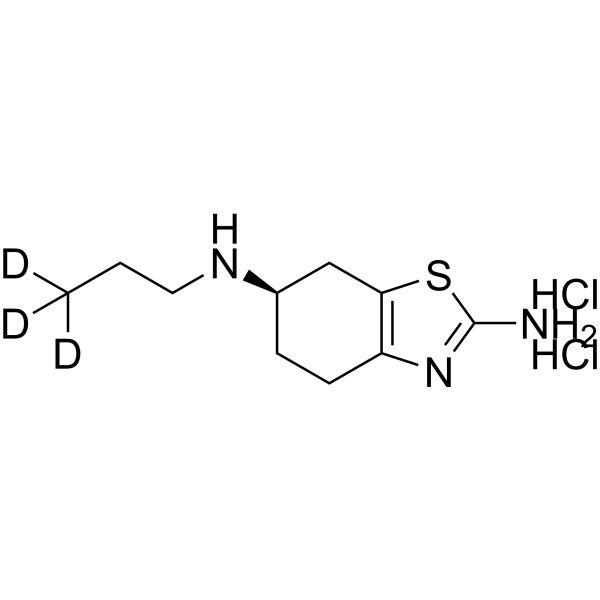 0 ImagesCat. No.: HY-17355BSCAS No.: 1432230-09-5Synonyms: (R)-Pramipexole-d3 dihydrochloride; R-(+)-Pramipexole-d3 dihydrochloride; KNS-760704-d3 dihydrochlorideDexpramipexole-d3 ((R)-Pramipexole-d3) dihydrochloride is the deuterium labeled Dexpramipexole. Dexpramipexole ((R)-Pramipexole) dihydrochloride is an orally active, blood-brain barrier permeable mitochondrial protective agent. Dexpramipexole dihydrochloride upregulates the expression of Parkin, PINK1, GPX4 and FSP1; binds to mitochondrial F1/Fo-ATP synthase; blocks the Nav1.8 sodium channel; and inhibits the activation of the NLRP3 inflammasome. Dexpramipexole dihydrochloride induces mitophagy, inhibits ferroptosis, pyroptosis, apoptosis, neuroinflammation and eosinophilopoiesis; maintains mitochondrial function and redox homeostasis; reduces reactive oxygen species production; and decreases myocardial infarct size. Dexpramipexole dihydrochloride is applicable to studies on eosinophilic asthma, myocardial ischemia/reperfusion injury, sepsis-associated encephalopathy, analgesia, and more.
-
Salubrinal (Standard)
 0 ImagesSalubrinal (Standard) is the analytical standard of Salubrinal. This product is intended for research and analytical applications. Salubrinal is a cell-permeable and selective inhibitor of eIF2α dephosphorylation. Salubrinal acts as a dual-specificity phosphatase 2 (Dusp2) inhibitor and suppresses inflammation in anti-collagen antibody-induced arthritis. Salubrinal has antiviral activity against HSV-1 and inhibits dephosphorylation of eIF2α mediated by the HSV-1 protein ICP34.5.
-
Dantrolene (sodium hemiheptahydrate) (Standard)
 0 ImagesSynonyms: Dantrolene sodium hydrate (Standard)Dantrolene (sodium hemiheptahydrate) (Standard) is the analytical standard of Dantrolene (sodium hemiheptahydrate). This product is intended for research and analytical applications. Dantrolene sodium hemiheptahydrate is an orally active, non-competitive glutathione reductase inhibitor with a Ki of 111.6 μM and an IC50 of 52.3 μM. Dantrolene sodium hemiheptahydrate is a ryanodine receptor (RyR) antagonist and Ca2+ signaling stabilizer. Dantrolene sodium hemiheptahydrate is a direct-acting skeletal muscle relaxant. Dantrolene sodium hemiheptahydrate can be used for the research of muscle spasticity, malignant hyperthermia, Huntington's disease and other neuroleptic malignant syndrome.
-
Bifendate (Standard)
 0 ImagesSynonyms: DDB (Standard)Bifendate (DDB), extracted from Schisandrae chinensis, is an orally active anti-HBV agent against chronic hepatitis B. Bifendate inhibits ATG5-dependent autophagy and attenuates oleic acid-induced lipid accumulation with anti-oxidant properties in vitro. Bifendate can decrease alanine transaminase (ALT) level in mice. Bifendate attenuates hepatic steatosis in cholesterol/bile salt- and high-fat diet-induced hypercholesterolemia in mice. Bifendate potently increases the activity of cytochrome proteins (CYPs) and reverse P-gp-mediated multi-drug resistance (MDR).
-
Daurisoline-d2
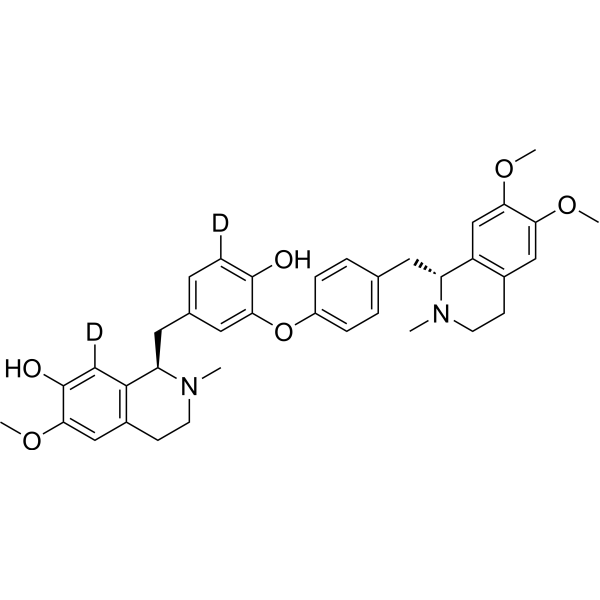 0 ImagesCat. No.: HY-N0221SSynonyms: (R,R)-Daurisoline-d2Daurisoline-d2 is the deuterium labeled Daurisoline (HY-N0221). Daurisoline is a bis-benzylisoquinoline alkaloid that can be isolated from Menispermum dauricum and Rhizoma Menispermi. Daurisoline exerts a blocking effect on hERG and has antiarrhythmic effects. Daurisoline is a potent autophagy blocker that can be used for the research of cancer.
-
Autophagy-IN-7
 0 ImagesCat. No.: HY-169592CAS No.: 324031-29-0
-
Mefloquine (Standard)
 0 ImagesSynonyms: Mefloquin (Standard)Mefloquine (Standard) is the analytical standard of Mefloquine. This product is intended for research and analytical applications. Mefloquine (Mefloquin), an orally active and potent quinoline antimalarial agent, is an anti-SARS-CoV-2 entry inhibitor. Mefloquine is also a K+ channel (KvQT1/minK) antagonist with an IC50 of ~1 μM. Mefloquine can be used for malaria, systemic lupus erythematosus and cancer research.
-
AZ PFKFB3 26 (Standard)
 0 ImagesAZ PFKFB3 26 (Standard) is the analytical standard of AZ PFKFB3 26 (HY-101971). This product is intended for research and analytical applications. AZ PFKFB3 26 is a potent and selective PFKFB3 inhibitor with an IC50 of 23 nM. AZ PFKFB3 26 inhibits PFKFB1 and PFKFB2 with IC50s of 2.06 and 0.384 μM, respectively. AZ PFKFB3 26 can be used in the study of non-small cell lung cancer.
-
Dehydrodiisoeugenol (Standard)
 0 ImagesDehydrodiisoeugenol (Standard) is the analytical standard of Dehydrodiisoeugenol (HY-N0589). This product is intended for research and analytical applications. Dehydrodiisoeugenol is an orally active anti-inflammatory and anti-tumor agent. Dehydrodiisoeugenol inhibits the proliferation of colorectal cancer cells, and induces apoptosis, autophagy, endoplasmic reticulum stress and cell cycle arrest. Dehydrodiisoeugenol also exerts anti-inflammatory effects by inhibiting the activation of NF-κB and the expression of COX-2. Dehydrodiisoeugenol can be used in the research related to colorectal cancer, inflammatory diseases and ulcerative colitis.
-
Daurisoline-d11
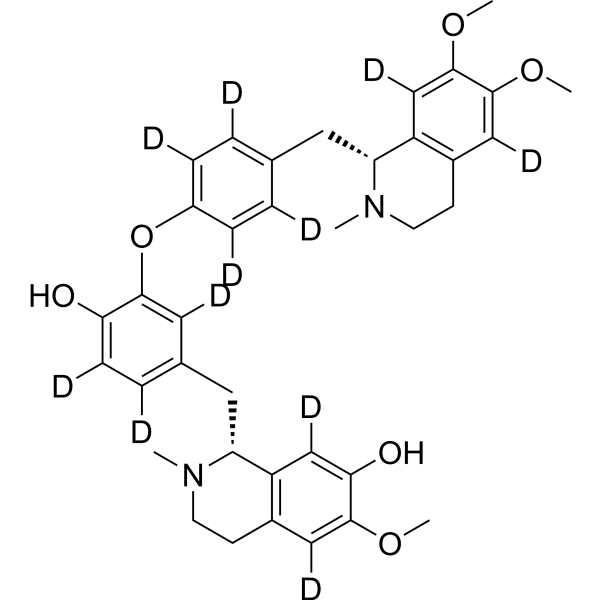 0 ImagesCat. No.: HY-N0221S2Synonyms: (R,R)-Daurisoline-d11Daurisoline-d11 is the deuterium labeled Daurisoline (HY-N0221). Daurisoline is a bis-benzylisoquinoline alkaloid that can be isolated from Menispermum dauricum and Rhizoma Menispermi. Daurisoline exerts a blocking effect on hERG and has antiarrhythmic effects. Daurisoline is a potent autophagy blocker that can be used for the research of cancer.
-
LY2109761 (Standard)
 0 ImagesLY2109761 (Standard) is the analytical standard of LY2109761. This product is intended for research and analytical applications. LY2109761 is an orally active, selective TGF-β receptor type I/II inhibitor with Kis of 38 nM and 300 nM, respectively.




