



Autophagy
Autophagy is a conserved cellular degradation and recycling process in the lysosome. In mammalian cells, there are three primary types of autophagy: microautophagy, macroautophagy, and chaperone-mediated autophagy (CMA). Microphagy captures cargoes by means of invaginations or protrusions of the lysosomal membrane directly, CMA uses chaperones to identify cargo proteins and then unfolds and transfers them into the lysosomal, while macroautophagy sequesters cargo by autophagosomes-de novo synthesized of double-membrane vesicles-and subsequently transport it to the lysosome.
Macroautophagy is the best studied and it occurs at a low level constitutively and can also be further induced under stress conditions, such as nutrient or energy starvation with a salient feature of autophagy protein degradation. Stress-induced macrophagy plays an important role in protein catabolism with another key protein degradation pathway, the ubiquitin–proteasome system (UPS).
As the study progressed, autophagy gains its importance under basal, nutrient-rich conditions, and is now recognized as a critical housekeeping pathway in catabolism of diverse cellular constituents, such as protein aggregates (aggrephagy), lipid droplets (lipophagy), iron complex (Ferritinophagy) and carbohydrate. Except for macromolecules, autophagy can also target several organelles and structures, such as mitochondria (mitophagy), peroxisome (pexophagy), endoplasmic reticulum (reticulophagy or ER-phagy), ribosome (ribophagy), spermatozoon-inherited organelles following fertilization (allophagy), secretory granules within pancreatic cells (zymophagy) and intracellular pathogens (xenophagy).
Autophagy and its dysfunction are associated with a variety of human pathologies, including ageing, cancer, neurodegenerative disease, heart disease and metabolic diseases, such as diabetes. Plenty of drugs and natural products are involved in autophagy modulation through multiple signaling pathways. Small molecules that can regulate autophagy seem to have great potential to intervene such diseases in animal models or clinical courses.
All Product Categories
-
Autophagy Inhibitors
(470)
View all products
-
Autophagy Agonists
(6)
View all products
-
Autophagy Activators
(119)
View all products
-
Autophagy Modulators
(59)
View all products
-
Autophagy Chemicals
(2)
View all products
-
Autophagy Inducers
(2163)
View all products
-
Autophagy Controls
(5)
View all products
-
Autophagy Ligand
(1)
View all products
-
Autophagy Related Products (3358)
Related Products (3358)

-
Antibodies (31)
-
Autophagy Signaling Pathway
-
EGFR/tubulin-IN-1
 0 ImagesCat. No.: HY-179049EGFR/tubulin-IN-1 (Compound 26) is a dual-target inhibitor of EGFR and tubulin. EGFR/tubulin-IN-1 significantly reduces the levels of p-EGFR, p-AKT, and p-ERK in cells, disrupting the microtubule structure of the cells. EGFR/tubulin-IN-1 significantly inhibits the proliferation of H1975 cells and significantly blocks the cells in the G2/M phase. EGFR/tubulin-IN-1 induces the expression of autophagy markers LC3B-II and Beclin-1, while down-regulating the expression of p62. EGFR/tubulin-IN-1 induces ferroptosis, with increased ROS content and depletion of glutathione (GSH). EGFR/tubulin-IN-1 inhibits epithelial-mesenchymal transition (EMT) and tumor metastasis. EGFR/tubulin-IN-1 has a significant tumor-suppressing effect in the H1975 transplanted tumor nude mouse model. EGFR/tubulin-IN-1 can be used for the study of non-small cell lung cancer.
-
Anticancer agent 325
 0 ImagesCat. No.: HY-183714CAS No.: 2922798-57-8Anticancer agent 325 is an apoptosis/autophagy inducer and anticancer agent. Anticancer agent 325 exhibits cytotoxic activity against gastric cancer cells, with no significant effect on healthy gastric epithelial cells. Anticancer agent 325 enhances the expression of activated/cleaved Caspase-3 to promote apoptosis. Anticancer agent 325 also enhances the cleavage of PARP, a downstream marker of apoptosis, promotes LC3B lipidation, and activates autophagy. Anticancer agent 325 can be used in the research of gastric cancer.
-
Thalidomide-NH-C5-NH2
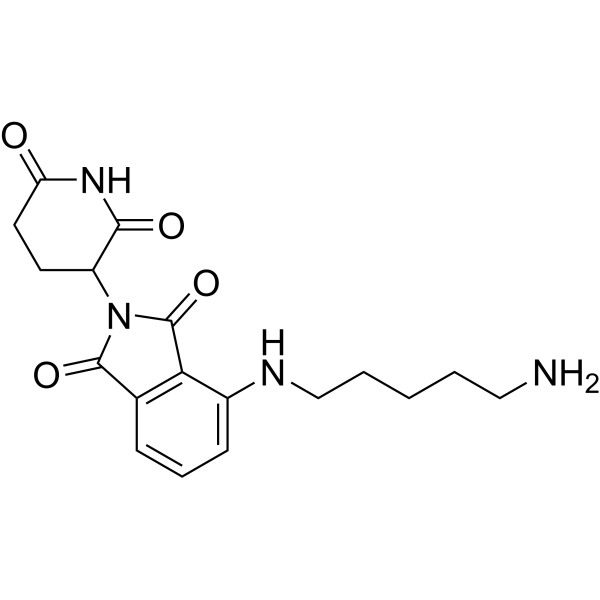 0 ImagesCat. No.: HY-134986CAS No.: 2093386-39-9Thalidomide-NH-C5-NH2 is a synthesized E3 ligase ligand-linker conjugate that incorporates the Thalidomide based cereblon ligand and a linker used in PROTAC technology.
-
anti-TNBC agent-6
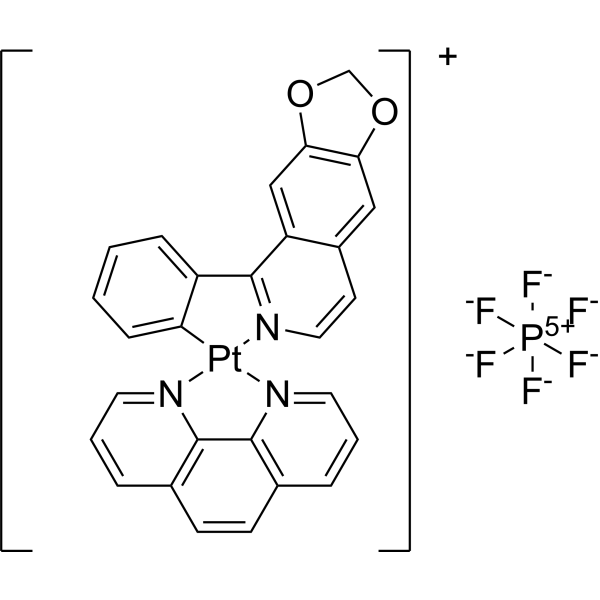 0 ImagesCat. No.: HY-158108anti-TNBC agent-6 (compound pt-3) is a potent anti-TNBC agent. anti-TNBC agent-6 shows cytotoxic activity. anti-TNBC agent-6 induces autophagy and ferroptosis. anti-TNBC agent-6 enhances intracellular ROS accumulatio. anti-TNBC agent-6 shows anti tumor activity and has the potential for the research of breast cancer.
-
Bergenin (Standard)
 0 ImagesBergenin (Standard) is the analytical standard of Bergenin. This product is intended for research and analytical applications. Bergenin is a cytoprotective and antioxidative polyphenol found in many medicinal plants. Bergenin has a wide spectrum activities such as hepatoprotective, antiinflammatory, immunomodulatory, antitumor, antiviral, and antifungal properties.
-
Capsaicin (Purity 65%) (Standard)
 0 ImagesCapsaicin (Purity 65%) (Standard) is the analytical standard of Capsaicin (Purity 65%). This product is intended for research and analytical applications. Capsaicin (Purity 65%) is a mixture of Capsaicin and Dihydrocapsaicin (Ratio >2:1).Capsaicin (Purity 65%) is an orally active capsaicin receptor (TRPV1) agonist.
-
Tolbutamide-13C
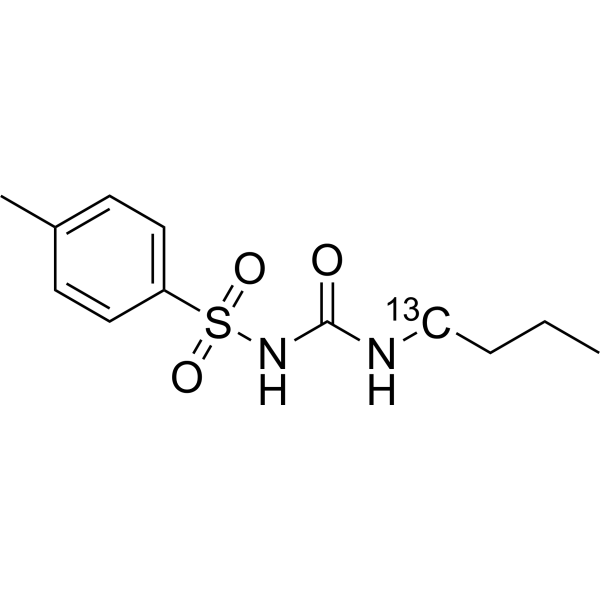 0 ImagesCat. No.: HY-B0401S1Tolbutamide-13C is the 13C-labeled Tolbutamide. Tolbutamide is a first generation potassium channel blocker, sulfonylurea oral hypoglycemic agent.
-
Clemastine fumarate (Standard)
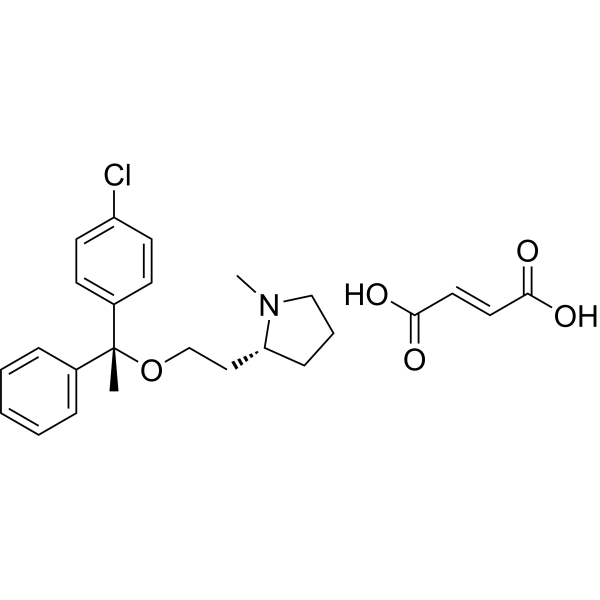 0 ImagesSynonyms: HS-592 fumarate (Standard); Meclastine fumarate (Standard)Clemastine (HS-592; Meclastine) fumarate (Standard) is the analytical standard of Clemastine fumarate. This product is intended for research and analytical applications. Clemastine fumarate is an orally active, blood-brain barrier-permeable H1 histamine receptor (H1 histamine receptor) antagonist with potent antiallergic effects. Clemastine fumarate also antagonizes muscarinic acetylcholine receptors (mAChR), particularly the M1 and M4 subtypes. In addition to antihistamine effects, Clemastine fumarate exhibits multiple pharmacological activities, especially in promoting central nervous system remyelination, activating autophagy and pyroptosis, exerting anti-apoptotic and neuroprotective effects, and suppressing inflammation .
-
FR 167653 free base
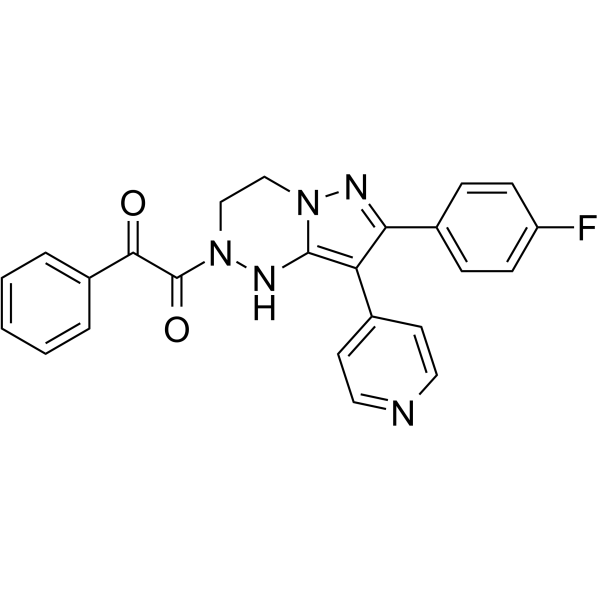 0 ImagesCat. No.: HY-18754CAS No.: 158876-65-4
-
ATG5 PPI-IN-4
 0 ImagesCat. No.: HY-183826CAS No.: 2841473-91-2ATG5 PPI-IN-4 is an autophagy inhibitor targeting ATG5, with an IC50 of 12.78 μM against ATG5-ATG16L1 and an IC50 of 12.00 μM against ATG5-TECAIR. ATG5 PPI-IN-4 blocks the protein interactions between ATG5 and ATG16L1, as well as between ATG5 and TECAIR, disrupts the assembly of the ATG12-ATG5-ATG16L1 ternary complex, inhibits the lipidation modification of LC3/ATG8, and ultimately downregulates cellular autophagy levels. ATG5 PPI-IN-4 can be used in autophagy-related research, such as studies on infection and cancer.
-
Chelerythrine hydroxide
 0 ImagesChelerythrine hydroxide is an alkaloid, acts as a potent and selective Ca2+/phospholopid-dependent PKC antagonist, with an IC50 of 0.7 μM. Chelerythrine hydroxide inhibits the BclXL-Bak BH3 peptide binding with IC50 of 1.5 μM. Chelerythrine hydroxide triggers Apoptosis and Autophagy. Chelerythrine hydroxide has antitumor, antidiabetic and anti-inflammatory activity. Chelerythrine hydroxide shows antibacterial activities against Gram-positive bacteria, Staphylococcus aureus (SA), MRSA.
-
(R)-Hydroxychloroquine phosphate
 0 ImagesCat. No.: HY-B1370ECAS No.: 2488706-20-1Synonyms: (R)-HCQ phosphate(R)-Hydroxychloroquine ((R)-HCQ) phosphate is a (R)-isomer of Hydroxychloroquine (HY-W031727). (R)-Hydroxychloroquine inhibits the insulin metabolizing enzyme of cytosolic fraction of liver homogenates in healthy and diabetic rats.
-
EAD1
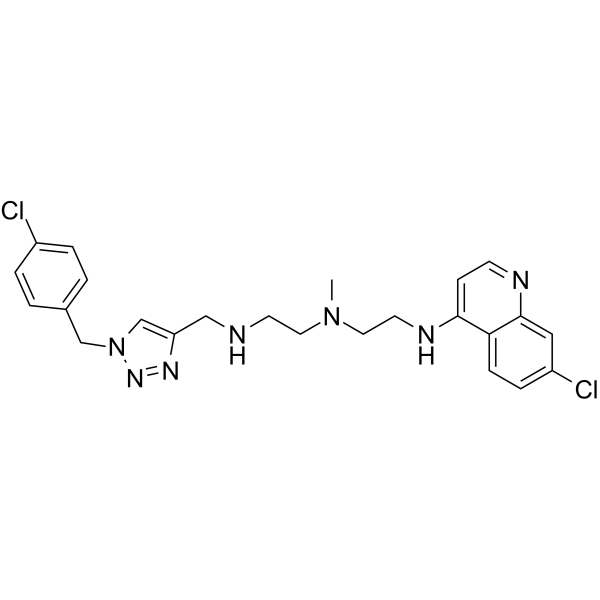 0 ImagesCat. No.: HY-123056CAS No.: 1644388-26-0EAD1 is a Chloroquine (HY-17589A) analog with anticancer activity. EAD1 blocks autophagy, leading to the intracellular accumulation of autophagosome-related proteins LC3-II and p62. EAD1 induces cancer cell apoptosis and inhibits cancer cell proliferation. EAD1 can be used in the research of lung cancer and pancreatic cancer.
-
(S)-Thalidomide-Piperazine-CH2-Pyrrolidine-C2-OH
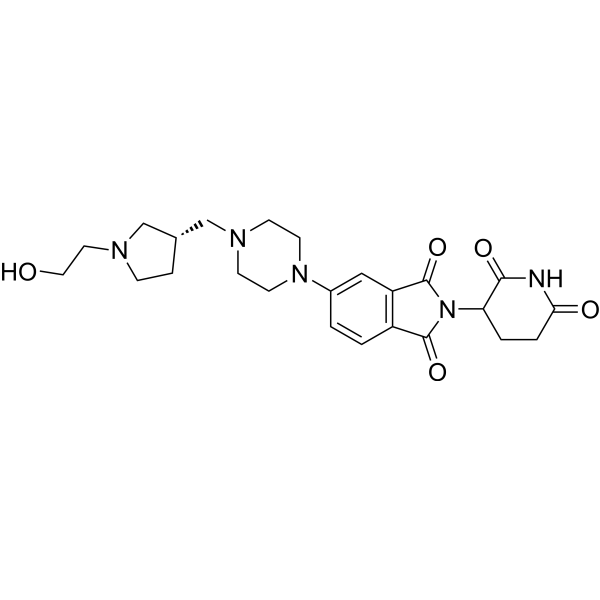 0 ImagesCat. No.: HY-157588E3 ligase Ligand-Linker Conjugate 30 is a conjugate of E3 ligase ligand and linker, consisting of Thalidomide (HY-14658) and the corresponding Linker. E3 ligase Ligand-Linker Conjugate 30 can serve as Cereblon ligand to recruit CRBN protein and serve as a key intermediate for the synthesis of complete PROTAC molecules.
-
NCO-141
 0 ImagesCat. No.: HY-185682CAS No.: 1382354-26-8NCO-141 is a selective SIRT2 inhibitor with an IC50 of 0.5 μM. NCO-141 induces cell apoptosis via caspase activation and mitochondrial superoxide anion production. NCO-141 induces cell autophagy by increasing LC3-II levels and autophagosome accumulation. NCO-141 is applicable to relevant research on leukemia.
-
AM580 (Standard)
 0 ImagesSynonyms: CD336 (Standard); NSC608001 (Standard); Ro 40-6055 (Standard)AM580 (Standard) is the analytical standard of AM580. This product is intended for research and analytical applications. AM580 is a selective RARα agonist with IC50 and EC50 of 8 nM and 0.36 nM, respectively.
-
Oxybenzone-13C6
 0 ImagesCat. No.: HY-A0067S1Synonyms: Benzophenone 3-13C6Oxybenzone-13C6 (Benzophenone 3-13C6) is the 13C-labeled Oxybenzone (HY-A0067). Oxybenzone (Benzophenone 3) is a commonly used UV filter in sun tans and skin protectants. Oxybenzone act as endocrine disrupting chemicals (EDCs) and can pass through the placental and blood-brain barriers. Benzophenone-3 impairs autophagy, alters epigenetic status, and disrupts retinoid X receptor signaling in apoptotic neuronal cells.

-
Neuroprotective agent 13
 0 ImagesCat. No.: HY-178048CAS No.: 3086460-35-4Neuroprotective agent 13 is a brain-penetrant 1H-benzo[d]imidazoles compound with neuroprotective effect. Neuroprotective agent 13 can activate autophagy and clear SCMAS accumulation from iPSC-derived neural progenitor cells. Neuroprotective agent 13 can be used for the research of neurological disease, such as neuronal ceroid lipofuscinoses (NCLs).




