



Bacterial
Anything that destroys bacteria or suppresses their growth or their ability to reproduce. Heat, chemicals such as chlorine, and antibiotic drugs all have antibacterial properties. Many antibacterial products for cleaning and handwashing are sold today. Such products do not reduce the risk for symptoms of viral infectious diseases in otherwise healthy persons. This does not preclude the potential contribution of antibacterial products to reducing symptoms of bacterial diseases in the home.
All Product Categories
-
Bacterial Inhibitors
(7484)
View all products
-
Bacterial Agonists
(3)
View all products
-
Bacterial Antagonists
(9)
View all products
-
Bacterial Activators
(23)
View all products
-
Bacterial Modulators
(27)
View all products
-
Bacterial Chemicals
(2)
View all products
-
Bacterial Inducers
(7)
View all products
-
Bacterial Controls
(14)
View all products
-
Bacterial Substrates
(2)
View all products
-
Bacterial Ligand
(1)
View all products
-
Bacterial Related Products (8809)
Related Products (8809)

-
Antibodies (14)
-
Related Compound Screening Libraries (1)
-
Antibacterial agent 30
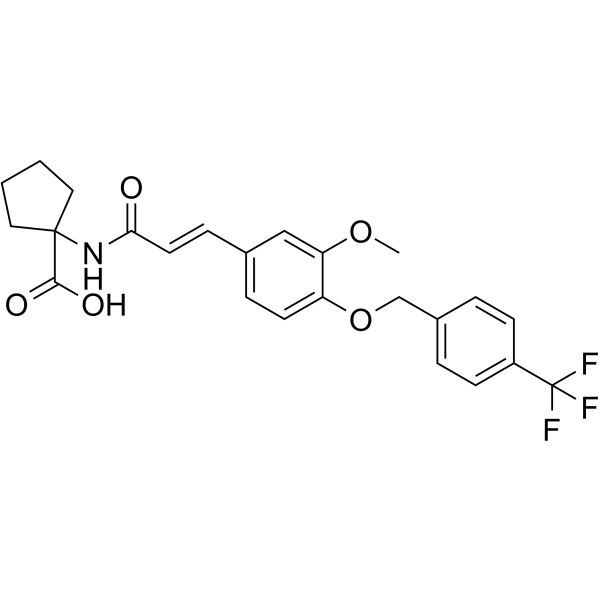 0 ImagesCat. No.: HY-132918CAS No.: 2694867-40-6Antibacterial agent 30 demonstrates excellent in vitro activity against Xoo with EC50 value of 1.9 μg/mL.
-
Sea buckthorn extract (leaves)
 0 ImagesCat. No.: HY-N20087Sea buckthorn extract (leaves) is an extract of the leaves of Hippophae rhamnoides L. It has cardioprotective effects, inhibits platelet aggregation, lowers cholesterol and blood pressure, and has antioxidant, antibacterial and antiviral properties.
-
MsbA-IN-2
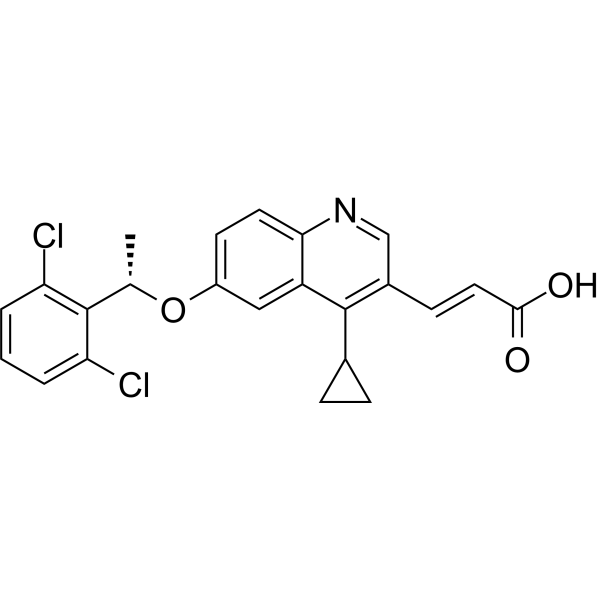 0 ImagesCat. No.: HY-144280CAS No.: 2909443-16-7MsbA-IN-2 (compound 12) is a potent lipopolysaccharide transporter MsbA inhibitor with an IC50 of 2 nM for E. coli MsbA.
-
DNA gyrase B-IN-3
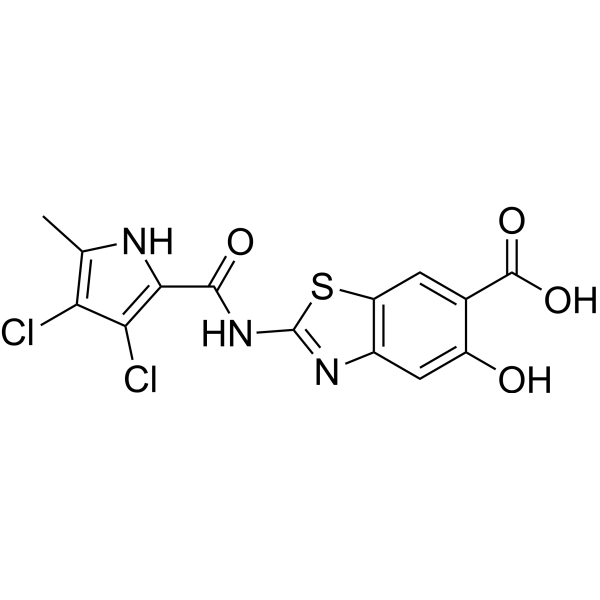 0 ImagesCat. No.: HY-149379CAS No.: 2412834-56-9DNA gyrase B-IN-3 (Compound A) is a bacterial DNA gyrase B inhibitor (IC50: < 10 nM). DNA gyrase B-IN-3 has antibacterial activity against gram-positive strains.
-
Anti-inflammatory agent 11
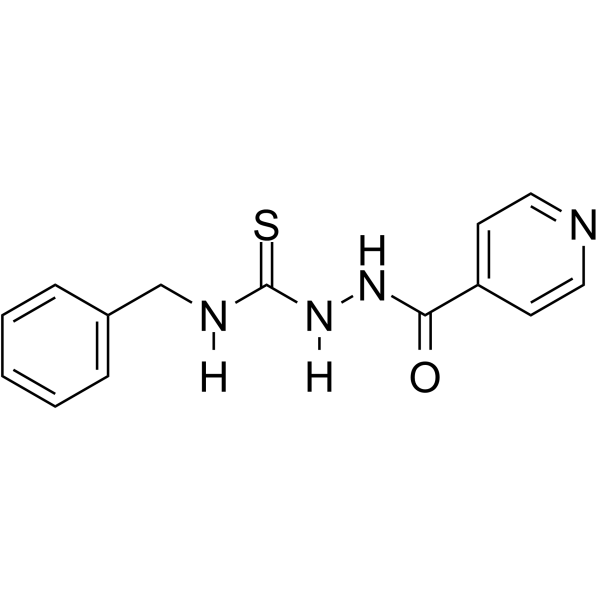 0 ImagesCat. No.: HY-144727CAS No.: 63932-07-0Anti-inflammatory agent 11 (compound 16) is a potent antimycobacterial and anti-inflammatory agent. Anti-inflammatory agent 11 inhibits Mtb H37Rv and M299 growth, with MIC50 (minimum inhibitory concentration 50%) of 1.3 and 6.9 μM, respectively. Anti-inflammatory agent 11 inhibits NO through the suppression of iNOS expression, and also inhibited the production of TNF-α and IL-1β. Anti-inflammatory agent 11 can be used for tuberculosis (TB) research.
-
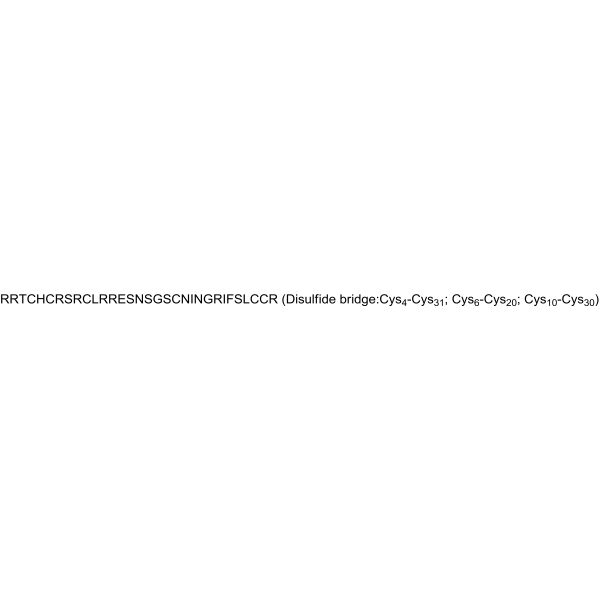
Nanchangmycin (Standard)
 0 ImagesCat. No.: HY-100528RCAS No.: 65101-87-3Synonyms: Nanchangmycin A (Standard)Nanchangmycin (Standard) is the analytical standard of Nanchangmycin. This product is intended for research and analytical applications. Nanchangmycin, a polyether antibiotic produced by Streptomyces nanchangensis NS3226, inhibits gram-positive bacteria[1]. Nanchangmycin is a broad spectrum antiviral active against Zika virus[2].
-
NDM-1 inhibitor-2
 0 ImagesCat. No.: HY-118013CAS No.: 665013-76-3NDM-1 inhibitor-2 is an inhibitor of New Delhi metallo-β-lactamase-1 (NDM-1) and has the ability to inhibit NDM-1 activity. NDM-1 inhibitor-2 exhibits a good inhibitory effect on drug-resistant bacterial strains that overexpress NDM-1. When NDM-1 inhibitor-2 is used in combination with the carbapenem antibiotic meropenem, a favorable synergistic effect can be produced.
-
Rabdosiae rubescentis herba extract
 0 ImagesCat. No.: HY-N20422Synonyms: Rabdosia rubescens extractRabdosiae rubescentis herba extract (Rabdosia rubescens extract) is an extract of Rabdosia rubescens (Hemsl.) Hara, which has various biological activities such as antibacterial, antiparasitic, anti-inflammatory and anticancer effects.
-
Velutinam
 0 ImagesCat. No.: HY-N16516CAS No.: 146428-62-8Velutinam is an alkaloid. Velutinam can be isolated from twigs of Uvaria grandiflora Roxb. Velutinam shows antioxidant activity. Velutinam can be used in the research of bacterial infections.
-
1,3,7-Trihydroxy-2-prenylxanthone
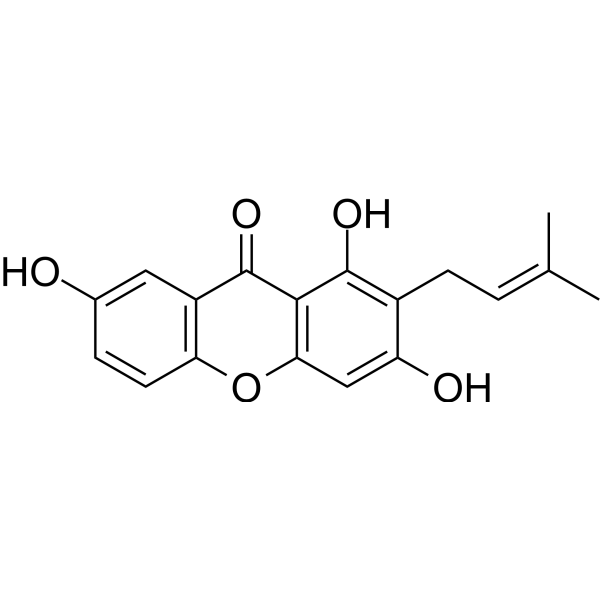 0 ImagesCat. No.: HY-N0983CAS No.: 20245-39-01,3,7-Trihydroxy-2-prenylxanthone, a xanthone, shows weaker antibacterial activity. 1,3,7-Trihydroxy-2-prenylxanthone exhibits the MIC values of 6.25 mg/ml against VREs strains (E. faecalis, E. faecium, and E. gallinarum).
-
Surgumycin
 0 ImagesCat. No.: HY-119660CAS No.: 51938-50-2Surgumycin is a compound with antimicrobial activity, and its structure was determined by studying its degradation products.
-
Midecamycin (Standard)
 0 ImagesCat. No.: HY-B1908RCAS No.: 35457-80-8Synonyms: SF-837 (Standard); Antibiotic SF-837 (Standard)Lomefloxacin (Standard) is the analytical standard of Lomefloxacin. This product is intended for research and analytical applications. Lomefloxacin (SC47111A) is a broad-spectrum quinolone antibiotic, with antimicrobial activity. Lomefloxacin is used for the research of respiratory tract infections, genitourinary infections, gastrointestinal infections, ENT infections, etc..
-
Rifaquizinone
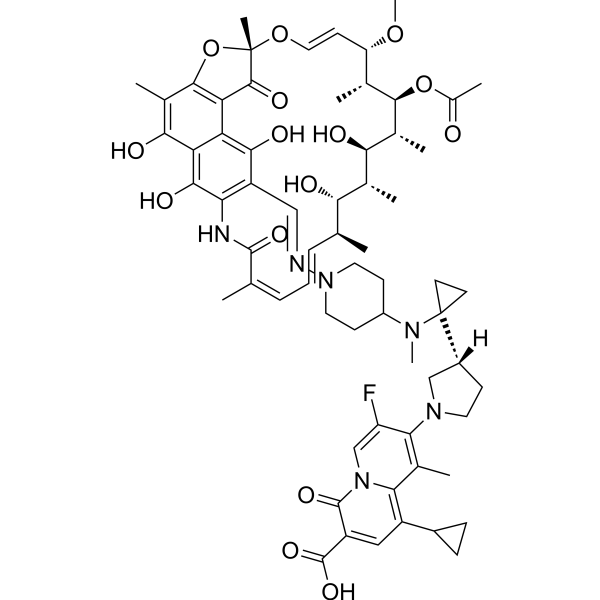 0 ImagesCat. No.: HY-135184CAS No.: 922717-97-3Synonyms: CBR-2092; TNP-2092Rifaquizinone (CBR-2092; TNP-2092) is a rifamycin-quinolone hybrid antibiotic. Rifaquizinone has an IC50 of 0.034 μM against wild-type Staphylococcus aureus DNA-dependent RNA polymerase. Rifaquizinone potently inhibits Staphylococcus aureus infection, with an MIC range of 0.008-0.5 μg/mL against 300 clinical isolates of staphylococci and streptococci. Rifaquizinone can be used in research related to persistent Staphylococcus aureus infections.
-
Andrographis paniculata extract
 0 ImagesCat. No.: HY-N18740CAS No.: 90244-84-1The active ingredients in Andrographis paniculata extract include flavonoids, polyphenols, and diterpenoid lactones, such as andrographolide, dehydroandrographolide, and neoandrographolide. These compounds are known for their anti-inflammatory, antioxidant, immune-boosting, antiviral, and antibacterial properties.
-
Oxyphenbutazone monohydrate (Standard)
 0 ImagesOxyphenbutazone monohydrate (Standard) is the analytical standard of Oxyphenbutazone monohydrate. This product is intended for research and analytical applications. Oxyphenbutazone monohydrate is a Phenylbutazone (HY-B0230) metabolite, with anti-inflammatory effect. Oxyphenbutazone monohydrate is an orally active non-selective COX inhibitor. Oxyphenbutazone monohydrate selectively kills non-replicating Mycobaterium tuberculosis.
-
Tuberculosis inhibitor 11
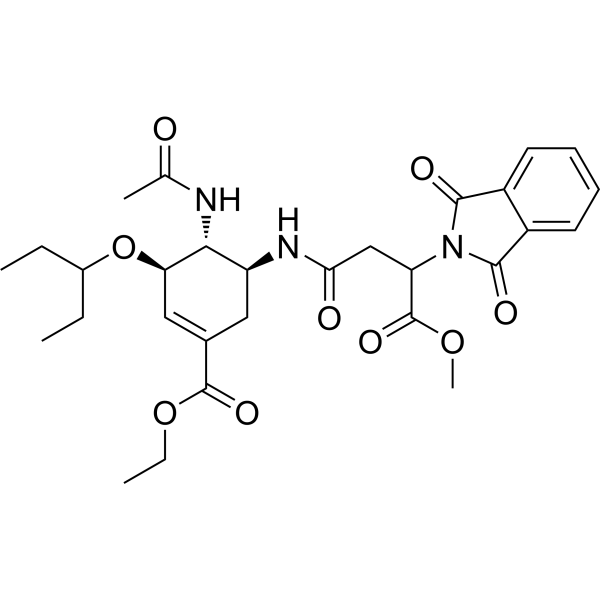 0 ImagesCat. No.: HY-156361Tuberculosis inhibitor 11 (Compound 14) can sensitize the antimycobacterial activity of the antitubercular agent.
-
Aldox-d6
 0 ImagesCat. No.: HY-W716702CAS No.: 2469039-16-3Synonyms: Lexamine M-13-d6; MAPD-d6Aldox-d6 (Lexamine M-13-d6; MAPD-d6) is the deuterium labeled Myristamidopropyl dimethylamine (HY-W099582). Myristamidopropyl dimethylamine (MAPD) is an antimicrobial agent (including against bacteria and fungi) and an insecticide, exhibiting inhibitory activity against Pseudomonas aeruginosa, Staphylococcus aureus, Candida albicans, Fusarium solani, and Acanthamoeba polyphaga. Myristamidopropyl dimethylamine can be used in research on microbial-induced keratitis .
-
Metallo-β-lactamase-IN-4
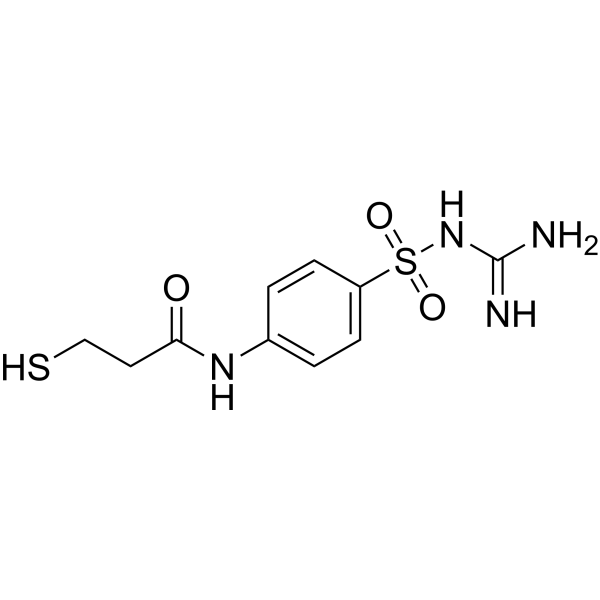 0 ImagesCat. No.: HY-144262CAS No.: 2711044-25-4Metallo-β-lactamase-IN-4 (compound 40) is a potent metallo-β-lactamases (MBL) inhibitor, with IC50 values of 0.5 μM (VIM-1), 2.1 μM (NDM-1), and 3.3 μM (IMP-7), respectively.
-
CUHK242
 0 ImagesCat. No.: HY-163882CAS No.: 2408055-05-8CUHK242 is a bacterial transcription inhibitor, with a MIC of 2 μg/mL for B. subtilis reporter strain BS2019. CUHK242 has antimicrobial activity against Staphylococcus aureus. CUHK242 can inhibit RNA synthesis in cells, thereby simultaneously reducing protein synthesis.




