



Beta-secretase
BACE; β-Secretase
Beta-secretase (BACE) is a transmembrane aspartic proteinase responsible for cleaving the amyloid precursor protein (APP) to generate the soluble ectodomain sAPPbeta and its C-terminal fragment CTFbeta. BACE is a major target of Alzheimer's disease (AD) therapeutics. There are two forms of the enzyme: BACE1 and BACE2.
Deposition of amyloid-β protein (Aβ) to form neuritic plaques is the characteristic neuropathology of Alzheimer's disease (AD). Aβ is generated from APP by β- and γ-secretase cleavages. BACE1 is the β-secretase and its inhibition induces severe side effects, whereas its homolog BACE2 normally suppresses Aβ by cleaving APP/Aβ at the θ-site (Phe20) within the Aβ domain.
Beta-secretase Isoform Specific Products
All Product Categories
-
Beta-secretase Related Products (151)
Related Products (151)

-
Antibodies (1)
-
Beta-secretase Isoform Comparison
-
Lanabecestat hydrochloride
 0 ImagesCat. No.: HY-100740ACAS No.: 1383986-31-9Synonyms: AZD-3293 hydrochloride; LY3314814 hydrochlorideLanabecestat (AZD3293; LY3314814) hydrochloride is a potent BACE1 inhibitor that has been investigated for its potential as a modifying treatment for Alzheimer's disease. Lanabecestat (hydrochloride) demonstrated significant dose- and time-dependent reductions in concentrations of amyloid beta peptides in plasma, cerebrospinal fluid, and brain. Lanabecestat (hydrochloride) was also shown to produce reductions in Aβ neuritic plaque burden without demonstrating clinical benefits or slowing the progression of Alzheimer's disease pathophysiology.
-
β-Secretase substrate VI, fluorogenic
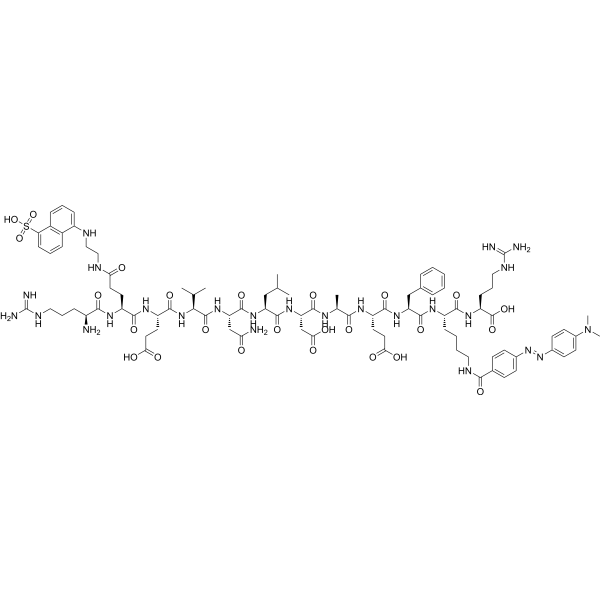 0 ImagesCat. No.: HY-P4899CAS No.: 310427-94-2Synonyms: RE(EDANS)EVNLDAEFK(DABCYL)Rβ-Secretase substrate VI, fluorogenic is an EDANS and DABCYL double-labeled peptide,serves as a fluorescent substrate for BACE1(Em=360nm,Ex=528nm). β-Secretase substrate VI, fluorogenic can be used for BACE1 activity measurement and the enzyme activity level is directly proportional to the fluorescence reaction.
-
BACE1-IN-9
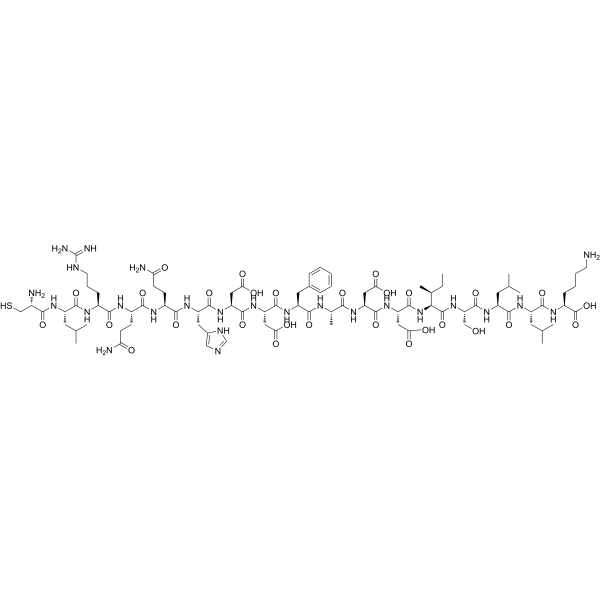
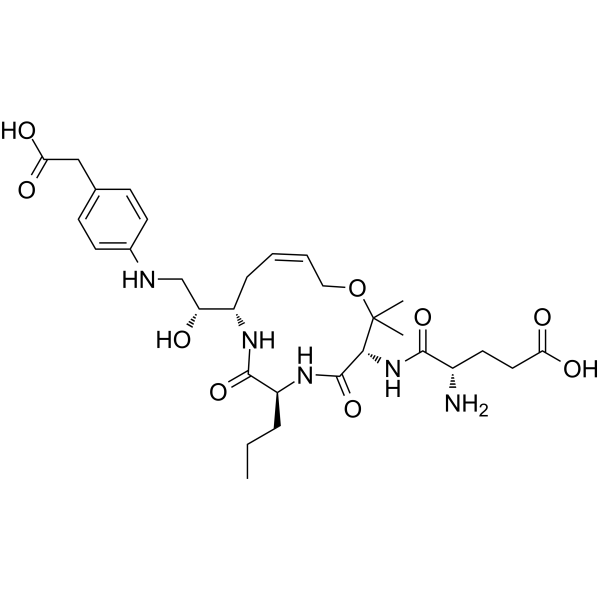 0 ImagesCat. No.: HY-144741CAS No.: 2872604-91-4BACE1-IN-9 (compound 82b) is a potent BACE1 (β-site APP cleaving enzyme 1) inhibitor, with an IC50 of 1.2 µM.
-
hAChE/hBACE-1-IN-2
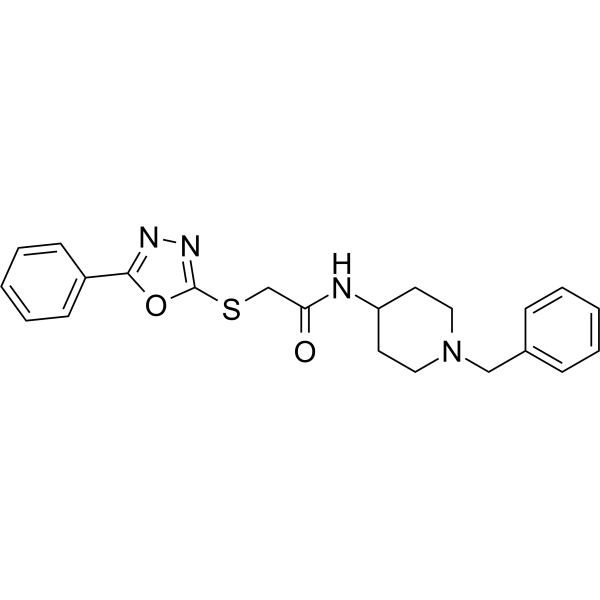 0 ImagesCat. No.: HY-149288hAChE/hBACE-1-IN-2 is a potent, orally active, blood-brain barrier transboundary triple inhibitor of hAChE, hBChE, and HACE-1 with IC50s of 0.113 μM, 1.48 μM and 0.38 μM, respectively. hAChE/hBACE-1-IN-2 has antioxidant activity. hAChE/hBACE-1-IN-2 also inhibits Aβ11-42 aggregation. hAChE/hBACE-1-IN-2 can be used to study Alzheimer's disease.
-
Eslicarbazepine-d4
 0 ImagesCat. No.: HY-114703S1Synonyms: BIA 2-194-d4Eslicarbazepine-d4 (BIA 2-194-d4) is deuterium labeled Eslicarbazepine. Eslicarbazepine is an oral anticonvulsant indicated for the adjunctive treatment of partial seizures.
-
Tenuifolin (Standard)
 0 ImagesCat. No.: HY-N0702RCAS No.: 20183-47-5Tenuifolin (Standard) is the analytical standard of Tenuifolin. This product is intended for research and analytical applications. Tenuifolin is effective and has a protective action. Tenuifolin inhibits β-secretase decreases Aβ protein secretion, suppresses Aβ25-35 secretion, and subsequently caspase-3 and caspase-9 become active. Tenuifolin's ability to lower AChE activity, increase at the same time, increase the ability of the upper glands, and improve the ability to read and remember. Research on tenuifolin's potential for use in urinary disease (AD).
-
BACE1-IN-1 (Standard)
 0 ImagesCat. No.: HY-100182RCAS No.: 1310347-50-2BACE1-IN-1 (Standard) is the analytical standard of BACE1-IN-1 (HY-100182). This product is intended for research and analytical applications. BACE1-IN-1 is an orally active, blood-brain barrier penetrant dual-target inhibitor of BACE1/2, with IC50 values of 23 nM and 24 nM against human BACE1 and BACE2, respectively. BACE1-IN-1 reduces cerebral Aβ40 levels in mice. BACE1-IN-1 can be used in studies related to Alzheimer's disease and type 2 diabetes.
-
Aloenin (Standard)
 0 ImagesCat. No.: HY-N0495RCAS No.: 38412-46-3Synonyms: Aloenin A (Standard)Aloenin (Standard) is the analytical standard of Aloenin. This product is intended for research and analytical applications. Aloenin (Aloenin A) is a kind of natural product, has effective clearing and free radical activity, and has moderate inhibitory activity on β-secretion (BACE) (IC50=14.95 μg/mL). Aloenin suppresses peritoneal hypertrophy in large rats and suppresses its release.
-
Bepridil hydrochloride (Standard)
 0 ImagesSynonyms: CERM 1978 (Standard); Org 5730 hydrochloride (Standard)Bepridil hydrochloride (Standard) (CERM 1978 (Standard);Org 5730 hydrochloride (Standard)) is the analytical standard of Bepridil hydrochloride (HY-103315). This product is intended for research and analytical applications. Bepridil hydrochloride is an orally active non-selective calcium channel antagonist with multi-ion channel blocking activity. Bepridil hydrochloride modulates Calmodulin, the 20S proteasome, T-type/L-type calcium channels, cardiac sodium channels, multiple potassium channels, γ-secretase, β-secretase, and mitoKATP/sarcKATP channels. Bepridil hydrochloride acts as a hydroxyl radical scavenger, regulates mitochondrial and intracellular calcium handling, and exerts antiarrhythmic, antianginal, and cardioprotective effects. Bepridil hydrochloride alters amyloid precursor protein processing, reduces β-amyloid and thalamic calcium levels, restores seladin-1/DHCR24 expression, and improves sensorimotor recovery after cerebral ischemia. Bepridil hydrochloride also exhibits potent inhibitory effects on SARS-CoV-2 replication. Bepridil hydrochloride is used in studies related to stable angina, arrhythmias, cerebral ischemia, Alzheimer's disease, and SARS-CoV-2 infection.
-
(1α,1'S,4β)-Lanabecestat (Standard)
 0 ImagesCat. No.: HY-100740CRCAS No.: 1384082-96-5Synonyms: (1α,1'S,4β)-AZD3293 (Standard); (1α,1'S,4β)-LY3314814 (Standard)(1α,1'S,4β)-Lanabecestat (Standard) is the analytical standard of (1α,1'S,4β)-Lanabecestat (HY-100740C). This product is intended for research and analytical applications. (1α,1'S,4β)-Lanabecestat ((1α,1'S,4β)-AZD3293) a less active enantiomer of Lanabecestat. Lanabecestat is a potent, orally active and blood-brain barrier penetrating BACE1 inhibitor with a Ki of 0.4 nM.
-
Bepridil-d5 hydrochloride
 0 ImagesCat. No.: HY-103315SSynonyms: CERM 1978-d5; Org 5730-d5 hydrochlorideBepridil-d5 hydrochloride (CERM 1978-d5; Org 5730-d5 hydrochloride) is the deuterated-labeled Bepridil hydrochloride (HY-103315). Bepridil hydrochloride (CERM 1978; Org 5730 hydrochloride) is an orally active non-selective calcium channel antagonist with multi-ion channel blocking activity. Bepridil hydrochloride modulates Calmodulin, the 20S proteasome, T-type/L-type calcium channels, cardiac sodium channels, multiple potassium channels, γ-secretase, β-secretase, and mitoKATP/sarcKATP channels. Bepridil hydrochloride acts as a hydroxyl radical scavenger, regulates mitochondrial and intracellular calcium handling, and exerts antiarrhythmic, antianginal, and cardioprotective effects. Bepridil hydrochloride alters amyloid precursor protein processing, reduces β-amyloid and thalamic calcium levels, restores seladin-1/DHCR24 expression, and improves sensorimotor recovery after cerebral ischemia. Bepridil hydrochloride also exhibits potent inhibitory effects on SARS-CoV-2 replication. Bepridil hydrochloride is used in studies related to stable angina, arrhythmias, cerebral ischemia, Alzheimer's disease, and SARS-CoV-2 infection.
-
(S)-(-)-Anatabine
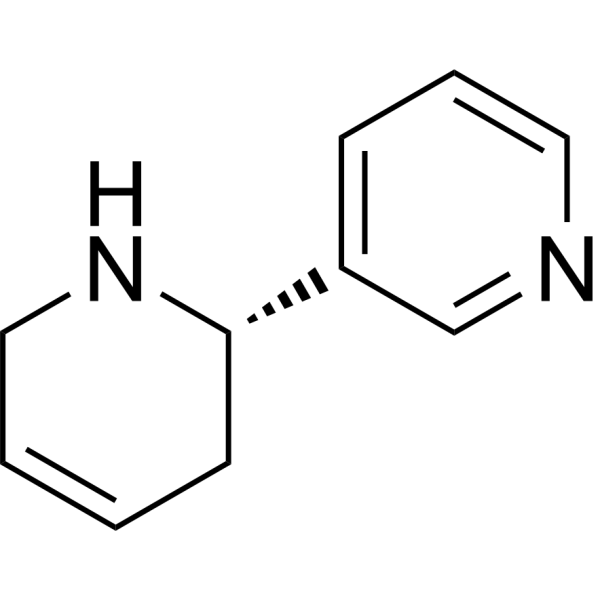 0 Images(S)-(-)-Anatabine is an NFκB/BACE-1 inhibitor with blood-brain barrier penetration. (S)-(-)-Anatabine inhibits NFκB activation via phosphorylation of its p65 subunit. (S)-(-)-Anatabine inhibits BACE-1 transcription and reduces BACE-1 protein levels. (S)-(-)-Anatabine lowers production of Aβ1-40 and Aβ1-42 by reducing β-cleavage of amyloid precursor protein without affecting α-cleavage. (S)-(-)-Anatabine can be used for the research of Alzheimer's disease.
-
TB-11
 0 ImagesTB-11 is a Cathepsin D inhibitor, with IC50s of 0.126 nM (Cathepsin D), 1.92 nM (Cathepsin E), 48.8 nM (BACE1), respectively. TB-11 can be used for tumor research.
-
WJM590
 0 ImagesCat. No.: HY-187367WJM590 is an orally active antimalarial agent that also exhibits inhibitory activities against renin, cathepsin D, BACE1, and plasmodial aspartic proteases. WJM590 inhibits substrate and protein maturation processing mediated by key proteases of Plasmodium falciparum, arrests asexual blood-stage parasites at the late schizont stage, inhibits merozoite release, and blocks malaria parasite transmission via vectors. WJM590 exerts selective inhibitory activity against multiple Plasmodium species and drug-resistant Plasmodium falciparum strains, and reduces parasitemia in infected mice. WJM590 can be used in malaria-related research.
-
Umibecestat hydrochloride
 0 ImagesCat. No.: HY-119689ACAS No.: 2365306-62-1Synonyms: CNP520 hydrochlorideUmibecestat hydrochloride (CNP520 hydrochloride) is a selective, orally active BACE inhibitor, with an IC50 of 11 nM for hBACE-1, 10 nM for mouse BACE-1, and 30 nM for hBACE-2. Umibecestat hydrochloride reduces β-Amyloid levels in the brain and cerebrospinal fluid, decreases β-amyloid plaque deposition, and inhibits plaque-associated neuroinflammation. Umibecestat hydrochloride is used in research related to Alzheimer's disease.
-
TPT-260
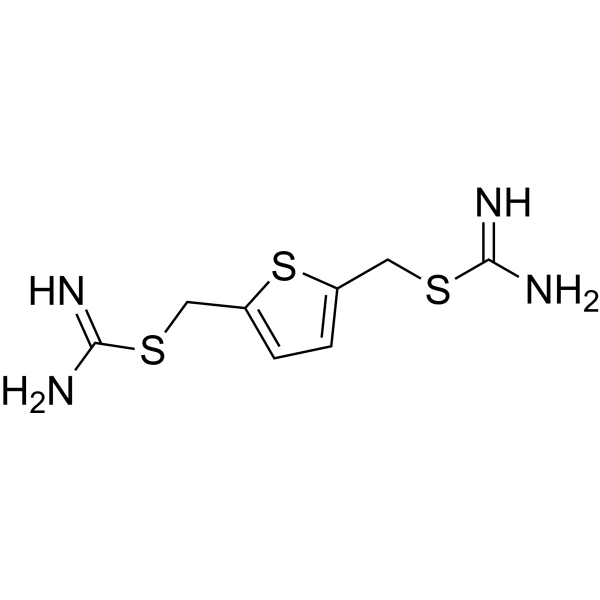 0 ImagesCat. No.: HY-13769CAS No.: 769856-81-7Synonyms: TPU260TPT-260 (TPU260), a thiophene thiourea derivative, is a retromer complex stabilizer against thermal denaturation (Kd = ~5 µM). TPT-260 increases the levels of retromer proteins, shifts amyloid-precursor protein (APP) away from the endosome, and decreases the pathogenic processing of APP. TPT-260 inhibits TLR4 upregulation, IKKβ phosphorylation, NF-κB p65 nuclear translocation, and NLRP3 inflammasome formation. TPT-260 improves retromer-mediated cargo trafficking, reduces brain infarct area, and decreases amyloid plaque deposition. TPT-260 exhibits minimal cytotoxicity to primary microglia at tested concentrations. TPT-260 can be used for the research of inflammatory bowel disease, ischemic stroke and Alzheimer's disease.
-
AZ-4217
 0 ImagesCat. No.: HY-18112CAS No.: 1383846-83-0AZ-4217 is an inhibitor for β-site amyloid precursor protein cleavage enzyme 1 (BACE1), with IC50 of 160 pM in human SH-SY5Y cells. AZ-4217 reduces amyloid deposition in Tg2576 mouse models, and is used for Alzheimer’s Disease research.
-
Verubecestat tosylate
 0 ImagesCat. No.: HY-16759BCAS No.: 1875153-95-9Synonyms: MK-8931 tosylateVerubecestat tosylate is an orally active, high-affinity BACE1 and BACE2 inhibitor with Ki values of 2.2 nM and 0.38 nM. Verubecestat tosylate effectively reduces Aβ40 and has the potential for Alzheimer's Disease.
-
LY2811376 (Standard)
 0 ImagesCat. No.: HY-10472RCAS No.: 1194044-20-6LY2811376 (Standard) is the analytical standard of LY2811376 (HY-10472). This product is intended for research and analytical applications. LY2811376 is the first orally available non-peptidic β-secretase (BACE1) inhibitor with IC50 of 239 nM-249 nM, that acts to decrease Aβ secretion with EC50 of 300 nM, and demonstrates to have 10-fold selectivity towards BACE1 over BACE2, and more than 50-fold inhibition over other aspartic proteases including cathepsin D, pepsin, or renin.




