



CaMK
Calmodulin-dependent protein kinases; Calmodulin-dependent kinases
The Ca2+/calmodulin-dependent kinase (CaMK) family has been recognized as a key mediator in living organisms and various biological processes.
CaMK II is a multifunctional cytoplasmic calcium and calmodulin-dependent protein kinase that phosphorylates and alters the function of a variety of substrates. The CaMK II pathway has been found to regulate the RANKL-induced osteoclast formation via the cAMP-response element binding protein (CREB) pathway.
Among many signaling pathways of proliferation, intracellular calciumol/L has been extensively demonstrated to be very important. In cytoplasm, calciumol/L binds to calmodulin, and then activates the CaMKs which are a family of structurally related serine/threonine protein kinases including CaMKI-IV. CaMKII, a multi functional protein kinase, is ubiquitously involved in many physiological processes including control of cell cycle, apoptosis, gene expression, and neurotransmission.
CaMK Isoform Specific Products
All Product Categories
-
CaMK Related Products (124)
Related Products (124)

-
Antibodies (7)
-
CaMK Isoform Comparison
-
TYMJ-01
 0 ImagesCat. No.: HY-181506CAS No.: 3109321-90-3TYMJ-01 is a fluorescent probe and eEF2K degrader. TYMJ-01 induces dose-dependent and specific degradation of eEF2K via the ubiquitin-proteasome pathway, with a DC50 of 82 nM. TYMJ-01 inhibits the proliferation, migration and invasion of triple-negative breast cancer cells. TYMJ-01 enables dynamic fluorescent imaging of eEF2K degradation in triple-negative breast cancer cells; it enhances the anti-tumor activity of Paclitaxel (HY-B0015). TYMJ-01 can be used for the research of triple-negative breast cancer.
-
Trifluoperazine-d3 dihydrochloride
 0 ImagesCat. No.: HY-B0532ASCAS No.: 1432064-02-2Trifluoperazine-d3 (dihydrochloride) is deuterium labeled Trifluoperazine (dihydrochloride). Trifluoperazine dihydrochloride, an antipsychotic agent, acts by blocking central dopamine receptors. Trifluoperazine dihydrochloride is a potent α1-adrenergic receptor antagonist. Trifluoperazine dihydrochloride is a potent NUPR1 inhibitor exerting anticancer activity. Trifluoperazine dihydrochloride is a calmodulin inhibitor, and also inhibits P-glycoprotein. Trifluoperazine dihydrochloride can be used for the research of schizophrenia. Trifluoperazine dihydrochloride acts as a reversible inhibitor of influenza virus morphogenesis.
-
Junicedric acid
 0 ImagesCat. No.: HY-W720917CAS No.: 41787-69-3Junicedric acid is a diterpenoid compound that can be isolated from the resin of the Araucaria araucana tree. Junicedric acid exerts neuroprotective activity by increasing intracellular calcium levels in hippocampal neurons, activating PKC and calcium/calmodulin-dependent protein kinase (CaMKII), and preventing Amyloid-β oligomer-induced synaptic protein loss, apoptosis, and long-term potentiation (LTP) inhibition. Junicedric acid can be used in the study of the pathological mechanisms of neurodegenerative diseases such as Alzheimer's disease.
-
MRS2768
 0 ImagesCat. No.: HY-108649CAS No.: 1047980-83-5MRS2768 is a potent, selective, and metabolically stable P2Y2 receptor agonist with an EC50 of 1.89 μM for the human P2Y2 receptor. MRS2768 activates Gq/PLC/PKC signaling, leading to downstream phosphorylation of Akt, eNOS, and ERK, with effects varying by cell type. MRS2768 inhibits ENaC via Gq/PKC/Src/Akt to promote natriuresis and lower blood pressure in the kidney. MRS2768 activates eNOS to increase NO secretion in endothelial cells. MRS2768 drives proliferation via PI3K/Akt in fibroblasts and cancer cells. MRS2768 exerts anti-apoptotic effects through PKC/Src/Akt in cardiomyocytes. MRS2768 can be applied to investigate P2Y2-dependent pathological processes, including acute kidney injury, chronic kidney disease and renal fibrosis, DOCA-salt induced hypertension, myocardial infarction, pulmonary arterial hypertension, pancreatic cancer, cardiac fibrosis, dry eye disease, as well as shear stress-mediated vascular remodeling and atherosclerosis.
-
Calmodulin Kinase IINtide, Myristoylated
 0 ImagesCat. No.: HY-P5987Synonyms: Myr-CaMKIINtideCalmodulin Kinase IINtide, Myristoylated (Myr-CaMKIINtide) is a selective and noncompetitive inhibitor of CaMKII.
-
eEF2K degrader-2
 0 ImagesCat. No.: HY-177720CAS No.: 1044797-96-7eEF2K degrader-2 (Compound C1) is a molecular glucose degrading agent that targets the eEF2K protein. eEF2K degrader-2 can significantly inhibit the proliferation, migration, invasion and induce apoptosis of triple negative breast cancer (TNBC) cells. eEF2K degrader-2 has no obvious organ toxicity or pathological damage. eEF2K degrader-2 can be used in the research of cancer such as breast cancer.
-
Calmodulin-Dependent Protein Kinase II (290-309)
 0 ImagesCat. No.: HY-P1479CAS No.: 115044-69-4
-
DCP-LA (Standard)
 0 ImagesCat. No.: HY-108599RCAS No.: 28399-31-7Synonyms: FR236924 (Standard)DCP-LA (Standard) is the analytical standard of DCP-LA. This product is intended for research and analytical applications. DCP-LA (FR236924), a linoleic acid derivative, selectively and directly activates PKCε. DCP-LA activates Ca(2+)/calmodulin-dependent protein kinase II (CaMKII) and inhibits protein phosphatase-1 (PP-1) to stimulate AMPA receptor exocytosis. DCP-LA inhibits activation of caspase-3/-9 and protects neurons at least in part from oxidative stress-induced apoptosis[1][2][3].
-
Synapsin I-(3-13)
 0 ImagesCat. No.: HY-P10282Synapsin I-(3-13), a substrate for CaMK1, is a glycoprotein. Synapsin I is a phosphoprotein that coats the cytoplasmic side of synaptic vesicles and regulates their trafficking within nerve terminals.
-
Autocamtide-3
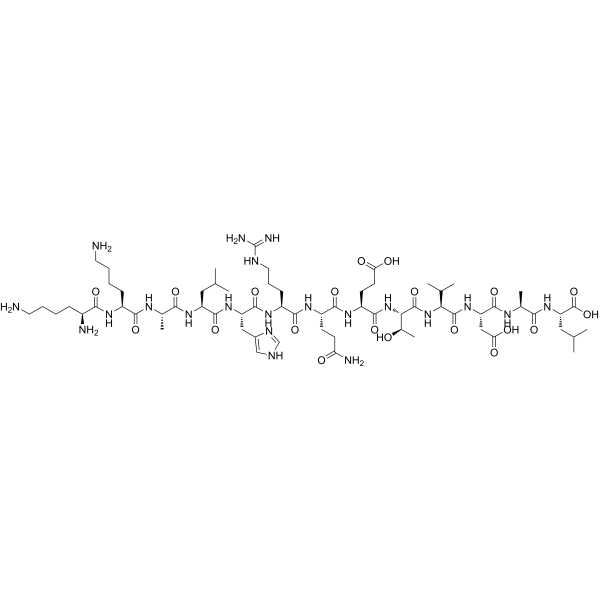 0 ImagesCat. No.: HY-P3811CAS No.: 142828-10-2
-
8-Br-ADPR
 0 ImagesCat. No.: HY-134261CAS No.: 59259-77-7Synonyms: 8-Bromoadenosine-5'-O-diphosphoribose8-Br-ADPR (8-Bromoadenosine-5'-O-diphosphoribose) is a TRPM2 inhibitor and ADPR signaling pathway antagonist. 8-Br-ADPR inhibits glucagon-mediated nuclear calcium signaling and downstream CaMKII/CREB phosphorylation by blocking ADPR-induced TRPM2 activation. 8-Br-ADPR significantly reduces gluconeogenic gene expression and blood glucose levels in diabetic models. 8-Br-ADPR effectively blocks ADPR-mediated calcium signal transduction in NK cells, inhibits immune synapse formation, granzyme B release and cytolytic activity against melanoma cells. 8-Br-ADPR is widely used in studies related to diseases such as diabetes, melanoma and lymphoma.
-
HOCPCA
 0 ImagesCat. No.: HY-135167CAS No.: 867178-11-8HOCPCA is a compound with neuroprotective activity that improves sensorimotor function in mice after experimental stroke. HOCPCA selectively binds to the CaMKIIα hub domain, modulates signaling of different CaMKII pools, and alleviates abnormal CaMKII signaling after cerebral ischemia. HOCPCA promotes hippocampal neuronal activity and enhances working memory. HOCPCA also normalizes Thr286 autophosphorylation in the cytoplasm after ischemia and downregulates ischemia-specific expression of active CaMKII enzymatic cleavage fragments. HOCPCA binds to the GHB binding site with 27-fold higher affinity than GHB and has good blood-brain barrier penetration ability.
-
Cucurbitacin IIa (Standard)
 0 ImagesCat. No.: HY-N1988RCAS No.: 58546-34-2Synonyms: Hemslecin A (Standard)Cucurbitacin IIa (Hemslecin A) (Standard) is the analytical standard for Cucurbitacin IIa (HY-N1988). This product is used for research and analytical applications. Cucurbitacin IIa is an orally active, blood-brain barrier-penetrating EGFR inhibitor with an IC50 of 1.455 nM for human EGFR. Cucurbitacin IIa induces caspase-3 dependent cell apoptosis, downregulates survivin expression, enhances autophagy levels, disrupts the actin cytoskeleton through actin aggregation, blocks the cell cycle at the G2/M phase, and inhibits the EGFR-MAPK signaling pathway to exert anti-inflammatory activity. Cucurbitacin IIa can be used in research on inflammatory-related diseases, depression, and non-small cell lung cancer and other cancers.
-
CaMK1β Recombinant Human Active Protein Kinase
 0 ImagesCat. No.: HY-E70810CaMK1 is present in several cell types and may be involved in various cellular processes. CaMK1 exists as different isoforms (α, β, γ and δ). CaMK1β Recombinant Human Active Protein Kinase is obtained by expressing CaMK1β proteins.
-
DY-9760e
 0 ImagesCat. No.: HY-19230CAS No.: 179185-73-0DY-9760e is a calmodulin (CaM) inhibitor. DY-9760e selectively inhibits the activity of various calmodulin-dependent enzymes by antagonizing the Ca²⁺/CaM complex, exhibiting the strongest inhibitory activity against nNOS, CaM kinase II, and calcineurin (Ki: 0.9, 1.4, and 2.0 μM, respectively). DY-9760e inhibits excessive nitric oxide production and protein tyrosine nitration, as well as the activation of calpain and caspase-3. DY-9760e reduces infarct size, improves cardiac function, and inhibits oxidative stress and cell death. DY-9760e can be used in research on the treatment of myocardial infarction, cerebral ischemia, and other diseases.
-
CaMK2β Recombinant Human Active Protein Kinase
 0 ImagesCat. No.: HY-E70812CAMK2 is involved in the regulation of cellular processes in a variety of tissues. CaMK2β Recombinant Human Active Protein Kinase is obtained by expressing CaMK2β proteins.
-
CaMKII-IN-3
 0 ImagesCat. No.: HY-180951CAS No.: 2765717-63-1CaMKII-IN-3 (Example 321) is a CaMKII inhibitor with an IC50 of less than 10 nM. CaMKII-IN-3 can be used for the study of heart diseases.
-
CaMK2α Recombinant Human Active Protein Kinase
 0 ImagesCat. No.: HY-E70811CAMK2 is involved in the regulation of cellular processes in a variety of tissues. CaMK2α Recombinant Human Active Protein Kinase is obtained by expressing CaMK2α proteins.
-
[Ala286]-Calmodulin-Dependent Protein Kinase II (281-302)
![[Ala286]-Calmodulin-Dependent Protein Kinase II (281-302)](https://file.medchemexpress.com/product_pic/hy-p10499.gif "Click to View [Ala286]-Calmodulin-Dependent Protein Kinase II (281-302) Product Detail") 0 ImagesCat. No.: HY-P10499CAS No.: 141055-85-8[Ala286]-Calmodulin-Dependent Protein Kinase II (281-302) is a modified fragment of calcium/calmodulin-dependent protein kinase II that contains the active domain of CaMKII and has an alanine substitution at position 286. [Ala286]-Calmodulin-Dependent Protein Kinase II (281-302) can be used to develop more potent CaMKII inhibitors.
0 ImagesCat. No.: HY-P10499CAS No.: 141055-85-8[Ala286]-Calmodulin-Dependent Protein Kinase II (281-302) is a modified fragment of calcium/calmodulin-dependent protein kinase II that contains the active domain of CaMKII and has an alanine substitution at position 286. [Ala286]-Calmodulin-Dependent Protein Kinase II (281-302) can be used to develop more potent CaMKII inhibitors.
-
AC3-I, myristoylated
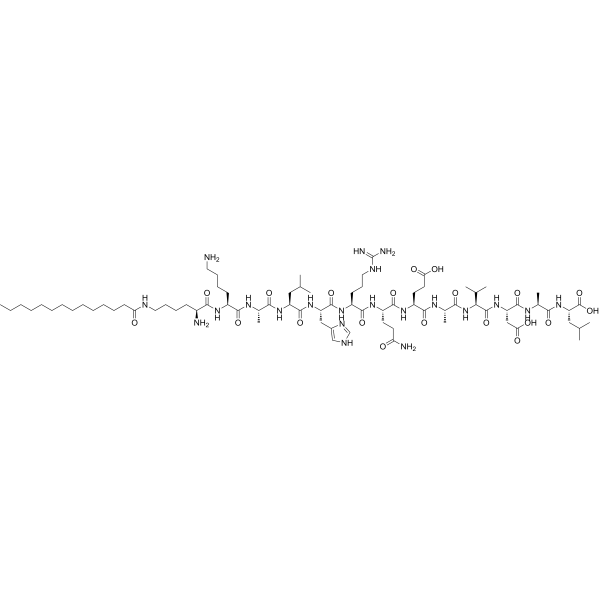 0 ImagesCat. No.: HY-P5525Synonyms: Autocamtide-3 Derived Inhibitory PeptideAC3-I, myristoylated is a biological active peptide. (This is a myristoylated form of Autocamtide-3-Derived Inhibitory Peptide (AC3-I), a highly specific inhibitor of Calmodulin-Dependent Protein Kinase ll (CaMKII) that is resistant to proteolysis. AC3-I is derived from Autocamtide-3, a substrate for CaMKII, with the Thr-9 phosphorylation site substituted with Ala.)




