



G-quadruplex
G-Quadruplex nucleic acids or G-quadruplexes (G4s) are four-stranded DNA or RNA secondary structures that are formed in guanine-rich sequences. They are widely distributed in functional regions of the human genome, such as telomeres, ribosomal DNA (rDNA), transcription start sites, promoter regions and untranslated regions of mRNA, suggesting that G-quadruplex structures may play a pivotal role in the control of a variety of cellular processes. In addition, G4s are enriched and conserved in the regulatory regions of microbes, including bacteria, fungi, and viruses.
The irregular formation of G4s on some genes might cause neurodegenerative diseases and cancers. Therefore, G4s in the genome are the therapeutic targets of these diseases. Small molecules, from naturally occurring to synthetic, are exploited to specifically target G-quadruplexes and have proven to be a new class of anticancer agents.
All Product Categories
-
G-quadruplex Inhibitors
(4)
View all products
-
G-quadruplex Activators
(6)
View all products
-
G-quadruplex Modulators
(3)
View all products
-
G-quadruplex Chemical
(1)
View all products
-
G-quadruplex Inducers
(4)
View all products
-
G-quadruplex Control
(1)
View all products
-
G-quadruplex Ligands
(14)
View all products
-
G-quadruplex Related Products (60)
Related Products (60)

-
SYUIQ-5
 0 ImagesSYUIQ-5 is a G-quadruplex ligand. SYUIQ-5 stabilizes G-quadruplex and induce senescence. SYUIQ-5 inhibits c-myc gene promoter activity. SYUIQ-5 induces cancer cells autophagy by triggering telomere damage through TRF2 delocalization from telomeres.
-
BMVC2
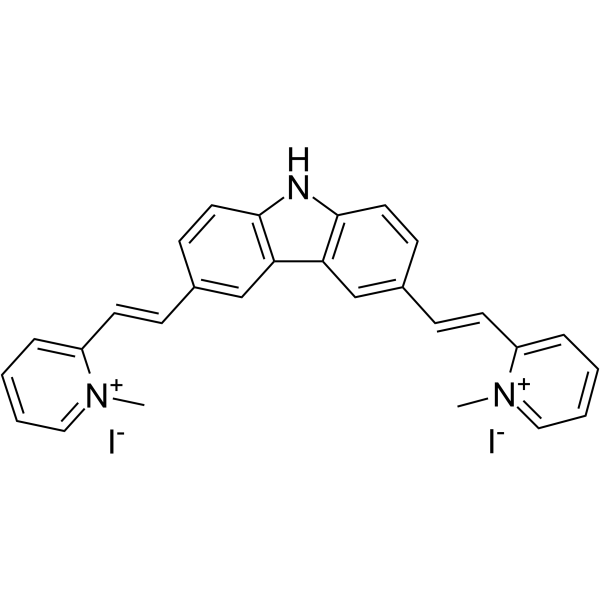 0 ImagesSynonyms: o-BMVCBMVC2 (o-BMVC) is a bisubstitute carbazole derivative of BMVC. BMVC2 is a G-quadruplex (G4) stabilizer.
-
TMPyP tetrachloride
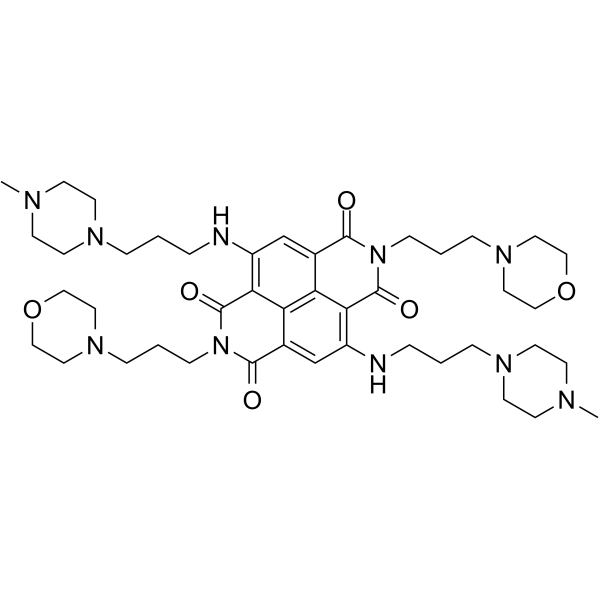
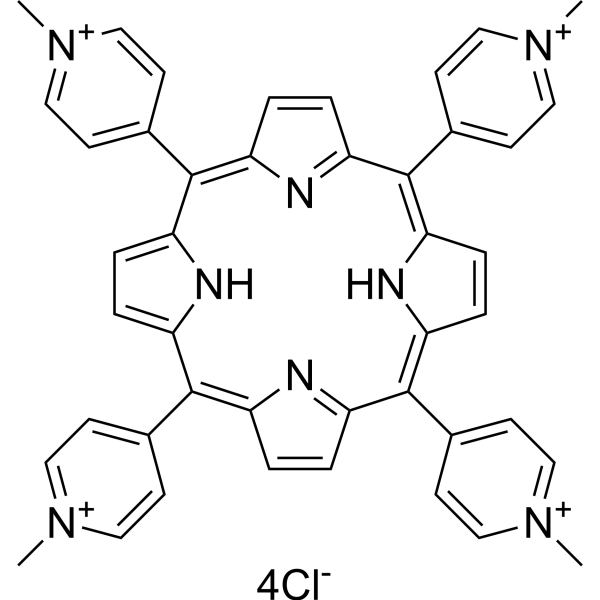 0 ImagesTMPyP tetrachloride is a quadruplex-specific ligand. TMPyP tetrachloride inhibits the interaction between G-quadruplexes and IGF-1. TMPyP tetrachloride is a telomerase inhibitor and inhibits cancer cells proliferation. TMPyP tetrachloride is also a stabilizer of nucleic acid secondary structure and an acetylcholinesterase inhibitor. Besides, TMPyP tetrachloride has antiviral activity against SARS-CoV-2.
-
MTR-106
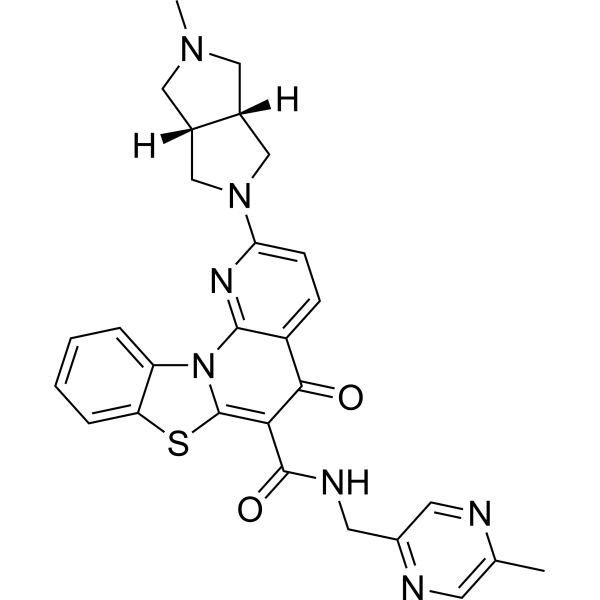 0 ImagesMTR-106 is a potent and orally active G-quadruplex stabilizer and RNA polymerase I inhibitor. MTR-106 induces apoptosis and inhibits cell growth. MTR-106 can be used in research of cancer.
-
PT-ttpy
 0 ImagesPt-ttpy, a metallo-organic complex and potent G-quadruplex ligand, effectively triggers substantial telomere-related DNA damage in cancer cells by inhibiting telomerase and/or telomere functions, while also causing various chromatin abnormalities during mitosis, such as chromatin bridges, ultrafine bridges (UFBs), and double-stranded breaks (DSBs).
-
L2H2-6OTD diformic
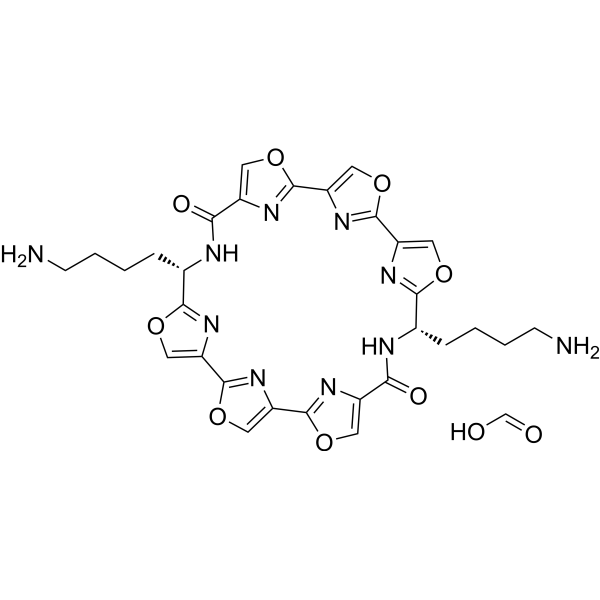 0 ImagesCat. No.: HY-148200APurity: 99.28%L2H2-6OTD diformic is a G-quadruplex (G-quadruplex, G4) ligand and telomerase (telomerase) inhibitor, with an IC50 of 15 nM against human telomerase. L2H2-6OTD diformic induces the formation of antiparallel G-quadruplex structures in long telomeric DNA. L2H2-6OTD diformic stabilizes the G4 structure of GD3 and enhances the immunological activity of CpG ODN. L2H2-6OTD diformic is applicable to research related to the development of G4-CpG immune adjuvants.


-
SJ26
 0 ImagesSJ26 is a Wnt1 inhibitor with anticancer activity. SJ26 inhibits the expression of Wnt1 and Wnt1-mediated downstream signaling pathways in a G-quadruplex structure-dependent manner to suppress the migration activity of cancer cells.

-
Telomeric G4s ligand 1
 0 ImagesTelomeric G4s ligand 1 is a telomeric G-quadruplex ligand that stabilizes telomeric G4 and induces R-loop formation, leading to DNA damage responses. Telomeric G4s ligand 1 induces apoptosis and evokes immunogenic cell death (ICD) in tumor cells.
-
MRS2768 tetrasodium salt
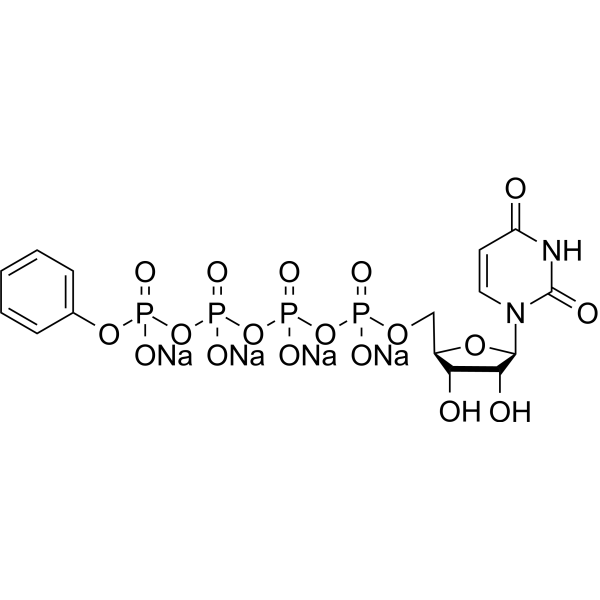 0 ImagesMRS2768 tetrasodium salt is a potent, selective, and metabolically stable P2Y2 receptor agonist with an EC50 of 1.89 μM for the human P2Y2 receptor. MRS2768 tetrasodium salt activates Gq/PLC/PKC signaling, leading to downstream phosphorylation of Akt, eNOS, and ERK, with effects varying by cell type. MRS2768 tetrasodium salt inhibits ENaC via Gq/PKC/Src/Akt to promote natriuresis and lower blood pressure in the kidney. MRS2768 tetrasodium salt activates eNOS to increase NO secretion in endothelial cells. MRS2768 tetrasodium salt drives proliferation via PI3K/Akt in fibroblasts and cancer cells. MRS2768 tetrasodium salt exerts anti-apoptotic effects through PKC/Src/Akt in cardiomyocytes. MRS2768 tetrasodium salt can be applied to investigate P2Y2-dependent pathological processes, including acute kidney injury, chronic kidney disease and renal fibrosis, DOCA-salt induced hypertension, myocardial infarction, pulmonary arterial hypertension, pancreatic cancer, cardiac fibrosis, dry eye disease, as well as shear stress-mediated vascular remodeling and atherosclerosis.
-
G-quadruplex ligand 4
 0 ImagesCat. No.: HY-179480G-quadruplex ligand 4 is a chromenone derivative and is a human telomerase reverse transcriptase (hTERT) G4 ligand. G-quadruplex ligand 4 downregulates hTERT expression and exhibits notable cytotoxicity towards triple-negative breast cancer (TNBC) cell lines. G-quadruplex ligand 4 can cause S/G2 cell cycle arrest and induce apoptosis. G-quadruplex ligand 4 downregulates the expression of hTERT, KRAS, and BCL-2. G-quadruplex ligand 4 can be used for the research of TNBC.
-
DIZ-3
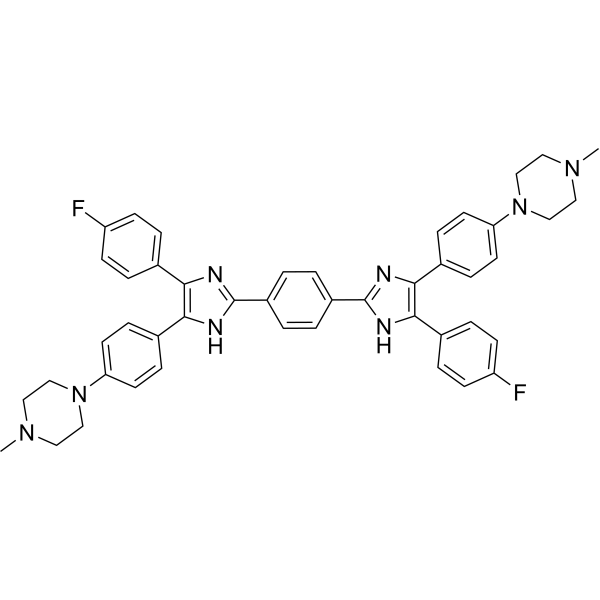 0 ImagesCat. No.: HY-146812CAS No.: 2675490-72-7DIZ-3 is a selective multimeric G4 ligand based on a G4-ligand-dimerizing strategy. DIZ-3 intercalates into the G4-G4 interface, stabilizing the higher-order structure. DIZ-3 induces cell cycle arrest and apoptosis, and thus inhibits cell proliferation in alternative lengthening of telomere (ALT) cancer cells.
-
Nemorubicin (GMP)
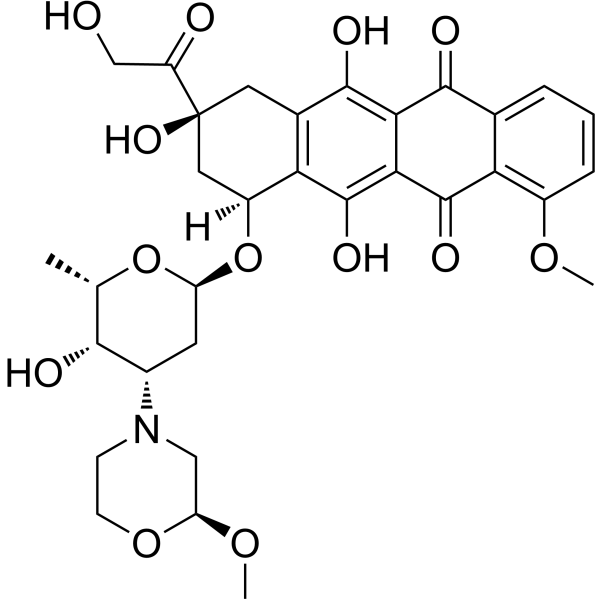 0 ImagesCat. No.: HY-15794GCAS No.: 108852-90-0Synonyms: Methoxymorpholinyl doxorubicin (GMP); FCE 23762 (GMP); PNU 152243 (GMP)Nemorubicin (Methoxymorpholinyl doxorubicin) GMP is a GMP-class Nemorubicin (HY-15794). Nemorubicin is a Doxorubicin derivative with potent antitumor activity. Nemorubicin is highly cytotoxic to a variety of tumor cell lines presenting a multidrug-resistant phenotype. Nemorubicin not only intercalate into the duplex DNA, but also result in significant ligands for G-quadruplex DNA segments, stabilizing their structure. Nemorubicin requirs an intact nucleotide excision repair (NER) system to exert its activity.
-
MET Transcription-IN-1
 0 ImagesCat. No.: HY-174384CAS No.: 3082125-66-1MET Transcription-IN-1 (Compound C3) is an orally active MET transcription inhibitor. MET Transcription-IN-1 can efficiently bind and stabilize the G-quadruplex in the MET promoter region, thereby inhibiting c-Met expression. MET Transcription-IN-1 can also overcome drug resistance caused by specific c-Met mutations. MET Transcription-IN-1 is capable of inhibiting tumor cell proliferation, migration, and invasion, as well as inducing cell cycle arrest and apoptosis. MET Transcription-IN-1 has antitumor activity, and can be used in the research of tumors such as non-small cell lung cancer.
-
MRS2768
 0 ImagesCat. No.: HY-108649CAS No.: 1047980-83-5MRS2768 is a potent, selective, and metabolically stable P2Y2 receptor agonist with an EC50 of 1.89 μM for the human P2Y2 receptor. MRS2768 activates Gq/PLC/PKC signaling, leading to downstream phosphorylation of Akt, eNOS, and ERK, with effects varying by cell type. MRS2768 inhibits ENaC via Gq/PKC/Src/Akt to promote natriuresis and lower blood pressure in the kidney. MRS2768 activates eNOS to increase NO secretion in endothelial cells. MRS2768 drives proliferation via PI3K/Akt in fibroblasts and cancer cells. MRS2768 exerts anti-apoptotic effects through PKC/Src/Akt in cardiomyocytes. MRS2768 can be applied to investigate P2Y2-dependent pathological processes, including acute kidney injury, chronic kidney disease and renal fibrosis, DOCA-salt induced hypertension, myocardial infarction, pulmonary arterial hypertension, pancreatic cancer, cardiac fibrosis, dry eye disease, as well as shear stress-mediated vascular remodeling and atherosclerosis.
-
NSC 373981
 0 ImagesCat. No.: HY-182706CAS No.: 95455-02-0NSC 373981 is a CARD11 G4 stabilizer. NSC 373981 stabilizes the CARD11 G4 structure and inhibits CARD11 transcription in cells. NSC 373981 also inhibits BCL2 and MYC. NSC 373981 suppresses the transcription of KRAS and TERT. NSC 373981 exhibits anticancer activity against diffuse large B-cell lymphoma.
-
MJ-NR-27
 0 ImagesCat. No.: HY-183980MJ-NR-27 is a bifunctional small molecule of ribonuclease-targeting chimera (RIBOTAC) that targets NRAS mRNA containing a G-quadruplex structure. MJ-NR-27 uses RNase L ligand 3 (HY-177030) as the RNase L ligand, RNA binder 4 (HY-183981) as the RNA binder, and Bis-PEG3-acid (HY-126891) as the linker. MJ-NR-27 achieves target RNA degradation by recruiting ribonuclease RNase L, and significantly induces morphological changes in tumor cells. MJ-NR-27 can be used in cancer research.



