



JNK
c-Jun N-terminal kinase
JNK (c-Jun N-terminal kinase), a kinase subfamily belonging to the MAPK, is activated in response to various stress stimuli and possesses a wide variety of regulatory functions. The JNK family of serine/threonine protein kinases comprises three isoforms (JNK1, JNK2 and JNK3). JNKs are involved in the emergence and progression of diverse pathologies such as neurodegenerative, cardiovascular and metabolic disorders as well as inflammation and cancer.
Similar to the other MAP kinases, JNKs are activated by a phosphorylation cascade generally involving two types of upstream kinases, the so-called MAP kinase kinase kinases (MAP3K, MKKK) and the MAP kinase kinases (MAP2K; MKK). At the MAP2K level, JNKs are activated by MKK4 and MKK7, the former is a common activator of the JNK and the p38 MAP kinase signaling pathway. The JNK cascade shares various intersection points with other pathways making it a part of a complex signaling network.
JNK Isoform Specific Products
All Product Categories
-
JNK Related Products (533)
Related Products (533)

-
Antibodies (16)
-
JNK Isoform Comparison
-
Rohitukine
 0 ImagesCat. No.: HY-119831CAS No.: 71294-60-5Rohitukine is an orally active CDK9/T1 inhibitor with an IC50 of 0.3 μM. Rohitukine blocks ATP binding sites of CDK2/A and CDK9/T1, suppresses PPARγ, AKT, mTOR, C/EBPα, SREBP-2, and NF-κB signaling, and increases hepatic LXRα expression. Rohitukine induces S-phase cell cycle arrest, ROS generation, apoptosis, and exhibits anti-inflammatory activity. Rohitukine can be used for the research of leukemia, pancreatic cancer, prostate cancer, breast cancer, CNS cancer, ovarian cancer, lung cancer, dyslipidemia, inflammatory diseases, inflammatory bowel disease, and arthritis.
-
JNK-IN-12
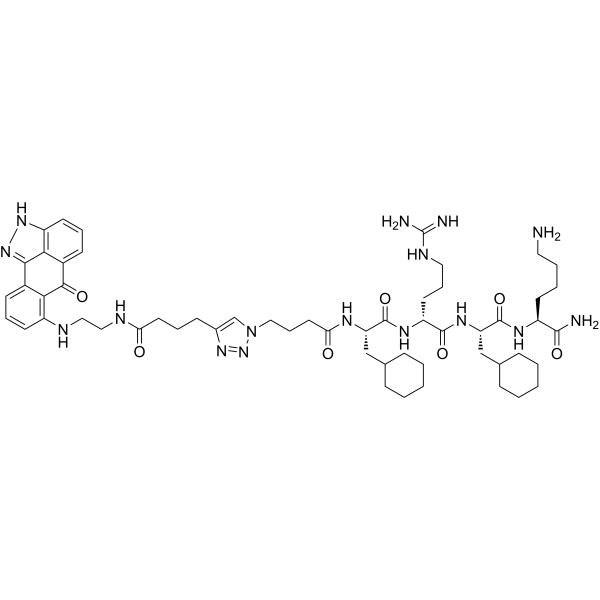 0 ImagesCat. No.: HY-155077JNK-IN-12 (compound P2) is a mitochondrial-targeted JNK inhibitor (IC50=66.3 nM), consisting of a mitochondrial-specific cell-penetrating peptide and a specific inhibitor of JNK, SP600125 (HY-12041). JNK-IN-12 doesn't inhibit nuclear JNK signaling, but does inhibit mitochondrial JNK phosphorylation. JNK-IN-12 helps to improve the Parkinson's disease (PD) both in vitro and in vivo.
-
JNK2-IN-1
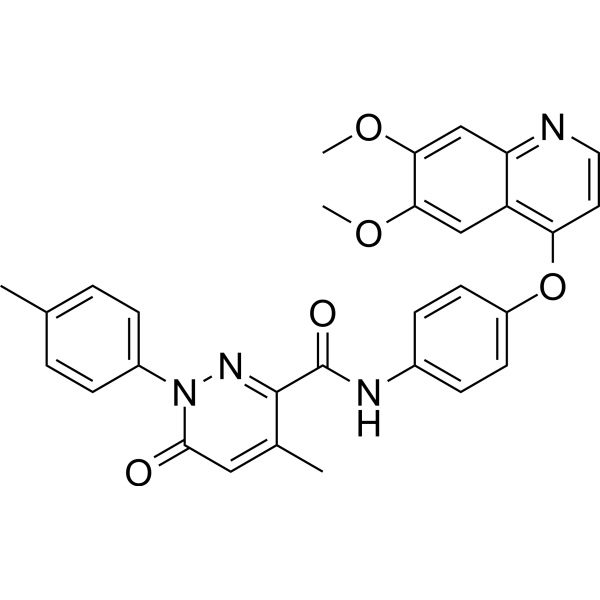 0 ImagesCat. No.: HY-149485CAS No.: 2998941-15-2
-
Continentalic acid (Standard)
 0 ImagesCat. No.: HY-N6908RCAS No.: 19889-23-7Continentalic acid (Standard) is the analytical standard of Continentalic acid (HY-N6908). This product is intended for research and analytical applications. Continentalic acid is a diterpenoid organic acid. Continentalic acid exhibits multiple activities including anti-inflammatory, antioxidant, neuroprotective, antibacterial and antitumor effects. Continentalic acid alleviates oxidative stress, reduces pro-inflammatory cytokine production, inhibits MAPK phosphorylation and neutrophil infiltration, and induces growth inhibition and apoptosis of cancer cells. Continentalic acid can be used in research related to traumatic brain injury, cancer, inflammation and infections.
-
GSK3-IN-10
 0 ImagesCat. No.: HY-172198CAS No.: 844441-56-1GSK3-IN-10 (Compound 4) is a multi-target inhibitor, that mainly targets GSK3α and GSK3β with IC50 of 1.0 nM and 2.0 nM. GSK3-IN-10 inhibits the activation of β-catenin, promotes the neuronal survival, and exhibits a protective effect against endoplasmic reticulum stress.
-
Propylparaben sodium (Standard)
 0 ImagesCat. No.: HY-N2026ARCAS No.: 35285-69-9Synonyms: Propyl parahydroxybenzoate sodium (Standard); Propyl 4-hydroxybenzoate sodium (Standard)Propylparaben (Propyl parahydroxybenzoate) sodium (Standard) is the analytical standard of Propylparaben sodium (HY-N2026A). Propylparaben (Propyl parahydroxybenzoate) sodium is an antibacterial preservative that can be produced by plants and bacteria. Propylparaben sodium is an orally active weak estrogen receptor agonist. Propylparaben sodium regulates the PI3K-AKT and JNK signaling pathways, and induces oxidative stress. Propylparaben sodium is commonly used in cosmetics, pharmaceuticals and foods, and can be used in studies related to ovarian aging and myocardial ischemia-reperfusion injury.
-
JNK2/MKK7 PPI-IN-1
 0 ImagesCat. No.: HY-181812JNK2/MKK7 PPI-IN-1 is an orally active JNK2 inhibitor with an IC50 of 0.99 μM and a Kd of 81.6 μM. JNK2/MKK7 PPI-IN-1 inhibits JNK2 kinase activity, disrupts JNK2-MKK7 protein-protein interaction, and reduces c-Jun phosphorylation. JNK2/MKK7 PPI-IN-1 inhibits LPS-induced overexpression of inflammatory cytokines IL-6 and TNF-α. JNK2/MKK7 PPI-IN-1 can be used for the research of acute lung injury.
-
Cathelicidin-PY
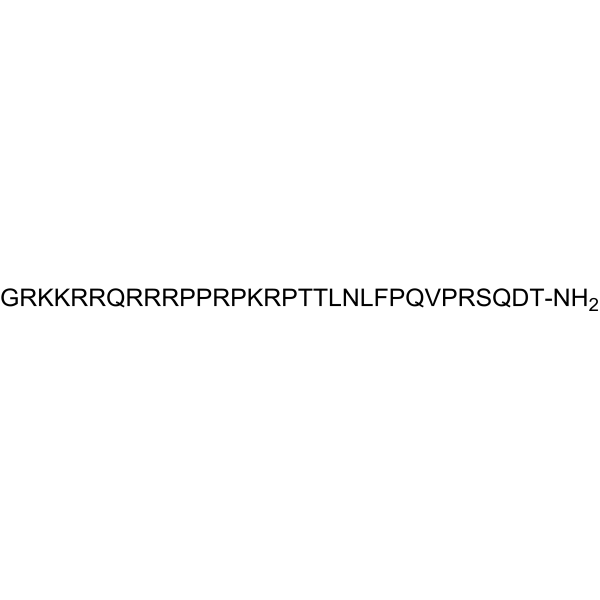
 0 ImagesCat. No.: HY-P11183CAS No.: 1431866-92-0Cathelicidin-PY is an antimicrobial peptide exhibiting strong antimicrobial property. Cathelicidin-PY inhibits the activation of TLR4 inflammatory response pathways induced by lipopolysaccharide (LPS) (HY-D1056). Cathelicidin-PY possesses strong antimicrobial and anti-inflammatory activities and low cytotoxic ability against RAW 264.7 cells. Cathelicidin-PY can be used for antimicrobial and anti-inflammatory research.
-
Adenosine receptor antagonist 7
 0 ImagesCat. No.: HY-179248CAS No.: 2570904-69-5Adenosine receptor antagonist 7 is an orally active triple A1/A2A/A2B adenosine receptor antagonist with Ki values of 1.5, 0.6 and 21 nM. Adenosine receptor antagonist 7 shows potent inhibitory activity (IC50 = 0.8 nM) of cAMP production in A2AR-HEK293 cells. Adenosine receptor antagonist 7 can enhance infiltration of effector T cells and increase the CD8+/Treg ratio companied with Avelumab (HY-108730). Adenosine receptor antagonist 7can be used for the research of cancer, such as colon cancer.
-
SB-T-101141
 0 ImagesCat. No.: HY-106159CAS No.: 186348-05-0SB-T-101141 is a novel taxane. SB-T-101141 effectively induces a noncanonical ferroptosis to overcome Paclitaxel (HY-B0015) resistance of breast cancer. SB-T-101141 facilitates the production of iron and ferrous ions and ROS. SB-T-101141 stably binds to KHSRP to inhibit the iron-dependent expression of CISD1 related to iron homeostasis. SB-T-101141 synergistically enhances the iron-dependent activation of JNK and PERK pathways via KHSRP. SB-T-101141 suppresses breast tumor growth in MCF-7(PR)/MDA-MB-231(PR) or KHSRP knock-down MCF-7 xenograft mice model.
-
Ginsenoside Re (Standard)
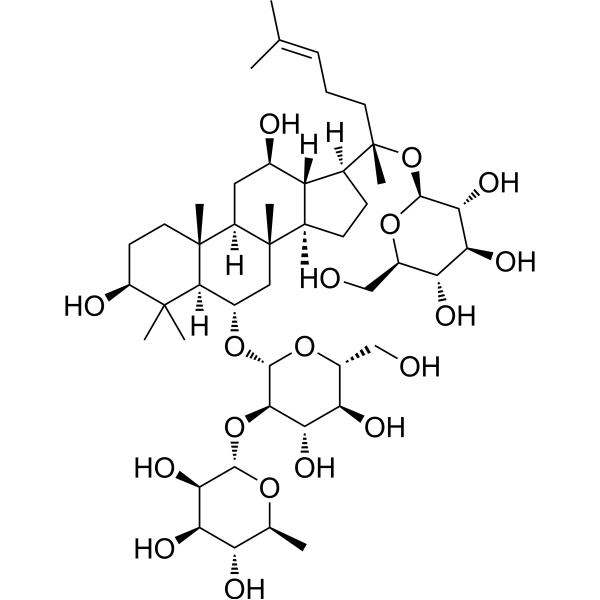 0 ImagesSynonyms: Ginsenoside B2(Standard); Panaxoside Re(Standard); Sanchinoside Re (Standard)Ginsenoside Re (Standard) is the analytical standard of Ginsenoside Re. This product is intended for research and analytical applications. Ginsenoside Re (Ginsenoside B2) is an extract from Panax notoginseng. Ginsenoside Re decreases the β-amyloid protein (Aβ). Ginsenoside Re plays a role in antiinflammation through inhibition of JNK and NF-κB.

-
Galarubicin hydrochloride
 0 ImagesCat. No.: HY-105178ACAS No.: 140637-82-7Synonyms: DA 125Galarubicin hydrochloride (DA 125) is a novel Anthracycline derivative. Galarubicin hydrochloride shows high-affinity DNA binding and topoisomerase II inhibitory activities. Galarubicin hydrochloride induces Apoptosis. Galarubicin hydrochloride exerts cytotoxicity via JNK pathway. Galarubicin hydrochloride can be used in the research of hepatocellular carcinoma.
-
Estrogen receptor-IN-2
 0 ImagesCat. No.: HY-184982Estrogen receptor-IN-2 is a potent estrogen receptor inhibitor formed by the conjugation of Tam (HY-13757)-NHC and gold (I). Estrogen receptor-IN-2 significantly downregulates estrogen receptor (ER) levels, inhibits ER-mediated downstream signaling pathways, and induces immunogenic cell death (ICD) mediated by damage-associated molecular patterns (DAMPs). Estrogen receptor-IN-2 can overcome drug resistance in MCF-7Y537S mutant cells via the RAMP3/CALCR signaling pathway. It is suitable for research on endocrine-resistant breast cancer.
-
Nrf2/HO-1 activator 2
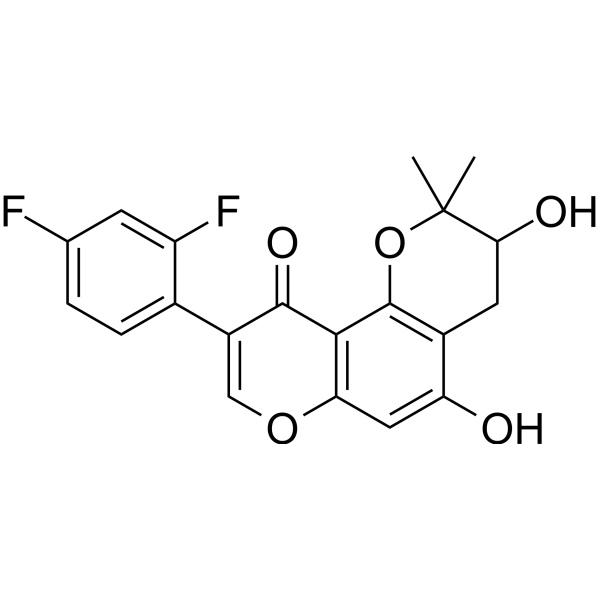 0 ImagesCat. No.: HY-151431CAS No.: 2883506-31-6Nrf2/HO-1 activator 2 (compound 13m), difluoro-substituted derivative, is a potent Nrf2/HO-1 activator. Nrf2/HO-1 activator 2 has neuroprotective and antioxidant effects through the Nrf2/HO-1 pathway mediated by phosphorylation of ERK1/2, JNK, or Akt in PC12 cells. Nrf2/HO-1 activator 2 can be used in the research of Parkinson's disease (PD).
-
JNK-IN-23
 0 ImagesCat. No.: HY-174211CAS No.: 1007786-48-2JNK-IN-23 (Compound K12) is an inhibitor of JNK. JNK-IN-23 inhibits the proliferation of MDA-MB-231 (GIC50: 30 nM). JNK-IN-23 blocks TNBC metastatic growth in vivo. JNK-IN-23 inhibits the growth of lung metastases by dual targeting of glutaminase-1 (GLS) and pyruvate dehydrogenase complex (PDHC).
-
Sesamolin (Standard)
 0 ImagesSesamolin (Standard) is the analytical standard of Sesamolin. This product is intended for research and analytical applications. Sesamolin, isolated from Sesamum indicum, has antioxidative activity, Sesaminol inhibits lipid peroxidation and shows neuroprotection effect. Sesamolin potently inhibits MAPK cascades by preventing phosphorylation of JNK, p38 MAPKs, and caspase-3 but not ERK-MAPK expression.
-
Isodorsmanin A
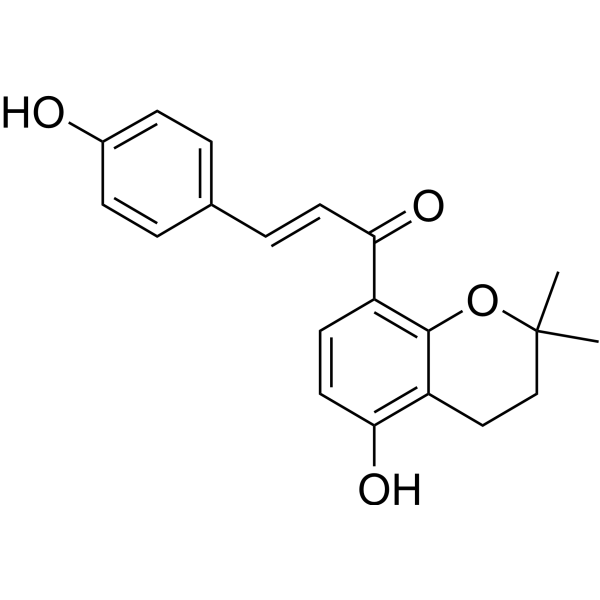 0 ImagesCat. No.: HY-N3487CAS No.: 118266-99-2Isodorsmanin A is an anti-inflammatory agent. Isodorsmanin A suppresses the production of inflammatory mediators and proinflammatory cytokines. Isodorsmanin A inhibits the phosphorylation of JNK, MAPK.
-
JNK-IN-15, Cell-Permeable, Negative Control
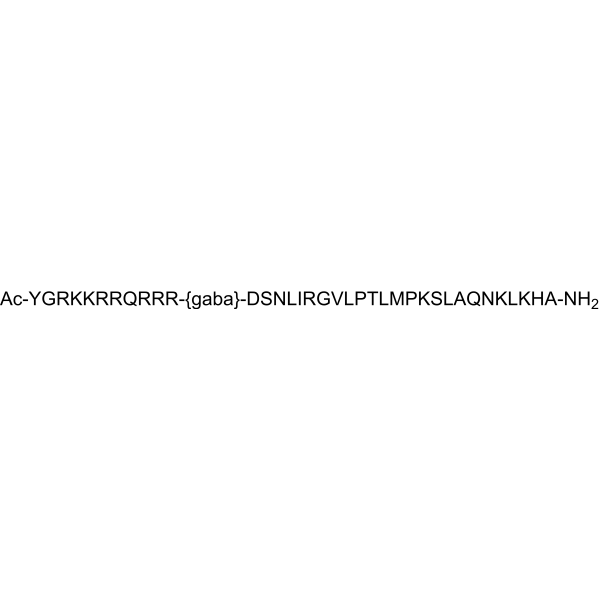 0 ImagesCat. No.: HY-P10141JNK-IN-15, Cell-Permeable, Negative Control is a negative control of JNK-IN-15, Cell-Permeable (HY-P10140). JNK-IN-15, Cell-Permeable is an inhibitor of JNK.




