



MDM-2/p53
The p53 tumor suppressor is a principal mediator of growth arrest, senescence, and apoptosis in response to a broad array of cellular damage. p53 is a short-lived protein that is maintained at low, often undetectable, levels in normal cells. Under stress conditions, the p53 protein accumulates in the cell, binds in its tetrameric form to p53-response elements and induces the transcription of various genes.
MDM-2 is transcriptionally activated by p53 and MDM-2, in turn, inhibits p53 activity in several ways. MDM-2 binds to the p53 transactivation domain and thereby inhibits p53-mediated transactivation. MDM-2 also contains a signal sequence that is similar to the nuclear export signal of various viral proteins and, after binding to p53, it induces its nuclear export. As p53 is a transcription factor, it needs to be in the nucleus to be able to access the DNA; its transport to the cytoplasm by MDM-2 prevents this. Finally, MDM-2 is a ubiquitin ligase, so is able to target p53 for degradation by the proteasome.
In many tumors p53 is inactivated by the overexpression of the negative regulators MDM2 and MDM4 or by the loss of activity of the MDM2 inhibitor ARF. The pathway can be reactivated in these tumors by small molecules that inhibit the interaction of MDM2 and/or MDM4 with p53. Such molecules are now in clinical trials.
All Product Categories
-
MDM-2/p53 Inhibitors
(108)
View all products
-
MDM-2/p53 Agonists
(8)
View all products
-
MDM-2/p53 Antagonists
(4)
View all products
-
MDM-2/p53 Activators
(133)
View all products
-
MDM-2/p53 Modulators
(24)
View all products
-
MDM-2/p53 MDM2 Inhibitors
(67)
View all products
-
MDM-2/p53 p53 Activators
(108)
View all products
-
MDM-2/p53 p53 Inhibitors
(16)
View all products
-
MDM-2/p53 Inducers
(17)
View all products
-
MDM-2/p53 Degraders
(6)
View all products
-
MDM-2/p53 Controls
(6)
View all products
-
MDM-2/p53 Ligands
(7)
View all products
-
MDM-2/p53 Related Products (580)
Related Products (580)

-
Antibodies (17)
-
MDM-2/p53 Signaling Pathway
-
2-Ammo-3-memyl-imidazo-[4,5-f]-quinoIine-13C
![2-Ammo-3-memyl-imidazo-[4,5-f]-quinoIine-13C](https://file.medchemexpress.com/product_pic/hy-w281364s.gif "Click to View 2-Ammo-3-memyl-imidazo-[4,5-f]-quinoIine-13C Product Detail") 0 ImagesCat. No.: HY-W281364SCAS No.: 2740419-05-82-Ammo-3-memyl-imidazo-[4,5-f]-quinoIine-13C is the 13C-labeled 2-Ammo-3-memyl-imidazo-[4,5-f]-quinoIine (HY-W281364). 2-Ammo-3-memyl-imidazo-[4,5-f]-quinoIine is a mutagenic compound.
0 ImagesCat. No.: HY-W281364SCAS No.: 2740419-05-82-Ammo-3-memyl-imidazo-[4,5-f]-quinoIine-13C is the 13C-labeled 2-Ammo-3-memyl-imidazo-[4,5-f]-quinoIine (HY-W281364). 2-Ammo-3-memyl-imidazo-[4,5-f]-quinoIine is a mutagenic compound.
-
Anticancer agent 50
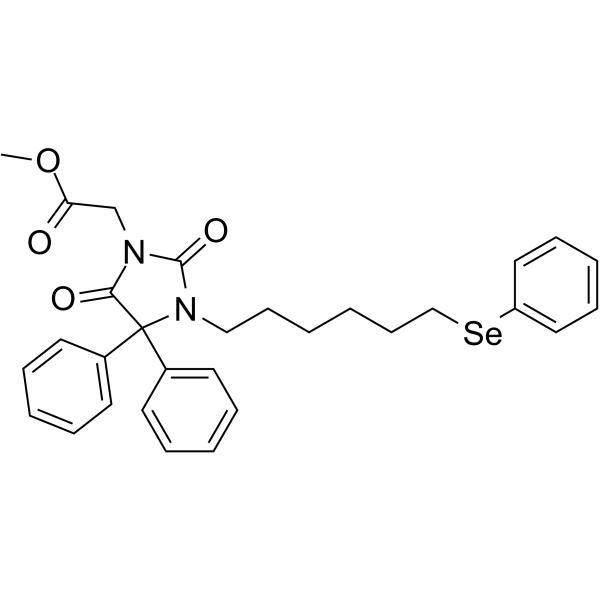 0 ImagesCat. No.: HY-146389CAS No.: 2487457-15-6Anticancer agent 50 (compound 6) is a potent ABCB1 efflux pump modulator. Anticancer agent 50 shows cytotoxic effects and antiproliferative effects. Anticancer agent 50 decreases the expression of cyclin D1 and induces p53 expression. Anticancer agent 50 has the potential for the research of T-lymphoma.
-
Tebufenozide-d9
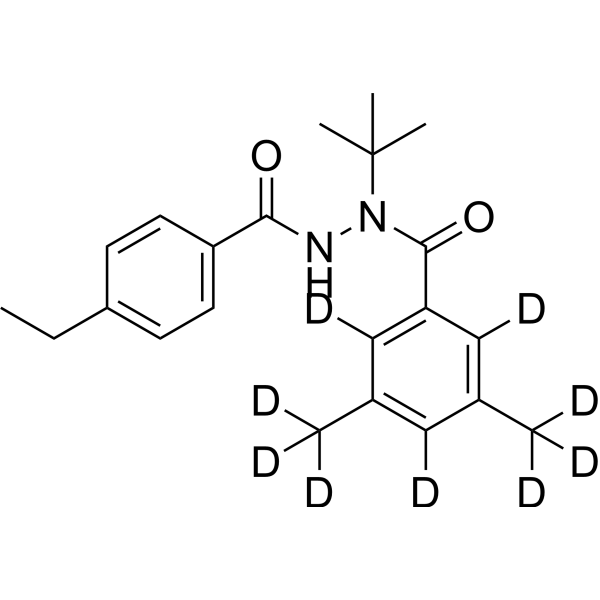 0 ImagesCat. No.: HY-B2054SCAS No.: 2469006-89-9Tebufenozide-d9 is the deuterium labeled Tebufenozide (HY-B2054). Tebufenozide is a nonsteroidal ecdysone agonist used to control pest. Tebufenozide has cytotoxic and induces apoptosis in HeLa and insect Tn5B1-4 cells.
-
MI-2103
 0 ImagesCat. No.: HY-131217CAS No.: 1410738-11-2MI-2103 is a MDM2 inhibitor with an IC50 of 48.1 nM. MI-2103 inhibits the growth of leukemia and breast cancer cells; it exerts no growth-inhibitory effect on cancer cells with p53 mutation or deletion. MI-2103 serves as a target protein ligand for the synthesis of MG-277 (HY-130122). MI-2103 is applicable to the research of leukemia and breast cancer.
-
MDM2/4-p53-IN-2
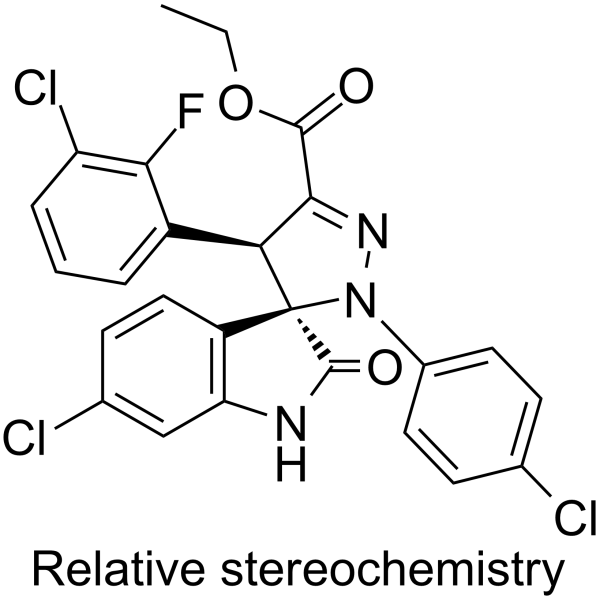 0 ImagesCat. No.: HY-151170CAS No.: 3037300-49-2MDM2/4-p53-IN-2 (2q) is a potent dual MDM2/ MDM4 inhibitor and p53 activator with the IC50 values of 70.7 nM for MDM2- p53 and 81.4 nM for MDM4-p53 complexes. MDM2/4-p53-IN-2 regulates the cell cycle, induces cell apoptosis and has anticancer activity.
-
p53-MDM2-IN-2
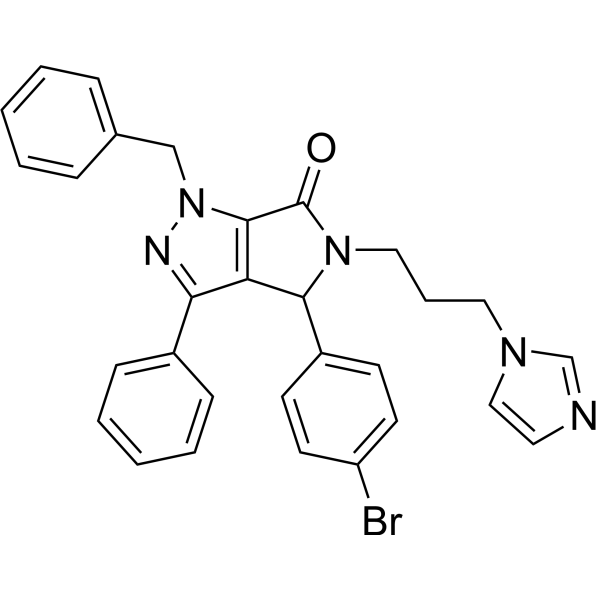 0 ImagesCat. No.: HY-116052CAS No.: 1542066-69-2p53-MDM2-IN-2 (Compound 5q) is an orally active p53-MDM2 inhibitor with a Ki value of 0.25 μM. p53-MDM2-IN-2 exerts antitumor activity by inhibiting NF-κB pathway.
-
CPT2
 0 ImagesCat. No.: HY-108433CAS No.: 1670277-66-3Synonyms: Carnitine palmitoyltransferase 2CPT2 (Carnitine palmitoyltransferase 2), an enzyme that participates in fatty acid oxidation, also is a colorectal cancer (CRC) prognostic biomarker. CPT2 overexpression can activate p-p53 to increase p53 expression, thereby inhibiting tumor proliferation and promoting apoptosis. CPT2 deficiency results in the most common inherited disorder of long-chain fatty acid oxidation affecting skeletal muscle. Downregulation of CPT2 is also highly correlated with the progression of various cancers and has potential for cancer research.
-
MB725
 0 ImagesCat. No.: HY-119408CAS No.: 2230058-99-6
-
JR4-187
 0 ImagesCat. No.: HY-182241CAS No.: 2446965-01-9JR4-187 is an orally active, copper-dependent anticancer agent. JR4-187 downregulates genes involved in oxidative phosphorylation, MYC targets and E2F targets in cancer cells, while upregulates genes involved in the TNF-α signaling pathway, p53 pathway and KRAS signaling pathway, and downregulates CTR1 protein. JR4-187 induces ROS production, apoptosis, copper-dependent cytotoxicity, and exhibits selective cytotoxicity against KRAS-mutant cancer cells. JR4-187 is well tolerated in mouse models of pancreatic cancer. JR4-187 can be used in research related to cancers such as pancreatic ductal adenocarcinoma, colon cancer and rectal cancer.
-
p53 Activator 17
 0 ImagesCat. No.: HY-179507p53 Activator 17 is a p53-Y220C activator. p53 Activator 17 exhibits selective cytotoxicity and pro-apoptotic activity in p53-Y220C mutant cancer cell lines, with minimal effects in wild-type or p53-null cells. p53 Activator 17 induces a mutant-to-wild-type conformational shift in cellular p53-Y220C, accompanied by transcriptional activation of canonical p53 target genes, including BBC3 (PUMA) and MDM2. p53 Activator 17 can be used for the study of hepatocellular carcinoma and breast cancer.
-
MI-1063
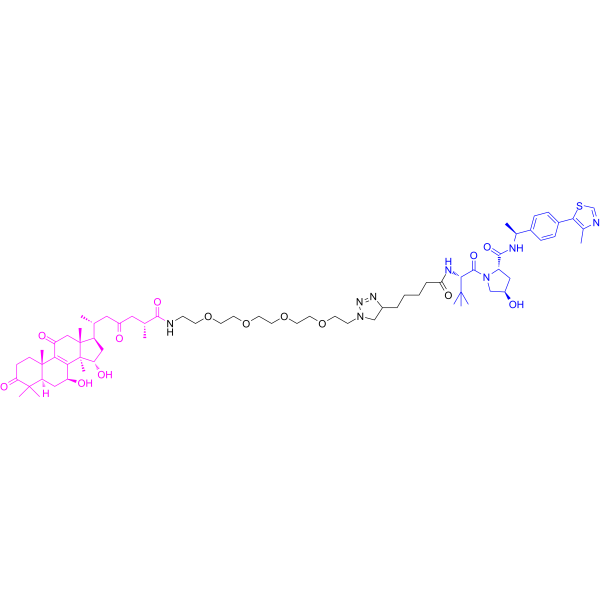
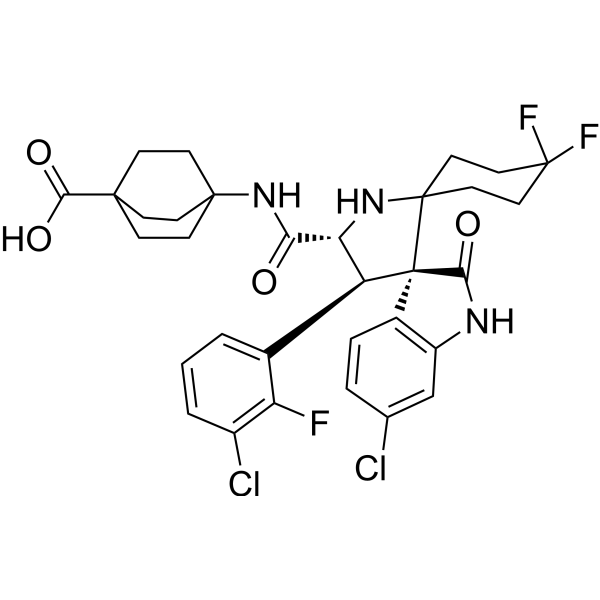
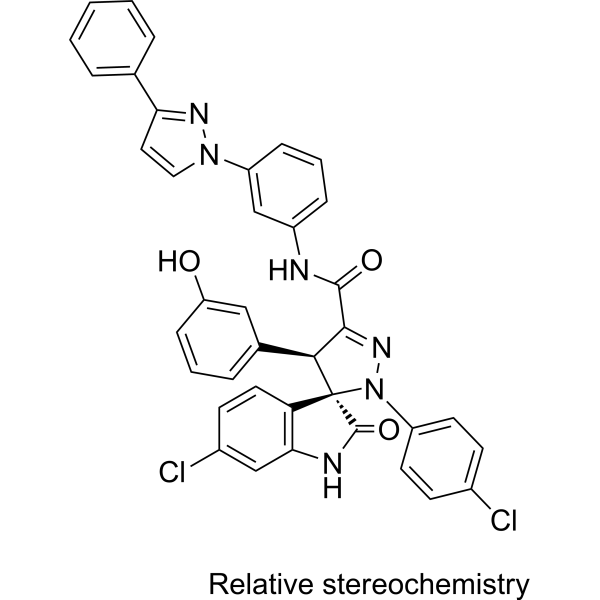
 0 ImagesCat. No.: HY-133754CAS No.: 1410737-39-1MI-1063 is an inhibitor for MDM-2, that blocks the MDM2-p53 interaction, and activates the tumor suppressor function of p53. MI-1063 inhibits the growth of cancer cell RS4-11 and MV4-11 with IC50 of 179 nM and 93 nM. MI-1063 can be used as target protein ligand in synthesis of PROTAC degrader MD-265 (HY-169327).
-
Higenamine-d4-1 hydrochloride
 0 ImagesCat. No.: HY-N2037AS1Synonyms: Norcoclaurine-d4-1 hydrochloride; Demethyl-Coclaurine-d4-1 hydrochlorideHigenamine-d4-1 (Norcoclaurine-d4-1) hydrochloride is deuterium labeled Higenamine (hydrochloride). Higenamine hydrochloride is a selective LSD1 inhibitor (IC50=1.47 μM) that can be isolated from aconite. Higenamine hydrochloride has anti-inflammatory and antibacterial activity. Higenamine (Norcoclaurine) can attenuate IL-1β-induced Apoptosis through ROS-mediated PI3K/Akt signaling pathway. Higenamine hydrochloride protects brain cells from oxygen deprivation. Higenamine can promote bone formation in osteoporosis through the SMAD2/3 pathway. Higenamine hydrochloride can be used to study cancer, inflammation, cardiorenal syndrome and other diseases.
-
Solasodine hydrochloride
 0 ImagesCat. No.: HY-W751400CAS No.: 6106-33-8Synonyms: Purapuridine hydrochloride; Solancarpidine hydrochloride; Solasodin hydrochlorideSolasodine (Purapuridine) hydrochloride is a steroidal alkaloid that occurs in plants of the Solanaceae family. Solasodine hydrochloride induces apoptosis by inhibiting the p53-MDM2 complex, p21Waf1/Cip1, and Bcl-2 proteins. Solasodine hydrochloride has neuroprotective, antifungal, hypotensive, anticancer, antiatherosclerotic, antiandrogenic and anti-inflammatory activities.
-
7α-Hydroxycholesterol (Standard)
 0 Images7α-Hydroxycholesterol is a cholesterol oxide and can serve as a biomarker for oxidative stress and lipid peroxidation. 7α-Hydroxycholesterol has cytotoxic and pro-inflammatory activities. 7α-Hydroxycholesterol can also inhibit sterol synthesis and reduce the activity of HMG-CoA reductase. 7α-Hydroxycholesterol can be used in the research of diseases such as diabetes and atherosclerosis.
-
Nutlin 1
 0 ImagesCat. No.: HY-118542CAS No.: 548472-58-8Nutlin 1, an antagonist of MDM2, activates a major cellular function of the p53 pathway, with an IC50 value of 0.26 μM.
-
Pancracine
 0 ImagesCat. No.: HY-N20721CAS No.: 21416-14-8Pancracine is an alkaloid. Pancracine upregulates p27, phosphorylated p38 MAPK and phosphorylated p53, while downregulating phosphorylated Akt and phosphorylated Rb. Pancracine induces G1 cell cycle arrest and Apoptosis in cells. Pancracine inhibits the replication of pseudotyped HIV-1 and Dengue virus. Pancracine can be used in research related to lung adenocarcinoma, acute lymphoblastic leukemia, cutaneous epidermoid carcinoma, human immunodeficiency virus infection and dengue virus infection.
-
Decarbamoylmitomycin C
 0 ImagesCat. No.: HY-167635CAS No.: 26909-37-5Decarbamoylmitomycin C, an analog of Mitomycin C (MC), is an DNA-alkylating agent. Decarbamoylmitomycin C (DMC) activates p53-independent ataxia telangiectasia and rad3 related protein (ATR) chromatin eviction.




