



Endogenous Metabolite
Endogenous metabolites refer to the collective set of small-molecule chemical substances present within organelles, cells, organs, biological fluids, or entire organisms; their molecular weights are typically less than 1500 Da. These endogenous metabolites—including lipids, amino acids, short peptides, nucleic acids, carbohydrates, alcohols, and organic acids—not only participate in signal transduction governing genomic function but also receive upstream signals from the environment, thereby bridging the interrelationships among genotype, environment, and phenotype.
Based on their biological functions, microbial endogenous metabolites can be broadly classified into two categories: primary metabolites and secondary metabolites. Primary metabolites are the core molecules essential for supporting microbial growth and proliferation; they serve to provide energy to the microbes or act as precursors and cofactors for the synthesis of biological macromolecules. In contrast, microbial secondary metabolites are a class of low-molecular-weight products that are not strictly essential for microbial growth. Nevertheless, microbial secondary metabolites include numerous substances—such as antibiotics, anti-tumor agents, and cholesterol-lowering agents—that are of critical importance to human health[1][2][3]. Furthermore, the metabolome of a biological organism is influenced by a variety of endogenous factors, including age, sex, body composition, genetic background, and underlying pathological states. The small-molecule metabolites within an organism are diverse and highly distinct; their levels are typically subject to the synergistic regulation of a vast array of enzymes and transport proteins, undergoing processes of synthesis, transformation, degradation, and compartmentalized distribution. Metabolomics research based on endogenous metabolites has been widely applied in the fields of metabolic disorders, neurodegenerative diseases, cancer, cardiovascular diseases, and infectious diseases, where these metabolites hold potential utility as biomarkers or therapeutic targets[1][2][3].
References:
- [1]. Seyedsayamdost MR. Toward a global picture of bacterial secondary metabolism. J Ind Microbiol Biotechnol. 2019 Mar;46(3-4):301-311. [Content Brief]
- [2]. Ruiz B, et al. Production of microbial secondary metabolites: regulation by the carbon source. Crit Rev Microbiol. 2010 May;36(2):146-67. [Content Brief]
- [3]. Wishart DS. Metabolomics for Investigating Physiological and Pathophysiological Processes. Physiol Rev. 2019 Oct 1;99(4):1819-1875. [Content Brief]
Endogenous Metabolite Isoform Specific Products
All Product Categories
-
Endogenous Metabolite Related Products (8420)
Related Products (8420)

-
Antibodies (477)
-
Endogenous Metabolite Isoform Comparison
-
Isorhamnetin (Standard)
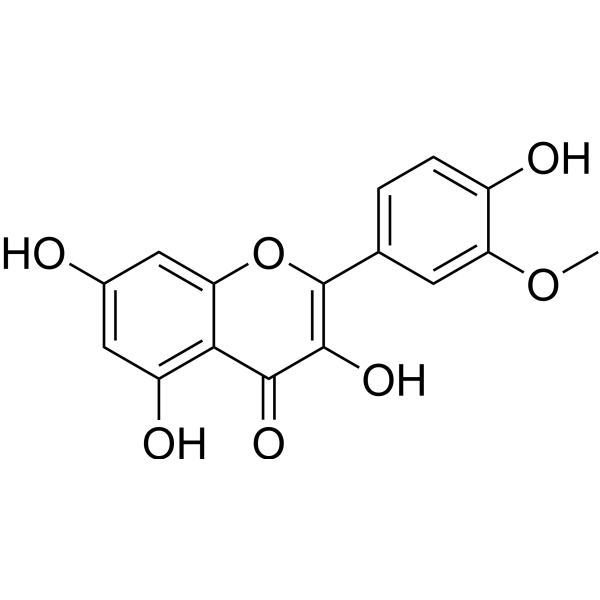 0 ImagesIsorhamnetin (Standard) is the analytical standard of Isorhamnetin. This product is intended for research and analytical applications. Isorhamnetin is a flavonoid compound extracted from the Chinese herb Hippophae rhamnoides L.. Isorhamnetin suppresses skin cancer through direct inhibition of MEK1 and PI3K.
-
L-Threonine-13C4,15N,d5
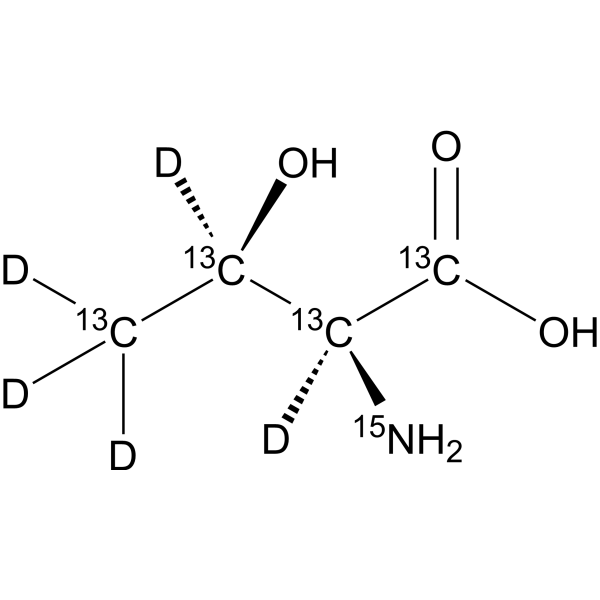 0 ImagesCat. No.: HY-N0658S2CAS No.: 2378755-51-0L-Threonine-13C4,15N,d5 is the deuterium, 13C-, and 15-labeled L-Threonine. L-Threonine is a natural amino acid, can be produced by microbial fermentation, and is used in food, medicine, or feed.
-
4-Methoxycinnamic acid-d3
 0 ImagesCat. No.: HY-W7209754-Methoxycinnamic acid-d3 is the deuterated-labeled 4-Methoxycinnamic acid (HY-N1387). 4-Methoxycinnamic acid is detected as natural phenylpropanoid in A. preissii.
-
L-Phenylalanine-13C-1
 0 ImagesCat. No.: HY-N0215S16CAS No.: 136056-01-4Synonyms: (S)-2-Amino-3-phenylpropionic acid-13C-1L-Phenylalanine-13C-1 ((S)-2-Amino-3-phenylpropionic acid-13C-1) is the 13C-labeled L-Phenylalanine (HY-N0215). L-Phenylalanine ((S)-2-Amino-3-phenylpropionic acid) is an essential amino acid isolated from Escherichia coli. L-Phenylalanine is a α2δ subunit of voltage-dependent Ca2+ channels antagonist with a Ki of 980 nM. L-phenylalanine is a competitive antagonist for the glycine- and glutamate-binding sites of N-methyl-D-aspartate receptors (NMDARs) (Kb of 573 μM ) and non-NMDARs, respectively. L-Phenylalanine is widely used in the production of food flavors and pharmaceuticals.
-
Coprostanol (Standard)
 0 ImagesCat. No.: HY-118103RCAS No.: 360-68-9Synonyms: 5β-Cholestan-3β-ol (Standard)Coprostanol (5β-Cholestan-3β-ol) (Standard) is the analytical standard of Coprostanol. This product is used for research and analytical applications. Coprostanol is a fecal sterol formed by the reduction of cholesterol by microorganisms in the human and higher animal intestines. Coprostanol can be used as an indicator sterol for fecal contamination. Coprostanol has been recognized as a good indicator of water resource pollution caused by sewage discharge. Coprostanol can serve as a potential biological indicator for cerebral chondrodystrophy (CTX).
-
Myristoleoyl-CoA
 0 ImagesCat. No.: HY-CE01710CAS No.: 87935-97-5Synonyms: Coenzyme A,S-(9Z)-9-tetradecenoateMyristoleoyl-CoA (Coenzyme A,S-(9Z)-9-tetradecenoate) is a monounsaturated fatty acyl-CoA derivative. Myristoleoyl-CoA is produced via the Δ9-desaturase-catalyzed desaturation of myristoyl-CoA in chicken liver microsomes.
-
Propane-1,2,3-triyl tripalmitate-d98
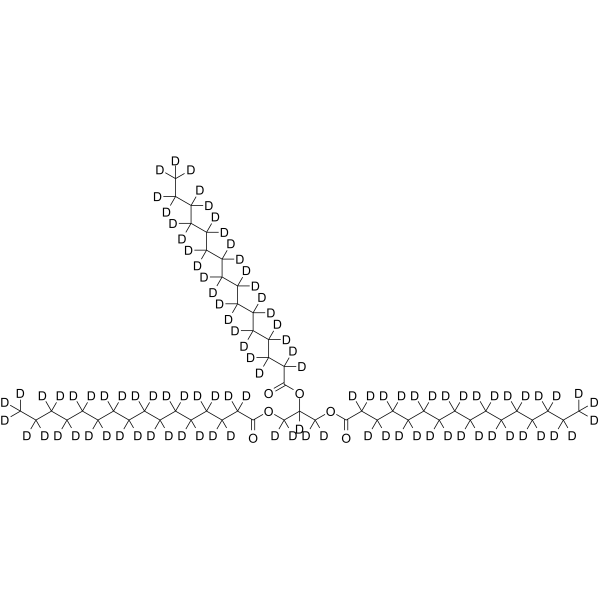 0 ImagesCat. No.: HY-W013061S6CAS No.: 1219803-85-6Propane-1,2,3-triyl tripalmitate-d98 is the deuterium labeled Propane-1,2,3-triyl tripalmitate (HY-W013061). Propane-1,2,3-triyl tripalmitate is a saturated fat. Propane-1,2,3-triyl tripalmitate enhances the lymphatic transport of Glycerol tristearate (HY-127035).
-
Chenodeoxycholic Acid-d7
 0 ImagesCat. No.: HY-W712932Synonyms: CDCA-d7Chenodeoxycholic Acid-d7 (CDCA-d7) is the deuterium labeled Chenodeoxycholic Acid (HY-76847). Chenodeoxycholic Acid is a hydrophobic primary bile acid that activates nuclear receptors (FXR) involved in cholesterol metabolism.
-
12(R)-HEPE
 0 ImagesCat. No.: HY-117044CAS No.: 109430-12-812(R)-HEPE is a monohydroxy fatty acid synthesized from EPA by the eggs of the sea urchin, S. purpuratus.1 The biological activity of 12(R)-HEPE has not been extensively documented, but may be similar to that of 12(R)-HETE.
-
Kipukasin C
 0 ImagesCat. No.: HY-N19838CAS No.: 948573-99-7Kipukasin C is an aroyl Uridine (HY-B1449) derivative found in Aspergillus versicolor. Kipukasin C shows no antifungal activity.
-
D-Mannose-d-1
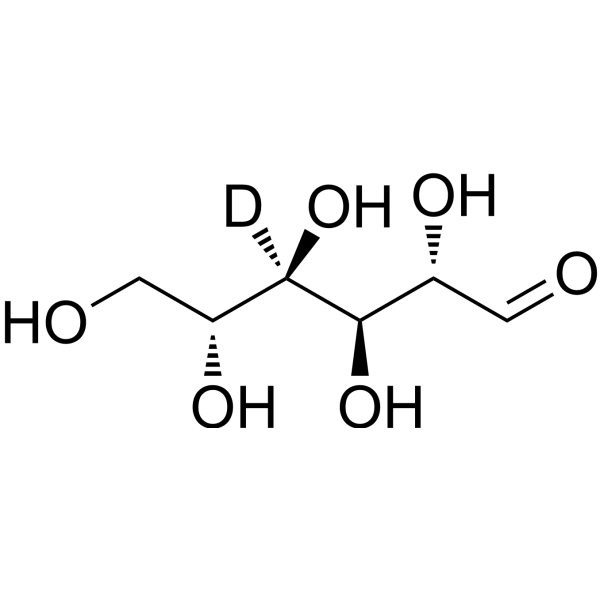 0 ImagesCat. No.: HY-N0379S12D-Mannose-d-1 is the deuterium labeled D-Mannose. D-Mannose is a carbohydrate, which plays an important role in human metabolism, especially in the glycosylationof specific prote.
-
D-Thyroxine (Standard)
 0 ImagesD-Thyroxine (Standard) is the analytical standard of D-Thyroxine (HY-A0152). This product is intended for research and analytical applications. D-Thyroxine (D-T4) is an orally active thyroid hormone that inhibits the secretion of TSH. D-Thyroxine can inhibit goiter, promote metamorphosis of tadpoles and influence cholesterol metabolism. D-Thyroxine can be used for the study of hypercholesterolemia.


-
D-Fructose-3-13C
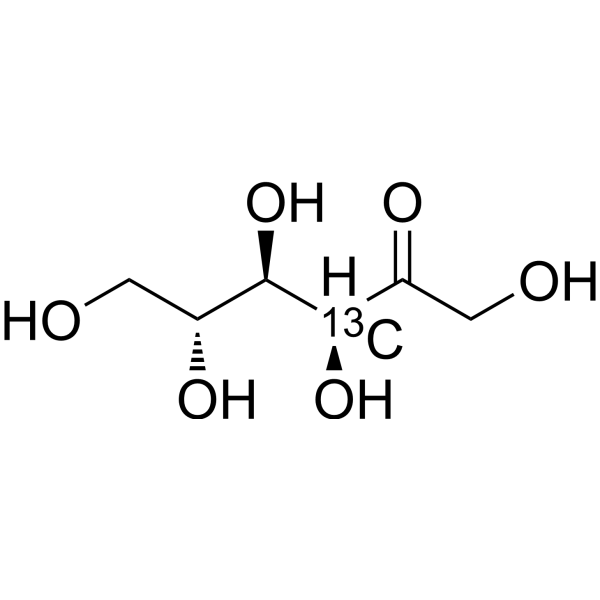 0 ImagesCat. No.: HY-N7092S4CAS No.: 249928-59-4Synonyms: D(-)-Fructose-3-13CD-Fructose-3-13C is the 13C labeled D-Fructose. D-Fructose (D(-)-Fructose) is a naturally occurring monosaccharide found in many plants.
-
Leucyl-phenylalanine-13C6,15N TFA
 0 ImagesCat. No.: HY-113278SLeucyl-phenylalanine-13C6,15N TFA is the 13C, 15N-labeled Leucyl-phenylalanine (HY-113278). Leucyl-phenylalanine is a linear dipeptide composed of L-leucine and L-phenylalanine, and also serves as a cyclization substrate. Leucyl-phenylalanine is an incomplete degradation product generated during protein breakdown or catabolism. Leucyl-phenylalanine undergoes heat-induced solid-state cyclization via an autocatalytic mechanism to form its cyclic diketopiperazine analog.

-
Petasitenine
 0 ImagesCat. No.: HY-142063CAS No.: 60102-37-6Synonyms: FukinotoxinPetasitenine (Fukinotoxin) is a pyrrolizidine alkaloid that can be found in the plant Petasites japonicus, which is a carcinogenic metabolite of neopetasitenine. Petasitenine causes lactate dehydrogenase leakage, and exhibits hepatotoxicity.
-
Cystocholic acid
 0 ImagesCat. No.: HY-N15193CAS No.: 73386-01-3Cystocholic acid is the metabolite of bile acid, and exhibits the antimicrobial potential.




