



Endogenous Metabolite
Endogenous metabolites refer to the collective set of small-molecule chemical substances present within organelles, cells, organs, biological fluids, or entire organisms; their molecular weights are typically less than 1500 Da. These endogenous metabolites—including lipids, amino acids, short peptides, nucleic acids, carbohydrates, alcohols, and organic acids—not only participate in signal transduction governing genomic function but also receive upstream signals from the environment, thereby bridging the interrelationships among genotype, environment, and phenotype.
Based on their biological functions, microbial endogenous metabolites can be broadly classified into two categories: primary metabolites and secondary metabolites. Primary metabolites are the core molecules essential for supporting microbial growth and proliferation; they serve to provide energy to the microbes or act as precursors and cofactors for the synthesis of biological macromolecules. In contrast, microbial secondary metabolites are a class of low-molecular-weight products that are not strictly essential for microbial growth. Nevertheless, microbial secondary metabolites include numerous substances—such as antibiotics, anti-tumor agents, and cholesterol-lowering agents—that are of critical importance to human health[1][2][3]. Furthermore, the metabolome of a biological organism is influenced by a variety of endogenous factors, including age, sex, body composition, genetic background, and underlying pathological states. The small-molecule metabolites within an organism are diverse and highly distinct; their levels are typically subject to the synergistic regulation of a vast array of enzymes and transport proteins, undergoing processes of synthesis, transformation, degradation, and compartmentalized distribution. Metabolomics research based on endogenous metabolites has been widely applied in the fields of metabolic disorders, neurodegenerative diseases, cancer, cardiovascular diseases, and infectious diseases, where these metabolites hold potential utility as biomarkers or therapeutic targets[1][2][3].
References:
- [1]. Seyedsayamdost MR. Toward a global picture of bacterial secondary metabolism. J Ind Microbiol Biotechnol. 2019 Mar;46(3-4):301-311. [Content Brief]
- [2]. Ruiz B, et al. Production of microbial secondary metabolites: regulation by the carbon source. Crit Rev Microbiol. 2010 May;36(2):146-67. [Content Brief]
- [3]. Wishart DS. Metabolomics for Investigating Physiological and Pathophysiological Processes. Physiol Rev. 2019 Oct 1;99(4):1819-1875. [Content Brief]
Endogenous Metabolite Isoform Specific Products
All Product Categories
-
Endogenous Metabolite Related Products (8420)
Related Products (8420)

-
Antibodies (477)
-
Endogenous Metabolite Isoform Comparison
-
Serotonin (Standard)
 0 ImagesCat. No.: HY-B1473ARCAS No.: 50-67-9Synonyms: 5-Hydroxytryptamine (Standard); 5-HT (Standard)Serotonin (Standard) is the analytical standard of Serotonin (HY-B1473A). This product is intended for research and analytical applications. Serotonin is a monoamine neurotransmitter in the CNS and an endogenous 5-HT receptor agonist. Serotonin is also a catechol O-methyltransferase (COMT) inhibitor with a Ki of 44 μM.
-
3'-O-Methylguanosine (Standard)
 0 ImagesCat. No.: HY-W091784RCAS No.: 10300-27-33'-O-Methylguanosine (Standard) is an analytical standard of 3'-O-Methylguanosine (HY-W091784). This product is intended for research and analytical applications. 3'-O-Methylguanosine is a methylated nucleoside analog and RNA chain terminator. 3'-O-Methylguanosine can inhibit the synthesis of early vaccinia virus-specific RNA.
-
2-Furoylglycine (Standard)
 0 ImagesCat. No.: HY-113340RCAS No.: 5657-19-22-Furoylglycine (Standard) is the analytical standard of 2-Furoylglycine. This product is intended for research and analytical applications. 2-Furoylglycine, a urinary metabolite in human, is a putative biomarker for coffee consumption.
-
Thymopentin (Standard)
 0 ImagesCat. No.: HY-N7122RCAS No.: 69558-55-0Thymopentin is a biologically active peptide secreted mainly by the epithelial cells of thymic cortex and medulla. Thymopentin is an effective immunomodulatory agent with a short plasma half-life of 30 seconds. Thymopentin enhances the generation of T-cell lineage derived from human embryonic stem cells (hESCs).
-
L-Alanyl-L-glutamine (Standard)
 0 ImagesL-Alanyl-L-glutamine (Standard) is the analytical standard of L-Alanyl-L-glutamine. This product is intended for research and analytical applications. L-Alanyl-L-glutamine, a glutamine dipeptide, is benefit for the antioxidant system, attenuating inflammation, and may modulate the heat shock protein (HSP) response in catabolic situations.
-
KSD 2405 (Standard)
 0 ImagesKSD 2405 (Standard) is the analytical standard of KSD 2405. This product is intended for research and analytical applications. KSD 2405 is an endogenous metabolite.
-
Boxidine
 0 ImagesCat. No.: HY-W726633CAS No.: 10355-14-3Boxidine is an orally active DHCR7 inhibitor. Boxidine inhibits DHCR7, blocks the conversion of 7-Dehydrocholesterol (HY-113279) to Cholesterol (HY-N0322), reduces serum cholesterol levels, causes accumulation of 7-dehydrocholesterol in serum and tissues, and inhibits sterol absorption. Boxidine exhibits antiproliferative and anticancer activities, with marginal activity against mouse tumors. Boxidine can be used in research related to diseases such as tumors and adrenal cancer.
-
15-Keto-prostaglandin E2-d4
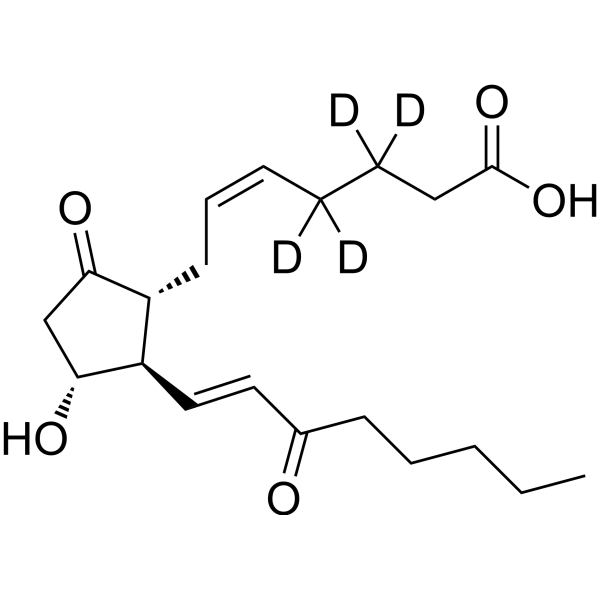 0 ImagesCat. No.: HY-113205S1CAS No.: 2738376-85-515-Keto-prostaglandin E2-d4 is the d4 labeled 15-keto-Prostaglandin E2 (HY-113205). 15-keto-Prostaglandin E2 (15-keto-PGE2) is an endogenous PGE2 metabolite. 15-keto-Prostaglandin E2 inhibits STAT3 activation by binding to the Cys259 residue of STAT3. 15-keto-Prostaglandin E2 binds to and stabilizes EP2 and EP4 receptors. 15-keto-Prostaglandin E2 inhibits the growth and progression of breast cancer cells. 15-keto-Prostaglandin E2 activates PPAR-γ and promotes fungal growth. 15-keto-Prostaglandin E2 disrupts glomerular vascularization during zebrafish development and reduces the surface area of the glomerular filtration barrier.
-
T-MAS
 0 ImagesT-MAS (4,4-Dimethylzymosterol) serves as an intermediate in cholesterol biosynthesis, stimulating oocytes for meiosis and modulating cumulus expansion.
-
Synephrine hydrochloride (Standard)
 0 ImagesSynonyms: Oxedrine hydrochloride (Standard)Synephrine (hydrochloride) (Standard) is the analytical standard of Synephrine (hydrochloride). This product is intended for research and analytical applications. Synephrine (Oxedrine) hydrochloride, an alkaloid, is an α-adrenergic and β-adrenergic agonist derived from the Citrus aurantium. Synephrine hydrochloride is a sympathomimetic compound and can be used for weight loss.
-
Succinic acid-13C2
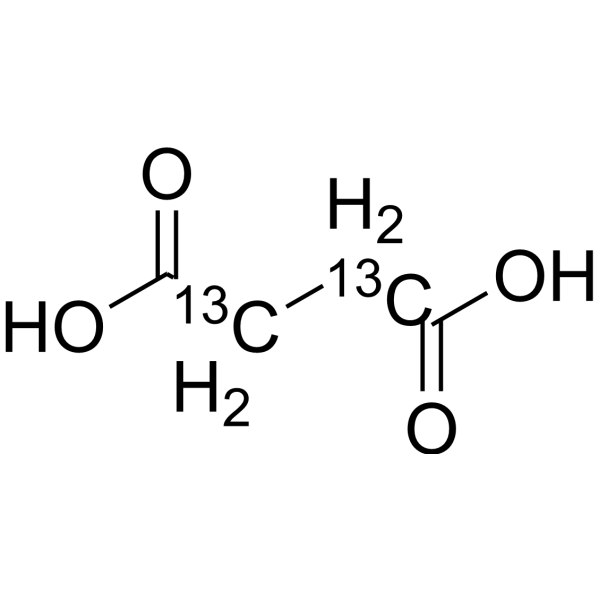 0 ImagesCat. No.: HY-N0420S4CAS No.: 61128-08-3Synonyms: Wormwood acid-13C2Succinic acid-13C2 is the 13C labeled Succinic acid[1]. Succinic acid is a potent and orally active anxiolytic agent. Succinic acid is an intermediate product of the tricarboxylic acid cycle. Succinic acid can be used as a precursor of many industrially important chemicals in food, chemical and pharmaceutical industries[2][3].
-
Diethylumbelliferyl phosphate
 0 ImagesDiethylumbelliferyl phosphate (DEUP), a selective and potent inhibitor of cholesterol esterase, does not inhibit protein kinase activity A in vitro, and it effectively disrupts steroidogenesis by blocking the transport of cholesterol into the mitochondria of steroidogenic cells, with an IC50 of 11.6 μM, potentially limiting dietary cholesterol absorption.
-
2-Heptyl-4,6-dihydroxybenzoic acid
 0 ImagesCat. No.: HY-W727144CAS No.: 6121-76-22-Heptyl-4,6-dihydroxybenzoic acid (compound 6b) is a known component of orcinol.
-
Butyrylcarnitine (Standard)
 0 ImagesButyrylcarnitine (Standard) is the analytical standard of Butyrylcarnitine (HY-113168). This product is intended for research and analytical applications. Butyrylcarnitine is an endogenous metabolite found in plasma. Elevated levels of Butyrylcarnitine are closely associated with abnormalities in lipid and energy metabolism. Butyrylcarnitine can serve as a diagnostic and prognostic indicator for certain diseases, such as heart failure and head and neck cancer.
-
L-Tryptophan-15N2,d8
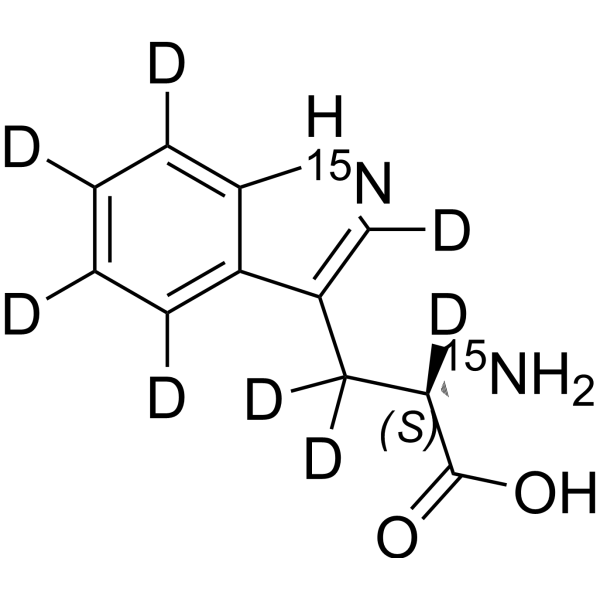 0 ImagesCat. No.: HY-N0623S6Synonyms: Tryptophan-15N2,d8; Tryptophane-15N2,d8L-Tryptophan-15N2,d8 is the deuterium and 15N-labeled L-Tryptophan. L-Tryptophan (Tryptophan) is an essential amino acid that is the precursor of serotonin, melatonin, and vitamin B3.
-
Nervonic acid-d18
 0 ImagesCat. No.: HY-W746544Synonyms: Selacholeic acid-d18; cis-15-Tetracosenoic acid-d18Nervonic acid-d18 (Selacholeic acid-d18) is the deuterium labeled Nervonic acid (HY-N2526). Nervonic acid is a monounsaturated fatty acid with oral activity. Nervonic acid exerts anti-inflammatory activity by inhibiting NF-κB signaling. Nervonic acid can be used in the study of neurodegenerative diseases.
-
Sitagliptin-d6
 0 ImagesCat. No.: HY-13749S3CAS No.: 1133211-99-0Synonyms: MK-0431-d6Sitagliptin-d6 (MK-0431-d6) is deuterium labeled Sitagliptin (HY-13749). Sitagliptin is an orally active and highly selective DPP4 inhibitor with an IC50 value of 19 nM. Sitagliptin blocks the degradation of glucagon-like peptide-1 (GLP-1) and glucose-dependent insulinotropic peptide (GIP) by competing inhibition mechanism (Kᵢ = 1 nM), thereby increasing the level of active incretin. Sitagliptin can also directly stimulate the secretion of GLP-1 by intestinal L cells by activating the cAMP/PKA and ERK1/2 pathways, and this effect is independent of DPP-4. Sitagliptin shows protective effects on pancreatic islet grafts in 1-type diabetes models. Sitagliptin can be used for the study of 1-type and 2-type diabetes.
-
3-Amino-2-methylpropanoic acid-d3
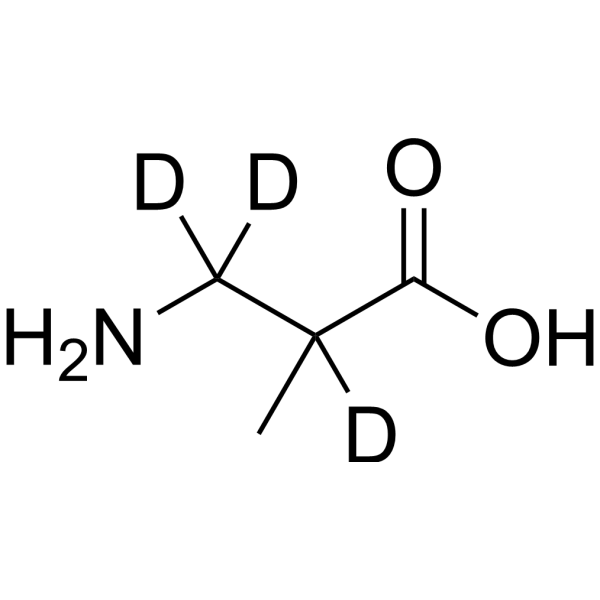 0 ImagesCat. No.: HY-W012974SCAS No.: 1219803-65-23-Amino-2-methylpropanoic acid-d3 is the deuterium labeled 3-Amino-2-methylpropanoic acid. 3-Amino-2-methylpropanoic acid could induce browning of white fat and hepatic β-oxidation and is inversely correlated with cardiometabolic risk factors.
-
Methylolanthanin
 0 ImagesCat. No.: HY-187523CAS No.: 3120945-90-3Synonyms: para-MLLMethylolanthanin (para-MLL) is a natural small-molecule metallophore identified in the culture supernatant of Methylobacterium extorquens AM1. Methylolanthanin binds lanthanide metal ions such as La3+, Nd3+ and Lu3+. It is applicable to studies related to lanthanide metabolism, bacterial metallophores, metal homeostasis and methylotrophic metabolism.
-
Allopurinol riboside (Standard)
 0 ImagesCat. No.: HY-101397RCAS No.: 16220-07-8Cholic acid (Standard) is the analytical standard of Cholic acid. This product is intended for research and analytical applications. Cholic acid is a major primary bile acid produced in the liver and usually conjugated with glycine or taurine. It facilitates fat absorption and cholesterol excretion. Cholic acid is orally active.




