



Resolvin D2 methyl ester
Resolvin D2 methyl ester is an ester derivative of the DHA (HY-B2167) metabolite Resolvin D2 (HY-121636) with anti-inflammatory and anti-infective activities. Resolvin D2 is a leukocyte modulator and a potent inhibitor of neuronal TRPV1 (IC50=0.1 nM) and TRPA1 (IC50=2 nM). Resolvin D2 can be used in sepsis research.
For research use only. We do not sell to patients.
- CAS No.: 810668-53-2
- Formula: C23H34O5
- Molecular Weight:390.51
-
Storage:
Please store the product under the recommended conditions in the Certificate of Analysis.


To place orders, for customer services and technical support, please contact: MedChemExpress USA
Tel: 609-228-6898 E-mail: [email protected] [email protected]


-
 Biological Activity
-
Chemical Information
- Protocols
- Purity & Documentation
- References
-
 Help & FAQs


-
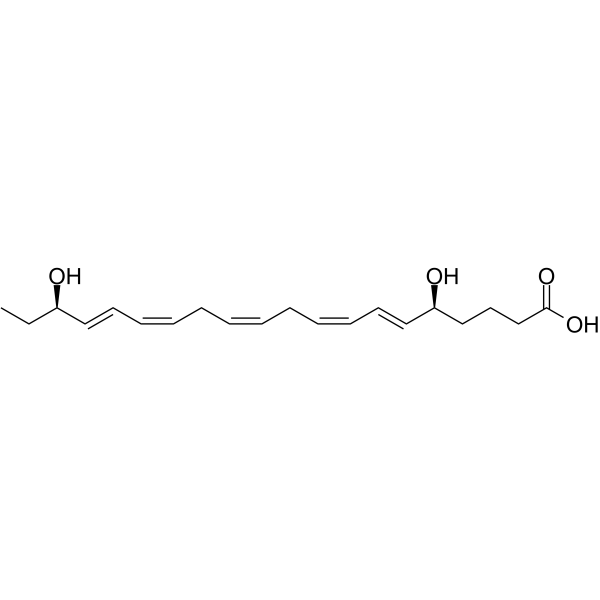
HY-133159
Resolvin E2Endogenous Anti-Inflammatory Agent -
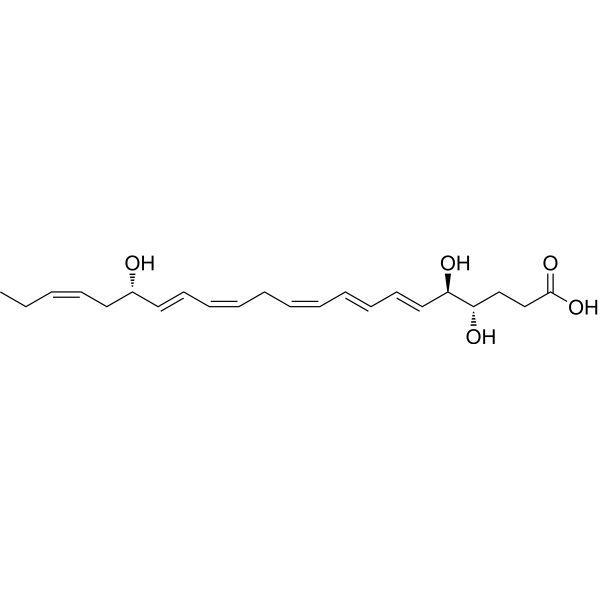
HY-113533
Resolvin D4Proresolving Mediator -
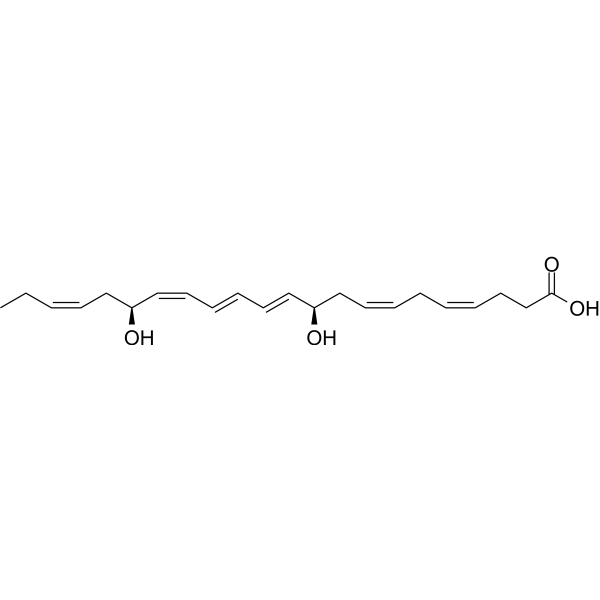
HY-130413
Protectin D1Neuroprotectin D1 -
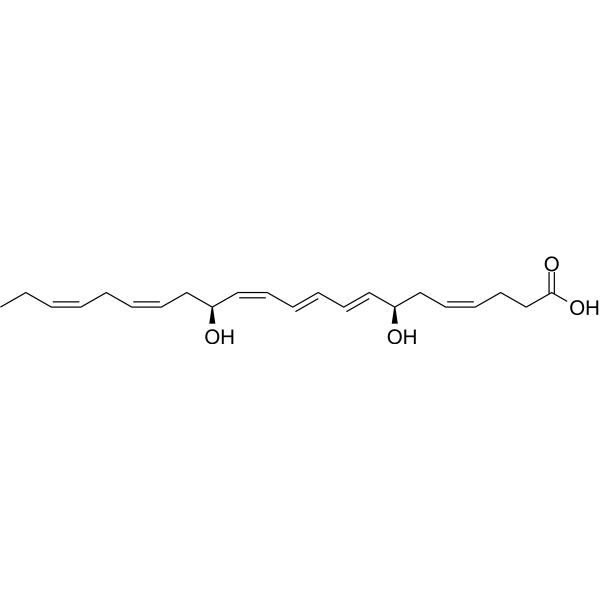
HY-116429
Maresin 1Ca2+ Stimulator -
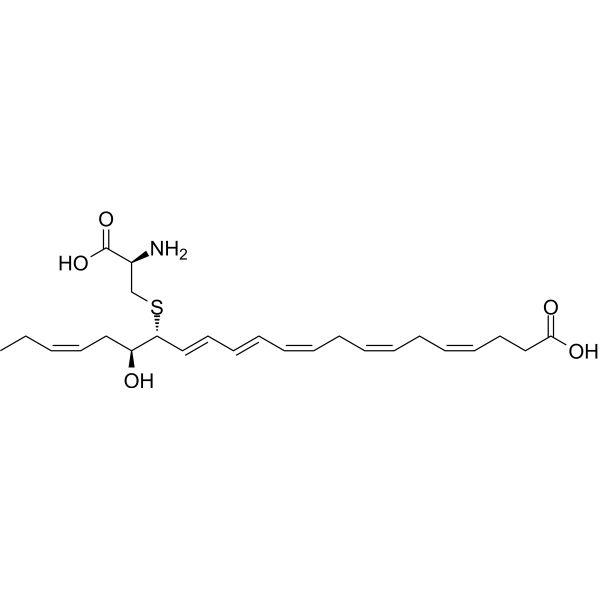
HY-120312
PCTR3Pro-Resolving Mediator -
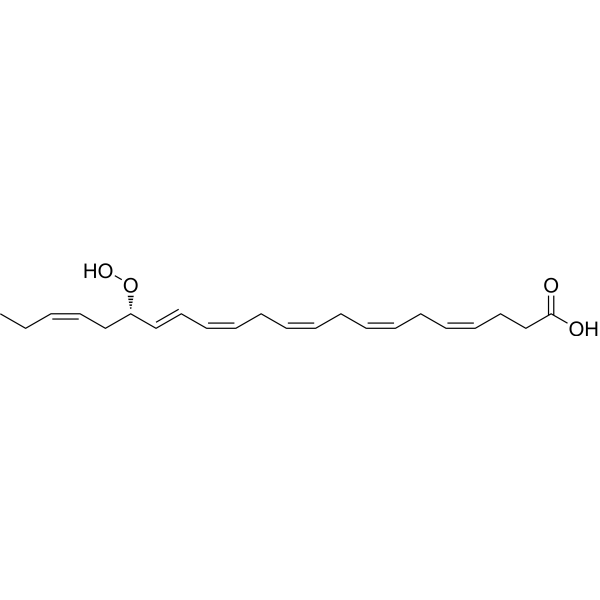
HY-116124
17(S)-HpDHAHydrolyzate -
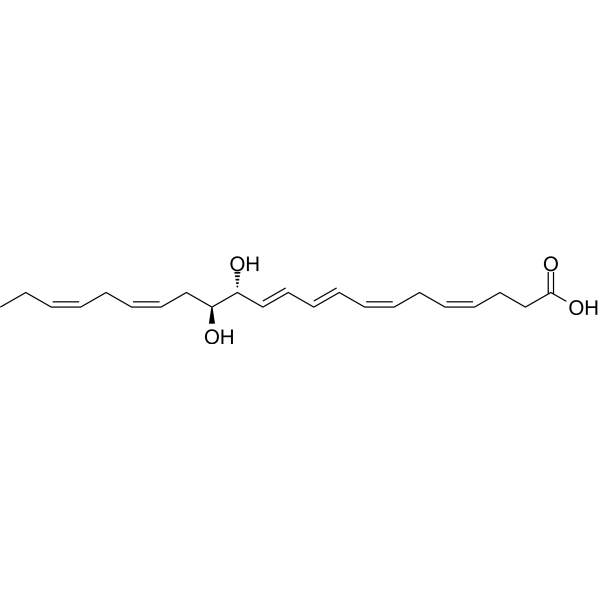
HY-119684
Maresin 2Anti-inflammatory And Pro-resolving Mediator -

HY-125408
Maresin conjugates in tissue regeneration 1cytokine -

HY-130322
Maresin Conjugates in Tissue Regeneration 2Specialized Pro-resolving Mediator -
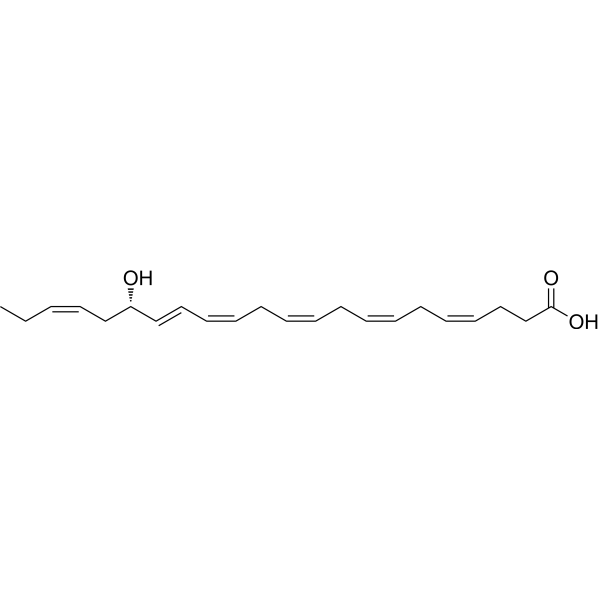
HY-120255A
17(S)-HDHAPPAR Activator -
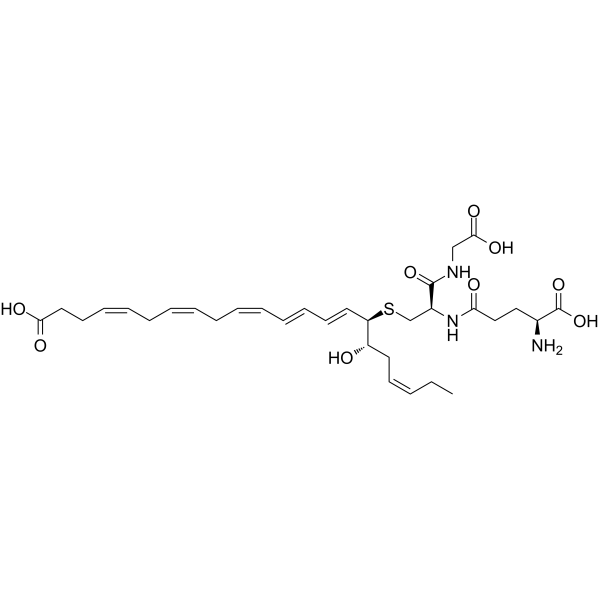
HY-125445
PCTR1Pro-resolving Mediator -

HY-116763
COX-2/5-LOX-IN-4COX-2/LOX Inhibitor
All Endogenous Metabolite Isoforms
More

Biological Activity
Description


Chemical Information
-
CAS No. 810668-53-2
-
Molecular Weight 390.51
-
Formula C23H34O5
-
SMILES
CC/C=C\C[C@H](O)[C@H](O)/C=C/C=C/C=C\C=C\[C@@H](O)C/C=C\CCC(OC)=O
-
Shipping
Room temperature in continental US; may vary elsewhere.
-
Storage
Please store the product under the recommended conditions in the Certificate of Analysis.


Purity & Documentation
References
[1]. Siddiqui YD, et al. Resolvin D2 Induces Resolution of Periapical Inflammation and Promotes Healing of Periapical Lesions in Rat Periapical Periodontitis. Front Immunol. 2019 Feb 26;10:307. [Content Brief] [Content Brief]
[2]. Spite M, et al. Resolvin D2 is a potent regulator of leukocytes and controls microbial sepsis. Nature. 2009 Oct 29;461(7268):1287-91. [Content Brief] [Content Brief]
[3]. Park CK, et al. Resolvin D2 is a potent endogenous inhibitor for transient receptor potential subtype V1/A1, inflammatory pain, and spinal cord synaptic plasticity in mice: distinct roles of resolvin D1, D2, and E1.6. J Neurosci. 2011 Dec 14;31(50):18433-8. [Content Brief]

Calculators
Concentration (start) × Volume (start) = Concentration (final) × Volume (final)


Resolvin D2 methyl ester Related Classifications
HY-W708469 Related Classifications
 Powered by Bioz