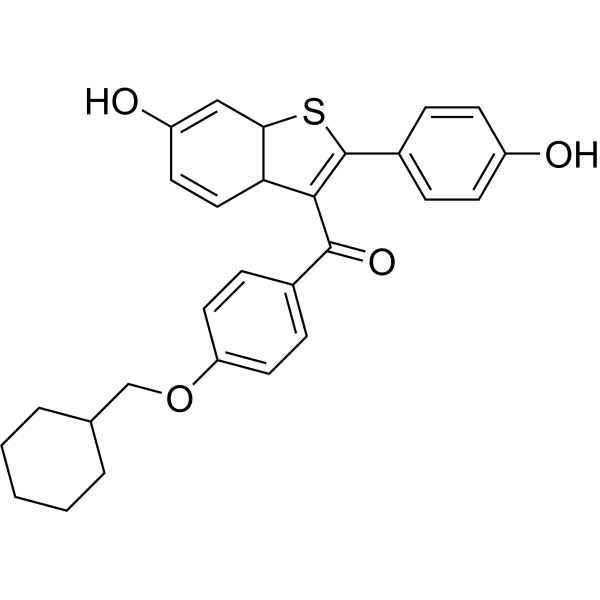
PPAR
Peroxisome proliferator-activated receptors
PPARs (Peroxisome proliferator-activated receptors) are ligand-activated transcription factors of nuclear hormone receptor superfamily comprising of the following three subtypes: PPARα, PPARγ, and PPARβ/δ. PPARs play essential roles in the regulation of cellular differentiation, development, and metabolism (carbohydrate, lipid, protein), and tumorigenesis of higher organisms. All PPARs heterodimerize with the retinoid X receptor (RXR) and bind to specific regions on the DNA of target genes. Activation of PPAR-α reduces triglyceride level and is involved in regulation of energy homeostasis. Activation of PPAR-γ enhances glucose metabolism, whereas activation of PPAR-β/δ enhances fatty acids metabolism.
PPAR Isoform Specific Products
All Product Categories
-
PPAR Inhibitors
(105)
View all products
-
PPAR Agonists
(336)
View all products
-
PPAR Antagonists
(30)
View all products
-
PPAR Activators
(168)
View all products
-
PPAR Modulators
(41)
View all products
-
PPAR Inducers
(6)
View all products
-
PPAR Controls
(3)
View all products
-
PPAR Ligands
(4)
View all products
-
Peroxisome Proliferator-activated Receptor Proteins
(11)
View all products
-
PPAR alpha Proteins
(2)
View all products
-
PPAR gamma Proteins
(7)
View all products
-
PPAR-delta Proteins
(2)
View all products
-
PPAR Related Products (737)
Related Products (737)

-
Recombinant Proteins (11)
-
Antibodies (4)
-
PPAR Isoform Comparison
-
Ciprofibrate impurity A
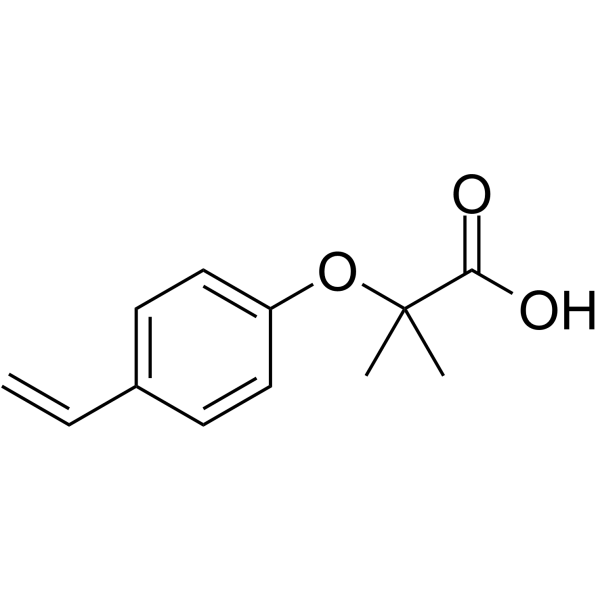 0 ImagesCat. No.: HY-133777CAS No.: 1474058-89-3Ciprofibrate impurity A is an impurity of Ciprofibrate. Ciprofibrate (Win35833) is a potent peroxisome proliferator, increases the phosphorylation level of the PPARalpha.
-
PPARα/γ agonist 3
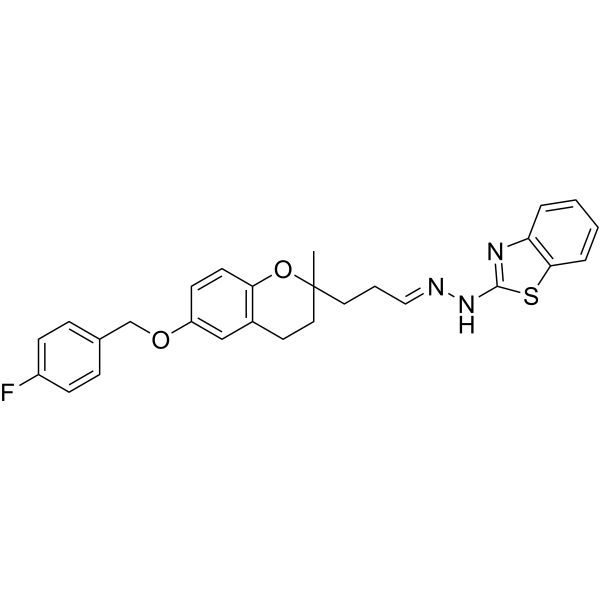 0 ImagesCat. No.: HY-162122CAS No.: 3027045-35-5PPARα/γ agonist 3 (Compound 4) is a dual agonist of PPARα/γ. PPARα/γ agonist 3 has anti-inflammatory activity, significantly reducing inflammatory markers such as IL-6 and MCP-1 on THP-1 macrophages through NF-κB activation. PPARα/γ agonist 3 can be used in the study of metabolic syndrome and metabolic dysfunction-related fatty liver disease (MAFLD).
-
BMS711939
 0 ImagesCat. No.: HY-115357CAS No.: 1000998-62-8BMS711939 is a selective agonist for peroxisome proliferator-activated receptor α (PPAR α), with EC50 of 4 nM and 4.5 μM, for human PPARα and human PPARγ. BMS711939 exhibits good pharmacokinetic characters in rats models. BMS711939 increases HDL cholesterol, reduces LDL cholesterol and triglycerides.
-
Ambrosin
 0 ImagesAmbrosin is an orally active NF-κβ and BACE1 inhibitor. Ambrosin reduces pro-inflammatory and nitrosative mediators, increases PPARγ levels, inhibits apoptosis (Apoptosis), enhances autophagy (Autophagy), and ameliorates oxidative stress. Ambrosin reduces Amyloid plaque deposition. Ambrosin improves lipopolysaccharide-induced memory impairment and colonic histopathological changes. Ambrosin can be used in research related to Alzheimer's disease and colitis.
-
NVP-TNKS656 (GMP)
 0 ImagesCat. No.: HY-13990GCAS No.: 1419949-20-4Synonyms: TNKS656 (GMP)NVP-TNKS656 (GMP) is NVP-TNKS656 (HY-13990) produced by using GMP guidelines. GMP small molecules works appropriately as an auxiliary reagent for cell therapy manufacture. NVP-TNKS656 is a highly potent, selective, and orally active TNKS2 inhibitor with IC50 of 6 nM, and is > 300 fold selectivity against PARP1 and PARP2.
-
Peliglitazar
 0 ImagesCat. No.: HY-101738CAS No.: 331744-64-0Synonyms: BMS 426707-01Peliglitazar is a dual α/γ PPAR activator.
-
NO-Pravastatin
 0 ImagesCat. No.: HY-184354CAS No.: 733034-46-3NO-Pravastatin is a derivative of Pravastatin (HY-B0165) covalently linked with an NO donor moiety, endowing it with dual functions of HMG-CoA reductase (HMGCR) inhibition and exogenous nitric oxide (NO) release. NO-Pravastatin activates PPARα/γ and ABCA1, and inhibits LPS (HY-D1056)-induced TNFα production. NO-Pravastatin can be used in research related to gallstones and cardiovascular diseases.
-
MBX-102 acid
 0 ImagesCat. No.: HY-138997CAS No.: 23953-39-1MBX-102 acid is a selective partial PPAR-γ agonist. MBX-102 acid binds highly to plasma proteins, mainly serum albumin. MBX-102 acid can be used to study type 2 diabetes.
-
Tibesaikosaponin V
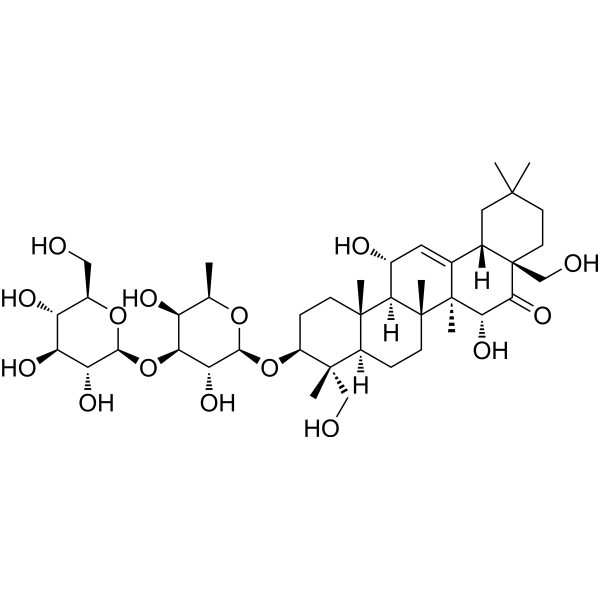 0 ImagesCat. No.: HY-N11507CAS No.: 2319668-87-4Synonyms: TKVTibesaikosaponin V (TKV) is a triterpene diglycoside, which can be isolated from the methanol extract of the roots of Bupleurum chinense DC.. Tibesaikosaponin V inhibits lipid accumulation and triacylglycerol content occurred without cytotoxicity to adipocytes. Tibesaikosaponin V suppresses the mRNA expression of nuclear transcription factors, such as peroxisome proliferator-activated receptor γ (PPARγ) and CCAAT/enhancer binding protein α (C/EBPα). Tibesaikosaponin V inhibits 3T3-L1 preadipocyte differentiation. Tibesaikosaponin V can be used fro research of obesity and its associated metabolic disorders.
-
PPARγ-IN-3
 0 ImagesCat. No.: HY-161985PPARγ-IN-3 (compound 9ga) is a potent and orally active PPARγ inhibitor. PPARγ-IN-3 reduces triglyceride (TG) accumulation with low cytotoxicity. PPARγ-IN-3 preventes the excessive growth of body weight and lessened fat mass as well as liver mass, decreases lipid accumulation in the liver and blood. PPARγ-IN-3 has the potential for the research of diet-induced obesity.
-
Bavachinin (Standard)
 0 ImagesSynonyms: 7-O-Methylbavachin (Standard); Bavachinin A (Standard)Bavachinin (Standard) is the analytical standard of Bavachinin. This product is intended for research and analytical applications. Bavachinin is agonist of pan-peroxisome proliferator-activated receptor (PPAR), with the IC50 value of 21.043 μM, 12.819 μM, and 0.622 μM to PPAR-α, RRAR-β/δ, and PPAR-γ, respectively. Bavachinin is an inhibitor of HIF-1α. Bavachinin exhibits antitumor activity against non-small cell lung cancer by targeting RRAR-γ. Bavachinin is a natural compound with anti-inflammatory and anti-angiogenic activities. Bavachinin has orally bioactivity..
-
Isobutylparaben (Standard)
 0 ImagesSynonyms: Isobutyl-P-Hydroxybenzoate (Standard)Isobutylparaben (Standard) is the analytical standard of Isobutylparaben. This product is intended for research and analytical applications. Isobutylparaben (Isobutyl 4-hydroxybenzoate) is the agonist for PXR, CAR and PPAR. Isobutylparaben has a broad-spectrum antimicrobial activity and widely used in personal care products and cosmetics.
-
Octocrylene-13C3
 0 ImagesCat. No.: HY-W654296Octocrylene-13C3 is the 13C-labeled Octocrylene (HY-A0087). Octocrylene is an organic ultraviolet (UV) filter that absorbs mainly UVB radiation and shorter UVA wavelengths. Octocrylene acts as a partial agonist of PPARγ, which alters the gene transcription profile of lipid metabolism enzymes. In addition, Octocrylene is cytotoxic and genotoxic to human skin fibroblasts and mediates the biosynthesis of estrogens such as estriol in zebrafish larvae, while affecting antioxidant pathways including glutathione transferase and peroxisomes.
-
MRL20
 0 ImagesCat. No.: HY-122222CAS No.: 393794-32-6MRL20 is a PPARγ constitutive and allosteric agonist. MRL20 enhances the interaction between PPARγ and the co-activating peptide of TRAP220, with its EC50 being 10 nM. Even after being covalently blocked in the constitutive pocket by GW9662 (HY-16578) or T0070907 (HY-13202), MRL20 can still strengthen the interaction between PPARγ and TRAP220, with EC50 values of 176 and 440 nM respectively. MRL20 fails to completely inhibit its cell activation effect. MRL20 can be used to study the allosteric regulatory mechanism of PPARγ.
-
PPARγ agonist-23
 0 ImagesCat. No.: HY-181896SPPARγ agonist-23 (Compound 9) is an orally active PPARγ agonist with an EC50 of 0.32 μM. PPARγ agonist-23 improves hepatic triglyceride levels, reduces scores of steatosis and hepatocellular ballooning, and decreases the total activity score of non-alcoholic steatohepatitis (NASH). PPARγ agonist-23 can be used for the research of non-alcoholic steatohepatitis.
-
ZLY032
 0 ImagesCat. No.: HY-139175CAS No.: 2314465-67-1ZLY032 is a dual FFA1/PPARδ agonist with the activity of improving glucose and lipid metabolism, alleviating liver fibrosis, and potentially inhibiting metabolic disorders.
-
Pparδ agonist 7
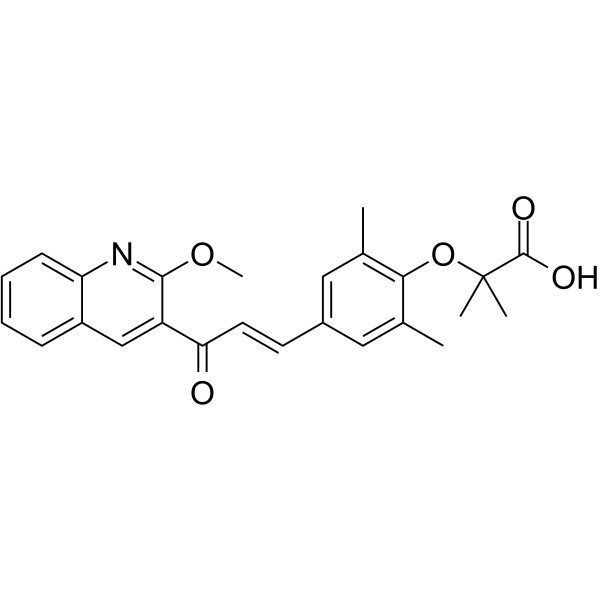 0 ImagesCat. No.: HY-143862CAS No.: 2340432-40-6Pparδ agonist 7 is a potent agonist of Pparδ. The peroxisome proliferator-activated receptor (PPAR) is a member of the intranuclear receptor transcription factor superfamily that plays a key role in the regulation of metabolic homeostasis, inflammation, cell growth and differentiation in vivo. Pparδ agonist 7 has the potential for the research of non-alcoholic fatty liver disease (NAFLD) (extracted from patent WO2019105234A1, compound TM4).
-
PPARδ agonist 8
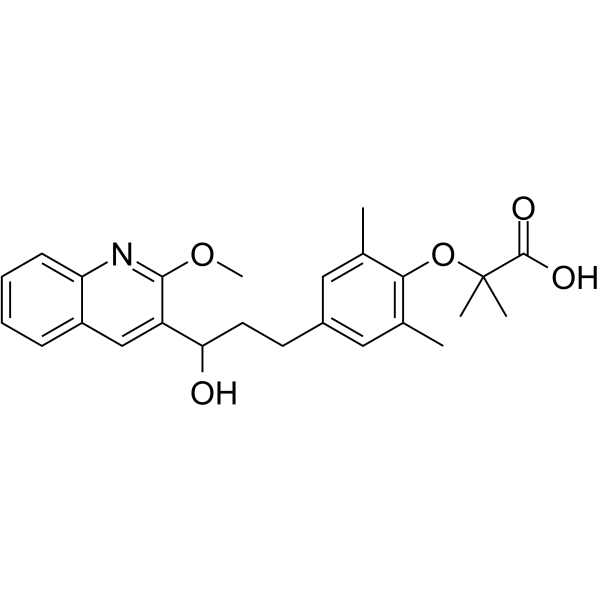 0 ImagesCat. No.: HY-143863CAS No.: 2697129-55-6Pparδ agonist 8 is a potent agonist of Pparδ. The peroxisome proliferator-activated receptor (PPAR) is a member of the intranuclear receptor transcription factor superfamily that plays a key role in the regulation of metabolic homeostasis, inflammation, cell growth and differentiation in vivo. Pparδ agonist 8 has the potential for the research of non-alcoholic fatty liver disease (NAFLD) (extracted from patent WO2021169769A1, compound TM2).
-
5-cis Carbaprostacyclin
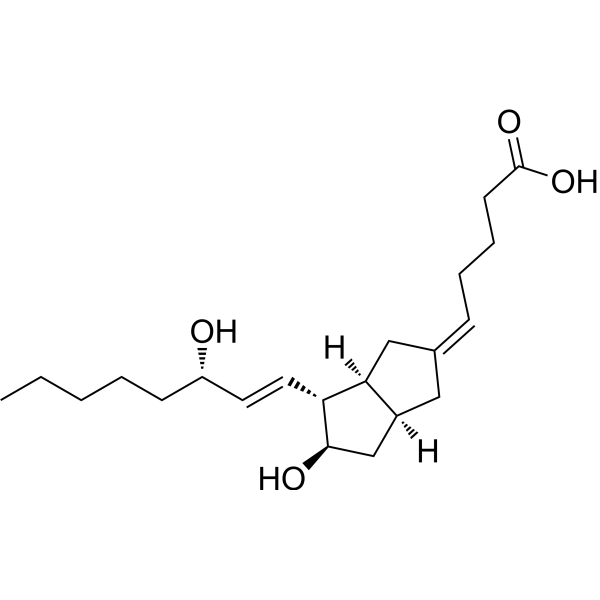 0 ImagesCat. No.: HY-124363CAS No.: 69609-77-45-cis Carbaprostacyclin is a stable analog of PGI2 based on Carbaprostacyclin (HY-112322). Carbacyclin is a PGI2 receptor agonist and vasodilator that activates PPARδ. 5-cis Carbaprostacyclin induces relaxation of pulmonary vascular tone.