



Voltage-gated potassium channel Inhibitor
- 1
- 2
-
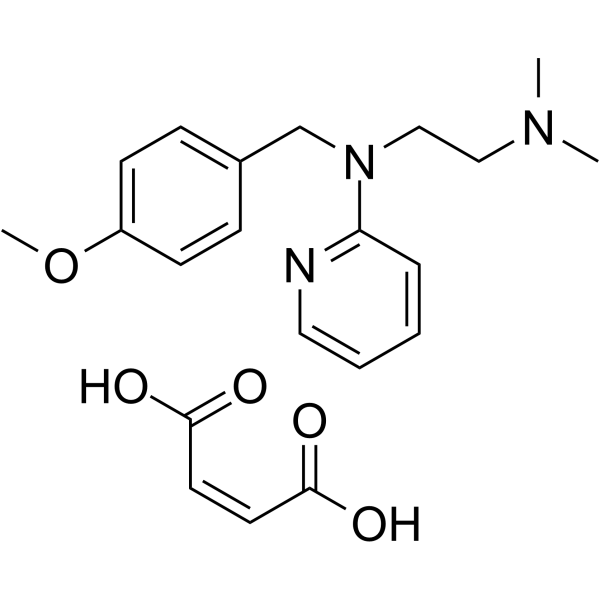
Mepyramine maleate
 0 Images
Mepyramine maleate (Pyrilamine maleate) is a selective histamine H1 receptor antagonist and KCNQ channel inhibitor, with an IC50 of 12.5 μM against KCNQ2/Q3. Mepyramine maleate shows no activity against allergic asthma in mice when used alone, but modulates the effect of JNJ 7777120 (HY-13508) on allergic asthma in mice; it inhibits the development of morphine physical dependence and increases histamine levels in mouse brains. Mepyramine maleate can be used in studies related to seizures, convulsions, allergic asthma and morphine physical dependence.
-
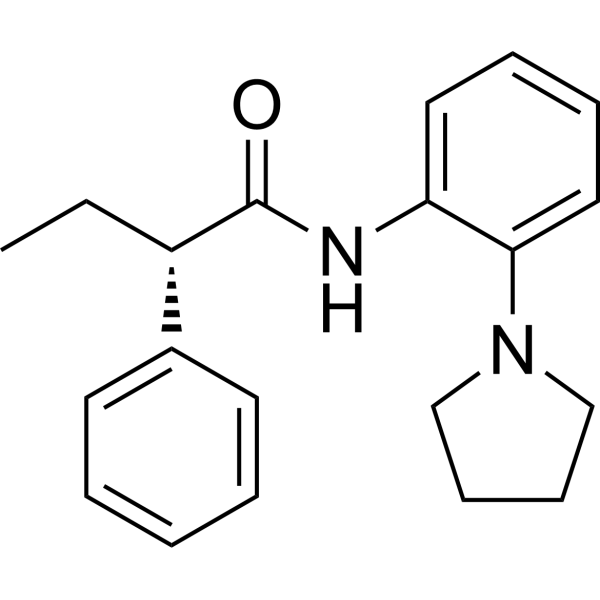
ML252
 0 Images
ML252 is a selective inhibitor of KCNQ2 (Kv7.2) channel with an IC50s of 69 nM, 2.92 μM, 0.12 μM and 0.20 μM for KCNQ2, KCNQ1 (Kv7.1), KCNQ2/Q3 and KCNQ4, respectively. ML252 also inhibits Cytochrome P450 with IC50s of 6.1 nM (CYP1A2), 18.9 nM (CYP2C9), 3.9 nM (CYP3A4), 19.9 nM (CYP2D6), respectively. ML252 shows highly brain penetrant .
-
Guangxitoxin 1E TFA
 0 ImagesCat. No.: HY-P1427A
Guangxitoxin 1E TFA is the TFA salt form of Guangxitoxin 1E (HY-P1427). Guangxitoxin 1E TFA is a peptide toxin and a selective inhibitor for voltage-gated potassium channel KV2.1 and KV2.2 with IC50 of 1-3 nM. Guangxitoxin 1E TFA enhances glucose-stimulated intracellular calcium ion oscillations and increases insulin secretion in a glucose-dependent manner.
-
PVTX-405
 0 ImagesCat. No.: HY-172930CAS No.: 2991021-08-8
PVTX-405 is a selective and oral active IKZF2 molecular glue degrader with a DC50 of 0.7 nM and a Dmax of 91%. PVTX-405 enhances degradation efficiency, significantly reduces off-target degradation, and alleviates hERG inhibition with IC50 of 48 µM. PVTX-405 significantly inhibits the growth of MC38 tumors, with greater synergistic anti-cancer efficacy in combination with immune checkpoint therapies (ICTs) (anti-PD1 or anti-LAG3) in the MC38 mouse tumor xenograft model using Crbn391V C57BL/6 mice.
-
Dendrotoxin-I TFA
 0 ImagesCat. No.: HY-P3055APurity: 99.85%Synonyms: DTX-I TFA
Dendrotoxin-I (DTX-I) TFA is a potent K+ channel blocker with IC50s of 0.13-50 nM for voltage-gated potassium channel subunits KV1.1, KV1.2 and KV1.6. Dendrotoxin-I TFA, a neurotoxin, has the potential for cancer research.
-
CP 339818 hydrochloride
 0 Images
CP 339818 hydrochloride is a non-peptide Kv1.3 channel (IC50 = 200 nM) and Kv1.4 channel blocker. CP 339818 hydrochloride inhibits HCN channel with IC50s of 18.9 μM and 43.4 μM against HCN1 and HCN4 (high Cl-). CP 339818 hydrochloride has significantly weaker blocking effects on Kv1.1, Kv1.2, Kv1.5, Kv1.6, Kv3.1-4, and Kv4.2 channels. CP 339818 hydrochloride selectively blocked Kv1.3, thereby inhibiting the activation process of human T cells. CP 339818 hydrochloride can be used to study the physiological functions of HCN and Kv channels.
-
LY3972406 hydrochloride
 0 Images
LY3972406 hydrochloride is a kv1.3 potassium channel inhibitor without affecting hERG channel activity. LY3972406 hydrochloride hydrochloride can be used in research of immune-related diseases such as psoriasis, rheumatoid arthritis, and systemic lupus erythematosus.
-
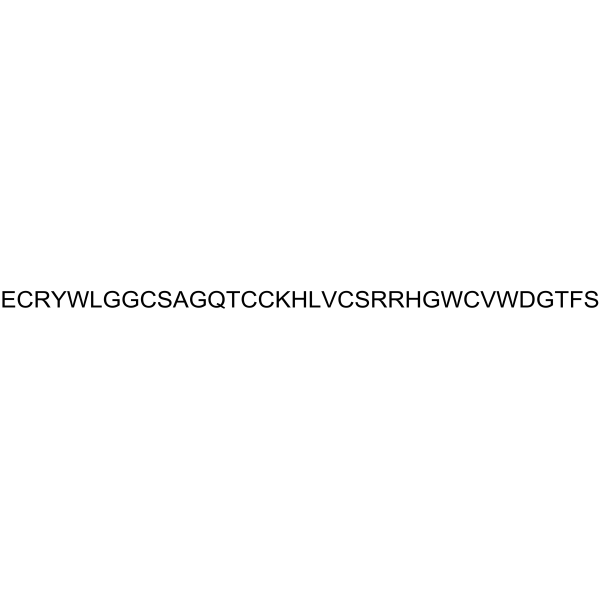
ProTx-I
 0 ImagesCat. No.: HY-P1073CAS No.: 484598-35-8
ProTx-I is a toxin derived from Thrixopelma pruriens and a peptide inhibitor targeting TTX-resistant sodium channels. ProTx-I interacts with voltage sensors of multiple domains such as NaV1.7, reduces neuronal excitability through allosteric modulation of channel gating and alteration of voltage dependence. The IC50 values of ProTx-I against human NaV1.7, NaV1.2, NaV1.6, and NaV1.5 are 95 nM, 104 nM, 21 nM, and 358 nM, respectively; ProTx-I also potently inhibits Ba2+ currents of hCav3.1, while its inhibitory potency against hCav3.2 is approximately 160-fold lower. ProTx-I is applicable to the research of chronic pain.
-
Vm24-toxin TFA
 0 ImagesCat. No.: HY-P5917ASynonyms: Vaejovis mexicanus peptide 24 TFA
Vm24-toxin (Vaejovis mexicanus peptide 24) TFA, a 36-residue peptide, is a potent and selective Kv1.3 blocker with a Kd of ~3 pM in lymphocytes. Vm24-toxin TFA shows >1500-fold affinity for Kv1.3 over other assayed potassium channels. Vm24-toxin TFA folds into a distorted cystine-stabilized α/β motif consisting of a single-turn α-helix and a three-stranded antiparallel β-sheet, stabilized by four disulfide bridges. Vm24-toxin TFA attenuates the CD4+ effector memory T cell response to T cell receptor (TCR) stimulation.
-
ADWX 1 TFA
 0 ImagesCat. No.: HY-P1409APurity: 98.37%
ADWX 1 TFA is a new peptide inhibitor that is potent and selective for Kv1.3 with an IC50 value of 1.89 pM. ADWX 1 inhibits Kv1.3 channel activity specifically to inhibit both the initial calcium signaling and NF-κB activation. ADWX 1 TFA ameliorates the disease in rats of experimental autoimmune encephalomyelitis (EAE) models. ADWX 1 TFA can be used to study T cell-mediated autoimmune diseases.
-
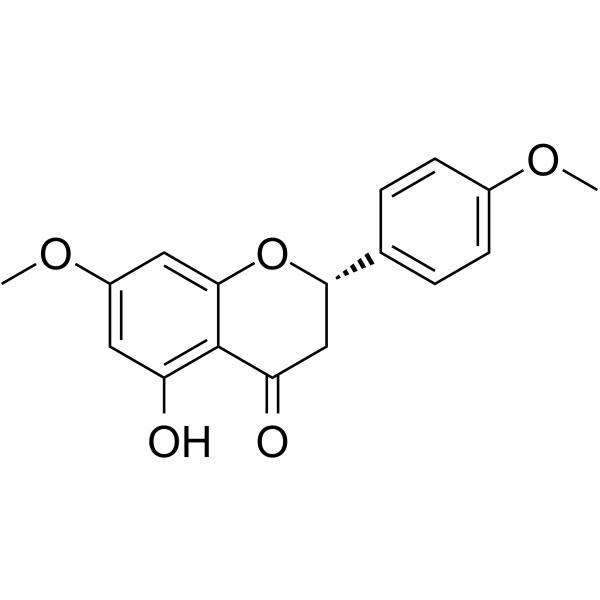
4',7-Di-O-methylnaringenin
 0 ImagesSynonyms: (-)-Naringenin 4',7-dimethyl Ether; (-)-NRG-DM
4',7-Di-O-methylnaringenin ((−)-NRG-DM) is a flavonoid found in Renealmia alpinia. (−)-NRG-DM inhibits Nav1.7, Nav1.8 and Kv2.1 channels and has analgesic activity. Intraperitoneal administration of (−)-NRG-DM dose-dependently attenuated pain in a formalin-induced mouse inflammatory pain model and mustard oil-induced mouse colorectal pain model[2].
-
Spinoxin
 0 ImagesSynonyms: Potassium channel toxin alpha-KTx 6.13; SPX; α-KTx6.13
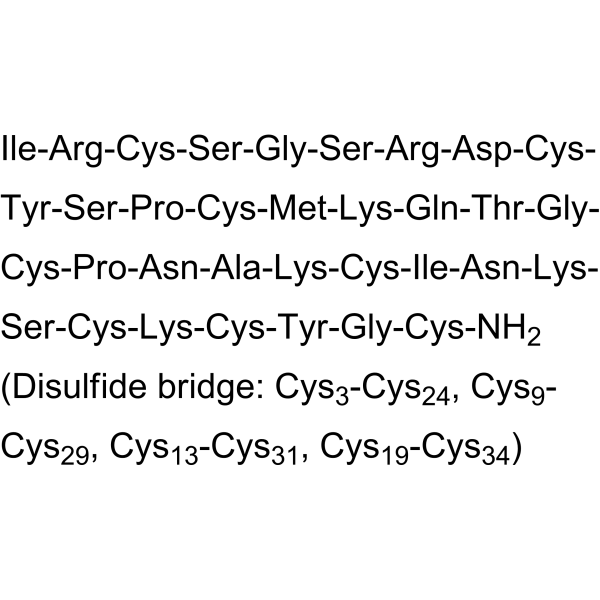
Spinoxin isolated from the venom of scorpion Heterometrus spinifer, is a 34-residue peptide neurotoxin cross-linked by four disulfide bridges. Spinoxin is a potent inhibitor of Kv1.3 potassium channel (IC50 = 63 nM), considering to be valid molecular targets in the diagnostics and therapy of various autoimmune disorders and cancers.
-
ML252 hydrochloride
 0 ImagesCat. No.: HY-18063ACAS No.: 2309887-61-2
ML252 hydrochloride is a selective inhibitor of KCNQ2 (Kv7.2) channel with IC50s of 69 nM, 2.92 μM, 0.12 μM and 0.20 μM for KCNQ2, KCNQ1 (Kv7.1), KCNQ2/Q3 and KCNQ4, respectively. ML252 hydrochloride also inhibits Cytochrome P450 with IC50s of 6.1 nM (CYP1A2), 18.9 nM (CYP2C9), 3.9 nM (CYP3A4), 19.9 nM (CYP2D6), respectively. ML252 hydrochloride shows highly brain penetrant.
-
HCN2 modulator-4
 0 ImagesCat. No.: HY-186059CAS No.: 3080809-03-3
-
HCN2 modulator-8
 0 ImagesCat. No.: HY-186061ACAS No.: 3080809-12-4
HCN2 modulator-8 is a pyrazolopyridine derivative and selective HCN2 inhibitor. HCN2 modulator-8 can be used for the research of pain, tinnitus, central nervous system disorders, psychiatric disorders, mood disorders.
-
LY3972406 free base
 0 ImagesCat. No.: HY-172374CAS No.: 2640023-16-9
LY3972406 free base is a kv1.3 potassium channel inhibitor without affecting hERG channel activity. LY3972406 free base can be used in research of immune-related diseases such as psoriasis, rheumatoid arthritis, and systemic lupus erythematosus.
-
Euphoscopin A
 0 ImagesCat. No.: HY-N21921CAS No.: 81542-94-1Synonyms: 2-epi-Euphornin I
Euphoscopin A (2-epi-Euphornin I) is a toxic lathyrane diterpene with Kv1.3 potassium channel inhibitory activity, can be found in fresh leaves and roots of Euphorbia helioscopia and aerial parts of Euphorbia fischeriana.
-
Kv7.2/Kv7.3 agonist 1
 0 ImagesCat. No.: HY-168214CAS No.: 2315450-35-0
Kv7.2/Kv7.3 agonist 1 (Compound 16) is an orally active agonist for KV7.2/7.3 channel (KCNQ2/3) with an EC50 of 1.03 μM. Kv7.2/Kv7.3 agonist 1 exhibits analgesic efficacy in mice chronic constriction injury (CCI) model and mice Streptozotocin (HY-13753)-induced diabetic peripheral neuropathic pain (DPNP) model, with ED50 of 12.02 and 9.63 mg/kg.
-
UK-78282
 0 ImagesCat. No.: HY-113964CAS No.: 191217-42-2
UK-78282 is a KV1.3 channel inhibitor with an IC50 value of 0.20 μM and a Kd of 0.39 μM. UK-78282 also inhibits the Kv1.4 Potassium Channel. UK-78282 blocks KV1.3 in a use-dependent manner and inhibits human T lymphocyte activation by regulating the cell cycle. UK-78282 can be used in research related to mental disorders, such as depression and schizophrenia.
-
ERG-IN-7
 0 ImagesCat. No.: HY-184190
ERG-IN-7 is a Nav1.5, Cav1.2 and Kv11.1 inhibitor with IC50 values of 10.34 μM, 21.01 μM, and 16.385 μM for human Nav1.5, Cav1.2, and Kv11.1, respectively. ERG-IN-7 prolongs action potentials, reduces conduction velocity, and restores cardiac function. ERG-IN-7 can be used for the research of ventricular arrhythmia.
- 1
- 2



