



Tyrosinase
Tyrosinase is a copper-containing metalloprotein belonging to the type-3 copper protein family, together with haemocyanins and catechol oxidases. Tyrosinases are the catalysts in mammals responsible for the formation of melanin in skin and hair color, as well as browning in fruit and vegetables following cell damage.
Tyrosinases are found in various prokaryotes as well as in plants, fungi, arthropods, and mammals and are responsible for pigmentation, wound healing, radiation protection, and primary immune response. Tyrosinases perform two sequential enzymatic reactions: hydroxylation of monophenols and oxidation of diphenols to form quinones which polymerize spontaneously to melanin. In plants, sponges, and many invertebrates, tyrosinases are important for wound healing and primary immune responses; in arthropods, they play a role in sclerotization, and in bacteria, tyrosinases protect DNA from UV damage.
All Product Categories
-
Tyrosinase Inhibitors
(275)
View all products
-
Tyrosinase Antagonist
(1)
View all products
-
Tyrosinase Activators
(10)
View all products
-
Tyrosinase Modulator
(1)
View all products
-
Tyrosinase Inducer
(1)
View all products
-
Tyrosinase Degrader
(1)
View all products
-
Tyrosinase Substrates
(7)
View all products
-
Tyrosinase Ligand
(1)
View all products
-
Tyrosinase Related Products (321)
Related Products (321)

-
Antibodies (9)
-
MtTMPK-IN-4
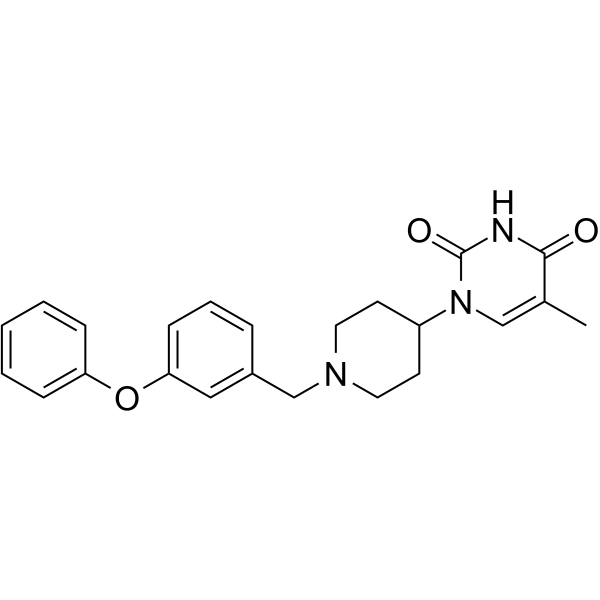 0 ImagesCat. No.: HY-143452CAS No.: 2225889-49-4MtTMPK-IN-4 (compound 2), a para-piperidine, is a potent mycobacterium tuberculosis thymidylate kinase (MtTMPK) inhibitor with an IC50 of 6.1 μM. MtTMPK-IN-4 is a potent tyrosinase inhibitor. MtTMPK-IN-4 is a potent antibacterial agent.
-
Black soya bean extract
 0 ImagesCat. No.: HY-N20313Synonyms: Black bean extractBlack soya bean extract is an extract of black soybean (Glycine max (L.) merr.) that has antioxidant and anti-mushroom tyrosinase activity.
-
AI10-m15
 0 ImagesCat. No.: HY-184907AI10-m15 is a tyrosinase inhibitor, with IC50 values of 0.019 μM (using L-DOPA (HY-N0304) as the substrate) and 0.02 μM (using L-Tyrosine (HY-N0473) as the substrate) against mushroom tyrosinase. AI10-m15 inhibits intracellular melanin production and reduces head pigmentation in zebrafish embryos. AI10-m15 can be used for the research of hyperpigmentation disorders.
-
PPL agonist-1
 0 ImagesCat. No.: HY-159917CAS No.: 3040997-52-9PPL agonist-1 is a highly selective Periplakin (PPL) agonist that increases cAMP levels by regulating PPL, thereby enhancing MITF expression and promoting melanin synthesis. Furthermore, PPL agonist-1 facilitates melanin production by regulating tryptophan metabolism. Compared to Ruxolitinib (HY-50856), PPL agonist-1 demonstrates superior efficacy. PPL agonist-1 holds potential for research into vitiligo treatment.
-
6-Acetylnimbandiol
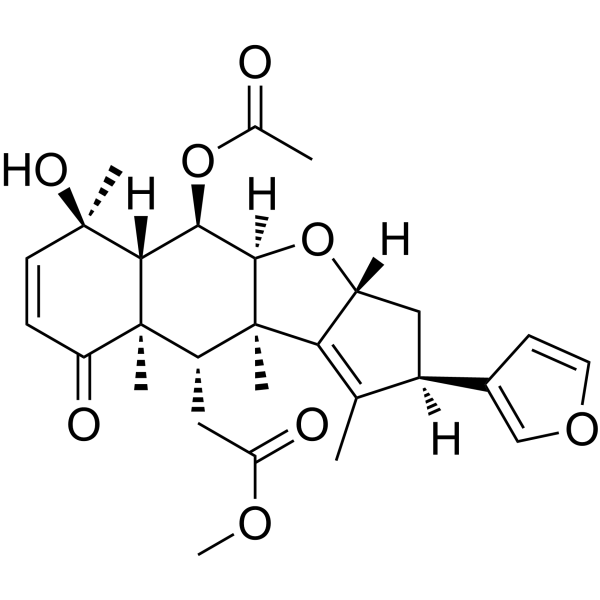 0 ImagesCat. No.: HY-N10437CAS No.: 1281766-66-2Synonyms: 6-O-Acetylnimbandiol6-Acetylnimbandiol (6-O-Acetylnimbandiol) is a non-cytotoxic tyrosinase inhibitor (IC50=69.85 μM) that effectively inhibits melanin production and MITF expression. 6-Acetylnimbandiol can be used in melanoma research.
-
Silydianin (Standard)
 0 ImagesCat. No.: HY-N0646RCAS No.: 29782-68-1Silydianin (Standard) is the analytical standard of Silydianin (HY-N0646). This product is intended for research and analytical applications. Silydianin is a flavonolignan. Silydianin can be obtained from Silybum marianum. Silydianin inhibits PTP1B with an IC50 of 17.38 μM. Silydianin inhibits both monophenolase and diphenolase of tyrosinase significantly, with IC50s of 2.6 μM and 16.5 μM, respectively. Silydianin induces Apoptosis and reduces cytokines (IL-4 and IL-5). Silymarin has antioxidant, cytoprotective and immunomodulatory effects. Silydianin has antitumor activity against prostate cancer. Silymarin can be used in allergic asthma research.
-
2,3-Dihydroisoginkgetin
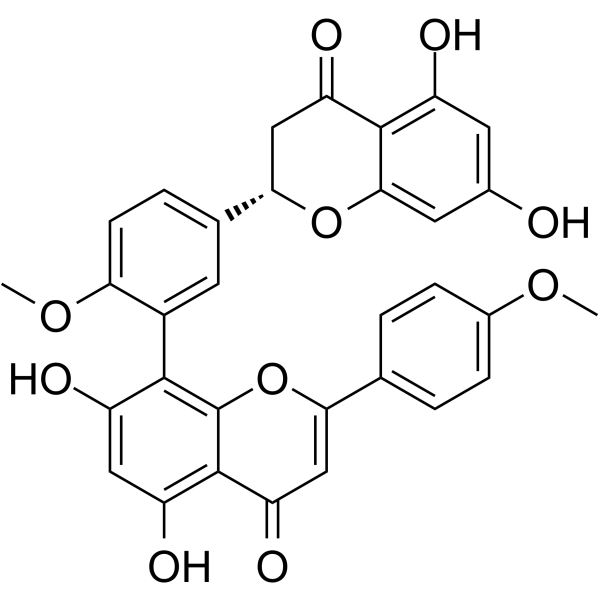 0 ImagesCat. No.: HY-N1658CAS No.: 828923-27-92,3-Dihydroisoginkgetin, a biflavonoid, is a inhibitor of Tyrosinase, with 36.84% inhibition at 0.1 mM. 2,3-Dihydroisoginkgetin shows less toxicity in HEMn (human epidermal melanocytes) cells, with an IC50 of 86.16 μM.
-
Anti-MSPR/RON/CD136 Antibody
 0 ImagesCat. No.: HY-P990471The Anti-MSPR/RON/CD136 Antibody is a human antibody expressed in CHO, targeting MSPR/RON/CD136. The Anti-MSPR/RON/CD136 Antibody is equipped with huIgG1 heavy chain and huκ light chain, with a predicted molecular weight (MW) of 145.74 kDa. The isotype control for the Anti-MSPR/RON/CD136 Antibody can refer to Human IgG1 kappa, Isotype Control (HY-P99001).
-
3,4-Dimethoxyphenol (Standard)
 0 Images3,4-Dimethoxyphenol (Standard) is the analytical standard of Lithocholic acid. This product is intended for research and analytical applications. 3,4-Dimethoxyphenol is a plant-derived phenylpropanoid compound and can use as a whitening agent in cosmetics. 3,4-Dimethoxyphenol exhibits broad-spectrum antimicrobial activity. 3,4-Dimethoxyphenol has tyrosinase-inhibiting activity. 3,4-Dimethoxyphenol has potent antioxidant effect isolated from the bacterial fermentation broth. 3,4-Dimethoxyphenol can be used for the study of infection.
-
Cyclo(l-Pro-d-Leu)
 0 ImagesCyclo(l-Pro-d-Leu) (compound 11) is a collagenase inhibitor that can be extracted from R. atalantica and also exhibits a mild tyrosinase inhibitory effect.
-
Tyrosinase-IN-4
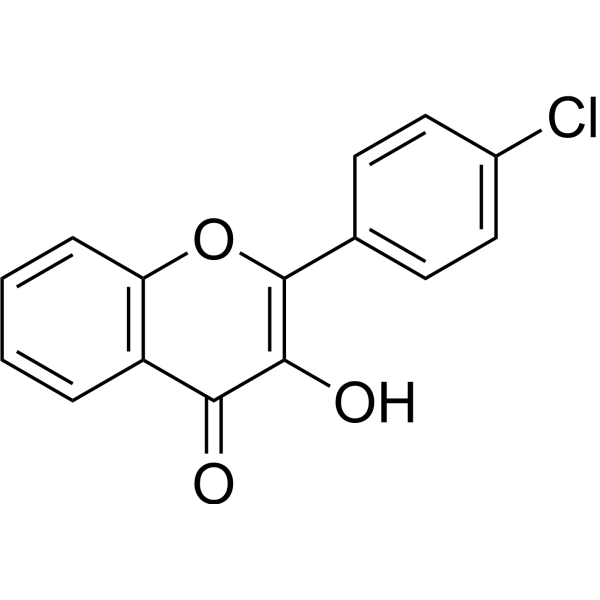 0 ImagesCat. No.: HY-143451CAS No.: 19275-70-8Tyrosinase-IN-4 (compound 34) is a potent inhibitor of tyrosinase. Tyrosinase is a copper-containing metalloenzyme that is responsible for the rate-limiting catalytic step in the melanin biosynthesis and enzymatic browning. Tyrosinase-IN-4 has the potential for the research of skin whitening agents and food preservatives.
-
Tyrosinase-IN-33
 0 ImagesCat. No.: HY-161950CAS No.: 137058-21-0Tyrosinase-IN-33 (compound 5) a Pyridine-based compound, is a potent inhibitor of mushroom tyrosinase diphenolase activity. Tyrosinase-IN-33 significantly decreases the enzyme activity, with an IC50 of 9.0 μM.
-
CLIP1-LTK fusion protein regulator-1
 0 ImagesCat. No.: HY-171155CAS No.: 1360282-15-0CLIP1-LTK fusion protein regulator-1 is a 7-azaindol-6-amine class CLIP1-LTK fusion protein regulator and CLIP1-LTK fusion protein receptor inhibitor. CLIP1-LTK fusion protein regulator-1 suppresses abnormal proliferation of CLIP1-LTK-dependent cells.CLIP1-LTK fusion protein regulator-1 can be used for the research of non-small cell lung cancer.
-
2-Ketoglutaric acid Sodium (GMP)
 0 ImagesCat. No.: HY-W013636AGCAS No.: 22202-68-2Synonyms: Alpha-Ketoglutaric acid Sodium (GMP)2-Ketoglutaric acid (Alpha-Ketoglutaric acid) Sodium (GMP) is 2-Ketoglutaric acid Sodium (HY-W013636A) produced by using GMP guidelines. GMP small molecules work appropriately as an auxiliary reagent for cell therapy manufacture. 2-Ketoglutaric acid Sodium is an intermediate in the production of ATP or GTP in the Krebs cycle. 2-Ketoglutaric acid Sodium also acts as the major carbon skeleton for nitrogen-assimilatory reactions. 2-Ketoglutaric acid Sodium is a reversible inhibitor of tyrosinase (IC50=15 mM).
-
TNK2-IN-1
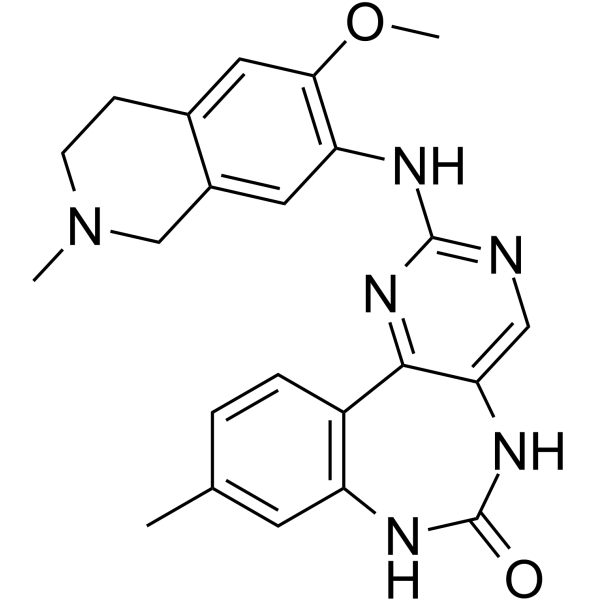 0 ImagesCat. No.: HY-145111CAS No.: 2574456-10-1TNK2-IN-1 is a TNK2 inhibitor. TNK2-IN-1 has an IC50 of 224 nM for TNK2. TNK2-IN-1 can be used for the research of cancer.
-
Tyrosinase-IN-40
 0 ImagesCat. No.: HY-168436Tyrosinase-IN-40 (Compound 9r) is a competitive-type tyrosinase inhibitor, with an IC50 value of 17.02 µM, a Ki value of 14.87 µM. Tyrosinase-IN-40 displays antioxidant activity. Tyrosinase-IN-40 can be used in melanin-related studies.
-
5-Feruloylquinic acid (Standard)
 0 ImagesCat. No.: HY-N7929RCAS No.: 40242-06-65-Feruloylquinic acid (Standard) is the analytical standard of 5-Feruloylquinic acid (HY-N7929). This product is intended for research and analytical applications. 5-Feruloylquinic acid (5-FQA) is a hydroxycinnamic acid derivative. 5-Feruloylquinic acid can be isolated from green coffee beans. 5-Feruloylquinic acid inhibits tyrosinase activity. 5-Feruloylquinic acid has antioxidant properties. 5-Feruloylquinic acid has anticancer activity against lymphoma, oral epidermal cancer, and breast cancer.
-
Tyrosinase-IN-44
 0 ImagesCat. No.: HY-178055CAS No.: 10200-72-3Tyrosinase-IN-44 (Compound 3) is a Tyrosinase inhibitor with IC50s of 0.47 and 0.53 μM for monophenolase and diphenolase, respectively. Tyrosinase-IN-44 has superior glutathione peroxidase-like catalytic and DPPH radical scavenging activity. Tyrosinase-IN-44 has potent antibrowning activity in banana and apple juices by directly inhibiting polyphenol oxidase (PPO) and offering antioxidant activity. Tyrosinase-IN-44 can be used for redox regulation and food preservation.
-
Tyrosinase-IN-25
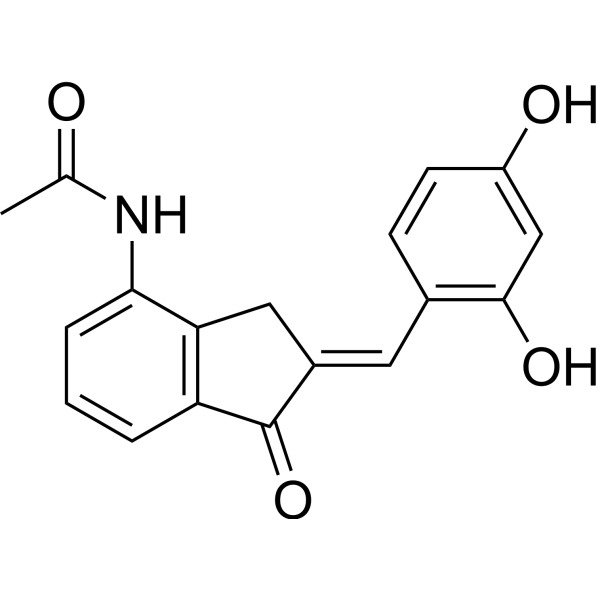 0 ImagesCat. No.: HY-163326Tyrosinase-IN-25 (compound 1l) is an inhibitor of tyrosinase and melanin biosynthesis in human melanoma cells.
-
Tyrosinase-IN-8
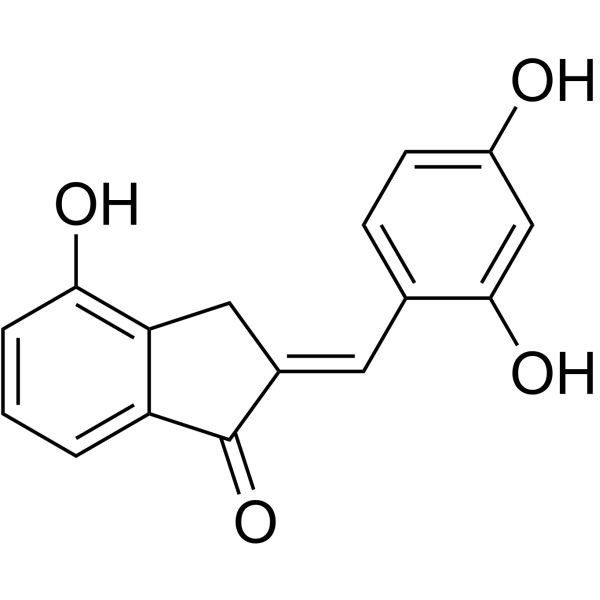 0 ImagesCat. No.: HY-151979Tyrosinase-IN-8 is a potent tyrosinase inhibitor with an IC50 value of 1.6 µM. Tyrosinase-IN-8 inhibits cell growth with low cytotoxicity.




