



Tyrosinase Substrate
-
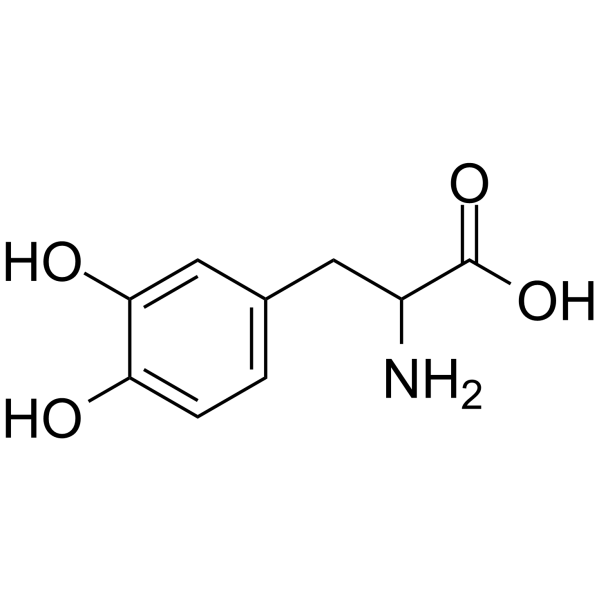
DL-Dopa
 0 Images
DL-Dopa is a dopamine precursor. It serves as a substrate for Mushroom Tyrosinase, which oxidizes it to dopaquinone, an intermediate in the DOPA-melanin polymerization process, and this reaction can be detected at 475 nm. DL-Dopa also forms synergistic hydrophobic and π-π stacking interactions with cationic surfactants. Its binding to cetylpyridinium chloride (HY-B1464) is stronger and exhibits better thermodynamic stability than its binding to benzalkonium chloride (HY-B2232). DL-Dopa can compensate for dopamine depletion in the brain and is applicable to research related to Parkinson's disease.
-
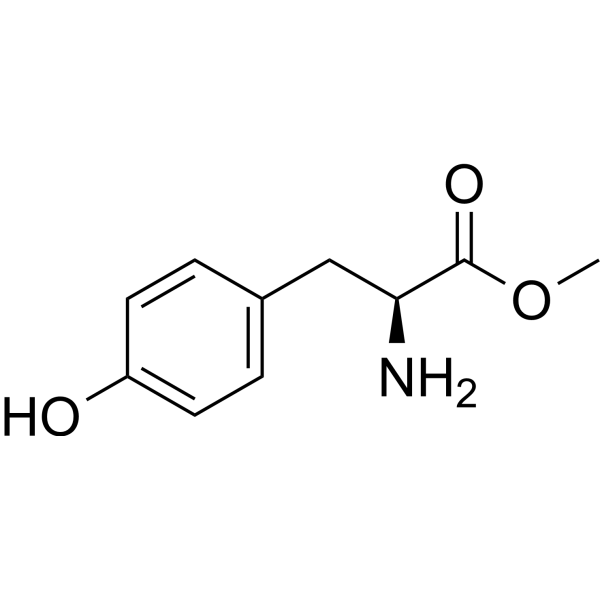
H-Tyr-OMe
 0 Images
H-Tyr-OMe is an amino acid derivative and also a coordinating ligand for CuII ions. H-Tyr-OMe can serve as a surface functionalization reagent for carbon dots, and is used to prepare fluorescent probes for biothiol sensing. H-Tyr-OMe is oxidized to quinone under the catalysis of Tyrosinase via its phenolic hydroxyl group, which quenches the fluorescence of carbon dots. H-Tyr-OMe contains potential coordination sites, including carboxyl, amino and phenolic hydroxyl groups.
-
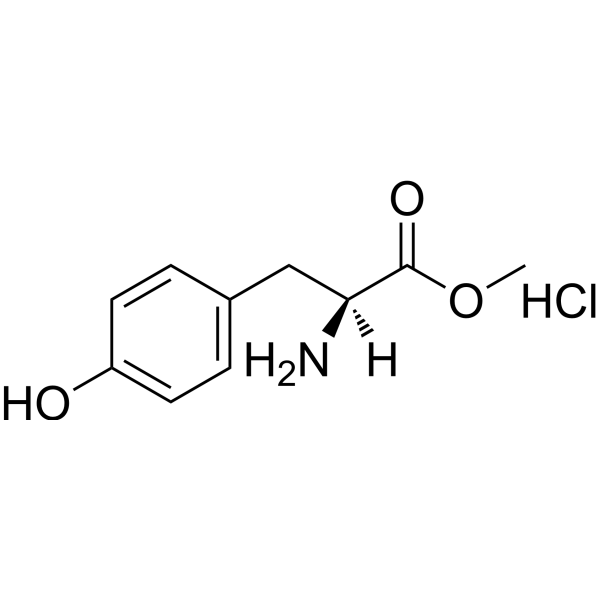
H-Tyr-OMe.HCl
 0 Images
H-Tyr-OMe.HCl is an amino acid derivative and also a coordinating ligand for CuII ions. H-Tyr-OMe.HCl can serve as a surface functionalization reagent for carbon dots, and is used to prepare fluorescent probes for biothiol sensing. H-Tyr-OMe.HCl is oxidized to quinone under the catalysis of Tyrosinase via its phenolic hydroxyl group, which quenches the fluorescence of carbon dots. H-Tyr-OMe.HCl contains potential coordination sites, including carboxyl, amino and phenolic hydroxyl groups.
-
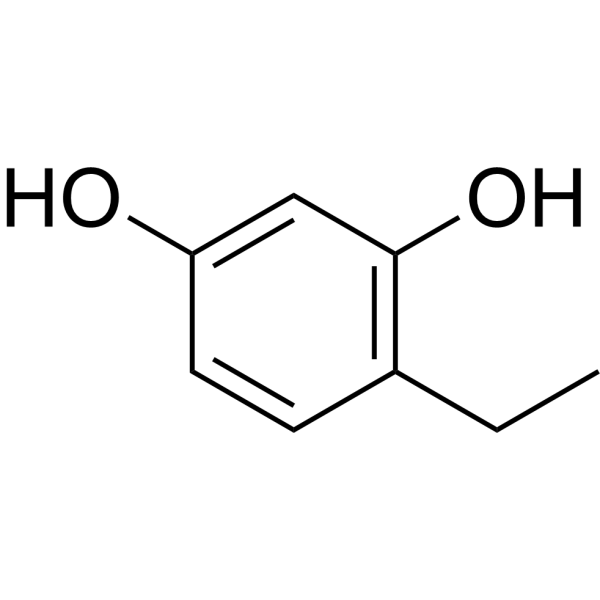
4-Ethylresorcinol
 0 Images
4-Ethylresorcinol is a derivative of resorcinol and can serve as a substrate for tyrosinase. 4-Ethylresorcinol has anti-hyperpigmentation and antioxidant effects and can inhibit melanin synthesis. 4-Ethylresorcinol has potential whitening value.
-
4-Ethylresorcinol (Standard)
 0 ImagesCat. No.: HY-W015782RCAS No.: 2896-60-8
4-Ethylresorcinol (Standard) is the analytical standard of 4-Ethylresorcinol (HY-W015782). This product is intended for research and analytical applications. 4-Ethylresorcinol is a derivative of resorcinol and can serve as a substrate for tyrosinase. 4-Ethylresorcinol has anti-hyperpigmentation and antioxidant effects and can inhibit melanin synthesis. 4-Ethylresorcinol has potential whitening value.
-
N-Acetyl-4-S-cysteaminylphenol
 0 ImagesCat. No.: HY-W129441CAS No.: 91281-32-2Synonyms: N-Ac-4-S-CAP
N-Acetyl-4-S-mercaptoaminophenol (N-Ac-4-S-CAP) is a compound that is selectively cytotoxic to melanocytes of black mouse hair follicles. It can cause 98% depigmentation of black mouse hair follicles. N-Ac-4-S-CAP can produce visible changes in hair follicle melanocytes 4 hours after intraperitoneal injection, including aggregation of melanin granules and nuclear condensation. Electron microscopy observations showed that it caused progressive destruction of melanocytes, including swelling of membranous organelles, nuclear condensation, and cytoplasmic vacuolation, ultimately leading to complete cell necrosis. N-Ac-4-S-CAP has a specific cytotoxic effect on melanocytes that actively produce eumelanin, but may not affect precursor or dormant melanocytes. These properties suggest that N-Ac-4-S-CAP may have potential application value in the treatment of melanoma or skin whitening.
-
H-Tyr-OMe (Standard)
 0 Images
H-Tyr-OMe (Standard) is the analytical standard of H-Tyr-OMe (HY-W007671). This product is intended for research and analytical applications. H-Tyr-OMe is an amino acid derivative and also a coordinating ligand for CuII ions. H-Tyr-OMe can serve as a surface functionalization reagent for carbon dots, and is used to prepare fluorescent probes for biothiol sensing. H-Tyr-OMe is oxidized to quinone under the catalysis of Tyrosinase via its phenolic hydroxyl group, which quenches the fluorescence of carbon dots. H-Tyr-OMe contains potential coordination sites, including carboxyl, amino and phenolic hydroxyl groups.



