



Collagen I
Collagen I is the predominant fibrillar collagen in the extracellular matrix and provides tensile strength, structural integrity, and mechanical support to bone, skin, tendon, ligament, and vascular tissues through the assembly of highly ordered collagen fibrils.[1][2] Type I collagen is composed of two α1(I) chains and one α2(I) chain that form a triple-helical procollagen molecule, which undergoes enzymatic processing and extracellular fibril formation to generate mature collagen fibers.[3][4] Mechanistically, collagen I regulates extracellular matrix organization and tissue architecture by forming stable cross-linked fibrillar networks that support cell adhesion, tissue repair, and connective tissue homeostasis.[1][3] In disease models, mutations affecting COL1A1 disrupt collagen assembly, fibrillogenesis, and matrix stability, leading to disorders including osteogenesis imperfecta and Ehlers-Danlos syndrome, highlighting the essential role of collagen I in skeletal and connective tissue integrity.[4] Compared with other collagen isoforms that form specialized extracellular matrix structures, collagen I is distinguished by its abundance and dominant contribution to fibrillar matrix formation in connective tissues.[1][2] For experimental applications, collagen I is widely used as a biomaterial and extracellular matrix model for investigating cell-matrix interactions, tissue remodeling, fibrosis, and regenerative processes because of its well-characterized fibrillar architecture and biomechanical properties.[1][2]
References:
- [1]. Amirrah IN, et al. A Comprehensive Review on Collagen Type I Development of Biomaterials for Tissue Engineering: From Biosynthesis to Bioscaffold. Biomedicines. 2022 Sep 16;10(9):2307. [Content Brief]
- [2]. Naomi R, et al. Current Insights into Collagen Type I. Polymers (Basel). 2021 Aug 9;13(16):2642. [Content Brief]
- [3]. National Library of Medicine.
- [4]. Collagen I gene information from NCBI.
-
Collagen I Related Products (22)
Related Products (22)

- 1
- 2
-
Sapanisertib
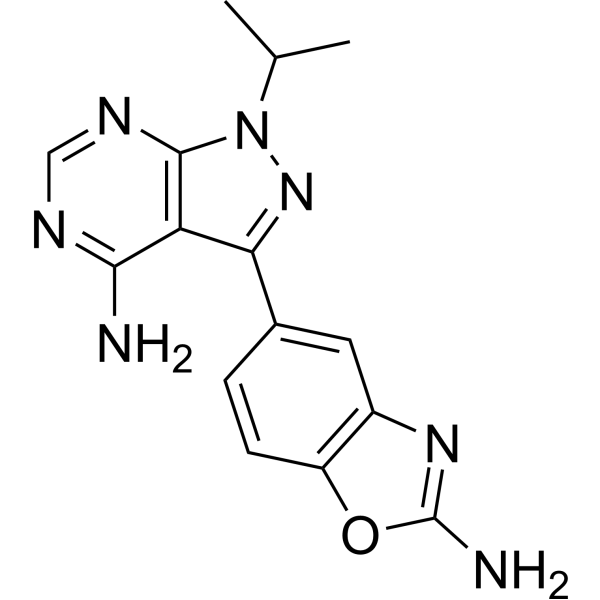 0 ImagesSynonyms: INK-128; MLN0128; TAK-228Sapanisertib (INK-128; MLN0128; TAK-228) is an orally active dual mTORC1/mTORC2 inhibitor. Sapanisertib directly and simultaneously inhibits mTORC1/2 activity through competitive binding with ATP, thereby comprehensively blocking downstream processes such as protein and lipid synthesis and cytoskeletal reorganization, consequently suppressing tumor cell proliferation and promoting apoptosis. Sapanisertib is applicable to research on melanoma, ovarian cancer, pulmonary fibrosis, and hematological malignancies.
-
Anti-Mouse CD106/VCAM-1 Antibody (M/K-2.7)
 0 ImagesCat. No.: HY-P990294Anti-Mouse CD106/VCAM-1 Antibody (M/K-2.7) is an anti-mouse CD106/VCAM-1 IgG1 monoclonal antibody. Anti-Mouse CD106/VCAM-1 Antibody (M/K-2.7) reduces inflammatory response and oxidative stress by lowering p-STAT3 and reactive oxygen species (ROS) levels. Anti-Mouse CD106/VCAM-1 Antibody (M/K-2.7) can alleviate cardiac inflammation and fibrosis by reducing the expression of collagen I and collagen III. Anti-Mouse CD106/VCAM-1 Antibody (M/K-2.7) can be used for research on cardiovascular conditions such as hypertensive heart condition and subretinal fibrosis.
-
Methylophiopogonone A
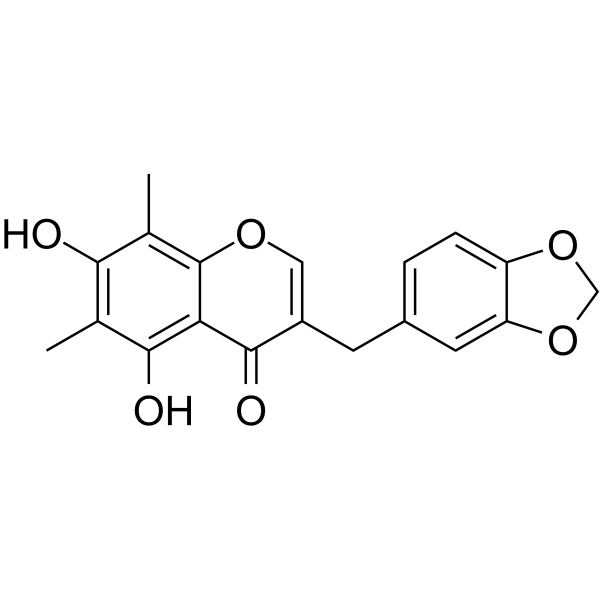 0 ImagesMethylophiopogonone A is a homoisoflavonoid compound found in the tuberous roots of Ophiopogon japonicus. Methylophiopogonone A inhibits lipopolysaccharide-induced NO production in mouse microglia with an IC50 of 19.2 μM. Methylophiopogonone A blocks the proliferation of LX-2 hepatic stellate cells and downregulates TGF-β1-induced expressions of type I collagen and α-SMA. Methylophiopogonone A blocks RELA/EGFR-mediated hepatic stellate cell activation, inhibits the MAPK12 pathway to reduce extracellular matrix accumulation, and simultaneously suppresses inflammatory signal transduction. Methylophiopogonone A can be used in studies related to chronic hepatitis B-associated hepatic fibrosis and neuroinflammation.
-
PST3.1a
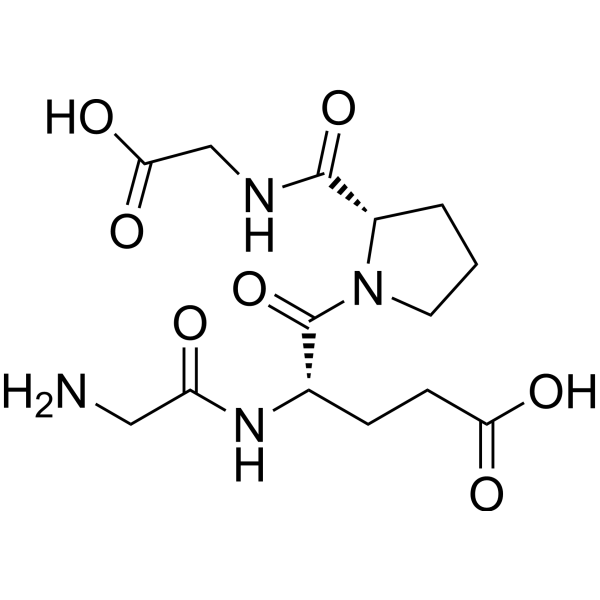
 0 ImagesPST3.1a is an orally active and brain-penetrant N-acetylglucosamine glycosyltransferase (MGAT5) inhibitor with a human IC50 of 2 µM. PST3.1a inhibits TGFβR and FAK signaling pathway activity. PST3.1a alters β1,6-GlcNAc N-glycans and microtubule/microfilament integrity, increases OLIG2 expression, and inhibits proliferation, migration, invasiveness, and clonogenic capacities of glioblastoma initiating cells. PST3.1a reduces invasive and proliferative capacity of glioblastoma initiating cells in orthotopic graft models, increases overall survival of orthotopic graft model mice. PST3.1a blunts MGAT5 overexpression, decreases renal fibrosis via collagen 1, collagen 4, and galectin 3 downregulation in a rat chronic kidney disease model. PST3.1a can be used for the research of glioblastoma multiforme and chronic kidney disease.
-
Oxoglaucine
 0 ImagesOxoglaucine (O-Methylatheroline) is a natural product with multiple activities including autophagy activation, anti-inflammation, antibacterial activity, and immunoregulation. Oxoglaucine inhibits the TRPV5/calmodulin/CAMK-II pathway, suppresses TGFβ-induced Smad2 phosphorylation by upregulating Smad7, blocks Ca2+ influx, activates autophagy, alleviates apoptosis and inflammation, inhibits ROS production and the expression of fibrosis markers in hepatocytes, and regulates immune cell populations and responses. Oxoglaucine protects against infections caused by Candida albicans and Klebsiella pneumoniae, and exerts effects on adjuvant-induced arthritis. Oxoglaucine can be used in studies related to arthritis, liver fibrosis, bacterial infections, and fungal infections.

-
Salviamarinic acid A
 0 ImagesCat. No.: HY-N17650CAS No.: 3038746-92-5Salviamarinic acid A is a water-soluble phenolic acid that can be extracted from Salvia miltiorrhiza with potent anti-pulmonary fibrosis activity. Salviamarinic acid A significantly increases cell viability, cell index, cell motility and E-cadherin expression, and reduces TGF-β1, α-SMA and Collagen I levels. Salviamarinic acid A can be used for pulmonary fibrosis research.
-
Antifibrotic agent 3
 0 ImagesCat. No.: HY-184738CAS No.: 2103516-38-5Antifibrotic agent 3 is an orally active antifibrotic agent. Antifibrotic agent 3 reduces hepatic stellate cell activation by downregulating the expression of Collagen I and α-SMA. Antifibrotic agent 3 inhibits liver fibrosis in bile duct ligation and carbon tetrachloride-induced liver fibrosis models. Antifibrotic agent 3 can be used for the research of liver fibrosis.
-
JNK3-IN-11
 0 ImagesCat. No.: HY-181993JNK3-IN-11 is a selective JNK3 inhibitor with an IC50 of 2.08 nM. JNK3-IN-11 binds to the JNK3 ATP-binding pocket, forming conserved hydrogen bonds with Met149 and a water-mediated hydrogen bond with Lys93. JNK3-IN-11 suppresses TGF-β1-induced c-Jun phosphorylation, reduces profibrotic markers COL1A1 and PAI-1, restores E-cadherin expression, and has protection against podocyte injure. JNK3-IN-11 can be used for the research of chronic kidney disease.
-
GV-001
 0 ImagesCat. No.: HY-182904CAS No.: 3082707-76-1GV-001 is a selective and orally active HDAC6 inhibitor with an IC50 of 1.18 nM against HDAC6. GV-001 selectively enhances α-tubulin acetylation, reduces sIL-6 and Collagen I levels, suppresses renal cyst growth, and upregulates PC1 expression. GV-001 can be used for the study of autosomal dominant polycystic kidney disease (ADPKD).
-
SB772077B
 0 ImagesCat. No.: HY-123958CAS No.: 785774-34-7SB772077B is a ROCK inhibitor. SB772077B has an anti-inflammatory activity and enhances aqueous outflow facility (OF) by inactivating RhoA/ROCK signal pathway. SB772077B significantly reduces the mRNA level of β-catenin and protein level of fibrotic markers, such as vinculin, fibronectin, collagen 1 A and vimentin. SB772077B also has vasodialatory activity and decreases pulmonary and systemic blood pressure. SB772077B can be used for glaucoma research and pulmonary hypertensive disorder research.
-
HIPK2-IN-2
 0 ImagesCat. No.: HY-189141HIPK2-IN-2 is an orally active and selective HIPK2 inhibitor with an IC50 of 0.36 μM against HIPK2. HIPK2-IN-2 reduces HIPK2 protein expression levels. HIPK2-IN-2 inhibits the proliferation and migration of renal interstitial fibroblasts, alleviates renal tubular injury and collagen deposition, and suppresses TGF-β/Smad3-mediated profibrotic signaling pathways as well as TNF-α/NF-κB-mediated inflammatory signaling pathways in renal cells. HIPK2-IN-2 is used for the study of chronic kidney disease-associated renal fibrosis.
-
HIPK2-IN-1
 0 ImagesCat. No.: HY-189140HIPK2-IN-1 is an orally active and selective HIPK2 inhibitor with an IC50 of 0.56 μM. HIPK2-IN-1 exerts antifibrotic and anti-inflammatory activities. HIPK2-IN-1 binds to HIPK2, inhibits the downstream TGF‑β/Smad3, p53, and TNF‑α/NF‑κB signaling pathways, reduces the expression of fibrotic markers, suppresses cell proliferation and migration, and alleviates renal tubular injury and collagen deposition. HIPK2-IN-1 is used for the study of renal fibrosis associated with chronic kidney disease.
-
LM9
 0 ImagesCat. No.: HY-180336CAS No.: 2249864-11-5LM9 is a potent, orally active MyD88 inhibitor. LM9 blocks TLR4/MyD88 binding, MyD88 homodimer formation, and TLR4/MyD88/NF-κB signaling pathway activation. LM9 prevents atherosclerosis by regulating inflammatory responses and oxidative stress in macrophages. LM9 efficiently mitigates inflammatory responses and fibrosis in obesity-induced cardiomyopathy. LM9 can be used for fibrosis and atherosclerosis research.
-
2ccPA sodium
 0 ImagesCat. No.: HY-160823CAS No.: 927880-40-8Synonyms: 2ccPA18:1 sodium2ccPA (2ccPA18:1) sodium is a chemically stable cyclic phosphatidic acid derivative and antifibrotic inhibitor-inducer. 2ccPA sodium increases intracellular cAMP levels in skin fibroblasts, downregulates the expression of extracellular matrix (ECM) components, and promotes the production of antifibrotic factors HGF and PGE2. 2ccPA sodium ameliorates Bleomycin hydrochloride (HY-17565A)-induced skin fibrosis in mice and can be used for research on systemic sclerosis (SSc) and other fibrotic disorders.
-
Antifibrotic agent 1
 0 ImagesCat. No.: HY-176194Antifibrotic agent 1 is an orally active anti-idiopathic pulmonary fibrosis (IPF) agent. Antifibrotic agent 1 effectively attenuates IPF-related processes, including TGF-β induced EMT and FMT processes, as well as pro-fibrotic M2 polarization. Antifibrotic agent 1 selectively inhibits CSF-1R, PDGFR-α and Src family kinases (SFKs), while sparing VEGFRs, FGFRs and Abl to minimize off-target toxicity. Antifibrotic agent 1 has potent anti-fibrotic activity in Bleomycin (BLM) (HY-108345)-induced pulmonary fibrosis mice model.
-
12-O-Tiglyl-phorbol 13-dodecanoate
 0 ImagesCat. No.: HY-N11736CAS No.: 37394-32-412-O-Tiglyl-phorbol 13-dodecanoate (TD13) is a potential inhibitor with anti-hepatic fibrosis activity, and it belongs to a series of derivatives of oral APOL2 inhibitors and anti-hepatic fibrosis agents. It shows no obvious toxicity in preclinical models. Compounds of the 12-O-Tiglyl-phorbol 13-dodecanoate series inhibit the expression of fibronectin, type I collagen and α-smooth muscle actin in hepatic stellate cells. 12-O-Tiglyl-phorbol 13-dodecanoate can be isolated from the Euphorbiaceae plant Euphorbia fischeriana, and it is applicable to the research of hepatic fibrosis.
-
Sapanisertib (Standard)
 0 ImagesSynonyms: INK-128 (Standard); MLN0128 (Standard); TAK-228 (Standard)Sapanisertib (INK-128; MLN0128; TAK-228) Standard is the analytical standard of Sapanisertib (HY-13328). This product is intended for research and analytical applications. Sapanisertib (INK-128; MLN0128; TAK-228) is an orally active dual mTORC1/mTORC2 inhibitor. Sapanisertib directly and simultaneously inhibits mTORC1/2 activity through competitive binding with ATP, thereby comprehensively blocking downstream processes such as protein and lipid synthesis and cytoskeletal reorganization, consequently suppressing tumor cell proliferation and promoting apoptosis. Sapanisertib is applicable to research on melanoma, ovarian cancer, pulmonary fibrosis, and hematological malignancies.
-
Methylophiopogonone A (Standard)
 0 ImagesCat. No.: HY-N2441RCAS No.: 74805-90-6Methylophiopogonone A (Standard) is the analytical standard of Methylophiopogonone A (HY-N2441). This product is intended for research and analytical applications. Methylophiopogonone A is a homoisoflavonoid compound found in the tuberous roots of Ophiopogon japonicus. Methylophiopogonone A inhibits lipopolysaccharide-induced NO production in mouse microglia with an IC50 of 19.2 μM. Methylophiopogonone A blocks the proliferation of LX-2 hepatic stellate cells and downregulates TGF-β1-induced expressions of type I collagen and α-SMA. Methylophiopogonone A blocks RELA/EGFR-mediated hepatic stellate cell activation, inhibits the MAPK12 pathway to reduce extracellular matrix accumulation, and simultaneously suppresses inflammatory signal transduction. Methylophiopogonone A can be used in studies related to chronic hepatitis B-associated hepatic fibrosis and neuroinflammation.
- 1
- 2



