



Fluorescent Dye
Fluorescence is a phenomenon of photoluminescence in luminescence. When an atom is irradiated by light, some electrons around the nucleus jump from their original orbitals to higher energy orbitals under the influence of light energy, i.e., from the ground state to the first or second excited single-line state, etc. Due to the instability of the first or second excited singlet state, the electron returns from the excited singlet state to the ground state accompanied by released energy, resulting in fluorescence.
Fluorescent dyes can be covalently bound or physically adsorbed in the structure of the substance. The fluorescence properties allow for the characterization, localization and quantitative analysis of the labeled object. Fluorescent dyes have shown great potential for the detection of proteins, nucleic acids, cells, and immunoassays, attributed to the advantages in non-radioactive contamination, simple experimental operation and easy observation.
Fluorescent dyes have penetrated many fields such as pharmacology, physiology, environmental science, and information science, as well as functional studies of proteins and drug screening.
All Product Categories
-
Fluorescent Dye Related Products (4914)
Related Products (4914)

-
Antibodies (4)

-
BAY-069
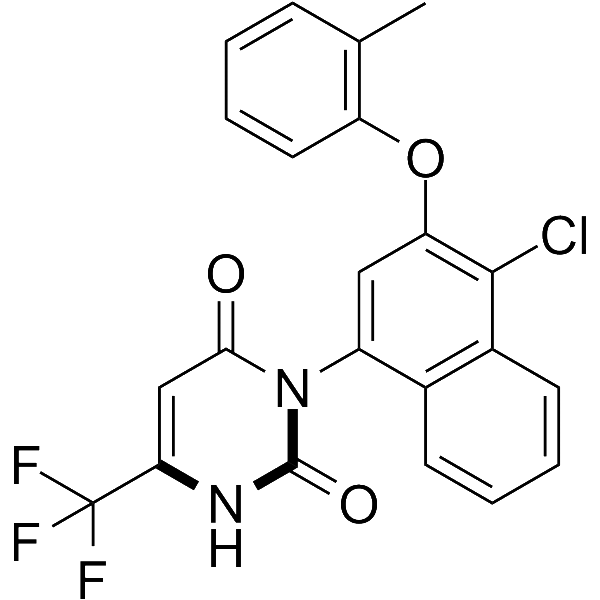 0 ImagesBAY-069 is a potent branched-chain amino acid transaminases 1 (BCAT1) and BCAT2 inhibitor with IC50 values of 31 nM and 153 nM, respectively. BAY-069 also can be used as a chemical probe. BAY-069 can be used tor research anticancer.
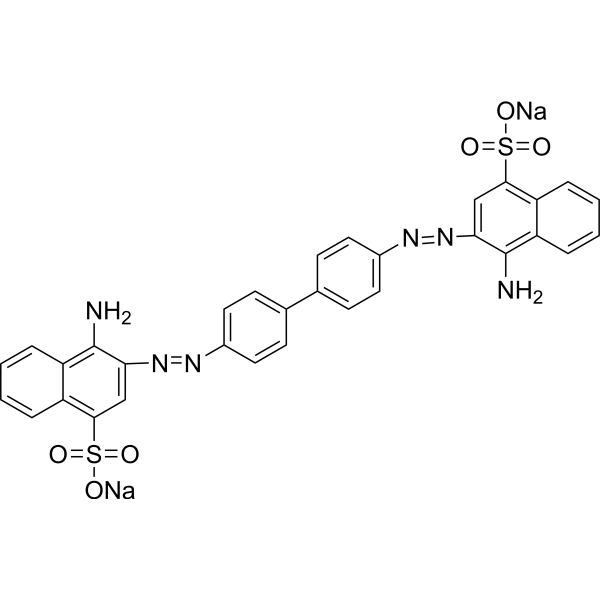
-
R-Phycoerythrin
 0 ImagesCat. No.: HY-D0988CAS No.: 11016-17-4Synonyms: R-PER-Phycoerythrin is found in Heterosiphonia japonica. R-Phycoerythrin is an orange-red fluorescent probe with α, β, and γ subunits. R-Phycoerythrin can be used in photodynamic therapy (PDT) to induce apoptosis in tumor cells. R-Phycoerythrin can be used in fluorescence microscopy, flow cytometry, and immunofluorescence analysis (Ex: 495 nm).
-
HMBR
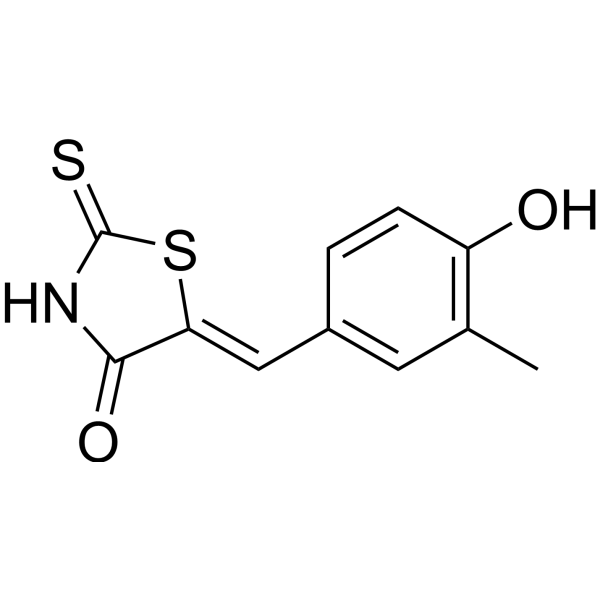 0 ImagesHMBR is an analogue with an additional methyl group on the aromatic ring and is non-fluorescent. HMBR conjugated with Y-FAST emits yellow fluorescence under blue light excitation (Ex= 419 nm; Em= 525–539 nm). HMBR is non-toxic to zebrafish embryos. HMBR has high cell permeability.
-
TRITC-dextran, MW 4000
 0 ImagesCat. No.: HY-158082Synonyms: Tetramethyl rhodamine isothiocyanate glucan, MW 4000TRITC-dextran MW 4000 (Tetramethyl rhodamine isothiocyanate glucan, MW 4000) is a fluorescent dye, with the molecular weight of 4 kD. TRITC-dextran MW 4000 exhibits an excitation wavelength of 555 nm. TRITC-dextran MW 4000 is vessel penetrate, which could label blood plasma to visualize the vasculature. TRITC-dextran MW 4000 is utilized in drug delivery for the stability of TRITC over a wide pH range (i.e. pH 2–11) and resistance to photo-bleaching.
-
Fluorescein di(β-D-galactopyranoside)
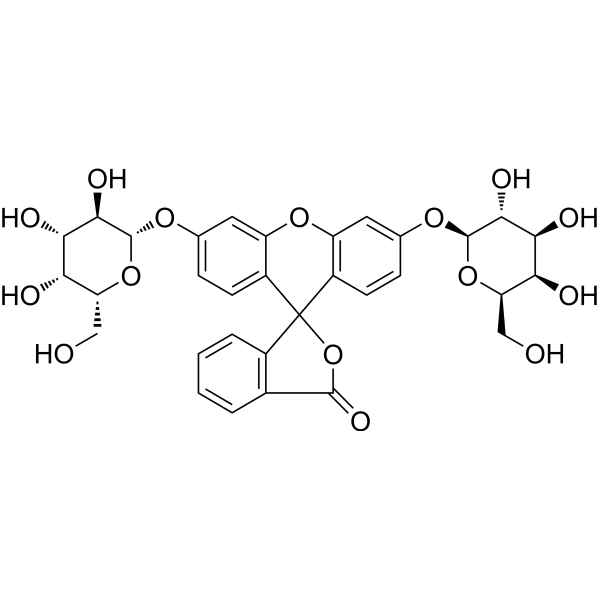 0 ImagesSynonyms: FDGFluorescein di(β-D-galactopyranoside) is a fluorogenic substrate for β-galactosidase (λex=485 nm, λem=535 nm).
-
Z-Arg-Arg-AMC hydrochloride
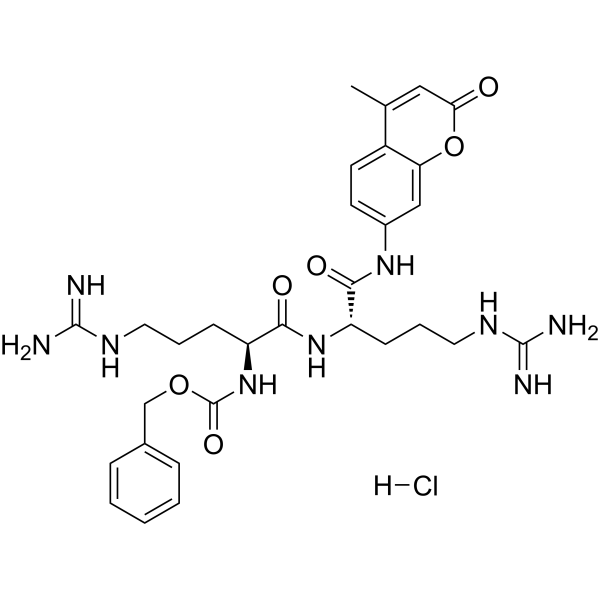 0 ImagesZ-Arg-Arg-AMC hydrochloride is a highly selective fluorescent Cathepsin B substrate. Z-Arg-Arg-AMC hydrochloride can be hydrolyzed by Cathepsin B to produce a fluorescent product for enzyme activity detection.
-
IR-820
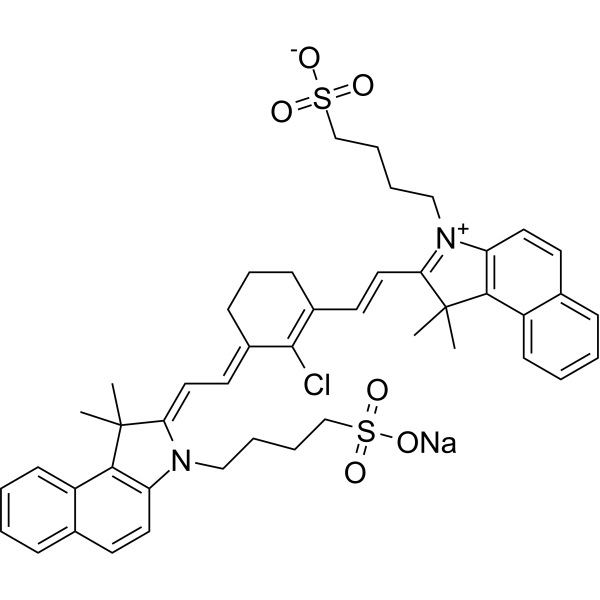 0 ImagesCat. No.: HY-136886CAS No.: 172616-80-7Synonyms: New Indocyanine GreenIR-820 (New Indocyanine Green) is an infrared blood pool contrast agent. IR-820 also is normally used as a laser and near-infrared dye to detect and quantify diseased tissue in live animals.

-
5-TAMRA-SE
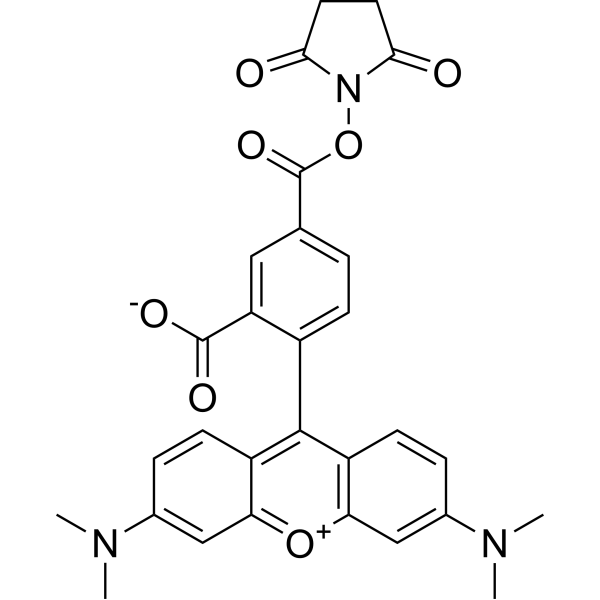 0 ImagesCat. No.: HY-D0048CAS No.: 150810-68-7Synonyms: 5-TAMRA-NHS ester; 5-Carboxytetramethylrhodamine succinimidyl ester5-TAMRA-SE is an amine-reactive fluorescent agent, and its conjugate produces bright, pH-insensitive orange-red fluorescence with good photostability (Ex/Em = 565/580 nm).
-
Di-8-ANEPPS
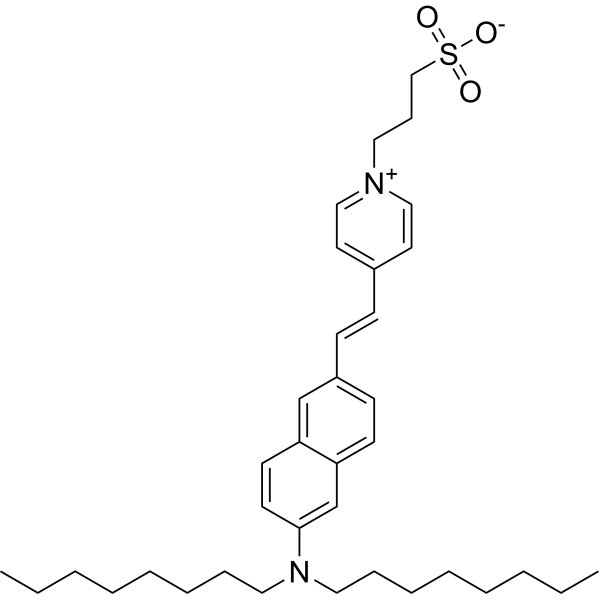 0 ImagesDi-8-ANEPPS is a naphthylstyryl voltage-sensitive dye, shifting both their fluorescence excitation and emission spectra upon changes in Vm .
-
AF488 NHS ester
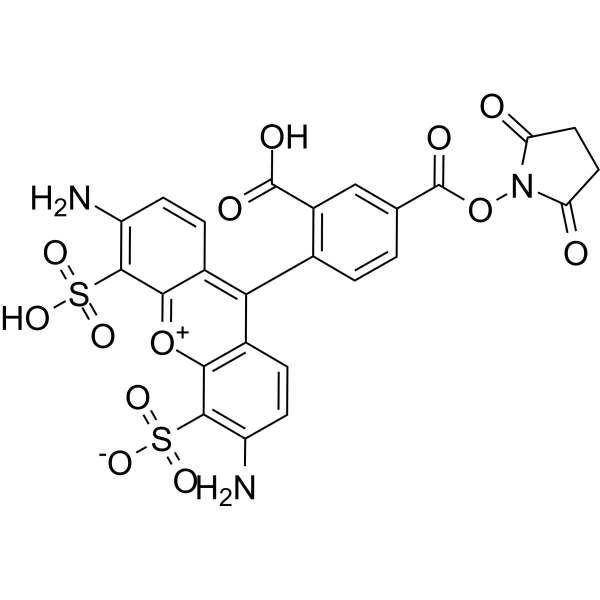 0 ImagesCat. No.: HY-D1730CAS No.: 1374019-99-4AF488 NHS ester is an amine specific fluorescence probe (Em=525 nm). AF488 NHS ester reacts with sulfhydryl groups and amines in aqueous and biological samples then change their chemical structure and fluorescence properties after derivatization.
-
IR-1061
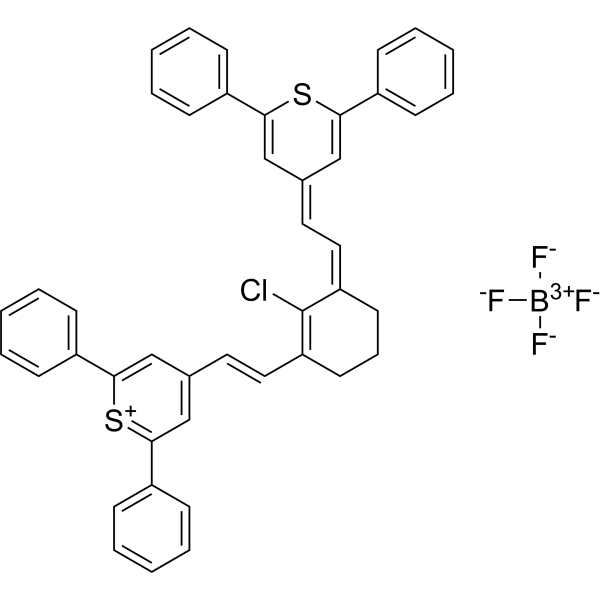 0 ImagesCat. No.: HY-D1449CAS No.: 155614-01-0IR-1061 is a near infrared fluorescent organic dye for in vivo bimodal imaging.
-
Z-Gly-Gly-Arg-AMC
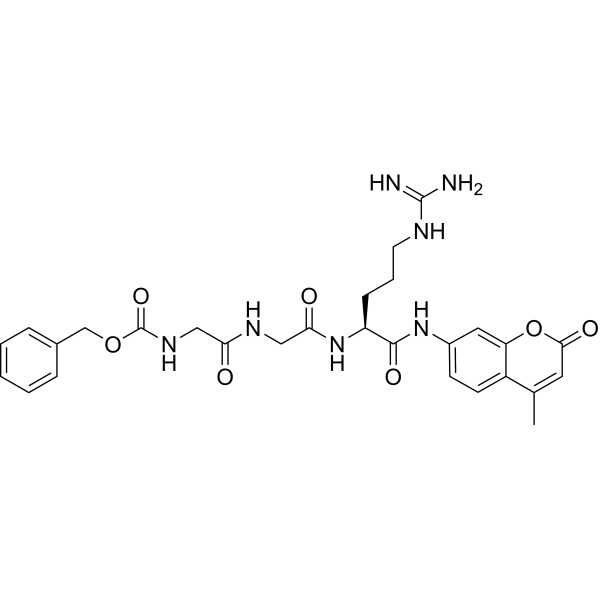 0 ImagesZ-Gly-Gly-Arg-AMC is a thrombin-specific fluorogenic substrate for testing of thrombin generation in PRP and platelet-poor plasma (PPP) (Ex/Em = 390/480 nm).
-
Rhodamine-N3 chloride
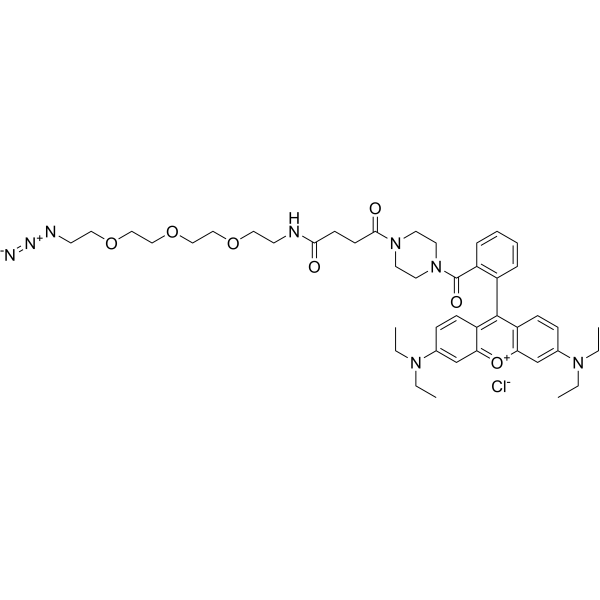 0 ImagesRhodamine-N3 chloride is an azide-rhodamine fluorescent dye that can be used to label biomolecules containing alkyne groups. Rhodamine-N3 chloride is a click chemistry reagent, it contains an Azide group and can undergo copper-catalyzed azide-alkyne cycloaddition reaction (CuAAc) with molecules containing Alkyne groups. It can also undergo strain-promoted alkyne-azide cycloaddition (SPAAC) reactions with molecules containing DBCO or BCN groups (Ex/Em = 544/576 nm).
-
Copper Fluor-4
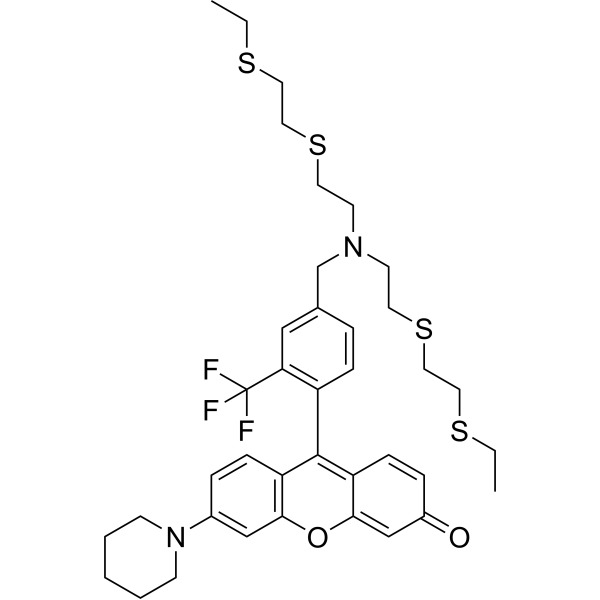 0 ImagesCat. No.: HY-150086CAS No.: 2365532-64-3Synonyms: CF4Copper Fluor-4 (CF4) is a Cu+-specific fluorescent probe based on a rhodol dye scaffold. Copper Fluor-4 has high copper selectivity with a Kd value of 2.9×10⁻¹³ M, particularly over zinc and iron, as well as abundant cellular alkali and alkaline earth metals. Copper Fluor-4 is stable in a physiologically relevant pH regime between 6 and 8 (wavelengths of 415 nm for excitation and 660 nm for emission).
-
Z-Ala-Ala-Asn-AMC
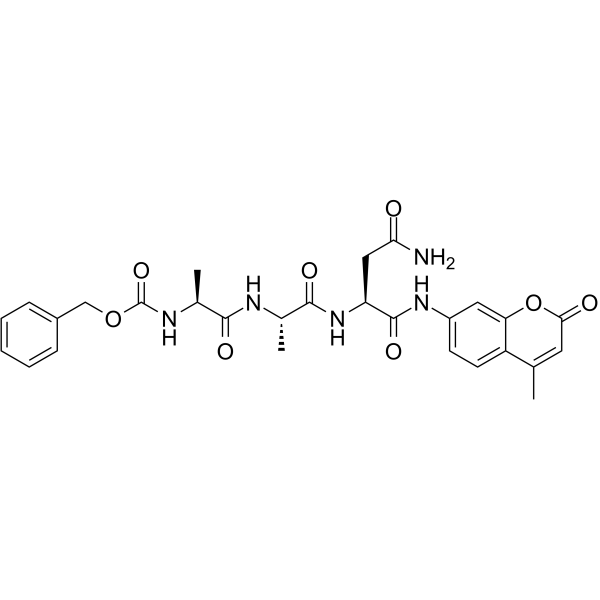 0 ImagesSynonyms: Cbz-Ala-Ala-Asn-AMC
-
CPM
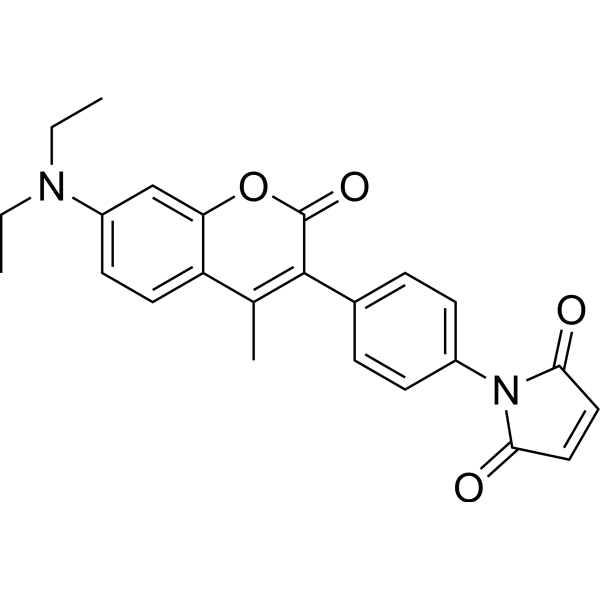 0 ImagesCPM is a maleimide derivative, acting as a blue fluorescent thiol-reactive dye (excitation/emission maxima of 387/463 nm).
-
MitoPerOx
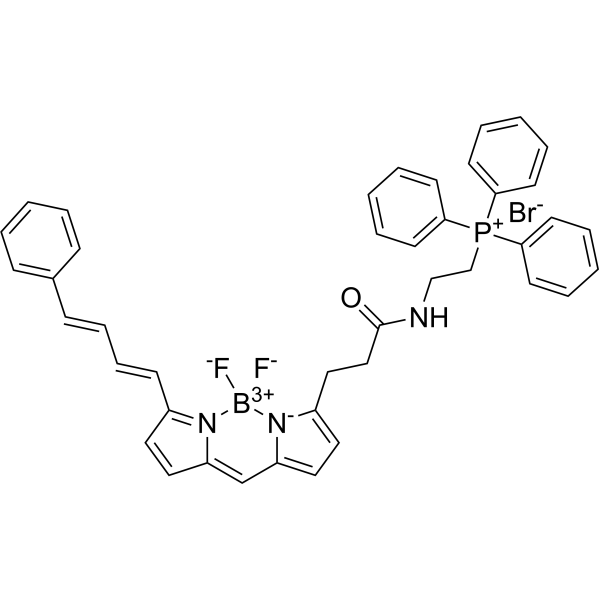 0 ImagesCat. No.: HY-125623CAS No.: 1392820-50-6MitoPerOx is a mitochondrial-targeted, lipid peroxidation-indicating fluorescent probe with BODIPY581/591 fluorophores. The triphenylphosphine cation (TPP+) of MitoPerOx can be selectively enriched in mitochondria (depending on membrane potential) and can be used to detect lipid peroxidation in the inner mitochondrial membrane. Under the action of lipid peroxides, the BODIPY581/591 fluorophores of MitoPerOx shift their emission wavelength from 590 nm (reduced state) to 520 nm (oxidized state), and ratiometric detection can be performed at an excitation wavelength of 488 nm. MitoPerOx can specifically monitor the peroxidation of mitochondrial phospholipids (especially cardiolipin) and is used in the study of oxidative stress-related diseases (such as aging, neurodegenerative diseases, and mitochondrial dysfunction)[1][2].




