



Fluorescent Dye
Fluorescence is a phenomenon of photoluminescence in luminescence. When an atom is irradiated by light, some electrons around the nucleus jump from their original orbitals to higher energy orbitals under the influence of light energy, i.e., from the ground state to the first or second excited single-line state, etc. Due to the instability of the first or second excited singlet state, the electron returns from the excited singlet state to the ground state accompanied by released energy, resulting in fluorescence.
Fluorescent dyes can be covalently bound or physically adsorbed in the structure of the substance. The fluorescence properties allow for the characterization, localization and quantitative analysis of the labeled object. Fluorescent dyes have shown great potential for the detection of proteins, nucleic acids, cells, and immunoassays, attributed to the advantages in non-radioactive contamination, simple experimental operation and easy observation.
Fluorescent dyes have penetrated many fields such as pharmacology, physiology, environmental science, and information science, as well as functional studies of proteins and drug screening.
All Product Categories
-
Fluorescent Dye Related Products (4914)
Related Products (4914)

-
Antibodies (4)
-
ATTO 488 NHS ester
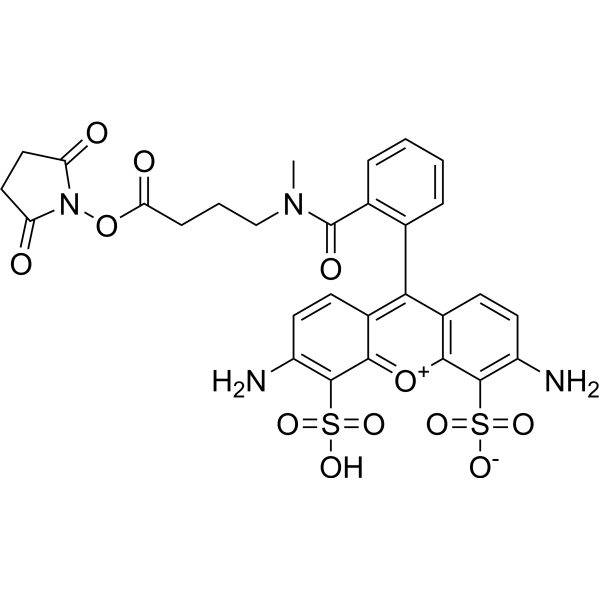 0 ImagesCat. No.: HY-D2001CAS No.: 863772-22-9ATTO 488 NHS ester is a new fluorescent marker based on the Rhodamine structure. It has strong absorption, high fluorescence quantum yield, high thermal stability and photochemical stability, and is suitable for single molecule detection and high-resolution microscopy. ATTO 488 NHS ester is an NHS ester derivative of ATTO 488 that can be used to label proteins or antibodies.
-
DMANI
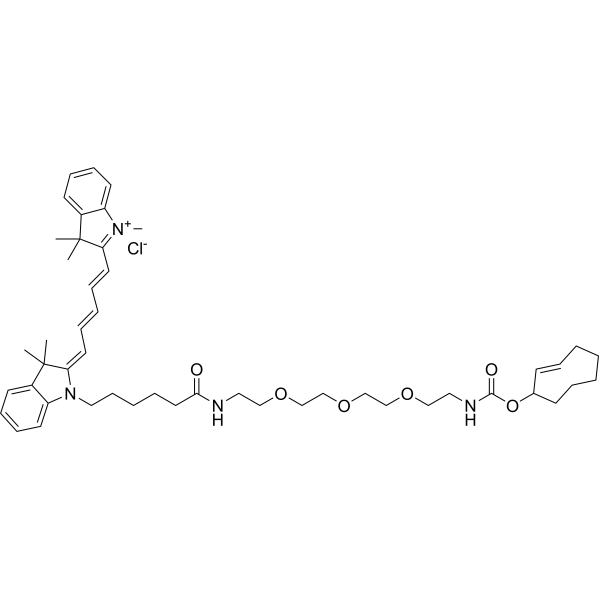
 0 ImagesDMANI is an intramolecular charge transfer (ICT)-based mitochondria-targeted ratiometric fluorescent probe. DMANI can monitor mitochondrial peroxynitrite (ONOO−) in living cells.
-
DiAzKs
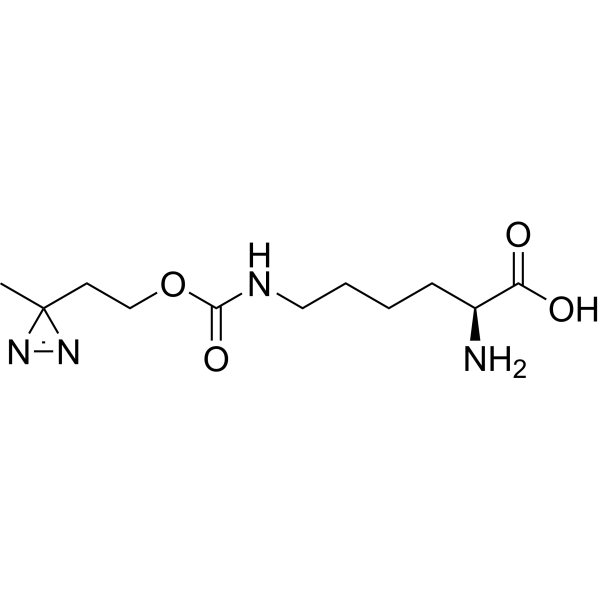 0 ImagesSynonyms: H-L-Photo-lysineDiAzKs (H-L-Photo-lysine) is a diazirine-containing lysine amino acid and is a photo-cross-linker. DiAzKs can site-selective incorporated into proteins and is used to crosslink protein-protein interactions in vitro and in living cells. DiAzKs acts as a UV light-activated photo-crosslinking probe.
-
Bis(4-tert-butylphenyl)amine
 0 ImagesSynonyms: DBDPABis (4-tert-butylphenyl) amine (DBDPA) is a C4 alkyl-substituted diphenylamine-based amino antioxidant. Bis (4-tert-butylphenyl) amine serves as a polymer additive in car seats. Bis (4-tert-butylphenyl) amine acts as a synthetic precursor for donor-acceptor-donor (D-A-D) type π-conjugated fluorophores.
-
2,4,6-Trimethylphenol
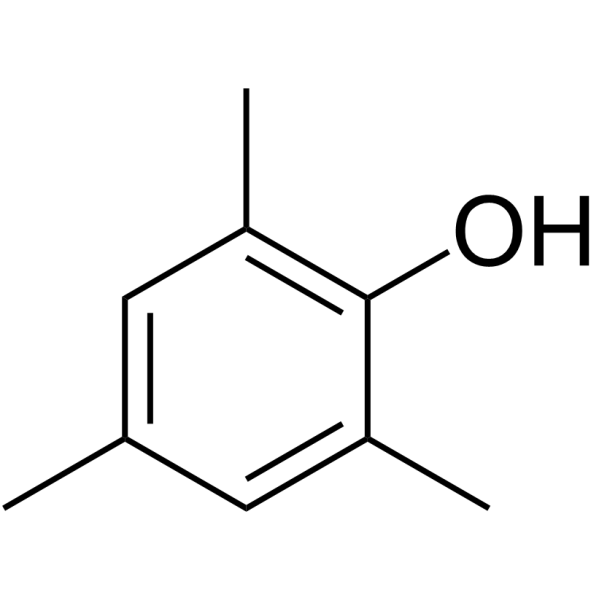 0 Images2,4,6-Trimethylphenol is a probe compound shown to react mainly with organic matter (3DOM*). 2,4,6-Trimethylphenol is rapidly oxidized by singlet oxygen in aqueous solution.
-
Coumarin 343
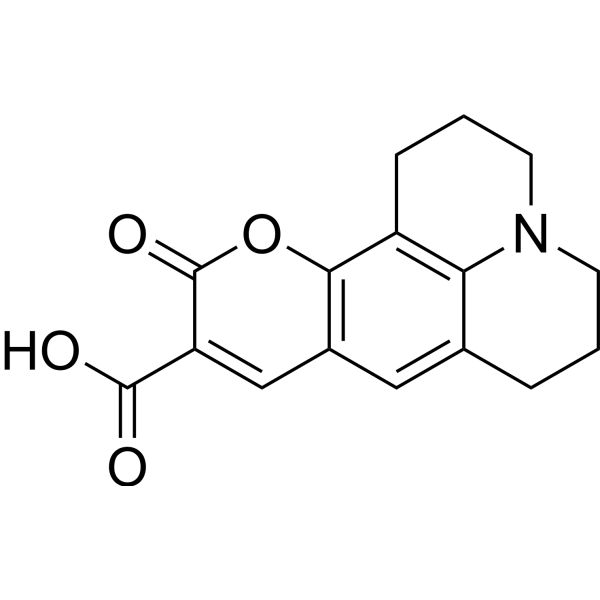 0 ImagesCat. No.: HY-W267364CAS No.: 55804-65-4Synonyms: C343Coumarin 343 (C343) is a hydrophilic fluorescent probe for the micro water pool. λem is approximately 425 nm andλem is approximately from 425 nm to 550 nm by RF-1500.
-
Hoechst 33342 analog
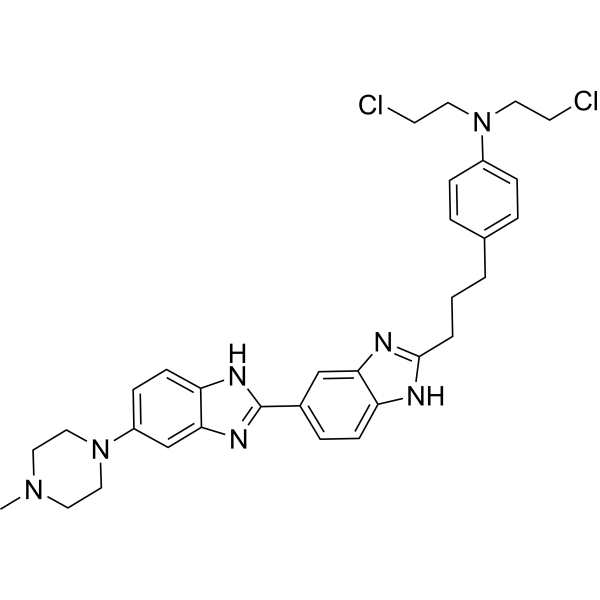 0 ImagesCat. No.: HY-15627CAS No.: 178481-68-0Hoechst 33342 analog is a marker dye in Hoechst series. Hoechst is A live nuclear marker dye. Hoechst binds to the grooves in the DNA double strand, which tends to be A/ T-rich DNA strand. Although it binds to all nucleic acids, the A/ T-rich double strand DNA significantly enhances fluorescence intensity Therefore,Hoechst dye can be used for living cell labeling. The fluorescence intensity of Hoechst dye increases with the increase of pH of solution.
-
Triphenylamine
 0 ImagesSynonyms: N,N-DiphenylbenzenamineTriphenylamine (N,N-Diphenylbenzenamine) is a highly fluorescent compound. Triphenylamine can induce apoptosis. Triphenylamine can be used as a fluorescent dye and is also used in photodynamic therapy research.
-
Calcein (tetraethyl ester)
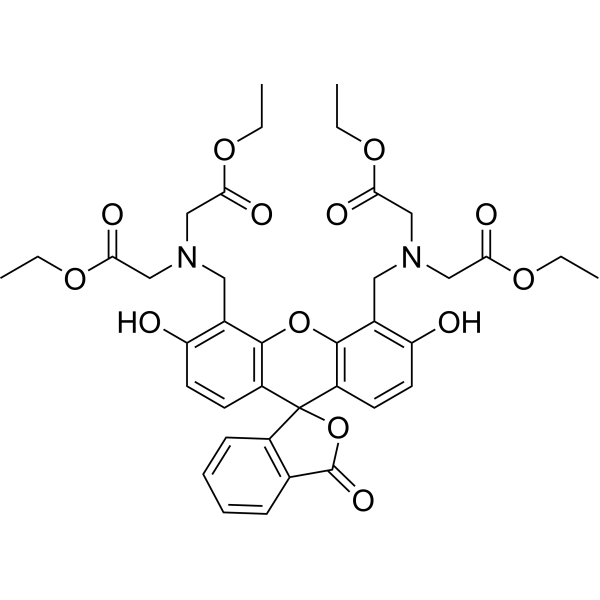 0 ImagesSynonyms: Fluorexon tetraethyl esterCalcein tetraethyl ester is a tetraethylated derivative of calcein, with its core function serving as a live cell-specific fluorescent tracer. Calcein tetraethyl ester can diffuse between human periodontal ligament cells via gap junctions, thus enabling the evaluation of gap junction intercellular communication function, and its diffusion is enhanced under hydrogen peroxide induction. Calcein tetraethyl ester can be applied in the fields of cell biology and fluorescent labeling.

-
Pyrromethene 597
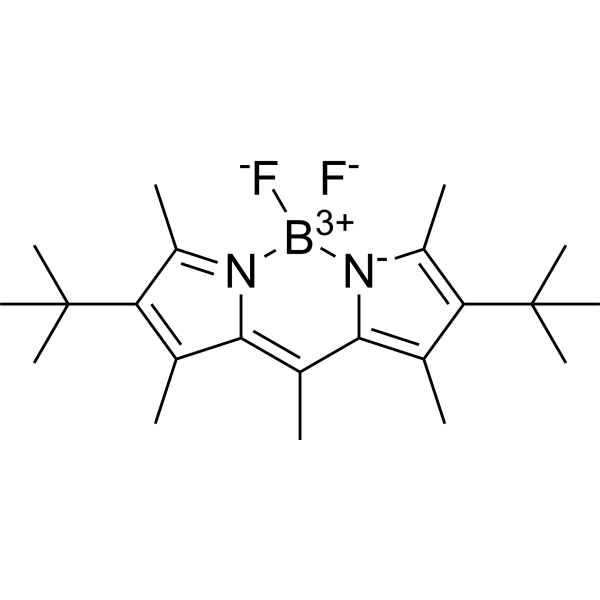 0 ImagesPyrromethene 597 is a temperature-sensitive BODIPY-class laser fluorescent dye whose fluorescence anisotropy decreases with increasing temperature, Ex/Em =527/557 nm. Pyrromethene 597 can serve as a temperature probe in solution and as a whispering gallery mode (WGM) microlaser gain medium. Pyrromethene 597 can be doped into photoresists for in situ fabrication of microlaser devices within living cells. Pyrromethene 597 can be used in fluorescence imaging and microlaser-related research.
-
Fluorescein-maleimide
 0 ImagesCat. No.: HY-W998680CAS No.: 2228857-33-6Synonyms: 5-FITC-MaleimideFluorescein-maleimide (5-FITC-Maleimide) is a thiol-reactive fluorescent derivatization reagent and non-specific protein labeling reagent. Fluorescein-maleimide covalently binds to protein thiol groups for protein labeling. Fluorescein-maleimide covalently binds to protein amino and imidazole groups under neutral pH conditions. Fluorescein-maleimide is used for fluorescent labeling of proteins, nucleic acids or other molecules containing one or more thiol groups (Ex/Em = 494/519 nm).
-
MitoTracker Deep Red FM (solution)
 0 ImagesCat. No.: HY-DY1105CAS No.: 873315-86-7Synonyms: MTDR FM (solution)MitoTracker Deep Red FM (solution) (MTDR FM (solution)) selectively accumulates in the mitochondrial matrix. MitoTracker Deep Red FM covalently binds mitochondrial proteins by reacting with free mercaptan of cysteine residues, allowing staining of mitochondrial membrane potential independent of membrane potential. The Ex/Em of MitoTracker Deep Red (MTDR) FM is 644/665 nm.
Solvent and concentration: DMSO: 1 mM
-
Propidium monoazide
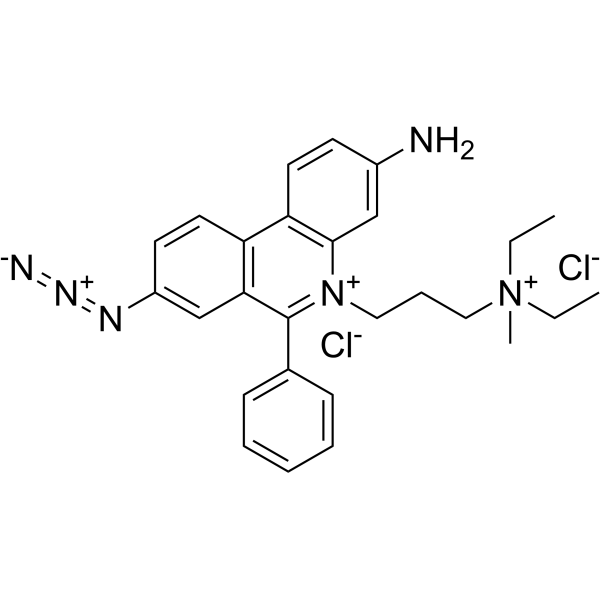 0 ImagesCat. No.: HY-D1444CAS No.: 91416-20-5Propidium monoazide is a cell-impermeant photoreactive DNA-binding dye that preferentially binds to dsDNA. Propidium monoazide (PMA) prevents DNA from dead bacteria from being amplified during the PCR. PMA-PCR enhanced both the specificity and the sensitivity of PCR. Propidium monoazide is a click chemistry reagent, it contains an Azide group and can undergo copper-catalyzed azide-alkyne cycloaddition reaction (CuAAc) with molecules containing Alkyne groups. It can also undergo strain-promoted alkyne-azide cycloaddition (SPAAC) reactions with molecules containing DBCO or BCN groups.
-
Cypate hydrochloride
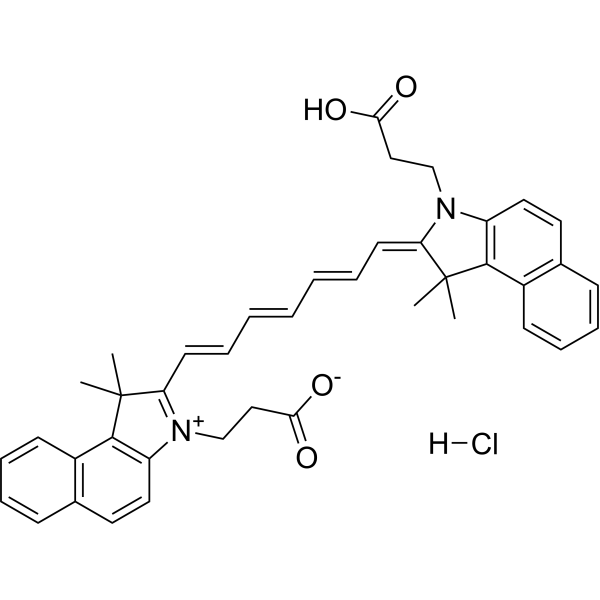 0 ImagesCat. No.: HY-D1719APurity: 98.60%Cypate is a near-infrared fluorescent dye that belongs to the family of photosensitizers. Cypate has high photostability and optical properties, and is often used in near-infrared optical imaging, as well as optical imaging, tumor marking, and drug delivery. In addition, Cypate is also used as a molecular probe and combined with targeting molecules (such as CBT or small interfering RNA) to achieve efficient detection and imaging of specific cells or tissues.
-
CH1055
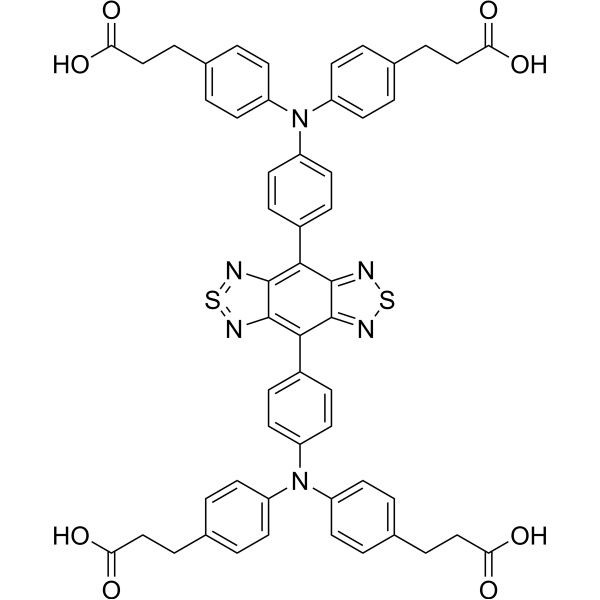 0 ImagesCat. No.: HY-D1464CAS No.: 1622250-38-7CH1055 is a near-infrared II (NIR-II) fluorescent dye that can be used as a fluorescent probe for in vivo imaging. CH1055 can be conjugated with antibodies or ligands for specific imaging (for example the tumor imaging).
-
4-Hydrazino-7-nitro-benzofurazan hydrazine adduct
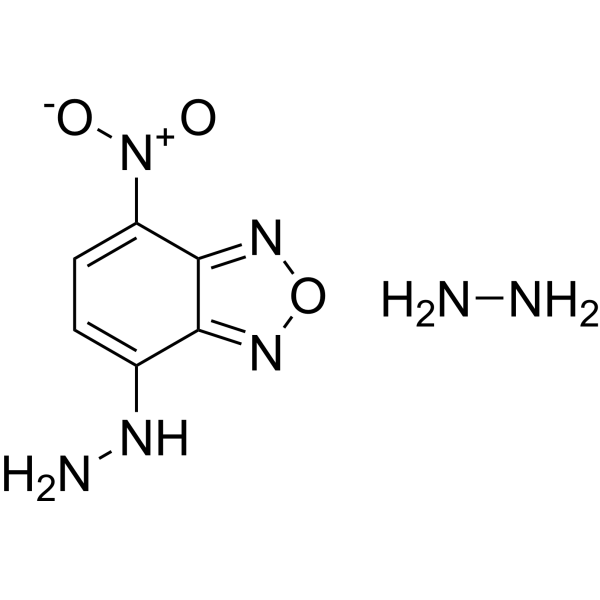 0 ImagesSynonyms: NBD-H4-Hydrazino-7-nitro-benzofurazan hydrazine adduct (NBD-H) is a fluorescent reagent used for protein labeling.
-
Lens Culinaris Agglutinin (Biotinylated)
 0 ImagesCat. No.: HY-NP0180Synonyms: LCA (Biotinylated)Lens Culinaris Agglutinin (LCA) Biotinylated is a plant lectin that can be used as a probe to specifically bind biomolecules (such as polysaccharides, peptides, etc.).Lens Culinaris Agglutinin (LCA) Biotinylated is a biological material or organic compound that can be used in life science research.




