



iGluR
Ionotropic glutamate receptors
iGluR (ionotropic glutamate receptor) is a ligand-gated ion channel that is activated by the neurotransmitter glutamate. iGluR are integral membrane proteins compose of four large subunits that form a central ion channel pore. Sequence similarity among all known glutamate receptor subunits, including the AMPA, kainate, NMDA, and δ receptors.
AMPA receptors are the main charge carriers during basal transmission, permitting influx of sodium ions to depolarise the postsynaptic membrane. NMDA receptors are blocked by magnesium ions and therefore only permit ion flux following prior depolarisation. This enables them to act as coincidence detectors for synaptic plasticity. Calcium influx through NMDA receptors leads to persistent modifications in the strength of synaptic transmission.
iGluR Isoform Specific Products
All Product Categories
-
iGluR Inhibitors
(130)
View all products
-
iGluR Agonists
(131)
View all products
-
iGluR Antagonists
(347)
View all products
-
iGluR Activators
(35)
View all products
-
iGluR Modulators
(93)
View all products
-
iGluR MDM2 Inhibitor
(1)
View all products
-
iGluR Controls
(5)
View all products
-
iGluR Ligands
(3)
View all products
-
iGluR Related Products (828)
Related Products (828)

-
Antibodies (11)
-
iGluR Isoform Comparison
-
Nylidrin hydrochloride (Standard)
 0 ImagesNylidrin (hydrochloride) (Standard) is the analytical standard of Nylidrin hydrochloride (HY-B1404). This product is intended for research and analytical applications. Nylidrin hydrochloride (Buphenine hydrochloride) is an orally active β-adrenergic agonist. Nylidrin hydrochloride antagonizes NR1A/2B NMDA receptors (IC50 = 0.18 μM in Xenopus oocytes). Nylidrin hydrochloride reduces the levels of NP, HA, and M1. Nylidrin hydrochloride has antiviral activity against multiple H1N1 subtype influenza A viruses. Nylidrin hydrochloride improves hemorrhagic shock and anti-allergic effects.
-
Pep2-SVKE
 0 ImagesCat. No.: HY-P1055CAS No.: 1315378-76-7Pep2-SVKE is an inactive control peptide for pep2-SVKI (HY-P1056). Pep2-SVKE is an inhibitory peptide corresponding to the last 10 amino acids of the C-terminus of the GluR2 AMPA receptor subunit. Pep2-SVKE does not block AMPA-mediated [3H]DA exocytosis. Pep2-SVKE does not bind to GRIP or PICK43 and does not block retention of PICK1 by GST-GluR2 and LTD[1][2][3][4][5].
-
Flupirtine (Standard)
 0 ImagesCat. No.: HY-17001ARCAS No.: 56995-20-1Synonyms: D 9998 (Standard)Flupirtine (Standard) (D 9998 (Standard)) is the analytical standard of Flupirtine (HY-17001A). This product is intended for research and analytical applications. Flupirtine is an orally active, blood-brain barrier-crossing non-opioid analgesic and neuroprotective agent. Flupirtine is a neuronal potassium channel opener (Kv7 activator), a NMDA receptor antagonist and a GABA receptor activator. Flupirtine stabilizes blood-brain-barrier integrity, reduces oxidative stress and brain leukocyte infiltration, enhances angioneurogenesis, suppresses calcium influx, stabilizes neuronal resting membrane potential, and counteracts focal cerebral ischemia. Flupirtine exhibits analgesic, muscle relaxant properties, protects neurons from excitotoxic, ischemic, or cytokine-mediated death. Flupirtine functions as a non-opioid analgesic without antipyretic or antiphlogistic properties, shows no relevant affinity to opiate receptor. Flupirtine can be used for the research of focal cerebral ischemia, pain, Alzheimer’s disease, or multiple sclerosis.
-
Dual Nav/NMDAR-IN-1
 0 ImagesCat. No.: HY-184718Dual Nav/NMDAR-IN-1 (compound 11a) is a dual-target modulator of Nav and NMDAR. Dual Nav/NMDAR-IN-1 increases the thermal stability of Nav and NMDAR and slows their proteolytic degradation, indicating that it binds to both Nav and NMDAR simultaneously. Dual Nav/NMDAR-IN-1 exhibits anticonvulsant activity in a pentylenetetrazole-induced mouse model of seizures and can be used in epilepsy-related research.
-
Withanone (Standard)
 0 ImagesCat. No.: HY-129692RCAS No.: 27570-38-3Withanone (Standard) is the analytical standard of Withanone (HY-129692). This product is intended for research and analytical applications. Withanone is an active ingredient from the roots of Withania somnifera and a GRP75 inhibitor. Withanone has multifunctional neuroprotective effects in alleviating cognitive dysfunction. In neuron-like cells, Withanone can inhibit NMDA-induced excitotoxicity. Withanone can inhibit white adipose tissue browning by blocking the formation of the GRP75-ANT2-UCP1 complex, thereby alleviating cancer-related cachexia. Withanone can be used in the research of tumors and nervous system diseases.
-
L-Phenylalanine-d
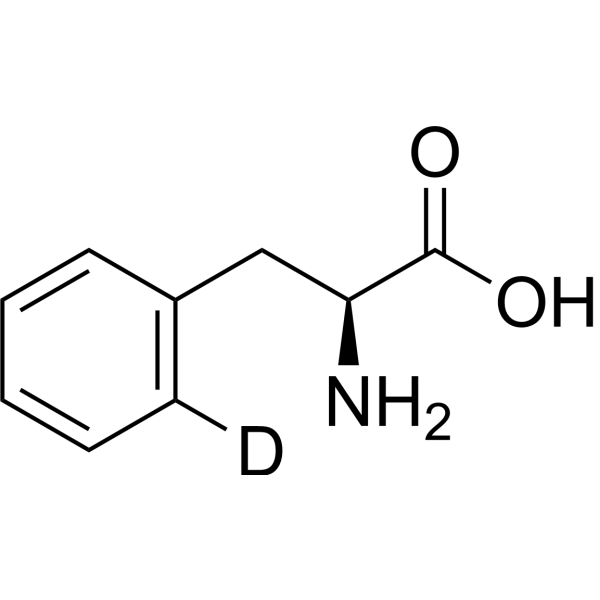 0 ImagesCat. No.: HY-N0215S13CAS No.: 54793-54-3Synonyms: (S)-2-Amino-3-phenylpropionic acid-d1L-Phenylalanine-d is the deuterium labeled L-Phenylalanine. L-Phenylalanine ((S)-2-Amino-3-phenylpropionic acid) is an essential amino acid isolated from Escherichia coli. L-Phenylalanine is a α2δ subunit of voltage-dependent Ca+ channels antagonist with a Ki of 980 nM. L-phenylalanine is a competitive antagonist for the glycine- and glutamate-binding sites of N-methyl-D-aspartate receptors (NMDARs) (KB of 573 μM ) and non-NMDARs, respectively. L-Phenylalanine is widely used in the production of food flavors and pharmaceuticals.
-
HSD17B13-IN-7
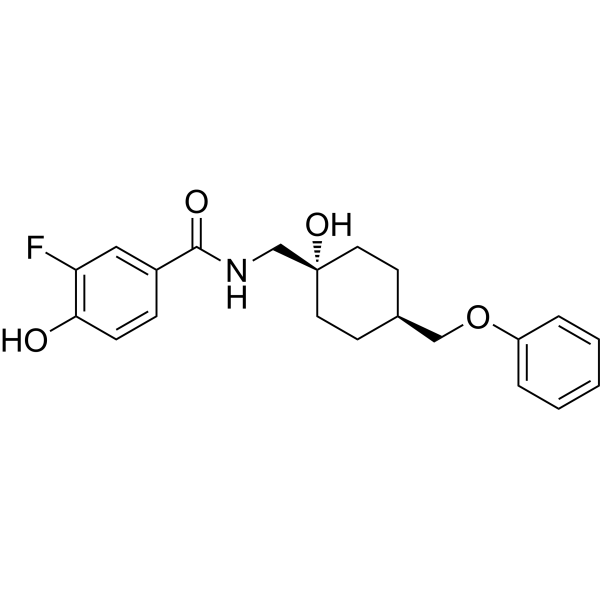 0 ImagesCat. No.: HY-161211CAS No.: 863564-16-3HSD17B13-IN-7 (compound 1), a fluorophenol-containing compound, is a potent HSD17B13 inhibitor with IC50s of 0.18 μM and 0.25 μM β-estradiol and Leukotriene B4 as substrates, respectively. HSD17B13-IN-7 is a potent N-methyl-D-aspartate (NMDA) NR2B receptor antagonist. HSD17B13-IN-7 has the potential for non-alcoholic fatty liver disease research.
-
UBP646
 0 ImagesCat. No.: HY-120523CAS No.: 1333213-35-6UBP646 is a potent GluN1/GluN2D receptors potentiator, and also potentiates the other three subtypes, GluN1/GluN2A, GluN1/GluN2B, and GluN1/GluN2C receptors.
-
L-687414
 0 ImagesCat. No.: HY-15436CAS No.: 130931-65-6L-687414 is an orally active glycine-site NMDA receptor antagonist or low-potency partial agonist. L-687414 has anticonvulsant activity.
-
TAK-137
 0 ImagesCat. No.: HY-204388CAS No.: 1358749-55-9TAK-137 is an AMPA receptor potentiator with weak agonistic effect. TAK-137 binds to the AMPA receptor ligand binding domain in a glutamate-dependent manner. TAK-137 potentiates AMPA-induced currents and Ca2+ influx. TAK-137 can be used for the research of neurological disease.
-
5-Chloro-1,4-dihydro-2,3-quinoxalinedione
 0 ImagesCat. No.: HY-17668CAS No.: 127731-60-65-Chloro-1,4-dihydro-2,3-quinoxalinedione (Compound 72) is a weak NMDA inhibitor with an IC50 of 56.3 μM. 5-Chloro-1,4-dihydro-2,3-quinoxalinedione can be used for the research of neurological disease.
-
LY 215490
 0 ImagesCat. No.: HY-106039CAS No.: 150010-68-7LY 215490 is a selective, competitive AMPA receptor antagonist against AMPA, CGSl9755 and kainate with IC50 values of 4.8, 26.4 and 247 μM, respectively. LY 215490 shows neuroprotective effects in focal ischaemia.
-
LSP-GR3 sodium
 0 ImagesCat. No.: HY-148828ALSP-GR3 sodium is a novel chemically-modified RNA oligonucleotides, called splice modulating oligomers (SMOs), which potently and specifically modulate GluR alternative splicing to GluR3-flip expression throughout the CNS.
-
PF-4778574
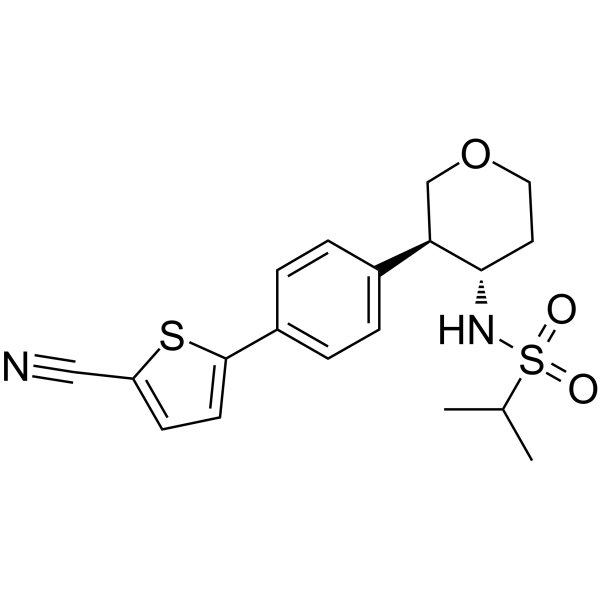 0 ImagesCat. No.: HY-14451CAS No.: 1219633-99-4PF-4778574 is a positive allosteric modulation of AMPA receptor with EC50 of 45 to 919 nM in differenct cells.
-
CP-283097
 0 ImagesCat. No.: HY-116142CAS No.: 138047-56-0CP-283097 is an orally active and conformationally restricted and NR2B subtype-selective NMDA antagonist. CP-283097 efficiently competitively inhibits the binding of [³H]CP-101,606 to the rat meninges, with an IC50 value of 18 nM. CP-283097 exhibits nearly complete inhibition of the current mediated by the NR2B receptor (IC50 = 206 nM), while the inhibitory effect on the NR2A or NR2C receptors is very weak. CP-283097 demonstrates excellent central nervous system permeability and in vivo efficacy in animal models. CP-283097 can be used for neurological diseases related to excessive activation of NMDA receptors.
-
CP-465022 maleate
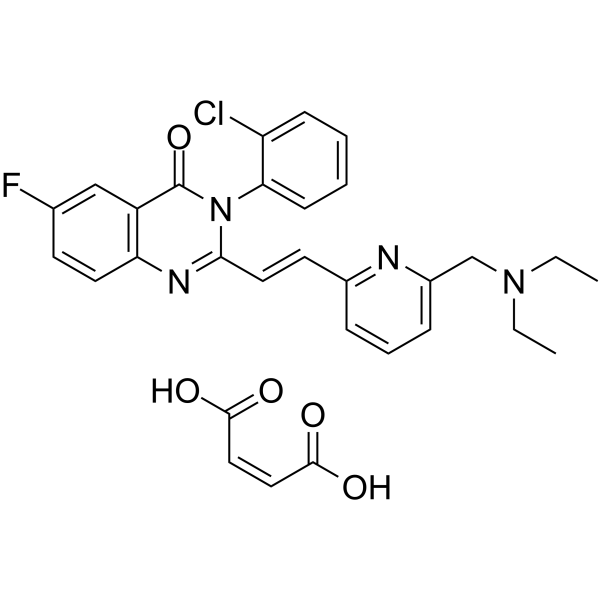 0 ImagesCat. No.: HY-18663ACAS No.: 199656-46-7CP-465022 Maleate is a potent, and selective noncompetitive AMPA receptor antagonist with anticonvulsant activity. CP-465022 is against Kainate-induced response with an IC50 of 25 nM in rat cortical neurons. CP-465022 provides a new tool to investigate the role of AMPA receptors in physiological and pathophysiological processes.
-
LY382884
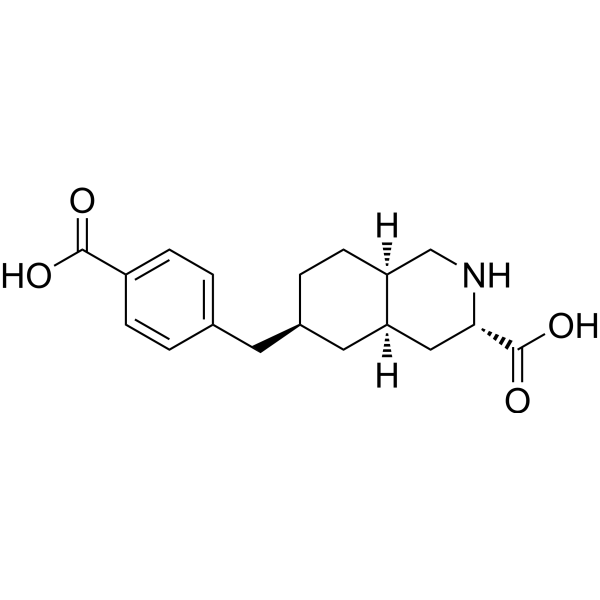 0 ImagesCat. No.: HY-120386CAS No.: 211566-75-5LY382884 is a selective antagonist for GluR5 kainate receptor. LY382884 prevents the induction of NMDA receptor independent long-term potentiation (LTP).
-
TAT-CBD3
 0 ImagesCat. No.: HY-P10357CAS No.: 1355359-36-2TAT-CBD3, a 15-amino acid peptide from CRMP2, fused to the TAT cell-penetrating motif of the HIV-1 protein, disrupts CRMP2-NMDAR interaction without change in NMDAR localization.
-
AChE/Aβ-IN-1
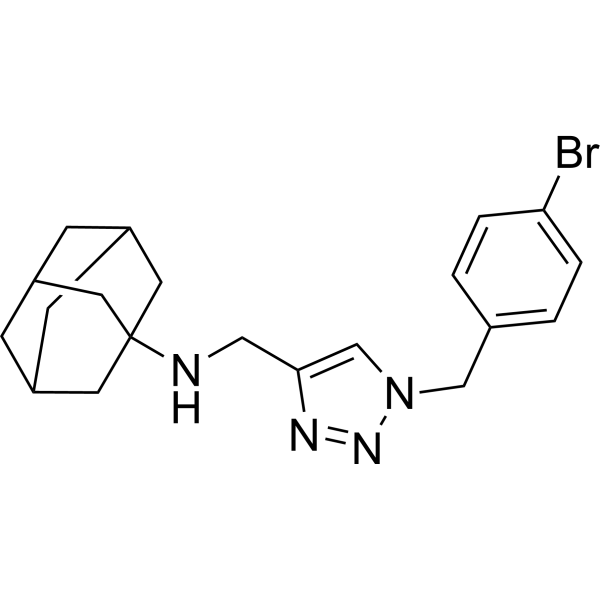 0 ImagesCat. No.: HY-155733AChE/Aβ-IN-1 (compound 32) is a potent and orally active inhibitor of acetylcholinesterase (AChE) with an IC50 of 86 nM, as well as an antagonist of NMDA receptor (GluN1-1b/GluN2B subunit combination) with IC50 of 3.876 μM. AChE/Aβ-IN-1 also inhibits Aβ aggregation and shows good blood-brain barrier permeability and neuroprotection. AChE/Aβ-IN-1 improves cognitive and spatial memory impairment in rats model.
-
Nooglutil
 0 ImagesCat. No.: HY-114576CAS No.: 112193-35-8Synonyms: Nooglutyl; ONK-10Nooglutil (Nooglutyl; ONK-10) is a positive modulator of AMPA-type glutamate receptors (AMPARs). Nooglutil also regulates dopamine D2 receptor function to exert anxiolytic effects. Nooglutil is promising for research of neurodegenerative disorders (e.g., Alzheimer’s disease).




