



nAChR
Nicotinic acetylcholine receptors
nAChRs (nicotinic acetylcholine receptors) are neuron receptor proteins that signal for muscular contraction upon a chemical stimulus. They are cholinergic receptors that form ligand-gated ion channels in the plasma membranes of certain neurons and on the presynaptic and postsynaptic sides of theneuromuscular junction. Nicotinic acetylcholine receptors are the best-studied of the ionotropic receptors. Like the other type of acetylcholine receptor-the muscarinic acetylcholine receptor (mAChR)-the nAChR is triggered by the binding of the neurotransmitter acetylcholine (ACh). Just as muscarinic receptors are named such because they are also activated by muscarine, nicotinic receptors can be opened not only by acetylcholine but also by nicotine —hence the name "nicotinic".
All Product Categories
-
nAChR Related Products (475)
Related Products (475)

-
Antibodies (5)
-
Nitenpyram (Standard)
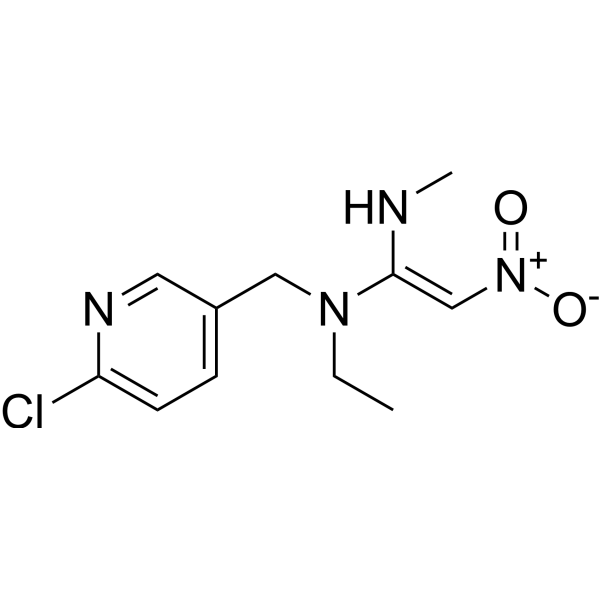 0 ImagesNitenpyram (Standard) is the analytical standard of Nitenpyram. This product is intended for research and analytical applications. Nitenpyram is a calss of neonicotinoid and an insect nicotinic acetylcholine receptor (nAChR) agonist with an IC50 of 14 nM. Nitenpyram is an oral fast-acting insecticide used to suppress sucking insects on companion animals.
-
nAChR-IN-1 hydrochloride
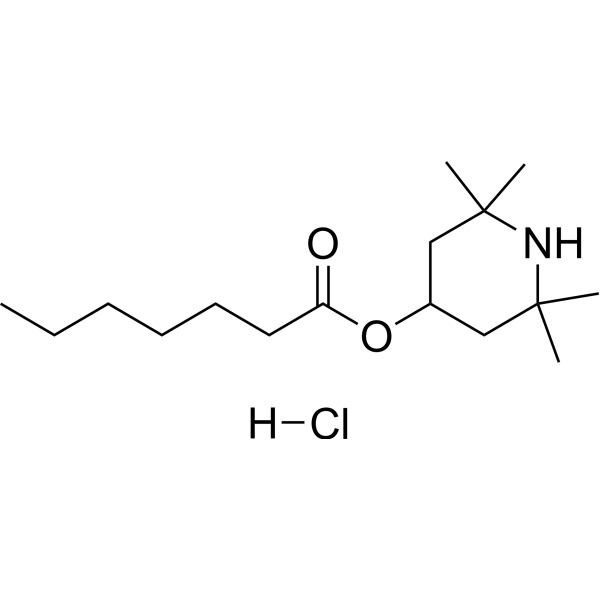 0 ImagesCat. No.: HY-107669CAS No.: 849461-91-2nAChR-IN-1 (hydrochloride) is a tetramethylpiperidine heptanoate, a selective nicotinic acetylcholine receptor (nAChR) inhibitor that inhibits nAChRs lacking α5, α6, or β3 subunits. nAChR-IN-1 has the effect of preventing nerve disorder, can be used for nicotinic acetylcholine receptor dysfunction or neurological disorders research.
-
Rivanicline fumarate
 0 ImagesCat. No.: HY-13225DCAS No.: 183288-99-5Synonyms: RJR-2403 fumarate; (E)-Metanicotine fumarateRivanicline (RJR-2403) fumarate is a neuronal nicotinic receptor agonist. Rivanicline fumarate is highly selective for the rat brain cortex nAChRs (Ki = 26 nM, EC50 of 732 nM) and α4β2 subtype (Ki = 26 nM, EC50 = 16 μM). Rivanicline fumarate can significantly restore the learning impairment and cognitive dysfunction. Rivanicline fumarate can be used for the study of neurodegenerative diseases (such as schizophrenia or Alzheimer's disease).
-
Neramexane mesylate
 0 ImagesCat. No.: HY-138973ACAS No.: 457068-92-7Neramexane mesylate is an α9α10 cholinergic nicotinic receptors and N-methyl-D-aspartate receptors(NMDA) antagonist. Neramexane mesylate can improve moderate to severe tinnitus, and also shows neuroprotective effects.
-
(rel)-Asperparaline A
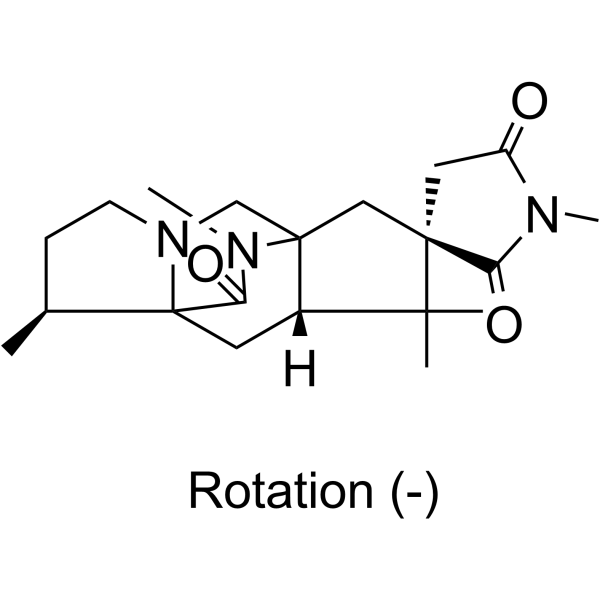 0 ImagesCat. No.: HY-124874CAS No.: 195966-93-9Synonyms: (rel)-Aspergillimide; (rel)-VM55598(rel)-Asperparaline A ((rel)-Aspergillimide), an anthelmintic metabolite, is isolated from okara that has been fermented with Aspergillus japonicas JV-23. (rel)-Asperparaline A is also a potent and selective antagonist of nAChR. (rel)-Asperparaline A exhibits paralytic activity in silk worms.
-
Insecticidal agent 12
 0 ImagesCat. No.: HY-162497CAS No.: 3037381-67-9Insecticidal agent 12 (Compound F45) has insecticidal activity (LC50: 2.94 μg/mL). Insecticidal agent 12 is an nAChR inhibitor.
-
Arecoline hydrobromide (Standard)
 0 ImagesSynonyms: methyl 1,2,5,6-tetrahydro-1-methyl-3-pyridinecarboxylate hydrobromide (Standard)Arecoline hydrobromide (Standard) is the analytical standard of Arecoline hydrobromide. This product is intended for research and analytical applications. Arecoline hydrobromide, a naturally brain-penetrant and orally active occurring psychoactive alkaloid, is a partial agonist of nicotinic and muscarinic acetylcholine receptor. Arecoline hydrobromide exhibits stimulation, alertness, anxiolysis and anti-parasitic effects. Arecoline hydrobromide also can induce oxidative stress.
-
Nanofin-d2 hydrochloride
 0 ImagesCat. No.: HY-B1191SASynonyms: 2,6-Lupetidine-d2 hydrochloride
-
Lupanine hydrochloride
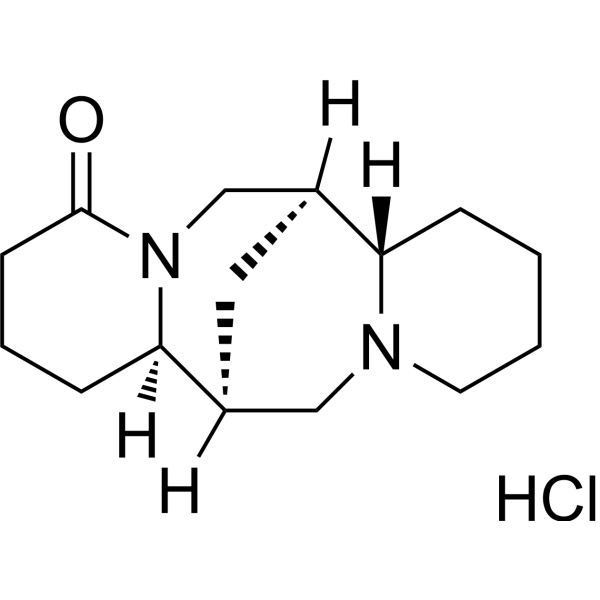 0 ImagesLupanine (D-Lupanine) hydrochloride is a natural ketonic derivative of Sparteine (HY-W008350) with a ganglioplegic activity. Lupanine hydrochloride shows binding affinity for nicotinic receptor with a Ki value of 500 nM.
-
AChE-IN-117
 0 ImagesCat. No.: HY-184140AChE-IN-117 is an AChE/nAChR inhibitor with larvicidal activity against Culex pipiens third-instar larvae. AChE-IN-117 forms stable catalytic site interactions to disrupt cholinergic signaling. AChE-IN-117 binds to its receptor via hydrogen bonding and π-cation interactions to interfere with cholinergic synaptic transmission. AChE-IN-117 induces neurotoxic symptoms including hyperactivity, erratic movement, tremors, paralysis, and larval mortality. AChE-IN-117 can be used for the research of mosquito-borne infectious diseases.
-
nAChR modulator-2
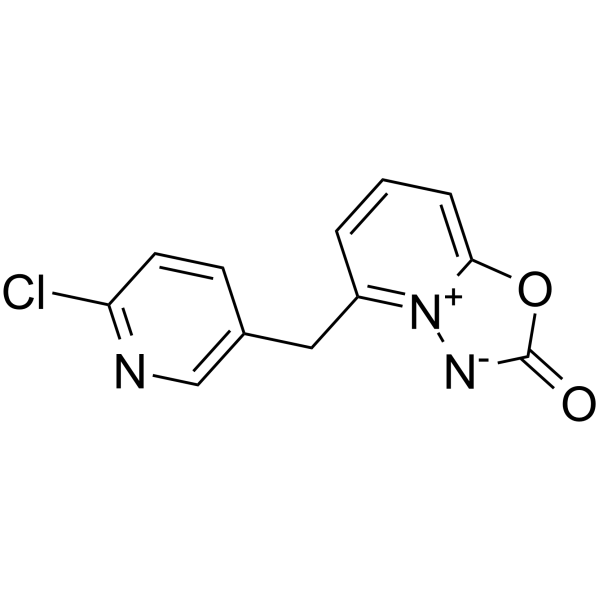 0 ImagesCat. No.: HY-145300CAS No.: 1700657-87-9
-
[D-Trp7,9,10]-Substance P
![[D-Trp7,9,10]-Substance P](https://file.medchemexpress.com/product_pic/hy-p1375.gif "Click to View [D-Trp7,9,10]-Substance P Product Detail") 0 ImagesCat. No.: HY-P1375CAS No.: 89430-38-6[D-Trp7,9,10]-Substance P is a substance P analogue. Substance P stimulates substance P receptors but also inhibits ion conductance through nicotinic acetylcholine receptors.
0 ImagesCat. No.: HY-P1375CAS No.: 89430-38-6[D-Trp7,9,10]-Substance P is a substance P analogue. Substance P stimulates substance P receptors but also inhibits ion conductance through nicotinic acetylcholine receptors.
-
Tebanicline
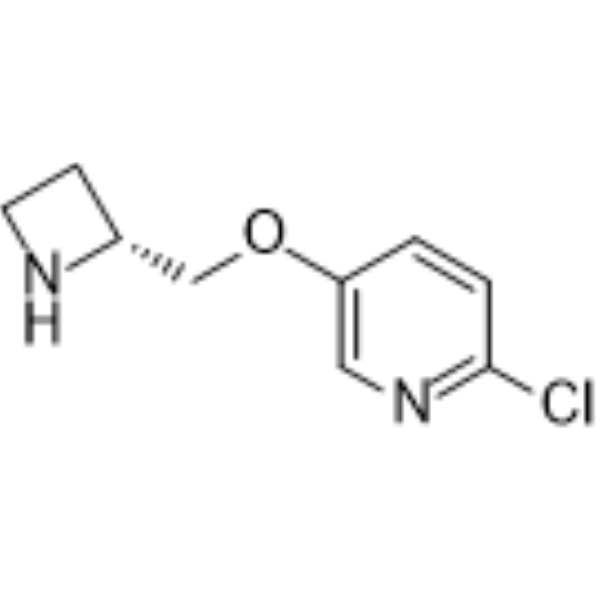 0 ImagesCat. No.: HY-14316CAS No.: 198283-73-7Synonyms: Ebanicline; ABT-594Tebanicline, an analogue of epibatidine, is a neuronal nicotinic acetylcholine receptor agonist. Tebanicline exhibits potent antinociceptive effects and has a high affinity for the α4β2 neuronal nicotinic acetylcholine receptor subunit in the central nervous system.
-
Flupyradifurone-d3
 0 ImagesCat. No.: HY-145295SFlupyradifurone-d3 is the deuterium labeled Flupyradifurone (HY-145295). Flupyradifurone is a systemic nAChR agonist that interferes with signal transduction in the central nervous system of sucking pests. Flupyradifurone can be used as a butenolide insecticide.
-
Hydrohydrastinine
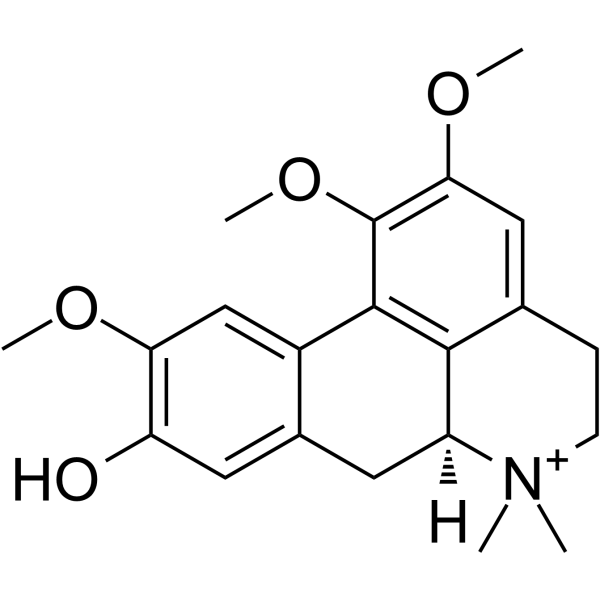
 0 ImagesHydrohydrastinine is a selective α4β2 nicotinic acetylcholine receptor antagonist with an IC50 of 2.6 μM and a Ki of 17 μM. Hydrohydrastinine exhibits weak activity at α4β4 and α3β4 nicotinic acetylcholine receptors. Hydrohydrastinine can be used for the research of depression.
-
Bradanicline tosylate
 0 ImagesCat. No.: HY-18060BCAS No.: 1111942-11-0Synonyms: TC-5619 tosylateBradanicline (TC-5619) tosylate is an orally active agonist of α7 nAChR with moderate blood-brain barrier penetration. Bradanicline tosylate exhibits high affinity and subtype selectivity for human α7 nAChR. Bradanicline tosylate possesses antitussive activity that depends on sustained receptor binding and activation. Bradanicline tosylate requires systemic administration to dose-dependently inhibit cough induced by citric acid, bradykinin and inhaled nicotine. Bradanicline tosylate is well tolerated in preclinical studies and is widely used in research related to chronic refractory cough.
-
α7 nAChR Modulator-4
 0 ImagesCat. No.: HY-182694CAS No.: 2135284-68-1α7 nAChR Modulator-4 is a positive allosteric modulator of α7 nAChR, with an EC50 of 910 nM. α7 nAChR Modulator-4 interacts with α7 nAChR to trigger downstream effects associated with inflammatory regulation. α7 nAChR Modulator-4 can be used in the research of Alzheimer's disease, Parkinson's disease and schizophrenia.
-
Frititorine A
 0 ImagesCat. No.: HY-N17849CAS No.: 2438188-71-5Frititorine A is a steroidal alkaloid that exists in the bulbs of Fritillaria tortifolia. Frititorine A exerts a relaxing effect on acetylcholine-induced tracheal contraction. Frititorine A can be used in asthma-related research.




