



AR-R17779 hydrochloride

Based on 1 Customer Validation
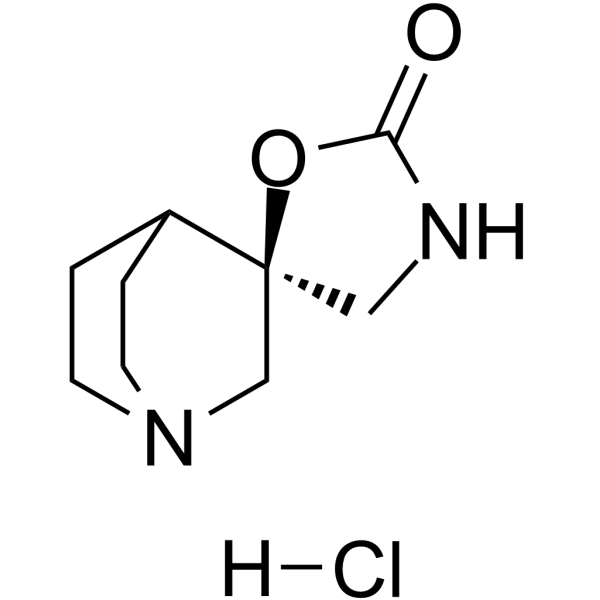
AR-R17779 hydrochloride is a potent and selective full agonist of nAChR, with Kis of 92 and 16000 nM for α7 and α4β2 subtype, respectively. AR-R17779 hydrochloride can improve learning and memory in rats. AR-R17779 hydrochloride also has anxiolytic activity. AR-R17779 hydrochloride can reduce inflammation by activating antiinflammatory cholinergic (vagal) pathways.
For research use only. We do not sell to patients.
- Purity : 99.0%
- CAS No.: 178419-42-6
- Formula: C9H15ClN2O2
- Molecular Weight:218.68
-
Storage:
-20°C, sealed storage, away from moisture and light
* In solvent : -80°C, 6 months; -20°C, 1 month (sealed storage, away from moisture and light)

To place orders, for customer services and technical support, please contact: MedChemExpress USA
Tel: 609-228-6898 E-mail: [email protected] [email protected]


-
 Biological Activity
-
Chemical Information
-
Solvent & Solubility
- Protocols
- Purity & Documentation
- References
-
 Help & FAQs


-
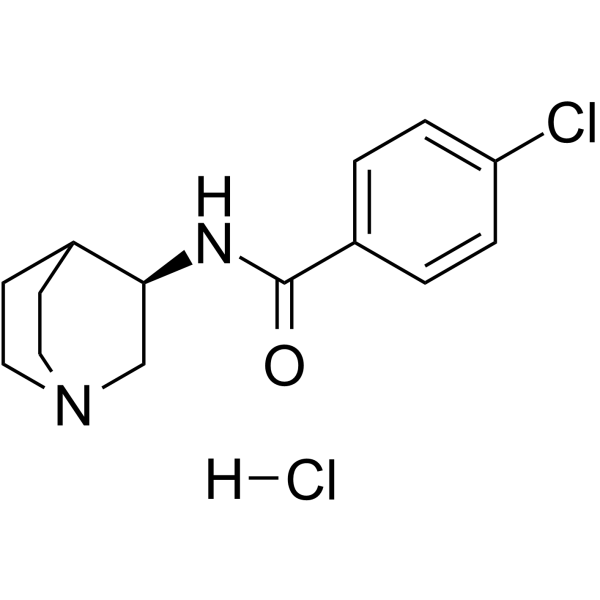
HY-12560A
PNU-282987α7 nAChR Agonist/5-HT3 antagonist -
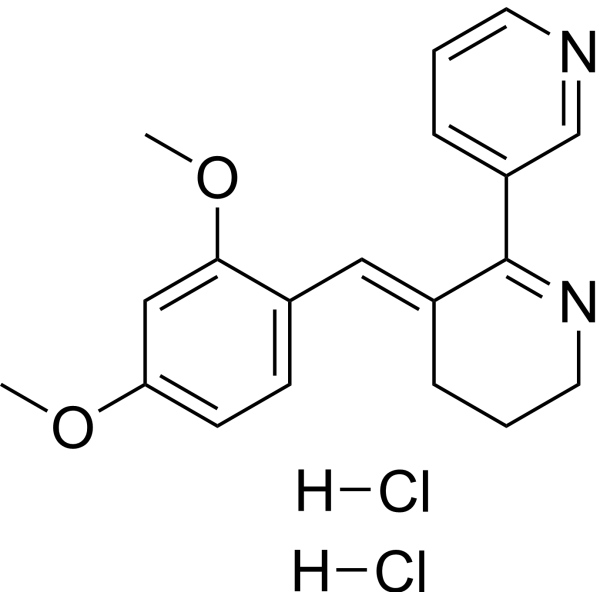
HY-14564A
GTS-21 dihydrochlorideα7-nAChR Agonist -
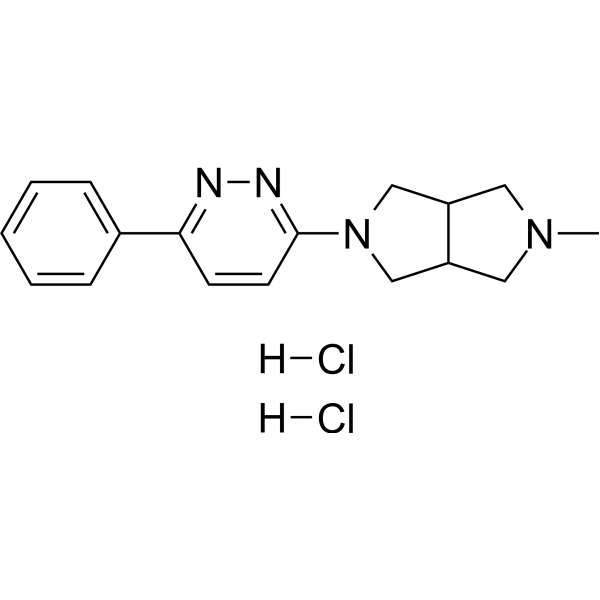
HY-59201A
A-582941 dihydrochlorideα7 nAChR Agonist -
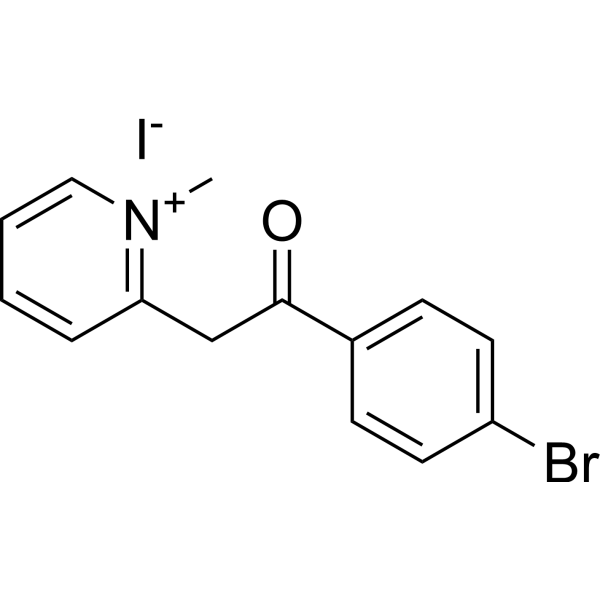
HY-11053
S 24795α7 nAChR partial agonist -
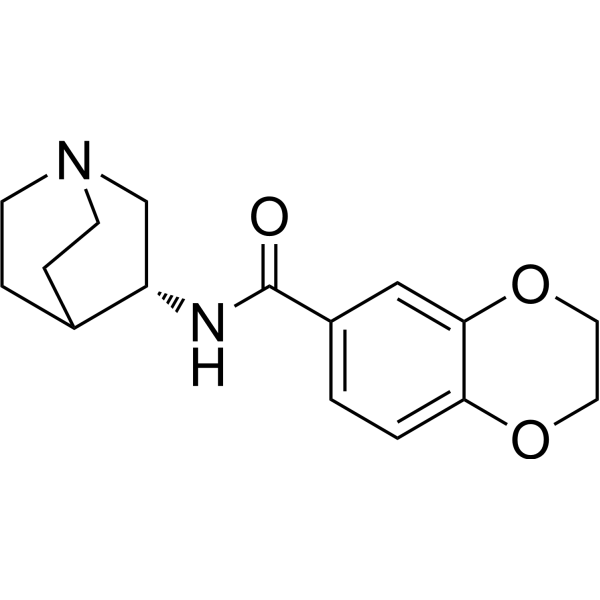
HY-129674
PHA 568487 free baseα-7 nAchR Agonist -
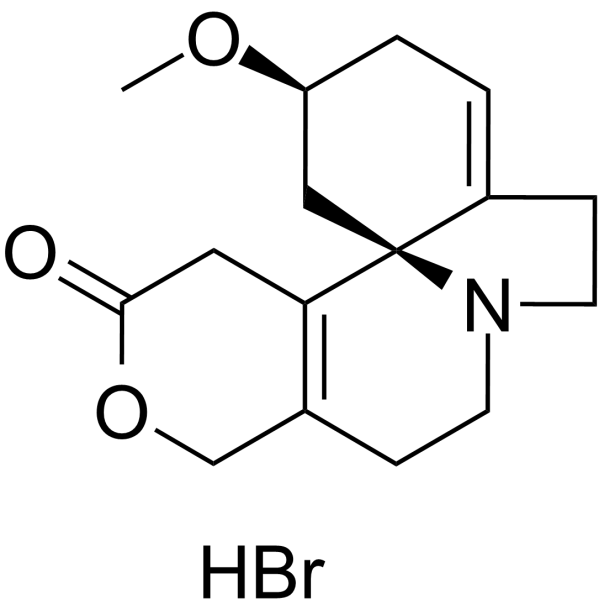
HY-107670
Dihydro-β-erythroidine hydrobromidenAChRs Antagonist -
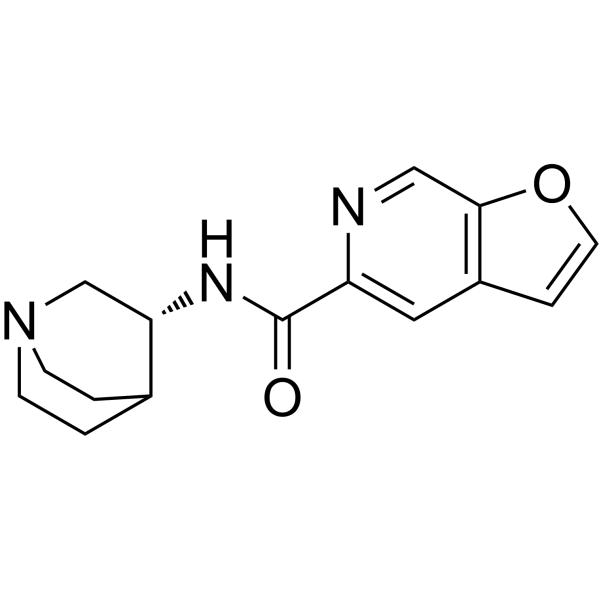
HY-105670
PHA-543613α7 nAChR Agonist -
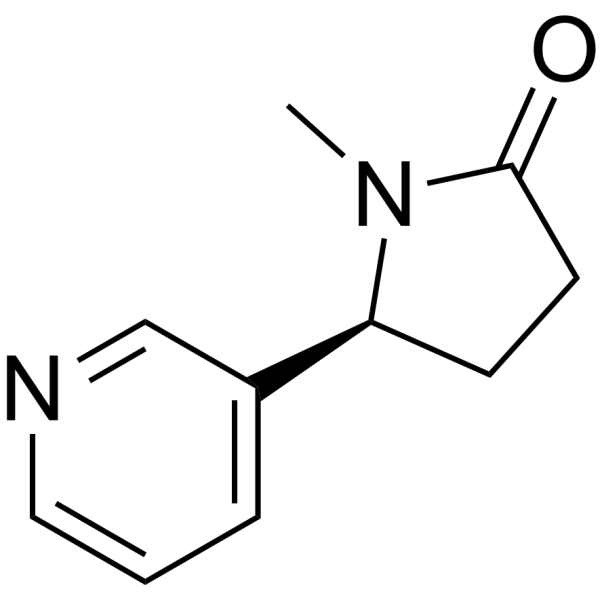
HY-B1178
CotinineEndogenous Metabolite -
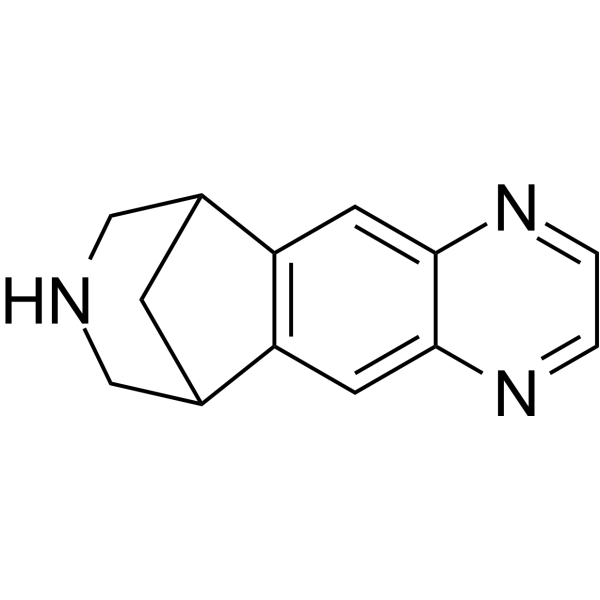
HY-10019
Vareniclineα4β2 nAChR Agonist -
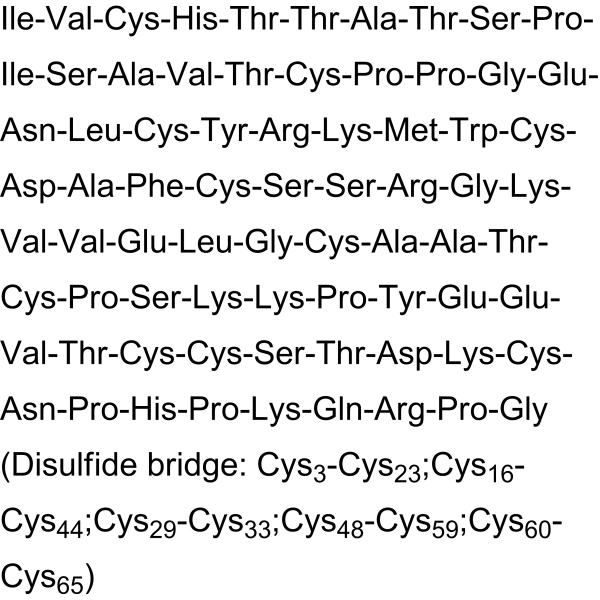
HY-P1264
α-BungarotoxinnAChRs Antagonist -
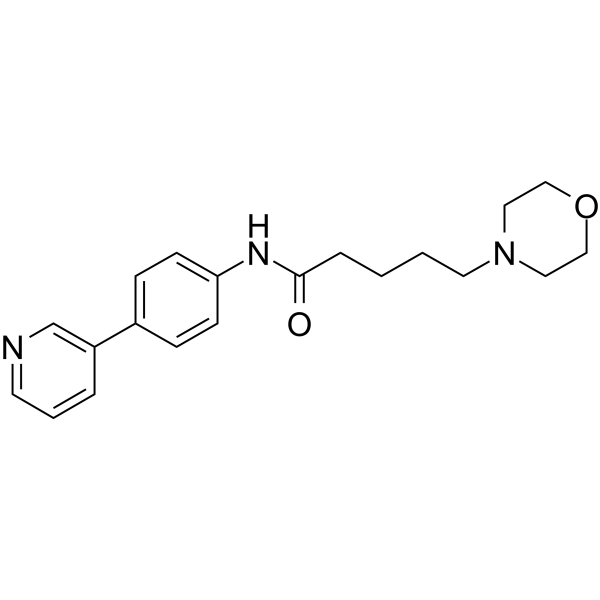
HY-107678
SEN12333α7 nAChR Agonist -
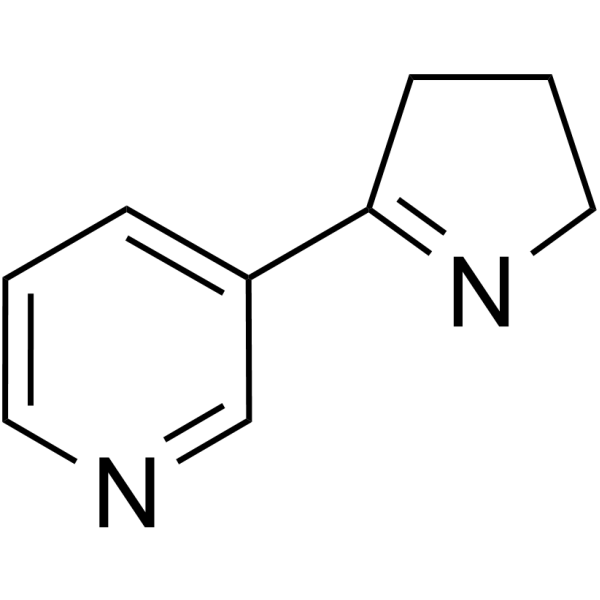
HY-W001909
Myosmine


Biological Activity
Description
IC50 & Target
IC50: 92 nM (α7-nAChR)[1]
In Vitro
AR-R17779 is 5-fold more potent and 35000-fold more selective than (-)-nicotine for the α7 nicotinic receptor[1].
AR-R17779 (200 nM; 24 h) inhibits the LPS-induced TNF production in macrophages[4].
MedChemExpress (MCE) has not independently confirmed the accuracy of these methods. They are for reference only. Further protocols information, click here.
In Vivo
AR-R17779 (1-10 mg/kg; s.c. for 3 weeks) improves learning in two radial-arm maze tasks and reverses working memory impairment caused by fimbria-fornix sections in rats[2].
MedChemExpress (MCE) has not independently confirmed the accuracy of these methods. They are for reference only.
-
Animal Model:Male DBA/1 mice (8-10 weeks) were subjected to unilateral cervical vagotomy or sham surgery, after which arthritis was induced with type II collagen[3]
-
Dosage:1, 2.5, 5 mg/kg
-
Administration:I.p. twice daily from day 20 until day 26
-
Result:Ameliorated arthritis and delayed onset of disease.
Reduced erosive disease, cartilage degradation and synovial inflammation.
Reduced TNFα levels in plasma and synovial tissue.


Chemical Information
-
CAS No. 178419-42-6
-
Appearance Solid
-
Molecular Weight 218.68
-
Formula C9H15ClN2O2
-
Color White to off-white
-
SMILES
O=C(NC1)O[C@@]21CN3CCC2CC3.[H]Cl
-
Shipping
Room temperature in continental US; may vary elsewhere.
-
Storage
-20°C, sealed storage, away from moisture and light
* In solvent : -80°C, 6 months; -20°C, 1 month (sealed storage, away from moisture and light)


Solvent & Solubility
In Vitro:
H2O : 32 mg/mL (146.33 mM; Need ultrasonic)
Please refer to the solubility information to select the appropriate solvent. Once prepared, please aliquot and store the solution to prevent product inactivation from repeated freeze-thaw cycles.
Storage method and period of stock solution: -80°C, 6 months; -20°C, 1 month (sealed storage, away from moisture and light). When stored at -80°C, please use it within 6 months. When stored at -20°C, please use it within 1 month.
* Note: If you choose water as the stock solution, please dilute it to the working solution, then filter and sterilize it with a 0.22 μm filter before use.
Please refer to the solubility information to select the appropriate solvent. Once prepared, please aliquot and store the solution to prevent product inactivation from repeated freeze-thaw cycles.
Storage method and period of stock solution: -80°C, 6 months; -20°C, 1 month (sealed storage, away from moisture and light). When stored at -80°C, please use it within 6 months. When stored at -20°C, please use it within 1 month.
* Note: If you choose water as the stock solution, please dilute it to the working solution, then filter and sterilize it with a 0.22 μm filter before use.
Concentration (start) × Volume (start) = Concentration (final) × Volume (final)

Protocols
-
Protocol for Shuttle Box Test (TDPA)
The Shuttle Box Test for TDPA, or temporally dissociated passive avoidance, measures hippocampus-dependent associative learning by testing whether a rodent avoids entering a dark compartment that was previously paired with foot shock after a temporal delay between dark-compartment entry and shock delivery. The main behavioral readout is crossover or step-through latency from the light chamber into the dark chamber; increased latency across training or retention trials reflects learned avoidance memory rather than motor performance alone.
-
Protocol for Elevated Plus Maze Test
The Elevated Plus Maze is a rodent anxiety-like behavior assay based on the conflict between spontaneous exploration and avoidance of open, elevated, exposed spaces. The apparatus contains two open arms and two closed arms arranged in a plus shape, and rodents normally spend more time in closed arms than open arms. The assay readout is generated by recording arm entries, time spent in open and closed arms, and related exploratory behaviors. Increased open-arm time or open-arm entries is commonly interpreted as reduced anxiety-like behavior, whereas reduced open-arm exploration is interpreted as increased anxiety-like behavior.
-
Protocol for Water Maze
The Morris Water Maze is a rodent spatial learning and memory assay in which a mouse or rat swims in opaque water to find an escape platform; in the hidden-platform version, the animal cannot see the platform and must use distal extra-maze cues to learn its fixed spatial location. The assay primarily measures hippocampus-dependent spatial learning during acquisition trials and spatial reference memory during probe trials after platform removal; readouts include escape latency, swim path length, swim speed, quadrant occupancy, platform-site crossings, and proximity to the former platform location.
-
Research Protocol for Inflammation-related Diseases
The NLRP3 inflammasome is a cytosolic innate immune signaling platform that integrates priming signals and danger-signal activation to promote caspase-1 activation, maturation of IL-1β and IL-18, and gasdermin D-mediated pyroptotic cell death. The core experimental logic is to determine whether inflammatory disease phenotypes are driven by increased NLRP3 expression, ASC-containing inflammasome assembly, caspase-1 cleavage, GSDMD cleavage, and extracellular release of IL-1β/IL-18 rather than by nonspecific cell injury alone. The pathway is strongly linked to inflammation-related disease phenotypes because monosodium urate crystals activate NALP3/NLRP3 inflammasome signaling in gout-like crystal inflammation, cholesterol crystals activate NLRP3 inflammasomes in atherogenesis models, and DSS-induced intestinal inflammation has been reported to involve NLRP3 inflammasome activity. However, experimental colitis studies also show context-dependent protective effects of NLRP3 inflammasome co


Purity & Documentation
-
Data Sheet (277 KB)
-
SDS (555 KB)
- English - EN (555 KB)
- Français - FR (555 KB)
- Deutsch - DE (555 KB)
- Norwegian - NO (555 KB)
- Español - ES (555 KB)
- Swedish - SV (555 KB)
- Italian - IT (555 KB)
- Korean - KR (555 KB)
- Portuguese - PT (555 KB)
-
Handling Instructions (2659 KB)
References
[1]. Mullen G, et, al. (-)-Spiro[1-azabicyclo[2.2.2]octane-3,5'-oxazolidin-2'-one], a conformationally restricted analogue of acetylcholine, is a highly selective full agonist at the alpha 7 nicotinic acetylcholine receptor. J Med Chem. 2000 Nov 2;43(22):4045-50. [Content Brief]
[2]. Levin ED, et, al. AR-R17779, and alpha7 nicotinic agonist, improves learning and memory in rats. Behav Pharmacol. 1999 Nov;10(6-7):675-80. [Content Brief]
[3]. Maanen MA, et, al. Stimulation of nicotinic acetylcholine receptors attenuates collagen-induced arthritis in mice. Arthritis Rheum. 2009 Jan;60(1):114-22. [Content Brief]
[4]. Lopes F, et, al. Involvement of Mast Cells in α7 Nicotinic Receptor Agonist Exacerbation of Freund's Complete Adjuvant-Induced Monoarthritis in Mice. [Content Brief]


Complete Stock Solution Preparation Table
Please refer to the solubility information to select the appropriate solvent. Once prepared, please aliquot and store the solution to prevent product inactivation from repeated freeze-thaw cycles.
Storage method and period of stock solution: -80°C, 6 months; -20°C, 1 month (sealed storage, away from moisture and light). When stored at -80°C, please use it within 6 months. When stored at -20°C, please use it within 1 month.
| Optional Solvent | Concentration Solvent Mass | 1 mg | 5 mg | 10 mg | 25 mg |
|---|---|---|---|---|---|
| H2O | 1 mM | 4.5729 mL | 22.8645 mL | 45.7289 mL | 114.3223 mL |
| 5 mM | 0.9146 mL | 4.5729 mL | 9.1458 mL | 22.8645 mL | |
| 10 mM | 0.4573 mL | 2.2864 mL | 4.5729 mL | 11.4322 mL | |
| 15 mM | 0.3049 mL | 1.5243 mL | 3.0486 mL | 7.6215 mL | |
| 20 mM | 0.2286 mL | 1.1432 mL | 2.2864 mL | 5.7161 mL | |
| 25 mM | 0.1829 mL | 0.9146 mL | 1.8292 mL | 4.5729 mL | |
| 30 mM | 0.1524 mL | 0.7621 mL | 1.5243 mL | 3.8107 mL | |
| 40 mM | 0.1143 mL | 0.5716 mL | 1.1432 mL | 2.8581 mL | |
| 50 mM | 0.0915 mL | 0.4573 mL | 0.9146 mL | 2.2864 mL | |
| 60 mM | 0.0762 mL | 0.3811 mL | 0.7621 mL | 1.9054 mL | |
| 80 mM | 0.0572 mL | 0.2858 mL | 0.5716 mL | 1.4290 mL | |
| 100 mM | 0.0457 mL | 0.2286 mL | 0.4573 mL | 1.1432 mL |
* Note: If you choose water as the stock solution, please dilute it to the working solution, then filter and sterilize it with a 0.22 μm filter before use.


AR-R17779 hydrochloride Related Classifications
HY-135483A Related Classifications
 Powered by Bioz