



Sofiniclin

Based on 1 Customer Validation
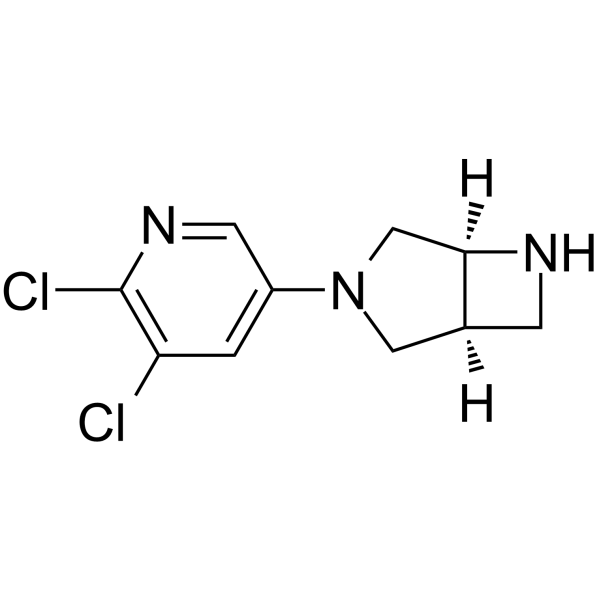
Sofiniclin (ABT 894), an agonist of nicotinic acetylcholine receptor (nAChR), is used as a potential non-stimulant research for attention-deficit/hyperactivity disorder (ADHD).
For research use only. We do not sell to patients.
- Purity : 99.63%
- CAS No.: 799279-80-4
- Formula: C10H11Cl2N3
- Molecular Weight:244.12
-
Storage:Powder -20°C, 3 years , 4°C, 2 years ; In solvent -80°C, 6 months , -20°C, 1 month

To place orders, for customer services and technical support, please contact: MedChemExpress USA
Tel: 609-228-6898 E-mail: [email protected] [email protected]


-
 Biological Activity
-
Chemical Information
-
Solvent & Solubility
- Purity & Documentation
- References
-
 Help & FAQs


-
HY-10019
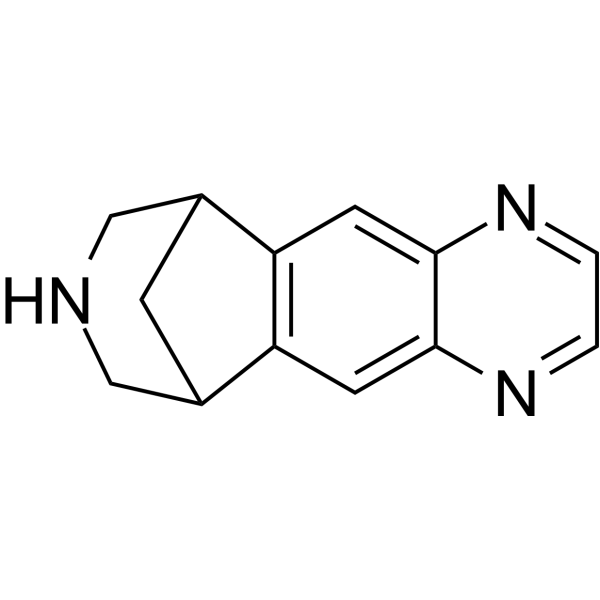
Vareniclineα4β2 nAChR Agonist -
HY-110160
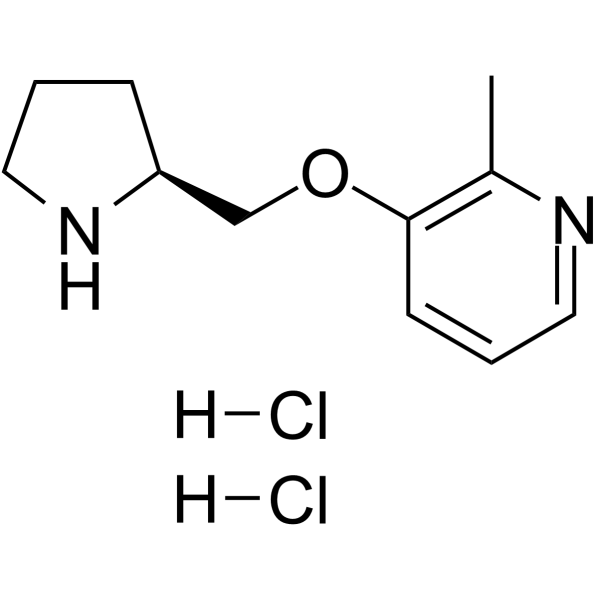
Pozanicline dihydrochloride -
HY-14316A
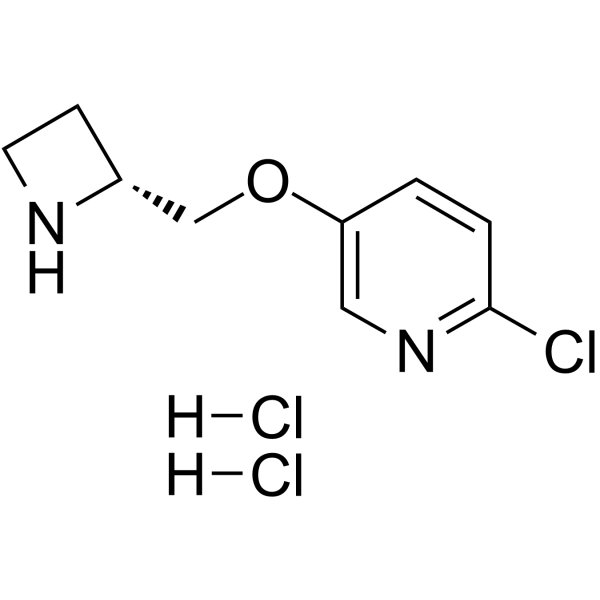
Tebanicline dihydrochloridenAChR Agonist -
HY-B1395
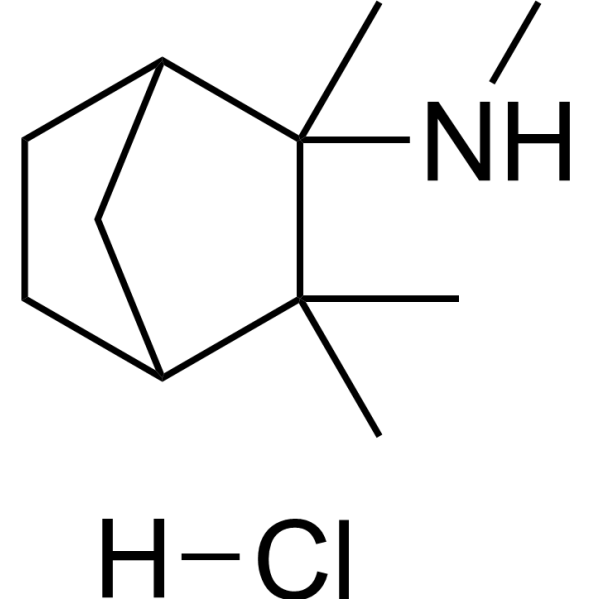
Mecamylamine hydrochloridenAChR Antagonist -
HY-12560A
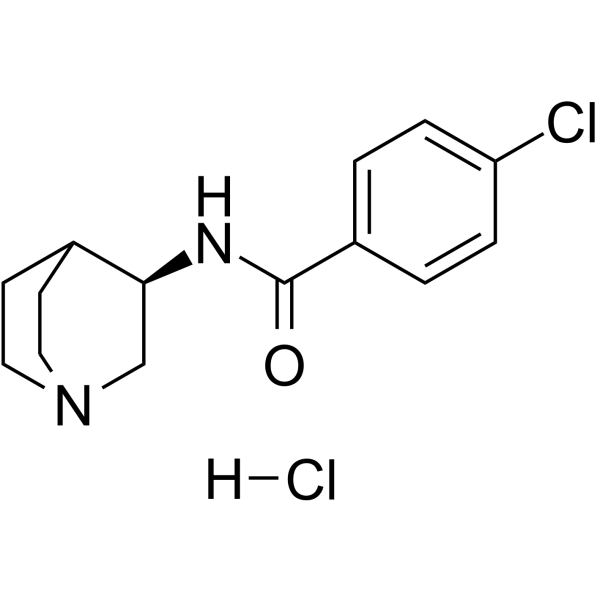
PNU-282987α7 nAChR Agonist/5-HT3 antagonist -
HY-N0175
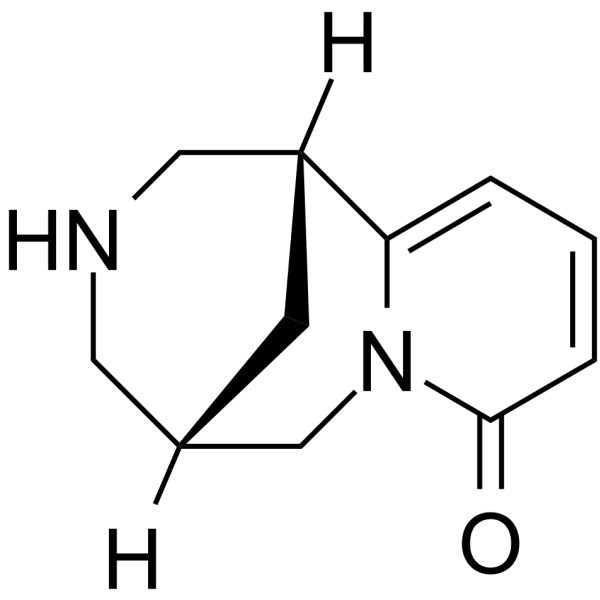
CytisiniclinenAChR Agonist -
HY-12151
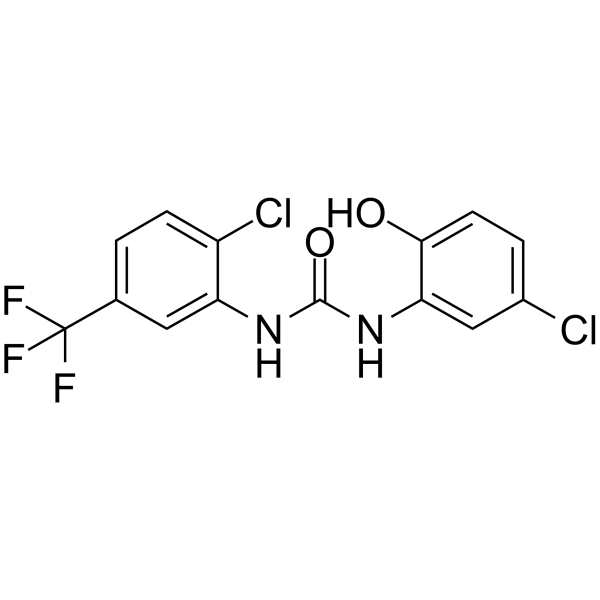
NS 1738nAChR Agonist -
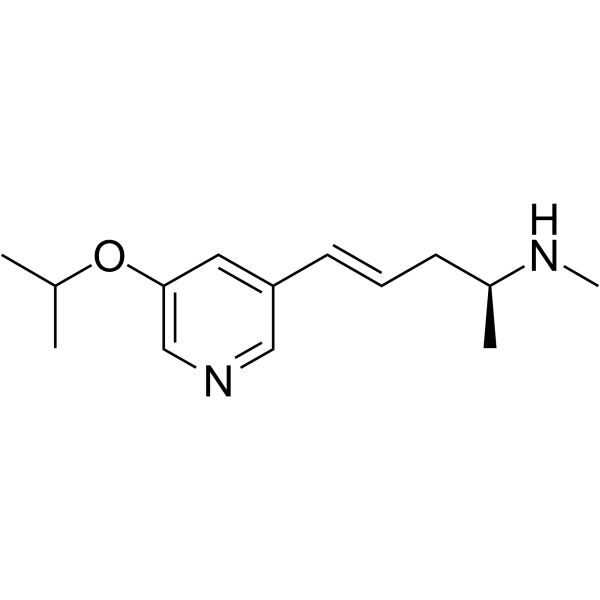
HY-10063
Isproniclineα4β2 nAChR Agonist -
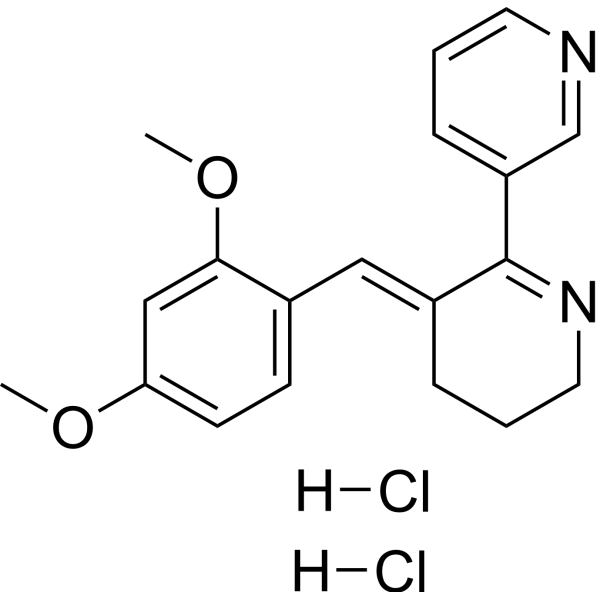
HY-14564A
GTS-21 dihydrochlorideα7-nAChR Agonist -
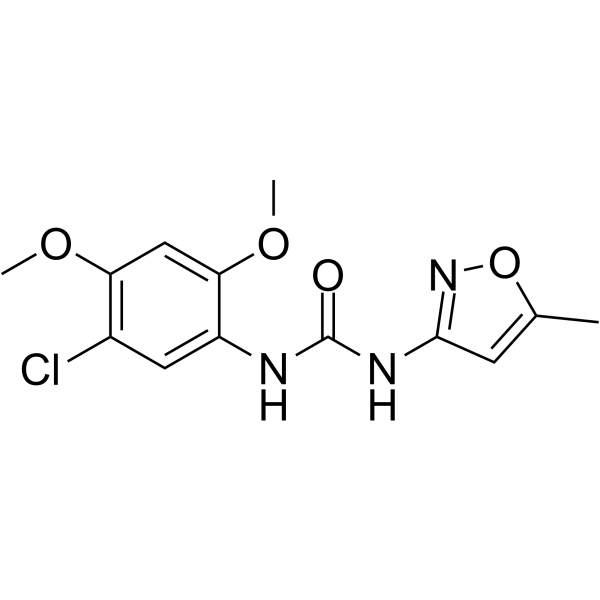
HY-12152
PNU-120596α7 nAChR PMA -
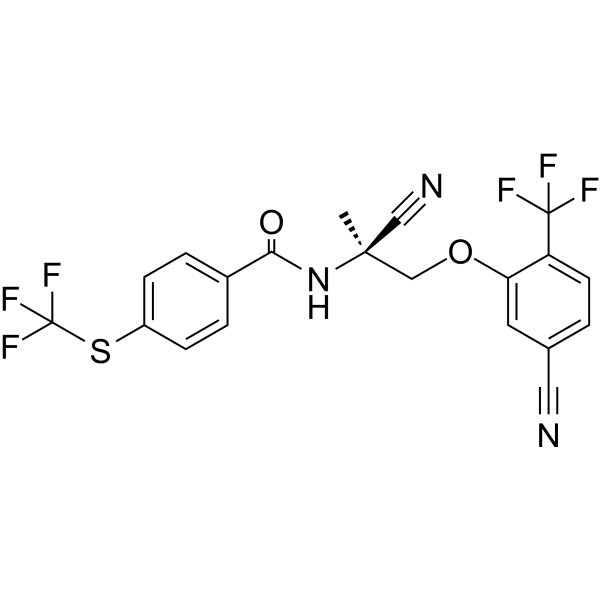
HY-14774
MonepantelmTOR Inhibitor -
HY-12150
CCMIα7 nAChR PAM


Biological Activity
Description
Cellular Effect
|
Cell Line

|
Type | Value | Description | References |
|---|---|---|---|---|
| HEK293 | EC50 |
0.4 μM
Compound: (1S,5S)-42
|
Agonist activity at recombinant human alpha-4-beta-2 nAChR expressed in HEK293 cells assessed as induction of calcium influx by FLIPR assay
Agonist activity at recombinant human alpha-4-beta-2 nAChR expressed in HEK293 cells assessed as induction of calcium influx by FLIPR assay
|
[PMID: 17929796] |
| HEK293 | EC50 |
1.5 μM
Compound: (1S,5S)-42
|
Agonist activity at recombinant human alpha-3-beta-4 nAChR expressed in HEK293 cells assessed as induction of calcium influx by FLIPR assay
Agonist activity at recombinant human alpha-3-beta-4 nAChR expressed in HEK293 cells assessed as induction of calcium influx by FLIPR assay
|
[PMID: 17929796] |
In Vitro
Sofiniclin is more potent than ABT-089 at both receptor subtypes, with Ki values of 1.9 nM for 125I-α-conotoxinMII binding and of 1.3 nM for 125I-epibatidine binding[1].
MedChemExpress (MCE) has not independently confirmed the accuracy of these methods. They are for reference only.
In Vivo
MedChemExpress (MCE) has not independently confirmed the accuracy of these methods. They are for reference only.


Chemical Information
-
CAS No. 799279-80-4
-
Appearance Solid
-
Molecular Weight 244.12
-
Formula C10H11Cl2N3
-
Color White to light brown
-
SMILES
ClC1=C(Cl)C=C(N2C[C@]3([H])CN[C@]3([H])C2)C=N1
-
Synonyms
ABT 894
-
Shipping
Room temperature in continental US; may vary elsewhere.
-
Storage
Powder -20°C 3 years 4°C 2 years In solvent -80°C 6 months -20°C 1 month


Solvent & Solubility
In Vitro:
DMSO : 35.71 mg/mL (146.28 mM; ultrasonic and warming and heat to 60°C; Hygroscopic DMSO has a significant impact on the solubility of product, please use newly opened DMSO)
Please refer to the solubility information to select the appropriate solvent. Once prepared, please aliquot and store the solution to prevent product inactivation from repeated freeze-thaw cycles.
Storage method and period of stock solution: -80°C, 6 months; -20°C, 1 month. When stored at -80°C, please use it within 6 months. When stored at -20°C, please use it within 1 month.
Please refer to the solubility information to select the appropriate solvent. Once prepared, please aliquot and store the solution to prevent product inactivation from repeated freeze-thaw cycles.
Storage method and period of stock solution: -80°C, 6 months; -20°C, 1 month. When stored at -80°C, please use it within 6 months. When stored at -20°C, please use it within 1 month.
Concentration (start) × Volume (start) = Concentration (final) × Volume (final)
In Vivo:
Select the appropriate dissolution method based on your experimental animal and administration route.
- For the following dissolution methods, please ensure to first prepare a clear stock solution using an In Vitro approach and then sequentially add co-solvents:
- To ensure reliable experimental results, the clarified stock solution can be appropriately stored based on storage conditions. As for the working solution for In Vivo experiments, it is recommended to prepare freshly and use it on the same day.
- The percentages shown for the solvents indicate their volumetric ratio in the final prepared solution. If precipitation or phase separation occurs during preparation, heat and/or sonication can be used to aid dissolution.
Add each solvent one by one: 10% DMSO 40% PEG300 5% Tween-80 45% Saline
Solubility: ≥ 2.08 mg/mL (8.52 mM); Clear solution
This protocol yields a clear solution of ≥ 2.08 mg/mL (saturation unknown).
Taking 1 mL working solution as an example, add 100 μL DMSO stock solution (20.8 mg/mL) to 400 μL PEG300, and mix evenly; then add 50 μL Tween-80 and mix evenly; then add 450 μL Saline to adjust the volume to 1 mL.
Preparation of Saline: Dissolve 0.9 g sodium chloride in ddH₂O and dilute to 100 mL to obtain a clear Saline solution.
Add each solvent one by one: 10% DMSO 90% (20% SBE-β-CD in Saline)
Solubility: ≥ 2.08 mg/mL (8.52 mM); Clear solution
This protocol yields a clear solution of ≥ 2.08 mg/mL (saturation unknown).
Taking 1 mL working solution as an example, add 100 μL DMSO stock solution (20.8 mg/mL) to 900 μL 20% SBE-β-CD in Saline, and mix evenly.
Preparation of 20% SBE-β-CD in Saline (4°C, storage for one week): 2 g SBE-β-CD powder is dissolved in 10 mL Saline, completely dissolve until clear.
In Vivo Dissolution Calculator
Please enter the basic information of animal experiments:
-
-
-
-
Recommended: Prepare an additional quantity of animals to account for potential losses during experiments.
Please enter your animal formula composition:
-
%DMSO +
Recommended: Keep the proportion of DMSO in working solution below 2% if your animal is weak.
-
%+
-
+%Tween-80 + +
-
%Saline +
The co-solvents required include: DMSO, . All of co-solvents are available by MedChemExpress (MCE). , Tween 80. All of co-solvents are available by MedChemExpress (MCE).
Working solution concentration: 0.22 mg/mL
Method for preparing stock solution: mg drug dissolved in μL DMSO. Stock solution concentration: mg/mL.
1. Take μL DMSO stock solution;
2. Add μL .
μL , mix evenly;
3. Then add μL Tween 80, mix evenly;
4. Then add μL
Please ensure that the stock solution in the first step is dissolved to a clear state, and add co-solvents in sequence. You can use ultrasonic heating (ultrasonic cleaner, recommended frequency 20-40 kHz), vortexing, etc. to assist dissolution.


Purity & Documentation
-
Data Sheet (273 KB)
-
SDS (251 KB)
- English - EN (251 KB)
- Français - FR (251 KB)
- Deutsch - DE (251 KB)
- Norwegian - NO (251 KB)
- Español - ES (251 KB)
- Swedish - SV (251 KB)
- Italian - IT (251 KB)
- Korean - KR (251 KB)
- Portuguese - PT (251 KB)
-
Handling Instructions (2659 KB)
References
[1]. Zhang D, et al. ABT-089 and ABT-894 reduce levodopa-induced dyskinesias in a monkey model of Parkinson's disease. Mov Disord. 2014 Apr;29(4):508-17. [Content Brief]
[2]. Zhang D, ET AL. α7 nicotinic receptor agonists reduce levodopa-induced dyskinesias with severe nigrostriatal damage. Mov Disord. 2015 Dec;30(14):1901-11. [Content Brief]


Complete Stock Solution Preparation Table
Please refer to the solubility information to select the appropriate solvent. Once prepared, please aliquot and store the solution to prevent product inactivation from repeated freeze-thaw cycles.
Storage method and period of stock solution: -80°C, 6 months; -20°C, 1 month. When stored at -80°C, please use it within 6 months. When stored at -20°C, please use it within 1 month.
| Optional Solvent | Concentration Solvent Mass | 1 mg | 5 mg | 10 mg | 25 mg |
|---|---|---|---|---|---|
| DMSO | 1 mM | 4.0963 mL | 20.4813 mL | 40.9626 mL | 102.4066 mL |
| 5 mM | 0.8193 mL | 4.0963 mL | 8.1925 mL | 20.4813 mL | |
| 10 mM | 0.4096 mL | 2.0481 mL | 4.0963 mL | 10.2407 mL | |
| 15 mM | 0.2731 mL | 1.3654 mL | 2.7308 mL | 6.8271 mL | |
| 20 mM | 0.2048 mL | 1.0241 mL | 2.0481 mL | 5.1203 mL | |
| 25 mM | 0.1639 mL | 0.8193 mL | 1.6385 mL | 4.0963 mL | |
| 30 mM | 0.1365 mL | 0.6827 mL | 1.3654 mL | 3.4136 mL | |
| 40 mM | 0.1024 mL | 0.5120 mL | 1.0241 mL | 2.5602 mL | |
| 50 mM | 0.0819 mL | 0.4096 mL | 0.8193 mL | 2.0481 mL | |
| 60 mM | 0.0683 mL | 0.3414 mL | 0.6827 mL | 1.7068 mL | |
| 80 mM | 0.0512 mL | 0.2560 mL | 0.5120 mL | 1.2801 mL | |
| 100 mM | 0.0410 mL | 0.2048 mL | 0.4096 mL | 1.0241 mL |


Sofiniclin Related Classifications
HY-14824 Related Classifications
 Powered by Bioz