



Necroptosis
Necroptosis is a form of regulated necrotic cell death mediated by receptor-interacting serine-threonine kinase 3 (RIPK3) and mixed lineage kinase domain-like (MLKL) and generally manifests with morphological features of necrosis. Necroptosis is characterized by early loss of plasma membrane integrity, leakage of intracellular contents, and organelle swelling. The cells dying through necroptosis lack the typical apoptotic characteristics, such as membrane blebbing, chromatin condensation, and intranucleosomal DNA cleavage into 180 bp DNA laddering, but may show TUNEL positivity.
Necroptosis triggers innate immune responses by rupturing dead cells and releasing intracellular components, it can be caused by Toll-like receptor (TLR)-3 and TLR-4 agonists, tumor necrosis factor (TNF), certain microbial infections, and T cell receptors. Necroptosis signaling is modulated by receptor-interacting protein kinase (RIPK) 1 when the activity of caspase-8 becomes compromised. Activated death receptors (DRs) cause the activation of receptor-interacting serine-threonine kinase 1 (RIPK1) and the RIPK1 kinase activity-dependent formation of an RIPK1-RIPK3-MLKL, which is complex II. RIPK3 phosphorylates MLKL, ultimately leading to necrosis through plasma membrane disruption and cell lysis.
All Product Categories
-
Necroptosis Related Products (176)
Related Products (176)

-
Sulfaphenazole-d4
 0 ImagesSulfaphenazole-d4 is the deuterium labeled Sulfaphenazole (HY-B1218). Sulfaphenazole is a selective inhibitor of human cytochrome P450 (CYP) 2C9 enzyme. Sulfaphenazole is a cytoprotective agent against light-induced death of photoreceptors. Sulfaphenazole inhibits light-induced necrosis and mitochondrial stress-initiated apoptosis. Sulfaphenazole is an off patent sulfonamide antibiotic and demonstrates bactericidal activity through enhanced M1 macrophage activity. Sulfaphenazole can significantly reduce infarct size and restore post-ischemic coronary flow following ischemia and reperfusion.
-
Necroptosis-IN-4
 0 ImagesCat. No.: HY-161843Necroptosis-IN-4, a potent necroptosis inhibitor, is a RIP kinase 1 (RIPK1) inhibitor. Necroptosis-IN-4 has no inhibitory activity against RIPK3 and weak inhibitory activity against VEGFR1/2 and PDGFR-α.

-
Chlorhexidine-d8
 0 ImagesCat. No.: HY-W738281CAS No.: 1246816-96-5Chlorhexidine-d8 is deuterium-labeled Chlorhexidine (HY-B1248). Chlorhexidine is a orally active cationic antimicrobial agent that targets microbial cell membranes. Chlorhexidine binds to cell membrane phospholipids non-specifically, destroys membrane structure and induces leakage of cell contents. Chlorhexidine has broad-spectrum bactericidal activity against both Gram-positive and Gram-negative bacteria. Chlorhexidine can interfere with membrane permeability, cause protein precipitation and energy metabolism disorders, such as rapid inhibition of microbial growth and induction of cell death (necrosis or apoptosis).
-
Gypsogenin (Standard)
 0 ImagesCat. No.: HY-121382RCAS No.: 639-14-5Cinosulfuron (Standard) is the analytical standard of Cinosulfuron. This product is intended for research and analytical applications. Gypsogenin is a selective mixed-type BChE inhibitor (Ki=19.99 μM) that also exhibits significant cytotoxicity against various human cancer cell lines. Gypsogenin inhibits tumor growth by inducing cell cycle arrest and triggering apoptosis. Gypsogenin displays antibacterial activity against bacteria such as Bacillus subtilis and Bacillus thuringiensis, and often serves as a key parent nucleus for the synthesis of anticancer compounds. Gypsogenin is widely used in research on Alzheimer's disease and various cancers including colon cancer, melanoma, and leukemia.
-
EGFR-IN-191
 0 ImagesCat. No.: HY-181093EGFR-IN-191 is an anti-tumor agent targeting both EGFR and AKT. EGFR-IN-191 exerts its anti-tumor activity by inducing DNA damage, apoptosis, cell cycle arrest, and inhibition of the PI3K/AKT-EGFR signaling pathway in tumor cells. EGFR-IN-191 can be used in the study of tumors such as triple-negative breast cancer.
-
Anticancer agent 267
 0 ImagesCat. No.: HY-173075Anticancer agent 267 (Compound 5q) is the activator for RIPK3 and MLKL. Anticancer agent 267 inhibits the proliferation in a variety of cancer cell lines (IC50 for MDA-MB-231, MDA-MB-486 and MCF-7 is 9.79, 10.77 and 5.94 μM, respectively), arrests cell cycle at subG1 phase, and induces necroptosis in cell MDA-MB-231. Anticancer agent 267 exhibits antitumor activity in mouse xenograft models.
-
Tetrachlorohydroquinone
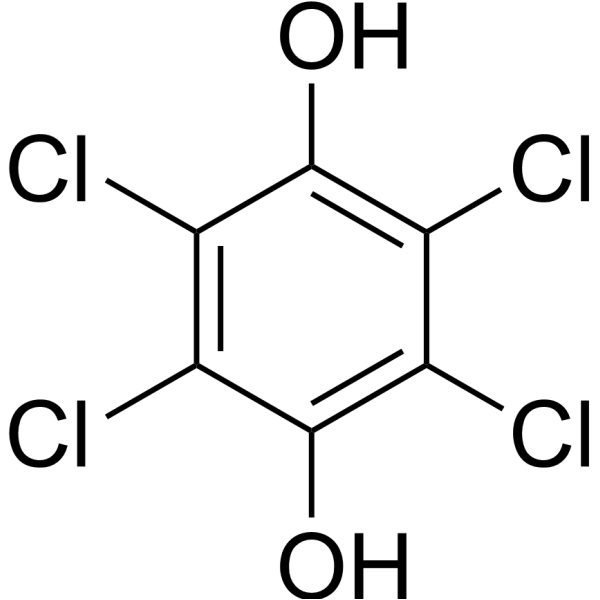 0 ImagesSynonyms: TCHQ; TetrachloroquinolTetrachlorohydroquinone (TCHQ) is a metabolite of Pentachlorophenol. Tetrachlorohydroquinone induces reactive oxidant stress (ROS), inhibits apoptosis and induces necrosis in primary mouse splenocytes. Tetrachlorohydroquinone increases DNA lesions and induces oxidative stress in rodents.

-
Anticancer agent 146
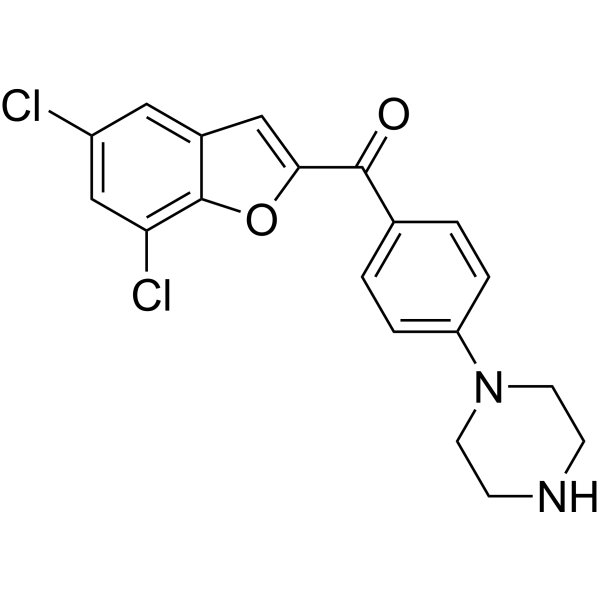 0 ImagesCat. No.: HY-155146Anticancer agent 146 (compound 1.19) is a necroptosis inducer. Anticancer agent 146 has anti-tumor efficacy in the mouse MDA-MB-231 xenograft model.
-
Antitumor agent-145
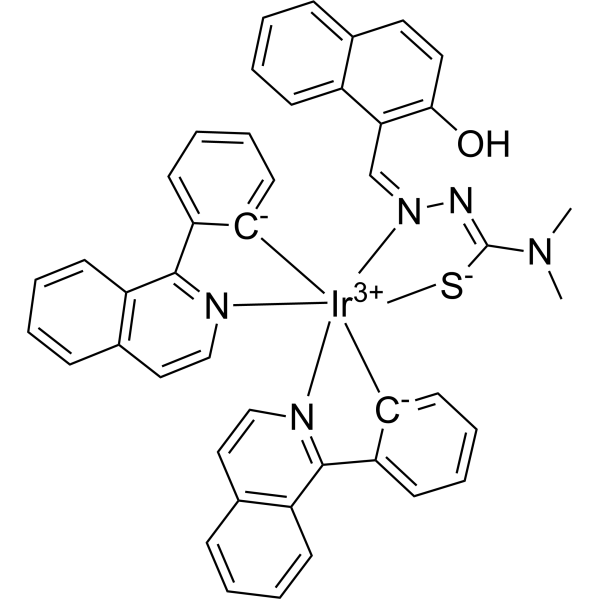 0 ImagesCat. No.: HY-162348CAS No.: 2983120-65-4Antitumor agent-145 (Compound Ir5) is a tumor inhibitor with remarkable fluorescence and mitochondrial targeting, which exerts anti-cancer effects by inducing necroptosis and activating the necroptosis-related immune response.
-
Antitumor photosensitizer-3
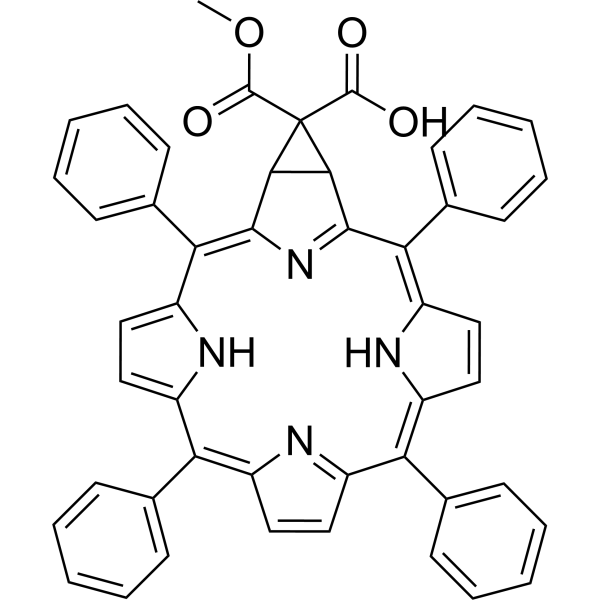 0 ImagesCat. No.: HY-147521CAS No.: 2102725-52-8Antitumor photosensitizer-3 (Compound I) is a chlorin derivative. Antitumor photosensitizer-3 induces tumor cells apoptosis and necrosis under 650 nm laser irradiation. Antitumor photosensitizer-3 exhibits lower skin photo-toxicity than positive reference m-THPC in vivo.
-
Antiparasitic agent-16
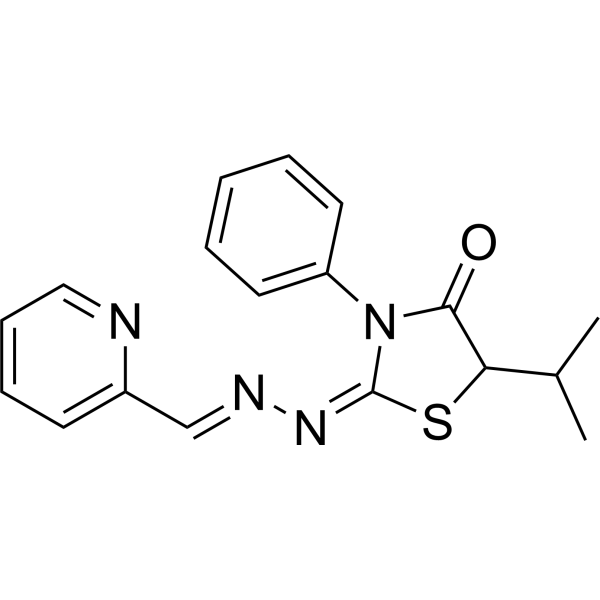 0 ImagesCat. No.: HY-149080CAS No.: 3046451-89-9Antiparasitic agent-16, a pyridine-thiazolidinone, has anti-Trypanosoma cruzi and leishmanicidal activities. Antiparasitic agent-16 has IC50s of 1.0 μM and 0.6 μM against trypomastigote and amastigote forms of T. cruzi. Antiparasitic agent-16 has IC50s of 150.2 μM and 16.75 μM against trypomastigote and amastigote forms of L. amazonensis. Antiparasitic agent-16 induces parasite cell death through necrosis induction. Antiparasitic agent-16 induces morphological changes such as shortening, retraction and curvature of the parasite body and leakage of internal content with T. cruzi trypomastigotes.
-
Necroptosis-IN-5
 0 ImagesCat. No.: HY-161911Necroptosis-IN-5 (Compound 26) is an orally active necroptosis inhibitor. Necroptosis-IN-5 also exhibits potent inhibitory activity against receptor-interacting protein kinase 1 (RIPK1). Necroptosis-IN-5 can be used to study necroptosis-related inflammatory diseases, neurodegenerative diseases, and cancers.
-
HDAC8-IN-14
 0 ImagesCat. No.: HY-178380HDAC8-IN-14, a curcuminoid derivative, is a selective HDAC8 inhibitor with a Ki of 9 nM. HDAC8-IN-14 induces the production of reactive oxygen species (ROS), disrupts mitochondrial membrane potential, and promotes apoptosis. HDAC8-IN-14 can significantly promote the accumulation of cells in the sub-G0/G1 phase, consistent with apoptotic or necrotic cell death. HDAC8-IN-14 induces upregulation of cytochrome c, cleaved caspase-3, and the pro-apoptotic protein Bak while leaving the anti-apoptotic Bcl-2 levels unaltered. HDAC8-IN-14 can be used for the study of leukemia.
-
PROTAC MLKL Degrader-2
 0 ImagesCat. No.: HY-169072CAS No.: 3103327-20-1PROTAC MLKL Degrader-2 is an orally active and highly selective mixed lineage kinase domain-like pseudokinase (MLKL) PROTAC degrader with a DC50 of 0.012 μM. PROTAC MLKL Degrader-2 recruits the CRBN E3 ubiquitin ligase to form a ternary complex, leading to ubiquitination of MLKL and its degradation via a proteasome-dependent pathway. PROTAC MLKL Degrader-2 inhibits necroptosis, reduces ROS production, restores mitochondrial function, and ameliorates lysosomal dysfunction induced by necroptotic stimuli. PROTAC MLKL Degrader-2 degrades MLKL in xenograft mouse models. PROTAC MLKL Degrader-2 can be used in cancer-related research.
-
RIPK1-IN-35
 0 ImagesCat. No.: HY-178762SCAS No.: 3103886-96-7RIPK1-IN-35 is a selective and orally active RIPK1 inhibitor with an IC50 of 5.33 nM. RIPK1-IN-35 has a potent protective effect against necroptosis in both human and murine cells. RIPK1-IN-35 shows good therapeutic effects in both TNF-α-induced systemic inflammatory response syndrome and DSS (HY-116282C)-induced inflammatory bowel disease models. RIPK1-IN-35 can be used to the study of inflammatory diseases related to necroptosis.
-
MLKL-IN-4
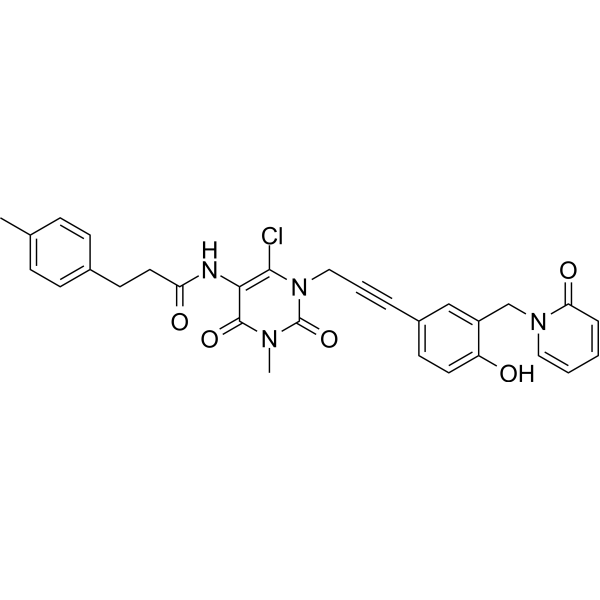 0 ImagesCat. No.: HY-151542CAS No.: 3031406-17-1MLKL-IN-4 (compound 56) is a potent MLKL (Mixed lineage kinase domain-like protein) inhibitor. MLKL-IN-4 inhibits necroptosis in HT-29 cells and acts downstream of MLKL phosphorylation, with EC50 of 82 nM. MLKL-IN-4 is a click chemistry reagent, it contains an Alkyne group and can undergo copper-catalyzed azide-alkyne cycloaddition (CuAAc) with molecules containing Azide groups.
-
AMP423
 0 ImagesCat. No.: HY-119289CAS No.: 219501-57-2AMP423 is an oxidation inducer and cell cycle regulator. AMP423 induces necrosis, apoptosis, and reactive oxygen species production. AMP423 induces inhibition of protein synthesis, reduction of thiol levels, and S-phase cell accumulation, and exhibits antitumor activity. AMP423 can be used in research related to multiple myeloma and follicular B-cell lymphoma.
-
Necrosulfonamide (Standard)
 0 ImagesCat. No.: HY-100573RCAS No.: 1360614-48-7Necrosulfonamide (Standard) is the analytical standard of Necrosulfonamide (HY-100573). This product is intended for research and analytical applications. Necrosulfonamide is a MLKL and Gasdermin D (GSDMD) inhibitor, capable of separately inhibiting necroptosis and pyroptosis of cells. Necrosulfonamide does not affect the activation of upstream signals, but specifically inhibits the downstream executor oligomerization step. Necrosulfonamide reduces the expression of the key kinases NLRP3 and caspase-1 involved in necroptosis and pyroptosis, activate the Nrf2 pathway and the downstream antioxidant enzymes, and also downregulates a variety of inflammatory factors. Necrosulfonamide plays significant roles in various diseases such as neurodegenerative diseases (such as Parkinson’s disease), tissue damage and ischemia-reperfusion injury, inflammatory bowel disease, osteoarthritis and fracture repair, and hair loss by regulating two important programmed necrosis pathways.



