



Yeast Infection
-
Yeast Infection (33)

- 1
- 2
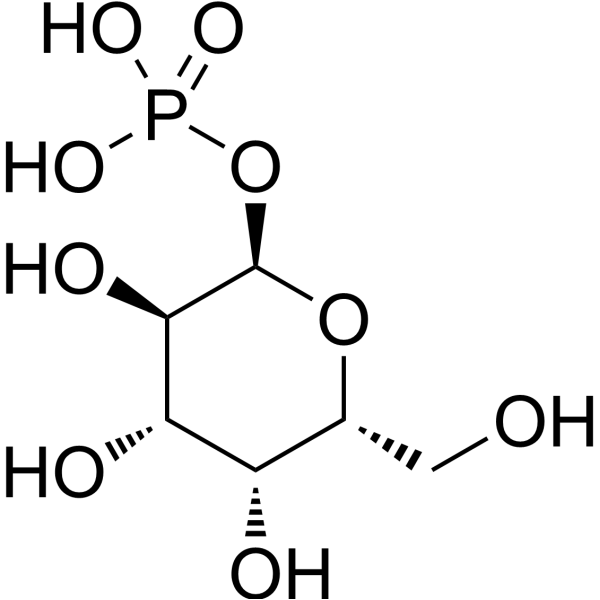
- Formula: C6H13O9P
- Molecular Weight: 260.14
Galactose 1-phosphate acts as a competitive substrate inhibitor of galactose-1-phosphate uridylyltransferase (GALT). Galactose 1-phosphate is a competitive inhibitor of Phosphoglucomutase, yet the rate at which this enzyme converts Galactose 1-phosphate to Galactose-6-phosphate is 400 times slower than the rate of converting Glucose-1-phosphate. Galactose 1-phosphate can be used in studies related to Saccharomyces cerevisiae infection and type I galactosemia.
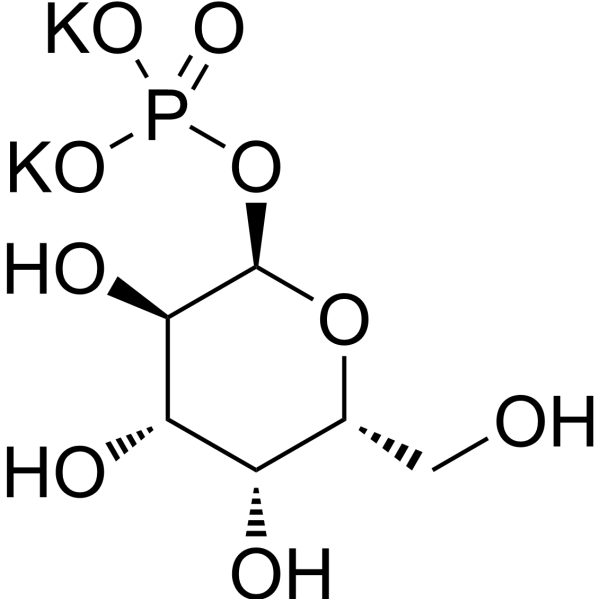
- Formula: C6H11K2O9P
- Molecular Weight: 336.32
Galactose 1-phosphate Potassium salt acts as a competitive substrate inhibitor of galactose-1-phosphate uridylyltransferase (GALT). Galactose 1-phosphate Potassium salt is a competitive inhibitor of Phosphoglucomutase, yet the rate at which this enzyme converts Galactose 1-phosphate to Galactose-6-phosphate is 400 times slower than the rate of converting Glucose-1-phosphate. Galactose 1-phosphate Potassium salt can be used in studies related to Saccharomyces cerevisiae infection and type I galactosemia.
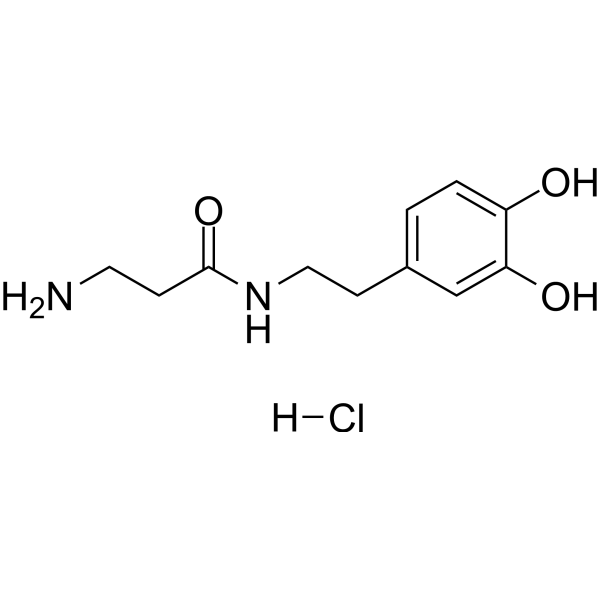
- Formula: C11H17ClN2O3
- Molecular Weight: 260.72
N-β-alanyldopamine hydrochloride (NBAD hydrochloride) is a tyrosine metabolite, Antibacterial agent and Antifungal agent. N-β-alanyldopamine hydrochloride exists in the hemolymph and cuticle during pupal cuticle tanning of the tobacco hornworm (Manduca sexta). N-β-alanyldopamine hydrochloride is the preferred substrate for pupal cuticular o-Diphenol oxidase during insect pupal cuticle tanning. N-β-alanyldopamine hydrochloride inhibits the growth of Escherichia coli, Bacillus megaterium and Saccharomyces cerevisiae in vitro. N-β-alanyldopamine hydrochloride can be used in studies related to microbial infections.
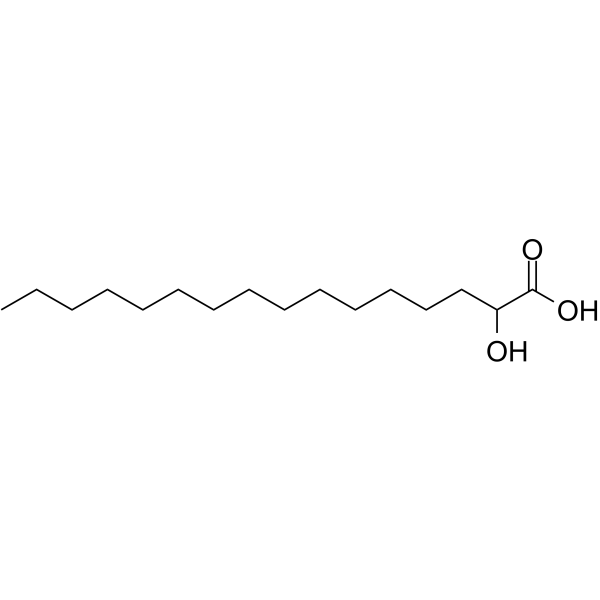
- Formula: C16H32O3
- Molecular Weight: 272.42
2-Hydroxypalmitic acid is an intermediate in the phytosphingosine metabolic pathway. 2-Hydroxypalmitic acid is exclusively incorporated into sphingolipids and not used for other lipids. 2-Hydroxypalmitic acid promotes the production of odd-carbon phosphatidylcholine species. 2-Hydroxypalmitic acid is applicable to studies of Saccharomyces cerevisiae infection.

- Formula: C16H28NP
- Molecular Weight: 265.38
Amphos is a monophosphazene hypolipidemic agent and yeast growth inducer. Amphos reduces intracellular lipid levels and promotes the growth of yeast cells. Amphos exhibits no antibacterial activity against bacterial and yeast cells.

Protein serine/threonine kinase (Ser/Thr protein kinase) is a signal transduction molecule. Protein serine/threonine kinase phosphorylates specific residues on target substrates, regulates phosphorylation-dependent signal cascades, modulates cellular processes of mycobacteria, blocks phagosome-lysosome fusion, promotes meiotic maturation of Xenopus laevis (African clawed frog) oocytes, rescues the phenotype of Saccharomyces cerevisiae (budding yeast) CDC5 mutants, and exhibits cell cycle phase-specific kinase activity. Protein serine/threonine kinase maintains a tightly regulated cell cycle expression pattern, and sustains the growth and survival of mycobacteria. Protein serine/threonine kinase can be used in studies related to tuberculosis.
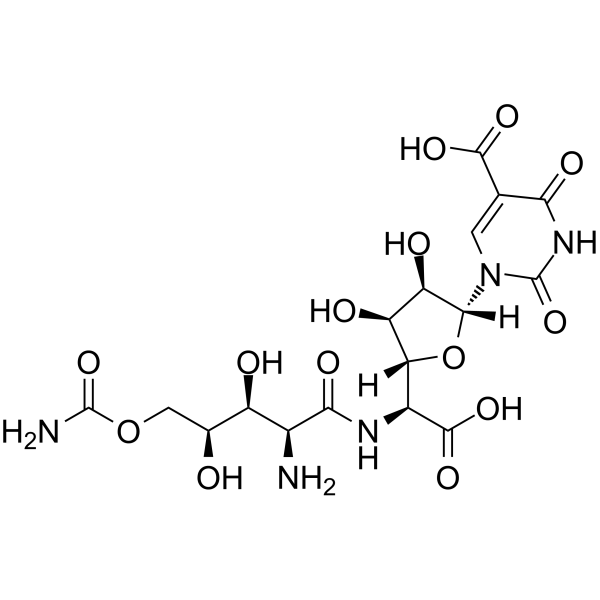
- Formula: C17H23N5O14
- Molecular Weight: 521.39
Polyoxin D (Polyoxorim) is an Antifungal Antibiotic. Polyoxin D inhibits Chitin synthase with an I50 of 1 mM for Stomoxys calcitrans chitin synthase. Polyoxin D causes swelling and rupture of fungal hyphal tips and budding yeast cells, haustorial encasement, haustorial wall thickening, widening of the extrahaustorial matrix, and cytoplasmic vesicles and tubular structures. Polyoxin D causes swelling of filamentous chains in Candida albicans and morphological changes in Agaricus bisporus and Coprinus cinereus. Polyoxin D is used in research on bean rust and Candida albicans infections.

- Formula: C1413C2H32O3
- Molecular Weight: 274.41
2-Hydroxypalmitic acid-13C2 is the 13C-labeled 2-Hydroxypalmitic acid (HY-N7814). 2-Hydroxypalmitic acid is an intermediate in the phytosphingosine metabolic pathway. 2-Hydroxypalmitic acid is exclusively incorporated into sphingolipids and not used for other lipids. 2-Hydroxypalmitic acid promotes the production of odd-carbon phosphatidylcholine species. 2-Hydroxypalmitic acid is applicable to studies of Saccharomyces cerevisiae infection.

- Formula: C23H32ClNO5
- Molecular Weight: 437.96
Antifungal agent 173 is an orally active antifungal (fungal) agent. Antifungal agent 173 disrupts fungal cell membrane integrity, inhibits yeast-hypha transition in Candida species, and suppresses biofilms. Antifungal agent 173 prevents mouse mortality in a mouse model of systemic candidiasis and reduces tongue lesions in a mouse model of oropharyngeal candidiasis. Antifungal agent 173 is applicable to research related to candidiasis.
Inorganic pyrophosphatase is a ubiquitous enzyme that converts pyrophosphate (PPi) to phosphate and, in this way, controls numerous biosynthetic reactions that produce PPi as a byproduct. Inorganic pyrophosphatase, Saccharomyces cerevisiae is an Inorganic pyrophosphatase isolated from Saccharomyces cerevisiae.

- Formula: C9H10O4
- Molecular Weight: 182.17
4,6-dimethoxysalicylaldehyde is an antifungal agent. 4,6-dimethoxysalicylaldehyde has considerable activity against C. albicans and slight activity against S. cerevisiae.
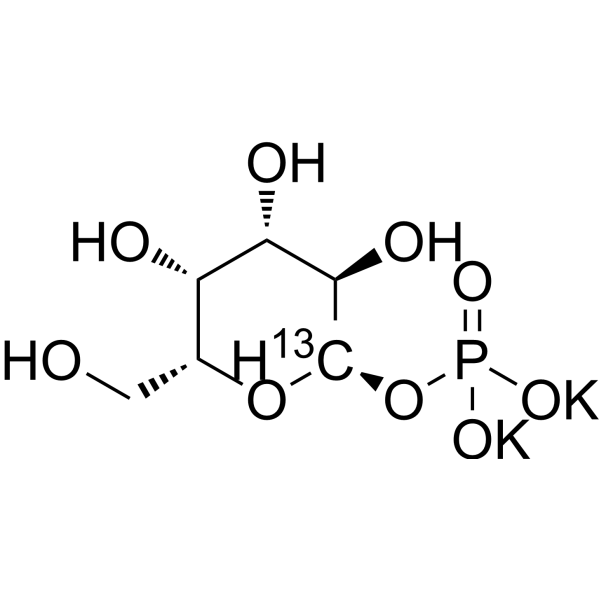
- Formula: C513CH11K2O9P
- Molecular Weight: 337.31
Galactose 1-phosphate-13C potassium is the 13C-labeled Galactose 1-phosphate Potassium salt (HY-113143A). Galactose 1-phosphate Potassium salt acts as a competitive substrate inhibitor of galactose-1-phosphate uridylyltransferase (GALT). Galactose 1-phosphate Potassium salt is a competitive inhibitor of Phosphoglucomutase, yet the rate at which this enzyme converts Galactose 1-phosphate to Galactose-6-phosphate is 400 times slower than the rate of converting Glucose-1-phosphate. Galactose 1-phosphate Potassium salt can be used in studies related to Saccharomyces cerevisiae infection and type I galactosemia.

- Formula: C10H20O
- Molecular Weight: 156.27
Dihydromyrcenol is an orally active flavor ingredient and Antifungal agent. Dihydromyrcenol acts as a toxicant. Dihydromyrcenol induces phototoxicity-related growth inhibition in Bakers' Yeast. In pregnant rats, Dihydromyrcenol causes threshold maternal toxicity by reducing feed consumption and body weight gain, and also induces threshold developmental toxicity by decreasing fetal body weight, inhibiting ossification of metatarsal bones in the hind paws, increasing the number of extra thoracic vertebrae ribs, and altering vertebral counts.

- Formula: C22H19F5N6O2
- Molecular Weight: 494.42
Antifungal agent-170 is an Antifungal agent. Antifungal agent-170 potently inhibits the growth of recombinant Saccharomyces cerevisiae strains expressing wild-type and mutant fungal CYP51 enzymes. Antifungal agent-170 potently inhibits the growth of Candida albicans, Candida glabrata, Candida krusei, Cryptococcus neoformans and Cryptococcus gattii. Antifungal agent-170 provides survival benefits in the Galleria mellonella (greater wax moth) infection model. Antifungal agent-170 can be used for the research of invasive fungal infections.

- Formula: C36H50O12
- Molecular Weight: 674.78
Capricostatin A is a glycosylated heteromeric depsipeptide and Antibacterial agent. Capricostatin A is present in the fungus Austroacremonium gemini MST-FP2131. Capricostatin A inhibits the growth of Gram-positive bacteria, including Bacillus subtilis, Staphylococcus aureus, and MRSA. Capricostatin A exhibits no antifungal activity against Saccharomyces cerevisiae and no cytotoxicity against mammalian cells. Capricostatin A can be used in the research of bacterial infections caused by Bacillus subtilis and Staphylococcus aureus.

- Formula: C40H66N4O16
- Molecular Weight: 858.97
Tunicamycin X (Tunicamycin 17:1) is a nucleoside Antibiotic. Tunicamycin X is isolated from Streptomyces xinghaiensis SCSIO S15077. Tunicamycin X acts as a growth inhibitor against bacteria and fungi. Tunicamycin X inhibits the growth of Bacillus thuringiensis strains. Tunicamycin X inhibits the growth of Candida albicans strains.

- Formula: C41H66O12
- Molecular Weight: 750.96
3-O-α-L-Arabinopyranosyl hederagenin 28-O-α-L-rhamnopyranosyl ester is an anti-fungal triterpene saponin. 3-O-α-L-Arabinopyranosyl hederagenin 28-O-α-L-rhamnopyranosyl ester can be isolated from the aerial parts of Clematis tangutica. 3-O-α-L-Arabinopyranosyl hederagenin 28-O-α-L-rhamnopyranosyl ester exhibits antifungal activity against fungal strains (P. avellaneum, C. glabrata, S. cerevisiae, T. beigelii), with the strongest activity against S. cerevisiae.

- Formula: C19H22O6
- Molecular Weight: 346.37
2-Deethoxy-2-hydroxyphantomolin, Germacranolide, is an Antifungal and Antibacterial agent. 2-Deethoxy-2-hydroxyphantomolin can be isolated from Elephantopus tomentosus Linn and E. mollis. 2-Deethoxy-2-hydroxyphantomolin is moderately active against Candida albicans (14 mm clearing zone) and slightly active against Escherichia coli (12 mm), Pseudomonas aeruginosa (12 mm), Bacillus subtilis (14 mm), and Trichophyton mentagrophytes (13 mm).

- Formula: C22H27NO6
- Molecular Weight: 401.45
(R)-RG7834 is an inactive enantiomer (“R” configuration) of RG7834 (HY-117650A).

- Formula: C58H94N16O20
- Molecular Weight: 1335.46
Histone H3 (73-83) is a histone H3 fragment. Histone H3 (73-83) can be obtained from incomplete tryptic digestion of underivatized wild-type histone H3. Histone H3 (73-83) can be used in the research of yeast infection.
- 1
- 2



