Search Result
Results for "
fatty-alcohols
" in MedChemExpress (MCE) Product Catalog:
5
Biochemical Assay Reagents
13
Isotope-Labeled Compounds
| Cat. No. |
Product Name |
Target |
Research Areas |
Chemical Structure |
-
- HY-B1465
-
-
-
- HY-N6811
-
|
|
Insecticide
|
Infection
Cardiovascular Disease
|
|
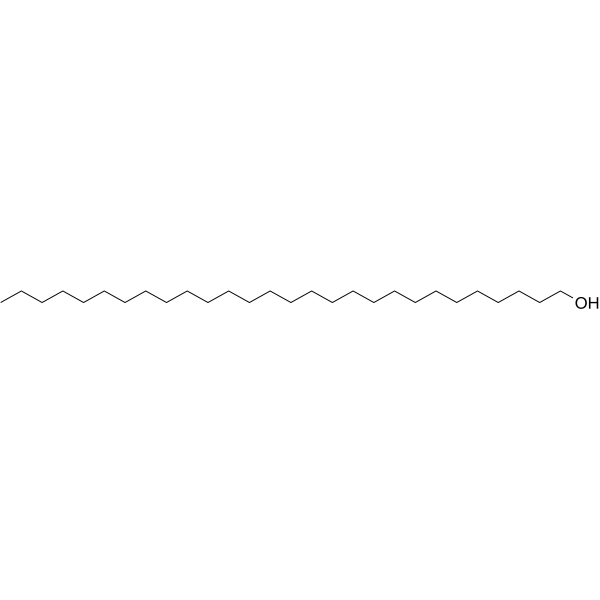
1-Octacosanol is a straight-chain aliphatic 28-carbon fatty alcohol and a major component of the cholesterol-lowering agent Policosanol. 1-Octacosanol exhibits various activities such as anti-fatigue, anti-angiogenic, cholesterol-lowering, and insecticidal effects .
|
-
-
- HY-W005627
-
-
-
- HY-W032013
-
-
-
- HY-W004263
-
|
Arachidyl alcohol
|
Environmental Pollutants
Fungal
|
Infection
|
|
1-Eicosanol (Arachidyl alcohol) is a long-chain fatty alcohol and volatile organic compound that can be isolated from the leaves of Leea indica and produced by Bacillus velezensis ZJ1. 1-Eicosanol inhibits mycelial growth of Alternaria solani and Botrytis cinerea. 1-Eicosanol is applicable to research related to tomato early blight and tomato gray mold .
|
-
-
- HY-W004294
-
-
-
- HY-B0222
-
|
Behenyl alcohol
|
Environmental Pollutants
HSV
|
Infection
|
|
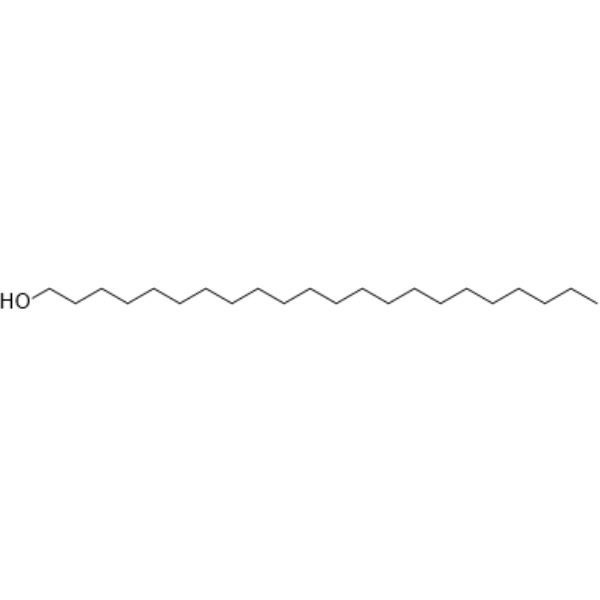
1-Docosanol (Behenyl alcohol) is a saturated fatty alcohol with reported inhibitory activity against lipid-enveloped viruses, including herpes simplex virus (HSV) .
|
-
-
- HY-W004295
-
|
|
Biochemical Assay Reagents
|
Inflammation/Immunology
|
|
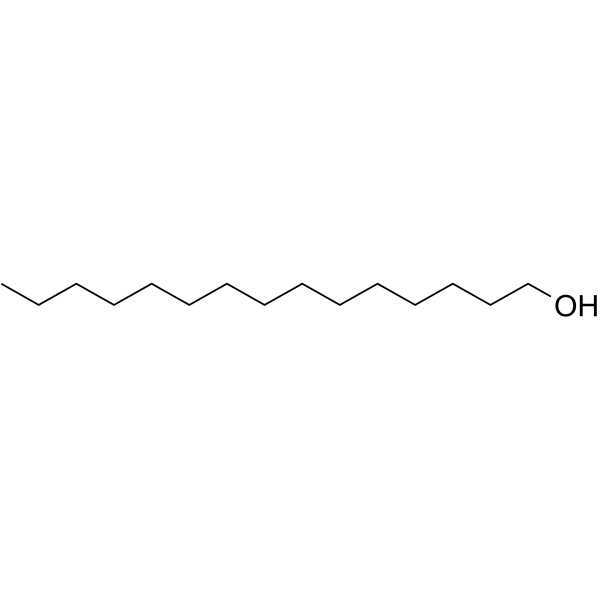
1-Pentadecanol is a long-chain fatty alcohol. 1-Pentadecanol has anti-comedone activity. 1-Pentadecanol has moisturizing and hydrating properties and can be applied to skin care products. 1-Pentadecanol can be used in the production of surfactants, emulsifiers and lubricants .
|
-
-
- HY-W250166
-
|
|
Environmental Pollutants
Biochemical Assay Reagents
|
Others
|
|
Poly(ethylene glycol) (12) tridecyl ether is a nonionic surfactant belonging to the family of ethoxylated fatty alcohols. It is commonly used as an emulsifier, solubilizer, and wetting agent in a variety of industrial and personal care products. Poly(ethylene glycol)(12) tridecyl ether has various properties that make it suitable for these applications, including its low toxicity, high solubility in water and organic solvents, and ability to stabilize emulsions. In addition, it can be used as a raw material for the production of other surfactants and specialty chemicals.
|
-
-
- HY-N8574
-
|
Heptacosan-1-ol
|
Biochemical Assay Reagents
|
Infection
|
|
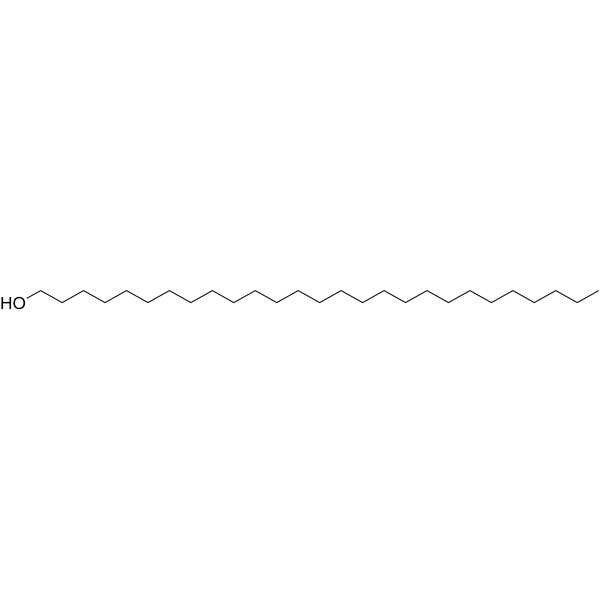
1-Heptacosanol (Heptacosan-1-ol) is a long-chain fatty alcohol with antifungal, antibacterial (against Escherichia coli and Staphylococcus aureus), nematicidal, anticancer and antioxidant activities. 1-Heptacosanol can be isolated from leaf extracts of Ficus septica and Lecaniodiscus cupanioides. 1-Heptacosanol not only effectively resists pathogenic fungal infections, but also shows potential against pepper anthracnose in phytopathology. 1-Heptacosanol can be used in the research of fungal infections, cancer and oxidative stress-related diseases .
|
-
-
- HY-W010807
-
|
|
Environmental Pollutants
Biochemical Assay Reagents
|
Others
|
|
Hexadecyl palmitate is an organic compound commonly used in the cosmetic industry as an emollient, thickener and skin conditioning agent. Cetyl palmitate is derived from a mixture of cetyl alcohol (a fatty alcohol) and palmitic acid (a saturated fatty acid). It is often used in skin care products such as moisturizers, lotions, and creams to improve their texture and Helps them glide smoothly on the skin. In addition to its use in cosmetics, cetyl palmitate is used in other industries including pharmaceuticals, food additives and lubricants. Overall, it's considered safe for use in personal care products, but like any other ingredient, it may cause irritation or an allergic reaction in some people.
|
-

-
- HY-Y1809
-
|
Stearyl alcohol
|
Environmental Pollutants
Biochemical Assay Reagents
|
Inflammation/Immunology
|
|
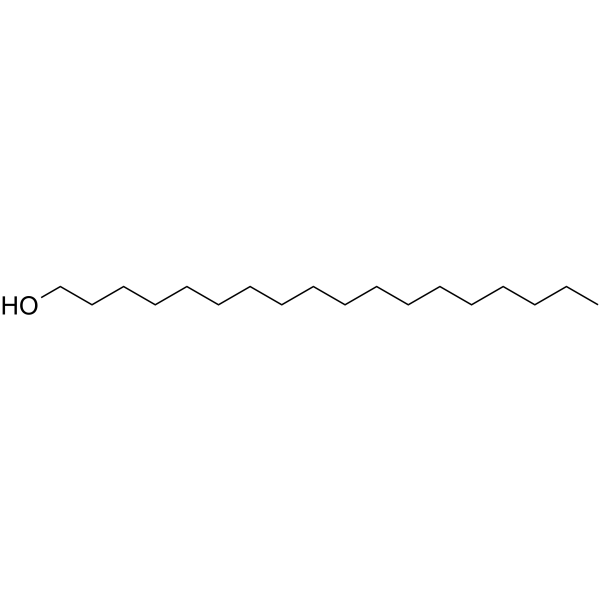
1-Hydroxyoctadecane (Stearyl alcohol) is a long-chain fatty alcohol and excipient. 1-Hydroxyoctadecane forms a closed oil film, thereby reducing transepidermal water loss (TEWL) and promoting skin moisturization. 1-Hydroxyoctadecane improves Imiquimod (HY-B0180)-induced psoriatic skin inflammation in mice .
|
-
-
- HY-W250170
-
|
Octyldecyl glucoside
|
Environmental Pollutants
Biochemical Assay Reagents
|
Others
|
|
Decyl glucoside is a mild nonionic surfactant. Decyl glucoside can be derived from renewable raw materials such as glucose and fatty alcohols from coconut oil or palm kernel oil. Decyl glucoside is known for its excellent foaming and cleaning properties.
|
-

-
- HY-104031
-
|
|
Notch
|
Neurological Disease
|
|
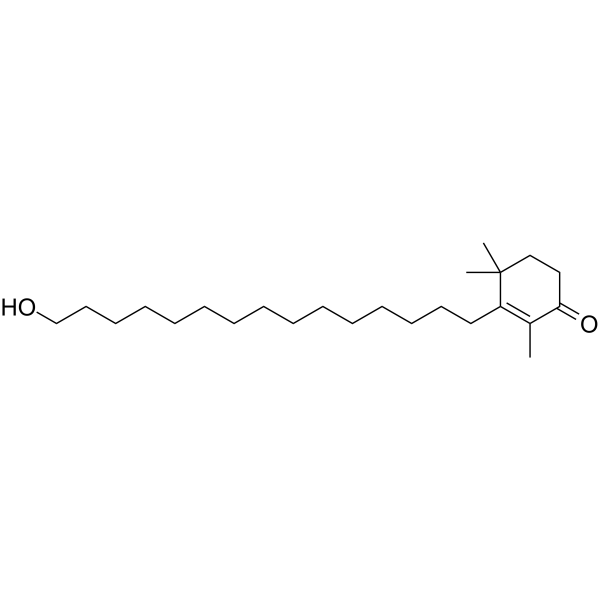
tCFA15 is a trimethyl cyclohexenonic long chain fatty alcohol containing 15 carbon atoms on the side chain, promotes the differentiation of neurons, and may regulates Notch signaling.
|
-
-
- HY-B1465S2
-
|
|
Endogenous Metabolite
|
Others
|
|
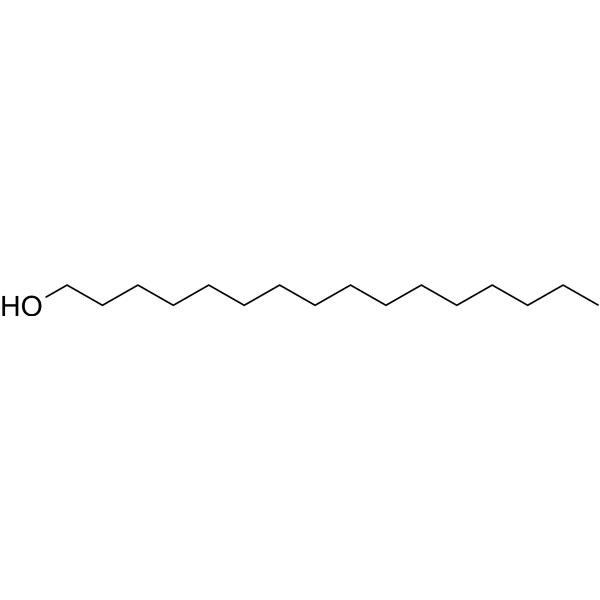
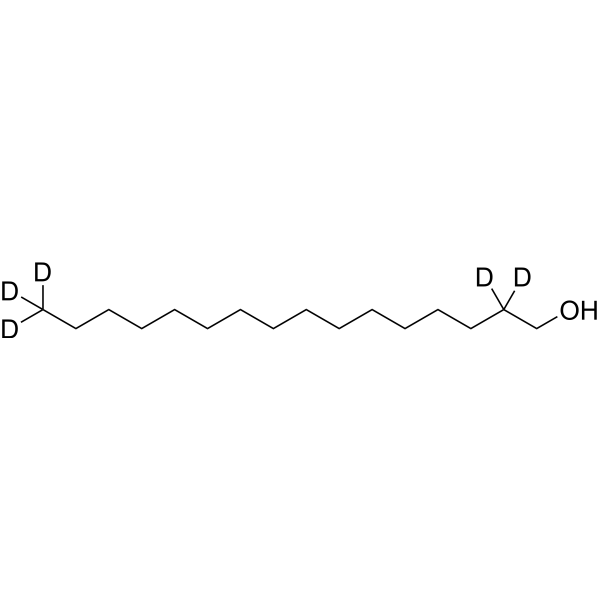
1-Hexadecanol-d5 is the deuterium labeled 1-Hexadecanol . 1-Hexadecanol is a fatty alcohol, a lipophilic substrate .
|
-
-
- HY-B1465R
-
|
Palmityl alcohol (Standard)
|
Reference Standards
Endogenous Metabolite
|
Others
|
|
1-Hexadecanol (Standard) is the analytical standard of 1-Hexadecanol. This product is intended for research and analytical applications. 1-Hexadecanol is a fatty alcohol, a lipophilic substrate. 1-Hexadecanol can be used for the research of ferroptosis .
|
-

-
- HY-W004294S1
-
|
|
Bacterial
|
Infection
|
|
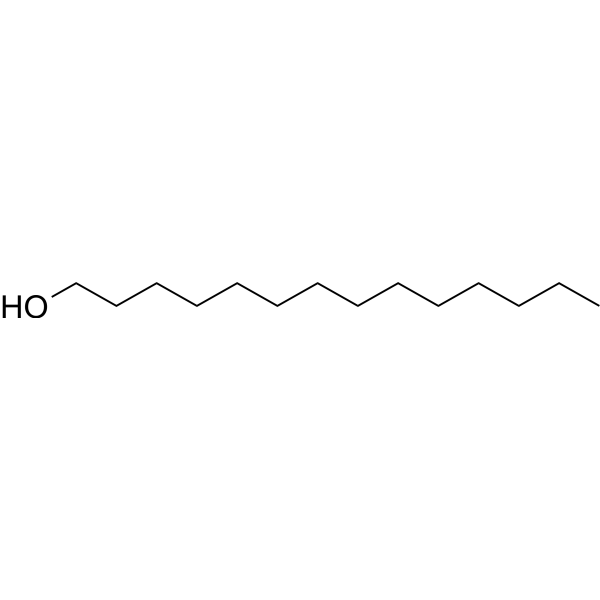
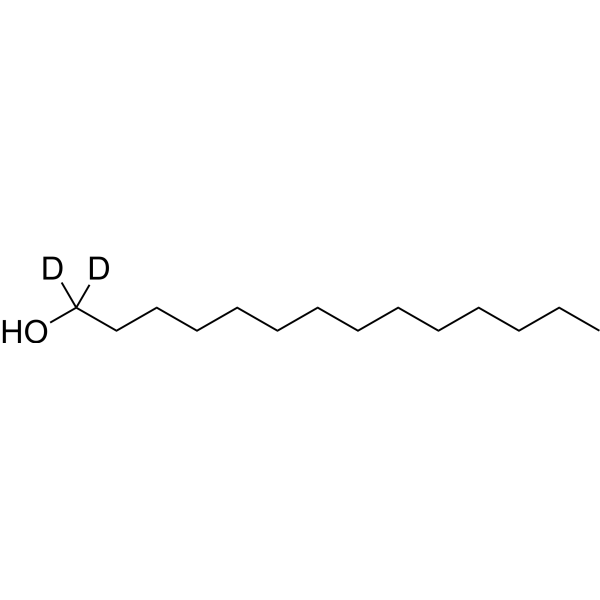
1-Tetradecanol-d2 is the deuterium labeled 1-Tetradecanol . 1-Tetradecanol, isolated from Myristica fragrans, is a straight-chain saturated fatty alcohol. 1-Tetradecanol possesses antibacterial and anti-inflammatory (periodontitis) activity .
|
-
-
- HY-W032013S1
-
|
Octanol-d2
|
Calcium Channel
Endogenous Metabolite
|
Metabolic Disease
|
|
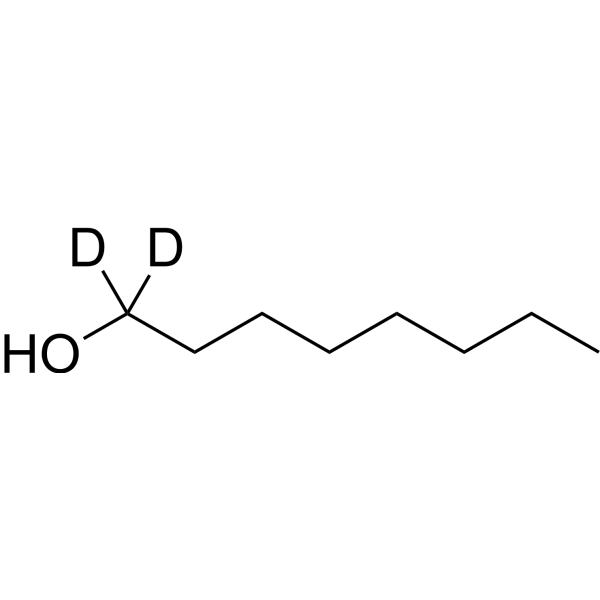
1-Octanol-d2 is the deuterium labeled 1-Octanol . 1-Octanol (Octanol), a saturated fatty alcohol, is a T-type calcium channels (T-channels) inhibitor with an IC50 of 4 μM for native T-currents . 1-Octanol is a highly attractive biofuel with diesel-like properties .
|
-
-
- HY-N17261
-
|
|
Others
|
Others
|
|
10-Nonacosanol is a long-chain fatty alcohol that can be found in Lonicera fragrantissima.
|
-

-
- HY-E70266
-
-
-
- HY-135801
-
|
|
Drug Intermediate
|
Metabolic Disease
|
|
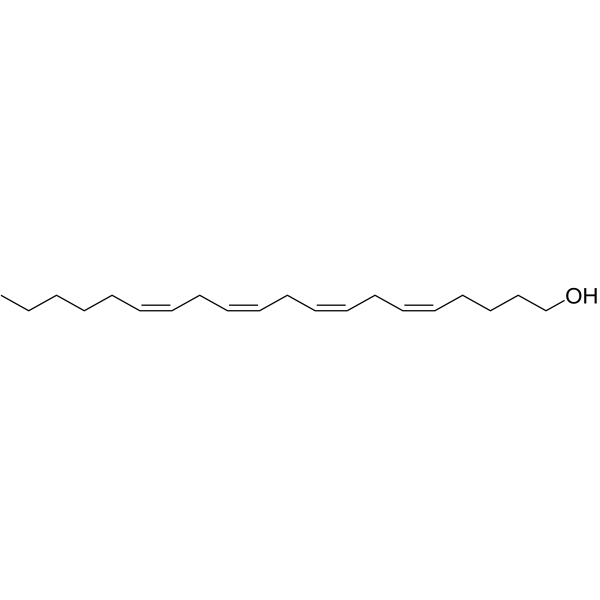
Arachidonyl alcohol is a long-chain primary fatty alcohol. Arachidonyl alcohol is used as a substrate for the production of several ether lipids possessing beneficial functions .
|
-
-
- HY-B0222S
-
|
|
HSV
|
Infection
|
|
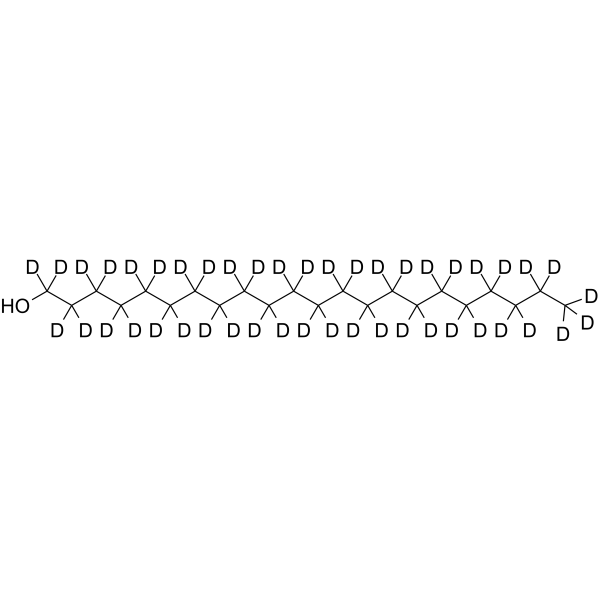
1-Docosanol-d45 is the deuterium labeled 1-Docosanol. 1-Docosanol is a saturated fatty alcohol used traditionally as an emollient, emulsifier, and thickener in cosmetics, and nutritional supplement. 1-Docosanol is an inhibitor of lipid-enveloped viruses including herpes simplex.
|
-
-
- HY-W032013R
-
|
Octanol (Standard)
|
Reference Standards
Calcium Channel
Endogenous Metabolite
|
Neurological Disease
Metabolic Disease
|
|
1-Octanol (Standard) is the analytical standard of 1-Octanol. This product is intended for research and analytical applications. 1-Octanol (Octanol), a saturated fatty alcohol, is a T-type calcium channels (T-channels) inhibitor with an IC50 of 4 μM for native T-currents . 1-Octanol is a highly attractive biofuel with diesel-like properties .
|
-

-
- HY-P10378
-
|
|
GnRH Receptor
|
Metabolic Disease
|
|
GPR10 agonist 1 (compound 18-S4) is a potent GPR10 agonist with EC50 values of 80, 7.8 nM in the presence (10%) or absence (0%) of FBS, respectively. GPR10 agonist 1 has the potential for the research of chronic obesity .
|
-

-
- HY-B1465S
-
|
|
Endogenous Metabolite
|
Others
|
|
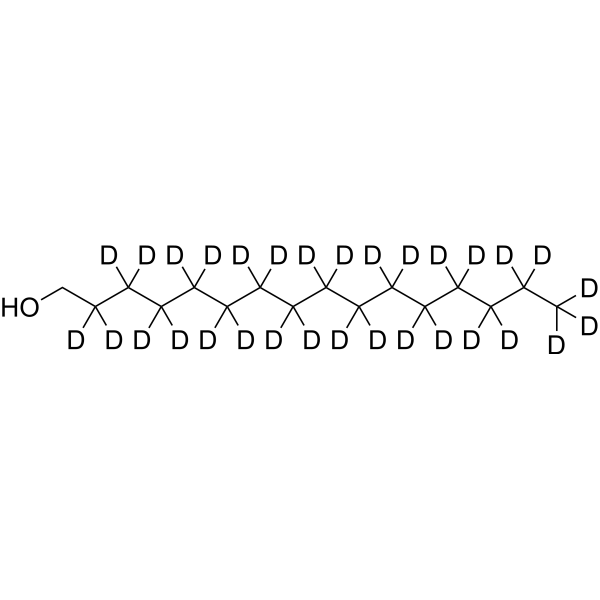
1-Hexadecanol-d31 is the deuterium labeled 1-Hexadecanol . 1-Hexadecanol is a fatty alcohol, a lipophilic substrate .
|
-
-
- HY-W005627R
-
|
|
Reference Standards
Others
|
Metabolic Disease
|
|
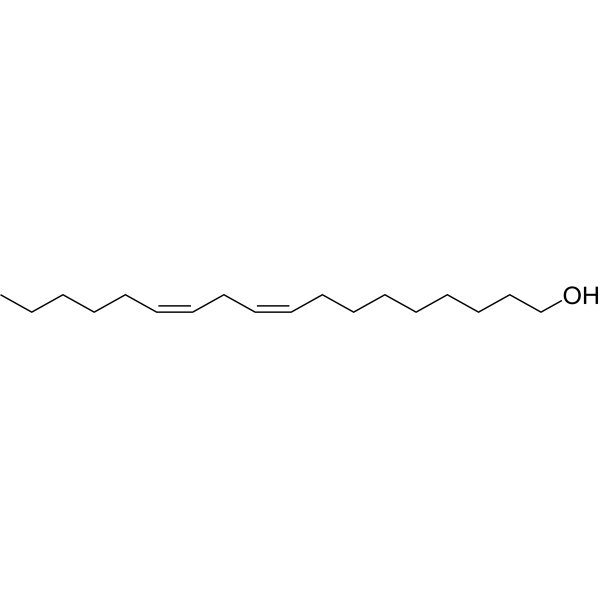
Linoleyl alcohol (Standard) is the analytical standard of Linoleyl alcohol. This product is intended for research and analytical applications. Linoleyl alcohol, a structural analog of Linoleic acid with no a-carboxyl group, is a fatty alcohol .
|
-

-
- HY-104031R
-
|
|
Reference Standards
Notch
|
Neurological Disease
|
|
tCFA15 (Standard) is the analytical standard of tCFA15. This product is intended for research and analytical applications. tCFA15 is a trimethyl cyclohexenonic long chain fatty alcohol containing 15 carbon atoms on the side chain, promotes the differentiation of neurons, and may regulates Notch signaling.
|
-

-
- HY-W004294S
-
|
|
Bacterial
|
Infection
|
|
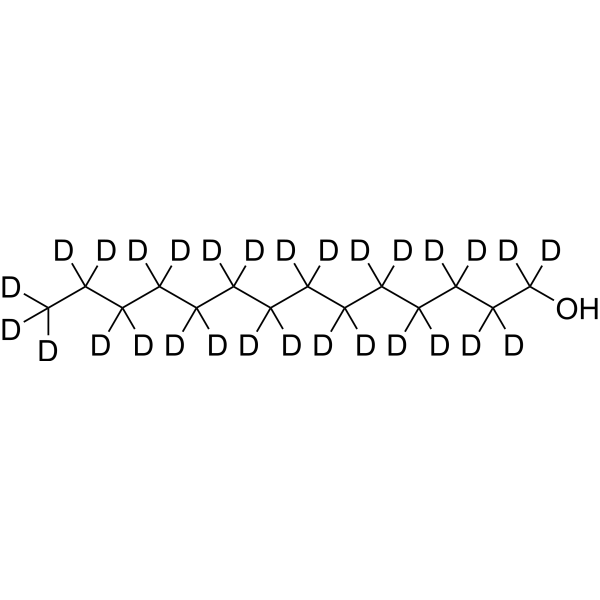
1-Tetradecanol-d29 is the deuterium labeled 1-Tetradecanol . 1-Tetradecanol, isolated from Myristica fragrans, is a straight-chain saturated fatty alcohol. 1-Tetradecanol possesses antibacterial and anti-inflammatory (periodontitis) activity .
|
-
-
- HY-W004294R
-
|
|
Reference Standards
Bacterial
|
Infection
Inflammation/Immunology
|
|
1-Tetradecanol (Standard) is the analytical standard of 1-Tetradecanol. This product is intended for research and analytical applications. 1-Tetradecanol, isolated from Myristica fragrans, is a straight-chain saturated fatty alcohol. 1-Tetradecanol possesses antibacterial and anti-inflammatory (periodontitis) activity .
|
-

-
- HY-B0222R
-
|
Behenyl alcohol (Standard)
|
Reference Standards
HSV
|
Infection
|
|
1-Docosanol (Standard) is the analytical standard of 1-Docosanol. This product is intended for research and analytical applications. 1-Docosanol (Behenyl alcohol) is a saturated fatty alcohol with reported inhibitory activity against lipid-enveloped viruses, including herpes simplex virus (HSV) .
|
-

-
- HY-W032013S
-
|
Octanol-d17
|
Calcium Channel
Endogenous Metabolite
|
Metabolic Disease
|
|
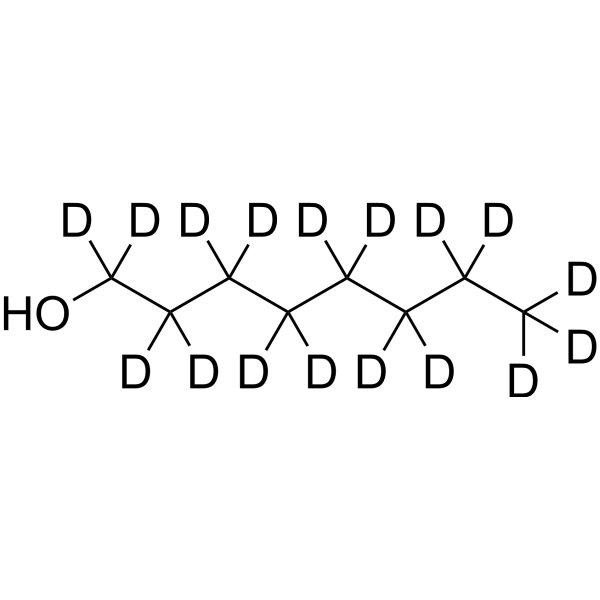
1-Octanol-d17 is the deuterium labeled 1-Octanol . 1-Octanol (Octanol), a saturated fatty alcohol, is a T-type calcium channels (T-channels) inhibitor with an IC50 of 4 μM for native T-currents . 1-Octanol is a highly attractive biofuel with diesel-like properties .
|
-
-
- HY-W032013S2
-
|
Octanol-d2-1
|
Calcium Channel
Endogenous Metabolite
Isotope-Labeled Compounds
|
Others
|
|
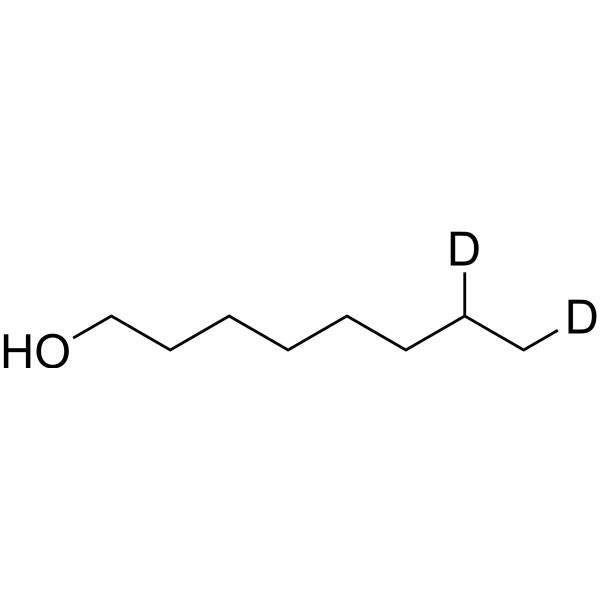
1-Octanol-d2-1 is deuterated labeled 1-Octanol (HY-W032013). 1-Octanol (Octanol), a saturated fatty alcohol, is a T-type calcium channels (T-channels) inhibitor with an IC50 of 4 μM for native T-currents . 1-Octanol is a highly attractive biofuel with diesel-like properties .
|
-
-
- HY-W032013S3
-
|
Octanol-d5
|
Calcium Channel
Endogenous Metabolite
Isotope-Labeled Compounds
|
Others
|
|
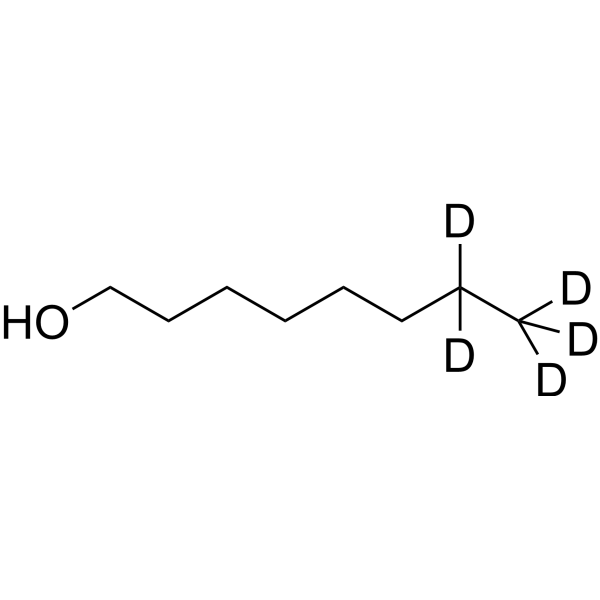
1-Octanol-d5 is deuterated labeled 1-Octanol (HY-W032013). 1-Octanol (Octanol), a saturated fatty alcohol, is a T-type calcium channels (T-channels) inhibitor with an IC50 of 4 μM for native T-currents . 1-Octanol is a highly attractive biofuel with diesel-like properties .
|
-
-
- HY-158575
-
|
14(Z),17(Z),20(Z),23(Z),26(Z),29(Z)-Dotriacontahexaenol
|
Drug Intermediate
|
Others
|
|
all-cis-14,17,20,23,26,29-Dotriacontahexaenol (14(Z),17(Z),20(Z),23(Z),26(Z),29(Z)-Dotriacontahexaenol) is a long-chain fatty alcohol. It is an intermediate in the synthesis of the very long-chain PUFA all-cis-14,17,20,23,26,29-dotriacontahexaenoic acid .
|
-

-
- HY-W010807R
-
|
|
Biochemical Assay Reagents
Reference Standards
|
Others
|
|
Hexadecyl palmitate (Standard) is the analytical standard of Hexadecyl palmitate. This product is intended for research and analytical applications. Hexadecyl palmitate is an organic compound commonly used in the cosmetic industry as an emollient, thickener and skin conditioning agent. Cetyl palmitate is derived from a mixture of cetyl alcohol (a fatty alcohol) and palmitic acid (a saturated fatty acid). It is often used in skin care products such as moisturizers, lotions, and creams to improve their texture and Helps them glide smoothly on the skin. In addition to its use in cosmetics, cetyl palmitate is used in other industries including pharmaceuticals, food additives and lubricants. Overall, it's considered safe for use in personal care products, but like any other ingredient, it may cause irritation or an allergic reaction in some people.
|
-

-
- HY-W335674
-
-

-
- HY-B1465S4
-
|
|
Endogenous Metabolite
|
Others
|
|
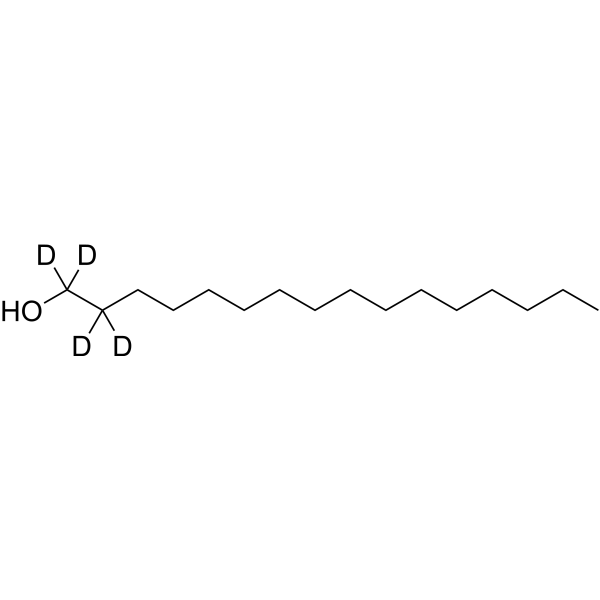
1-Hexadecanol-d4 is the deuterium labeled 1-Hexadecanol . 1-Hexadecanol is a fatty alcohol, a lipophilic substrate .
|
-
-
- HY-B1465S1
-
|
|
Endogenous Metabolite
|
Others
|
|
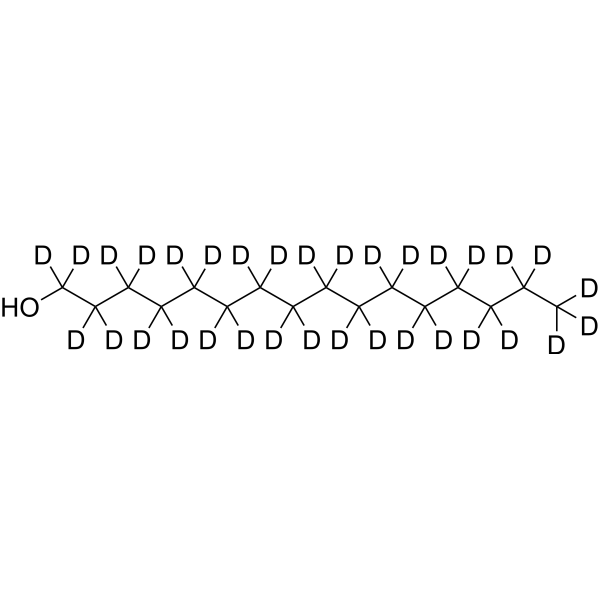
1-Hexadecanol-d33 is the deuterium labeled 1-Hexadecanol . 1-Hexadecanol is a fatty alcohol, a lipophilic substrate .
|
-
-
- HY-B1465S3
-
|
|
Endogenous Metabolite
|
Others
|
|
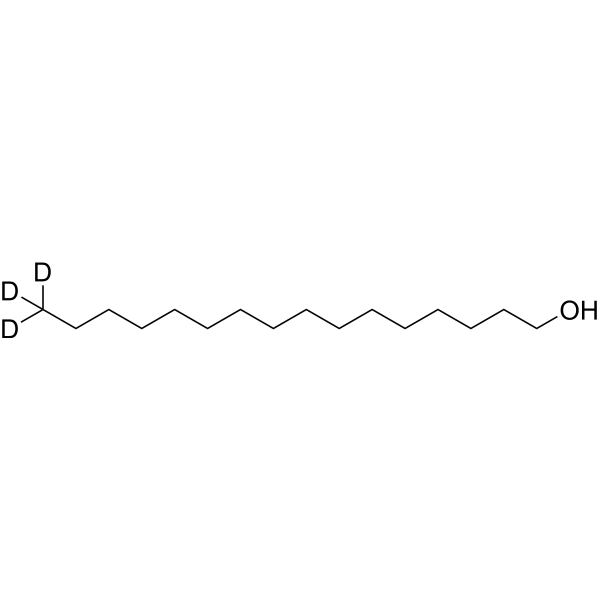
1-Hexadecanol-d3 is the deuterium labeled 1-Hexadecanol . 1-Hexadecanol is a fatty alcohol, a lipophilic substrate .
|
-
-
- HY-W758425
-
-

-
- HY-W004295R
-
|
|
Reference Standards
Others
|
Inflammation/Immunology
|
|
1-Pentadecanol (Standard) is the analytical standard of 1-Pentadecanol. This product is intended for research and analytical applications. 1-Pentadecanol is a long-chain fatty alcohol. 1-Pentadecanol has anti-comedone activity. 1-Pentadecanol has moisturizing and hydrating properties and can be applied to skin care products. 1-Pentadecanol can be used in the production of surfactants, emulsifiers and lubricants.
|
-

| Cat. No. |
Product Name |
Type |
-
- HY-W250166
-
|
|
Biochemical Assay Reagents
|
|
Poly(ethylene glycol) (12) tridecyl ether is a nonionic surfactant belonging to the family of ethoxylated fatty alcohols. It is commonly used as an emulsifier, solubilizer, and wetting agent in a variety of industrial and personal care products. Poly(ethylene glycol)(12) tridecyl ether has various properties that make it suitable for these applications, including its low toxicity, high solubility in water and organic solvents, and ability to stabilize emulsions. In addition, it can be used as a raw material for the production of other surfactants and specialty chemicals.
|
-
- HY-N8574
-
|
Heptacosan-1-ol
|
Biochemical Assay Reagents
|
|
1-Heptacosanol (Heptacosan-1-ol) is a long-chain fatty alcohol with antifungal, antibacterial (against Escherichia coli and Staphylococcus aureus), nematicidal, anticancer and antioxidant activities. 1-Heptacosanol can be isolated from leaf extracts of Ficus septica and Lecaniodiscus cupanioides. 1-Heptacosanol not only effectively resists pathogenic fungal infections, but also shows potential against pepper anthracnose in phytopathology. 1-Heptacosanol can be used in the research of fungal infections, cancer and oxidative stress-related diseases .
|
-
- HY-W010807
-
|
|
Biochemical Assay Reagents
|
|
Hexadecyl palmitate is an organic compound commonly used in the cosmetic industry as an emollient, thickener and skin conditioning agent. Cetyl palmitate is derived from a mixture of cetyl alcohol (a fatty alcohol) and palmitic acid (a saturated fatty acid). It is often used in skin care products such as moisturizers, lotions, and creams to improve their texture and Helps them glide smoothly on the skin. In addition to its use in cosmetics, cetyl palmitate is used in other industries including pharmaceuticals, food additives and lubricants. Overall, it's considered safe for use in personal care products, but like any other ingredient, it may cause irritation or an allergic reaction in some people.
|
-
- HY-W250170
-
|
Octyldecyl glucoside
|
Biochemical Assay Reagents
|
|
Decyl glucoside is a mild nonionic surfactant. Decyl glucoside can be derived from renewable raw materials such as glucose and fatty alcohols from coconut oil or palm kernel oil. Decyl glucoside is known for its excellent foaming and cleaning properties.
|
-
- HY-W010807R
-
|
|
Biochemical Assay Reagents
|
|
Hexadecyl palmitate (Standard) is the analytical standard of Hexadecyl palmitate. This product is intended for research and analytical applications. Hexadecyl palmitate is an organic compound commonly used in the cosmetic industry as an emollient, thickener and skin conditioning agent. Cetyl palmitate is derived from a mixture of cetyl alcohol (a fatty alcohol) and palmitic acid (a saturated fatty acid). It is often used in skin care products such as moisturizers, lotions, and creams to improve their texture and Helps them glide smoothly on the skin. In addition to its use in cosmetics, cetyl palmitate is used in other industries including pharmaceuticals, food additives and lubricants. Overall, it's considered safe for use in personal care products, but like any other ingredient, it may cause irritation or an allergic reaction in some people.
|
| Cat. No. |
Product Name |
Target |
Research Area |
-
- HY-W250166
-
|
|
Environmental Pollutants
Biochemical Assay Reagents
|
Others
|
|
Poly(ethylene glycol) (12) tridecyl ether is a nonionic surfactant belonging to the family of ethoxylated fatty alcohols. It is commonly used as an emulsifier, solubilizer, and wetting agent in a variety of industrial and personal care products. Poly(ethylene glycol)(12) tridecyl ether has various properties that make it suitable for these applications, including its low toxicity, high solubility in water and organic solvents, and ability to stabilize emulsions. In addition, it can be used as a raw material for the production of other surfactants and specialty chemicals.
|
-
- HY-P10378
-
|
|
GnRH Receptor
|
Metabolic Disease
|
|
GPR10 agonist 1 (compound 18-S4) is a potent GPR10 agonist with EC50 values of 80, 7.8 nM in the presence (10%) or absence (0%) of FBS, respectively. GPR10 agonist 1 has the potential for the research of chronic obesity .
|
| Cat. No. |
Product Name |
Category |
Target |
Chemical Structure |
| Cat. No. |
Product Name |
Chemical Structure |
-
- HY-B1465S2
-
|
|
|
1-Hexadecanol-d5 is the deuterium labeled 1-Hexadecanol . 1-Hexadecanol is a fatty alcohol, a lipophilic substrate .
|
-
-
- HY-W004294S1
-
|
|
|
1-Tetradecanol-d2 is the deuterium labeled 1-Tetradecanol . 1-Tetradecanol, isolated from Myristica fragrans, is a straight-chain saturated fatty alcohol. 1-Tetradecanol possesses antibacterial and anti-inflammatory (periodontitis) activity .
|
-
-
- HY-W032013S1
-
|
|
|
1-Octanol-d2 is the deuterium labeled 1-Octanol . 1-Octanol (Octanol), a saturated fatty alcohol, is a T-type calcium channels (T-channels) inhibitor with an IC50 of 4 μM for native T-currents . 1-Octanol is a highly attractive biofuel with diesel-like properties .
|
-
-
- HY-B0222S
-
|
|
|
1-Docosanol-d45 is the deuterium labeled 1-Docosanol. 1-Docosanol is a saturated fatty alcohol used traditionally as an emollient, emulsifier, and thickener in cosmetics, and nutritional supplement. 1-Docosanol is an inhibitor of lipid-enveloped viruses including herpes simplex.
|
-
-
- HY-B1465S
-
|
|
|
1-Hexadecanol-d31 is the deuterium labeled 1-Hexadecanol . 1-Hexadecanol is a fatty alcohol, a lipophilic substrate .
|
-
-
- HY-W004294S
-
|
|
|
1-Tetradecanol-d29 is the deuterium labeled 1-Tetradecanol . 1-Tetradecanol, isolated from Myristica fragrans, is a straight-chain saturated fatty alcohol. 1-Tetradecanol possesses antibacterial and anti-inflammatory (periodontitis) activity .
|
-
-
- HY-W032013S
-
|
|
|
1-Octanol-d17 is the deuterium labeled 1-Octanol . 1-Octanol (Octanol), a saturated fatty alcohol, is a T-type calcium channels (T-channels) inhibitor with an IC50 of 4 μM for native T-currents . 1-Octanol is a highly attractive biofuel with diesel-like properties .
|
-
-
- HY-W032013S2
-
|
|
|
1-Octanol-d2-1 is deuterated labeled 1-Octanol (HY-W032013). 1-Octanol (Octanol), a saturated fatty alcohol, is a T-type calcium channels (T-channels) inhibitor with an IC50 of 4 μM for native T-currents . 1-Octanol is a highly attractive biofuel with diesel-like properties .
|
-
-
- HY-W032013S3
-
|
|
|
1-Octanol-d5 is deuterated labeled 1-Octanol (HY-W032013). 1-Octanol (Octanol), a saturated fatty alcohol, is a T-type calcium channels (T-channels) inhibitor with an IC50 of 4 μM for native T-currents . 1-Octanol is a highly attractive biofuel with diesel-like properties .
|
-
-
- HY-B1465S4
-
|
|
|
1-Hexadecanol-d4 is the deuterium labeled 1-Hexadecanol . 1-Hexadecanol is a fatty alcohol, a lipophilic substrate .
|
-
-
- HY-B1465S1
-
|
|
|
1-Hexadecanol-d33 is the deuterium labeled 1-Hexadecanol . 1-Hexadecanol is a fatty alcohol, a lipophilic substrate .
|
-
-
- HY-B1465S3
-
|
|
|
1-Hexadecanol-d3 is the deuterium labeled 1-Hexadecanol . 1-Hexadecanol is a fatty alcohol, a lipophilic substrate .
|
-
-
- HY-W758425
-
|
|
|
1-Tetradecanol-d7 is the deuterium labeled 1-Tetradecanol (HY-W004294). 1-Tetradecanol is a straight-chain saturated fatty alcohol and antibacterial agent. 1-Tetradecanol can be isolated from Myristica fragrans. 1-Tetradecanol possesses antibacterial and anti-inflammatory (periodontitis) activity .
|
-
| Cat. No. |
Product Name |
|
Classification |
-
- HY-B1465
-
|
Palmityl alcohol
|
|
Emulsifiers
Surfactants
|
|
1-Hexadecanol is a fatty alcohol, a lipophilic substrate. 1-Hexadecanol can be used for the research of ferroptosis .
|
-
- HY-W010807
-
|
|
|
Emulsifiers
|
|
Hexadecyl palmitate is an organic compound commonly used in the cosmetic industry as an emollient, thickener and skin conditioning agent. Cetyl palmitate is derived from a mixture of cetyl alcohol (a fatty alcohol) and palmitic acid (a saturated fatty acid). It is often used in skin care products such as moisturizers, lotions, and creams to improve their texture and Helps them glide smoothly on the skin. In addition to its use in cosmetics, cetyl palmitate is used in other industries including pharmaceuticals, food additives and lubricants. Overall, it's considered safe for use in personal care products, but like any other ingredient, it may cause irritation or an allergic reaction in some people.
|
-
- HY-Y1809
-
|
Stearyl alcohol
|
|
Others
|
|
1-Hydroxyoctadecane (Stearyl alcohol) is a long-chain fatty alcohol and excipient. 1-Hydroxyoctadecane forms a closed oil film, thereby reducing transepidermal water loss (TEWL) and promoting skin moisturization. 1-Hydroxyoctadecane improves Imiquimod (HY-B0180)-induced psoriatic skin inflammation in mice .
|
Your information is safe with us. * Required Fields.
Inquiry Information
- Product Name:
- Cat. No.:
- Quantity:
- MCE Japan Authorized Agent:








