



1-Hydroxyoctadecane

Based on 1 Customer Validation
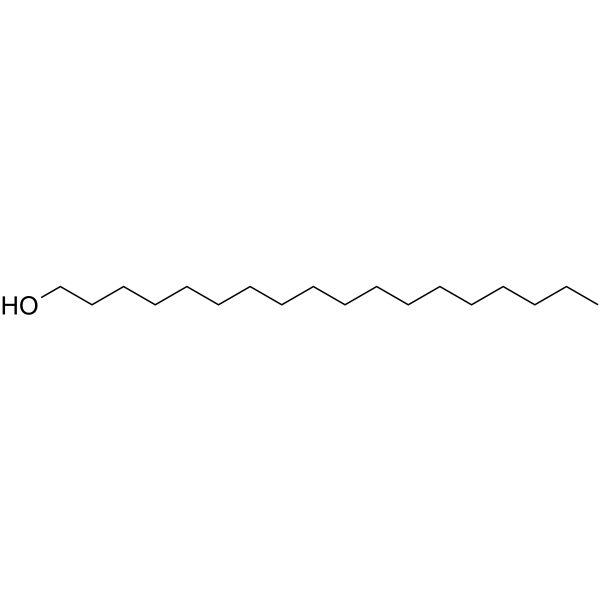
1-Hydroxyoctadecane (Stearyl alcohol) is a long-chain fatty alcohol and excipient. 1-Hydroxyoctadecane forms a closed oil film, thereby reducing transepidermal water loss (TEWL) and promoting skin moisturization. 1-Hydroxyoctadecane improves Imiquimod (HY-B0180)-induced psoriatic skin inflammation in mice.
For research use only. We do not sell to patients.
- Purity : 99.22%
- CAS No.: 112-92-5
- Formula: C18H38O
- Molecular Weight:270.49
-
Storage:Powder -20°C, 3 years , 4°C, 2 years ; In solvent -80°C, 2 years , -20°C, 1 year

To place orders, for customer services and technical support, please contact: MedChemExpress USA
Tel: 609-228-6898 E-mail: [email protected] [email protected]


-
 Biological Activity
-
Chemical Information
-
Solvent & Solubility
- Protocols
- Purity & Documentation
- References
-
 Help & FAQs


-
HY-B1465
1-HexadecanolEndogenous Metabolite -

HY-Y1809R
1-Hydroxyoctadecane (Standard) -
HY-W032022
1-HexanolPrimary Alcohol -
HY-W127493
1-HexacosanolBiochemical Assay Reagent -
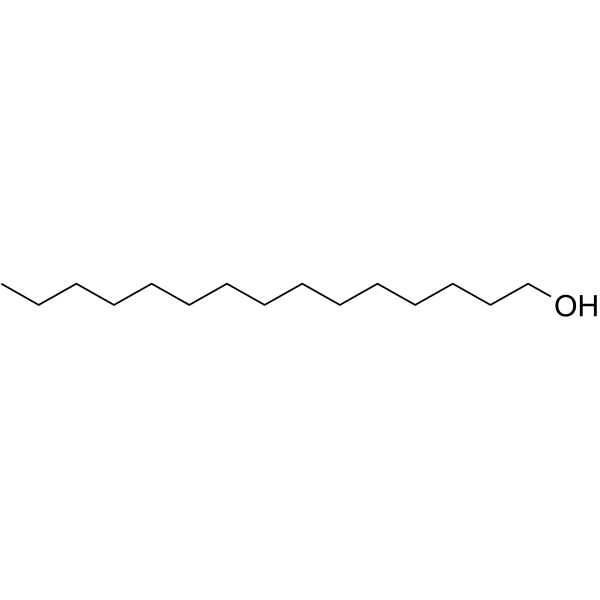
HY-W004295
1-PentadecanolAntibacterial Agent -

HY-B1465R
1-Hexadecanol (Standard)Endogenous Metabolite -
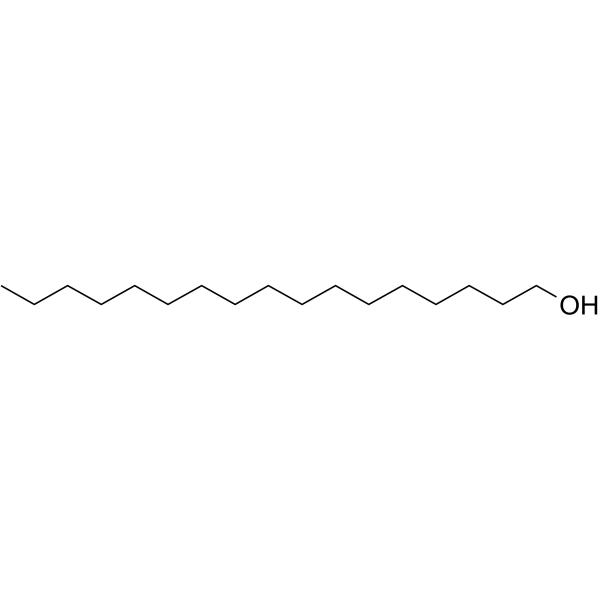
HY-W004296
1-HeptadecanolAntibacterial Agent -
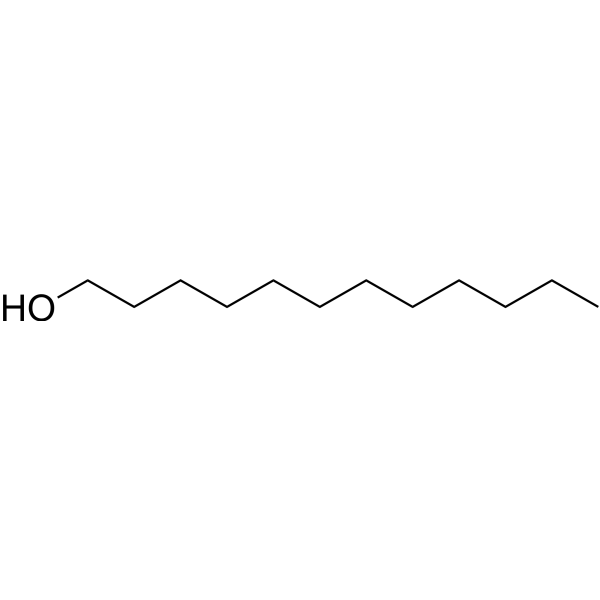
HY-Y0289
1-DodecanolSurfactant -
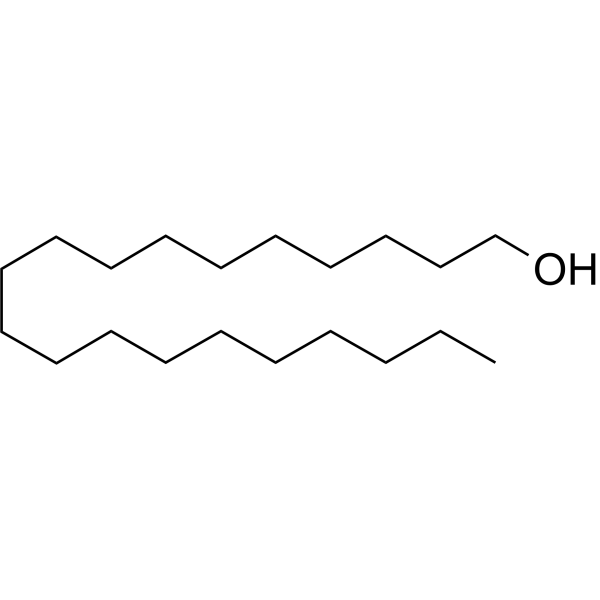
HY-W004263
1-EicosanolAntifungal Agent -
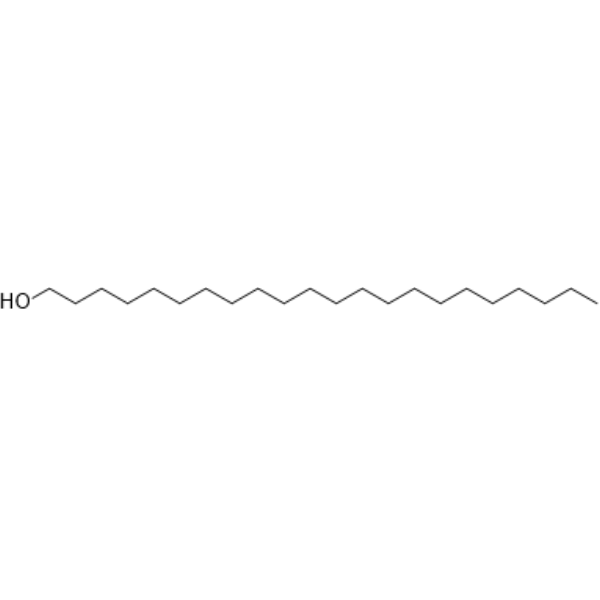
HY-B0222
1-DocosanolHSV Inhibitor -
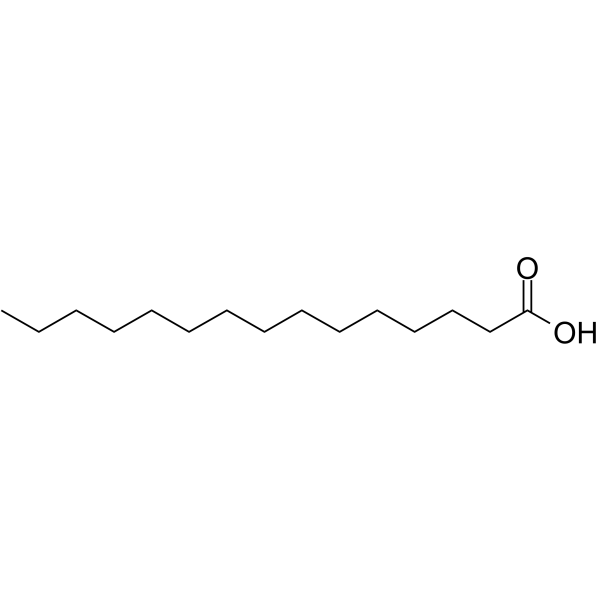
HY-W004283
Pentadecanoic acidSTAT3 Inhibitor -
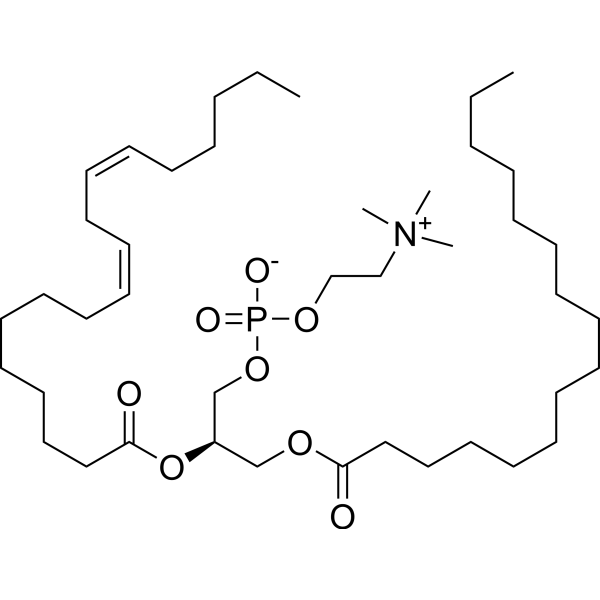
HY-B2235
LecithinEndogenous Metabolite


Biological Activity
Description
IC50 & Target
|
Human Endogenous Metabolite |
In Vivo
MedChemExpress (MCE) has not independently confirmed the accuracy of these methods. They are for reference only.


Chemical Information
-
CAS No. 112-92-5
-
Appearance Solid
-
Molecular Weight 270.49
-
Formula C18H38O
-
Color White to off-white
-
SMILES
CCCCCCCCCCCCCCCCCCO
-
Synonyms
Stearyl alcohol
-
Structure Classification
-
Initial Source
-
Shipping
Room temperature in continental US; may vary elsewhere.
-
Storage
Powder -20°C 3 years 4°C 2 years In solvent -80°C 2 years -20°C 1 year


Solvent & Solubility
In Vitro:
DMSO : 5 mg/mL (18.48 mM; Need ultrasonic; Hygroscopic DMSO has a significant impact on the solubility of product, please use newly opened DMSO)
Please refer to the solubility information to select the appropriate solvent. Once prepared, please aliquot and store the solution to prevent product inactivation from repeated freeze-thaw cycles.
Storage method and period of stock solution: -80°C, 2 years; -20°C, 1 year. When stored at -80°C, please use it within 2 years. When stored at -20°C, please use it within 1 year.
Please refer to the solubility information to select the appropriate solvent. Once prepared, please aliquot and store the solution to prevent product inactivation from repeated freeze-thaw cycles.
Storage method and period of stock solution: -80°C, 2 years; -20°C, 1 year. When stored at -80°C, please use it within 2 years. When stored at -20°C, please use it within 1 year.
Concentration (start) × Volume (start) = Concentration (final) × Volume (final)


Purity & Documentation
-
Data Sheet (267 KB)
-
SDS (396 KB)
- English - EN (396 KB)
- Français - FR (396 KB)
- Deutsch - DE (396 KB)
- Norwegian - NO (396 KB)
- Español - ES (396 KB)
- Swedish - SV (396 KB)
- Italian - IT (396 KB)
- Korean - KR (396 KB)
- Portuguese - PT (396 KB)
-
Handling Instructions (2659 KB)
References


Complete Stock Solution Preparation Table
Please refer to the solubility information to select the appropriate solvent. Once prepared, please aliquot and store the solution to prevent product inactivation from repeated freeze-thaw cycles.
Storage method and period of stock solution: -80°C, 2 years; -20°C, 1 year. When stored at -80°C, please use it within 2 years. When stored at -20°C, please use it within 1 year.
| Optional Solvent | Concentration Solvent Mass | 1 mg | 5 mg | 10 mg | 25 mg |
|---|---|---|---|---|---|
| DMSO | 1 mM | 3.6970 mL | 18.4850 mL | 36.9699 mL | 92.4249 mL |
| 5 mM | 0.7394 mL | 3.6970 mL | 7.3940 mL | 18.4850 mL | |
| 10 mM | 0.3697 mL | 1.8485 mL | 3.6970 mL | 9.2425 mL | |
| 15 mM | 0.2465 mL | 1.2323 mL | 2.4647 mL | 6.1617 mL |


1-Hydroxyoctadecane Related Classifications
HY-Y1809 Related Classifications
 Powered by Bioz