Search Result
Results for "
item/HY-16562
" in MedChemExpress (MCE) Product Catalog:
7
Isotope-Labeled Compounds
| Cat. No. |
Product Name |
Target |
Research Areas |
Chemical Structure |
-
- HY-16562
-
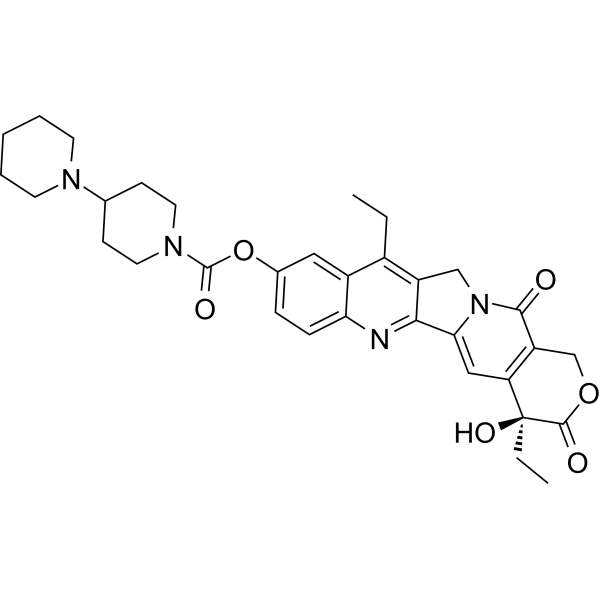
Irinotecan
Maximum Cited Publications
75 Publications Verification
(+)-Irinotecan; CPT-11; VAL-413free base
|
Topoisomerase
Autophagy
|
Neurological Disease
Cancer
|
|
Irinotecan ((+)-Irinotecan) is a topoisomerase I inhibitor, preventing religation of the DNA strand by binding to topoisomerase I-DNA complex .
|
-
-
- HY-16562A
-
|
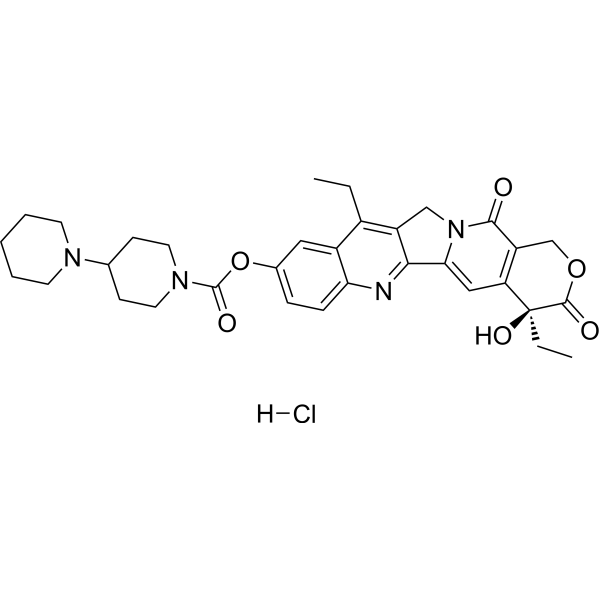
(+)-Irinotecan HYdrochloride; CPT-11 HYdrochloride; VAL-413
|
Topoisomerase
Autophagy
|
Cancer
|
|
Irinotecan hydrochloride ((+)-Irinotecan hydrochloride) is a topoisomerase I inhibitor mainly used to treat colon cancer and rectal cancer .
|
-
-
- HY-126373
-
|
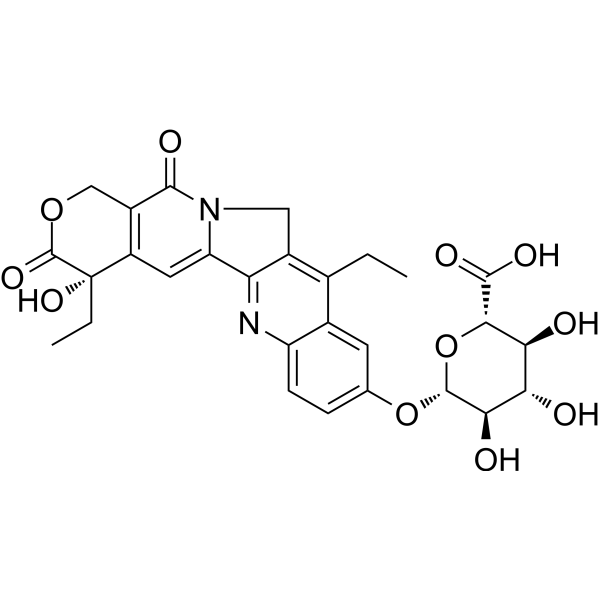
SN-38G
|
Drug Metabolite
|
Cancer
|
|
SN-38 glucuronide is an inactive metabolite of the anticancer active molecule Irinotecan (HY-16562) and has toxic effects on the gastrointestinal tract. Irinotecan is a topoisomerase I inhibitor which can be used for researching colon and rectal cancer .
|
-
-
- HY-113283
-
|
|
Amyloid-β
Natriuretic Peptide Receptor (NPR)
α-synuclein
Transthyretin (TTR)
Claudin
|
Neurological Disease
Metabolic Disease
Cancer
|
|
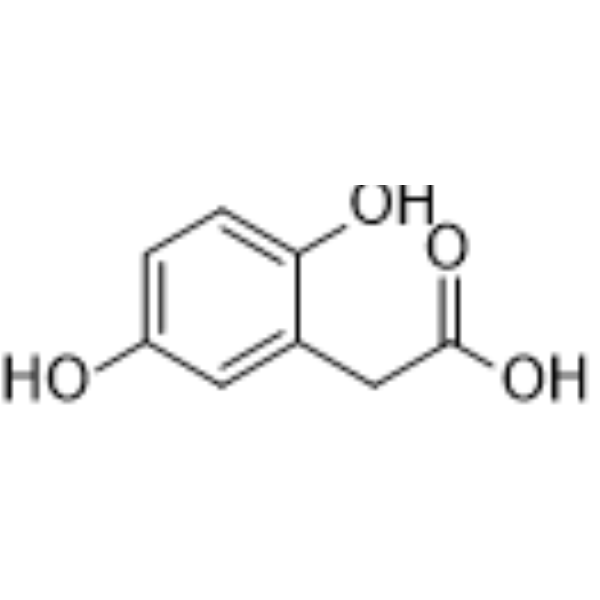
Homogentisic acid is an orally active, blood-brain barrier-permeable amyloidogenic compound that functions as both an amyloid component and a pigment precursor. Accumulation of homogentisic acid downregulates tight junction proteins (such as claudin-5, occludin, ZO-1) and impairs blood-brain barrier integrity. Homogentisic acid and its oxidation product benzoquinone acetic acid not only induce the aggregation and fibrosis of multiple proteins (such as Aβ1-42, α-synuclein, SAA, Transthyretin (TTR), atrial natriuretic peptide), but also trigger oxidative stress, damage to the Wnt/β-catenin pathway, and neurotoxicity, leading to ochronosis pigment deposition and synaptic dysfunction. At specific concentrations, homogentisic acid exerts no cytotoxicity or genotoxicity on human peripheral blood lymphocytes, and even counteracts the genotoxicity induced by Irinotecan (HY-16562). Homogentisic acid serves as an important tool molecule for investigating the mechanisms of diseases including ochronosis, secondary amyloidosis, Alzheimer's disease, and colorectal cancer .
|
-
-
- HY-12757
-
|
|
BCRP
|
Cancer
|
|
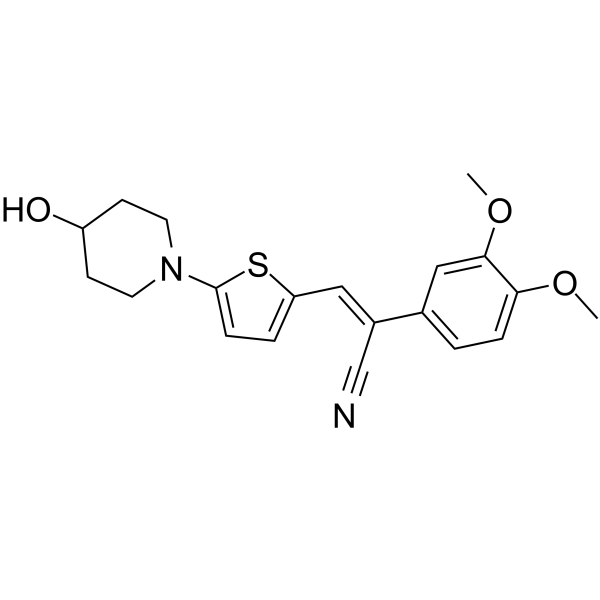
YHO-13177, a acrylonitrile derivative, is an orally active, potent and specific inhibitor of breast cancer resistance protein (BCRP) and ABCG2 with an IC50 value of 10 nM. YHO-13177 potentiates the cytotoxicity of SN-38 in HCT116 and A549 cells that express BCRP. YHO-13177 combined with Irinotecan (HY-16562) significantly suppresses the tumor growth in an HCT116/BCRP xenograft model .
|
-
-
- HY-W012985
-
|
|
ATP Synthase
Apoptosis
|
Metabolic Disease
Cancer
|
|
Methyl pyruvate is a methyl ester derivative of pyruvic acid. Methyl pyruvate induces insulin release and membrane depolarization. Methyl pyruvate rescues proteasome damage and nuclear localization of TdP-43 caused by overexpression of σ1RE102Q by enhancing ATP synthesis. Methyl pyruvate selectively protects normal lung fibroblasts from cell death induced by Irinotecan (HY-16562). Methyl pyruvate promotes apoptosis and necrosis in cancer cells and downregulates angiogenesis and cell cycle pathways. Methyl pyruvate is an effective substrate for dihydrodihydrogen dehydrogenase.
|
-

-
- HY-173243A
-
|
|
Drug-Linker Conjugates for ADC
|
Cancer
|
|
Val-Ala-PAB-SN38 TFA is a drug-linker conjugate for ADC, composed of ADC linker Val-Ala-PAB (HY-125933) and SN38 (HY-13704), which is the active metabolite of the Topoisomerase I inhibitor Irinotecan (HY-16562) .
|
-

-
- HY-16562S1
-
|
|
Isotope-Labeled Compounds
Topoisomerase
Autophagy
|
Cancer
|
|
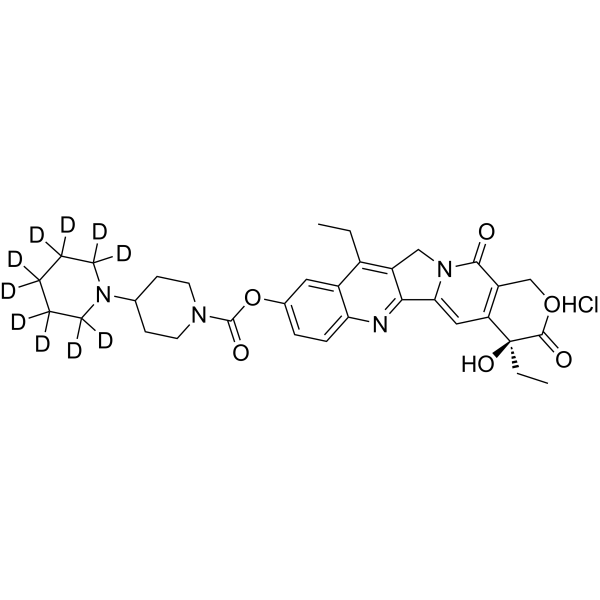
Irinotecan-d10 (hydrochloride) is the deuterium labeled Irinotecan. Irinotecan ((+)-Irinotecan) is a topoisomerase I inhibitor, preventing religation of the DNA strand by binding to topoisomerase I-DNA complex .
|
-
-
- HY-W105318
-
|
PBP
|
TGF-beta/Smad
Apoptosis
|
Cancer
|
|
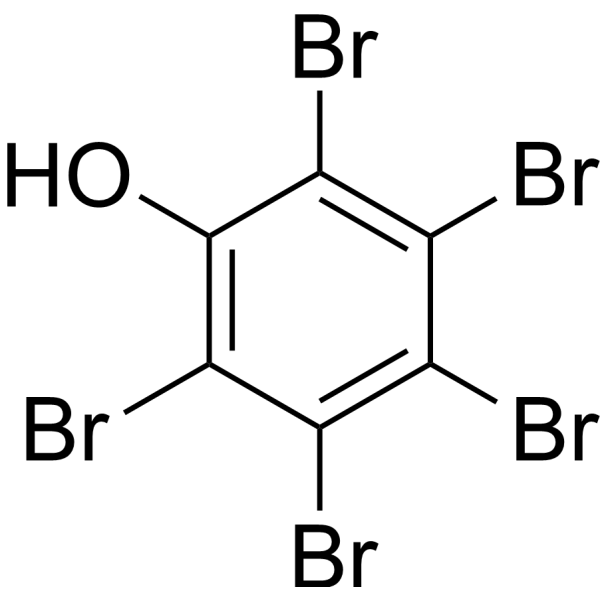
Pentabromophenol (PBP) is a brominated flame retardant (BFR) widely used in various consumer products to reduce the flammability of materials used in different utility items. Pentabromophenol can accelerate the degradation of transforming growth factor-β (TGF-β) receptors by promoting clathrin-mediated endocytosis, thereby inhibiting the TGF-β signaling pathway. Additionally, Pentabromophenol can also induce apoptosis in peripheral blood mononuclear cells (PBMCs) .
|
-
-
- HY-145525
-
|
CAR 18:2; C18:2 Carnitine; L-Carnitine linoleoyl ester
|
Endogenous Metabolite
|
Others
|
|
Linoleoyl-L-carnitine is a naturally occurring long-chain acylcarnitine. Hepatic levels of linoleoyl-L-carnitine are increased following high-dose (200 mg/kg) administration of Isoniazid (Item No. 20378) in mice.
|
-

-
- HY-137555
-
|
11-deHYdro-2,3-dinor TXB2
|
Endogenous Metabolite
|
Metabolic Disease
|
|
11-dehydro-2,3-dinor Thromboxane B2 (11-dehydro-2,3-dinor TXB2) is a metabolite of the TXA2 inactive metabolite TXB2 (Item No. 19030). It is formed from TXB2 by cytosolic aldehyde dehydrogenase (ALDH) and β-oxidation. Levels of 11-dehydro-2,3-dinor TXB2 are increased 5.2-fold in a surgery-induced rat model of tendon overuse.
|
-

-
- HY-P10783
-
|
|
Peptide-Drug Conjugates (PDCs)
Integrin
|
Cancer
|
|
BGC0222 is a novel prodrug of Irinotecan (HY-16562). BGC0222, as a PEG-cRGD-conjugated Irinotecan (HY-16562) derivative, could slowly and steadily release Irinotecan (HY-16562). BGC0222 binds to αVβ3 with IC50 values of 4.25 μM (αVβ3) and 58.7 μM (αVβ5). BGC0222 possesses the property of inducing neovascularization. BGC0222 exhibits good antiproliferation activity in many tumors .
|
-

-
- HY-173243
-
|
|
Drug-Linker Conjugates for ADC
|
Cancer
|
|
Val-Ala-PAB-SN38 is a drug-linker conjugate for ADC, composed of ADC linker Val-Ala-PAB (HY-125933) and SN38 (HY-13704), which is the active metabolite of the Topoisomerase I inhibitor Irinotecan (HY-16562) .
|
-

-
- HY-17648
-
|
|
BCRP
|
Cancer
|
|
MBL-II-141 is potent ABCG2 inhibitor with an IC50 of 0.11 μM. MBL-II-141 inhibits the transport function of ABCG2 in a non-competitive manner, preventing ABCG2 from pumping substrates (such as Irinotecan (HY-16562)) out of the cells, thereby increasing the accumulation of drugs within the cells. MBL-II-141 has no effect on ABCB1 (P-gp) and ABCC1 (MRP1) and has extremely low cytotoxicity (IG50 > 100 μM). MBL-II-141 can be used for the study of multidrug resistance (MDR) cancers .
|
-

-
- HY-W114419
-
|
|
Estrogen Receptor/ERR
mTOR
|
Cardiovascular Disease
Metabolic Disease
|
|
Bisphenol C is an estrogen receptor-α (ERα) agonist and an ERβ antagonist, with IC50 values of 2.65 nM for ERα and 1.94 nM for ERβ. Bisphenol C is a material of manufacturing polyester polymers like polycarbonate, is widely used in daily items like water bottles, food packaging, textile and so on .
|
-

-
- HY-Z11281
-
-

-
- HY-164271
-
|
|
Topoisomerase
|
Cancer
|
|
10-Boc-SN-38 is a tert-butyloxycarbonyl (Boc)-protected form of SN-38 (HY-13704). SN-38 is the active metabolite of Irinotecan (HY-16562) .
|
-

-
- HY-155034
-
|
|
Topoisomerase
GLUT
|
Cancer
|
|
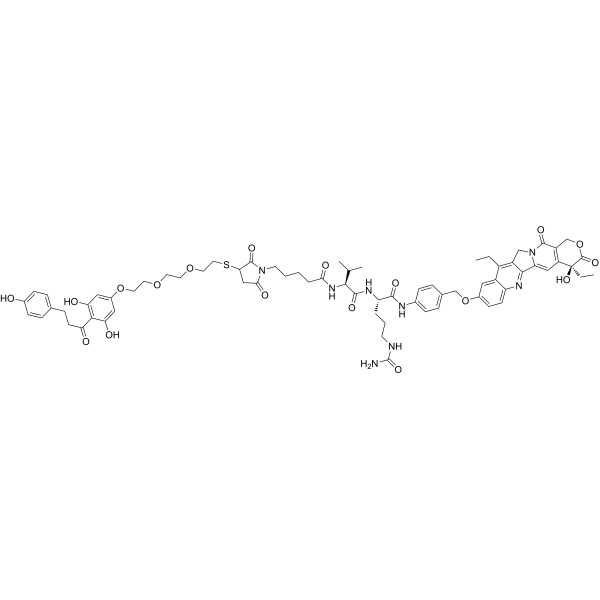
Antitumor agent-102 (compound 10) is a conjugate of Topoisomerase I inhibitor SN38 and glucose transporter inhibitor, targeting to colorectal cancer. Antitumor agent-102 induces higher concentrations of free SN38 in tumor tissues than Irinotecan (HY-16562) .
|
-
-
- HY-116661
-
|
CBGV
|
Cannabinoid Receptor
|
Metabolic Disease
|
|
Cannabigerovarin (CRM) (Item No. 29117) is a certified reference material categorized as a phytocannabinoid.1 This product is intended for research and forensic applications.
|
-

-
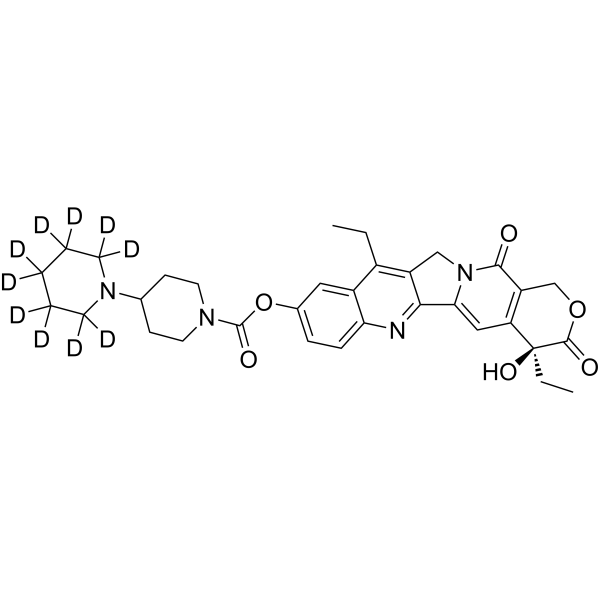
- HY-16562S
-
|
(+)-Irinotecan-d10; CPT-11-d10; VAL-413-d10free base
|
Topoisomerase
Autophagy
|
Cancer
|
|
Irinotecan-d10 is a deuterium labeled Irinotecan ((+)-Irinotecan). Irinotecan ((+)-Irinotecan) is a topoisomerase I inhibitor, preventing religation of the DNA strand by binding to topoisomerase I-DNA complex .
|
-
-
- HY-16562R
-
|
(+)-Irinotecan (Standard); CPT-11 (Standard); VAL-413free base (Standard)
|
Reference Standards
Topoisomerase
Autophagy
|
Cancer
|
|
Irinotecan (Standard) is the analytical standard of Irinotecan. This product is intended for research and analytical applications. Irinotecan ((+)-Irinotecan) is a topoisomerase I inhibitor, preventing religation of the DNA strand by binding to topoisomerase I-DNA complex .
|
-

-
- HY-16562AR
-
|
(+)-Irinotecan HYdrochloride (Standard); CPT-11 HYdrochloride (Standard); VAL-413 (Standard)
|
Reference Standards
Topoisomerase
Autophagy
|
Cancer
|
|
Irinotecan (hydrochloride) (Standard) is the analytical standard of Irinotecan (hydrochloride). This product is intended for research and analytical applications. Irinotecan hydrochloride ((+)-Irinotecan hydrochloride) is a topoisomerase I inhibitor mainly used to treat colon cancer and rectal cancer .
|
-

-
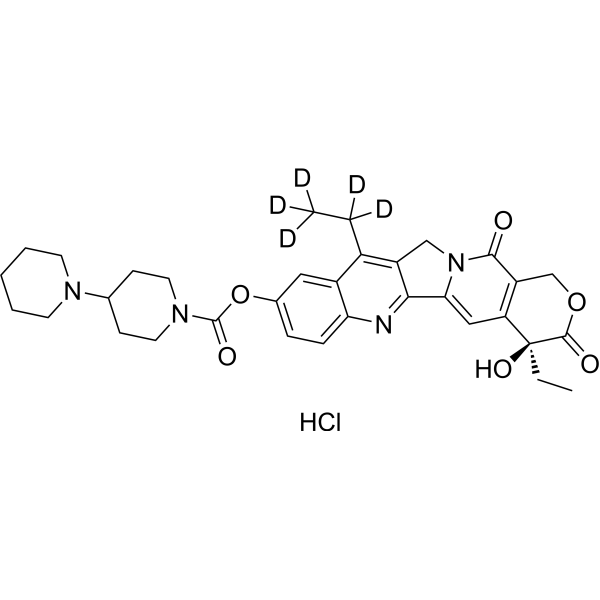
- HY-16562AS
-
|
(+)-Irinotecan-d5 (HYdrochloride; CPT-11-d5 HYdrochloride; VAL-413-d5
|
Autophagy
Topoisomerase
Isotope-Labeled Compounds
|
Cancer
|
|
Irinotecan-d5 hydrochloride is deuterated labeled Irinotecan hydrochloride (HY-16562A). Irinotecan hydrochloride ((+)-Irinotecan hydrochloride) is a topoisomerase I inhibitor mainly used to treat colon cancer and rectal cancer .
|
-
-
- HY-W653919
-
|
|
Isotope-Labeled Compounds
Drug Metabolite
|
Cancer
|
|
SN-38 glucuronide-d3 is deuterium labeled SN-38 glucuronide. SN-38 glucuronide is an inactive metabolite of the anticancer active molecule Irinotecan (HY-16562) and has toxic effects on the gastrointestinal tract. Irinotecan is a topoisomerase I inhibitor which can be used for researching colon and rectal cancer .
|
-

-
- HY-141436R
-
|
Sucrose octasulfate potassium (Standard)
|
Biochemical Assay Reagents
Reference Standards
|
Cancer
|
|
Sucrosofate (potassium) (Standard) is the analytical standard of Sucrosofate (potassium). This product is intended for research and analytical applications. Sucrosofate (Sucrose octasulfate) potassium is a sucrose acid that can be used to prepare liposomes to deliver Irinotecan (HY-16562). Irinotecan is an inhibitor of topoisomerase Topo I and is commonly used in colon and rectal cancer research. Sucrosofate nanoliposome preparation loaded with Irinotecan, also known as PEP02 or MM-398 .
|
-

-
- HY-132561S
-
|
APC-d3
|
Isotope-Labeled Compounds
Topoisomerase
Cholinesterase (ChE)
|
Cancer
|
|
RPR121056-d3 is the deuterium labeled RPR121056. RPR121056 is a metabolite of Irinotecan (HY-16562), which is generated by CYP3A4. Irinotecan (CPT-11) is an antineoplastic agent that inhibits topoisomerase type I, causing cell death, and is widely used in the study of colorectal cancer. Irinotecan also directly inhibits AChE .
|
-

-
- HY-149291
-
|
|
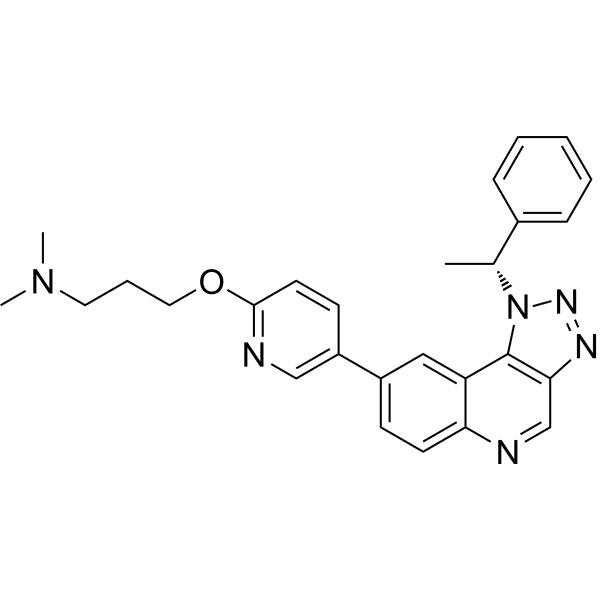
ATM/ATR
Apoptosis
|
Cancer
|
|
ATM Inhibitor-7 is a potent and selective ataxia-telangiectasia mutated (ATM) inhibitor with an IC50 value of 1.0 nM. ATM Inhibitor-7 induces Apoptosis and cell cycle arrest at G2/M phase when combinanted with CPT-11 (HY-16562). ATM Inhibitor-7 combines with CPT-11 shows antitumor activity .
|
-
-
- HY-119992
-
|
|
PARP
|
Cancer
|
|
CEP-6800 is an inhibitor of PARP-1 with chemopotentiating ability. CEP-6800 attenuates irinotecan (HY-16562)- and Temozolomide (HY-17364)-induced poly(ADP-ribose) accumulation in LoVo as well as HT29 xenografts. CEP-6800 can suppress Calu-6 tumor growth. CEP-6800 can be studied in anti-cancer research .
|
-

-
- HY-130340
-
|
Teichomycin A3 factor 1; Antibiotic L 17054
|
Antibiotic
|
Infection
|
|
Teicoplanin A3-1 is a degradation product of teicoplanins A2-1 to 5 (Item Nos. 20187, 20188, 20189, 20192). Teicoplanins are glycopeptide antibiotics produced by A. teichomyceticus that are broadly effective against Gram-positive bacteria in vitro.
|
-

-
- HY-173267
-
|
|
Carboxylesterase (CES)
|
Metabolic Disease
Cancer
|
|
CES2A-IN-2 (compound 14n) is an orally active, highly specific, irreversible and covalent CES2A inhibitor with an IC50 of 0.04 nM for human CES2A. CES2A-IN-2 covalently binds to CES2A by specifically targeting the catalytic serine residue (Ser-228). CES2A-IN-2 can significantly ameliorate Irinotecan-triggered gut toxicity (ITGT) without diminishing the anti-tumor effects of Irinotecan (HY-16562) in tumor-bearing mice .
|
-

-
- HY-159966
-
|
|
Topoisomerase
HDAC
Reactive Oxygen Species (ROS)
Apoptosis
|
Cancer
|
|
Top/HDAC-IN-3 (Compound 31) is an orally active dual inhibitor of Topoisomerase and HDAC. Top/HDAC-IN-3 increases reactive oxygen species (ROS) levels, leading to DNA damage, thereby inhibiting cancer cell colony formation and migration, inducing cancer cell Apoptosis, and causing cell cycle arrest. In the NSCLC model, Top/HDAC-IN-3 exhibited significant antitumor effects, with a tumor growth inhibition (TGI) of 77.5% at 100 mg/kg, surpassing the efficacy of the HDAC inhibitor SAHA (HY-10221) and the combination of SAHA (HY-10221) with the topoisomerase inhibitor Irinotecan (HY-16562) .
|
-

-
- HY-RS16562
-
|
|
Small Interfering RNA (siRNA)
|
Others
|
|
Sp1 Mouse Pre-designed siRNA Set A contains three designed siRNAs for Sp1 gene (Mouse), as well as a negative control, a positive control, and a FAM-labeled negative control.
|
-
Sp1 Mouse Pre-designed siRNA Set A
Sp1 Mouse Pre-designed siRNA Set A
-
- HY-173397
-
|
|
β-glucuronidase
Bacterial
|
Metabolic Disease
|
|
β-Glucuronidase-IN-3 (Compound 49) is a covalent allosteric β-glucuronidase inhibitor. β-Glucuronidase-IN-3 has potent inhibitory activity against Escherichia coli β-glucuronidase (EcGUS) (IC50: 12.9 nM). β-Glucuronidase-IN-3 exerts its inhibitory effect by reversibly covalently modifying the cysteine residues (Cys28, Cys443, and Cys197) of EcGUS. β-Glucuronidase-IN-3 can be used in the study of intestinal microbiota-related diseases, especially to alleviate the toxic side effects of Irinotecan (HY-16562) and nonsteroidal anti-inflammatory drugs (NSAIDs) .
|
-

-
- HY-124200
-
|
|
Prostaglandin Receptor
|
Endocrinology
|
|
AL 8810 (Item No. 16735) is an 11β-fluoro analog of prostaglandin F2α which acts as a potent and selective antagonist at the FP receptor. AL 8810 isopropyl ester is a lipid soluble, esterified prodrug form of AL 8810 analogous to the commonly used therapeutic intraocular prostaglandin compounds such as Latanoprost (HY-B0577) and Travoprost (HY-B0584).
|
-

-
- HY-129303
-
|
|
Endogenous Metabolite
|
Metabolic Disease
|
|
AP39 (Item No. 17100) is a compound used to increase the levels of hydrogen sulfide (H2S) within mitochondria. It consists of a mitochondria-targeting motif (triphenylphosphonium) coupled to an H2S-donating moiety (dithiolethione) by an aliphatic linker. AP219 is a control compound for AP39, containing the triphenylphosphonium scaffold but lacking the H2S-releasing portion.
|
-

-
- HY-134123
-
|
LXB4 metHYl ester
|
Drug Intermediate
Leukotriene Receptor
|
Metabolic Disease
|
|
Lipoxin B4 (LXB4) methyl ester is a lipid soluble prodrug form of the transcellular metabolite LXB4. LXB4 is a positional isomer of LXA4 produced by the metabolism of 15-HETE or 15-HpETE by human leukocytes. At a concentration of 100 nM, LXB4 inhibits polymorphonuclear leukocyte (PMN) migration stimulated by leukotriene B4 (LTB4; Item No. 20110) and inhibits LTB4-induced adhesion of PMNs with an IC50 value of 0.3 nM.
|
-

-
- HY-16562S2
-
-

-
- HY-126373S
-
|
SN-38G-d5
|
Isotope-Labeled Compounds
Drug Metabolite
|
Cancer
|
|
SN-38 glucuronide-d5 (SN-38G-d5) is the deuterium labeled SN-38 glucuronide (HY-126373). SN-38 glucuronide is an inactive metabolite of the anticancer active molecule Irinotecan (HY-16562) and has toxic effects on the gastrointestinal tract. Irinotecan is a topoisomerase I inhibitor which can be used for researching colon and rectal cancer.
|
-

-
-
HY-L0096V
-
|
|
1,400,000 compounds
|
|
Vitas-M Screening Compounds Library (stock) contains about 1,400,000 chemical substances. They are synthetic small molecule organic compounds for biological screening and lead optimization. Select any number of items as a "cherry pick".
|
-
-
HY-L055
-
|
|
1,801 compounds
|
|
Medicine Food Homology (MFH) means that some food themselves are medicines and there is no absolute boundary between them. MFH theory combines the function of food and medicine together scientifically and MFH materials can be used both for food and medicine. Besides nutritional value, MFH materials also have the functions in the prevention and treatment of disease and many other healthcare effects. Food as medicines has many benefits because of their safety while taking drugs will bring inevitable side effect to people. In order to ensure the safe use of functional food, National Health Commission of People's Republic of China made specific provisions on MFH items. More than 100 kinds of widely used MFH materials have been released.
Based on MFH items released by National Health Commission, PRC, MCE carefully designs a unique collection of 1,801 Medicine Food Homology Compounds with high safety that can be used for high throughput and high content screening for drug discovery.
|
-
-
HY-L0088V
-
|
|
50,240 compounds
|
|
Life Chemicals presents a number of exclusive Pre-Plated Diversity Sets composed of 50,240 novel compounds with optimal physicochemical properties selected from Life Chemicals collection of newly synthesized items by dissimilarity search with an average Tanimoto threshold of 82%. These Diverse Screening Sets are ideal starting points for customers looking for a wide range of dissimilarity to screen against a number of targets from different classes or where little information is available on targeted protein structure.
|
| Cat. No. |
Product Name |
Target |
Research Area |
-
- HY-P10783
-
|
|
Peptide-Drug Conjugates (PDCs)
Integrin
|
Cancer
|
|
BGC0222 is a novel prodrug of Irinotecan (HY-16562). BGC0222, as a PEG-cRGD-conjugated Irinotecan (HY-16562) derivative, could slowly and steadily release Irinotecan (HY-16562). BGC0222 binds to αVβ3 with IC50 values of 4.25 μM (αVβ3) and 58.7 μM (αVβ5). BGC0222 possesses the property of inducing neovascularization. BGC0222 exhibits good antiproliferation activity in many tumors .
|
| Cat. No. |
Product Name |
Category |
Target |
Chemical Structure |
-
- HY-16562A
-
-
-
- HY-113283
-
|
|
Structural Classification
Other disease
Classification of Application Fields
Ketones, Aldehydes, Acids
Disease markers
Phenols
Polyphenols
Metabolic Disease
Endogenous metabolite
Disease Research Fields
|
Amyloid-β
Natriuretic Peptide Receptor (NPR)
α-synuclein
Transthyretin (TTR)
Claudin
|
|
Homogentisic acid is an orally active, blood-brain barrier-permeable amyloidogenic compound that functions as both an amyloid component and a pigment precursor. Accumulation of homogentisic acid downregulates tight junction proteins (such as claudin-5, occludin, ZO-1) and impairs blood-brain barrier integrity. Homogentisic acid and its oxidation product benzoquinone acetic acid not only induce the aggregation and fibrosis of multiple proteins (such as Aβ1-42, α-synuclein, SAA, Transthyretin (TTR), atrial natriuretic peptide), but also trigger oxidative stress, damage to the Wnt/β-catenin pathway, and neurotoxicity, leading to ochronosis pigment deposition and synaptic dysfunction. At specific concentrations, homogentisic acid exerts no cytotoxicity or genotoxicity on human peripheral blood lymphocytes, and even counteracts the genotoxicity induced by Irinotecan (HY-16562). Homogentisic acid serves as an important tool molecule for investigating the mechanisms of diseases including ochronosis, secondary amyloidosis, Alzheimer's disease, and colorectal cancer .
|
-
-
- HY-16562AR
-
-
| Cat. No. |
Product Name |
Chemical Structure |
-
- HY-16562S1
-
|
|
|
Irinotecan-d10 (hydrochloride) is the deuterium labeled Irinotecan. Irinotecan ((+)-Irinotecan) is a topoisomerase I inhibitor, preventing religation of the DNA strand by binding to topoisomerase I-DNA complex .
|
-
-
- HY-16562S
-
|
|
|
Irinotecan-d10 is a deuterium labeled Irinotecan ((+)-Irinotecan). Irinotecan ((+)-Irinotecan) is a topoisomerase I inhibitor, preventing religation of the DNA strand by binding to topoisomerase I-DNA complex .
|
-
-
- HY-16562AS
-
|
|
|
Irinotecan-d5 hydrochloride is deuterated labeled Irinotecan hydrochloride (HY-16562A). Irinotecan hydrochloride ((+)-Irinotecan hydrochloride) is a topoisomerase I inhibitor mainly used to treat colon cancer and rectal cancer .
|
-
-
- HY-W653919
-
|
|
|
SN-38 glucuronide-d3 is deuterium labeled SN-38 glucuronide. SN-38 glucuronide is an inactive metabolite of the anticancer active molecule Irinotecan (HY-16562) and has toxic effects on the gastrointestinal tract. Irinotecan is a topoisomerase I inhibitor which can be used for researching colon and rectal cancer .
|
-
-
- HY-132561S
-
|
|
|
RPR121056-d3 is the deuterium labeled RPR121056. RPR121056 is a metabolite of Irinotecan (HY-16562), which is generated by CYP3A4. Irinotecan (CPT-11) is an antineoplastic agent that inhibits topoisomerase type I, causing cell death, and is widely used in the study of colorectal cancer. Irinotecan also directly inhibits AChE .
|
-
-
- HY-16562S2
-
|
|
|
Irinotecan- 13C6 ((+)-Irinotecan- 13C6) is the 13C-labeled Irinotecan (HY-16562). Irinotecan ((+)-Irinotecan) is a topoisomerase I inhibitor, preventing religation of the DNA strand by binding to topoisomerase I-DNA complex .
|
-
-
- HY-126373S
-
|
|
|
SN-38 glucuronide-d5 (SN-38G-d5) is the deuterium labeled SN-38 glucuronide (HY-126373). SN-38 glucuronide is an inactive metabolite of the anticancer active molecule Irinotecan (HY-16562) and has toxic effects on the gastrointestinal tract. Irinotecan is a topoisomerase I inhibitor which can be used for researching colon and rectal cancer.
|
-
| Cat. No. |
Product Name |
|
Classification |
Your information is safe with us. * Required Fields.
Inquiry Information
- Product Name:
- Cat. No.:
- Quantity:
- MCE Japan Authorized Agent:








