Delivery of temperature sensitive items including proteins and kits will be paused on 6/19 for the Juneteenth holiday. For urgent orders please contact customer service.
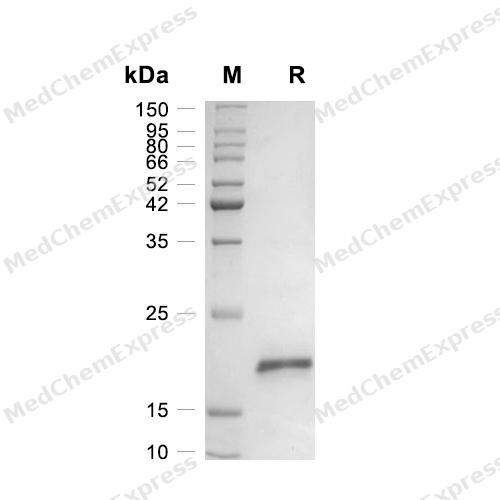
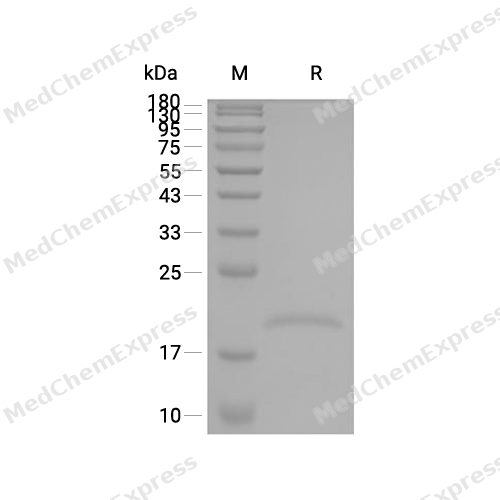
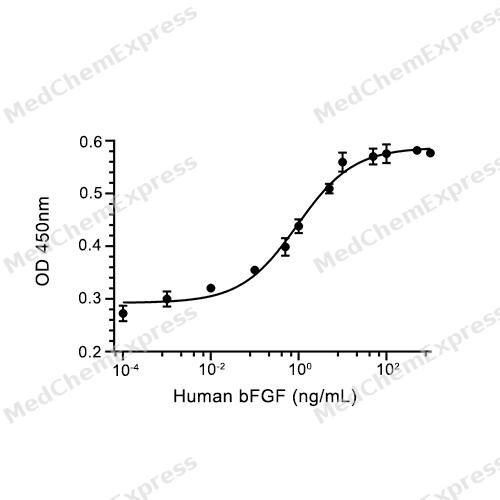
FGF-2/bFGF is a member of the fibroblast family and has a high affinity for heparin. FGF-2 plays an important role in tendon to bone healing, cartilage repair, bone repair, and nerve regeneration. FGF-2 specifically binds to tyrosine kinase receptors and activates the FGF/FGFR signaling pathway. Subsequently, FGF-2 influences cell proliferation, differentiation and apoptosis, as well as immune regulation by transducing other classical pathways. For example, FGF-2 regulates the JAK-STAT signaling pathway to regulate cartilage metabolism. FGF-2 also acts as a mitotic promoter to accelerate cell proliferation. Therefore, (1) FGF-2 is an important growth factor in the healing process of ligament/tendon injury. In vitro experiments, low-dose FGF-2 can stimulate the proliferation and differentiation of bone marrow mesenchymal stem cells, and up-regulate the mRNA expression of type I/III collagen and fibronectin. However, high doses of FGF-2 did not stimulate extracellular matrix (ECM) protein proliferation and gene expression. (2) FGF-2 is also an endogenous and intrinsic growth factor in cartilage repair. FGF-2 binds to heparan sulfate proteoglycan and is stored in the ECM of articular cartilage. When cartilage is damaged or degenerated, ECM rapidly releases FGF-2 and activates ERK signaling pathways to promote cartilage regeneration. FGF-2 exhibits a biphasic effect in combination with its specific receptor. FGF-2 combined with FGFR3 promoted the repair of articular cartilage. FGF-2 combined with FGFR1 promoted the degeneration of articular cartilage[1]. FGF-2 is expressed in granulosa cells and colliculus cells, as well as hepatocellular cancer cells, but not in non-cancerous liver tissues. This reveals the role of FGF-2 in brain tumors, particularly glioblastoma. According to studies, FGF-2 is a known carcinogenic factor in GBM. FGF-2 increases the self-renewal of glioblastoma stem cells and contributes to the growth and vascularization of glioma[2]. FGF-2 protein is highly conserved in some species, and the similarity rate of human FGF-2 protein sequence to rat, mouse, and bovine was 97.4%, 95.45%, and 98.71%, respectively.
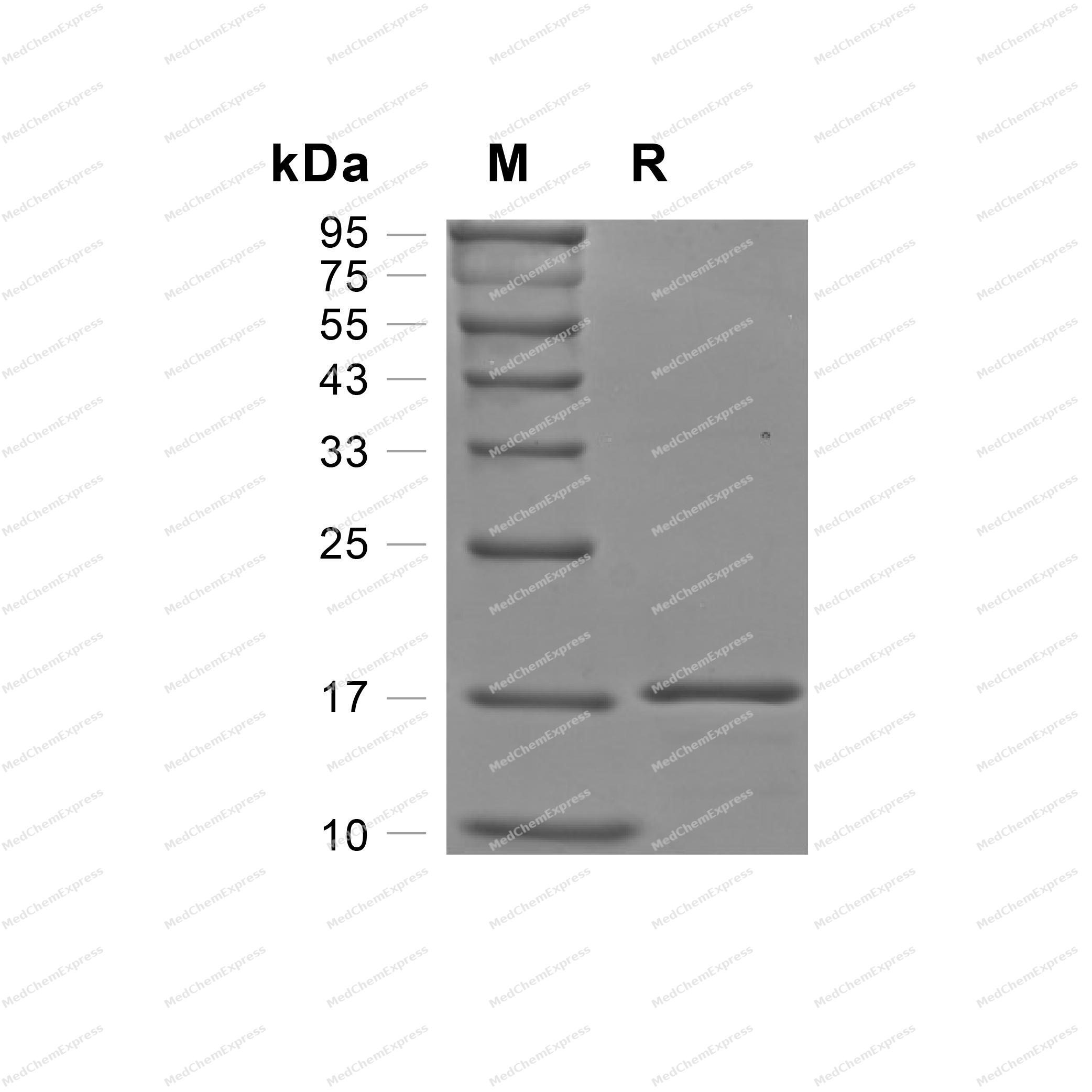
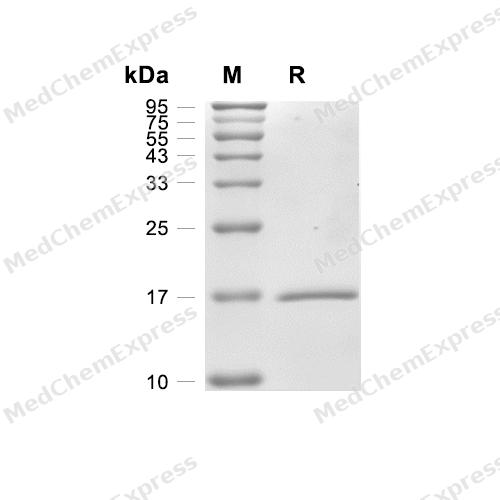
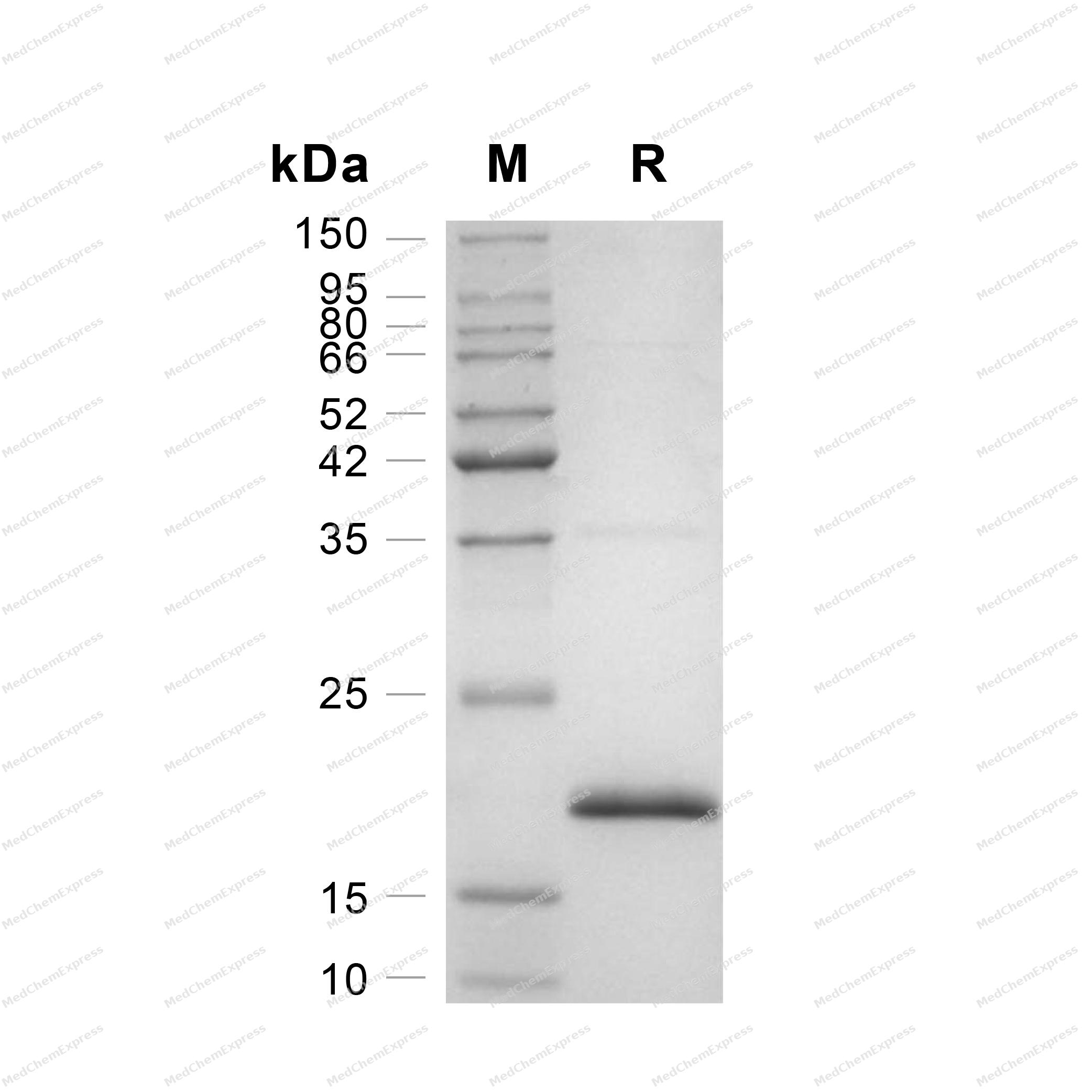
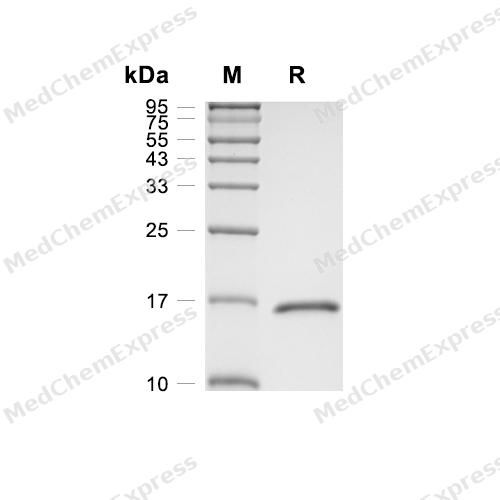
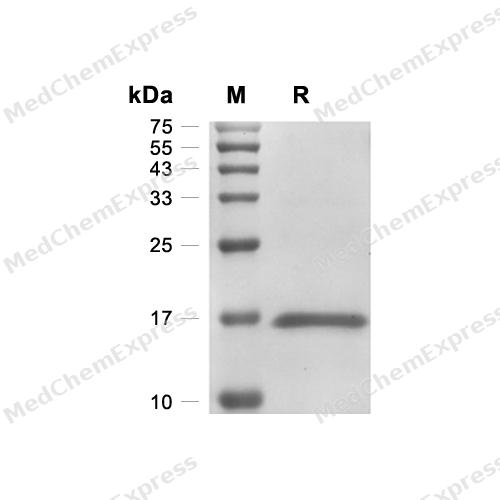
FGF-2 is a member of the fibroblast family involved in bone healing, cartilage repair, bone repair, and nerve regeneration. FGF-2 is also a mitotic promoter that accelerates cell proliferation. FGF-2 regulates immune processes by specifically targeting tyrosine kinase receptors and activating the FGF/FGFR signaling pathway. For example, FGF-2 is involved in the JAK-STAT signaling pathway to regulate cartilage metabolism and also activates ERK signaling to promote cartilage regeneration. FGF-2 combined with FGFR1/3 promoted degeneration and repair of articular cartilage, respectively. FGF-2 is also a known carcinogen in GBM, which contributes to glioma growth and vascularization.FGF basic/bFGF Protein, Human (146a.a), consists of 146 amino acids, produced by E.coli with tag free.
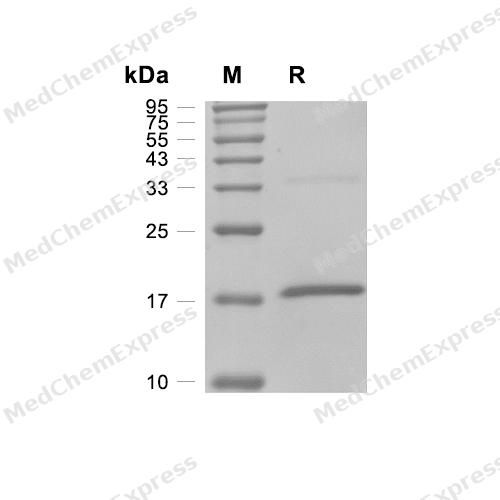
FGF-2 is a member of the fibroblast family involved in bone healing, cartilage repair, bone repair, and nerve regeneration. FGF-2 is also a mitotic promoter that accelerates cell proliferation. FGF-2 regulates immune processes by specifically targeting tyrosine kinase receptors and activating the FGF/FGFR signaling pathway. For example, FGF-2 is involved in the JAK-STAT signaling pathway to regulate cartilage metabolism and also activates ERK signaling to promote cartilage regeneration. FGF-2 combined with FGFR1/3 promoted degeneration and repair of articular cartilage, respectively. FGF-2 is also a known carcinogen in GBM, which contributes to glioma growth and vascularization.FGF basic/bFGF Protein, Human (154a.a), consists of 154 amino acids, produced by E.coli with tag free.
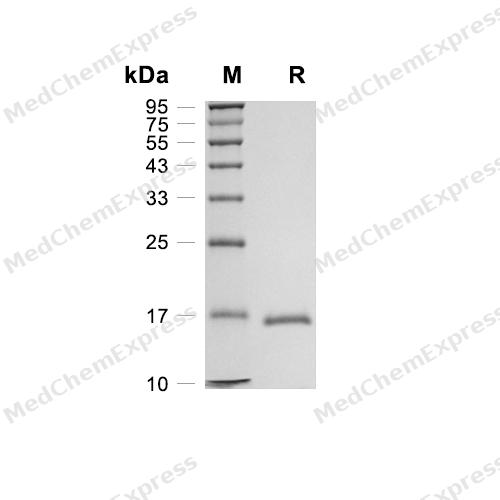
FGF-2 is a member of the fibroblast family involved in bone healing, cartilage repair, bone repair, and nerve regeneration. FGF-2 is also a mitotic promoter that accelerates cell proliferation. FGF-2 regulates immune processes by specifically targeting tyrosine kinase receptors and activating the FGF/FGFR signaling pathway. For example, FGF-2 is involved in the JAK-STAT signaling pathway to regulate cartilage metabolism and also activates ERK signaling to promote cartilage regeneration. FGF-2 combined with FGFR1/3 promoted degeneration and repair of articular cartilage, respectively. FGF-2 is also a known carcinogen in GBM, which contributes to glioma growth and vascularization.FGF-2 Protein, Rat, consists of 145 amino acids, produced by E.coli with tag free.
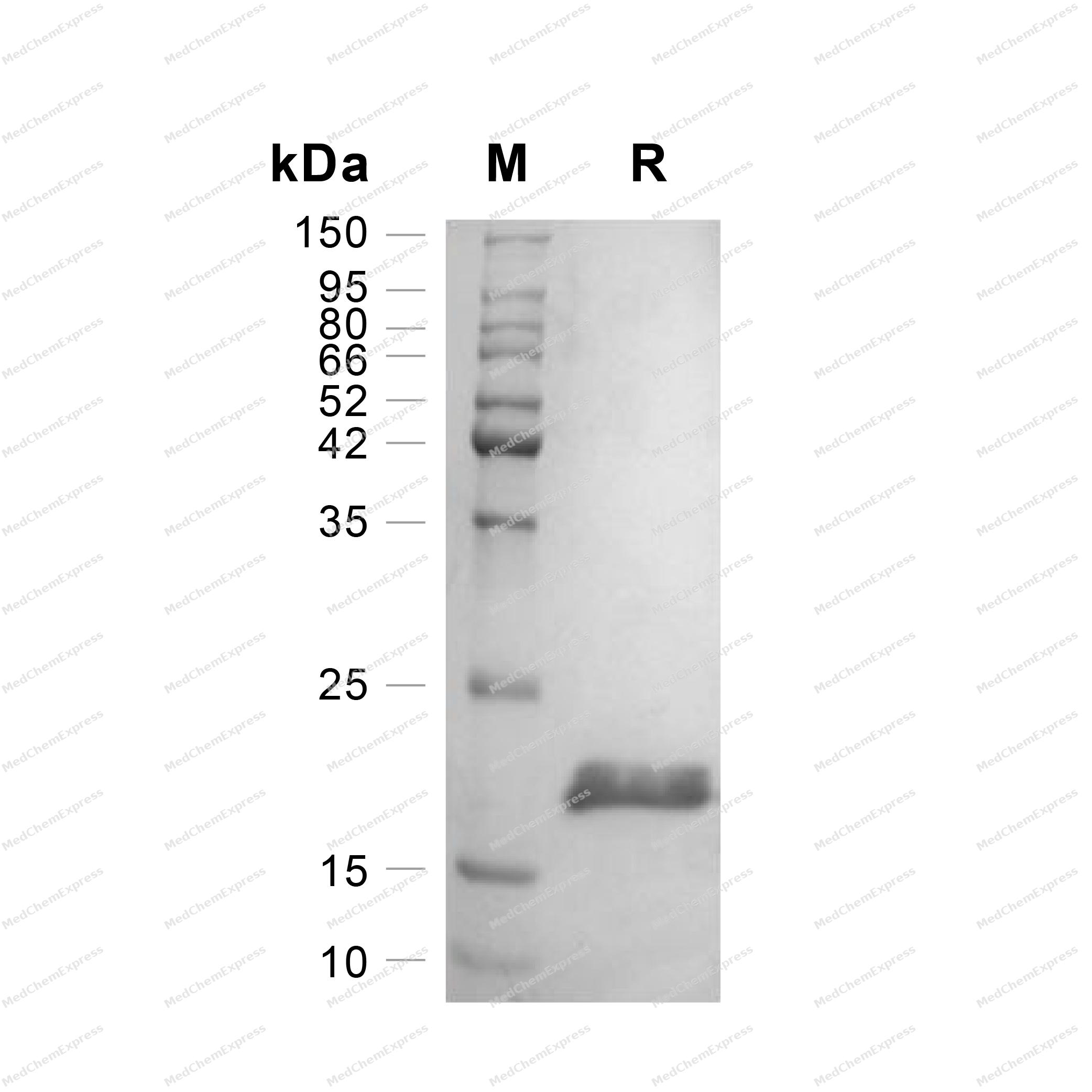
FGF-2 is a member of the fibroblast family involved in bone healing, cartilage repair, bone repair, and nerve regeneration. FGF-2 is also a mitotic promoter that accelerates cell proliferation. FGF-2 regulates immune processes by specifically targeting tyrosine kinase receptors and activating the FGF/FGFR signaling pathway. For example, FGF-2 is involved in the JAK-STAT signaling pathway to regulate cartilage metabolism and also activates ERK signaling to promote cartilage regeneration. FGF-2 combined with FGFR1/3 promoted degeneration and repair of articular cartilage, respectively. FGF-2 is also a known carcinogen in GBM, which contributes to glioma growth and vascularization.FGF-2 Protein, Mouse (145a.a), consists of 145 amino acids, produced by E.coli with tag free.
FGF-2 is a member of the fibroblast family involved in bone healing, cartilage repair, bone repair, and nerve regeneration. FGF-2 is also a mitotic promoter that accelerates cell proliferation. FGF-2 regulates immune processes by specifically targeting tyrosine kinase receptors and activating the FGF/FGFR signaling pathway. For example, FGF-2 is involved in the JAK-STAT signaling pathway to regulate cartilage metabolism and also activates ERK signaling to promote cartilage regeneration. FGF-2 combined with FGFR1/3 promoted degeneration and repair of articular cartilage, respectively. FGF-2 is also a known carcinogen in GBM, which contributes to glioma growth and vascularization.FGF-2 Protein, Mouse (His), consists of 144 amino acids, produced by E.coli with N-His.
FGF basic, or bFGF (fibroblast growth factor basic), initiates at an alternative CUG codon, marking a distinctive feature in translational initiation. This alternative start codon plays a pivotal role in regulating the expression and functional properties of FGF basic.Heat Stable FGF basic/bFGF Protein, Human, Human is the recombinant human-derived Heat Stable FGF-basic protein, expressed by E. coli , with tag free.
FGF-2 is a member of the fibroblast family involved in bone healing, cartilage repair, bone repair, and nerve regeneration. FGF-2 is also a mitotic promoter that accelerates cell proliferation. FGF-2 regulates immune processes by specifically targeting tyrosine kinase receptors and activating the FGF/FGFR signaling pathway. For example, FGF-2 is involved in the JAK-STAT signaling pathway to regulate cartilage metabolism and also activates ERK signaling to promote cartilage regeneration. FGF-2 combined with FGFR1/3 promoted degeneration and repair of articular cartilage, respectively. FGF-2 is also a known carcinogen in GBM, which contributes to glioma growth and vascularization.Animal-Free FGF-2 Protein, Mouse (His), consists of 144 amino acids, produced by E.coli with tag free.This product is for cell culture use only.
FGF-2 is a member of the fibroblast family involved in bone healing, cartilage repair, bone repair, and nerve regeneration. FGF-2 is also a mitotic promoter that accelerates cell proliferation. FGF-2 regulates immune processes by specifically targeting tyrosine kinase receptors and activating the FGF/FGFR signaling pathway. For example, FGF-2 is involved in the JAK-STAT signaling pathway to regulate cartilage metabolism and also activates ERK signaling to promote cartilage regeneration. FGF-2 combined with FGFR1/3 promoted degeneration and repair of articular cartilage, respectively. FGF-2 is also a known carcinogen in GBM, which contributes to glioma growth and vascularization.GMP FGF basic/bFGF Protein, Human, consists of 157 amino acids, produced by E.coli with tag free.
FGF basic, or bFGF (fibroblast growth factor basic), initiates at an alternative CUG codon, marking a distinctive feature in translational initiation. This alternative start codon plays a pivotal role in regulating the expression and functional properties of FGF basic. FGF basic/bFGF Protein, Human (P. pastoris, N-His) is the recombinant human-derived FGF basic/bFGF protein, expressed by P. pastoris , with N-6*His labeled tag.
FGF-2 is a member of the fibroblast family involved in bone healing, cartilage repair, bone repair, and nerve regeneration. FGF-2 is also a mitotic promoter that accelerates cell proliferation. FGF-2 regulates immune processes by specifically targeting tyrosine kinase receptors and activating the FGF/FGFR signaling pathway. For example, FGF-2 is involved in the JAK-STAT signaling pathway to regulate cartilage metabolism and also activates ERK signaling to promote cartilage regeneration. FGF-2 combined with FGFR1/3 promoted degeneration and repair of articular cartilage, respectively. FGF-2 is also a known carcinogen in GBM, which contributes to glioma growth and vascularization.FGF basic/bFGF Protein, Human (145a.a), consists of 145 amino acids, produced by E.coli with tag free.
FGF-2 is a member of the fibroblast family involved in bone healing, cartilage repair, bone repair, and nerve regeneration. FGF-2 is also a mitotic promoter that accelerates cell proliferation. FGF-2 regulates immune processes by specifically targeting tyrosine kinase receptors and activating the FGF/FGFR signaling pathway. For example, FGF-2 is involved in the JAK-STAT signaling pathway to regulate cartilage metabolism and also activates ERK signaling to promote cartilage regeneration. FGF-2 combined with FGFR1/3 promoted degeneration and repair of articular cartilage, respectively. FGF-2 is also a known carcinogen in GBM, which contributes to glioma growth and vascularization.FGF basic/bFGF Protein, Human (157a.a), consists of 157 amino acids, produced by E.coli with tag free.
FGF-2 is a member of the fibroblast family involved in bone healing, cartilage repair, bone repair, and nerve regeneration. FGF-2 is also a mitotic promoter that accelerates cell proliferation. FGF-2 regulates immune processes by specifically targeting tyrosine kinase receptors and activating the FGF/FGFR signaling pathway. For example, FGF-2 is involved in the JAK-STAT signaling pathway to regulate cartilage metabolism and also activates ERK signaling to promote cartilage regeneration. FGF-2 combined with FGFR1/3 promoted degeneration and repair of articular cartilage, respectively. FGF-2 is also a known carcinogen in GBM, which contributes to glioma growth and vascularization.FGF basic/bFGF protein, Bovine, consists of 146 amino acids, produced by E.coli with tag free.
FGF-2 protein is a member of the fibroblast growth factor family, involved in biological processes such as bone healing, cartilage repair, tumor development, and nerve regeneration. FGF-2 is also a mitogen that accelerates cell proliferation. It regulates immune processes by specifically targeting tyrosine kinase receptors and activating the FGF/FGFR signaling pathway. FGF-2 protein, Mouse (154 a.a.), is a recombinant protein produced in E. coli (Escherichia coli), consisting of 154 amino acids (M1-S154), and is untagged.
FGF2 protein is a multifunctional ligand that can bind to FGFR1, FGFR2, FGFR3 and FGFR4. It is also a key integrin ligand for FGF2 signal transduction and has an important interaction with the integrin ITGAV:ITGB3. FGF2 plays a critical role in cell survival, division, differentiation, and migration, serves as a potent mitogen, and induces angiogenesis. FGF basic/bFGF protein, Bovine (P. pastoris, N-His) is the recombinant bovine-derived FGF2 protein, expressed by P. pastoris , with N-6*His labeled tag.
FGF-2 is a member of the fibroblast family involved in bone healing, cartilage repair, bone repair, and nerve regeneration. FGF-2 is also a mitotic promoter that accelerates cell proliferation. FGF-2 regulates immune processes by specifically targeting tyrosine kinase receptors and activating the FGF/FGFR signaling pathway. For example, FGF-2 is involved in the JAK-STAT signaling pathway to regulate cartilage metabolism and also activates ERK signaling to promote cartilage regeneration. FGF-2 combined with FGFR1/3 promoted degeneration and repair of articular cartilage, respectively. FGF-2 is also a known carcinogen in GBM, which contributes to glioma growth and vascularization.
FGF-2 is a member of the fibroblast family involved in bone healing, cartilage repair, bone repair, and nerve regeneration. FGF-2 is also a mitotic promoter that accelerates cell proliferation. FGF-2 regulates immune processes by specifically targeting tyrosine kinase receptors and activating the FGF/FGFR signaling pathway. For example, FGF-2 is involved in the JAK-STAT signaling pathway to regulate cartilage metabolism and also activates ERK signaling to promote cartilage regeneration. FGF-2 combined with FGFR1/3 promoted degeneration and repair of articular cartilage, respectively. FGF-2 is also a known carcinogen in GBM, which contributes to glioma growth and vascularization.Animal-Free FGF basic/bFGF Protein, Human (154a.a, His), consists of 154 amino acids, produced by E.coli with tag free.This product is for cell culture use only.
FGF2 Protein acts as a ligand for FGFR1-4 and an integrin ligand for FGF2 signaling. It regulates cell survival, division, differentiation, and migration. FGF2 Protein is a strong mitogen and can induce angiogenesis. FGF2 Protein, Chicken (His) is the recombinant FGF2 protein, expressed by E. coli , with C-6*His labeled tag.
FGF-2 is a member of the fibroblast family involved in bone healing, cartilage repair, bone repair, and nerve regeneration. FGF-2 is also a mitotic promoter that accelerates cell proliferation. FGF-2 regulates immune processes by specifically targeting tyrosine kinase receptors and activating the FGF/FGFR signaling pathway. For example, FGF-2 is involved in the JAK-STAT signaling pathway to regulate cartilage metabolism and also activates ERK signaling to promote cartilage regeneration. FGF-2 combined with FGFR1/3 promoted degeneration and repair of articular cartilage, respectively. FGF-2 is also a known carcinogen in GBM, which contributes to glioma growth and vascularization.Animal-Free FGF-2 Protein, Pig (His), consists of 1 amino acids, produced by E.coli with tag free.This product is for cell culture use only.
FGF-2 is a member of the fibroblast family involved in bone healing, cartilage repair, bone repair, and nerve regeneration. FGF-2 is also a mitotic promoter that accelerates cell proliferation. FGF-2 regulates immune processes by specifically targeting tyrosine kinase receptors and activating the FGF/FGFR signaling pathway. For example, FGF-2 is involved in the JAK-STAT signaling pathway to regulate cartilage metabolism and also activates ERK signaling to promote cartilage regeneration. FGF-2 combined with FGFR1/3 promoted degeneration and repair of articular cartilage, respectively. FGF-2 is also a known carcinogen in GBM, which contributes to glioma growth and vascularization.Animal-Free FGF basic/bFGF Protein, Human (145a.a), consists of 145 amino acids, produced by E.coli with tag free.This product is for cell culture use only.
Western blot analysis of extracts from THP-1(lane 2(20μg), Jurkat (lane 3(20μg) and NIH3T3(lane 4(20μg) using FOXO1A (HY-P80132) Rabbit mAb. Proteins were transferred
to a PVDF membrane and blocked with 5% non-fat milk in TBST for 2 hour at room temperature. The primary antibody (1/1000) and Loading control antibody (Beta Actin, HY-P80438, 1/10000) was
used in 5% non-fat milk in TBST at 4°C overnight. Goat Anti-Mouse/Rabbit IgG-HRP Secondary Antibody (1/10000) was used for 1 hour at room temperature.
Western blot analysis of extracts from THP-1(lane 2(20μg), Jurkat (lane 3(20μg) and NIH3T3(lane 4(20μg) using FOXO1A (HY-P80132) Rabbit mAb. Proteins were transferred
to a PVDF membrane and blocked with 5% non-fat milk in TBST for 2 hour at room temperature. The primary antibody (1/1000) and Loading control antibody (Beta Actin, HY-P80438, 1/10000) was
used in 5% non-fat milk in TBST at 4°C overnight. Goat Anti-Mouse/Rabbit IgG-HRP Secondary Antibody (1/10000) was used for 1 hour at room temperature.
Western blot analysis of extracts from THP-1(lane 2(20μg), Jurkat (lane 3(20μg) and NIH3T3(lane 4(20μg) using FOXO1A (HY-P80132) Rabbit mAb. Proteins were transferred
to a PVDF membrane and blocked with 5% non-fat milk in TBST for 2 hour at room temperature. The primary antibody (1/1000) and Loading control antibody (Beta Actin, HY-P80438, 1/10000) was
used in 5% non-fat milk in TBST at 4°C overnight. Goat Anti-Mouse/Rabbit IgG-HRP Secondary Antibody (1/10000) was used for 1 hour at room temperature.
MedChemExpress values your privacy and your trust is important to us. We use cookies to enhance your website experience. Some cookies are necessary to run the website.
Privacy and Cookie Policy