



FGF-2 Protein, Mouse (154a.a)
Based on 1 publication(s) in Google Scholar
FGF-2 protein is a member of the fibroblast growth factor family, involved in biological processes such as bone healing, cartilage repair, tumor development, and nerve regeneration. FGF-2 is also a mitogen that accelerates cell proliferation. It regulates immune processes by specifically targeting tyrosine kinase receptors and activating the FGF/FGFR signaling pathway. FGF-2 protein, Mouse (154 a.a.), is a recombinant protein produced in E. coli (Escherichia coli), consisting of 154 amino acids (M1-S154), and is untagged.
- Species: Mouse
- Source: E. coli
-
Storage:Stored at -20°C for 2 years from date of receipt. After reconstitution, it is stable at 4°C for 1 week or -20°C for longer (with carrier protein). It is recommended to freeze aliquots at -20°C or -80°C for extended storage.


To place orders, for customer services and technical support, please contact: MedChemExpress USA
Tel: 609-228-6898 E-mail: [email protected] [email protected]


-
 Biological Activity
-
Technical Parameters
-
Product Properties
- Documentation
- References
- Help & FAQs


-

HY-P7067
EGF Protein, Mouse -
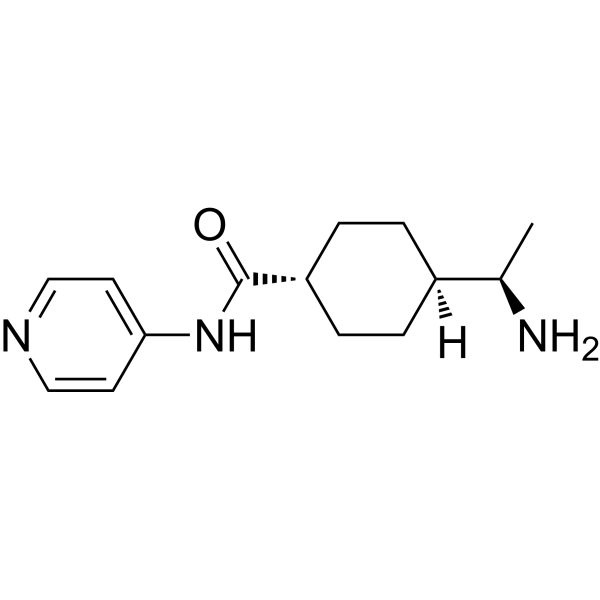
HY-10071
Y-27632ROCK Inhibitor -
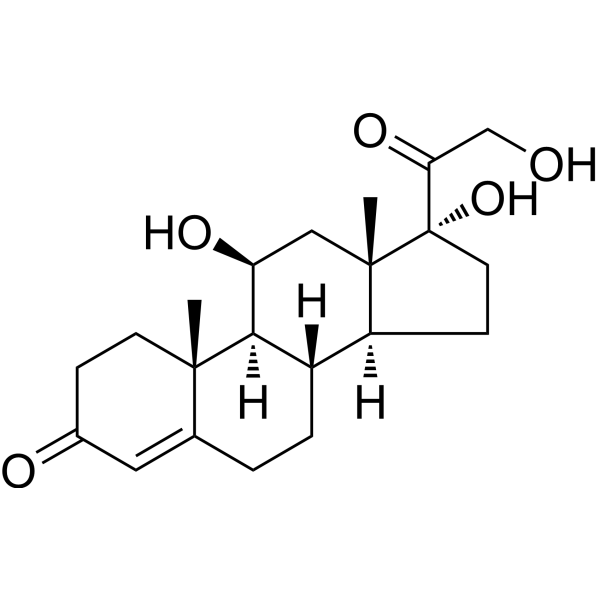
HY-N0583
HydrocortisoneGlucocorticoid Receptor Agonist -
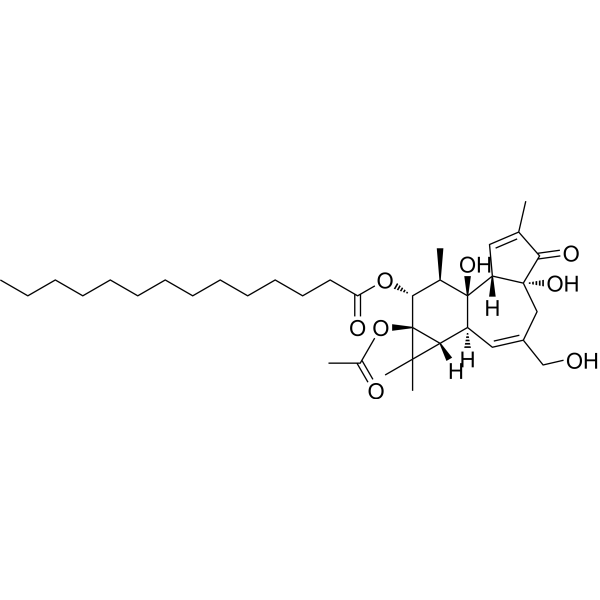
HY-18739
Phorbol 12-myristate 13-acetatePKC Activator -
HY-N0183
FormononetinFGFR2 Inhibitor -
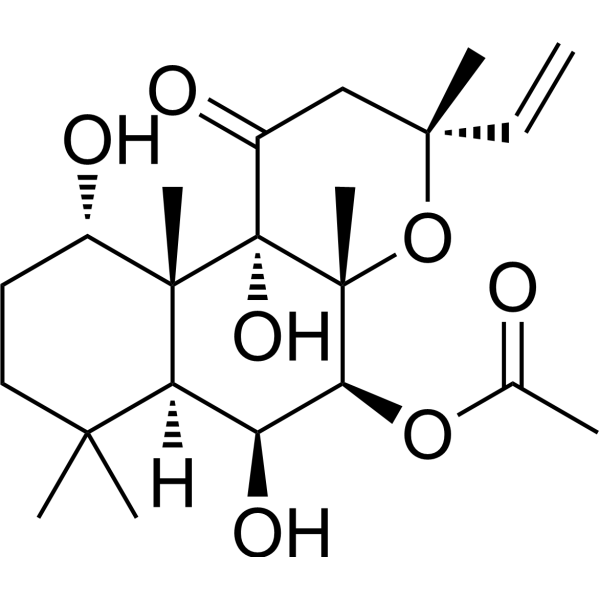
HY-15371
ForskolinAdenylate Cyclase Activator -
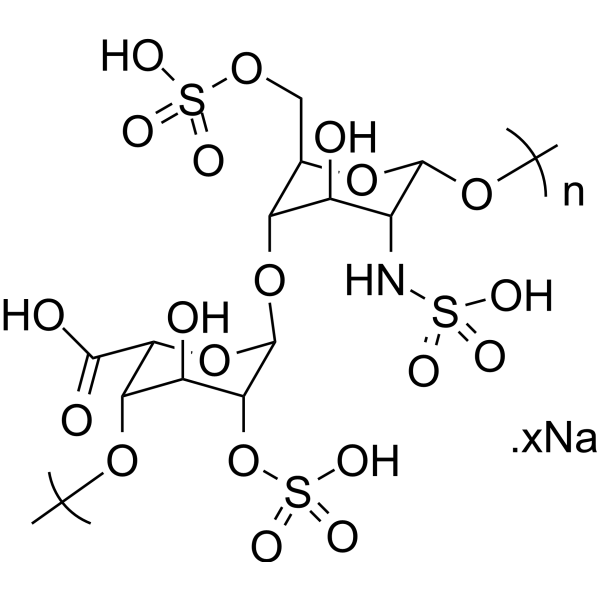
HY-17567A
Heparin sodium saltAnticoagulant -
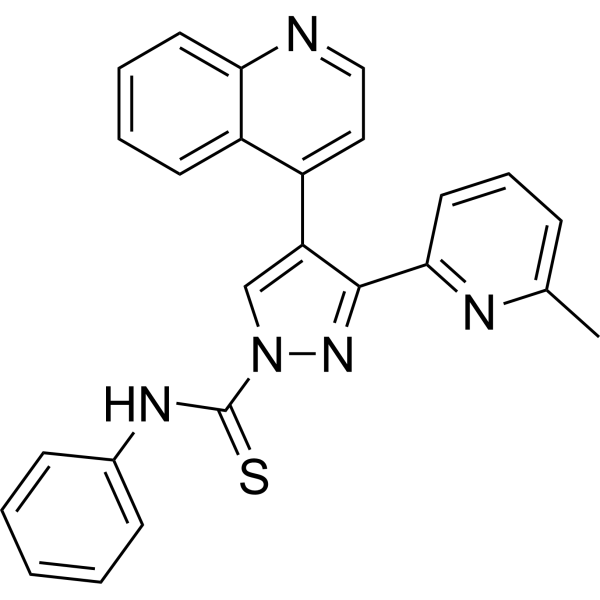
HY-10432
A 83-01ALK4/5/7 Inhibitor -
HY-K2014
PEI Transfection Reagent -
HY-P7070
IGF-I/IGF-1 Protein, Mouse -
HY-P70311
Activin A Protein, Human/Mouse/Rat (HEK293) -
HY-P73928
HGF Protein, Mouse (HEK293)


Biological Activity
Description
FGF-2 protein is a member of the fibroblast growth factor family, involved in biological processes such as bone healing, cartilage repair, tumor development, and nerve regeneration. FGF-2 is also a mitogen that accelerates cell proliferation. It regulates immune processes by specifically targeting tyrosine kinase receptors and activating the FGF/FGFR signaling pathway. FGF-2 protein, Mouse (154 a.a.), is a recombinant protein produced in E. coli (Escherichia coli), consisting of 154 amino acids (M1-S154), and is untagged[1][2][3][4][5][6][7][8][9].
Background
FGF-2 protein belongs to the heparin-binding FGF growth factor family and plays a crucial role in tendon-to-bone healing, cartilage repair, bone repair, nerve regeneration, and cancer development[1][4]. (1) Bone Cell Proliferation: Low doses of FGF-2 protein stimulate the proliferation and differentiation of bone marrow mesenchymal stem cells and upregulate the mRNA expression of type I/III collagen and fibronectin. However, high doses of FGF-2 protein do not stimulate extracellular matrix (ECM) protein proliferation and gene expression. FGF-2 protein also acts as an endogenous and intrinsic growth factor in cartilage repair. FGF-2 binds to heparan sulfate proteoglycans and is stored in the ECM of articular cartilage. When cartilage is damaged or degenerates, ECM rapidly releases FGF-2 and activates ERK signaling pathways to promote cartilage regeneration. FGF-2 exhibits a biphasic effect when binding to its specific receptors. FGF-2 promotes the repair of articular cartilage in conjunction with FGFR3, whereas it promotes the degeneration of articular cartilage when combined with FGFR1[1]. (2) Inducing Cancer Development: FGF-2 enhances the self-renewal of glioblastoma stem cells, contributing to glioma growth and vascularization[2]. Dysregulation of FGF-2 signaling induces cancer development, and FGF-2 protein is a key tumor-promoting factor in the tumor microenvironment[6]. (3) Neurogenesis: FGF-2 protein is essential for the proliferation of cortical cells and neurogenesis in the brain[3]. FGF-2 protein regulates the proliferation and differentiation of neural stem cells through β-catenin mediation. In the presence of FGF-2 protein, overexpression of β-catenin helps maintain neural progenitor cells in a proliferative state. However, in the absence of FGF-2 protein, overexpression of β-catenin enhances neuronal differentiation[8]. (4) Inducing Inflammation: Elevated levels of FGF-2 protein lead to dysregulation of angiogenesis and inflammatory responses, inducing the expression of various inflammation-related genes, including pro-inflammatory cytokines/chemokines and their receptors, endothelial cell adhesion molecules, and components of the prostaglandin pathway[4]. (5) Angiogenesis: FGF-2 protein promotes angiogenesis by interacting with various endothelial cell surface receptors, including tyrosine kinase receptors, heparan sulfate proteoglycans, and integrins[4]. Overexpression of FGF-2 protein in vivo leads to pulmonary arterial smooth muscle cell (SMC) proliferation, while a reduction in FGF-2 protein levels effectively prevents pulmonary arterial hypertension[7]. FGF-2 protein is highly conserved among certain species, with human FGF-2 protein sequence sharing 97.4%, 95.45%, and 98.71% similarity with that of rat, mouse, and cow, respectively.
In Vitro
FGF-2 protein (Mouse) (0-50 ng/mL, 30 minutes to 2 hours) dose-dependently increases the levels of β-catenin mRNA in CD1 mouse neural progenitor cells, thereby regulating neuronal proliferation and differentiation[8].
In Vivo
FGF-2 protein (Mouse) (2 and 6 μg/kg, i.v., single dose) significantly improves myocardial function in a chronic ischemia model of Yorkshire pigs (created through surgical procedures)[9]. FGF-2 protein (Mouse) (5 ng/g, i.p., once daily for 21 days) reduces anxiety-like behavior and increases hippocampal cell survival in high-anxiety (LR) Sprague Dawley rats (bred selectively)[5].
Verified Bioactivity
Measured in a cell proliferation assay using BALB/c 3T3 cells. The ED50 for this effect is 0.1-2.205 ng/mL.
MCE Validation Data
-
Purity - SDS-PAGE
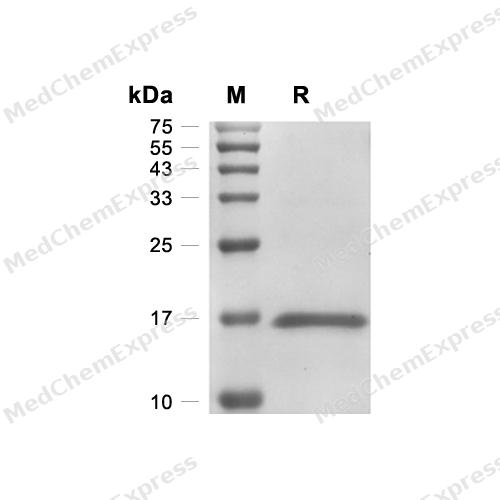
Purity - SDS-PAGE
-
Bioactivity - Cell-Based Assay
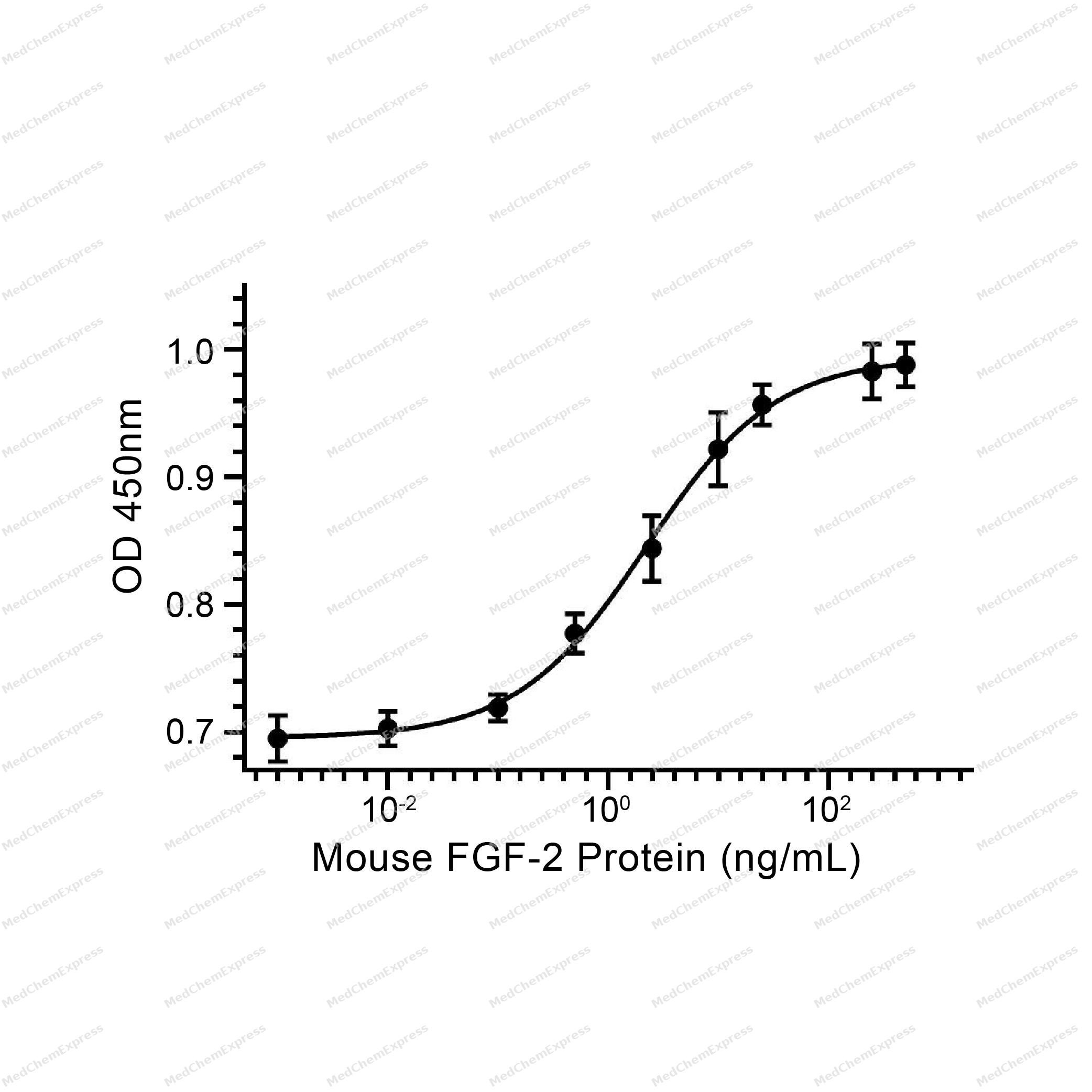
Bioactivity - Cell-Based Assay


Publications (1)
-
Journal Impact Factor
-
Most Recent


Technical Parameters
-
Species Mouse
-
Source E. coli
-
Tag Tag Free
-
Accession
P15655 (M1-S154)
-
Molecular Construction
-
N-term
-
FGF-2 (M1-S154)
Accession # P15655 -
C-term
-
-
Protein Length
Full Length
-
Synonyms
FGF2; BFGF; Prev. FGFB; Basic Fibroblast Growth Factor; Fibroblast Growth Factor 2 (Basic); Fibroblast Growth Factor; Heparin-Binding Growth Factor 2; Prostatropin; HBGF-2; FGF2A; FGF-2; FGF; Fibroblast Growth Factor 2; Basic Fibroblast Growth Factor BFGF
-
AA Sequence
MAASGITSLPALPEDGGAAFPPGHFKDPKRLYCKNGGFFLRIHPDGRVDGVREKSDPHVKLQLQAEERGVVSIKGVCANRYLAMKEDGRLLASKCVTEECFFFERLESNNYNTYRSRKYSSWYVALKRTGQYKLGSKTGPGQKAILFLPMSAKS
-
Predicted Molecular Mass
17 kDa
-
Molecular Weight
Approximately 16-18 kDa, based on SDS-PAGE under reducing conditions.
-
Purity
≥ 95%, as determined by reducing SDS-PAGE.


Product Properties
Lyophilized powder
1.Lyophilized from a 0.22 μm filtered solution of 20 mM PB, 400 mM NaCl, 0.02% Tween 80, 4.0% sucrose, 4.0% manntiol, pH 7.0.
2.Lyophilized from a 0.22 μm filtered solution of 20 mM PB, 0.02% Tween 80, 2.0% sucrose, 4.0% manntiol, pH 7.0.
3.Lyophilized from a 0.22 μm filtered solution of PBS, pH 7.4.
4.Lyophilized from a 0.22 μm filtered solution of PBS, pH 7.4, 8% trehalose.
Please refer to the lot-specific COA for specific buffer information.
<1 EU/μg, determined by LAL method.
It is not recommended to reconstitute to a concentration less than 100 μg/mL in ddH2O. For long term storage it is recommended to add a carrier protein (0.1% BSA, 5% HSA, 10% FBS or 5% Trehalose).
Stored at -20°C for 2 years from date of receipt. After reconstitution, it is stable at 4°C for 1 week or -20°C for longer (with carrier protein). It is recommended to freeze aliquots at -20°C or -80°C for extended storage.
Room temperature in continental US; may vary elsewhere.


Documentation
-
Data Sheet (266 KB)
-
SDS (252 KB)
- English - EN (252 KB)
- Français - FR (252 KB)
- Deutsch - DE (252 KB)
- Norwegian - NO (252 KB)
- Español - ES (252 KB)
- Swedish - SV (252 KB)
- Italian - IT (252 KB)
- Korean - KR (252 KB)
- Portuguese - PT (252 KB)
-
Handling Instructions (2659 KB)


References
[1]. Zhang J, et al. FGF2: a key regulator augmenting tendon-to-bone healing and cartilage repair. Regen Med. 2020 Sep;15(9):2129-2142. [Content Brief]
[2]. Jimenez-Pascual A, et al. FGF2: a novel druggable target for glioblastoma? Expert Opin Ther Targets. 2020 Apr;24(4):311-318. [Content Brief]
[3]. Raballo R, et al. Basic fibroblast growth factor (Fgf2) is necessary for cell proliferation and neurogenesis in the developing cerebral cortex[J]. Journal of Neuroscience, 2000, 20(13): 5012-5023. [Content Brief]
[4]. Presta M, et al. Inflammatory cells and chemokines sustain FGF2-induced angiogenesis. Eur Cytokine Netw. 2009 Jun;20(2):39-50. [Content Brief]
[5]. Perez JA, et al. A new role for FGF2 as an endogenous inhibitor of anxiety. J Neurosci. 2009 May 13;29(19):6379-87. [Content Brief]
[6]. Akl MR, et al. Molecular and clinical significance of fibroblast growth factor 2 (FGF2 /bFGF) in malignancies of solid and hematological cancers for personalized therapies. Oncotarget. 2016 Jul 12;7(28):44735-44762. [Content Brief]
[7]. Izikki M, et al. Endothelial-derived FGF2 contributes to the progression of pulmonary hypertension in humans and rodents. J Clin Invest. 2009 Mar;119(3):512-23. [Content Brief]
[8]. Israsena N, et al. The presence of FGF2 signaling determines whether beta-catenin exerts effects on proliferation or neuronal differentiation of neural stem cells. Dev Biol. 2004 Apr 1;268(1):220-31. [Content Brief]
[9]. Sato K, et al. Efficacy of intracoronary versus intravenous FGF-2 in a pig model of chronic myocardial ischemia. Ann Thorac Surg. 2000 Dec;70(6):2113-8. [Content Brief]

Calculators
Concentration (start) × Volume (start) = Concentration (final) × Volume (final)


 Powered by Bioz

