
1. Search Result
Search Result
Pathways Recommended: MAPK/ERK Pathway
Results for "

β-arrestin pathway

" in MedChemExpress (MCE) Product Catalog:

30

Inhibitors & Agonists

5

Peptides

1

Click Chemistry

Cat. No. Product Name Target Research Areas Chemical Structure
  • HY-160734

    GSBR-1290

    GLP Receptor Metabolic Disease
    Aleniglipron (GSBR-1290) is an orally active glucagon-like peptide-1 receptor (GLP-1R) agonist, with an EC50 value of less than 0.1 nM in HDB cell lines in cAMP stimulation assays. Aleniglipron selectively activates the Gαs-cAMP signaling pathway of GLP-1R without β-arrestin recruitment. Aleniglipron induces insulin release, promotes glucose clearance, reduces food intake and decreases body weight. Aleniglipron is applicable to research related to type 2 diabetes and obesity .
    Aleniglipron
  • HY-122197
    ML339
    4 Publications Verification

    CXCR Apelin Receptor (APJ) Arrestin Cancer
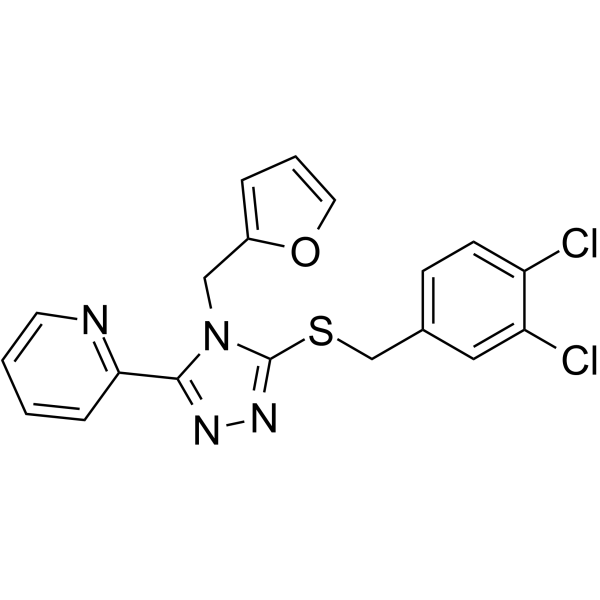
    ML339 is a selective CXCR6 antagonist with an IC50 of 140 nM. ML339 antagonizes β-arrestin recruitment and cAMP signaling pathway of human CXCR6 receptor induced by CXCL16, with IC50 of 0.3 μM and 1.4 μM, respectively. ML339 shows weaker activity against the recruitment of β-arrestin in mouse CXCR6 receptors, with an IC50 of 18 μM. ML339 has no inhibitory effect on CXCR5CXCR4CXCR6 and apelin receptor (APJ), with IC50 >79 μM. ML339 has the potential to promote the development of prostate cancer research .
    ML339
  • HY-145404
    Mitragynine pseudoindoxyl
    1 Publications Verification

    Opioid Receptor Metabolic Disease
    Mitragynine pseudoindoxyl is a potent orally active agonist of the μ-opioid receptor (MOR-1, Ki=0.8 nM) and an antagonist of the δ-opioid receptor (DOR-1, Ki=3.0 nM). Mitragynine pseudoindoxyl has moderate affinity for the κ-opioid receptor (KOR-1, Ki=24 nM) and does not recruit β-arrestin-2, acting through G protein-mediated signaling pathways without β-arrestin-2-related activation. Mitragynine pseudoindoxyl produces potent analgesic activity through a mixed μ-agonist/δ-antagonist mechanism, with low side effects such as physical dependence, respiratory depression, and constipation, and no rewarding or aversive behaviors. Mitragynine pseudoindoxyl reduces hyperactivity, inhibits GI transit, and enhances characteristics, making it a potential analgesic .
    Mitragynine pseudoindoxyl
  • HY-165428

    CXCR Arrestin Inflammation/Immunology
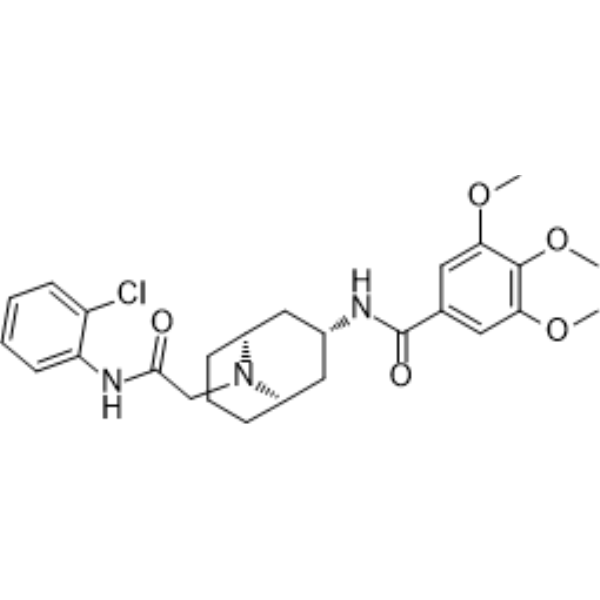
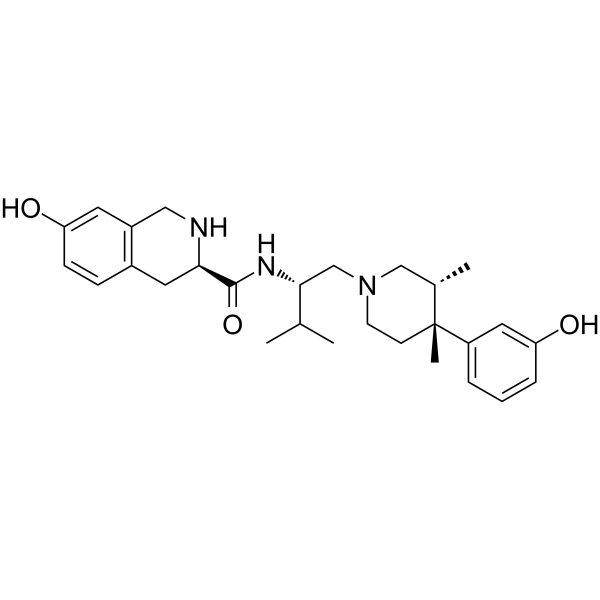
    SCH-900875 is an orally active, brain-penetrant and selective CXCR3 receptor inhibitor, which also shows high selectivity over CXCR1 and CXCR2 receptors. SCH-900875 binds to CXCR3, blocking the binding of ligands CXCL9, CXCL10, and CXCL11, inhibiting downstream G protein and β-arrestin signaling pathways to suppress inflammatory cell migration. SCH-900875 is promising for research of autoimmune diseases (rheumatoid arthritis, multiple sclerosis) and inflammatory disorders (psoriasis, inflammatory bowel disease) .
    SCH-900875
  • HY-P2106
    Elabela(19-32)
    5+ Cited Publications

    Arrestin Apelin Receptor (APJ) Cardiovascular Disease
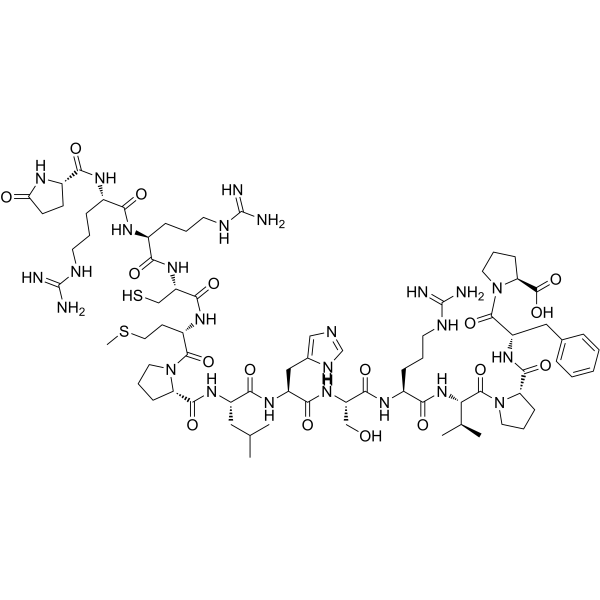
    Elabela(19-32) is an active fragment of ELABELA (ELA) that binds to apelin receptor (APJ). Elabela(19-32) activates the Gαi1 and β-arrestin-2 signaling pathways with EC50s of 8.6 nM and 166 nM. Elabela(19-32) induces receptor internalization and reduces arterial pressure, exerts positive inotropic effects on the heart .
    Elabela(19-32)
  • HY-136832

    Serotonin Transporter Potassium Channel Arrestin Opioid Receptor Cardiovascular Disease Neurological Disease
    Noribogaine hydrochloride is an orally active, blood-brain barrier permeable SERT inhibitor (IC50=50-300 nM) and hERG channel blocker. Noribogaine hydrochloride enhances serotonergic transmission, activates the κ-opioid receptor (OPRK) G protein signaling pathway and inhibits β-arrestin recruitment. Meanwhile, Noribogaine hydrochloride blocks the μ-opioid receptor (OPRM) signaling pathway as well as ion channels associated with cardiac repolarization. Noribogaine hydrochloride induces neuritogenesis, upregulates GDNF mRNA expression, and modulates opioid tolerance. Noribogaine hydrochloride reduces alcohol-seeking behavior in experimental animals, and is widely used in studies related to depression, addiction, alcoholism, and cardiotoxicity .
    Noribogaine hydrochloride
  • HY-P2106A
    Elabela(19-32) TFA
    5+ Cited Publications

    Apelin Receptor (APJ) Arrestin Cardiovascular Disease
    Elabela(19-32) TFA is an active fragment of ELABELA (ELA) that binds to apelin receptor (APJ). Elabela(19-32) TFA activates the Gαi1 and β-arrestin-2 signaling pathways with EC50s of 8.6 nM and 166 nM. Elabela(19-32) TFA induces receptor internalization and reduces arterial pressure, exerts positive inotropic effects on the heart .
    Elabela(19-32) TFA
  • HY-163671

    GPR52 Arrestin Neurological Disease
    PW0729 is a selective GPR52 agonist. PW0729 activates G protein/cAMP signaling pathway, with bias toward this pathway over β-arrestin recruitment, and induces GPR52 desensitization. PW0729 can be used for the research of neuropsychiatric and neurological diseases .
    PW0729
  • HY-P2249

    Arrestin Apelin Receptor (APJ) Cardiovascular Disease
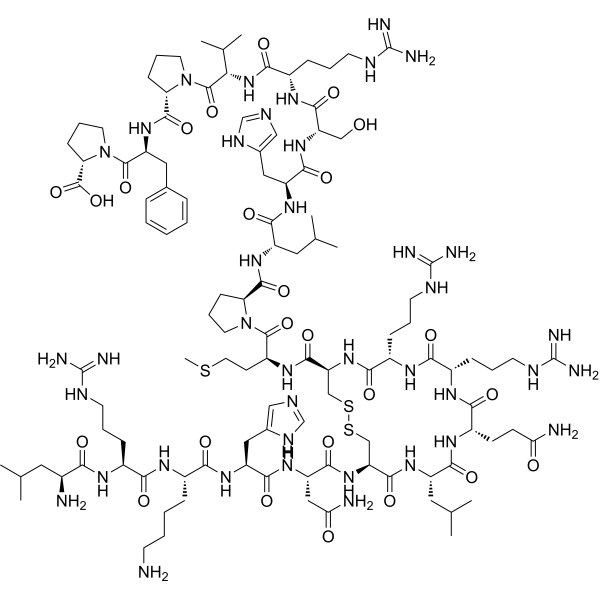
    ELA-21 (human) is an apelin receptor agonist with a pKi of 8.52. ELA-21 (human) completely inhibits Forskolin-induced cAMP production and stimulates β-arrestin recruitment with subnanomolar potencies. ELA-21 (human) is an agonist in G-protein-dependent and -independent pathways .
    ELA-21 (human)
  • HY-110302

    Opioid Receptor Neurological Disease
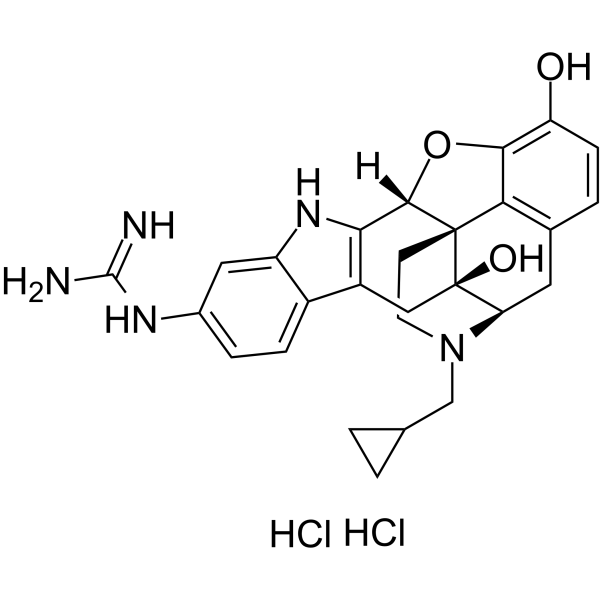
    6'-GNTI dihydrochloride, a κ-opioid receptor (KOR) agonist, displays bias toward the activation of G protein-mediated signaling over β-arrestin2 recruitment. 6'-GNTI 6'-GNTI dihydrochloride only activates the Akt pathway in striatal neurons .
    6'-GNTI dihydrochloride
  • HY-175231

    5-HT Receptor Neurological Disease
    ST171 is a bitopic 5-HT1AR agonist with an Ki of 0.41  nM. ST171 selectively activates Gi/o signaling pathway and inhibits 5-HT1AR-mediated cAMP accumulation without Gs activation and marginal β-arrestin recruitment. T171 reduces hypersensitivity in chronic neuropathic and inflammatory pain mice model. ST171 can be used for pain research .
    ST171
  • HY-175001

    Dopamine Receptor Arrestin Neurological Disease
    D1/D5 Receptor agonist-1 is a highly brain-penetrant and orally active D1/D5 receptor agonist. D1/D5 Receptor agonist-1 maintains considerable efficacy in the cAMP pathway and in β-arrestin recruitment, with EC50s of 3.7 nM (D1R cAMP), 91 nM (D1R β-arrestin), 129 nM (D1R internalization) and a Ki of 111 nM (D1R binding affinity). D1/D5 Receptor agonist-1 inhibits β-arrestin signaling in a rat with L-DOPA (HY-N0304) induced dyskinesias. D1/D5 Receptor agonist-1 can be used for the study of Parkinson’s disease .
    D1/D5 Receptor agonist-1
  • HY-138951

    Protease Activated Receptor (PAR) Inflammation/Immunology Cancer
    AY77 is a calcium-biased PAR2 agonist. AY77 shows an EC50 of 0.17 and 2 nM in PAR2-mediated the activation in the Gq pathway and recruitment of β-arrestin-2, respectively. AY77 potently induces intracellular Ca 2+ release .
    AY77
  • HY-173479

    GLP Receptor Cardiovascular Disease Metabolic Disease
    GLP-1R agonist 30 is a selective and orally active GLP-1R agonist with an EC50 of 0.048 nM. GLP-1R has excellent selectivity, with EC50 greater than 20 μM for GLP-2R, GIPR, and GCPR. GLP-1R agonist significantly increases cAMP-stimulating activity while markedly reducing hERG inhibitory activities. GLP-1R agonist has preferable absorption and excellent β-arrestin pathway selectivity. GLP-1R agonist effectively improves glucose tolerance and promoted insulin secretion in B-hGLP1R knock-in mice .
    GLP-1R agonist 30
  • HY-141434

    Hydroxycarboxylic Acid Receptor (HCAR) Inflammation/Immunology Cancer
    5-OxoETE methyl ester is the agonist for oxoeicosanoid receptor 1 (OXER1). 5-OxoETE methyl ester binds to OXER1, and activates downstream signaling pathways β-arrestin recruitment with an EC50 of 1.54 µM .
    5-OxoETE methyl ester
  • HY-W664041

    Dopamine Receptor Neurological Disease
    Noncatechol agonist-1 (19) is a Noncatechol agonist with full efficacy at both D1R-G protein and D1R-β-arrestin2 pathways, with pEC50 values of 8.41 for D1R-mediated cAMP production and 7.7 for β-arrestin2 recruitment, respectively .
    Noncatechol agonist-1
  • HY-P5017

    Oxytocin Receptor Endocrinology
    (Val3,Pro8)-Oxytocin is the Gq-dependent pathway agonist. (Val3,Pro8)-Oxytocin is also a weaker agonist for the β-arrestin engagement and endocytosis toward the oxytocin receptor (OXTR) .
    (Val3,Pro8)-Oxytocin
  • HY-153162A

    Dopamine Receptor Neurological Disease
    (-)-IHCH7041 (Compound (-)-(S)-I-10) is a selective and orally active dopamine D2 receptor agonist with a Ki of 22.44 nM. (-)-IHCH7041 can activate Gαi1 protein and β-arrestin2 signaling pathway with EC50 values of 1.38 and 2.75 nM. (-)-IHCH7041 can improve cognitive impairment and memory capacity. (-)-IHCH7041 can be used for the research of neurological disease, such as Alzheimer's disease .
    (-)-IHCH7041
  • HY-163345

    5-HT Receptor Neurological Disease
    5-HT7R antagonist 2 (compound 4h) is a 5-HT7R antagonist that antagonizes the G protein and β-arrestin signaling pathways, with a Ki of 67 nM, the IC50 values in cAMP and Tango tests were 2.59 μM and 39.57 μM, respectively. 5-HT7R antagonist 2 has an effect on neurogenesis and can reduce repetitive behaviors related to autism spectrum disorder (ASD) and restore neurogenesis of ASD impairment .
    5-HT7R antagonist 2
  • HY-14433

    PF-991

    LPL Receptor Inflammation/Immunology
    PF-462991 (PF-991) is a S1P1 receptor agonist with an EC50 of 1.9 nM. PF-462991 functionally activates this receptor via the β-arrestin pathway. PF-462991 is applicable to research related to rheumatoid arthritis .
    PF-462991
  • HY-120925

    Opioid Receptor Arrestin Neurological Disease
    TRV0109101 is a μ-opioid peptide receptor (MOPR) selective agonist (KD = 70 nM) with blood-brain barrier permeability. TRV0109101 selectively promotes G protein signaling pathway coupling while reducing the recruitment of β-arrestin. TRV0109101 inhibits opioid-induced mechanical hyperalgesia and induces antinociceptive tolerance. TRV0109101 is applicable for pain-related research .
    TRV0109101
  • HY-183777

    Apelin Receptor (APJ) Arrestin Cardiovascular Disease
    B-007 is an AplnR agonist with G protein-biased signaling (EC50 = 11.6 nM). B-007 activates the G protein pathway while abolishing β-arrestin1 and β-arrestin2 signaling. B-007 serves as a scaffold for development of G protein-biased apelin receptor agonists. B-007 can be used for the research of heart failure .
    B-007
  • HY-47412

    Dopamine Receptor Neurological Disease
    Cariprazine impurity 1 is a dopamine D2 receptor (D2R) agonist. Cariprazine impurity 1 modulates D2R-mediated Gi/o signaling pathway to inhibit cAMP production, and regulates D2R-mediated β-arrestin2 recruitment pathway .
    Cariprazine impurity 1
  • HY-181822

    Formyl Peptide Receptor (FPR) Arrestin PKA Interleukin Related Cardiovascular Disease
    BMS-986331 is an orally active selective N-Formyl Peptide Receptor 2 (FPR2) agonist with an EC50 of 0.5 nM in humans and 1 nM in rats. BMS-986331 activates Gαi2, GαoA, Gα12, Gα13 signaling pathways, recruits β-arrestin1 and β-arrestin2, and inhibits downstream cAMP. BMS-986331 induces the expression and release of the pro-resolution cytokine IL-10. BMS-986331 improves cardiac structure and function in a rat model of heart failure induced by permanent coronary artery occlusion. BMS-986331 can be used for the research of heart failure .
    BMS-986331
  • HY-115643

    GPR119 Arrestin GLP Receptor Metabolic Disease
    AZ13581837 is an orally active GPR120 agonist with an EC50 of 5.2 nM for human GPR120. AZ13581837 signals through Gαq, Gαs, and β-arrestin pathways, reduces cAMP production, stimulates GLP-1 secretion, induces glucose lowering, and increases insulin secretion. AZ13581837 can be used for the research of type 2 diabetes .
    AZ13581837
  • HY-133151

    CXCR Cancer
    CXCR6 antagonist 1 (Compound 81) is an orally active CXCR6 antagonist. CXCR6 antagonist 1 inhibits the CXCR6 receptor signaling pathway, including β-arrestin recruitment and Forskolin (HY-15371)-induced cAMP production. CXCR6 antagonist 1 reduces tumor growth in a mouse xenograft model of hepatocellular carcinoma. CXCR6 antagonist 1 can be used in research related to hepatocellular carcinoma .
    CXCR6 antagonist 1
  • HY-W399025

    Opioid Receptor Arrestin Neurological Disease
    ID110460001 is a full agonist of μ-opioid receptor and an agonist of δ-opioid receptor. ID110460001 exhibits high intrinsic efficacy for G protein pathway activation of μ-opioid receptor, and this property is not affected by the reduction in receptor quantity. ID110460001 acts only as a very weak partial agonist in the β-arrestin-2 pathway of both receptors, and binds to μ-opioid receptor via a specific mode. The efficacy of ID110460001 in the G protein pathway of δ-opioid receptor is sensitive to changes in receptor quantity. ID110460001 can be used in pain-related research .
    ID110460001
  • HY-W414109

    Opioid Receptor Arrestin Neurological Disease
    ID110460002 possesses both full agonist activity at the μ-opioid receptor (OPRM) and agonist activity at the δ-opioid receptor (OPRD). ID110460002 acts as a potent agonist for the G protein pathways of both receptors, but exhibits only very weak partial agonist activity towards the β-arrestin-2 pathway. The agonistic potency of ID110460002 at OPRM has extremely high intrinsic activity and is unaffected by reduced receptor expression levels, while its potency at OPRD depends on receptor expression levels. ID110460002 displays tissue- or organ-dependent properties, and serves as a critical compound for investigating pain mechanisms and analgesia .
    ID110460002
  • HY-120093

    Cannabinoid Receptor PERK Neurological Disease
    GAT100 is a negative allosteric modulator and covalent allosteric probe for cannabinoid receptor type 1 (CB1R). GAT100 acts as a positive allosteric modulator for orthosteric agonist CP55,940 binding to regulate the CB1R signaling pathway. GAT100 reduces the potency and efficacy of orthosteric CB1R agonists in terms of β-arrestin 1 recruitment, phosphorylation of PLCβ3 and ERK1/2, cAMP accumulation, and CB1R internalization. GAT100 is applicable to the research of psychobehavioral and somatic diseases .
    GAT100
  • HY-183578

    LPL Receptor Inflammation/Immunology
    TYY-31 is an orally active, selective S1PR1 agonist with an EC50 of 1.13 pM. TYY-31 promotes the phosphorylation of ERK1/2. TYY-31 exerts anti-inflammatory and immunosuppressive effects, ameliorates DSS-induced colitis in mice, and reduces peripheral blood lymphocyte counts in mice in a dose-dependent manner. TYY-31 can be used for the research of ulcerative colitis .
    TYY-31

Inquiry Online

Your information is safe with us. * Required Fields.

Salutation


Country or Region *

Applicant Name *


Organization Name *

Department *


Email Address *


Product Name *

Cat. No.


Requested quantity *

Phone Number *


Remarks

Inquiry Online

Inquiry Information

Product Name:
Cat. No.:
Quantity:
MCE Japan Authorized Agent:

