



AY77
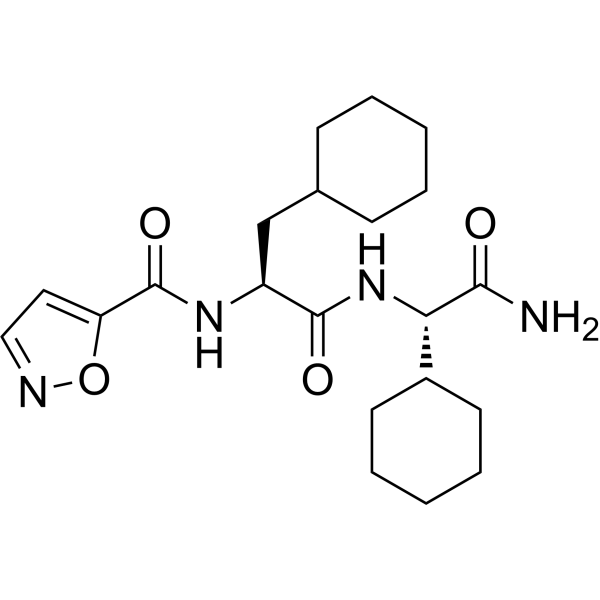
AY77 is a calcium-biased PAR2 agonist. AY77 shows an EC50 of 0.17 and 2 nM in PAR2-mediated the activation in the Gq pathway and recruitment of β-arrestin-2, respectively. AY77 potently induces intracellular Ca2+ release.
For research use only. We do not sell to patients.
- CAS No.: 1835734-92-3
- Formula: C21H32N4O4
- Molecular Weight:404.50
-
Storage:
Please store the product under the recommended conditions in the Certificate of Analysis.

To place orders, for customer services and technical support, please contact: MedChemExpress USA
Tel: 609-228-6898 E-mail: [email protected] [email protected]


-
 Biological Activity
-
Chemical Information
- Protocols
- Purity & Documentation
- References
-
 Help & FAQs


-
HY-10119
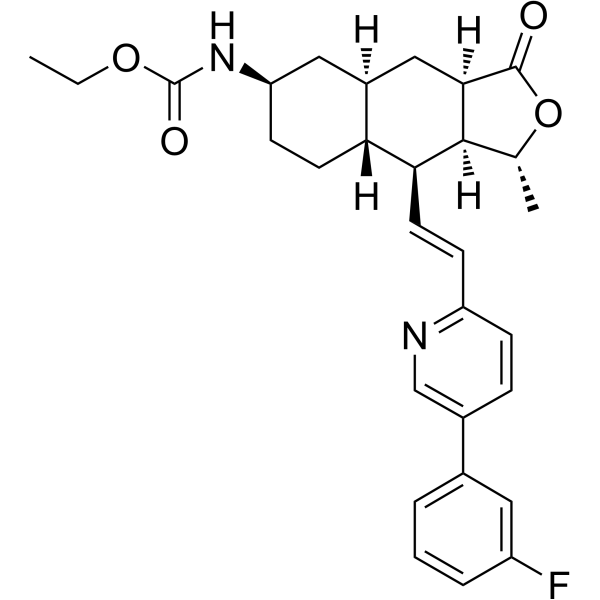
VorapaxarPAR-1 Antagonist -

HY-10119R
Vorapaxar (Standard)PAR-1 Antagonist -
HY-P1536
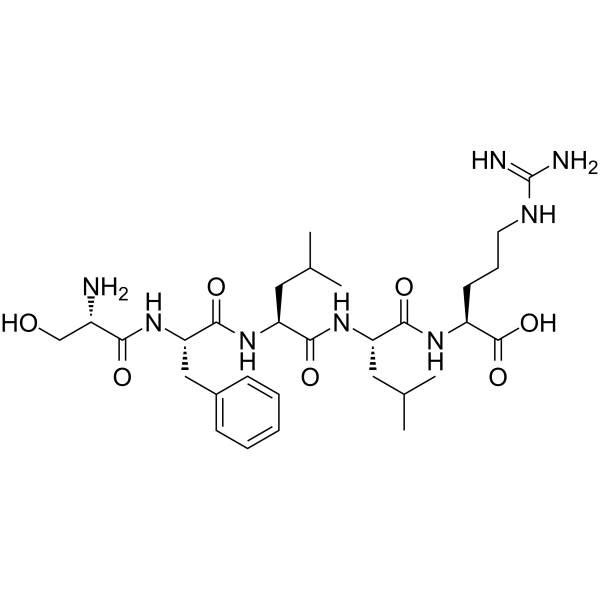
Thrombin Receptor Activator for Peptide 5 (TRAP-5) -
HY-18200
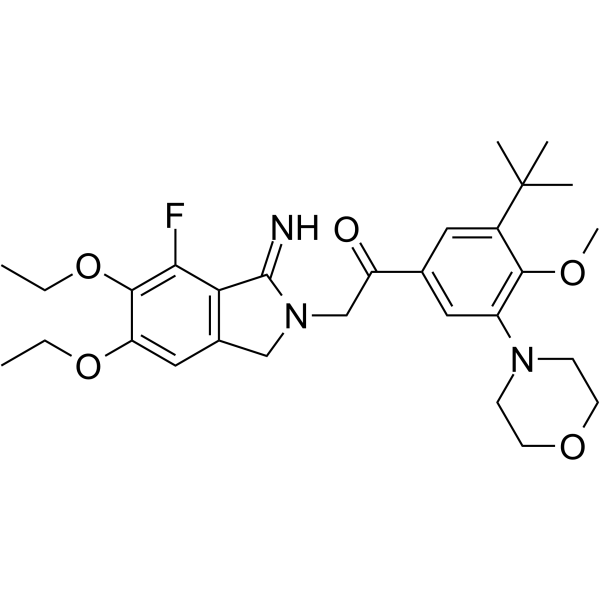
AtopaxarPAR-1 Antagonist -
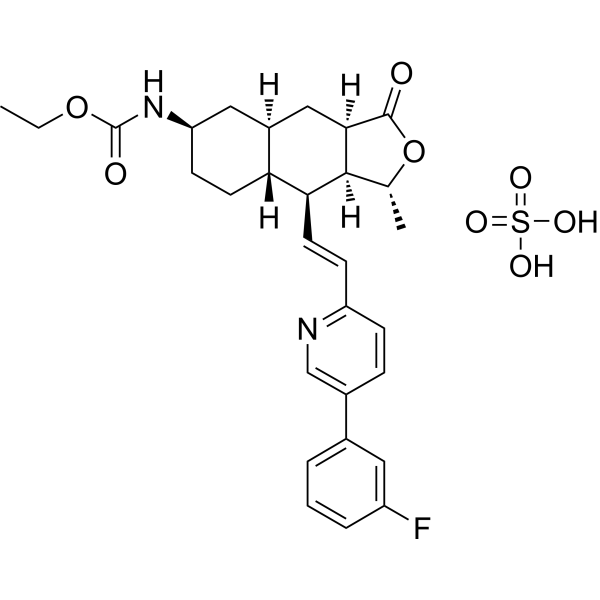
HY-10119A
Vorapaxar sulfatePAR-1 Antagonist -
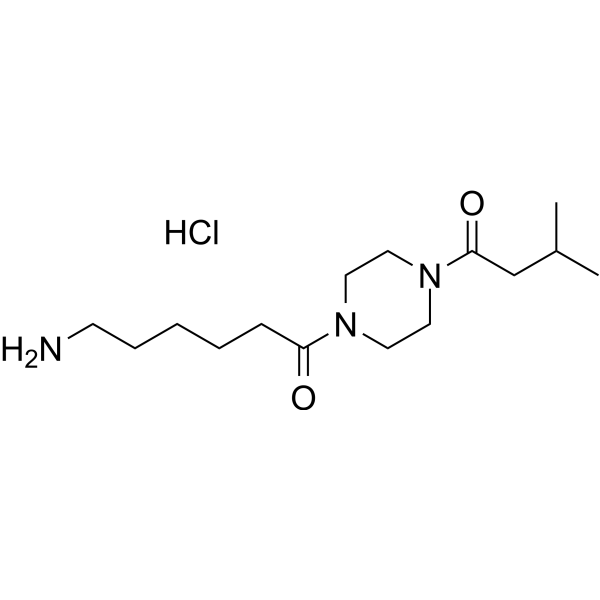
HY-124748A
ENMD-1068 hydrochloridePAR2 Antagonist -
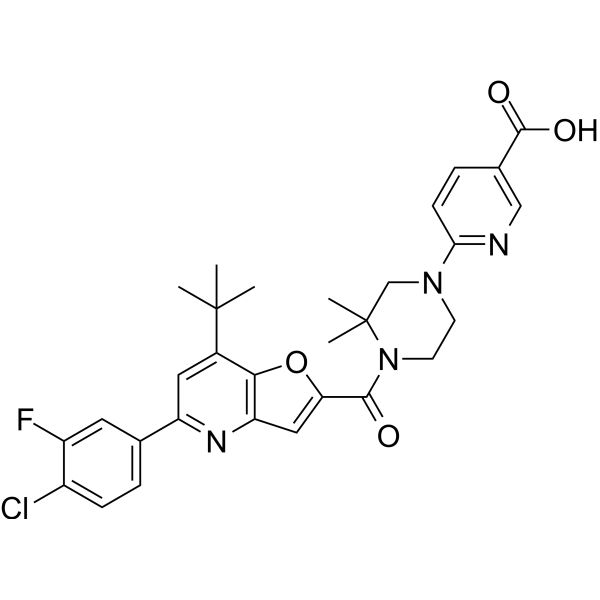
HY-148016
I-287PAR2 Inhibitor -

HY-10119AR
Vorapaxar sulfate (Standard)PAR-1 Antagonist -
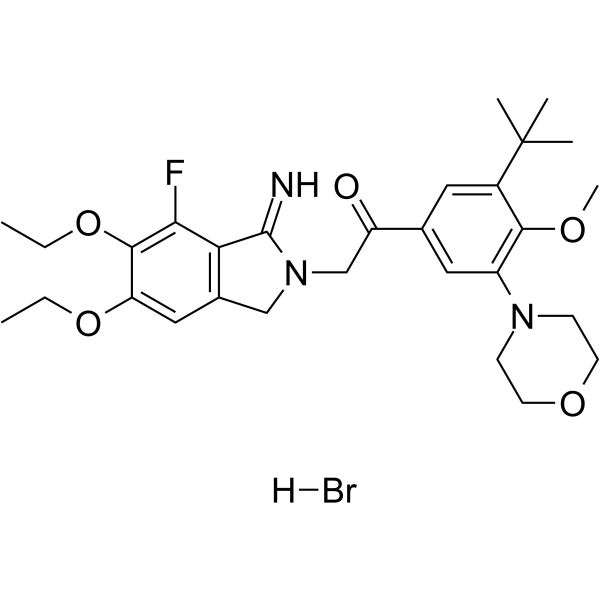
HY-18200B
Atopaxar hydrobromidePAR-1 Antagonist


Biological Activity
Description
IC50 & Target
|
PAR2 |
Cellular Effect
|
Cell Line

|
Type | Value | Description | References |
|---|---|---|---|---|
| HEK293 | EC50 |
2 μM
Compound: 2; AY77
|
Agonist activity at PK1-tagged PAR2 (unknown origin) expressed in HEK293 cells assessed as induction of beta-arrestin recruitment incubated for 90 mins by Pathhunter chemiluminescent assay
Agonist activity at PK1-tagged PAR2 (unknown origin) expressed in HEK293 cells assessed as induction of beta-arrestin recruitment incubated for 90 mins by Pathhunter chemiluminescent assay
|
[PMID: 32551018] |
| HEK-293T | EC50 |
0.17 μM
Compound: 2; AY77
|
Agonist activity at human PAR2 expressed in HEK293T cells assessed as induction of Galphaq-stimulated IP1 formation incubated for 2 hrs by FRET assay
Agonist activity at human PAR2 expressed in HEK293T cells assessed as induction of Galphaq-stimulated IP1 formation incubated for 2 hrs by FRET assay
|
[PMID: 32551018] |


Chemical Information
-
CAS No. 1835734-92-3
-
Molecular Weight 404.50
-
Formula C21H32N4O4
-
Sequence
{5-Isoxazolylcarbonyl-Cha}-{Chg}-NH2
-
Sequence Shortening
{5-Isoxazolylcarbonyl-Cha}-{Chg}-NH2
-
Shipping
Room temperature in continental US; may vary elsewhere.
-
Storage
Please store the product under the recommended conditions in the Certificate of Analysis.


Purity & Documentation
References

Calculators
Concentration (start) × Volume (start) = Concentration (final) × Volume (final)


AY77 Related Classifications
HY-138951 Related Classifications
 Powered by Bioz