1. Search Result
Search Result
Results for "

Androstenedione

" in MedChemExpress (MCE) Product Catalog:

25

Inhibitors & Agonists

5

Natural
Products

6

Isotope-Labeled Compounds

Cat. No. Product Name Target Research Areas Chemical Structure
  • HY-B0234
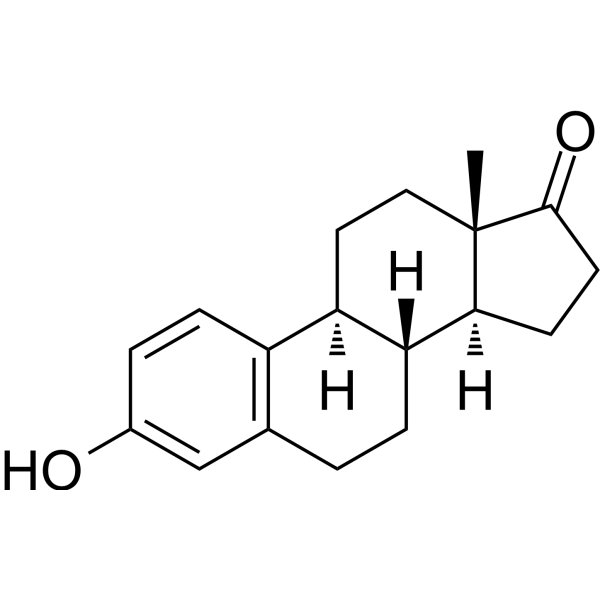
    Estrone
    5+ Cited Publications

    E1; Oestrone

    Estrogen Receptor/ERR Endogenous Metabolite Endocrinology Cancer
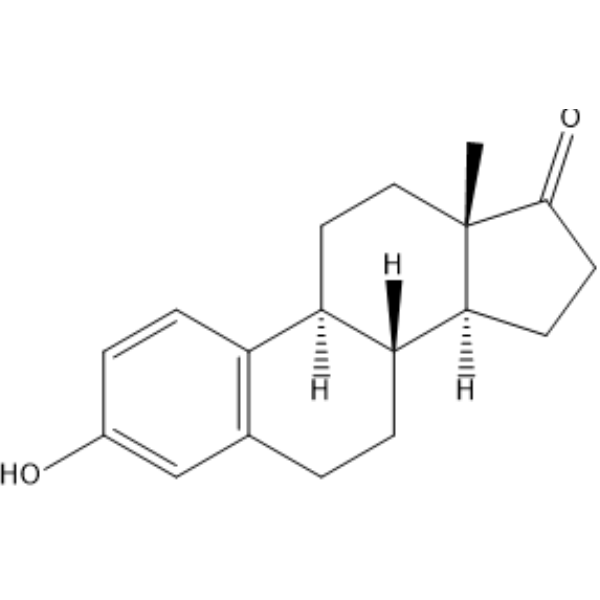
    Estrone (E1) is a natural estrogenic hormone. Estrone is the main representative of the endogenous estrogens and is produced by several tissues, especially adipose tissue. Estrone is the result of the process of aromatization of androstenedione that occurs in fat cells .
    Estrone
  • HY-13632
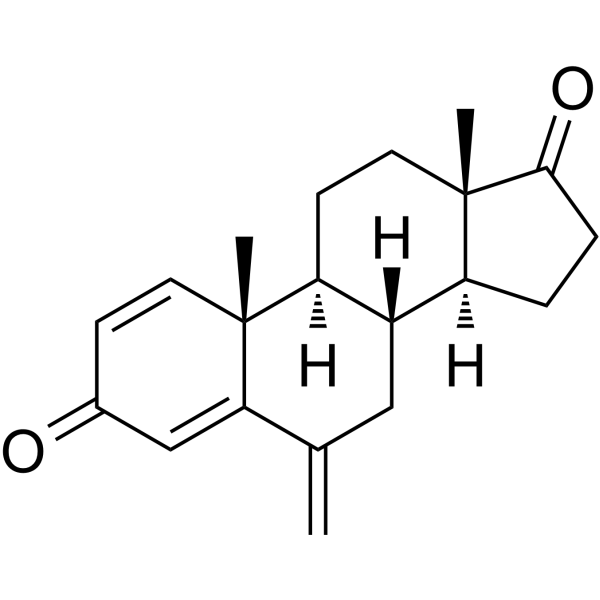
    Exemestane
    Maximum Cited Publications
    7 Publications Verification

    FCE 24304; EXE

    Cytochrome P450 Endocrinology Cancer
    Exemestane (FCE 24304) is a selective, irreversible and orally active steroidal aromatase inhibitor with IC50s of 30 nM and 40 nM for human placental and rat ovarian aromatase, respectively. Exemestane can be used for hormone-dependent breast cancer research .
    Exemestane
  • HY-114464

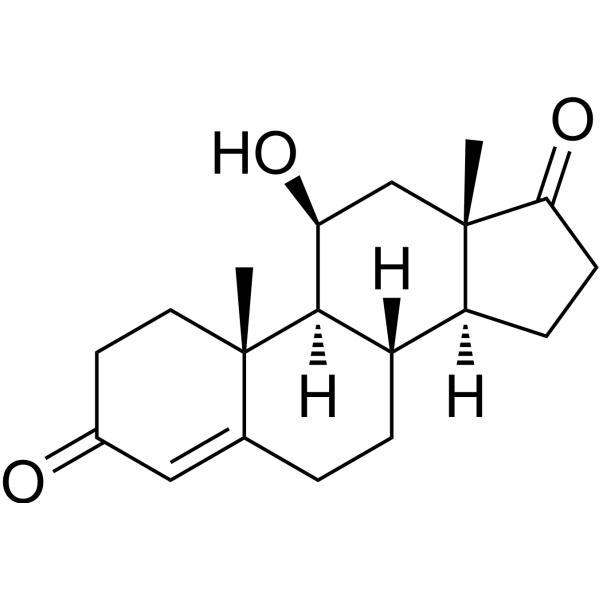
    4-Androsten-11β-ol-3,17-dione

    Endogenous Metabolite 11β-HSD Endocrinology
    11-Beta-hydroxyandrostenedione (4-Androsten-11β-ol-3,17-dione) is a steroid mainly found in the the adrenal origin (11β-hydroxylase is present in adrenal tissue, but absent in ovarian tissue). 11-Beta-hydroxyandrostenedione is a 11β-hydroxysteroid dehydrogenase (11βHSD) isozymes inhibitor. As 4-androstenedione increases, measuring plasma 11-Beta-hydroxyandrostenedione can distinguish the adrenal or ovarian origin of hyperandrogenism .
    11-Beta-hydroxyandrostenedione
  • HY-B0234R
    Estrone (Standard)
    5+ Cited Publications

    E1(Standard); Oestrone (Standard)

    Reference Standards Estrogen Receptor/ERR Endogenous Metabolite Endocrinology Cancer
    Estrone (Standard) is the analytical standard of Estrone. This product is intended for research and analytical applications. Estrone (E1) is a natural estrogenic hormone. Estrone is the main representative of the endogenous estrogens and is produced by several tissues, especially adipose tissue. Estrone is the result of the process of aromatization of androstenedione that occurs in fat cells .
    Estrone (Standard)
  • HY-B0234S2

    E1-d4; Oestrone-d4

    Estrogen Receptor/ERR Endogenous Metabolite Endocrinology Cancer
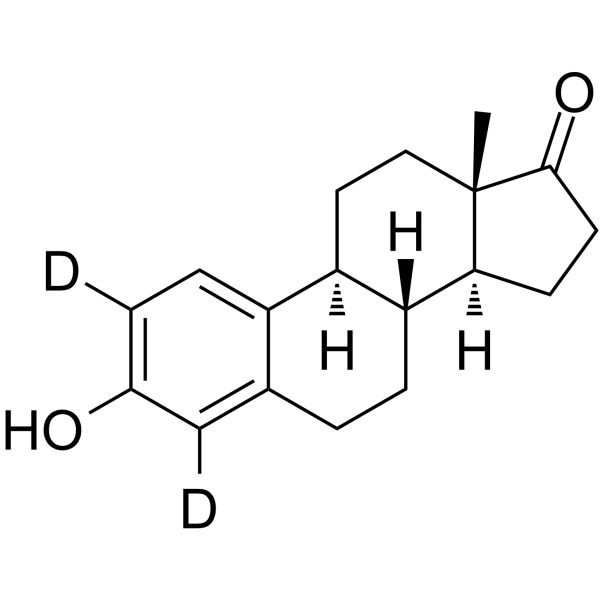
    Estrone-d4 is the deuterium labeled Estrone. Estrone (E1) is a natural estrogenic hormone. Estrone is the main representative of the endogenous estrogens and is produced by several tissues, especially adipose tissue. Estrone is the result of the process of aromatization of androstenedione that occurs in fat cells .
    Estrone-d4
  • HY-107939

    Glucocorticoid Receptor Cytochrome P450 Neurological Disease Metabolic Disease Inflammation/Immunology
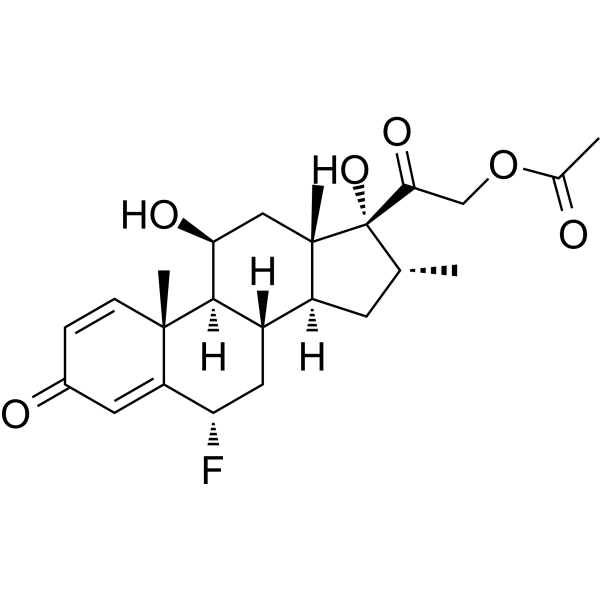
    Paramethasone Acetate is an orally active long-acting glucocorticoid. Paramethasone Acetate directly inhibits testicular aromatase, thereby reducing the synthesis of estradiol. Paramethasone Acetate suppresses the basal and midcycle luteinizing hormone surges in female animals and blocks estrogen synthesis. Paramethasone Acetate also decreases circulating levels of dihydrotestosterone, androstenedione and estradiol in male animals. Paramethasone Acetate inhibits cartilage degeneration and alleviates joint pathological damage in osteoarthritis models. Paramethasone Acetate can be used in research related to osteoarthritis and endocrinology .
    Paramethasone Acetate
  • HY-113603

    SPR001; LY2371712

    CRFR Metabolic Disease
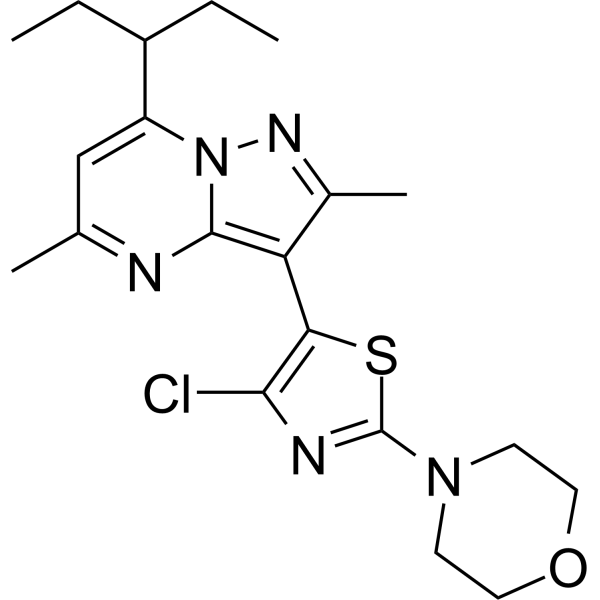
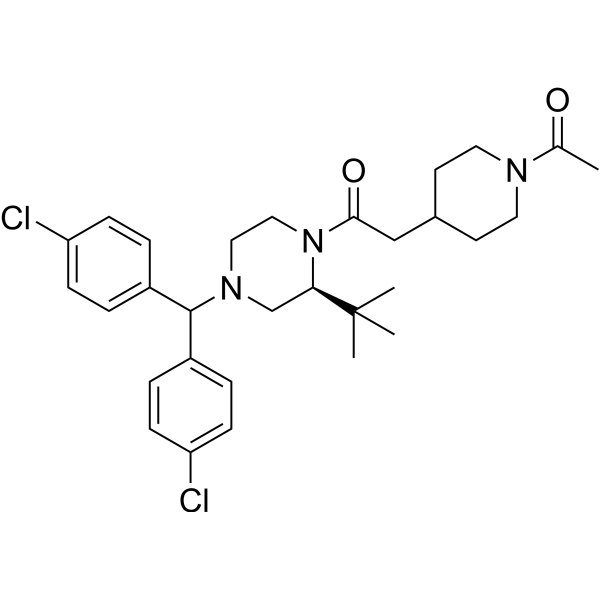
    Tildacerfont (SPR001; LY2371712) is an orally active, blood-brain barrier-penetrant selective corticotropin-releasing factor type 1 (CRF1) receptor antagonist. Tildacerfont selectively blocks CRF1 receptors, thereby inhibiting the release of pituitary adrenocorticotropic hormone (ACTH). Tildacerfont can be used in research related to congenital adrenal hyperplasia .
    Tildacerfont
  • HY-B0234S1

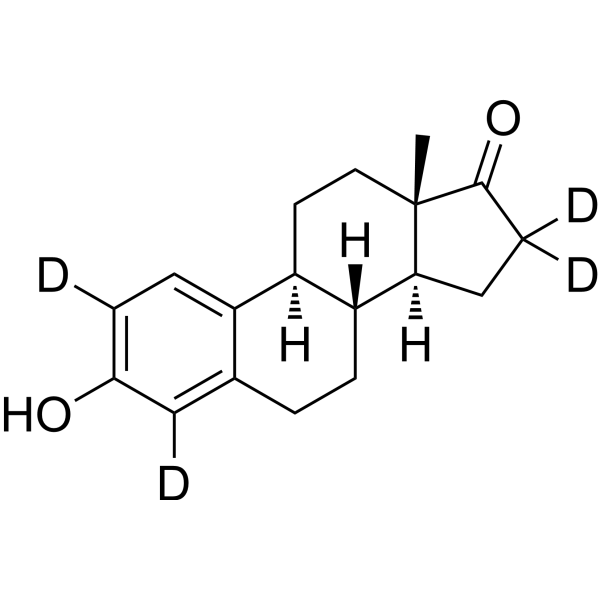
    E1-d2; Oestrone-d2

    Isotope-Labeled Compounds Estrogen Receptor/ERR Endogenous Metabolite Endocrinology Cancer
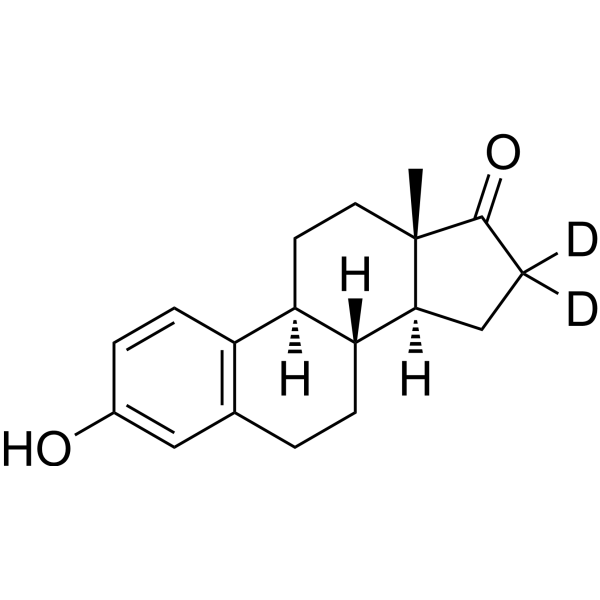
    Estrone-d2 is the deuterium labeled Estrone. Estrone (E1) is a natural estrogenic hormone. Estrone is the main representative of the endogenous estrogens and is produced by several tissues, especially adipose tissue. Estrone is the result of the process of aromatization of androstenedione that occurs in fat cells .
    Estrone-d2
  • HY-B0234S

    E1-13C3; Oestrone-13C3

    Isotope-Labeled Compounds Estrogen Receptor/ERR Endogenous Metabolite Endocrinology Cancer
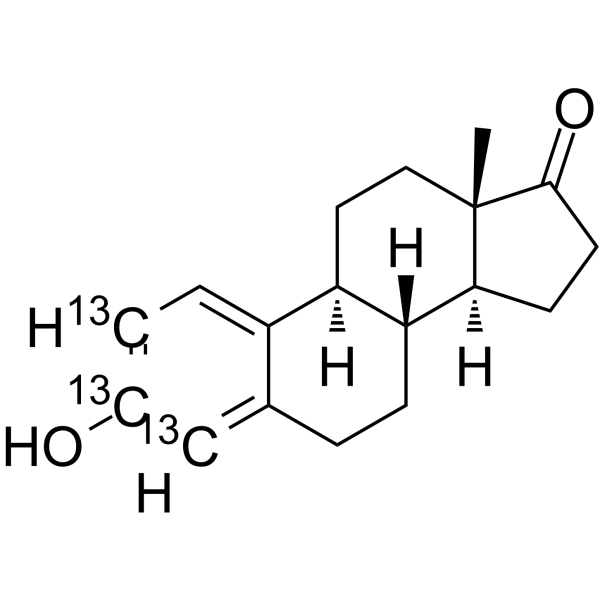
    Estrone- 13C3 is the 13C-labeled Estrone. Estrone (E1) is a natural estrogenic hormone. Estrone is the main representative of the endogenous estrogens and is produced by several tissues, especially adipose tissue. Estrone is the result of the process of aromatization of androstenedione that occurs in fat cells .
    Estrone-13C3
  • HY-118382

    STX1383

    17β-HSD Cancer
    SCH-451659 (STX1383) is an orally active, selective 17β-HSD3 inhibitor with an IC50 of 2.4 nM against h17β-HSD3. SCH-451659 selectively blocks the conversion of androstenedione to testosterone. SCH-451659 reduces testosterone levels in mice. SCH-451659 exhibits anticancer activity against androstenedione-dependent prostate tumors .
    SCH-451659
  • HY-163940

    Aldose Reductase Androgen Receptor Cancer
    LX1 is an anti-prostate cancer compound that targets androgen receptor (AR), AR variants and steroidogenic enzyme AKR1C3. LX1 inhibits the enzymatic activity of AKR1C3, reduces the conversion of androstenedione to testosterone and reduces the expression of AR and AR-V7 and downregulates their target genes. LX1 overcomes the resistance of tumor cells to Enzalutamide (HY-70002), and the combination with Enzalutamide (HY-70002) further inhibits tumor growth .
    LX1
  • HY-W699936

    Cytochrome P450 Others
    6β-Hydroxy androstenedione is a steroid product that can be isolated from Fusarium culmorum .
    6β-Hydroxy androstenedione
  • HY-162105

    Cytochrome P450 Endocrinology Cancer
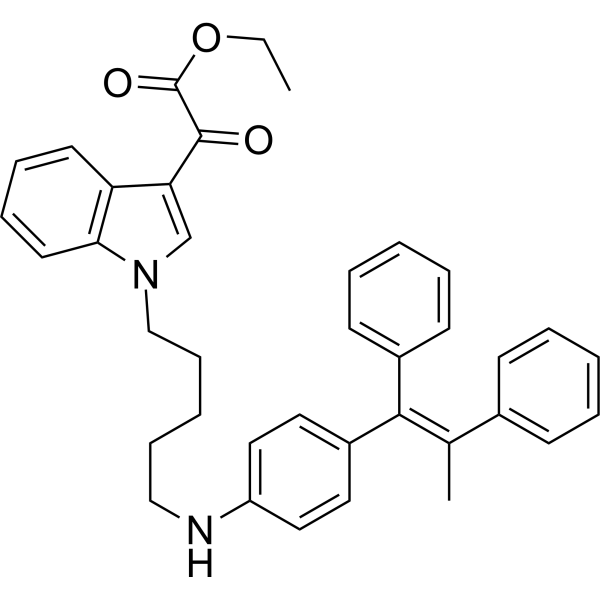
    Aromatase-IN-3 (compound 7d) is an aromatase inhibitor with an IC50 of 54 nM. Through suppressing the conversion of androstenedione to oestrogen caused by aromatase, Aromatase-IN-3 exerts an appreciable tumor growth inhibitory activities against breast cancer cell lines, suggesting its usage for ER+ cancer research .
    Aromatase-IN-3
  • HY-108409

    Etienic acid; Testosterone-17β-carboxylic acid; 3-Oxoandrost-4-ene-17β-carboxylic acid

    Drug Derivative Metabolic Disease Cancer
    Progesterone carboxylic acid (Testosterone-17β-carboxylic acid) is an androstenedione analogue. Progesterone carboxylic acid can conjugate with 20-mer peptide nucleic acid (PNA) and the conjugate has superior binding capacity on complementary DNA. Progesterone carboxylic acid can be used for cancers and type 2 diabetes (T2D) research .
    Progesterone carboxylic acid
  • HY-N13215

    Bacterial Cytochrome P450 Parasite Fungal Metabolic Disease
    Tongkat Ali Extract is the extract of Tongkat Ali, a testosterone modulator. Tongkat Ali Extract activates CYP17 enzyme to enhance conversion of pregnenolone and progesterone to dehydroepiandrosterone, androstenedione, and testosterone. Tongkat Ali Extract demonstrates antimalarial, antimicrobial, anticancer, and antidiabetic activity. Tongkat Ali Extract can be used for the research of diabetic and male infertility .
    Tongkat Ali Extract
  • HY-W739700

    d-Aminoglutethimide L-Tartrate

    Cytochrome P450 Inflammation/Immunology
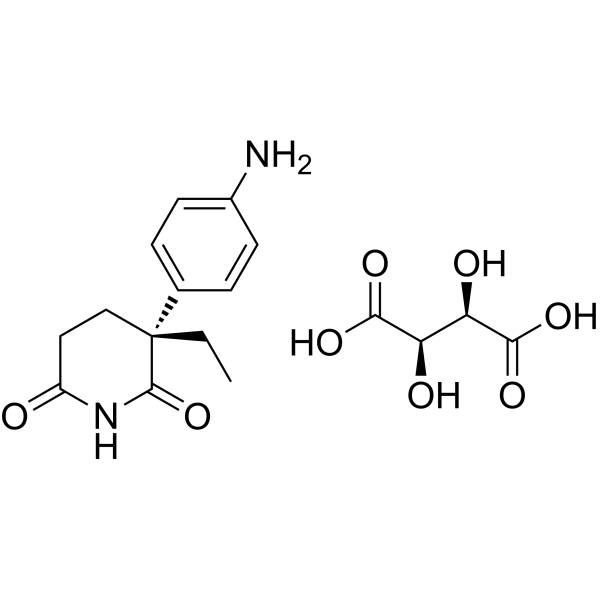
    (R)-(+)-Aminoglutethimide (L-Tartrate) is an inhibitor of aromatase. (R)-(+)-Aminoglutethimide inhibits androstenedione with a Ki value of 0.3 μM .
    (R)-(+)-Aminoglutethimide L-Tartrate
  • HY-B0234S4

    E1-d2-1; Oestrone-d2-1

    Isotope-Labeled Compounds Estrogen Receptor/ERR Endogenous Metabolite Endocrinology
    Estrone-d2-1 is the deuterium labeled Estrone. Estrone (E1) is a natural estrogenic hormone. Estrone is the main representative of the endogenous estrogens and is produced by several tissues, especially adipose tissue. Estrone is the result of the process of aromatization of androstenedione that occurs in fat cells .
    Estrone-d2-1
  • HY-B0234S3

    E1-13C2; Oestrone-13C2

    Isotope-Labeled Compounds Estrogen Receptor/ERR Endogenous Metabolite Endocrinology Cancer
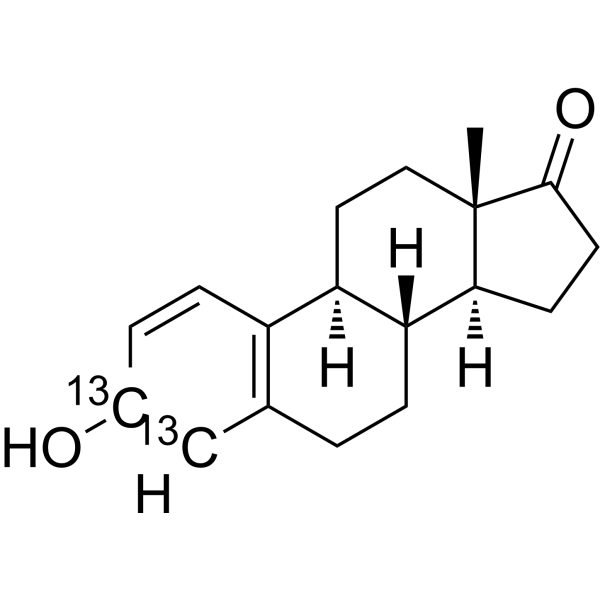
    Estrone- 13C2 is the 13C-labeled Estrone. Estrone (E1) is a natural estrogenic hormone. Estrone is the main representative of the endogenous estrogens and is produced by several tissues, especially adipose tissue. Estrone is the result of the process of aromatization of androstenedione that occurs in fat cells .
    Estrone-13C2
  • HY-13632S5

    FCE 24304-13C,d2; EXE-13C,d2

    Cytochrome P450 Isotope-Labeled Compounds Endocrinology Cancer
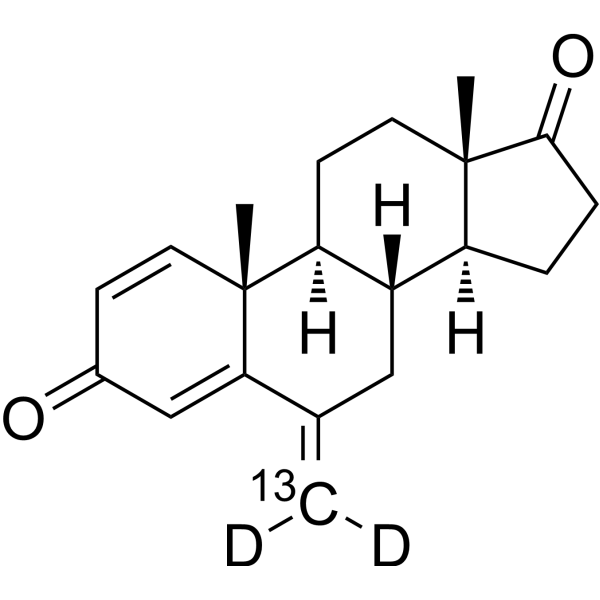
    Exemestane- 13C,d2 is 13C and deuterated labeled Exemestane (HY-13632). Exemestane (FCE 24304) is a selective, irreversible and orally active steroidal aromatase inhibitor with IC50s of 30 nM and 40 nM for human placental and rat ovarian aromatase, respectively. Exemestane can be used for hormone-dependent breast cancer research .
    Exemestane-13C,d2
  • HY-A0179

    Glucocorticoid Receptor Cytochrome P450 Neurological Disease Metabolic Disease Inflammation/Immunology
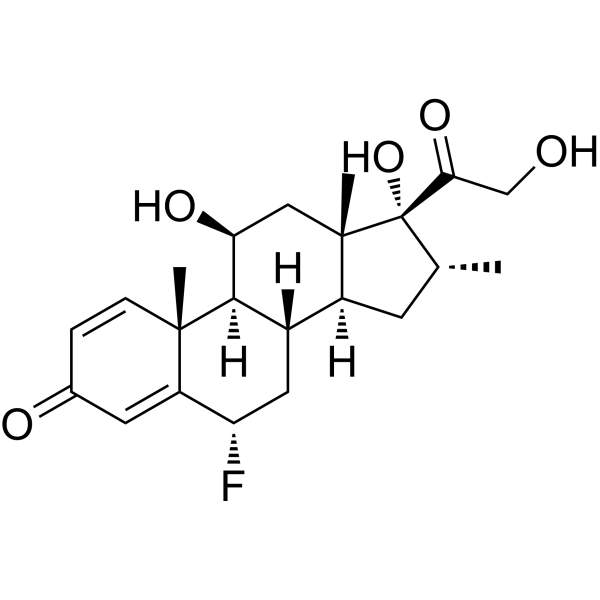
    Paramethasone is an orally active long-acting glucocorticoid. Paramethasone directly inhibits testicular aromatase, thereby reducing the synthesis of estradiol. Paramethasone suppresses the basal and midcycle luteinizing hormone surges in female animals and blocks estrogen synthesis. Paramethasone also decreases circulating levels of dihydrotestosterone, androstenedione and estradiol in male animals. Paramethasone inhibits cartilage degeneration and alleviates joint pathological damage in osteoarthritis models. Paramethasone can be used in research related to osteoarthritis and endocrinology .
    Paramethasone
  • HY-107939R

    Glucocorticoid Receptor Reference Standards Cytochrome P450 Neurological Disease Metabolic Disease Inflammation/Immunology
    Paramethasone Acetate (Standard) is the analytical standard of Paramethasone Acetate (HY-107939). This product is intended for research and analytical applications. Paramethasone Acetate is an orally active long-acting glucocorticoid. Paramethasone Acetate directly inhibits testicular aromatase, thereby reducing the synthesis of estradiol. Paramethasone Acetate suppresses the basal and midcycle luteinizing hormone surges in female animals and blocks estrogen synthesis. Paramethasone Acetate also decreases circulating levels of dihydrotestosterone, androstenedione and estradiol in male animals. Paramethasone Acetate inhibits cartilage degeneration and alleviates joint pathological damage in osteoarthritis models. Paramethasone Acetate can be used in research related to osteoarthritis and endocrinology.
    Paramethasone Acetate (Standard)
  • HY-182708

    Cytochrome P450 Metabolic Disease
    CGS 18320B is a human placental microsomal aromatase inhibitor with a Ki of 0.16 nM. CGS 18320B interacts reversibly with the enzyme's active site to block estrogen biosynthesis from androstenedione. CGS 18320B can be used for the research of aromatase inhibition and estrogen biosynthesis regulation .
    CGS 18320B
  • HY-108409R

    Etienic acid (Standard); Testosterone-17β-carboxylic acid (Standard); 3-Oxoandrost-4-ene-17β-carboxylic acid (Standard)

    Reference Standards Drug Derivative Metabolic Disease Cancer
    Progesterone carboxylic acid (Standard) is the analytical standard of Progesterone carboxylic acid (HY-108409). This product is intended for research and analytical applications. Progesterone carboxylic acid (Testosterone-17β-carboxylic acid) is an androstenedione analogue. Progesterone carboxylic acid can conjugate with 20-mer peptide nucleic acid (PNA) and the conjugate has superior binding capacity on complementary DNA. Progesterone carboxylic acid can be used for cancers and type 2 diabetes (T2D) research .
    Progesterone carboxylic acid (Standard)
  • HY-P2901A

    Aldose Reductase Metabolic Disease
    3α-Hydroxysteroid Dehydrogenase, Pseudomonas testosteroni (EC 1.1.1.50) belongs to the oxidoreductase family. Its three substrates are androstenedione, NAD+, and NADP+, while its four products are 5α-androstane-3,17-dione, NADH, NADPH, and H+. 3α-Hydroxysteroid Dehydrogenase, Pseudomonas testosteroni, acts on the CH-OH group of the donor molecule, with NAD+ or NADP+ as the acceptor.
    3α-Hydroxysteroid Dehydrogenase, Pseudomonas testosteroni
  • HY-180420

    Cytochrome P450 Cancer
    Tan-931 is a non-competitive and selective inhibitor of aromatase , with an IC50 is 17.2 μM and a Ki of 40 μM for human aromatase, and an IC50 of 162 μM for rat aromatase. Tan-931 reduces plasma estradiol-17β level and weight of ovaries and uterus in PMSG (HY-N12634)-treated female rats. Tan-931 can be used for the research of estrogen-dependent metastatic breast cancer .
    Tan-931

Inquiry Online

Your information is safe with us. * Required Fields.

Salutation


Country or Region *

Applicant Name *


Organization Name *

Department *


Email Address *


Product Name *

Cat. No.


Requested quantity *

Phone Number *


Remarks

Inquiry Online

Inquiry Information

Product Name:
Cat. No.:
Quantity:
MCE Japan Authorized Agent:

